About Us

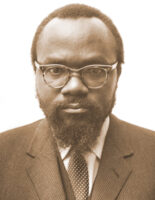
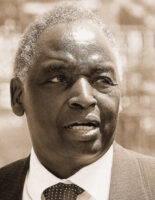
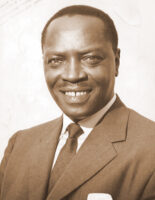
James Samuel Gichuru – Gentle, tolerant and always confident

In 1964, President Jomo Kenyatta convened a meeting in Nakuru to convince the large-scale settler farmers not to flee the country but instead stay and help develop the economy of the young nation. With him was James Samuel Gichuru, a Cabinet minister.

Jeremiah Kiereini in his book, A Daunting Journey wrote, “James Gichuru was a realist and a moderate. At this time some of his colleagues were extreme radicals to whom even the thought of Europeans remaining in Kenya seemed anathema.”

Kiereini, who was the Permanent Secretary for Defence when Gichuru was the minister, further described Gichuru as a cordial and humane individual that he enjoyed working with and who allowed his PS “a liberal atmosphere in which to formulate policies… We consulted extensively before arriving at our conclusions”.

Gichuru did not involve himself in petty tribal politics and commanded respect from leaders and the general public. It therefore surprised many that he was one of the senior government ministers and Gikuyu, Embu and Meru Association (GEMA) officials who attended a rally in Nakuru in 1976 to call for a change to the constitution to bar the Vice President, Daniel arap Moi, from automatically taking over on the demise of the President.

Attorney General Charles Njonjo legally put a stop to the change the Constitution meetings, which were seen as a scheme to block Moi from stepping into Kenyatta’s shoes. The assumption was that since Gichuru had attended at least one of these meetings, he did not support Moi and so when Moi assumed the presidency he would automatically be side-lined.

That did not happen. When Moi became President in August 1978, he kept Gichuru on as a Minister of State in the Office of the President in the Defence portfolio. Despite his failing health, Gichuru successfully defended his Limuru parliamentary seat in the first General Election under Moi in 1979. When the President constituted his Cabinet after the elections, Gichuru remained a Minister of State. In return, Gichuru gave Moi unqualified loyalty.

Born in 1914, Gichuru was the first of nine children. His 90-year-old sister, Hannah Wanjiku, said that from a young age, he led a life different from other boys his age, mostly because his parents were religious and put education ahead of traditional cultural activities.

“While tradition dictated that boys look after livestock, my parents, who were among the very first Christians in Thogoto (in Kikuyu District), insisted that Gichuru and my brothers and sisters attend school instead. Gichuru was a very obedient young man,” Wanjiku recalled.

Because of the relationship between his parents and missionaries, he went to school at the Church of Scotland Mission School, Kikuyu. He completed his primary education and went on to Alliance High School then proceeded to Makerere College in Uganda for a diploma in teaching. He returned to teach at Alliance, where the teaching staff was then exclusively white, between 1935 and 1940. He then became the headmaster of the Church of Scotland School in Dagoretti. The other pioneer African teacher at Alliance was J.D. Otiende, who became a minister in independent Kenya’s first Cabinet.

“Gichuru was head-hunted to encourage more Africans to take up studies at the school,” his sister recalled. His students included Charles Njonjo.

Gichuru married Rahab Wambui Ndatha in 1936, while he was teaching at Alliance. It was also during his time here that he fought against discrimination. His first protest was against a rule that African teachers should wear shorts similar to the students’ uniform, while their white counterparts could wear long trousers.

Wanjiru recalled: “Alliance was a white man’s island and the Africans who worked there copied their habits and acted like Europeans. Gichuru was no exception and his first and second children were never carried on their mother’s back. Instead, they were pushed around in a pram, like European children. Gichuru also interacted with other educated Africans, especially those involved in the struggle for freedom. As a teacher, he encouraged his students to read newspapers and follow the progress of the struggle.”

He became involved in active politics in 1940 and travelled long distances on his bicycle to meet other political leaders. He was elected the first President of the Kenya African Union (KAU) party in 1944, but vacated the seat for Jomo Kenyatta when he returned from Britain in 1946.

History was to repeat itself years later, in 1961, when Gichuru stepped down from the presidency of the Kenya African National Union (KANU) for Kenyatta, who had just been released from detention, to take over and eventually lead the country to independence.

In the late 1940s, Gichuru left his teaching job in Kikuyu to become a full-time politician. However, the colonial government appointed him a chief (his father had been a headman, the equivalent of an assistant chief) in the early 1950s. According to his sister, he used his position to further the cause of the struggle and encourage oath taking. This displeased the colonial authorities and he was relieved of his public job, arrested and put under restriction in 1953. This happened when he told a public baraza at Dagoretti Market that he was not scared of the white man.

“Women have given birth to many men but the one who gave birth to me gave birth to a warrior,” he used to say.

Two days later he was arrested at his home in Thogoto by the District Commissioner and a squad of Administration Police officers. Gichuru was restricted in Githunguri, Kiambu, but when the colonialists realised that he had relatives and friends who looked after him there, they pushed him farther to Gatamaiyu, which bordered a forest.

His daughter recounted: “To kill boredom, my father volunteered to teach at nearby schools. But he suffered because food was little and he was not allowed any visitors. In fact, my mother wished he were in prison or a detention camp where prisoners were at least given food.”

However, the people of Gatamaiyu took it upon themselves to feed him and they even smuggled the meals his wife made from Kikuyu to Githunguri in a sack of charcoal.

He attracted the attention of Catholic priests in Gatamaiyu due to his volunteer teaching. One priest told the colonial authorities that Gichuru had a sharp brain and asked them not to waste it but let him make use of it. The government allowed the priests to place Gichuru at Kilimambogo Teachers’ Training College, where he taught for several years. J. Kioni, the first Kenya National Union of Teachers (KNUT) Secretary General was his colleague.

“The priests built him a house and, though he would not come home, we visited him during the school holidays,” Gichuru’s daughter recalled.

However, as it became obvious that Kenya would become independent, the colonial authorities took Gichuru back to restriction in Githunguri in the late 1950s. Later, Munyua Waiyaki and Njoroge Mungai asked him to accept the presidency of KANU and hold it in trust for Kenyatta. He was released from restriction in 1961.

Those who remember him say he was trusting and allowed people to work independently if they convinced him they were able. His daughter remembered a loving, doting and accommodating father who, however, would not compromise on hard work.

“My father, the teacher, had in his heart a special place for education. He helped many people access education, but he also insisted that people live off the sweat of their brow and not wait for free things.”

As many who knew Gichuru testified, he was a man of the people. Although at one time he saved the Sigona Golf Club from being sub-divided to settle the landless, he often socialised with athuri a macuka (old uneducated men clad in sheets).

He was trusting and allowed people to work independently if they convinced him they were able

“People approached him and he helped them on the spot or sent them where they would get assistance. At one point, he had guaranteed so many people’s loans at the Bank of Baroda that it politely stopped him.”

Kenyatta, who was taught by Gichuru’s mother at the mission school in Thogoto, referred to his minister as muthuri wa kanitha (church elder). He would tell anybody who cared to listen that Gichuru was the only one he trusted to tell the truth in any circumstances.

During the struggle for independence, he was considered an extremist. After independence, a British newspaper described him as “gentle, tolerant, often humorous, but always confident”, adding: “Only the most rabid white racist could detect in James Gichuru the stuff of the political fanatic.”

As independent Kenya’s first Minister for Finance, Gichuru presided over budgets that were friendly to the poor and as such, the effect of taxation changes was minimal on the cost of living. He was instrumental in bringing bills to the House of Representatives that led to Kenya joining the World Bank, the International Monetary Fund, the International Finance Corporation and the International Development Association.

“The decision to join the four had been taken by the Cabinet more as a matter of policy than for financial gain,” he told Parliament in November 1963.

In 1964, he presented a Bill for the House of Representatives to ratify the provision to establish the African Development Bank. After independence, Gichuru was also at the centre of talks between Kenyan and British officials on the take-over of one million acres of mixed farmland owned by Europeans to resettle landless Africans. Towards the end of the Kenyatta rule, Gichuru was the Minister for Defence. When Moi took over from Kenyatta, Gichuru retained the position.

The minister developed health problems from the early 1970s and died in August 1982. In a letter to the editor of the Daily Nation on 27 August 1982, Eric Kimeli Sugut of Moi’s Bridge wrote: “Gichuru was a prominent personality who participated in all aspects of the struggle for uhuru (freedom). He played a heroic role and its significance in the history of this country will be remembered by all.”

Henry Kasasati described him as a “real patriot and a gentleman of rare breed”. He said if Kenyans emulated Gichuru’s leadership style, the country would be guaranteed its place as an island of peace in Africa.
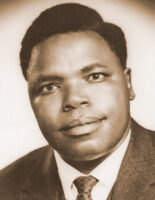


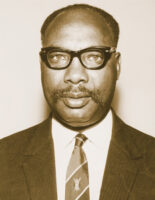
James Nyamweya – Founder of the Industrial Court and father of the labour movement

James Nyamweya was a politician and pioneer lawyer who served as MP for Nyaribari (before it was split into Nyaribari Chache and Nyaribari Masaba), as well as an influential Cabinet minister in different ministries in President Jomo Kenyatta’s government. Under President Daniel arap Moi, he headed the Elections and Boundaries Commission briefly ahead of the 1988 mlolongo (queue voting) elections. He was also a founding member of the Democratic Party (DP) along with Mwai Kibaki and was the Vice Chairman of the party at the time of his death in 1995.

Nyamweya was one of the modern patriarchs of his native Abagusii community; he was also present at the very beginning of the Kenya nation state, one of the founding members of the Kenya African National Union (KANU) party, and one of the first Kenyans to establish a legal practice in the country. He was one of the youngest MPs and Cabinet ministers in Kenyatta’s founding Cabinet.

The child of a Seventh Day Adventist preacher, Nyamweya was born on 27 December 1927 in Nyaribari Masaba. He attended exclusively Adventist schools, namely Nyanchwa SDA Primary School and Kamagambo Mission School, before joining Kisii Secondary School. At the time, many Adventists in South Nyanza were satisfied with elementary education as long as it guaranteed them jobs in teaching, which was the highest vocation.

But not Nyamweya, who acquired secondary school education and sat for his Cambridge School Certificate through correspondence. He joined King’s College in London in the 1950s, graduating with a bachelor’s degree in law and working briefly as a barrister in the English capital. It was in London that he met future key figures in Kenya’s first government such as Kibaki, who became a long-time family friend. Others were Munyua Waiyaki, John Marie Seroney and Matthew Guy Muli.

When he returned to Kenya, Nyamweya initially worked as a legal secretary for the colonial government. This gave him further access to future decision makers in the first government.

For his service to the country, Kenyatta awarded him the Elder of Golden Heart (EGH) and Member of the Burning Spear (MBS)

He soon resigned from the government and set up a legal practice in Kisumu District (now Kisumu County). Jaramogi Oginga Odinga, Kenya’s first Vice President, gave him an office in Kisumu Town. He became one of the learned Kenyans who joined the anti-colonial struggle, alongside Argwings Kodhek and Mareka Gecaga, the first African lawyers in the country. He worked with Odinga and later represented him in a sedition case. Reportedly, he even wrote a letter to the Queen of England to complain about the treatment of Africans by whites in Kenya. This agitation put him on the map and after independence, he started as a Parliamentary Secretary in the Ministry of Justice and Constitutional Affairs.

He then served as Assistant Minister in the Office of the President and was later promoted to Minister for Foreign Affairs, and then Minister of State in Charge of Provincial Administration. In the mid-1970s, he was the Minister for Power and Communication and later, the Minister for Labour.

As Foreign Affairs minister and a confidant of Kenyatta, he often represented the President outside the country. This close relationship with the President would prove fatal in his later political life; when Kenyatta died, he was sidelined during Moi’s tenure as President.

In the 1960s, with his friends Kibaki and Tom Mboya, he was part of the team that worked on Session Paper No. 10 that was the economic blueprint of the country in its formative days.

When Joseph Murumbi resigned suddenly as Vice President and Moi was appointed in his place, Nyamweya was appointed Leader of Government Business in Parliament, a position that many thought would undermine Moi, who was second in command in the country. Technically, he was Moi’s boss and this rivalry festered until Kenyatta died in 1978. In the 1979 elections, he lost his parliamentary seat to Andrew Omanga. He briefly headed the Elections and Boundaries Commission in 1987; the appointment was apparently an attempt to stop him from vying in the 1988 elections. Even so, Moi barred him and Simeon Nyachae from vying.

As Minister for Labour, Nyamweya was credited with founding the Industrial Court and is largely regarded as the father of the labour movement. He formulated the Employment Act of Kenya and made it possible for employers, employees and the government to work together.

As an Adventist, Nyamweya also negotiated for Saturday to be a day of rest to allow those who worshipped on Saturdays to rest and worship. Kenyatta used Nyamweya to persuade Adventist members of his community not to uproot their tea plantations because of their over-zealous interpretation of their church doctrines that forbid or discourage the use of stimulants.

With Nyamweya at the helm of the Labour docket, Kenya became a member of the International Labour Organization (ILO), helping Kenyan employers to adhere to ILO conventions. His efforts earned the country a nomination to serve as Chairman of the ILO governing body for two years.

He also played an advisory role in the building of Mwalimu Hotel in Kisii District, that is jointly owned by the Kenya National Union of Teachers (KNUT), Kisii Branch. He advised KNUT to use a salary check-off system to collect the money required for construction and ensured that the system got the right approvals by the authorities.

As an MP, he represented Nyaribari when it was a large constituency — later split into two — from 1963 to 1979. He is credited with starting and building many secondary schools in his consitituency. In the 1960s and 1970s, schools, especially secondary schools, were rare. The establishment of schools was especially critical in stopping the haemorrhaging of students to Bugema in Uganda in search of secondary school education. He also started a maternity hospital in Nyanturago.

As a nationalist, Nyamweya rarely meddled with community politics or aspired to be a kingpin. For his service to the country, Kenyatta awarded him Elder of the Order of the Golden Heart (EGH) and Moran of the Order of the Burning Spear (MBS).

Nyamweya remained out of the government in the 1980s and joined Kibaki, who was the Minister for Health in Moi’s Cabinet, to form DP, which helped Kibaki come third in the 1992 presidential elections. Nyamweya vied for the Nyaribari Masaba Constituency seat in 1992 and lost to Hezron Manduku. Although he petitioned the results in court, he lost the case.

He served as the National Vice Chairman of DP, actively campaigning in Kisii where the party won a considerable number of votes, and winning the first defection in Protus Momanyi (who was later wooed back to KANU). Kibaki got more votes in Kisii than other presidential aspirants.

Nyamweya’s son, George Nyamweya, served as Secretary General of the party and later founded the Party of National Unity that Kibaki used as a vehicle for the 2007 General Election. The younger Nyamweya was nominated to Parliament.


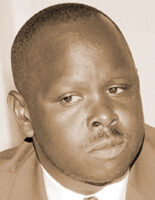
James Njagi Njiru – KANU strongman who had the President’s ear

Growing up, James Njagi Njiru’s acquaintance with the world outside of the place where he was born was minimal. But not even dropping out of school after getting his primary certificate could deter him from joining elective politics – he decided to vie for the Kirinyaga West parliamentary seat to become the constituency’s second MP in 1969.

After dropping out of school, Njiru, who was born in Kiaritha Village of Kirinyaga District (present-day Kirinyaga County), became a political activist in his home town and by independence, he had joined the youth wing of the ruling party, the Kenya African National Union (KANU). Owing to his organisational skills and leadership qualities, KANU youths in the district elected him as their leader. His work was to mobilise young people to attend political rallies, chiefs’ meetings and other gatherings the government organised for the community.

Being at the heart of the KANU campaigns in Kirinyaga for the country’s first General Election in 1963, Njiru, then in his early 20s, had carved a niche for himself as an effective youth mobiliser. He vied for the Kirinyaga West parliamentary seat but lost to Njagi Kibuga. However, by the next elections in 1969, his popularity was such that he easily trounced Kibuga.

Njiru’s entry into Parliament gave him his first formal job and he went on to make a name for himself in the country’s political arena. He eventually rose to become a member of President Daniel arap Moi’s inner circle and was appointed the Minister for National Guidance and Political Affairs.

In the early 1970s, Njiru was known for his role in defending the ruling party both in and out of Parliament

As the KANU Kirinyaga Branch Chairman, the MP wielded so much power that he often found himself at odds with people opposed to the party leadership. For instance, soon after his appointment as a minister, he was quick to proscribe Beyond Magazine, a publication sponsored by the National Council of Churches of Kenya (NCCK) and which exposed corruption in the government. Backed by other critics of the KANU regime, NCCK accused Njiru of blatantly abusing his powers by being domineering towards anyone perceived to be anti-Moi.

When Njiru died in June 2013, the Business Daily ran with the headline, “Death of a KANU stalwart and tin god.” Other catchphrases the press used to refer to the minister who had crossed swords with many politicians, the clergy and civil servants included “Kirinyaga KANU strongman” and “Kirinyaga KANU Supremo.”

In the early 1970s, Njiru was known for his role in defending the ruling party both in and out of Parliament. He established a formidable network of KANU youth wingers in Kirinyaga and, with his mastery of the political platform soon caught the attention of party bigwigs, including President Jomo Kenyatta, as he led delegations of party leaders from Kirinyaga to State House Nairobi.

By the time the 1974 General Election was approaching, the young MP had made a name as a leading political player – mainly for his role in party activities such as recruitment drives. He therefore faced no challenges defending his seat, which he again retained in 1979, the year Moi appointed him the Assistant Minister for Health.

Njiru was seen as a leader who was obsessed with power. For instance, he often sought to be recognised as the senior-most politician in Kirinyaga. This would explain why he frequently clashed with his counterpart from Kirinyaga East Constituency (since renamed Gichugu), Nahashon Njuno, during his early years in Parliament. Like Njiru, Njuno, who entered Parliament in 1974, was in the league of youthful MPs.

In his autobiography, Troubled But Not Destroyed, Rev Dr David Gitari, who was the Anglican Bishop of Mt Kenya East Diocese, claimed Njuno narrowly escaped death when his rival attempted to shoot him with a pistol in a bar in Kutus Town, Kirinyaga. The two MPs had disagreed over where the district headquarters should be – the Kirinyaga West MP had opposed his rival’s plans to relocate the headquarters to Kutus.

According to Gitari, Njiru had found his fellow MP having drinks with colleagues and shot at him, but the bullet missed its target. A frightened Njuno and friends ran for dear life in every direction. “The matter was investigated by police but to the best of my knowledge, no action was taken against Njiru,” wrote Gitari.

A more embarrassing incident occurred some time later, when the two leaders had a physical confrontation in Parliament. It was 13 October 1981 and both were assistant ministers – Njiru in health and Njuno in the Ministry of Transport and Communication. The two faced off and even exchanged blows before they were separated by MPs who heard the commotion in the lobby. Njiru ended up in hospital and managed to evoke sympathy from the public when a photograph of him recuperating appeared in the local dailies. He blamed Njuno for ambushing him.

He presented another pitiable picture when he rose to talk about the incident on the floor of the House and claimed that his opponent had, prior to the violent confrontation, planned to attack him with the aim of taking his life. He said he had alerted the police and the House about the threat, which was actualised while he was looking for a file in the members’ private room in Parliament. Njiru said his attacker had unexpectedly hit him with a chair.

“I felt someone hit me very hard with a chair and I fell down. I discovered that my attacker had a small knife and I got hold of his arm,” he was quoted saying by the Hansard. “Thank God that some security people came to my rescue although my attacker managed to run away.” He then disclosed that the attacker was Njuno.

Njuno, on the other hand, went about boasting to the press that Njiru was lucky he (Njuno) had used only his left jab during the fight. Had he used the right, he asserted, Njiru would have been a dead man. The incident elicited sharp reactions from all corners of the country and became the subject of public debate.

Moi, who was barely three years in power at the time, pardoned the two leaders and asked the Minister for Internal Security, G.G. Kariuki, to reconcile them. The President seemed to have a soft spot for Njiru, who had since the early 1970s remained one of his most trusted lieutenants. The pardon was ostensibly meant to help the two MPs save face but the electorate in Kirinyaga West would not forgive Njiru.

The political landscape in central Kenya had also begun to change after the Vice President, Mwai Kibaki, decided to position himself as the region’s kingpin – in the 1983 General Election, he had fielded his preferred parliamentary candidates in almost every constituency in Central Province, including Kirinyaga.

Kibaki had John Matere Keriri compete against Njiru, who found he was no match for the newcomer. Apart from being a member of Kibaki’s camp, Keriri also had a strong academic background. The Makerere University-trained economist who had held senior positions in the civil service was expected to bring change to Kirinyaga.

It turned out to be a double tragedy for Njiru who, besides losing his parliamentary seat, also lost Moi’s favour for being associated with Charles Njonjo, the Minister for Constitutional Affairs. Njonjo had been accused of trying to overthrow Moi’s government. Meanwhile, Njuno had retained his seat, having allied himself with Kibaki.

Two years after the elections, Moi started a campaign to consolidate himself in central Kenya where Kibaki seemed to have taken control. In Kirinyaga, the President rehabilitated Njiru by having him elected as KANU Chairman during the 1985 party elections. Back in action, Njiru was once again the man to watch in the district. With the government’s support, he reactivated his networks after kicking off his campaigns for the 1988 General Election. His plan was to recapture the seat he had lost to Keriri.

Meanwhile, a new voting system had been introduced in which KANU had to conduct nominations first to pick the candidates who would vie for the various constituencies. The party primaries were conducted by having voters queue behind the portrait or photograph of their preferred candidate.

This new system, commonly known as mlolongo (queue), received countrywide condemnation as it was viewed as a means of targeting Kibaki-allied politicians. One of its critics was the NCCK, which described it as a mockery of justice. But Njiru loudly defended it and used it to unseat Keriri. And he did not win alone – his camp comprising Godfrey Karekia Kariithi and Kathigi Kibugi carried the day in Kirinyaga. Kariithi, who was a Chief Secretary in both the Kenyatta and Moi regimes, trounced Njiru’s archrival, Njuno, in Gichugu while Kibugi won in Mwea Constituency.

It was time for the politician many described as a shrewd, audacious go-getter to show his might and win the confidence of the President and KANU once more. Moi knew Njiru’s ability to fight political battles and silence KANU critics, and it was time to reward him by creating a special ministry that came to be loathed even by those close to Moi – the Ministry of National Guidance and Political Affairs.

Together with his Assistant Minister, Shariff Nassir, he once summoned Josephat Karanja, who was by then the Vice President and Minister for Home Affairs and National Heritage, to answer to charges of behaving arrogantly and claiming to be acting as the Head of State whenever his boss was away. The storm had been ignited by another power broker who had denounced an unnamed top politician he alleged was using irregular tactics to set himself up as an overlord of Kiambu politics.

With everyone pointing fingers at the Vice President, the Minister for National Guidance and Political Affairs promised to investigate and subsequently summoned Karanja to confirm or deny the allegations. But Karanja never honoured the summons as the KANU National Chairman, Peter Oloo Aringo, intervened and dismissed the accusations as a Kiambu affair.

In October 1988, Njiru was re-elected the KANU Kirinyaga Branch Chairman, thereby reaffirming his power. Just the mention of his name was enough make top civil servants in the district tremble. Any government employees suspected to be close to ‘enemies’ of the ruling party found themselves in trouble. It was either dismissal or disciplinary action for such individuals.

Meanwhile, Gitari remained one of the strongest critics of the government and the queue voting system. Jointly with NCCK, the clergyman had decided to use every pulpit opportunity to remind people of the mess the elections had created. He wrote in his autobiography that Njiru tried to silence him by mobilising KANU youths to disrupt his church sermons.

“When KANU youth wingers attempted to grab microphones from me as I was preaching at St Thomas’s Cathedral, Kerugoya, in April 1989, I posed the question as to whether this was what was meant by National Guidance and Political Affairs,” he wrote.

Besides the prelate, Njiru had clashed with many other people, starting with his Cabinet colleagues. But to the people of Ndia Constituency and Kirinyaga District at large, he was viewed differently. Known for his generosity, he was a darling of the people.

Through his ministry, he helped several people in his constituency to get government jobs. Whenever his vehicle was spotted in the village, cheering crowds would rush to welcome their MP and demand that he address them. He was known to be cordial and warm hearted when dealing with ordinary people in Kirinyaga, but ruthless when fighting those who he perceived as political foes.

Nevertheless, Njiru was becoming a liability and the time came when Moi made the decision to abolish the Ministry of National Guidance and Political Affairs. This was in 1989, when Njiru’s wars with Gitari had reached a climax. The President had visited Meru District and after addressing a meeting at Kinoru Stadium, he decided to fly back to Nairobi in a military helicopter and allowed Njiru to use his official limousine to get back to Nairobi.

But to the people of Ndia Constituency and Kirinyaga District at large, he was viewed differently. Known for his generosity, he was a darling of the people

On the way, Njiru committed an unforgivable sin. When he got to Wang’uru Township in Mwea, he ordered the presidential motorcade to stop. Why? There was a cheering crowd that demanded to be addressed by the President, or so they thought. Njiru could not resist and decided to address the gathering from the top of the presidential limousine.

This incident angered the President and he summoned Njiru to his office in State House the next day as pressure from other leaders mounted for him to take action against his minister, who was now being accused of plotting to take over the government. Following the coup attempt of 1982 by soldiers from the Kenya Air Force, Moi did not tolerate any threats to his power – real or perceived. The ministry was abolished and the influential minister transferred to the Ministry of Culture and Social Services. Njiru had effectively fallen out of favour with the President.

But his troubles were not over. At home, he was slowly losing his grip as the KANU  point man and his camp began to crumble. Kariithi, the MP for Gichugu, had renounced him and joined forces with Njuno after the KANU Kirinyaga Branch, which Njiru chaired, accused him of making secret trips to Uganda to meet with diplomats. Such a move was in breach of trust given his position as an Assistant Minister and prompted the President to sack him.

It later turned out that national security personnel had confused another person with the same name for Kariithi. The rumours returned to haunt Njiru as they had originated from the party branch office. When leaders accused him of being behind them, he found it hard to exonerate himself.

There was also a raid on Gitari’s residence and Moi was forced to order an investigation. At the time, the KANU regime was under scrutiny from human rights organisations and the West for using coercion to silence its critics. Although the outcome of the investigation was not made public, it was said to have implicated the minister.

Njiru was also accused of sabotaging the Kerugoya-Baricho-Kagio road project because it would have ended up benefiting Keriri, his political enemy, as it cut through Kanyeki-ini Ward in Keriri’s home area. The government had allocated money for the project, which the contractor abandoned after laying the foundation. The contractor did not return the money and Njiru was accused of benefiting from it. He vehemently denied the accusations.

It wasn’t long before other political leaders began to disassociate themselves from him. Even Kibugi, the Mwea MP and an ally, left and joined the Kariithi-Njuno group. At one point, Moi went to Kirinyaga to reconcile the rival KANU factions. During his visit, he reinstated Kariithi to the government. And in what appeared to be an indirect warning, the President also cautioned politicians who told lies about others.

After Section 2A of the constitution (which at the time allowed for only one political party) was repealed in 1992, mass defections from KANU to the Opposition started in Kirinyaga, virtually paralysing the ruling party’s operations. It was Kariithi who led the walk-out to join the Forum for the Restoration of Democracy (FORD) led by Jaramogi Oginga Odinga.

Kibaki had also formed the Democratic Party, which was the preferred outfit in parts of Mt Kenya region, including Kirinyaga.

In a bid to salvage KANU, Moi had to call for fresh party elections from the grassroots, and Njiru won. However, he failed to capture the KANU ticket during party nominations and subsequently defected to FORD-Kenya, a faction of the original FORD.

This marked the end of his political career as attempts to make a comeback to mainstream politics also failed. But he did try to mend fences with people whose paths he had crossed and when he died, many eulogised him as a generous and kind-hearted leader.


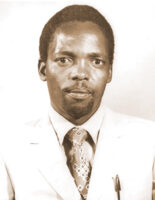
Jackson Kimeu Mulinge – A man made of steel

Jackson Kimeu Mulinge was one of the most respected personalities in the Ukambani region. Before joining politics he had a successful career as Kenya’s top soldier, rising from a private in the colonial army to the pinnacle of the country’s military service as the Chief of General Staff (today referred to as Chief of Defence Forces) under both President Jomo Kenyatta and President Daniel arap Moi.

Mulinge was not keen on joining the military; neither was he keen to join politics. Nevertheless, he succeeded in both careers. He became the first Kenyan to hold the post of Chief of General Staff in 1978 and the first Kenyan to become a four-star General in 1980.

He was persuaded to join elective politics by Moi through influential Machakos District KANU stalwart, Mulu Mutisya. Mulinge eventually successfully contested the Kathiani parliamentary seat and worked in the Cabinet as Minister for Lands and Urban Development and in the Ministry of Health.

While working as the army chief and later the chief of Kenya’s defence forces, Mulinge initiated numerous development projects in Kathiani Constituency.

He is credited with transforming the sleepy Kathiani market centre on the northern foothills of Iveti Hills into a modern, thriving town through the tarmacking of the 21-km road from Machakos Town. In addition, power transmission lines were installed on the same route and the Muoni Dam was built, a stone’s throw from his Mutungoni Farm house, to supply water to homes and institutions. Also developed was Kathiani Hospital, which is today a Level 4 facility, and the Kathiani Boys and Kathiani Girls boarding high schools that are today national schools, among many other projects.

Mulinge’s political journey started after his retirement from the military in 1986. His retirement coincided with Moi’s quest to consolidate his support in the whole of Ukambani by neutralising the influence of minister Paul Joseph Ngei.

Ngei was part of the ‘change the constitution’ group fronted by Njoroge Mungai, Kihika Kimani and Njenga Karume, among others, which had sought to bar Vice President Moi from automatically succeeding Kenyatta. Moreover, Ngei had expressed an interest in becoming President after Kenyatta.

Until his debut in politics, Mulinge enjoyed respect from the military. In addition, and owing to his development record, his image loomed large in Machakos. This did not sit very well with Moi who sought to neutralise all other centres of power in the country in order to exercise political authority directly through his chosen point men.

Moi sought to kill two birds with one stone during the 1988 elections — disengage Mulinge from the army by introducing him to politics and use him to neutralise Ngei’s influence in Ukambani.

Mulinge agreed to contest the Kangundo parliamentary seat. Ngei, a veteran politician, was the MP and had held the seat since independence. After an acrimonious and widely publicised campaign, Ngei won the seat by a landslide. After his defeat in the elections, Mulinge went into full-time business in real estate and farming/ranching.

“This was perhaps the worst political misadventure in Kenya’s electoral history,” commented a former top official of the Machakos branch of the ruling party, KANU in an interview. “It was not, however, surprising given that this was probably what the sponsors of the misadventure hoped to achieve,” he said.

His legacy is that of a man who tried his best to be incorruptible and helped countless people to get education and find employment

Mulinge was born in 1924 in Kyuluni Village, Kathiani, in Machakos District (now Machakos County). He attended the African Inland Mission (AIM) Mumbuni School near Machakos Town. He joined the military ‘accidentally’ after a colonial military officer recruiting servicemen in Machakos in September 1945 noticed a tall and well-built boy with goats in the town.

This is how he joined the King’s African Rifles. When World War II broke out, Mulinge was among the young Kenyan recruits who were shipped out to fight for the British in Ethiopia. After the war he remained in the army and rose through the ranks, becoming the first African officer in Kenya to be commissioned as a second lieutenant in 1961. During the celebrations on the eve of Kenya’s independence in 1963, he started off the evening as a major and emerged as a lieutenant colonel just after midnight. Mulinge took over the reins of the army in 1969 as a brigadier. In 1971, he took charge of the entire military following the removal of Major General Joseph Ndolo and was promoted to the rank of Major General. When Moi became President in 1978, he promoted Mulinge to Chief of General Staff.

For 44 years, Mulinge was as a loyal and dedicated military officer who had an exemplary career. He retired in July 1986. The Daily Nation quoted a retired army man who knew him for years as saying, “Mulinge was a decent, level-headed, good officer whose decisions were sometimes hamstrung by his lack of formal education that made him rely on other officers who didn’t always mean well.”

Soon after his retirement Mulinge was appointed Chairman of the Kenya Railways at a time when the government sought to revive the fledgling corporation to boost the transport sector. In 1988 he was appointed Chairman of the Kenya Meat Commission (KMC) in a move aimed at restoring the fortunes of the defunct commission. With his experience in the livestock and meat industry, it was hoped that he would revamp the commission operations and restore its lost glory. This proved to be a tall order. It was while he was at KMC that he was prevailed upon to contest the Kangundo parliamentary seat.

Mulinge decided to contest the Kathiani parliamentary seat in the 1992 General Election. The incumbent, Laban Maingi Kitele, who was in the Cabinet, knew he was in deep trouble.

“Kitele knew he had no chance against Mulinge due to his military career and unassailable development track record,” said Wilson ‘Muthungulule’ Muema, Kitele’s confidante and former nominated councillor in the Machakos Municipal Council, in an interview.

In the end, Mulinge won the seat by a landslide, not just because of his development record but also because he had maintained direct political links with Moi and the local party leadership led by Mutisya. The retired general was appointed Minister for Lands and Urban Development when Moi formed his government following the 1992 elections.

Mulinge was one of the few Kenyans at the time qualified to manage the Lands docket. He owned 90 parcels of land with ranches and housing estates in Machakos and Nairobi that were successfully managed under a ranching company.

He understood land ownership issues and therefore moved quickly to institute measures to speed up the two bottlenecks that bedevilled landowners in Kenya: Land adjudication to facilitate the issuance of long-delayed title deeds and the winding up of a plethora of land-buying companies that had been exploiting their members and corruptly selling off their livestock and pocketing proceeds from their agricultural produce.

And since Kenya had lost its meat export opportunity to the European Union to Botswana, Mulinge successfully secured alternative meat markets in the Middle East, notably Saudi Arabia, the United Arab Emirates and other Gulf nations, where KMC did thriving business.

But in a June 1995 Cabinet reshuffle midway through his term, Mulinge was transferred to the Ministry of Health, where he often appeared to be at sea, especially when he had to answer health-related questions from MPs in the National Assembly. Nevertheless, in the short period he presided over the ministry, Mulinge oversaw the expansion of health services through construction of additional health centres across the country, immunisation programmes and distribution of drugs through a kit system.

As a Cabinet minister, just as during his military service, Mulinge remained close to Moi, who visited Kathiani numerous times to preside over fundraisers for various development projects, including the construction of Kathiani Hospital.

In addition to his military decorations, Mulinge was awarded national honours, according to documented records, that included Elder of the Golden Heart (EGH) and Moran of the Burning Spear (MBS).

Mulinge, a staunch KANU supporter, become a victim of pluralism politics when the 1997 General Election was called. A proliferation of political parties had sprung up across the country, some of which were created along ethnic lines. These new parties were more popular than KANU. Thus, when the youthful Peter Kaindi presented himself as a Kathiani parliamentary candidate under the Social Democratic Party (SDP) party led by Johnstone Makau and Charity Ngilu, Mulinge had no chance. He was defeated by the young man. Mulinge had served only one term as MP.

He returned to his Kathiani home where he concentrated yet again on his vast business empire until his health failed and he was confined to a wheelchair. He died on 16 July 2014 aged 90 years.

Moi described Mulinge’s death as a big loss to the country. “The death of Mulinge has robbed Kenyans of one of the most industrious sons who was always ready to take responsibility for his actions,” said Moi in his message of condolence.

He revealed that Mulinge’s bravery as a soldier caught his eye, which led to his speedy promotion to the rank of general. “After realising that Mulinge was a man made of steel, I picked him and in recognition of his bravery and hard work, promoted him to the rank of full general,” he said.

Eulogising him, President Uhuru Kenyatta said Mulinge was a “great soldier who led a life of honour, service and patriotism”. He added that “… for all his achievements, everyone who knew and worked with General Mulinge respected him as a humble, kind and courageous man, devoted to his family, community and nation”.

Quite apart from Mulinge’s sterling military accomplishments and service as a Cabinet minister, his legacy is that of a man who tried his best to be incorruptible and who helped countless people to get education and find employment. Yet, despite all his achievements, he remained a humble man with a local touch to the end.

Mulinge will always be remembered for his military service and development record, particularly in Kathiani and in the greater Ukambani.

Gilbert Kabeere M’Mbijjewe – His lone ranger style put him at odds with colleagues

Little is known about Gilbert Kabeere M’Mbijjewe although many may remember his trademark pipe. He was among the few Kenyan politicians whose appointment to the Cabinet was because of his impressive career as a civil servant and as a corporate executive.

As a minister in President Daniel arap Moi’s administration, M’Mbijjewe had a quiet political career. He was among the renowned leaders in his home district of Meru, but low key in the national arena. His educational background was unmatched. He had a bachelor’s degree in agriculture from the University of Reading in the United Kingdom.

M’Mbijjewe returned to Kenya from university and joined the colonial civil service. His return coincided with the land adjudication process to issue individual title deeds to Kenyans. He therefore got a position as a land consolidation officer in the Ministry of Agriculture and later became a planning officer in the same ministry before resigning to join the private sector.

He worked with Twiga Chemical Industries in Nairobi, which was a subsidiary of the Imperial Chemical Industries of Britain. He joined the company as a senior executive officer. At the time, not many Africans held such senior positions in multinational corporations.

However, M’Mbijjewe left his well-paying job to join politics in 1969. He lost the Meru Central (renamed South Imenti in 1986) seat to the incumbent Member of Parliament, Elias Marete. He won the seat in the subsequent 1974 General Election.

Besides having previous experience in government and the corporate world, M’Mbijjewe was the most senior politician among his colleagues after Jackson Harvester Angaine lost his seat. Angaine, the first MP from Meru to be appointed to the Cabinet, lost to Nteere Mbogori in Meru North-West Constituency.

M’Mbijjewe was appointed Minister for Tourism and  later held the same position in the Agriculture, Energy and Health ministries. He had previously served as an assistant minister under President Jomo Kenyatta.

Born in 1926 in Mikumbune Location in Meru District (now Meru County), M’Mbijjewe was among the lucky few who managed to access education as his father, M’Mwirichia Mabura, a senior chief in the early years of colonial rule, was among a small number of African leaders who embraced education. M’Mbijjewe went to Alliance High School before joining Makerere University College in Uganda for a Diploma in Agriculture. He subsequently got an opportunity to advance his education at Aberdeen College, now University of Aberdeen, in Scotland. After he graduated, he enrolled at the University of Reading for a degree in agriculture. He returned home in 1950.

His experience as a farmer and academic credentials in agriculture made the appointment to the Ministry of Agriculture a good fit. During his tenure at the ministry, proposals to establish irrigation projects in some dry parts of the country through the National Irrigation Board were effected. One such project was the Mitunguu Irrigation Scheme at the boundary of present-day Meru and Tharaka Nithi counties which was key in addressing food security in the area.

M’Mbijjewe is also credited with initiating the Meru College of Technology, now Meru University of Science and Technology, and for initiating water projects.

He was re-elected in 1983 and appointed Minister for Health. He is credited with expanding health facilities in the country. He was later transferred in the same capacity to the Ministry of Energy.

Unlike other politicians, M’Mbijjewe appeared to be a loner. He did not even hold a grassroots position within his political party, KANU. This somewhat affected his relationship with other Meru MPs, who referred to him as “mbogo ya kirithya” (lone buffalo) for isolating himself from their caucus. He failed in his attempt to become the KANU chairman in Meru, a position held by Angaine.

M’Mbijjewe’s name was adversely mentioned in the Miller Commission of Inquiry set up by President Moi to investigate the conduct of the Minister for Constitutional Affairs, Charles Njonjo. This led to Bahati MP Fred Omido’s demand in Parliament that the minister resign from his position. The President defended M’Mbijjewe. The matter also prompted Angaine to convene the Meru KANU branch Executive Committee to suspend the minister.

This marked a period when the minister faced several obstacles. In Parliament he was accused of receiving a bribe during his time as the Minister for Health. The accusation proved false. He also had pending lawsuits and other accusations, including claims of some dealings with the Meru County Council that had MPs calling for him to resign.

M’Mbijjewe was eventually dismissed from his Cabinet post and the President appointed Angaine as Minister for State in the Office of the President. The position had been held by Peter Nyakiamo, who was transferred to the Ministry of Health to replace M’Mbijjewe.

During the 1988 General Election, he won the newly-created South Imenti parliamentary seat and was appointed Assistant Minister for Research, Science and Technology. He lost the seat in 1992 to the Forum for the Restoration of Democracy-Kenya candidate, Kiraitu Murungi.

M’Mbijjewe retired to his rural home and led a quiet life until his death in November 2017.


Isaac Omolo Okero – The hairy bearded one

For a decade from 1969, Isaac Omolo Okero’s name was synonymous with national politics as a powerful government official and National Assembly representative.

Omolo Okero, as he was more commonly known, proved to be a smart and perceptive politician who knew how to manoeuvre his way around the political labyrinth. But his principled leadership and independent-mindedness did not go down well with some of his Cabinet colleagues and his fellow leaders in the ruling KANU party, which he headed from 1978 to 1979 as National Chairman.

Popularly known as ‘Rayier’ (hairy bearded one), Okero had a relatively successful political career between 1969 and 1979 as a Cabinet minister and as a Member of Parliament for Gem Constituency in Nyanza Province. He had worked in various ministries under President Jomo Kenyatta (1969-1978) and briefly under President Daniel arap Moi, who took over following Kenyatta’s death. Okero was appointed to head the Ministry of Power and Communications for about a year.

Throughout his 10 years as an MP he was on the front bench in Parliament as Minister for Health (1969-1973), Minister for Power and Communications (1973-1977) and in the same docket for his final term (1978-1979) under the Moi administration.

Asked to share his experience under the Moi regime, the 89-year-old Okero was cautious, stating that he did not have enough time to know the President well. He attributed this to his brief tenure in the transition government before the next General Election was called. He said giving an opinion “would be guesswork” since at the time the President was still settling down with the ministers appointed by his predecessor. Some of them had apparently dismissed Moi before he took over, never imagining that he would ever take over as Head of State.

Like most local politicians, Rayier is convinced beyond any shadow of doubt that he was rigged out of the 1979 elections by the powers that be, because of his principled leadership and distaste for sycophancy after surviving the opposition wave in 1974.

“When I got into politics and was appointed to the Cabinet, I learnt very quickly that politicians do not like one who has an independent mind. My predecessor in Gem, C.M.G. Argwings Kodhek, was also a principled person and Gem voters did not like representatives who could be manipulated.”

Even after being out in the political cold, Okero’s principles, loyalty to Moi and impeccable legal and managerial track record paid dividends, leading to his appointment as Chairman of the Board of Kenya Airways for almost a decade, from 1996 to 2005, during its most turbulent years and successful privatisation programme. This was when the national airline had teamed up with the Royal Dutch Airlines (KLM) as a privatised entity and finally started to make profits. His legacy at KQ is that he was part of the team that midwifed the process, turning the loss-making carrier into a leading one in the region and across the African continent.

In a recent interview the former minister, whose hobbies include flying and playing golf, preferred not to talk about the legacy he left as Gem MP.

“Let others talk about my legacy. I don’t talk about it because there is a tendency to praise oneself. That is natural. My approach is different. A legacy is history and it is for those who come after you to see and talk about it lest some say what you are saying is a lie.”

Okero recalled how he was appointed the KANU National Chairman in 1978 during party national elections together with acting President Moi and Vice President Mwai Kibaki, who were the party President and Vice President respectively. The three received the same number of votes, thanks to the queue-voting electoral system adopted by the thousands of delegates from the five provinces in the country at the time.

“During the visit to Kabarak (Moi’s upcountry home), I insisted that I retain my post as Chairman. We discussed it with Moi, and between Assistant Minister David Okiki Amayo and I, agreed that we would go for the slot and nothing else on the basis that we, as a community, had a big stake in the leadership of the country,” he said.

Little did he know that there was brewing opposition to his leadership by powerful forces in the KANU hierarchy at that crucial time in Kenya’s history. The deal, it later transpired, must have been sealed long before D-Day. When the party elections finally came up, an expectant Okero and his supporters assembled at the Kenyatta International Conference Centre (KICC) for the KANU National Delegates’ Conference. They were, however, shocked to learn that delegates from Nyanza Province had met behind his back the previous night and decided to vote for Amayo.

The shock and trauma Okero suffered that day must have been severe, considering the announcement came only a few minutes after he and Mombasa KANU Branch Chairman, Shariff Nassir, had been loudly cheered by what appeared to be a majority of delegates as the duo walked down the aisle to propose and second the election of Moi as party President.

But his principles would not allow him to be a sore loser. After the initial shock he stood up, strode confidently to the dais and took the microphone to make his feelings known.

“I am aware that a night meeting was held to support Okiki Amayo. Since I also come from Nyanza Province, I cannot oppose their decision. I wish Okiki the best,” he declared before returning to his seat.

When the next KANU elections were called, Okero was no longer a minister, as he had lost his Gem seat in the 1979 polls to Aggrey Otieno Ambala.

Okero joined politics on his 40th birthday, following in the footsteps of other key figures who had represented Gem Constituency like Kodhek, who had served as the Minister for Foreign Affairs Minister before his mysterious death in a road accident in Nairobi in February 1969.

Wasonga Sijeyo held the seat briefly after Kodhek before he was arrested and detained for being a member of the opposition Kenya People’s Union (KPU), making way for Okero’s entry into politics in 1969.

The former minister was born in Ulumbi Village in Gem near the home of the famous no-nonsense Chief Odera Kang’o, who had ensured that education was encouraged in Gem and that every able child was in school by all means possible. “At that time, education was crucial and you were nothing without it,” said Okero.

An alumnus of Ambira and Maseno schools in Siaya and Kisumu districts respectively, Okero proceeded to Alliance High School in Kiambu District then to Makerere University in Uganda. His academic progression was interrupted in 1952 when the hot-headed undergraduate led a students’ strike, leading to his expulsion. In 1953, Okero got a scholarship from the Indian High Commission to study law at the University of Bombay from where he graduated with honours in 1956. Later that year, he landed a job as Associate Secretary to the International Students Organisation (ISO) in Leiden, The Netherlands, where he worked until 1959.

Driven by a thirst for achievement in other spheres of life, the energetic Okero tried his hand at music, teaming up with compatriot Polycarp Akoko in Bombay to record four political songs in praise of Kenyan nationalists at the peak of the Mau Mau freedom struggle. The colonial government branded the two as agitators and banned the songs from being played on air in Kenya.

But that did not deter Rayier from chasing his dream of becoming a qualified lawyer. In February 1959, he left Holland for London and joined the prestigious Middle Temple, one of the Four Inns of Court, and after qualifying as a barrister, he was appointed by the colonial government to join the Attorney General’s Office in Nairobi as a State Counsel. This was in 1962, just before Kenya’s independence.

That this was a good omen for the fast-rising barrister from Ulumbi Village, Gem Location, was obvious to all. From then on, Okero’s star continued to rise in the civil service when he got a job as Deputy Public Prosecutor (1963-1965) and thereafter Commissioner General of Customs and Excise (1965-1969) headquartered in Mombasa.

But his passion was legal practice. It thus came as no surprise when, in 1969, he opened a private law firm in Kisumu Town with his friend, James Miruka Owuor, who later became the MP for Nyando.

His plans were, however, rudely interrupted by a series of dramatic events in the country that year that left his composure and confidence, alongside the hopes and aspirations of the entire Luo community and the Gem constituents, in tatters. These were the fatal road accident of Gem MP Kodhek, the assassination of Tom Mboya, who was the Minister for Economic Planning, the banning of the KPU party and the arrest and detention of its leaders and members.

After the death of Kodhek, the first African lawyer to practise in Kenya and one who was bold enough to represent Mau Mau suspects in court, Gem constituents wanted another lawyer to represent them in the august House.

“I yielded to public pressure and decided to plunge into politics in 1969,” Okero recalled, saying that this historic decision changed his life forever. By-elections were called in all the constituencies whose MPs had been detained, among them Gem. Okero ran for the seat and emerged victorious.

President Kenyatta then appointed him Minister for Health and before long, his star was rising again. In the 1973 Cabinet reshuffle, he was moved to the huge Power and Communication docket. Among the many government parastatals under this ministry were the lucrative Kenya Posts and Telecommunications and the Kenya Railways and Harbours Corporations, which held a lot of clout in the country’s economy.

The political layout in Luoland was overhauled significantly when political detainees, who included Odinga and his comrades, Sijeyo and Luke Obok, former MP for Alego Usonga, were released. In the 1974 General Election, Okero was the only Luo Cabinet minister to survive the electoral purge; the victim was William Odongo Omamo in neighbouring Bondo Constituency.

In 1977, Okero was moved in a surprise reshuffle to head the Ministry of Information and Broadcasting for a year. After Kenyatta died and Moi took over the following year, Okero was redeployed to the Ministry of Power and Communication. His return to this ministry was well received by observers, given his reputation as a results-oriented manager wherever he worked; this accolade remained intact up to the conclusion of his second term as an MP.

In the 1979 polls, the first after Kenyatta’s death, Okero lost to newcomer Ambala in a contest he still strongly believes was rigged by the new administration. He declined to elaborate. Looking back, the former minister maintained that he admired Kenyatta for not rigging polls in favour of any candidate during his 15-year tenure as Head of State and as KANU Chairman.

One of Okero’s legacies is the establishment of Siaya District Hospital and the realisation of rural electrification in Yala and Siaya District as a whole. He recalled pulling his boss aside after a Cabinet meeting at State House Nairobi and requesting him to authorise the hospital project. President Kenyatta retorted, “Aren’t you the Minister for Health?” The matter ended there and the project kicked off shortly thereafter.

Okero is married to Jane Margaret Anyango and they have six children; four sons and two daughters.


Isaac Kiprono Ruto – A rebel with or without a cause

Among the youthful and energetic politicians tasked with warding off opposition to the dominant KANU party in the Rift Valley region was Isaac Kiprono Ruto, who was Minister for Vocational Training towards the end of President Daniel arap Moi’s tenure in 2002. He was 34 years old when he was appointed to the Cabinet.

Born in Uasin Gishu District, (now Uasin Gishu County), his family moved to Chepalungu in the former Bomet District in the 1980s. Ruto was elected Chepalungu Member of Parliament in 1997 to become one of Moi’s point men in South Rift Valley. Between1998 and 1999, he was the Assistant Minister for Education, and later moved to the Ministry of Agriculture in the same capacity until 2001 when he became a minister.

After the Bomet MP, Kipkalya Kones, was relieved of his duties for associating with the Opposition, Ruto was promoted to Minister for Vocational Training in 2002. As a politician and by his appointment, he was expected to ensure that the Opposition and the Kones influence came to nothing in the region that was traditionally a KANU stronghold. KANU was concerned that Kones was moving the Kipsigis ethnic community’s loyalty to the Opposition, which was not in Moi’s interests. Kones was a very influential person in the region and had teamed up with the James Orengo-led Muungano Wa Mageuzi and later with Simeon Nyachae’s Forum for the Restoration of Democracy (FORD)-People party, where he became his running mate in the 2002 General Election.

Moi also wanted Ruto to campaign for Uhuru Kenyatta, whom he saw as his successor for the presidency.

“When Kones left KANU for the Opposition after differing with Moi over land allocations in the Mau Forest among other things, Moi wanted Ruto to ward off any opposition in Bomet, which was Kones’s backyard,” said Patrick N’gerechi, once the Mayor of Bomet. According to him, Moi feared that KANU would lose support in Bomet and in Kericho because Kones was known for his mobilisation skills.

“Moi banked on Ruto’s ability to take his opponents head on and because he was youthful, he would cut the Kones influence and draw huge support for KANU and its candidate, Uhuru Kenyatta,” said Ng’erechi.

In his new role as a Kipsigis political fixer, Ruto spent most of his time campaigning for KANU and Uhuru, and failed to concentrate on his Chepalungu seat, which led to his defeat at the hands of a man he had beaten in 1997, John Koech.

“Moi wanted an aggressive person to check on opposition in Bomet and beyond. Koech was not thought to be equal to the task and Moi condequently sought his replacement,” said Ng’erechi.

Surprisingly, Ruto became an MP and the common perception was that Koech, a grassroots mobiliser, was rigged out.

Known for speaking his mind, Ruto studied political science at the University of Nairobi (UoN) but was once expelled for student activism. In 1982, when a number of soldiers from the Kenya Air Force attempted to overthrow Moi’s government, he was detained along with other UoN students for supporting the abortive coup d’état. After several interventions by politicians and parents, Moi pardoned the students and they were released to continue with their education.

Before the 2002 General Election, Ruto differed sharply with Moi shortly before the end of a two-day State tour of South Africa over the electability of Kenyatta and Kipsigis politics in general. The President abandoned him at a South African airport and Ruto had to return to Nairobi on a commercial airline. When asked why he was left behind, Ruto, who later patched up his differences with Moi, said it was a small difference not worth discussing with the media.

Those who know the former minister say he had a knack for differing with even those close to him.

“He is somebody you cannot easily convince to change his mind once he has formed an opinion on a matter,” said Chepkebit Mibei, a former Kericho KANU Branch chairman.

Mibei noted that Ruto would differ with Moi, parliamentarians and even his Cabinet colleagues over issues he held close to his heart. His saving grace was that he did not hold grudges. Mibei felt that Moi tasked Ruto to keep opposition politics out of Kipsigis because there was nobody else to do it. “His trusted lieutenants like Isaac Salat and Jonathan Ng’eno had recently passed on. Others were considered lightweight,” he said.

After staying five years out of Parliament and out of any positions of influence, Ruto beat Koech in the 2007 General Election and held the Chepalungu seat until 2013, when he became Governor of Bomet County.

Between 2008 and 2013, he was a member of the parliamentary Administration of Justice and Legal Affairs Committee and the Select Committee on Constitutional Review, supporting the formulation of the draft Constitution of Kenya, which included strong provisions for a devolved system of governance that was approved by 67 per cent of Kenyans in the August 2010 referendum.


Jackson Harvester Angaine – The king without a kingdom

In 1976, Jackson Angaine became the most senior Cabinet minister to join the campaign started by the Gikuyu, Embu and Meru Association (GEMA) community leaders seeking to change the constitution. The intention was to bar the then Vice President, Daniel arap Moi, from automatically assuming the presidency in the event of the death of President Jomo Kenyatta.

Angaine supported the campaign, reportedly saying that “since law is made by man, it can be amended by man, if need be”. Following the initial meeting hosted by the Nakuru North Member of Parliament, Kihika Kimani, in Nakuru District, Angaine hosted the campaign proponents in Meru the following week.

Two years later, Kenyatta died and Moi was sworn in as President. Angaine, like other politicians who had joined the ‘change the constitution’ bandwagon, found himself isolated in the new government. It was therefore not surprising that in the 1979 General Election, he lost his parliamentary seat to Nteere Mbogori. This significantly changed Meru politics, which Angaine had dominated since independence. A new crop of politicians, led by Tigania Constituency’s Matthew Adams Karauri and Central Imenti’s Joseph Kirugi M’Mukindia, emerged.

Things got worse for Angaine. Squatters invaded his 4,000-acre farm in Timau, a clear signal that he had fallen out of favour. But those who had written him off had celebrated too soon. Angaine found his footing again in the 1983 snap election that followed the dismissal of Charles Njonjo, the Minister for Constitutional Affairs following accusations that he was a traitor. Angaine won comfortably; two years later he was appointed Minister of State in the Office of the President.

At the age of 87, Angaine was re-elected during the infamous mlolongo elections of 1988 after which he asked his constituents to declare him MP for life

The election gave Moi an opportunity to overhaul the Kenyatta system he had inherited and install his own personnel. Among the senior Cabinet ministers who were dropped by Moi was ‘powerful’ Minister of State, G.G. Kariuki, who was replaced by Kabeere M’Mbijjewe, an MP from Meru District (since renamed Meru County). Angaine’s spectacular comeback made him proclaim himself the “King of the Meru”, but life in Parliament was not easy as a backbencher fighting to keep his head up in a sea of younger politicians. In Meru, young politicians sought to oust him as the KANU kingpin in the district. He got lucky when M’Mbijje we was dismissed from his Cabinet position by the President in 1985. Angaine was selected to fill his shoes as Minister of State. At the age of 87, he was re-elected during the infamous mlolongo (queue-voting) elections of 1988 after which he asked his constituents to declare him MP for life.

“Let my opponents know I am as fit as a fiddle in the brain and capable to lead,” he told his constituents. The campaign was supported by the mayor of Meru and some councillors, but by then the political landscape was also changing as the demand for political pluralism increased.

After Moi conceded to local and international pressure and agreed to the repeal of Section 2A of the constitution to allow for the return of pluralism, former Vice President Mwai Kibaki decamped from KANU on Christmas Day 1991 and formed the Democratic Party (DP). In the subsequent 1992 elections, Kibaki’s DP routed KANU in the Meru region where KANU won only one seat — Imenti Central.

Angaine lost the Imenti North seat to Makerere-trained mathematician, David Mwiraria. His political journey ended when he lost the Meru District KANU chairmanship to Silas Muriuki. The loss of the chairmanship, which he had held since independence, meant that his clout in Meru had come to an end. Attempts to groom his son, Mutuma, to take over his leadership mantle did not go far.

Angaine attributed his 1992 loss to the multiparty euphoria and promised that, just like in 1983, he would spring back. However, owing to his advanced age and ill health, he retired to his farm in Timau. He died on 23 February 1999. Angaine will be remembered as the minister who had the trickiest docket in independent Kenya: Settling millions of landless Kenyans in the former White Highlands. He also played a leading role in creating an African propertied class, resulting in gross inequities in property ownership, especially land. Angaine headed the Ministry of Lands and Settlement between 1964 and 1979, when he first lost his parliamentary seat.

Born in 1900 in Gautuku Village, Ntima Location, Meru, Angaine joined the United Methodist Missionary Society School in Kaaga for primary education in 1913. He later went to Alliance High School. The son of Paramount Chief Angaine M’Itiria, Angaine distinguished himself at Alliance as a boxer. He did the London Matriculation course but did not join university, opting instead for a job as an accountant.

His political career started when he joined the Kenya African Union (KAU) party and became the Meru District Chairman. The party did not have a national figure to galvanise the populace. The return of Kenyatta from England offered KAU the political mobilisation required. The result was that KAU supporters were educated on their political and social rights.

Although KAU eventually became a national party, it was split between radicals and moderates — the radicals were against the moderates’ call for negotiations. This radical stance gave rise to the Mau Mau movement. Meru, located as it was adjacent to Mt Kenya Forest, became the base of the organisation.

An assassination carried out by the Mau Mau on 9 October 1952 ignited a call among the White settlers for decisive action against the KAU leadership, whom they argued was behind the attacks on European farms. On 20 October 1952, a State of Emergency was declared and the colonial government launched Operation Jock Stock targeting KAU leaders and the GEMA communities.

Angaine was detained in Kajiado, Mackinnon Road, Hola and Manda Island, the last being a hardship area for nationalist prisoners who were thought to be the ringleaders of Mau Mau.

The clamour for independence persisted — with James Gichuru, Jaramogi Oginga Odinga and Tom Mboya pushing for liberation — even after the Mau Mau blockade was broken. Angaine was released from prison and joined other former KAU leaders at KANU’s formation in March 1960 in Kiambu.

He became the KAU party leader in Meru as Kenyans went to the first multiparty elections in 1961 between KANU and its rival, the Kenya African Democratic Union (KADU). KANU won the election and Angaine won one of the Meru seats.

He was appointed the Parliamentary Secretary (Assistant Minister) in the Ministry of Tourism, Forests and Wildlife and was later transferred to the Ministry of Education. He was re-elected in 1963 and appointed Minister for Lands and Settlement. It was a tough position that placed Angaine between economic realities and political wishes.

He also had to deal with demands from a restless group of freedom fighters that demanded quick settlement and redistribution of land — an almost impossible task. Yet overall, Angaine became one of the most influential ministers when it came to land redistribution.


Jackson Itirithia Kalweo – A crowd-pleasing orator

In 1992, President Daniel arap Moi made an announcement at a KANU party rally in Mau Stadium in Meru District: Jackson Itirithia Kalweo was going to be one of his point men in the region. The President singled him out from a group of several officials in the ruling party. Why Kalweo? The question in the minds of many was valid, since he had been out in the political cold for nearly a decade.

Kalweo had been expelled from the party in 1984, when his name featured in the controversial Njonjo Commission of Inquiry that Moi had set up the previous year to investigate the powerful KANU minister, Charles Njonjo. The Head of State had branded Njonjo a traitor, accusing him of being groomed by foreign powers to overthrow him.

Prior to his expulsion, Kalweo had been a close political ally of the President, who had appointed him Assistant Minister for Culture and Social Services following the 1979 General Election. Kalweo was serving his second term in Parliament. But after his name was linked with the Njonjo affair, he fell out with Moi, who first sacked him from his government position before expelling him from the ruling party.

In the General Election of 1983, Kalweo lost his Nyambene North parliamentary seat to Joseph Muturia. He had ousted Muturia in the 1974 polls after failing to unseat him in 1969 when he made his début in elective politics.

It was widely expected that Kalweo would be pardoned in the run-up to the 1988 elections when Moi was extending an olive branch to politicians he had fallen out with over the Njonjo affair. This, however, did not happen to Kalweo. Consequently he did not participate in that election and it was won by a newcomer, Joseph Malebe.

The beleaguered politician however successfully applied for readmission to the party after the General Election. He went ahead to vie for the party chairmanship in Igembe Constituency of Nyambene Division, which he won. So, in the lead-up to the first multiparty elections of 1992, Kalweo was back in the political fold and was among the few politicians in the Meru region donning KANU colours.

Kalweo knew the message, the language and the tone to use in political rallies to electrify crowds

A keen political observer, Moi must have realised that Kalweo was still in the good books of the electorate. During subsequent meetings KANU conducted in Meru North, many are the times when voters carried the veteran politician shoulder high, prompting the President to provide him with a Land Rover vehicle for his campaigns and other logistics. It was therefore not such a big surprise when the Presidentextended favours to him at a meeting of the ruling party that had been organised by the Nyambene sub-branch officials.

The party officials had met as part of their attempts to counter-balance the growing popularity of the Democratic Party (DP). Campaigns for the first multiparty elections were gaining momentum and the President, who had lost ground in Mt Kenya region following stiff opposition from DP and FORD-Asili, had to deploy a new strategy to scuttle his rivals in their strongholds. DP, led by former Vice President Mwai Kibaki, had made inroads into the larger Meru District (since renamed Meru County), winning the support of most of the political giants and the elite in the vote-rich region. However, this was the same region the President was banking on not only to register victory, but also to capture at least one or two parliamentary seats for the ruling party.

In his efforts to consolidate his votes in Opposition strongholds like Meru, Moi had suffered huge setbacks as leaders he trusted would defect upon realising that KANU was hard to sell. Voters preferred Kibaki’s DP or FORD-Asili, whose presidential candidate was Kenneth Matiba. In Meru North Sub-county (formerly Nyambene Division), one of Moi’s key strategists was Erastus Mbaabu. The President had information that the man was in the process of defecting to DP. He had appointed him Chairman of the National Cereals and Produce Board (NCPB) following his retirement as a District Commissioner. Aware of Mbaabu’s intended move, Moi was careful in his choice of team leader to carry the KANU flag. This led him to choose Kalweo, who had shown unwavering support in his bid for re-election as President.

In response to Kalweo’s appointment, Mbaabu renounced KANU and joined DP, which sponsored him to vie in Igembe Constituency (known as Nyambene North before the 1988 elections) against Kalweo. There was no other threat to the former Culture and Social Services Assistant Minister in KANU since Muturia, who had ousted him in 1983, had moved to neighbouring Ntonyiri in 1988, becoming the first MP for the new constituency carved out of Igembe.

Joseph Malebe, the incumbent in Igembe, had failed to live up to voters’ expectations during his five-year term. A geologist who had secured contracts to drill boreholes across East African countries, Malebe had won the hearts of the electorate with his academic credentials. Unlike Kalweo who did not have much in the way of an academic background, Malebe had a Master’s degree in Geology. But he could not match his rival’s mastery of the political game; Kalweo knew the message, the language and the tone to use in political rallies to electrify crowds.

Kalweo knew the message, the language and the tone to use in political rallies to electrify crowds

After clinching the KANU ticket, Kalweo easily beat Mbaabu. He also surprised the DP brigade in Meru after Moi, KANU’s presidential candidate, came close to DP’s Kibaki in the polls, garnering 8,127 votes against the latter’s 8,870.

During this election, Moi’s ministers in Meru District, Kabeere M’Mbijjewe (South Imenti) and Jackson Angaine (North Imenti) did not survive the Opposition wave. The former lost to Kiraitu Murungi of FORD-Kenya while the latter was replaced by David Mwiraria of DP. In Tigania, another staunch supporter of KANU, Mathews Adams Karauri, was dethroned by DP’s Benjamin Ndubai.

KANU did, however, manage to capture two other seats. Kirugi Laiboni M’Mukindia, the Minister for Energy, recaptured his Imenti Central seat and in Tharaka Constituency, Francis Kaguima also retained his seat. To neutralise the Opposition in Mt Kenya, Moi needed a strong KANU team from the region. And so it was Kalweo’s turn to fly the KANU flag as the first minister from Meru North. He was appointed Minister for Culture and Social Services but was later moved to the Office of the President as Minister of State in charge of Internal Security and Provincial Administration.

Had Kalweo decided to seek election on a DP ticket or through any other opposition party, many believe he would still have won as he was the favourite candidate for Igembe Constituency in the 1992 elections.

Together with Moi, Kalweo was credited with transforming Igembe Division through various projects that had been initiated in the region through Plan International (PI), a development and humanitarian non-government organisation. There was, for instance, the Kawiru Water Project that provided water from Nyambene Hills to the lower areas of Igembe and Ntonyiri. Besides this project PI, which became established in Meru North in the early 1980s when Kalweo was an assistant minister, had also built several boreholes for the community.

The President was known for his partiality towards the development of marginalised areas and the presence of PI in Igembe was viewed as being courtesy of his administration. It also created a favourable political ground for him and for KANU.

The NGO transformed the entire Igembe Division. The area had remained one of the most backward in the country. Despite the lucrative miraa trade, Igembe had very poor infrastructure. Most primary schools were in a pathetic state. Classrooms were built of mud walls and children would drop out of school to work on miraa farms. The situation started to change with the arrival of PI. Several cattle dips as well as markets were built by the NGO, which also employed several locals. Livelihoods were changed in the process and the organisation became Kalweo’s main campaign tool in the 1992 elections as he kept reminding his constituents: “Nindabuunere nchang’i muthuumu ni keenda bunyua mauta (I killed the giraffe for you to feed on).”

Born in Igembe in 1937, Kalweo attended Maua Primary School for his early education between 1951 and 1956 before proceeding to Katheene Intermediate School in 1957. He later joined Meru Teacher Training College where he qualified as a P3 teacher. He taught at various primary schools in Meru District before resigning to go into politics. His entry into politics was not accidental; he had caught the eye of President Jomo Kenyatta back in the early days of independence. As a music and dance teacher, he had distinguished himself from his fellow teachers in the Meru region. Every year, the school in which he was the choir master unfailingly secured a place at the annual national music festival.

Antobochiu Primary School, the last institution he taught at before quitting to join politics, had placed Igembe Division on the national map for its good performance in the primary schools music festivals. The choir was so good that President Kenyatta would routinely invite the schoolchildren and their teacher to perform both at State House and at his Gatundu home.

Kalweo was described as a jovial, eloquent and witty man who amused crowds while on stage with his choir or his dancing troupe. Kenyatta is said to have admired the teacher so much that he insisted on having Kalweo’s school choir permanently listed as part of the entertainment at events where he was officiating. Kalweo eventually became a frequent visitor to State House and the President’s rural home where he would interact with politicians and the ‘who’s who’ in Kenyatta’s government.

This exposure gave Kalweo a lot of confidence and determination to seek higher office; it is said that President Kenyatta encouraged him to enter politics. At home, the teacher was a community leader and so when he made his début in politics in 1969, after declaring his candidature for the Igembe parliamentary seat, his name was already on the lips of many.

Kalweo was appointed a KANU minister at a time when politics had become competitive following the reintroduction of pluralism. With the Opposition in Parliament on a mission to discredit the government, it was not easy for him to respond to questions regarding security as the Minister of State in charge of Internal Security and Provincial Administration. A man with limited education, he had devised a way of evading questions from a formidable Opposition that kept the government on its toes.

Instead of tackling the questions directly, the minister would play around with words. This ended up irritating the opposition side. Many are the times when Kalweo found himself at odds with opposition MPs, who took to routinely interrupting his speeches.

When ethnic-based violence broke out in the Likoni area of the Coast region in August 1997, opposition MPs claimed it was State-sponsored. A group of assailants had overrun a police station, broken into the armoury and taken away over 30 modern assault rifles and 5,000 rounds of ammunition before embarking on an orgy of arson and senseless slaughter of innocent civilians, according to the news magazine, The Weekly Review, of 22 August 1997.

Prof Rashid Mzee, the Kisauni MP, accused the government of failing to explain to the House what was going on, or even reassuring the country that it was in control, whenKalweo attempted to describe the steps taken to arrest the situation. Aware of his style of evading questions, his fellow MPs drowned out his speech with heckling and points of order, leaving him with little choice but to take his seat. But heckling did not usually deter the minister from tackling matters raised in Parliament; he was in the habit of vehemently defending the President and his administration amid insults and disparaging remarks from the opposition benches.

On his home turf, he was seen by his constituents as a power to reckon with. He was the most powerful man in Meru and he used this position to consolidate his support and widen networks for Moi and the ruling party. To maintain his popularity in Meru North and in other marginalised areas of the Mt Kenya region, Moi embarked on a campaign to create more districts and other administrative units in what he said was an effort to bring development closer to the people.

The creation of Nyambene District (later renamed Meru North District), carved out of the larger Meru in 1993, was a milestone for the people of Igembe and Tigania. Two other districts – Meru South (Nithi) and Tharaka – were also hived off, leaving the Meru region with three new districts. In doing this, Moi was using sub-ethnic criteria with a rallying call, “It is time for us (the small and marginalised sub-tribes) to eat.” In a nutshell, the move was more of a political project.

Other new administrative divisions were created in Meru North, increasing the number from three to thirteen. This meant the creation of additional jobs as new district officers, chiefs and their assistants were deployed. Kalweo was able to build support networks all over to ensure that no rival could beat him in the 1997 polls. No chief or other civil servant would have dared to show any opposition to the minister. He was instrumental in recommending who should be employed, even in the Nyambene County Council.

Come the 1997 polls, Kalweo could not be swayed by the Opposition. The Meru region was still considered a DP zone but owing to the creation of the new administrative centres, KANU’s popularity had soared and the party won more seats in Meru North. Apart from Kalweo, there was Karauri, who won the newly-created Tigania East Constituency. Moi managed to secure 49,000 votes against Kibaki’s 54,000. What the President garnered in this region accounted for virtually the total number of votes from the whole of Central Province. Kalweo had by now replaced Angaine, the once self-styled ‘King of Meru.’ He was like a monarch.

His closeness to the Head of State was hailed as a solution to most of the economic disparities that existed between the remote parts of Meru North and other parts of the Mt Kenya region. Following his victory in the 1997 elections, Moi appointed Kalweo Minister for Health, where he once again faced the same challenges as when he was Minister for Internal Security.

The Ministry of Health was engulfed in a series of scandals over the process of procuring medical drugs meant for public health facilities. There were incidents of loss of drugs that were blamed on the tendering process. It was alleged that some of the companies supplying the drugs were privately owned; Kalweo and his Permanent Secretary, Sammy Mbova, were accused of conniving with the suppliers to divert the drugs, an accusation they denied. As usual, Kalweo would not be shaken by the barking of opposition MPs. He stood his ground in defending the government.

In January 1998, he averted a nurses’ strike that would have paralysed operations in public hospitals. The minister had to summon all departmental heads to his Afya House office where he made the statement that convinced the nurses to return to work. He said, “I would like health staffers countrywide to be patriotic and honest while discharging their duties. This is the only way we can gain the confidence of patients under our care,” as reported in the Daily Nation of 13 January 1998.

Moi’s term of office was ending in 2002 as stipulated in the constitution, which said that a President could serve only two terms. Despite Kalweo’s win in the 1997 elections, the political tide turned against him after his opponents started evaluating his performance as a KANU minister. His critics included Kiraitu Murungi, the Imenti South MP at the time, who had joined DP from FORD-Kenya and become Kibaki’s key man in Meru.

Unfortunately for Kalweo, he had made several blunders while he was in charge of the Internal Security docket. He had become so powerful that he had offended several people in his constituency and in Meru North Sub-county in general. This situation is what was used to hound him out of politics.

There were those who accused him of using the provincial administration and other security organs of the State to fight his political battles. For instance, it was alleged that he would threaten chiefs and their assistants with the sack if they did not mobilise voters to vote for him during the 1997 General Election. Most of these administrators had secured their jobs through his patronage; some were allegedly relatives or political supporters.

His political opponents successfully used this perception to campaign against him. They claimed that by using his influence to have his relatives get government jobs, Kalweo was not only abusing his powers but also treating his constituents with contempt.

Insecurity in Meru North is also said to have deteriorated during his tenure as Minister for Internal Security. Meru pastoralists, who occupy the northern locations, had approached him, having lost large herds of livestock to Samburu rustlers in 1996. The pastoralists wanted him to order the return of their herds and provide more security to protect the animals. Kalweo was unable to respond for fear of antagonising the Kamatusa (an acronym for Kalenjin, Maasai, Turkana and Samburu communities), who had come together to rise against the dominance of the larger communities – the Kikuyus and Luos – who were in the Opposition. As a KANU stalwart, Kalweo could not dare upset Kamatusa leaders who were seen as having Moi’s blessings.

Furthermore, Moi had become hugely unpopular in the Mt Kenya region after picking Uhuru Kenyatta, the son of Kenya’s founding President, to take on the newly formed National Rainbow Alliance (NARC) that was led by Kibaki. The political tide in Meru North had turned. After Kalweo lost to Murungi, who had been nominated by NARC in the 2002 elections, he opted to hang up his political boots.


George Kamau Muhoho – A desire to serve the people

George Kamau Muhoho, a one-time priest who rose through the ranks of the Catholic Church administration to serve as Private Secretary to Pope Paul IV, left it all behind to enter local politics and serve his country’s people instead. He has been a Member of Parliament for Juja, served under President Daniel arap Moi as a Cabinet Minister and later under President Mwai Kibaki as Director General of the Kenya Airports Authority (KAA).

A son of Senior Chief Muhoho wa Gatheca, Muhoho is the younger brother to Mama Ngina Kenyatta, the pioneer First Lady of Kenya and widow of the founding President of the Republic of Kenya, Mzee Jomo Kenyatta. Accordingly, he is an uncle to the fourth President of Kenya, Uhuru Muigai Kenyatta.

Born in 1936, as a young lad Muhoho was skipped five classes in two years at Gatitu Primary School. The former Father Muhoho is an alumnus of Urbanian University (International Relations and Diplomatic Practice) and Collegio San Pietro (MA, Canon Law) and was ordained as a Catholic priest in 1963, the year Kenya attained independence. He served the Church in various administrative capacities. In addition to his service to the Pope, he was the first black African Papal Envoy to Brussels, Luxembourg, the Council of Europe and NATO. He was then appointed as the Pope’s emissary to Uganda during the reign of Dictator Idi Amin in 1972. He speaks Latin, Spanish, Italian, French and German, in addition to multiple African languages. He thereafter served as Chaplain of the University of Nairobi in 1976.

After 13 years in the Catholic Church, he quit his priestly duties and calling. “I decided my life was not in the priesthood,” he was quoted in a 2004 news report. “I had always wanted to serve the Church at the parish level … when I joined the administration, I felt I wasn’t serving the people the way I wanted. It was not an easy decision. I had done a lot of soul-searching (and) I took a week off to pray alone at my house,” he added.

In addition to his service to the Pope, Muhoho was the first black African Papal Envoy to Brussels, Luxembourg, the Council of Europe and NATO

Speculation was rife that he had been persuaded by his brother-in-law, President Kenyatta, to ditch the priesthood and participate in the expansive business and political empire of the first family. Kenyatta is rumoured to have pressured him to become “a real father with children”, a rumour Muhoho dismissed, insisting that Jomo always respected his decisions. But in a 2004 interview, Muhoho admitted that Kenyatta was very happy that he (Muhoho) had become a “proper father”.

The Head of State was among the guests who graced his colourful wedding ceremony on 8 January 1977 at the Holy Family Basilica as he married his bride Jean Njeri Koinange – daughter of John Koinange – whom he had met during a family reception soon after he quit the priesthood.

The assumption that Kenyatta had pushed Muhoho to leave the priesthood appeared to gain credence when the priest entered politics and won the Juja seat in the 1983 polls. Moi appointed him Assistant Minister for Education, later elevating him to the post of full Cabinet Minister in charge of Tourism and Wildlife in 1987. His political career was succeeded by a stint in the parastatal sector as Director General of KAA during Kibaki’s tenure.

Together with Kibaki, Njenga Karume and John Keen, Muhoho was one of the founder officials of the opposition Democratic Party of Kenya (DP) in 1991. Kibaki was party leader, Karume was its Patron, Keen was Secretary General and Muhoho the Executive Officer.

The DP and other opposition parties competed against Moi’s KANU in 1992 and 1997, but because of opposition disunity, they were defeated by KANU in both general elections. However in 2002, Moi’s term had come to an end and he chose Uhuru Kenyatta to carry his party’s flag. Moi’s choice came at the expense of several people with longer political experience, among them his long-serving Vice President George Saitoti and KANU top officials like Kalonzo Musyoka, Musalia Mudavadi as well as Raila Odinga, who had joined KANU one year before in the hope of getting Moi’s endorsement to run for the presidency.

For all intents and purposes, Muhoho chose friendship over family; instead of supporting his nephew Uhuru, he opted to campaign for his long-time family friend Kibaki, and indeed spearheaded the latter’s campaigns. In fact, both Karume and Keen abandoned Kibaki in his hour of need. Keen had earlier left the DP to re-join KANU while at the last minute, Karume chose to support Uhuru. Nonetheless, the combined force of Kibaki, other opposition parties and the support of KANU renegades including Raila and Kalonzo, ensured that Uhuru and KANU lost at the polls.

In 2004 Kibaki’s appointment of Muhoho as Director General of KAA was met with mixed reviews. Many termed him as ‘deadwood’ since he was viewed as being too old to serve in a public docket. Later, Muhoho would be quoted as saying he had carried out his responsibilities with diligence. He is credited with overseeing the construction of a new modern wing at Jomo Kenyatta International Airport (JKIA) and a new airport in Kisumu.

In the run-up to the 2007 General Election, Muhoho took leave from KAA to run Kibaki’s re-election campaign and resumed his duties in January 2008 after Kibaki’s swearing-in as President on 30 December 2007. Government critics argued that this leave of absence by a public official for political reasons was irregular.

In 2008, the Efficiency Monitoring Unit raised questions over the expenditure of KES 1.7 billion on contracts by the Authority, but Transport Minister Chirau Ali Mwakwere defended Muhoho, saying the questions raised concerned the institution and not Muhoho as an individual. The Unit, together with the Inspectorate of State Corporations, revealed that the KAA Board and Management had failed to comply with regulations in the awarding of contracts.

In April 2009 Muhoho was reappointed, for the third time, as Director General at the helm of KAA for a one-year term, after which Stephen Mwangi Gichuki took over as MD of the Authority. This was in spite of reservations by the Parliamentary Committee on Transport which had tabled a report in Parliament stating that “…the interview (for the MD’s position) carried out by Muhoho was not procedural”.

Unlike in 2002, Muhoho joined other members of the Kenyatta family, including Uhuru’s cousin Ngengi Muigai, to ensure that Uhuru became the fourth President of Kenya. They gave it their all, using their connections, time and resources to campaign for him. The former priest was instrumental in activating the resourceful Catholic network and mounting an interfaith campaign to make sure Kenya’s fourth President was a Catholic.

For a second time in 2017, the family relentlessly campaigned for Uhuru and did not give up despite the Supreme Court ruling that overturned Uhuru’s 8 August win. In fact Muhoho and the rest of the Kenyatta family were said to have spearheaded a no-holds-barred campaign and encouraged Uhuru all the way to State House for a second term.

At over 90 years of age, Muhoho continues to oversee operations of the Kenyatta family businesses.