About Us

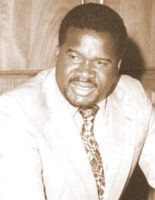
Elijah Wasike Mwangale – The minister who escorted a fleeing Obote to State House

‘Chairman,’ the name by which Elijah Wasike Mwangale came to be known, was coined by President Daniel arap Moi when he was still Vice President and Leader of Government Business in Parliament. Mwangale gave Moi a difficult time on the floor of the House as a government critic during President Jomo Kenyatta’s tenure. He would become Moi’s ardent defender only when the VP ascended to power after Kenyatta’s death in 1978.

The events leading to Mwangale becoming known as ‘Chairman’ were tragic, and involved the grisly murder of former Nyandarua North MP Josiah Mwangi Kariuki (popularly known as JM), whose body was found by a Maasai herdsman in the Ngong Hills near Nairobi on 2 March 1975. Mwangale, then a flamboyant, bearded and fiery MP for Bungoma East, chaired the 11-member Committee that investigated the murder.

Mwangale was summoned to State House over the Committee’s report, which recommended investigation of two top State officials by the police. When Mwangale and his team were summoned to State House, one Committee member remained behind with an original copy of the report. After he had tabled the report in Parliament, the MP waved his copy and said it differed from what had been tabled. The Speaker of the National Assembly, Fred Mati, ruled that the matter could be raised during debate as evidence – which never happened as there were fears of detention without trial at the time.

During voting, Moi, the Attorney General, Charles Njonjo, and a number of other politicians rallied the House to “note and not adopt” the report – meaning it would have no power for further action. Nonetheless, it was adopted as Masinde Muliro, a Cabinet minister, and Peter Kibisu, an Assistant Minister, voted against the government.

The two were sacked on the same day, but not before Mwangale had emotionally moved the motion to adopt the report and concluded his argument with a Luhya proverb – the US-educated agriculturalist-turned-politician had a penchant for proverbs. Mwangale’s role in heading the Committee and getting the report adopted saw the nickname ‘Chairman’ stick.

Immediately after the 1979 General Election, the first under Moi’s regime, Mwangale was assigned to the Ministry of Labour. He would then move to Tourism and Wildlife, Foreign Affairs and Agriculture. It was thought that he was assigned  to head these ministries as a way for Moi to tame him. Mwangale became the most influential minister from Luhya land after Moses Mudavadi.

Although he was the son of a staunch Friends Church elder from Matili Village in Kamukuywa, Bungoma District (now Bungoma County), Mwangale was among a group of Kenyan politicians referred to as KANU hawks; Moi men who held total power and who were steadfast defenders of KANU’s single-party rule.

On his appointment to the Ministry of Labour, Mwangale immediately set about dealing with the wrangles between the Central Organisation of Trade Unions’ (COTU) Secretary General, Juma Boy, and opponents led by Yunis Ismail, who had dethroned him from the Dock Workers’ Union in an effort to block him from retaining his Secretary General position at the national level. The law required the COTU Secretary General to also be a Secretary General in a grassroots union. Boy had circumvented this by prevailing upon an ally in the Petroleum Union to step down for him.

Mwangale summoned the COTU Executive Board and threatened to dissolve COTU if the wrangling continued, which calmed matters down. It was also under Mwangale’s watch that the Kenya Civil Servants’ Union, whose Secretary General was Kimani wa Nyoike, was banned. Mwangale convinced Moi that civil servants offered essential services to the nation and could not, therefore, be free to call for a strike as that would paralyse services and hurt Kenyans.

The minister became such a staunch Moi defender that he helped to bring down two giant politicians from Central Province who were perceived to be a threat to the regime. When Njonjo, the Attorney General of transition, so deftly handled Moi’s move to State House after Kenyatta’s death, he became very powerful. He and G.G. Kariuki, another powerful minister, were the only ones who ever rode in the presidential limousine with the Head of State.

Then, sometime in 1983, Moi went to Kisii District and sparked the ‘traitor’ debate. He claimed there was someone being groomed by foreign powers to take over his government. The debate raged without anyone pointing fingers, until Njonjo returned from a trip abroad.

It was Mwangale who pointed at the AG in Parliament as the traitor being alluded to, prompting Moi to appoint Justice Cecil Miller to chair a Judicial Commission of Inquiry into the allegations. The Commission absolved Njonjo of the treasonable act but by that time, the political tide had already turned against him. Meanwhile, Mwangale was rewarded after the 1983 snap elections by being transferred from the Ministry of Tourism and Wildlife to Foreign Affairs.

Prior to KANU’s discredited 1988 mlolongo (queue) voting system, there was a sustained campaign for Moi to remove Mwai Kibaki as his VP. KANU power barons accused Kibaki of not showing total loyalty to the ruling party. For instance, they pointed out that he never wore the badge bearing Moi’s portrait on his lapel, as was the trend. Instead, he wore one with the KANU insignia.

Mwangale made forays into Kibaki’s Nyeri District backyard in what was seen as an anti-Kibaki campaign, prompting the VP to publicly declare that there was no room for “political tourists” in Nyeri. The VP also responded to an attempt to oust him as MP of Othaya constituency saying, “Rigging requires some intelligence.”

When the time came to name the Cabinet after the 1989 General Election, Moi dropped Kibaki as VP and appointed him as the Minister for Health. Josephat Karanja, a former University of Nairobi Vice Chancellor and Assistant Minister, was named to replace him.

But in a bizarre twist of events Karanja, a flamboyant, arrogant politician, would suffer the same fate. Moi was on a trip abroad when it was reported that his new VP had boasted that he was the Acting President while Moi was away. Upon his return Moi, while officiating at a fundraiser at St Mary’s Yala High School, stated that he was the President even when he was away or asleep. David Mwenje, the MP for Embakasi, moved a motion in Parliament to impeach Karanja.

Mwangale took over the Foreign Affairs docket in a time of regional and international crises. There was political turmoil in Uganda, with coups and counter-coups keeping the country in a state of constant tension. Tanzanians were grappling with a smooth transition from the founding President, Julius Nyerere, to Ali Hassan Mwinyi. There were coups in Rwanda and Burundi. And an arduous Iran-Iraq war had affected oil prices worldwide.

His most difficult assignment was Uganda, which had had no peace since February 1971 when Idi Amin, a military officer, toppled Milton Obote’s first government. Obote’s fledgling second government was on its knees in 1985, when government forces tired of fighting the National Resistance Movement rebels led by Yoweri Museveni.

General Tito Okello staged a coup then went public to say it was “not a coup, but an uncoordinated movement of troops” in Kampala. This was to facilitate Obote’s safe passage through the Busia District border into Kenya’s State Lodge in Kakamega District. Okello immediately announced from Kampala that there was a new government, with himself as President. It was Mwangale that Moi sent to Kakamega to escort Obote to State House Nakuru. Later, Mwangale would publicly confess that he did not know whether to address Obote as “Your Excellency former President” or simply “Dr Obote.”

The minister became such a staunch Moi defender that he helped to bring down two giant politicians from Central Province who were perceived to be a threat to the regime

The second phase of this matter was the Uganda Peace Talks, which President Moi chaired for a month at the Kenyatta International Conference Centre in Nairobi in an attempt to unite Okello and Museveni. Mwangale and Okello’s Foreign Minister, Olara Otunu, burnt the midnight oil trying to find common ground for a political agreement without much success. A form of agreement that was reached and signed was rubbished by Museveni on the spot. He later fought his way to Kampala and took over power in 1986.

Mwangale was moved to the Ministry of Agriculture after he discredited the 1988 General Election, leaving Foreign Affairs to Robert Ouko. In Agriculture, the former lecturer proved his expertise by intensifying animal artificial insemination countrywide to boost the efforts of livestock farmers targeting beef exports. Payments to sugar and cereal farmers became his priority, and the timely procurement of fertiliser also helped farmers improve their crops.

The story of Mwangale’s rise to the pinnacle of power is as interesting as his early life. As a boy, his father enrolled him in Chesamisi Primary School, but when he reached intermediate level, he was dissatisfied with the school. So he decided to cross the border to a school in Uganda, but soon returned home.

His father took him to a school in Mombasa, where he is said to have developed an interest in agriculture. This later took him to Egerton College, near Nakuru Town, to pursue a diploma in the field of agriculture. One of his teachers there was William Odongo Omamo, another minister under the Kenyatta and Moi regimes. Omamo identified him among three students who got sponsorship for degree studies at Virginia University in the USA, on condition that they would return to teach at Egerton.

While in America, where Mwangale qualified for his Bachelor’s and Master’s degrees, he met his American wife, Janet. He returned to teach at Egerton before going into politics and later married a second wife, Salome.

So how did Mwangale’s star, which had risen as far as political stars can rise, come tumbling down? Many believe he became a manifestation of the quote by historian and moralist Lord John Dalberg-Acton: “Power tends to corrupt, and absolute power corrupts absolutely.”

As an experienced politician,  he failed disastrously to read the wind of change that came with multipartism in 1992 and that swept several heavyweights out of Parliament. Before the multiparty General Election, he had disdainfully dismissed his opponent, the little-known Mukhisa Kituyi, a former minister in Kibaki’s regime and eventual Secretary General of the United Nations Conference on Trade and Development (UNCTAD).

Kituyi did not just win the seat but sent his predecessor packing with a landslide vote, thus consigning a man who had once relished power to the political desert for good. An attempt to revive Mwangale by appointing him Chairman of the Kenya Bureau of Standards came to nought in the changed political circumstances.

Born in Matili in Bungoma, Mwangale died in 2004 aged 66.
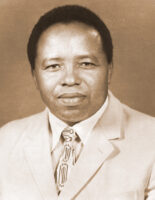
Eliud Timothy Mwamunga – Giving trade and commerce an African face

During the course of his illustrious political career spanning two decades, Eliud Timothy Mwamunga is credited with establishing a sterling track record in the eyes of his constituents as their Member of Parliament, and being instrumental in helping shape the social, political and economic future of post-independent Kenya.

Born on 21 July 1935 at Ishamba at the foot of the Taita Hills, Mwamunga built himself a reputation as an astute politician adept at navigating the choppy waters of Government. The proof of his political savvy is found in his long service in the Cabinets of both the Founding President Jomo Kenyatta and of his successor, President Daniel arap Moi, over the course of an uninterrupted 20-year term as elected MP of his native Voi constituency. None of those who came before or after him – Basil Mwakiringo, Darius Mbela, Boniface Mganga or Adiel Kachila – served for even two terms.

Under Kenyatta, Mwamunga held the Water Development, and Commerce and Industry dockets and in the successive administration under Moi he served as Minister for Information and Broadcasting. Mwamunga would later co-found the Democratic Party of Kenya (DP) that was destined to catapult Mwai Kibaki into the position of Kenya’s third President.

The native of Taita-Taveta grew up in an area richly endowed with natural resources: minerals such as rubies, cash crops such as sisal and fruits such as mangoes, in addition to wildlife, since the Tsavo National Park is adjacent to the area. As a youth he attended Ishamba Primary School, later joining Shimo-la-Tewa Secondary in Mombasa for a brief period before transferring to the nationally reputed Alliance High School in Kikuyu near Nairobi.

His higher education was undertaken at Makerere followed by the University of Dar-es-Salaam where he went to study law. If Makerere was considered the educational Mecca of Eastern Africa, Dar es Salaam was the premier law institution in the region. Upon attaining his degree in Law, Mwamunga taught in various schools in Coast Province at a time when the struggle for independence was at its zenith. The Mau Mau war was in top gear, the State of Emergency had been declared in 1952 and leaders were forming political parties to agitate for independence.

The key player of that political struggle at the Coast was Ronald Ngala, a major inspiration for the young teacher. Ngala, who abhorred the marginalisation and exploitation of the Coast people, played a central role in the struggle for independence.

The independence constitutional conferences in London, the 1963 elections pitting the Kenya African National Union (KANU) against the Kenya African Democratic Union (KADU), and the dissolution of KADU in 1964 were pivotal political events of the freedom struggle and the genesis of the young nation, and the young teacher caught the fever. He would later be deployed to work in local government to serve as Clerk to the Taita-Taveta County Council, where he began to rub shoulders with civic leaders and parliamentarians. During this time he had opportunity to visit every part of Taita-Taveta and learn about the dire need for the basic necessities of life among his people.

This is when he discerned the role he could play in serving the people of Taita-Taveta.

As Town Clerk and later, he waged a relentless campaign against land grabbing and championed protection for ranchers, provision of water and education. The Daily Nation of 1 July 2018 reported shortly after his death that “…he convinced the civic leaders to sub-divide and register empty rangelands into ranches to keep off land grabbers, speculators and brokers, as a result protecting more than one million acres of community land”.

In 1969, at the age of 34, Mwamunga contested and won the Taita-Taveta parliamentary seat, initiating numerous development projects while in his first term in Parliament. He proceeded to make useful connections with agriculturalists, wildlife conservationists and mineral prospectors, including wealthy Kenyans and foreigners who could exploit the natural resources of the district.

Over time he grew into a wealthy landowner and courted the Kenyatta and Moi administrations by not only rising above other political greenhorns in Taita-Taveta and the Coast, but also playing low-profile politics at a time when the careers of abrasive and combative politicians could be brutally cut short through detention, summary dismissal from the Cabinet or rigging out of Parliament.

He also consolidated his political connections at the national level. This strategy bore fruit and, when he was re-elected in 1974, Kenyatta appointed him Minister for Water Development. During his two-year stint in the Ministry, Mwamunga spearheaded projects that included construction of the country’s first dams, water supply schemes for urban areas and irrigation schemes that boosted agricultural production.

Since agriculture was the mainstay of the economy, the Water Ministry was regarded as a vehicle through which Kenya could use irrigation to grow enough food for its growing population as well as for export.

In 1976, Kenyatta switched Mwamunga with Gikonyo Kiano who had been overseeing the Ministry of Commerce and Industry. In the new ministry, Mwamunga put in place policies that created a good environment for foreign and local investment in trade and industry. Following in the footsteps of Vice President and Home Affairs Minister Moi and his predecessor Kiano, Mwamunga accelerated the Africanisation policy in Trade and Commerce. Europeans and Asians dominated the sector, the latter having set up camp not only in Nairobi but also in other urban areas, to the chagrin of indigenous businessmen.

With Kenyatta’s blessing, Mwamunga issued quit notices to Asians doing business in the rural areas, effectively confining them to Nairobi and other major towns. This was in line with the mandate of the Industrial and Commercial Development Corporation (ICDC) to extend loans to indigenous people so they could open up businesses and fill the gap left by the departing Asian traders.

In 1976 Kenya hosted the 4th Session of the United Nations Conference on Trade and Development (UNCTAD). The first of its kind to be held on African soil, the international conference was opened by Kenyatta and drew international personalities such as US Secretary of State Henry Kissinger, UN Secretary-General Kurt Waldheim and Philippines President Ferdinand Marcos. In his address as host, Mwamunga urged world nations to resolve trade disputes, especially between rich and poor countries. He called for agreements to guide international financial lending and commodity prices to protect poor countries.

Mwamunga’s first political storm came in 1977 during a KANU election. He clashed with party Acting Secretary General Robert Matano when the latter appointed Mwamunga to supervise the Mombasa Branch elections. In what turned out to be an ugly duel with Matano, Mwamunga defied the order for fresh elections, saying the branch had just held polls the previous year and that officials had been elected and registered. They were John Mambo (Chairman), Abdullah Mwaruwa (Vice Chairman), Maurice Mboja (Secretary) and Mohamed Jahazi (Organising Secretary).

Mwamunga wrote to the officials and advised them not to hold elections. But the Registrar denied that any officials had been registered. Fresh branch elections were held, and all the officials were voted out and new ones elected. The new Chairman was Shariff Nassir, who was to become the most powerful politician at the Coast during Moi’s tenure.

This was to haunt Mwamunga in later years when he and Nassir locked horns over supremacy at the Coast at a time when the latter became Moi’s point man in the region. The election loss by the team that he supported did not deter Mwamunga from recapturing his seat – renamed Voi – in the 1979 General Election, the first after the death of Kenyatta the previous year. Mwamunga did even better than in previous elections, polling 8,363 votes against his only rival, Kwaya Mwatibo’s 2,699.

This was a strong mandate and those who had opposed him in the past reportedly changed sides and threw their lot behind the Minister. One such candidate was Augustine Mwagogo Ngume, who pulled out of the race midway.

In spite of an uneasy relationship with Moi due to his links with Ministers and businessmen close to Kenyatta, Mwamunga was reappointed to the Cabinet as Minister for Information and Broadcasting. However, he was caught up in the 1983 ‘msaliti’ (traitor) affair involving former Attorney General Charles Njonjo, alleged to have plotted to overthrow the Moi government.

In what was to become Moi’s signature style of dealing with politicians perceived to be against him, Njonjo was subjected to public humiliation as the “…traitor in Moi’s Cabinet being groomed to take over the presidency illegally”. Politicians took advantage of the traitor debate both inside Parliament and in public fora to settle scores with Njonjo. Moi began to purge his government of perceived enemies. Some MPs accused Mwamunga of being sympathetic to Njonjo. Although he and a few others survived the political lynching and the 1983 snap election that was called to essentially get rid of Njonjo sympathisers, the association cast a cloud over Mwamunga’s political future.

Mwamunga issued quit notices to Asians doing business in the rural areas, effectively confining them to Nairobi and other major towns

Mwamunga experienced the full wrath of the ruling party and continued to face many difficulties until the end of his political career. For one, National Organising Secretary and Minister for Supplies and Marketing Laban Kitele publicly rebuked him over the whereabouts of KES 1 million disbursed to his Voi constituency.

Although he defended himself spiritedly against accusations of mismanaging the funds, the message, coming from a Moi point man, was clear that the Minister was no longer in the President’s good books. The KANU Taita-Taveta Branch tried to hound him out of office.

He was engaged in protracted running battles and petty squabbles initiated at KANU headquarters and Nassir’s Mombasa Branch. The disputes were spearheaded by a new crop of leaders led by Mbela, who would later oust Mwamunga from the Voi seat and become Minister for Lands.

It did not, therefore, come as a surprise when Mwamunga was sacked as Minister for Information and Broadcasting in January 1988, in the run-up to that year’s infamous queue-voting elections. Many MPs perceived to be anti-Moi lost their seats.

The queue-voting system elicited national and international condemnation and helped build the groundswell of opposition politics. Mwamunga became a victim of the electoral system soon after his dismissal from the Cabinet. Moreover as the national purge continued, he lost his chairmanship of the Taita-Taveta KANU Branch. And the party machinery was not through with him; Mwamunga was accused of all manner of misdeeds and suspended from membership in the branch.

His sacking from the Cabinet and subsequent troubles from KANU might not have been a result of the traitor issue alone, but also due to his perceived gravitation towards Kibaki.

In the run-up to the 1988 General Election he was alleged to be among candidates sponsored by Kibaki for the poll after Kibaki, who had been blocked from presiding over fundraisers outside Nyeri, accepted Mwamunga’s invitation to raise funds in Voi.

It was no surprise that Mwamunga joined Kibaki in January 1992 to launch the opposition party DP, after the Constitution was changed in 1991 to make Kenya a multiparty State. Kibaki had resigned from KANU and from the Cabinet as Minister for Health on Christmas Day 1991.

Mwamunga was named DP Coast representative. He played an active role in popularising the DP in the region ahead of the first multiparty elections in 1992. But division in the newly-formed opposition parties made it difficult for them to win the elections.

Mwamunga himself failed to recapture the Voi seat that had been synonymous with his name for a good two decades. It was won by KANU’s Mbela, who was subsequently appointed to the Cabinet.

At that point Mwamunga retired from public life and retreated to Ishamba to concentrate on business and farming.

The politician was, however, dogged by ill health and he eventually died on 9 June 2018 at the age of 83 while undergoing treatment at a Mombasa hospital.


Cyrus Shakhalaga Khwa Jirongo – Mister Moneybag

Cyrus Shakhalaga Khwa Jirongo is a flamboyant politician whose fidelity to politics – and to business – is always a subject of heated discussion. A man whose politics and wealth are linked to a questionable assembly of youthful leaders that campaigned for the re-election of President Daniel arap Moi in 1992, Jirongo has shifted alliances so many times since, that it becomes almost impossible to isolate his political ideology.

A survivor in his own right, he has overcome myriad auctions of the business empire he built from political proceeds of the Youth for KANU 1992 (YK ’92) that he co-founded. The freshly released KES 500 currency note became synonymous with the name Jirongo after YK ’92 organisation widely distributed it as vote-buying handouts during the 1992 election campaigns.

But according to the Daily Nation of July 2017, Jirongo owns properties worth billions of shillings, but is woefully short of cash; a broke billionaire, unable to pay his debtors. He was declared bankrupt (though the order was later rescinded) because of a KES 700 million debt he owed a long-time friend-turned-foe, Sammy Boit Kogo, the newspaper stated.

Indeed, many political anecdotes swirl around his life as the YK ’92 leader but little, if anything, is there to account for his days as Lugari MP (1998-2002 and 2007-2013) and later Cabinet minister (Rural Development).

Immediately after joining Parliament, Jirongo announced his intention to vie for the country’s presidency after the end of Moi’s term in 2002. He pulled back but gave it a shot in the 2017 elections, only managing to garner 0.07% of the vote in the initial round of a presidential election annulled by the Supreme Court over irregularities.

Jirongo spoke out against KANU’s rigidity concerning youth leadership and went ahead to assemble a team of MPs fiercely opposed to the ruling party’s old ways

Be that as it may, not much is known about Jirongo’s life prior to the emergence of YK ’92. The snippets of information available indicate that he was born sometime in March 1961. He was a student at Mang’u High School between 1978 and 1981 and 10 years later, became the Chairperson of AFC Leopards, one of Kenya’s leading football clubs.

Jirongo was just 31 years old when he assembled a group of unlikely friends who included Sam Nyamweya, Fred Kiptanui, Ben Wakhungu, Sammy Kogo, Victor Kebenei, Bartonjo Chesaina, Joe Mwangale, Joe Kimkung, Patrick Osero, William Ruto, Esther Sagini, Moses Kurgat, Jimmy Choge, Rajab Waliaula, Mwelu Ngei, Alex Mukabwa, Fred Amayo, Munyua Waiyaki (nephew of Cabinet minister Munyua Waiyaki) and Ken Ouko, to create YK ’92.

Barely a couple of months after it was launched in March 1992, the group became exceedingly powerful and brazenly moneyed. Members became instant billionaires by raising campaign funds for the ruling party KANU.

“State House was our home. Doors were readily opened for us if we wanted anything and Mzee (Moi) was usually available for us,” Kimkung was quoted in the Sunday Nation of 29 May 2016.

The organisation’s members threw all manner of dirt at the Opposition, including purchasing newspaper space and broadcast time to pour scorn on Moi rivals.

“We started out with the best of intentions but we were ultimately consumed by greed and the ambitions of some of us,” lawyer Moses Kurgat, the group’s first Secretary General, told the Sunday Nation.

“Never has the energy and creativity of the youth been directed to a more destructive course until YK ’92 happened. The impact of its activities lived with us for more than 20 years and will be felt for many years to come,” commented Raila Odinga, who bore the brunt of YK ’92 many times.

As it were, YK ’92 was built on quicksand. After Moi retained his seat in the first multiparty elections since 1966, the YK ’92 outfit became rabid; power went straight to the heads of its leaders.

The hallucination of power and authority blinded the youth. Jirongo made a fatal misstep by calling for the resignation of George Saitoti, the Vice President and Minister for Planning and National Development, a call that coincided with a walkout from Parliament staged by opposition MPs in protest against Saitoti. “The uncanny alliance this seemed to portray unwittingly played Jirongo into the hands of his foes; and his organisation was instantly suspended by President Daniel arap Moi,” The Economic Review reported in May 1993. It added, “Poor Jirongo, he’s been used and discarded, just like they said he’d be”.

Kibaki said that he had predicted Moi would “…use the youths and then discard them when he did not need them anymore”.

Moi claimed that the organisation had tarnished KANU’s image, and that its officials had joined the Opposition to undermine his leadership. In fact, Moi chose to defend Saitoti and went ahead to mention Cabinet ministers Nicholas Biwott and William ole Ntimama as key KANU loyalists.

Beaten, Jirongo chose a new defence tactic by seeking political relevance. He started building a power base in Luhya land, driven by the perception that western Kenya lacked a leader able to take on the powers that be. The Leader of Official Opposition, Mwai Kibaki, also weighed in, claiming that Jirongo’s predicament wasn’t surprising.

Moi would later disband YK ’92. “Mr Moi moved in to financially cripple its ambitious Chairman who, by his own admission, harboured ambitions to build the group into a formidable political outfit to rival the then ruling KANU party,” the Sunday Nation reported on 29 May 2016.

But just before Moi disbanded the organisation, calling its leaders a “group of conmen” despite their efforts that resulted in his re-election, Jirongo was arrested briefly, accused of possessing unlicensed guns. His houses in Nairobi had been raided and searched for the firearms.

The Central Organisation of Trade Unions (COTU) Secretary General, Joseph Jolly Mugala, who had called a workers’ strike to demand Saitoti’s sacking, was also arrested at the same time along with former Webuye MP Joash Wamang’oli.

It so happened that at the time Moi was wielding his whip on Jirongo, he also targeted officials of the National Social Security Fund (NSSF) comprising Martin Kunguru (Managing Trustee) and Peter Linus Baraza Kubebea (Finance Manager). To a casual observer, the action against Kunguru and Kubebea may well have appeared political. It wasn’t necessarily so. The NSSF officials had strong links with Jirongo’s business fortunes.

The NSSF either contracted Jirongo to construct a number of residential properties on its behalf or purchased ongoing projects from him at a cost that became an issue of dispute and prolonged court cases. Among projects that have been at the centre of controversy include Hazina residential estate in Nairobi.

In recent reports, Jirongo has often claimed that he was already a billionaire by the time he co-founded YK ’92. But it’s not a secret anymore that it was during the YK ’92 days that Jirongo evolved his companies – including Cyperr Projects International Ltd and Sololo Outlets – into powerful business engines that controlled Nairobi’s real estate sector.

Correspondence between NSSF lawyer Mutula Kilonzo (who was also Moi’s lawyer), the Head of the Civil Service Philip Mbithi and Moi is very revealing. In one of his confidential letters to Moi, Kilonzo wrote, “We have identified more than 180 properties belonging to either the companies aforementioned or Mr Jirongo personally… we have recommended that the Special Branch investigate to locate other assets owned by Mr Jirongo, relatives, associates… as the possibility still exists that what we have is not exhaustive.” Kilonzo asked Mbithi to “…mount detailed surveillance on Jirongo and his associates to ascertain whether there are and prepare against any threats to State security as a result of massive cash believed to be in his possession.”

According to The Economic Review of August-September 1993, “Jirongo’s controversial private business dealings, especially the lucrative contract to develop a multi-million shilling housing project for the NSSF, were put under close scrutiny. The final indignity was delivered two months ago when his Cyperr Projects International and Sololo Outlets Limited were placed under receivership over dues allegedly owed the NSSF and Postbank Credit limited.”

After a lull in the limelight, Jirongo resurfaced in 1997 when contesting for the Lugari Parliamentary seat which he won. Again, as in 1992, this marked another era in the flamboyant politician’s life – and a sort of return to KANU and mending of fences with his mentor, Moi. This was despite a vow he had made in September 1993 not to vie for a parliamentary seat. “I am not interested in going to Parliament to make noise,” he had declared at the time.

Six months after entering Parliament, Jirongo announced his plans to run for the country’s presidency in the following election cycle in 2002. News magazine The Weekly Review described the announcement as charting out his own course. It stated, “He is known to be ambitious, and ever since entering Parliament this year, he has cut for himself the image of an independent and radical legislator, one who is ready to speak his mind on issues that some may consider too sensitive to comment upon.”

Jirongo spoke out against KANU’s rigidity concerning youth leadership and went ahead to assemble a team of MPs fiercely opposed to the ruling party’s old ways. His faction came to be known as KANU C, as opposed to conservative KANU A (made up of diehard leaders such as Moi and Cabinet ministers Nicholas Biwott, William ole Ntimama and Shariff Nassir) and the moderate KANU B.

Even as he announced his presidential ambitions, Jirongo made it known that he was not planning to run on a KANU ticket. He described Michael Wamalwa Kijana, who had run for President the previous year, as a “sell-out” and declared himself the “aggressive leader” to fill the leadership vacuum in Luhya land. Over and above his dismissive attitude regarding Wamalwa, Jirongo had no time for his Cabinet colleague Musalia Mudavadi, also from Luhya land.

In 1998, he accused Musalia of not being ambitious enough. However, his critics questioned whether his announcement to run for President “…is a mere bluff to jog the Luhya leaders out of their political slumber or the beginning of bigger things to come”, according to The Weekly Review of July 1998. “This is not the first time that Jirongo has publicly chided Luhya political leaders. He never misses an opportunity to throw a barb or two at the community’s leaders, whom he considers to be complacent, ineffective and divided to the detriment of the community’s interests,” the news magazine reported.

In November 2001 Moi announced a major Cabinet reshuffle in which he appeared to offload the old guard in favour of youthful faces. Jirongo and Uhuru Kenyatta were among the new names in the Cabinet. Jirongo was now Minister for Rural Development, which had formerly been a department within the larger Ministry of Planning and National Development. His predecessor was Yekoyada Masakhalia, described by Pan African News Agency (PANA) as a “…former UN bureaucrat turned politician”.

As Minister for Rural Development, Jirongo’s role was to oversee socioeconomic improvement of mostly arid and semi-arid areas in the country, especially in the neglected northern Kenya. He was also in charge of the Lake Basin Development Authority (LBDA). At best, the Ministry lacked gravitas. Moi created it perhaps to reward loyalists. In fact, PANA reported, “Jirongo, who was behind the yet to be registered United Democratic Movement (UDM) political party, had even gone public with his plans to contest for the presidency come next year. He, however, changed his stance and it was a matter of time before he was rewarded for it.”

This was hardly unexpected. During his stint as a backbencher, Jirongo and other KANU rebels, including Kipruto Kirwa and John Sambu, had formed UDM ostensibly to challenge KANU in the 2002 elections. But political analysts viewed UDM as an expression of disgust by the youth isolated from government in favour of the so-called Old Guard. Jirongo’s performance at the Ministry of Rural Development remains a matter of conjecture. Not much has been reported on that score.

According to a Hansard Report of 16 July 2002, Jirongo announced that the Kenya Rural Development Strategy was being developed to address “…highly centralised government, inadequate empowerment, lack of effective participation, physical infrastructure, research and technology transfer and information services” in rural areas.

In 2002/2003, his Ministry was allocated KES 6.6 billion (recurrent) and KES 1.5 billion for development purposes, compared to KES 2.97 billion and KES 970 million respectively in 2001/2002. About 70 per cent of this allocation went to the Ministry’s 42 State-owned corporations. But MPs felt the allocations were hardly enough. “The Minister knows very well that the amount of money he has asked for is not adequate for the job at hand. He should decline to take that money. The Minister should plead with the House to assist him get more money,” opposition MP Njeru Ndwiga pleaded.

Jirongo took over a Ministry that was facing questions from the Controller and Auditor General over its financial status. In the 1997/98 Appropriation Accounts report, the Auditor questioned the use of billions of shillings granted to corporations within the Ministry. For instance, KES 331 million was granted to six regional organisations in the 1997/98 budget, but the Auditor could not establish “…that the grants were received by the organisations”.

After KANU was bundled out of power, Jirongo formed the Kenya African Democratic Development (KADDU) political party through which he reclaimed the Lugari parliamentary seat he had lost in 2002. KADDU had a pitiful showing in the election, to the extent that Jirongo was its only MP. He had a brief dalliance with the United Republican Party (URP) and the Orange Democratic Movement (ODM) before settling with the Federal Party of Kenya (FPK), on which he unsuccessfully ran for the Kakamega Senatorial position in 2013.

Five years later, he would announce his interest in the presidency.

In the August 2017 elections eventually annulled by the Supreme Court over multiple irregularities, Jirongo garnered just 0.07 per cent (11,282) of the votes, claiming the second last position among the eight candidates. This time round, he ran on a United Democratic Party (UDP) ticket. Almost two weeks before the repeat presidential election of 26 October 2017, the court declared him bankrupt for failing to repay a KES 700 million loan advanced to him by a former YK ’92 colleague Sammy Kogo. The orders were surprisingly lifted just three days to the disputed presidential election boycotted by the key opposition leader Raila Odinga. Jirongo garnered 37,791 votes in this election.

Since leaving Parliament in 2013, Jirongo has faced suits and countersuits over his business dealings. More recently COTU Secretary General Francis Atwoli took him to court for failing to repay a KES 100 million ‘friendly’ loan he had advanced to Jirongo. Despite all this, the businessman-cum-politician has succeeded in staying afloat. In 2012 his company Sololo Outlets won a case against the NSSF and was awarded KES 490 million in compensation.

Jirongo is associated with several companies, including Kuza Farm, Sololo Outlets and Cyperr Projects International. He is also linked to a number of residential developments in Nairobi, including Saika Estate along Kangundo Road, Hazina Estate in South B and Kemri Estate along Mbagathi Road.

To date, nobody has attempted to quantify the amount of money that circulated within YK ’92. What is clear, though, is that all its members, once described as “political sharks”, became immensely rich. Many of them either control the political purse or have very deep links in the government.


Chrysanthus Barnabas Okemo – Commited to excellence

Chrysanthus Barnabas Okemo, Kenya’s eighth Finance minister, joined the National Treasury at a time when the country was having difficulties with donors. Okemo became part of what was dubbed the “dream team” — a group of leading personalities from the private sector selected to revive the country’s ailing economy — when he was appointed Finance minister in August 1999.

When President Moi crafted the team of technocrats from the private sector in September 1999, he added the Planning portfolio to Okemo’s docket.

Moi named internationally renowned conservationist Richard Leakey, with whom he had fallen out before the 1997 elections, as Secretary to the Cabinet and Head of Public Service in his office.

Martin Oduor-Otieno, a Director of Finance and Planning at Barclays Bank in Nairobi was named Permanent Secretary Treasury, Mwaghazi Mwachofi, a resident representative of the South Africa-based International Finance Corporation as Financial Secretary and Kitili Mbathi as Investment Secretary. Additional members of the team were Titus Naikuni, Chief Executive Officer of Magadi Soda Company, who was taken to Transport and Communications as Permanent Secretary; Shem Migot Adhola, a leading specialist for rural development in Africa at the World Bank, who was taken to agriculture; and Wilfred Mwangi, of the International Maize and Wheat Improvement Centre, who was assigned to the Ministry of Energy.

These PSs in key ministries were tasked to turn the economy around and convince donors that Kenya had begun a new chapter.

Based on his private sector engagements as a banker and successful businessman, Okemo had been moved from Energy to Treasury, swapping positions with Francis Yekoyada Masakhalia, the seventh Finance minister. The intention was to give Okemo a World Bank look-alike boardroom with top brains to help convince donors that Kenya was headed for better times.

The Breton Woods institutions had put what they called irreversible demands on the Moi government. They wanted the government to cut down the bloated civil service by carrying out retrenchments and merging non-performing parastatal corporations. Restructuring the energy sector and a zero tolerance to corruption were also key on their agenda.

For Moi, economic growth was a legacy that he wanted to leave. He therefore sought help from outside his government, hence the Dream Team.

After the annual Paris Club round table talks with the International Monetary Fund and the World Bank that year, a quick disbursement was released to meet the country’s balance of payments to international financial commitments.

At home, the National Bank was almost on its knees following demands by state corporations, including the National Social Security Fund, to return billions of their deposits.

Okemo and the Dream Team converted these deposits to equity, meaning the corporations became shareholders in the bank, pending floatation of shares on the Nairobi Stock Exchange for the public to pump in money.

But it was his first budget speech that brought him fame. Okemo scrapped duty on bicycles commonly known as boda boda, arguing it would spur transport in the countryside. Indeed the entire Parliament broke into laughter but boda boda, meaning crossing the (international) boundaries, began at the Busia border where they would carry people from Uganda and Kenya to either side carrying their merchandise for cross-border trading.

This was long before the motorcycles and tuk tuks widely used today all over the country arrived on the scene. While many saw it as a “sentimental tax waiver” by a minister from Busia County, it spurred economic growth as intended.

Despite his commitment to economic reforms, Okemo’s tenancy at Harambee Avenue did not leave an impact. Influential forces soon set their sights on him as he was seen as blocking payments to contractors who in his opinion were doubtful. Road blocks were put in his way by both influential individuals and Parliament, which blocked laws to create the Kenya Anti-Corruption Authority (KACA) to fight corruption.

The retrenchment of 250,000 civil servants, for which he had budgeted, also annoyed many.

The Dream Team crumbled, having been fought hard by influential members of KANU. They accused the team of arrogance, using their hefty salaries and a condescending attitude towards their peers in civil service among other reasons for dismantling the team.

They had hardly been in office for 18 months when the fight reached a crescendo. During a fundraising event in St Mary’s School Maraba, Kisii, on 14 October 2000 Okemo defended the team’s excellent performance and their total package of KES 10.8 million per month as justifiable and supported by the contracts they signed.

He told his audience that it could only be reviewed when they renewed their contracts – which they never did as they were disbanded before that could happen. Both Leakey and Oduor-Otieno left in 2001 and others followed.

Later Okemo was appointed Minister for Energy where he oversaw expansion of the energy sector mainly in electricity supply from the traditional hydroelectric power to other sources, including geothermal. He also developed the blueprint for wind power although he did not implement it.

It was under his watch in the first stint (1998) that Independent Power Producers (IPPs) were vigorously used in a move explained as boosting electricity on the national grid to meet a shortfall by traditional power generators.

Although Okemo became a politician after an illustrious career in the private sector and in business — even serving as Managing Director of the government-owned Kenya National Assurance Corporation — he won the Nambale parliamentary seat in Busia County during the 1997 elections, dislodging his political nemesis Phillip Masinde. This was his second attempt.

He had contested the seat in 1992 on a FORD-Asili opposition ticket, losing to KANU’s Masinde amid claims that the election was rigged in the ruling party’s favour.

Despite an otherwise good track record, a scandal surfaced in earnest when Okemo was still influential in the Moi government. In January 2001 his name was linked with that of a company associated with the former Managing Director of Kenya Power and Lighting Company Samuel Gichuru, a powerful executive under Moi. Okemo was still at the Treasury.

A British MP raised the matter in the House of Commons in which he said there were companies in the UK which were being paid inflated bills by the Kenya Government for alleged services delivered.

The MP told the House that there were many contradictory audit queries on those payments to companies based in Jersey, a UK island known to be among offshore destinations for money laundering.

The MP pointed out that the contradictions suggested that British companies, which by law were supported by the UK Government to do business in Africa, abetted corruption. Details of the scandal emerged in the warrants of arrest from Jersey in which the island government intended to charge the two with 53 counts related to corruption.

It emerged that Okemo had opened a bank account in Jersey under his name and that of Arus Management Services where funds were deposited between 1 August 2000 and 3 August 2001.

The papers stated that the two (Okemo and Gichuru) had misled auditors of Wartsilla firm that a company associated with Gichuru, Windward Trading, was receiving the money as consultation fees.

Other charges included false declaration, fraud and money laundering. Some of the payments were related to phantom power projects such as the Ewaso Nyiro Power Plant whose history dates back to 1990 but does not exist.

Okemo and Gichuru fought extradition orders by the Jersey Government. Eventually, the UK government instituted restitution processes to recover the laundered money.

In February 2016 (under Uhuru Kenyatta’s presidency) the Royal Court of Jersey confiscated the money laundered by the two. And on 3 March 2017 Jersey Chief Minister, Senator Ian Gorst, signed an agreement with Treasury Permanent Secretary Kamau Thugge to return KES 380 million to Kenya.

Two years earlier, Kenyatta had appointed Okemo to the Kitale-based Kenya Seed Company Board via a gazette notice on 20 March 2015. This kicked up a storm, with lobby groups and the Ethics and Anti-Corruption Commission launching protests about Okemo being appointed to public office while he still had pending integrity questions over the Jersey scandal.

Okemo declined the president’s appointment.


Hon. Archbishop Stephen Oluoch Ondieki – A short but memorable tenure

Stephen Oluoch Ondiek joined the Cabinet as Minister for Manpower Development in 2001 when most Nyanza leaders had abandoned KANU and President Daniel arap Moi to join the Opposition. Nyanza, and specifically Luo-Nyanza, chose to have nothing to do with Moi and his KANU regime after the reintroduction of multiparty democracy in 1992. Their leader of choice was Jaramogi Oginga Odinga, who in 1992 was a presidential candidate on a Forum for the Restoration of Democracy (FORD)-Kenya ticket.

Ironically, the soft-spoken head of the Legio Maria Church of Africa was encouraged to enter elective politics by Oginga in 1983 at a time when KANU was being popularised as “baba na mama” (father and mother) and was the only legal political party in the country.

Ondiek effectively used his church position to woo voters and successfully ran for the Ugenya parliamentary seat against his brother-in-law James Orengo. The cleric was a backbencher for several years before Moi named him Public Works assistant minister.

He was re-elected in the 1988 General Election — the infamous mlolongo (queue voting) exercise — but Orengo bounced back in 1992 following the reintroduction of multipartism.

Until his death in 2011, Ondiek did not return to Parliament as an elected leader. Orengo remained Ugenya MP from 1992 to 2013 when he opted to contest the Siaya senatorial seat.

Ondiek briefly held the post of Siaya KANU branch Chairman. That party position had been held by William Odongo Omamo until his defection to the Raila Odinga-led National Development Party (NDP) in 1997.

Ondiek’s name became nationally known during his short tenure as minister as he responded to questions from MPs in Parliament on behalf of his ministry and of his absent Cabinet colleagues. The parliamentary Standing Orders of the day reserved one hour after Question Time on Tuesday, Wednesday and Thursday afternoons for ministers to respond to matters raised by backbenchers.

His most enduring legacy remains in the education field. He had a passion for education and invested in both primary and secondary schools in Nairobi, Kisii and in his home area, Siaya.

Some of his constituents, however, accused him of misusing his office as the patron of the Ugenya Constituency Development Fund to favour schools he was associated with during the allocation of fees to needy students.

In November 2002 tragedy struck. As his children were driving back to Nairobi, they were involved in an accident only hours after helping their father win the party nomination. Three of them died.

Arthur Kinnyanjui Magugu – Master of surprise

When Arthur Kinyanjui Magugu entered politics at the age of 35, he surprised many by ousting former Githunguri MP and vocal freedom fighter Waira wa Kamau. This was in 1969. The son of a Senior Chief and a graduate of La Verne and Stockholm universities, Magugu was appointed as an Assistant Minister for Health in the administration of President Jomo Kenyatta in 1974. He would later serve in the same capacity in the Ministry of Finance.

During the ‘Change the Constitution’ debate of 1976, some leaders from Central Kenya and Ukambani wanted the Constitution changed to disallow Vice President Daniel arap Moi from assuming the presidency automatically if Kenyatta died while in office. Magugu aligned himself with the Moi camp led by Attorney General Charles Njonjo. This guaranteed him favour with Moi when the older statesman died and Moi took over in 1978. Following the 1979 elections in which Magugu beat former diplomat and Vice Chancellor of the University of Nairobi Josephat Karanja for the Githunguri parliamentary seat, Moi appointed him to head the Ministry of Health.

By the time Magugu took over as Health minister, there was a crisis in the sector following several resignations by doctors and specialist consultants from government service. This followed Moi’s directive in August 1979 that all doctors working for the government must do so on a full-time basis and stop working part-time in private clinics and hospitals.

Moi argued that divided loyalties by doctors between government and private facilities compromised the quality of service they accorded the millions of Kenyans seeking medical attention from public hospitals. He said this gave an unfair advantage to the few who could afford to visit private medical facilities. “I do not want to lead a nation of mercenaries. I cannot allow the doctors to continue dividing their loyalties. They must serve the nation wholeheartedly,” Moi warned the doctors.

Mass resignations by health professionals followed Moi’s statement, resulting in disruption of medical services in public hospitals and teaching of medical students at the University of Nairobi and the Medical Training Centre. Although Magugu put on a brave face by insisting that there was no disruption of medical services, in January 1980 he admitted that 23 doctors and specialists had by then resigned while the government had only been able to recruit eight doctors from India to replace them.

“There is no cause for alarm over these resignations since those who have left are being replaced so as to ensure smooth running of health services,” he asserted in the local media. But in what appeared to be a contradiction, the Minister said the government was considering licensing specialists and consultants working in government hospitals to perform part-time work in non-government medical institutions.

A week later Moi, incensed by the mass resignation of the doctors following his rash directive, confirmed Magugu’s statement saying, “…each individual doctor’s case will be treated on its own merit.” In spite of this, the public continued to suffer as the doctors who remained in government service were inadequate and demoralised.

Magugu worked hard to prove his worth and in mid-January 1980 when he visited the dental unit at the Kenyatta National Hospital (KNH), he described the situation there as terrible. He was angered by the large stocks of expired medicine as a result of superfluous requisition. When he visited the KNH main facility that same month, he promised to form a management Board to oversee the day-to-day running of the institution and to set in motion a major shake-up at the hospital.

Magugu, who made impromptu visits to practically all crucial government medical institutions, was also shocked by the mess at the Central Medical Stores where he found tons of expensive but unnecessary medicine, most of which was already expired. When he visited the Mathare Hospital, the only public mental health care institution in the country, the Minister discovered a similar situation there. He was so enraged that he accused the hospital Administrator of inefficiency and ordered that he be issued with a warning letter. He was particularly angered by the large heaps of unwashed patients’ uniforms due to what he was told was lack of diesel in the laundry; but nobody could explain why the diesel had not been purchased. “Sanitation is very important and it is unfortunate that mental patients should be treated as if they were unwanted,” he told the local dailies.

During the same visit, the Minister announced that the government was planning to open psychiatric wings in the provincial hospitals to avoid congestion at Mathare and lead to more humane treatment of mental patients.

Keeping up his trend of surprise visits to medical institutions, Magugu showed up at Gatundu Hospital one Monday morning in February 1980 and after witnessing the same mess he had seen elsewhere, he directed all government medical institutions to surrender all stocks of expired drugs to the Central Medical Stores by the end of that month. “In future, we don’t expect to find any expired drugs whatsoever in any of our medical institutions,” he announced.

In his clean-up exercise, Magugu ventured further afield in the weeks that followed, reprimanding Medical Officers of Health in Loitokitok, Kiambu and Eldoret among other areas for stocking expired drugs, absenteeism and unclean hospital environments among other unsavoury practices.

Magugu made an indelible mark at the Health ministry when he made it compulsory for manufacturers of tobacco products to print a health warning on cigarette packs. He is also credited with enforcing the landmark ban on smoking in public places.

So indispensable had Magugu made himself to the President that even after Njonjo and most of his allies had fallen from grace following the ‘traitor’ saga, he was one of the very few Kikuyus who retained powerful positions in the Moi government. A hawkish Nyayo loyalist, Magugu at one time even ordered the removal of portraits of the founding President from government offices. Consequently, following the 1983 snap General Election, he was appointed Minister for Finance. Later he would serve as Minister for Transport which was bedevilled by many loopholes allegedly used by top KANU officials close to Moi to siphon public funds. He was also credited with quietly helping Moi cut down to size members of the Kiambu mafia that included former Chairman of the Gikuyu, Embu and Meru Association (GEMA) Njenga Karume and Kenyatta’s powerful Minister of State, Mbiyu Koinange.

When most politicians from central Kenya abandoned KANU to join the budding opposition once the country returned to a multiparty system, Magugu remained in KANU. Even in 2002 when the only high-profile central Kenya politician in KANU was Uhuru Kenyatta, Magugu stayed in the party and contested his seat on the party’s ticket. But by the time Magugu was being appointed to head the Finance ministry, he appeared to have lost steam and his performance was somewhat lacklustre. He rarely attended parliamentary sessions and at one point in April 1983, Members of Parliament raised a queries about his prolonged absence. In fact the Makueni MP Kasanga Mulwa asked the Speaker of the National Assembly to declare Magugu’s Githunguri seat vacant following what he claimed was the Minister’s absence from the house for more than eight consecutive sessions without the permission of the Speaker. “If he had permission, then what on earth is the excuse?” Mulwa posed.

Apparently, Magugu had delegated his parliamentary duties to his assistant Achiya Echakara, who during the debate on the Minister’s absence defended his boss saying that despite his absence from the house, Magugu spent “…a lot of time on efforts to find solutions to the country’s financial problems”.

Magugu was unfortunate in that he took over the Finance docket at a time when the country was in deep economic recession. He had to battle with an economy that was fast sliding into the doldrums owing to scarce supply of foreign exchange. This was caused mostly by unfavourable and illegal outflows of cash.

1983 was the year of the ‘traitor’ drama implicating Njonjo when politicians, including Moi, claimed that treason was brewing within the administration, with the goal of overthrowing his government. For the first time in the history of independent Kenya the Finance Minister postponed the reading of the Budget by a week.

Many former colleagues of Njonjo were purged that year following the appointment of a Commission of Inquiry into Njonjo’s conduct. So when Magugu was pressed for an explanation on the Budget delay, he used the political uncertainty as an excuse, telling journalists at his Treasury Building office that the delay was “…a small matter as every Minister was facing a big battle for political survival”.

In the 1979 and 1983 General Elections, Magugu unseated Karanja from the Githunguri parliamentary seat. Karanja would not see the inside of the parliamentary chamber until he shifted his political base to Mathare constituency in Nairobi during a by-election in 1986 following the self-exile of area MP Andrew Kimani Ngumba.

During campaigns for the 1983 elections, Karanja and his supporters claimed that Magugu had been involved in companies that had collected millions of shillings from the people of Githunguri with the purpose of buying land for them, but that the money was not properly accounted for. In return, Magugu accused Karanja of a plot to have him assassinated.

It was also in 1983 that Magugu’s car was involved in a head-on collision with another vehicle on Kiambu Road. The accident was fatal for the occupants of the other car, but Magugu emerged unscathed. When the media enquired about his narrow escape he retorted, “I was driving a safe car. Had it not been for this, I would be dead.” The Minister was driving a Mercedes Benz.

Soon after his election as MP for Mathare, in what appeared to be a strategic move to gradually edge out Kikuyus from proximity to the presidency, Karanja was elevated to the office of Vice President, replacing Mwai Kibaki. Karanja was a greenhorn in politics and many saw his appointment as a stop-gap measure as Moi consolidated himself and gathered the courage to finally remove the Kikuyu from the number two slot.

In a scheme similar to that which felled Njonjo, Moi returned from an overseas trip to declare that there was no position for an Acting President in Kenya, triggering public speculation regarding a politician who was out to undermine him. He was obliquely referring to Karanja. Having taken the cue from Moi that Karanja was no longer in favour with the Head of State, Moi’s sycophantic followers accused the VP of high-handedness and of ordering them to kneel before him if they wanted his goodwill. They initially avoided naming him directly, instead referring indirectly to a ‘kneel before me’ politician.

A Motion of no confidence against the VP was brought to Parliament and during that debate, Magugu hit at his village-mate, telling Parliament that there was no place for ‘kneel before me’ politicians in Kenya. He claimed that Karanja had been overheard boasting that he was Acting President while Moi was away. Karanja would eventually resign to avoid the humiliation of a no-confidence vote.

Magugu’s tenure as MP for Githunguri ran from 1979 to 1992 when he was eased out of active politics during the multiparty elections. He would, however, be re-elected on a KANU ticket in 2002 as MP for Githunguri. He rode on a KANU wave that swept across Kiambu when Uhuru Kenyatta, as Deputy Prime Minister, ran for the presidency on that party’s ticket.

By that time, however, Magugu’s health was deteriorating and after the swearing-in ceremony he was unable to attend any other session of Parliament. He is on record as being the only MP who served the entire term on sick leave. As MP for Githunguri between 1979 and 1992, Magugu spearheaded several development projects including the building and rehabilitation of roads and schools. His 2002 to 2007 term fell short of his previous development record, mainly because he was ailing.

He died in September 2012 after being house-bound for years.

Chris Mogere Obure – Loyal and hard working

Chris Mogere Obure was one of the longest-serving members of the Moi administration having first been appointed assistant minister for Labour in 1984 with Robert Ouko as his minister.

His political career started in 1969 when he entered the race for the Bomachoge Bassi constituency parliamentary seat, which he lost. He lost again in 1979 and finally won the seat in the 1983 General Election. He was subsequently appointed an assistant minister.

In the infamous 1988 mlolongo (queue-voting) general elections, he won the Bobasi constituency seat after the former electoral area was split into two. This time he was moved to the Ministry of Foreign Affairs and International Cooperation where he worked under Ouko before the minister’s death in 1990.

In 1992 Obure did not contest after the ruling party, KANU, ordered a repeat of its nomination exercise in Bobasi. He was replaced by Stephen Manoti.

However, he made a comeback in 1997 and was thereafter appointed assistant minister for Transport and Communications. “The main challenge at the time was introducing mobile phone services in Kenya. The minister William ole Ntimama appointed me to chair a Task Force composed of technical people from Kenya Posts and Telecommunications Corporation, the Office of the President and the ministry. We travelled around to look for investors and eventually found a partner in Vodafone,” he said.

“The problem was, we were thinking about small numbers. We were looking at 600 mobile units twice the number of landlines. Investors flatly refused, saying we had to increase the numbers to one million. Now, there are about 30 million registered mobile units. We did not think demand would be quite rapid as it was very expensive for one to own (a mobile phone). Things have changed.”

In February 1990 he was appointed Minister for Industrialisation and shortly after was moved to the Ministry of Cooperatives in the same capacity.

Following rationalisation of ministries that reduced their number to 15, he was appointed Minister for Agriculture, Livestock and Fisheries, where he said he undertook several reforms to boost various sub-sectors.

In a Cabinet reshuffle in 2001, Moi moved Obure to Foreign Affairs and International Cooperation where he stayed for less than a year before another transfer to Finance.

“In 2002, we did a lot of adjustments. It was a very difficult year. There was a lot of repositioning in politics and this gave us problems. The economy was performing very badly due to the political uncertainties, so tax revenue was very low. Donors were not providing loans; I don’t know how we survived. But as Minister for Finance, I had to hold hard to ensure the economy did not collapse,” said Obure.

In that year’s elections KANU, which fronted Uhuru Kenyatta as its presidential candidate, lost to an opposition coalition, the National Rainbow Alliance, led by Raila Odinga. The Alliance included politicians who had left the ruling party.

Obure was born in September 1943. He began his education at Kereri Primary School in Bobasi.

“I used to walk for 12 kilometres to and from Kereri Primary School every day for eight years. It was tough. The paths were rough and most of the time, there were a lot of rains. What that environment did to you, was harden your determination. It emboldens you to work hard and succeed,” he said.

After completing primary school, he went to Kamagambo SDA Secondary School in South Nyanza district for his secondary education and thereafter, he was hired as an untrained teacher at Riosiri Primary School in South Mugirango in the current Gucha sub-county.

The government had just introduced the Higher Certificate of Education, so Obure left his teaching job to enrol at Kisii High School for A levels.

“I found excellent facilities and teachers who were trained and committed and so I finished Form 5 and 6 in one year instead of two. I did this by enrolling for the London GCSE (A Level),” he said. He joined the University of Nairobi the same year, 1965, to study for a Bachelor of Commerce degree.

At the university his interest in politics blossomed after he was elected as the vice president and minister for campus affairs in the student body. Horace Ongili Owiti, the Gem MP, was the president.

“At the time, the cold war was raging and students became a target group. We were invited to visit the USSR (Union of Soviet Socialist Republics) and other countries in Eastern Europe. We met many student leaders. It was an inciting moment,” Obure disclosed.

At the university, Obure also studied for a professional course offered by the Chartered Institute of Secretaries and Administrators of the UK, which would later prove vital for his career.

“At the time, the student population was very small and we were in demand from various institutions, including government. There were many offers for jobs but I chose the East African Bata Shoe Company. I was being prepared for a four-year programme through which they wanted me to go to the UK, but I already had a professional course. They were training Kenyans to take over from departing expatriates. Hence, my six-year waiting period was reduced to two years. I was appointed the Company Secretary in 1970,” he explained.

He worked at the shoe company up to June 1984 after which he took up an offer at Kenya Breweries Limited (KBL) to work in a similar capacity.

After two years, he was appointed Group Company Secretary with East African Breweries Ltd but still retained his KBL job. In 1982, he was appointed a director at KBL.

Charles Wanyoike Rubia – The Starehe MP who paid heavily for seeking reforms

Charles Wanyoike Rubia was the first African mayor of Nairobi. Over the span of his career as a public servant, he rose to become a Member of Parliament, assistant minister and Cabinet minister before he joined the opposition movement that agitated for multipartism in the 1990s.

Rubia was born in 1923 in Mariaini in Murang’a District (now Murang’a County) and educated at Kahuhia Primary School and Kagumo Intermediate School. His peers at Kagumo included Julius Kiano, the first Kenyan to get a PhD and one of the youngest Cabinet ministers in independent Kenya. President Jomo Kenyatta’s son, Peter Muigai, was another of Rubia’s classmates at Kagumo.

In 1941, he joined Alliance High School alongside one of Kenya’s earliest envoys, Henry Muli, and Nathan Munoko who, years later, became the National Organising Secretary of the ruling party, the Kenya African National Union (KANU). Rubia was also at Alliance with Jean-Marie Seroney, who later became the MP for Tinderet and Deputy Parliamentary Speaker, Robert Matano, Munyua Waiyaki and Njoroge Mungai, who all made it to the first Cabinet under Kenyatta as young men.

He went about his job with enthusiasm, using his knowledge of local councils to try and stop corruption

One of their teachers was Eliud Mathu, who in 1944 would be nominated to the Legislative Council (LegCo) of Kenya as the first African to represent African interests. The other was Joseph Otiende, the first Minister for Education in the Kenyatta administration.

On completing his studies at Alliance, Rubia was employed by the Posts and Telegraphs as a postmaster trainee up to 1946, when he joined a brokerage firm before resigning to join the Nairobi Municipal Council. His political career began in 1955, when he was nominated to the African Ward Council and two years later, the Nairobi Municipal Council. Other African nominees to the council at that time were Musa Amalemba and John M. Kasyoka. Five years later, Rubia was nominated to the LegCo but he left in 1962 to become the first African Mayor of Nairobi, a year before independence.

As Mayor, he was socially and publicly at the same level as a central government Cabinet minister, and in almost all public functions in the city he was second only to the President. Rubia’s term as Mayor ended in 1967 but he continued to be a force to reckon with at City Hall; he is believed to have been behind most of those elected to powerful council committees at that time.

In the January 1968 KANU elections, he beat Waiyaki to become the party branch Chairman. And in the 1969 General Election, he was elected MP for Starehe constituency, beating Peter Kinyanjui. Kenyatta subsequently appointed him Assistant Minister for Education.

Rubia was known as a loyal minister who also believed in free speech. For example, in February 1970, he was quoted in Parliament saying, “It is vital in a house where there is no opposition that members speak freely and fearlessly.” By the early 1970s, he was criticising the Kenyatta regime as the political rivalry between Kiambu and Murang’a districts intensified. Together with vocal Nyandarua MP Josiah Mwangi (‘JM’) Kariuki, Martin Shikuku and Burudi Nabwera, who were also assistant ministers, he often took issue with government policy and actions.

But despite his often expressed opposition to government policies, and this in a one-party state, he managed to get re-elected in 1974, successfully defending his Starehe seat against Kinyanjui and another contestant. However, together with the other ‘renegade’ assistant ministers, he was not re-appointed to government.

In March 1975, Kariuki’s mutilated body was found in Ngong Forest. Rumours that he had been assassinated were rife and during his burial, Rubia claimed that he and Shikuku, among others, were on a ‘hit list’ for their critical stand against the government. He was a member of the committee inquiring into the Nyandarua MP’s death and when the committee tabled a report in June that year, it implicated senior government security chiefs and a Cabinet minister close to the President.

In the 1977 KANU elections, Rubia was defeated by Mungai as the Nairobi branch Chairman. He would most likely have also lost in the 1979 General Election but Charles Njonjo, known to be a bosom buddy of President Daniel arap Moi, saved him. During the 1976 debate to change the Constitution of Kenya, Njonjo had sided with Moi and seemingly stopped the debate in its tracks by using his close association with Kenyatta and the law. Njonjo is credited with almost single-handedly making sure Moi became President after Kenyatta’s death in 1978. During the 1979 elections, he is believed to have ensured that all those who had opposed Moi, including Mungai, were sidelined in the KANU leadership.

Rubia successfully defended his Starehe seat and was appointed Minister for Local Government and Urban Development. He went about his job with enthusiasm, using his knowledge of local councils to try and stop corruption. He even issued a directive that no council official or councillor could own more than one council house.

“I will neither tolerate, encourage nor stand malpractices of any kind by those charged with the responsibility of running local authorities as long as I remain minister,” he said in a newspaper interview in December 1979.

But his authority as a minister would be tested when he clashed with the Mayor for Nairobi, Nathan Kahara, over the latter’s decision to sack some council employees who included Wilson Mugo and Simon Gitonga. The Mayor viewed Rubia’s defence of the two senior officers as an attempt to maintain a stranglehold on council affairs, and their relationship grew strained as a result. Additionally, in June 1980, it would emerge that Rubia had contradicted his own ‘one man, one council house’ policy. As Mayor of Nairobi, he had acquired three City Council houses (two of his children reportedly also had houses). Moi subsequently removed Rubia from the ministry and replaced him with Stanley Oloitiptip, the Kajiado South MP.

Oloitiptip sided with Kahara in the turf wars against Rubia and the Mayor was eventually able to remove Mugo and Gitonga from office. Oloitiptip also succeeded in watering down Rubia’s influence in the council. Following the February 1982 Cabinet reshuffle, Oloitiptip was removed from government and replaced by Moses Mudavadi. Rubia was appointed Minister for Works and Housing.

However, as Moi consolidated his authority following the failed coup of 1 August 1982, he dropped those who had previously been close to him. In March 1983, Mudavadi dissolved the City Council and replaced it with a government-appointed Commission, throwing out the Mayor, councillors and senior staff. As the purge continued, Rubia and Oloitiptip were dropped from the Cabinet after the September 1983 General Election, allegedly for their alliance with Njonjo, who was now seen as a traitor. Up until the attempted coup, Njonjo had been one of Moi’s closest associates. Rubia was one of very few MPs who defended Njonjo in Parliament against the ‘traitor’ accusations.

In September 1986, Rubia was again among a handful of MPs who defended clergymen when they were condemned by politicians for criticising the mlolongo (queue) system of voting. Moi and other senior KANU officials had expressed a desire to replace the secret ballot system with mlolongo in nominating candidates for national elections.

Rubia argued that those criticising the clergy were violating the Constitution, which upheld freedom of speech as a right. In December of that year, he was the lone MP to vote against the Constitutional Amendment Bill, which sought to abolish the office of the Chief Secretary and remove security of tenure for the Attorney General, and that of the Controller and Auditor General. He later defended the Law Society of Kenya (LSK) and the National Council of Churches of Kenya (NCCK) following attacks by politicians for opposing the bill.

In January 1987, he was picked up by plainclothes policemen for questioning on his utterances, but was released without charge. Not surprisingly, when the mlolongo system was used during party nominations for the 1988 General Election, Rubia was defeated by Kiruhi Kimondo, a man he had defeated hands down in previous contests. According to election officials counting the voters in the queues, Kimondo had more than 70 per cent of the votes which, according to KANU rules, automatically made him the new Starehe MP.

Rubia protested that Kimondo’s votes had been inflated by more than 2,000 before retreating to focus on his businesses and directorships in several parastatal organisations. However, in March 1989, he was summoned by the Starehe KANU sub-branch following accusations of inciting pupils and parents of a city school to march to State House. He defied the summons and the case was referred to the Nairobi KANU branch, which recommended to the party’s National Executive Committee that he be expelled.

Rubia was expelled from KANU in June, and by the end of 1989, more than 30 top party officials had also been expelled. Among them was Kenneth Matiba, then the MP for Mbiri Constituency (later renamed Kiharu).

On 3 May 1990, Rubia and Matiba called a press conference to urge for the return of a multiparty democracy. At the same time Smith Hempstone, the outspoken US ambassador to Kenya, made similar calls. He said the US favoured countries that nourished democratic institutions, defended human rights and practised multiparty politics.

Hempstone was ferociously attacked by KANU loyalists, including Kalonzo Musyoka, the National Organising Secretary, who told him not to dictate what type of government Kenya should adopt. At the same time, the President warned that he would deal ruthlessly with anyone trying to undermine his government.

On 3 May 1990, Rubia and Matiba called a press conference to urge for the return of a multiparty democracy

Elijah Mwangale and William Ntimama, both Cabinet ministers, publicly called for the detention of Rubia and Matiba. In Parliament, Burudi Nabwera, then the MP for Lugari Constituency and a Minister of State in the Office of the President, said the government would take stern action against the two “for rocking the boat of peace in the country”.

So when Matiba, Rubia, Jaramogi Oginga Odinga and his son, Raila Odinga, met in early June 1990 to organise a public rally set for July in Nairobi’s Kamukunji constituency to advocate for multipartism, they were marked men. On 4 July, Rubia, Matiba and Raila were picked up by police and detained. That notwithstanding, the rally went on and, although violently dispersed by police, it marked the beginning of the public push for the opening of a greater political space.

The government thereafter relaxed its stand on the queue voting system and Parliament repealed Section 2A of the Constitution of Kenya, paving the way for the registration of other political parties.

On being detained without trial, Rubia would later tell the Daily Nation, “The situation in prison was very bad. Ken Matiba and I were in isolated detention. We were separately held in solitary confinement. You stayed in a block alone.

For example, in Kamiti (Maximum Security Prison), I stayed in three blocks and in a block of, say, 16 cubicles, I was the only prisoner there. And I was guarded by as many as eight very strong boys.”

Rubia was released from detention in April 1991, while Matiba and Raila were released two months later. After taking time off to recuperate, Rubia broke his silence in October 1991 to urge the government to allow peaceful political change “…in this 11th hour. The alternative is disaster and disaster has been stalking the land for some time now. Let Kenyans have pluralism and free elections now,” he told the Daily Nation.

He would later join the Forum for the Restoration of Democracy (FORD), which had been established in 1991 by other pro-reform leaders while he and others were in detention. When FORD split into two in 1992, Rubia joined the FORD-Asili faction led by Matiba.

But on 7 October of the same year, he and others broke away and formed the Kenya National Congress (KNC) party through which he vied for the Starehe seat in the December 1992 General Election. He lost to FORD-Asili’s Kimondo by more than 10,000 votes. With that defeat, Rubia retired from active politics.

In August 2018, the Murang’a University of Technology awarded him an Honorary Doctorate in Humane Letters.

Charles Mugane Njonjo – Moi’s powerful constitutional affairs minister

If Charles Mugane Njonjo was President Jomo Kenyatta’s powerful legal advisor and Attorney General, he wielded even more power as President Daniel arap Moi’s close and trusted Justice and Constitutional Affairs Minister until an acrimonious political fallout tore them asunder. Under the Kenyatta administration, Njonjo held the Sword of Damocles and later played kingmaker during the sunset days of the Founding Father of the Kenyan nation. Under Moi, Njonjo was regarded as the power behind the throne; he is one of the few Kenyans who have tasted absolute power.

Njonjo served for 17 years as the first AG of post-independence Kenya from 1963 to 1980, and then for three more years as Justice and Constitutional Affairs Minister.

During his colourful and often controversial career as AG and Cabinet minister, power man Njonjo often took rides in the limousines of the two Presidents and participated in the selection of ministers, ambassadors and other key members of Government. At the pinnacle of his momentous political career in 1983, the man nicknamed ‘the Duke of Kabeteshire’ due to his unusual English mannerisms was second only to Moi – despite not being Vice President.

However, his fall from power was swift and brutal after he was implicated in the 1982 failed coup by elements of the Kenya Air Force. Accusations that he was a ‘traitor’ formed the basis of a protracted Judicial Commission of Inquiry leading to his ignominious exit from public service.

At the ripe old age of 99, Njonjo is presently the only surviving member of Kenya’s first Cabinet.

Born with the proverbial silver spoon in his mouth, the son of colonial Paramount Chief Josiah Njonjo was born at Kibichiku, Kabete, in Kiambu District on 23 January 1920 in a prominent family of four brothers and four sisters, three of whom are alive at the time of writing. The young Njonjo led a pampered life and was said to ride to the local Gwa Gateru Primary School in Lower Kabete on a horse accompanied by a servant. His father was one of the foremost collaborators of the British in Kenya.

In Parliament, where he was in his element owing to his superior grasp of the English language and access to classified information, Njonjo was admired and feared in equal measure

The school was associated with the heavily bearded Canon Leakey, the pastor in charge of the nearby Protestant church, now the Anglican Church of Kenya (ACK) Mother Church, Kabete.

Later, Njonjo joined the prestigious Alliance High School in nearby Kikuyu, sharing a class with Jeremiah Nyagah who would later become a colleague in the Cabinet. For a boy used to the comforts of a colonial Chief’s home, Alliance was quite tough. “Students did not wear shoes and we showered with cold water. This is where I ate ugali for the first time,” he recalled.

In 1939 Njonjo joined King’s College, Budo, in neighbouring Uganda for a two-year pre-university course. He was in the same class as Frederick Mutesa, who later became the Kabaka (King) of the Baganda. After Budo, his father wanted him to go to the UK for further studies, but this was not to be. Instead, he enrolled at Fort Hare University in South Africa for three years to study Administration, Sociology and South African Criminal Law in addition to Latin. He described life in South Africa as “terrible” due to the apartheid system. “I would travel from Durban to Fort Hare and in the whole train there would be only one uncomfortable compartment for natives (blacks). We even carried our own food as we were not allowed into the dining car. At the railway station, you could not cross the path of the whites and one had to go round and round to exit or enter the station,” he disclosed.

After completing his studies, Njonjo returned to Kenya for one month before flying to the United Kingdom to join Exeter University for a postgraduate course in Public Administration. He completed his studies at Exeter in 1947 and proceeded to register at the London School of Economics until 1950. He thereafter studied law for four years before he was called to the Bar at Gray’s Inn. “My father could not afford my college fees and I had to do manual work, including washing dishes, to see myself through college,” Njonjo explained regarding his prolonged stay in the UK. He much preferred life in that country to his previous experience in South Africa.

On his return to Kenya from Britain in 1954 he was employed by the colonial government as a High Court Registrar serving in Mombasa. He was soon promoted to Registrar-General and moved to the Attorney General’s office as Senior Crown Counsel in 1955. He served diligently as a colonial Government lawyer during the troubled Emergency period, in the course of which the government committed atrocities against Kenyans including mass arrests, torture and detentions as well as arbitrary removal of families from their ancestral lands and herding them into ‘reserves’ from where they provided slave labour for the rapidly proliferating white farms.

One year before independence, the diligent Njonjo was promoted to the powerful position of Deputy Public Prosecutor, a heartbeat away from the position of AG.

“When Mzee (Jomo Kenyatta) became Prime Minister, I was appointed Attorney General and when Kenya became a Republic in 1964, I became an ex-officio Member of Parliament and the Cabinet,” he explained.

During his 17-year service at Sheria House as AG, Njonjo occasionally shocked the nation by expressing views that were diametrically opposed to the country’s foreign policy or even that of the Organisation of African Unity (OAU) – not to mention prevailing local sentiments. For instance, he was widely known to be a proponent of continued white rule in apartheid South Africa, Rhodesia (present-day Zimbabwe) and Mozambique; he wanted Kenya to maintain diplomatic ties with the pariah apartheid South African regime, to the chagrin of Kenya’s Foreign Minister Munyua Waiyaki; he negotiated the Israeli military raid on Entebbe airport in Uganda to free Israeli hostages held by terrorist airplane hijackers; and he was strongly opposed to the existence of the tribal grouping known as the Gikuyu, Embu and Meru Association (GEMA) which he had registered in 1971 and thereafter sought to proscribe in 1976.

Njonjo had Kenyatta’s ear and was consulted often, making him a very powerful man in every sphere. So close a confidant of Kenyatta was the AG that he was credited with recommending Moi as Kenya’s third Vice President after the resignation of Joseph Murumbi, a proposal Kenyatta gave favourable consideration.

“As we drove one day in the presidential limousine from some town in the Rift Valley after Murumbi had resigned as Vice President, Mzee wondered loudly whom he would appoint to replace Murumbi. Then Kenyatta asked me: ‘Who do you have’? To which I replied, ‘How about Moi’?” Njonjo recalled. According to him, Kenyatta was so pleased with this proposal that he appointed Moi as VP the very next day.

To his credit, Njonjo initiated many of the laws that transformed Kenya from a colony to a free and independent country, and established the many institutions that became the bedrock of democracy and good governance in Kenya under the 15-year leadership of Kenyatta.

Njonjo got married in 1972 at the age of 52. “I was married to my work,” he confessed. He further explained, “I loved my work as Attorney General of Kenya, worked odd hours that would have put a spouse off. For a long time I did not entertain the idea of marriage. Outside the office, I had hobbies that I enjoyed thoroughly and I thought this was enough for me.”

But he was under pressure from every quarter. Kenyatta wondered for how long he would be advised by a bachelor. Njonjo’s mother, Wairimu, wanted grandchildren too. Being a steadfast follower of the ACK, it was the church that eventually got him a wife. In the early 1970s during church services at the All Saints Cathedral in Nairobi, the AG noticed a girl in the choir. Sometimes she would be seated in the same pew as him. “I would look at her and think to myself, ‘Now, there is a nice girl’. My pastor also thought she was the right partner for me and would invite us and other faithful to his house for dinner,” Njonjo recalled. Margaret Bryson was British and the pair gradually got to know one another well, eventually marrying in a colourful wedding on 20 November 1972. They were blessed with three children: two daughters and a son.

As AG and later as Cabinet Minister, Njonjo was a stickler for the law, which was why he stood firm on the whole issue of the Kenyatta succession when he insisted that the country must follow the constitutional path. The Constitution provided that in the event of the death or incapacity of the sitting President, the Vice President would take over for 90 days before fresh elections were held.

In 1976 when Mzee’s health started failing, therefore, the AG came out fighting in opposition to a potentially divisive and destructive campaign by a lobby group fronted by Kiambu politicians Njoroge Mungai and Njenga Karume, Nakuru kingpin Kihika Kimani, the ‘King of Meru’ Harvester Angaine and his Ukambani counterpart Paul Joseph Ngei and others. They were determined to amend the Constitution to bar VP Moi from automatically succeeding Kenyatta upon his death. The group’s ‘Change the Constitution’ campaign reached a crescendo when it held a charged rally in Nakuru at which Ngei controversially asked Kenyans to give him the reins of power for just three days, and declared openly that he would never relinquish the position.

An ally of Moi, Njonjo rejected the group’s proposals in a heated debate in the National Assembly and accused them of imagining the death of the President which, he informed them, was treasonable. “You do not change the Constitution by the roadside. I told the group to stop imagining the death of the President and instead take an Amendment to Parliament if they had a genuine cause instead of playing the tribal card,” he recalled.

The group’s scheme was successfully thwarted by the combined force of Moi and his supporters who included Finance Minister Mwai Kibaki along with Njonjo, who quite likely had personal motives of investing in their own political future.

When Kenyatta died on 22 August 1978 and was succeeded by Moi, Njonjo retained his position as AG as he had anticipated, but with the added reputation of being a kingmaker and a defender of the Constitution and democracy.

The AG’s relationship with Moi, however, turned temporarily frosty a few weeks into the latter’s presidency when Njonjo was quoted by the media as allegedly saying that the Moi regime was nothing but “…a passing cloud.” The whole hullabaloo soon faded away and the damage quickly repaired.

As AG under Moi, Njonjo cultivated his relationship with the new Head of State, to such an extent that the two became inseparable; a team that was expanded to include the Minister for Internal Security, Godfrey Gitahi (‘GG’) Kariuki. The trio regularly rode in the Presidential limousine as Moi criss-crossed the country consolidating his authority and introducing his Nyayo philosophy on meet the people tours, harambee fundraisers, inspection of development projects and attendance at church services.

When he hit 60, having put in 17 years of service as AG, Njonjo felt it was time to move on. In an orchestrated and well-choreographed move, he called a press conference to announce his resignation as AG and his intention to contest the Kikuyu parliamentary seat only a day after the incumbent MP resigned to allow Njonjo to vie for the seat.

Exactly as expected, Njonjo easily won the seat and transformed himself into a politician overnight. As part of the orchestrated changes, he was appointed Cabinet Minister in the specially-minted Ministry of Justice and Constitutional Affairs, a position he held until 1983. The Ministry strategically roped in the Judiciary and, as it was during his days as AG, Njonjo worked closely with the national security apparatus – making him the single most powerful person after the President.

In Parliament, where he was in his element owing to his superior grasp of the English language and access to classified information, Njonjo was admired and feared in equal measure. Rightly or wrongly, he was associated with Moi’s excesses including the arrests and torture of perceived dissidents and detentions without trial.

His popularity suffered when he introduced Bills and Constitutional changes seen as oppressive, and others aimed at creating what came to be called an imperial presidency.

Owing to the perception that he was misadvising Moi to brutalise his opponents and to implement tough Government policies, Njonjo met with stiff opposition from Parliament, especially from a group of seven young and highly intelligent MPs, namely Koigi wa Wamwere, Mashengu wa Mwachofi, James Orengo, Chelagat Mutai, Abuya Abuya, Onyango Midika and Lawrence Sifuna.

“Parliament was at times amusing and we had people who thought they could get away with anything. But I challenged them head on. There was, for example, this group of seven radicals … and I referred to them jokingly as the ‘Seven Bearded Sisters’. They were intelligent, but I could not allow them to use their intelligence to push everybody else about,” he commented regarding his engagement with the group.

Come the 1 August 1982 attempted coup by elements of the Kenya Air Force and Njonjo’s massive political edifice started slowly crumbling.

After the putsch failed and as military elements were court-martialled and politicians taken to court, Moi decided to purge the ruling party, Kenya African National Union (KANU) and the Cabinet of figures he believed wanted him out of power. Chief among them was Njonjo and the equally powerful Internal Security Minister ‘GG’ Kariuki.

In yet another well-choreographed plan which included finger-pointing in Parliament against anti-Moi elements, real or imagined, Njonjo was eventually named ‘the Traitor’ by fellow Cabinet Minister Elijah Mwangale.

What followed was a protracted Judicial Commission of Inquiry presided over by the eccentric Justice Cecil Miller of Jamaican descent. In the end, the Inquiry concluded that Njonjo was guilty of abuse of office and that he had tried to take over power from President Moi. He was forced to resign from Government, effectively destroying his political career.

For many political observers, it was hard to imagine how Njonjo could gamble with and destroy his career spanning 22 years by trying to overthrow the man he fought so hard to establish in State House after Kenyatta’s death in 1978, the man on whose behalf he almost single-handedly managed the transition and for whom he gambled all, including risking estrangement from his native Kikuyu community. Njonjo insists he had no intention of overthrowing Moi, saying the whole thing was hatched by people who thought he was too powerful and wanted him out of the power equation. “They claimed that I had the support of America and Britain. This was not the case at all. These people were like wild dogs baying for the blood of a rabbit,” he commented.

Njonjo has nothing but contempt for the Miller Commission. “During the Inquiry, I was not worried as I knew my conscience was clear and I was not guilty. In any case, had I wanted to ensure Moi did not become President all I had to do was to join hands with the 1976 Change the Constitution group. In the end, it left me with my head held high and nothing but contempt for the three judges who blatantly trampled on the law instead of upholding it,” he said.

In October 2006 Njonjo unsuccessfully attempted a political comeback by supporting opposition leader Raila Amolo Odinga.

Njonjo remains one of the richest people in Kenya with extensive landholding across the country. He also owns interests in high-profile financial institutions including banks and insurance companies.


Burundi Nabwera – The all-powerful KANU secretary general

Burudi Nabwera was perhaps one of the most highly educated politicians among those schooled in prestigious British institutions during colonial times. Because of this, he understood both Western capitalism and Eastern socialism, which came in useful after independence. He was appointed ambassador to the United States by President Jomo Kenyatta after independence.

Under Moi, Nabwera rose from KANU Secretary General, at the time regarded as the de facto number three post in the power hierarchy under the single party rule, to the pinnacle position of Minister of State in the Office of the President. In deploying Nabwera in the two powerful positions at different times, Moi was in essence taking advantage of his vast political and diplomatic experience.

Born in 1927, Nabwera was educated at Maseno School, Makerere University and the London School of Economics. At Maseno he met the highly political Jaramogi Oginga Odinga, who was to become Kenya’s first Vice-President. Others who studied at Maseno were Masinde Muliro and Wycliffe Wasia Awori, who later became Kenya’s first Members of Parliament (MPs) in the Legislative Council (Legco) while agitating for independence. During his time at Makerere, Nabwera met contemporary scholars Bethwel Ogot and Thomas Odhiambo, Josephat Karanja, and Ugandan poet Henry Muwanga Barlow, who wrote the famous poem ‘Building the Nation’. Barlow later became President Milton Obote’s first Head of Public Service. Emilio Mwai Kibaki joined Makerere later. According to Nabwera’s book, How it Happened, these people not only inspired him but also shaped his future career.

Earlier when he was a minister in the office of the president, he was even more influential than the then KANU Secretary General

Moi recognised Nabwera’s potential from the glimpses Kenyatta had already seen.

Nabwera was defeated in his bid for the Lurambi North Constituency by Joshua Angatia during the first post-Kenyatta General Election in 1979. During the Kenyatta era, Nabwera had been an influential politician as an assistant minister in Foreign Affairs and was now out in the cold, so to speak.

Moi wanted older politicians to team up with his friend Moses Mudavadi to contain radical politics from the likes of Martin Shikuku (Butere), Lawrence Sifuna (Bungoma South) and his own Cabinet Minister Elijah Mwangale whom he did not trust.

After Charles Njonjo’s fall from grace following the inquiry prompted by the ‘traitor’ issue, Moi set about reorganising KANU. The president brought in a new team of strong-willed politicians, among them David Okiki Amayo as Chairman and Nabwera as the third Secretary General of the party.

KANU developed its dictatorial character during this time. Overzealous with party power, Nabwera developed the confidence of a leopard, making every party policy pronouncement and threatening wayward KANU members with disciplinary action or expulsion. Hitherto unknown to many Kenyans, Nabwera gained fame overnight around 1986 even before he became a minister two years later.

He sparked fury in KANU when he went on national television channel Voice of Kenya to utter a taboo. He told Kenyans during a popular press conference programme that the ruling party was going to pardon what became known as “Njonjo men” who had been expelled from the party. At that time, it was a taboo – indeed an abomination – for any KANU official to contemplate pardoning politicians who had been expelled for their links with Njonjo who had been expelled from the party and compelled to surrender his life membership certificate.

Moi had accused Njonjo of conspiring with a foreign power to topple the government. The President appointed a Commission of Inquiry headed by Justice Cecil Miller which eventually absolved Njonjo, but not before several politicians said to have been linked to him were also disgraced.

Nabwera exuded confidence and the media took the matter seriously, giving the story a lot of prominence. But in Moi’s State House and among a cabal of KANU stalwarts who loathed the idea of Njonjo returning, all was not well. The party stalwarts accused Nabwera of being a Njonjo sympathiser. He was soon replaced as Secretary General by Moses Mudavadi.

Nabwera posed several rhetorical questions in his book, such as: Why did KANU, which had ruled for nearly half a century, not read the signs of the times to know it was losing power? Why can’t KANU regain its lost glory? Why can’t political parties instil discipline in members like he did while at KANU?

Earlier, when he was a minister in the Office of the President, Nabwera was even more influential than the KANU Secretary General. In this position he was close to power, becoming one of the most sought after ministers in Moi’s regime. Power brokers, business people and job seekers would troop to his office in Harambee House to implore him “to take your word” to State House. His undoing was that he was unable to differentiate between the government and party domains.

His automatic victory in Lugari Constituency through the 70 per cent party rule in the 1988 mlolongo (queue voting) General Election clouded his judgement, making him feel the party was synonymous with government. He spent his energy as minister defending his boss Moi and KANU to the detriment of his constituents. Little known Apili Wawire, who vied on a Ford-ASILI ticket, beat him in the 1992 elections.

Before he left Parliament, Nabwera had been transferred to the Ministry of Information where he also carried his party whip. There, he set about reforming institutions operating in the domain of information dissemination to make them KANU compliant ahead of 1992 multiparty elections. He even removed Kenya Broadcasting Corporation chief James Kangwana via a gazette notice along with his Board, replacing them with people he believed to be KANU-friendly.

With the same zeal and zest, he attacked the World Bank for imposing unrealistic aid conditions on Kenya. He cited its demand for reduction in the universities’ admissions as impracticable.

Nabwera, who married Tabitha in 1958, will be remembered for his diplomatic and political career spanning the two post-independence regimes of Kenyatta and Moi.