About Us

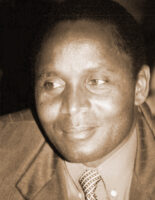
Professor Fredrick Dickson Anangwe – Scholar turned politician

Frederick Dickson Amukowa Anangwe joined politics at the height of the campaign for multipartism in the late 1980s and early 1990s. Although he did not succeed in his bid to win a seat in Parliament in 1992, his fortunes changed in 1997 when he successfully contested the Butere seat and was subsequently appointed Minister for Cooperative Development.

Anangwe worked as a District Officer (DO) in Ngong, near Nairobi, at the dawn of the Moi era. While in that position, he received a scholarship to the Netherlands to pursue a Master’s degree in Public Administration. He also took advantage of the opportunity to study French.

On his return to Kenya, he taught at the Kenya Institute of Administration, now known as the Kenya School of Government. Another sponsorship saw him travel to undertake further studies, this time to Manchester University in the UK, and he graduated with a PhD in the same field.

Anangwe joined his alma mater, the University of Nairobi, to teach Political Science in the Department of Government. This is where his interest in politics was birthed. An opportunity arose to actively participate in politics when Moi faced a real danger of losing power in 1992 with the wind of change that swept across the country pressing for a return to multipartism. This was the campaign to repeal Section 2A of the old Constitution which had been enacted in 1982, making KANU the only legal political party in Kenya.

Anangwe is credited with forming a task force to explore ways of reducing the price of medicine in the country

As a student of Political Science, and having served as a DO with the trappings of power that came with this position, Anangwe knew first hand what power meant. At this time, the Youth for KANU ’92 (YK ’92), headed by Cyrus Jirongo, had sprung up as a powerful lobby group to campaign for Moi’s victory in the upcoming elections. Anangwe jumped on this bandwagon with other professors including Eric Aseka, Chris Wanjala and Henry Mwanzi, to recruit youth to campaign for Moi.

The influential Weekly Review magazine published by Hilary Ng’weno, the first African Editor-in-Chief of the Daily Nation, published an issue during this period carrying a cover headline reading: “100 Lecturers Say no to Multi-partism”. The publication did not, however, name the lecturers. The article was criticised for this claim as the population of lecturers at the time (1991) was slightly more than 100; given that some of them were opposition sympathisers, the claim was outrageous.

The publication of this controversial article coincided with Moi setting up a committee under Vice President George Saitoti to gather views from people around the country on whether or not Kenya should revert to pluralism. One of the conclusions of the Saitoti committee, influenced by the same lecturers and traced to YK ’92, was that Kenyans did not want multipartism, but an expansion of the democratic space within the ruling party, KANU.

On the contrary, the reality on the ground was that wherever the committee went, Kenyans were unified in their call for multipartism. Anangwe was a member of the think tank, formed by Aseka, which organised, through Minister William Ntimama, to meet Moi to share some urgent findings they had gathered from the field. They convinced the President that the call for multipartism was merely academic and therefore needed to be countered through intellectualism.

Despite campaigning for Moi’s re-election, Anangwe remained at the University of Nairobi; he bided his time until the next General Election. In 1997 he contested and won the Butere seat, previously held by Martin Shikuku. He aligned himself with KANU stalwarts Saitoti and Joseph Kamotho. Anangwe was appointed Minister for Co-operative Development. His aptitude for leadership had developed early in his life as School Captain at Shimo la Tewa High School in Mombasa.

However, he is best remembered for the role he played in his portfolio as Minister for Medical Services. Anangwe is credited with forming a task force to explore ways of reducing medicine prices in the country, an exercise meant to improve access to essential drugs.

The task force was comprised of representatives from the Health ministry, the World Health Organization, UNAIDS, the Kenya Medical Association, the Pharmaceutical Society of Kenya, the Federation of Kenya Pharmaceutical Manufacturers, Medecins Sans Frontieres, Treasury and the University of Nairobi’s Department of Pharmacy. It was chaired by the Medical Services Director Richard Muga, and the Chief Pharmacist, Kipkerich Koskei, served as Secretary.

It was tasked with reviewing the existing regulatory framework for players in the market. The minister was categorical that about 50 per cent of Kenyans lacked access to basic life-saving medicines, which was morally and politically unacceptable. He said that Kenyans were dying every day from curable diseases.

High producer or importer prices, strong patent protection, tariffs and taxes, and high wholesale and retail mark-ups were blamed for causing the high prices. Anangwe felt that drugs in Kenya were much more expensive than the same products in other countries. He compared the price of antiretroviral drugs for HIV/AIDS (not free at the time), unaffordable to many Kenyans, with their price in Malaysia. He told the press that a drug such as fluconazole, a treatment used for managing AIDS-related meningitis, cost USD30 cents per 200 mg capsule for the generic version in Thailand compared to USD18 in Kenya, where it was patent-protected. He argued that Kenya consequently needed urgent measures to improve access to essential medicines by its citizens.

As a result, five pharmaceutical companies reduced the cost of HIV/AIDS drugs. Some media reports indicated that Kenya was negotiating for up to 85 per cent reduction in the prices of these drugs. However, Anangwe said: “Even with the proposed reduction, the prices of the drugs will still be prohibitive.”

For example, he explained, the cost per patient of triple antiretroviral therapy after reduction would still be in excess of USD60 per month, which translated to USD720 per year. This cost was too high for most Kenyans. The drugs remained expensive until the late 2000s when the government started to supply antiretroviral drugs for free.

Anangwe told the media that the offer by multinationals to reduce drug prices contrasted sharply with the prices offered by generic manufacturers in India, citing Cipla Corporation as an example.

Thereafter, the ministry had some issues with a tender for supply of ambulances to hospitals under the aegis of the National Hospital Insurance Fund. This may have contributed to the eventual departure of Anangwe, along with a few other officers, from Medical Services. Just before the 2002 General Election, the professor was appointed assistant minister in the Office of the President.

Dr. Paul Adhu Awiti – From dissident and activist to cabinet minister

Paul Adhu Awiti had a chequered career, rising from political detainee to Cabinet Minister both under President Daniel arap Moi’s government.

Awiti never in his wildest dreams imagined that he would share a table with, let alone become a member of Moi’s Cabinet, having been blacklisted as a dissident and detained for his radical political stand.

One Monday, while on a bus travelling from Kisumu to Nairobi, the Karachuonyo Member of Parliament (MP) was woken from his midday nap by a fellow passenger and informed that Moi had just named him as a minister in a mini-Cabinet reshuffle.

And just like that, the soft-spoken MP arrived in Nairobi that evening and was immediately escorted to an official government limousine, complete with driver and bodyguard, and driven to his humble residence.

As planning minister, Awiti believed that the government should be frugal, effective and efficient”

The following week he went to State House Nairobi where he and his mentor, Raila Odinga (MP for Langata), were sworn in as ministers for Planning and National Development and Energy respectively.

But in reality, it was not as easy as that. The two opposition MPs were integrated into the KANU government after intense behind-the-scenes meetings and a political pact between Odinga, leader of the National Development Party (NDP), and KANU, which had been in power since independence in 1963.

Among others who benefitted from the KANU-NDP Cooperation, as it was called, were Ndhiwa MP Joshua Orwa Ojode, and Philemon Abongo, who was promoted and appointed Police Commissioner (1998–2002).

After his appointment as Planning minister in 2001, Awiti emerged as one of the best performing ministers. His talents as a planner and political economist stood him in good stead in managing the ministry.

When Moi bypassed Odinga and all other senior politicians in both KANU and NDP to appoint a junior official, Uhuru Kenyatta, as his heir-apparent, the political merger hit turbulence, forcing Awiti and all ministers from the NDP wing to resign en masse in protest.

“There was turmoil in KANU and NDP. There were big expectations that Moi would settle on Raila or George Saitoti, who was then the Vice President, as his successor.

But he shocked everyone by settling on Uhuru,” Awiti told a local TV station during an interview in 2014.

Others who resigned were Energy minister Odinga, KANU Secretary General and Education minister Kalonzo Musyoka, Heritage minister William Ntimama and the Assistant Minister for Education, Moody Awori. Awori later became Kenya’s fifth VP.

As Planning minister, Awiti believed that the government should be frugal, effective and efficient. His opinion was that government employees needed to be committed and selfless leaders at all levels of our society.

The former detainee was one of the top political strategists at the Forum for Restoration of Democracy (FORD)-Kenya before Odinga moved to NDP. Awiti is credited as being one of those behind the decision to merge NDP with KANU in 2001, believing that it was easier to change a government from within than from the Opposition.

The MP was an outstanding economist and political strategist, a renowned mobiliser and advisor to many key personalities including Tanzania’s founding President Mwalimu Julius Nyerere during his three decades at the helm as a regional leader in East Africa and beyond. Awiti was a principled and brave politician who never sought favours from the establishment even when he needed to.

He was first elected to Parliament in 1997 on an NDP ticket, to replace former MP Phoebe Asiyo for whom he had been chief campaigner in 1992. He had helped Asiyo trounce KANU’s Okiki Amayo who was fully supported by Moi’s government.

He successfully challenged Asiyo in 1997. She was one of the most formidable women politicians Kenya has ever had. Awiti was re-elected in 2002 as a National Rainbow Coalition (NARC) candidate. In 2007 his fortunes changed when a newcomer, James Rege – an electrical engineer who had just returned from the USA – beat him to win Karachuonyo parliamentary seat.

During his one term as Karachuonyo MP Awiti lived in a rented house in Nairobi. He travelled by bus every weekend to be with his constituents in Karachuonyo and with his wife and children in Kisumu.

In an interview after Awiti was first appointed minister, Awiti’s cousin Peter Awiti recalls that his brother confided that the MP’s first reaction was to scoff at the claims.

“He thought it was a joke until he called me and I confirmed to him that he was among the few from the opposition party who had been appointed to the Cabinet with Langata MP, Raila Odinga.”

Even after receiving the best news of his political life, Awiti remained calm in his bus seat until he arrived in Nairobi. It was as if nothing had happened.

Such was the simplicity that defined the life of a man who lived a chequered political life for close to three decades.

Former Subukia MP and KANU-era detainee, Koigi Wamwere, described Awiti as a freedom fighter who risked his life to fight for liberation. “I met Adhu in 1970 when he was an Assistant Town Clerk in Kisumu. He used to pick me in Nakuru in his Beetle car when we went to hold secret meetings with university lecturers,” remembers Koigi. “Adhu also visited me while I was in detention. We were part of the young Africans who were fighting for liberation.”

One of his chief campaigners in the 1997 campaigns, Dick Ogembo, says that unlike most politicians, Awiti was a simple and very principled politician. The MP dropped his first name, Paul, and preferred to be called Adhu Awiti. He was “a politically mysterious man”, according to Ogembo, who said that nobody ever knew his next move and that he worked on very complex political plans to defeat his adversaries.

In 2003 Adhu stunned a gathering that included the country’s top politicians when he said that he had walked all the way from his village in Kanjira, Karachuonyo, about 80 km away to attend the home-coming party of Dennis Akumu, a former Nyakach Constituency MP.

The Orange Democratic Movement (ODM) Executive Director, Oduor Ong’wen, also a political detainee during the single party era, described Awiti as a rare breed of freedom fighter, a principled man who led the fight for Kenya’s second liberation.

“Dr Awiti was many things to many people but to me, Adhu was a father, mentor, confidante, best friend and a symbol of revolutionary disposition. He was a true comrade of mine,” said Ong’wen.

“I first met Adhu in December 1980, when I had just joined the University of Nairobi. We had a student reunion in Kisumu, and he was a keynote speaker. I was struck by his brilliance and eloquence. In that memorable speech, he reminded the students about their responsibility to the historic national struggle, and the need to remain uncompromising.”

Ong’wen reunited with Awiti in April 1987, when the two were arrested and detained at Kamiti Maximum Security Prison on sedition charges.

“Upon release from Moi’s jail, we regrouped to continue with the struggle. He became the fulcrum of our cell in Kisumu comprising among others Muga K’Olale, Onyango CA and Odhiambo Olel. Following the disruption of this cell after the Saba Saba uprising in 1990, Adhu and I fled the country. We reunited in exile, and continued to link up with the movement back home and intensify the agitation for return of multiparty democracy,” recalled Ong’wen.

According to Ong’wen, Awiti was actively involved in anti-government activities while in exile and was a frequent visitor to Uganda where his former student, Yoweri Museveni, was the President.

For three years between 1970 and 1973, Awiti taught Economics as a lecturer at the Dar es Salaam University College. His students included Museveni and former Congolese rebel leader Wamba dia Wamba.

Awiti was among opposition politicians, university lecturers and student leaders who bore the brunt of KANU’s high-handed leadership in 1987 during the crackdown on the clandestine ‘Mwakenya’ movement.

He was arrested on the charge of belonging to Mwakenya, and detained at the notorious Nyayo torture chambers for 30 days before being transferred to Kamiti Prison. When he was released in 1991 he fled to exile to Oslo in Norway.

Four years later, he joined Odinga who had been elected Kibera MP after decamping from FORD-Kenya to launch the NDP in 1996 following differences with FORD-Kenya leader Michael Kijana Wamalwa.

An aggressive go-getter, Awiti quickly joined Odinga’s inner circle of strategists and became one of the founder members of NDP. He was also a lead campaigner for Odinga when he first vied for the Presidency in 1997.

Even though Awiti lost the Karachuonyo seat in 2007 and in 2013, he remained a loyal member of ODM and the Coalition for Reforms and Democracy (CORD) until his death.

When Odinga and Kibaki formed a coalition government after the post-election violence triggered by Kibaki’s re-election, Awiti acted as Odinga’s political advisor when the latter was appointed Prime Minister, a role he performed with passion.

Earlier, Awiti had worked as Deputy Town Clerk in Kisumu in 1974 and was instrumental in drawing up physical and development plans for the lakeside town. Some of his plans are still in use.

Awiti was born on 15 October 1939 in Kanjira in Karachuonyo in Homa Bay County.

He died on 15 July 2015, aged 75. As appreciation for his leadership and to honour his sacrifices during the struggle for the second liberation, residents of West Karachuonyo named a secondary school in his honour.

Andrew Omanga – Champion of grassroot development

Andrew John Omanga first became Member of Parliament (MP) for the larger Nyaribari Constituency after defeating Lawrence Sagini in 1979. He was among several new faces in President Moi’s first Cabinet, a position he landed with the support of Simeon Nyachae, the influential Chief Secretary, the earlier equivalent of a post now known as Head of Public Service and Secretary to the Cabinet.

The other new ministers were Nicholas Biwott, Moses Mudavadi, Joseph Kamotho, Charles Rubia, John Okwanyo, G.G. Kariuki, Arthur Magugu, Jonathan Ng’eno and Kabeere M’Mbijjewe. Moi announced that his new administration was based on nation building and restructuring to ensure maximum efficiency. Omanga was appointed Minister for Environment and Natural Resources. He was later moved to Industry.

In his book, Trails in Academic and Administrative Leadership, the former Vice Chancellor of Jomo Kenyatta University of Agriculture and Technology (JKUAT), Ratemo Michieka, narrates a brief encounter with Omanga where the minister, a lover of education and scholarly disciplines, did not waste time. He simply congratulated him for the good work he was doing at the university and handed him a letter appointing him as a member of the Kenya Marine and Fisheries Board to go and save the coastal region which, due to environmental degradation, was in danger of losing its marine life.

Omanga made history in May 1980 he when took leave and Moi exercised his powers under the Interpretation and General Provisions Act to temporarily transfer his mandate to Water Development minister Jonathan Ng’eno. Ng’eno was named Minister for Tourism and Wildlife in a subsequent reshuffle.

Despite serving a very big constituency he ensured he personally took part in development projects he initiated in the 1980s such as schools

The highlights of Omanga’s tenure include the controversial funding of the Kenyatta International Conference Centre (KICC). A KANU conference held between 2 and 5 December 1985 at the Kenya Institute of Administration (renamed the Kenya School of Government) in Kabete, attended by 300 delegates, had voted to have KICC become part of the party’s properties along with the Kenya Times Media Trust Ltd and the Press Trust Printing Company.

However, the Tourism ministry continued to fund KICC as Omanga said the government wanted to ensure that KICC had enough facilities. This, despite the fact that the ruling party, whose headquarters were at the KICC, was plotting to gain ownership of the building.

“Mr Speaker Sir, I would like to touch on the Kenyatta nternational Conference Centre. I will not say much about KICC because you will know about the importance of the conference centre to us. It is at that conference centre where the World Bank held its conference sometime back. It is at that conference centre where the United Nations Women’s Decade Conference was held. This conference placed Kenya highly on the world map. It is also at that conference centre where many world conferences are taking place today; in fact one conference is being concluded today,” he told the House during proceedings of the Committee of Supply on 9 October 1986.

“Mr Speaker Sir, in terms of development, conference tourism has become very important. It has become so important that these days, when people come to Nairobi, they try to combine a holiday and business meeting,” he added, while emphasising that the government hoped to match the facilities found in countries such as Singapore.

KANU, however, managed to take over the facility in 1989 after the land on which it stands was transferred to the party even as the government continued to maintain it. The transfer was annulled through an Executive Order when Mwai Kibaki became president in 2003.

In 1988 Omanga led a group of local MPs against Simeon Nyachae who was contesting the Nyaribari Chache seat. In what became known as the Kebirigo Declaration, the MPs claimed Nyachae, who had left the civil service, was intending to finance competitors in their constituencies. This opposition led to Nyachae being barred from taking part in the General Election.

In the first multiparty elections Omanga, who remained loyal to KANU, stepped down for Nyachae. He was appointed Executive Chairman of the Kenya National Assurance Corporation in January 1993.

Omanga, who died in 2004 at the age of 72, left behind two widows, Clare and Grace, and 10 children.

Clare Omanga served as a nominated councillor and took up her husband’s community work upon his death. She was also part of a delegation that attended the landmark United Nations Fourth World Conference on Women held in Beijing, China, in 1995. She married Omanga in 1961 after they fell in love while she was still a student at Lenana Girls. “He must have heard of the first girl from Kisii who had broken the record to step in a Form One class,” she told a journalist in a past interview.

Nicknamed “Guinness Export” (the size of a 250 ml bottle of Guinness stout at the time) because of his short frame, Omanga shied away from publicity unlike some of his colleagues from the region such as Nyachae, Zachary Onyonka and Sagini. He was, however, active on the ground, initiating development projects which earned him the admiration of his Nyaribari constituents (before the constituency was split into two). He was also known for his down-to-earth demeanour. Omanga is credited with the construction of many of the permanent structures in schools and other institutions in the region and was a strong political force in the region.

“Despite serving a very big constituency, he ensured he became personally involved in the development projects he initiated in the 1980s, especially schools. And he had a unique way of doing it by literally carrying materials from source to site. He would, for instance, line up students, parents and guests and they would then pass bricks to one another until they reached the school. That helped strengthen the community and also saved a lot of money as opposed to using motorised transport,” said David Okindo, who was a parent at Emeroka Primary School, one of the beneficiaries of the minister’s development efforts.

Omanga attended Amasago Intermediate Primary School in Keumbu between 1943 and 1945 before moving to St Mary’s School, Nyabururu, where he completed his primary education. He was admitted to Yala Secondary School in 1947 and in 1950, joined Mangu High School. He enrolled at Makerere University College in Kampala, Uganda, in 1954 to study for a Bachelor of Arts degree in English, Geography and Economics.

In 1956 Omanga was admitted at the Tata Institute of Social Science in Bombay, India, to study Political Science, graduating with a Master’s degree. After his return to Kenya, he was employed as a Personnel Manager at the East African Tobacco Company, as BAT was then known. His other credentials included a Social Services Administration diploma, a UK Management course and a certificate in Public Administration from the Royal College, Nairobi. He joined public service in 1961 as an Assistant Secretary. Omanga was appointed Permanent Secretary in the Vice President’s Office and Ministry of Home Affairs by Mzee Jomo Kenyatta in May 1966, paving the way for his political journey.

“Omanga shied away from publicity…He, however, was active on the ground, initiating development projects which earned him the admiration of his Nyaribari constituents.”

Andrew Kiptoon – Outspoken, honest and dedicated

Andrew Chepkoiywo Kiptoon, who served as a Roads and Public Works minister for two-and-a-half years from 1998 to 2000, had an uneasy relationship with President Daniel arap Moi. The Baringo North Member of Parliament (1997 to 2002) was known for freely speaking his mind, a trait that did not sit well with Moi and the KANU hierarchy. Kiptoon, who beat Willy Kamuren after his decade-long tenure as area MP, streamlined the Roads ministry which had earlier been taken over by the so-called cowboy road contractors, earning him accolades and condemnation in equal measure.

He is said to have differed with Moi and those close to him on several occasions for persistently demanding prudent management of Kenya’s economy and independence for ministers to discharge their mandate. Interestingly, his brother Japheth Kiptoon, a former long-serving Vice Chancellor of Egerton University, was a close friend of Moi.

In a rare instance, Andrew Kiptoon contested the Baringo North parliamentary seat and won without blessings from Moi who would have preferred Kamuren as MP. “Moi didn’t want him to contest the seat but he couldn’t do anything because voters who were long tired of Kamuren, wanted change,” said Kibet Kulei, a member of the Baringo County Assembly. Initially, Moi had vowed not to allow Kiptoon to be elected despite his popularity, but backed down when he realised that the engineer would most likely defect to the opposition and still win the election. Moi reluctantly let the electorate have their way because he did not want opposition in his Baringo backyard, Kulei said.

According to Kulei, the former minister had developed an interest in politics in the early 1960s and had been nursing a development agenda for his people. But since he was not a KANU cheerleader, Moi viewed Kiptoon with suspicion. “Even when he was elected, he still viewed him as an opposition sympathiser. Because of independence of mind, he couldn’t find his way to the kitchen cabinet,” said Kulei.

The Democratic Party Shadow Minister for Roads Joshua Toro said Kiptoon was the most dedicated and hardworking minister in the government.

Born in 1946 in Kapchepkoiywo in Kabartonjo, he started school in 1955 at the African Inland Church Mission School, but instead of starting from class one, he went straight to class two. His family said he was too bright to fit in class one. He sat for his Kenya African Preliminary Examination (KAPE) in 1961 at the same school and proceeded to Alliance High School for both his O and A level examinations. In 1968 he joined the University of Nairobi, graduating with a Bachelor’s degree in structural engineering.

After graduation he worked for four years as a consultant with Cowi Consult, a Danish engineering company that sent him to Denmark to pursue a one-year Diploma course in engineering. After returning from Denmark in 1976, he left his job to set up a company known as Chauhan Kiptoon Consulting Engineers, which he co-owned with a native Asian. Several buildings in Nairobi can be attributed to his engineering skills. Along with other engineers, he was requested by the government to build and expand water infrastructure in the country.

Before he was sacked from his Cabinet position Kiptoon, considered by both KANU and the Opposition as rational, moderate, affable, efficient and a dynamic minister in the Moi government, was pushing for implementation of the Roads Board Bill. The Bill was supposed to transfer the management of the fuel levy to districts (counties) under the supervision of elected leaders.

This sparked a falling out with powerful people who wanted their private companies to win tenders for road repairs and construction. He was also determined to streamline the dilapidated roads sector by blacklisting contractors who did shoddy work. The axe fell on him after persistent lobbying and prodding by influential road contractors who were in business with powerful government officials.

“He refused to bend to the whims of powerful men including Moi. It is a blow to the fight against graft,” Mukhisa Kituyi, Kimilili MP (FORD-Kenya) told the Daily Nation. He added: “Kiptoon was the best minister from the Kalenjin community. He was the example we used to illustrate that there are good people among the Kalenjin around President Moi.”

MPs from both sides of Parliament described him as open and transparent on national issues, adding that he was moderate and a likeable member of the Moi Cabinet.

A shocked opposition, which further described Kiptoon as an anti-corruption crusader, urged the World Bank and the International Monetary Fund, that were withholding aid because of runaway graft and poor governance, to continue doing so because of the sacking of Kiptoon.

The Democratic Party Shadow Minister for Roads, Joshua Toro, declared that Kiptoon was the most dedicated and hardworking minister in the government. “As an experienced engineer, he knew all the tricks contractors and the ministry officials used to steal money from the government. He was the right man for the job because nobody could dupe him in the quality of the work done,” he told the Daily Nation.

Toro added that Kiptoon was honest and forthright in his reply to questions and complaints by MPs. “When the Roads Board Bill came before the House Committee, Mr Kiptoon listened to suggestions we gave and incorporated all of them in the final document,” said Toro.

Some said Kiptoon had invited his sacking by clinging to the ‘Mr Clean’ tag in the midst of looters.

Several rebel KANU MPs described Kiptoon as honest, independent-minded and a professional who never exhibited sycophantic traits; they admitted that his sacking was glaring evidence of Moi’s inability to tolerate independence of thought by his ministers.

At the time of his appointment as Roads minister, Kiptoon lamented about the poor state of the roads in the country and pledged that under his watch, he would improve Kenya’s road network. Anthony Kimetto, a former Sotik MP, said Kiptoon wanted to run his ministry independently, but he did not succeed because all ministries were managed from State House. “He was in the right place at the wrong time. He wanted to discharge his duties professionally, but it was the time when Moi was both the president and the minister,” he commented.

During his tenure in the Cabinet Kiptoon, a family man who now leads a quiet life in Nairobi, once questioned why power rationing, under Kenya Power and Lighting Company, was the order of the day; he publicly blamed it on mismanagement and habitually rubbed the establishment the wrong way, continuing to point out the ills afflicting the country even after leaving the Cabinet.

The bold maverick once challenged Moi in Parliament to declare whether he was retiring after 2002 because of the uncertainty of the economy. He said the prevailing atmosphere was discouraging local and foreign investments.

Kiptoon, considered as the voice of reason in KANU, had a warm relationship with the Opposition. He once differed with his party over an attack by its members on Mwai Kibaki who was then the Leader of Opposition in Parliament. He told the party to stop blaming the Opposition for the problems the country was facing, like the donor funding freeze.

Kimetto remarked that in the days when KANU was in power, ministers were just figureheads with no absolute mandate over their ministries.

“It was the time when ministers couldn’t make decisions without consulting the president or other people near him. Kiptoon did things the way he wanted but couldn’t last,” he said. According to Kimetto, had Kiptoon stayed in the ministry for five years, he could have harnessed funds and fixed problems that bedevilled the roads sector when local and international donors did not trust the government. “He could have utilised the fuel levy to fix roads. He was shown the door when he wanted to use billions of shillings in the kitty. He had to go to give way to hyenas who were salivating for the money.”

Kimetto added that the minister was conversant with the state of all roads in the country and regretted that he was sacked before he fixed roads in his constituency.

Kiptoon was one of the people who suggested that the six million-year-old man whose skeleton was discovered in Baringo North be given the name Arrorin Tugenensis. The former minister, who left the Cabinet without any scandal, hailed from the Arror sub-tribe of the Tugen people group.

Dalmas Otieno – Level-headed veteran

Having been a minister for nearly 10 years, Mr Otieno knew the nooks and crannies of the civil service well enough to fix where it was broken.

Even though he had been a Kanu loyalist nearly all his life, he understood that he was serving a reformist government and he went about initiating changes, the most important of which was digitising government services.

Mr Otieno joined Mr Odinga’s Orange Democratic Movement (ODM) in 2007 as the easier route back to politics after staying out in the political cold for five years. That calculation earned him back his old Cabinet seat – this time in the Grand Coalition Government that was formed after the disputed 2007 elections.

His party affiliation notwithstanding, it was easy for Mr Kibaki to embrace him because of his wide experience in government and gentlemanly mien. And he did not disappoint. His success was reflected in the many reforms he introduced in the key Ministry of Public Service that Mr Kibaki entrusted him with.

Because Mr Otieno was an excellent performer and a stickler for proper procedures and discipline, it was not surprising that Mr Kibaki chose him to head the Ministry of Public Service, which was still bedevilled by corruption and lethargy since the Kanu days, the independence party having been trounced only five years earlier.

Mr Otieno knew very well where the rot lay, having been a longtime strategist for President Daniel arap Moi. In an interview for this project, the 75-year-old leader said that under Mr Kibaki, there was much emphasis on performance and productivity, and that he applied the same principles to ensure efficiency in public service.

He noted that working under Mr Kibaki was a different ball game in that every issue and project was analysed professionally before implementation and the work had to be completed within the stipulated budget.

“There was no room for people creating projects outside the laid-down plans for every ministry,” he said, recalling that Mr Kibaki approached every issue professionally.

Since Public Service ministry was based at Harambee House, Mr Otieno — who was deputised by Assistant Minister Major (Rtd) Aden Ahmed Sugow, with Titus Ndambuki as Permanent Secretary — was in contact with Mr Kibaki virtually every day to consult and exchange views on issues related to his ministry. The towering MP for Rongo in South Nyanza headed the ministries of Industrialisation between 1988 and 1991, Labour and Human Resource Development (1991) and Transport (1991 to 1996.)

Away from administration, Mr Otieno is also a respected boardroom negotiator. In early 2008, when there was an impasse over the division of ministries between Mr Kibaki’s Party of National Unity (PNU) and Raila Odinga’s Orange Democratic Movement (ODM), Mr Otieno came in handy for the latter, their earlier political differences notwithstanding.

To get away from the political jostling and wrangling between the two coalition partners for key ministries, President Kibaki and Mr Odinga went for a retreat at Sagana State Lodge, with the President’s trusted ally Francis Muthaura tugging along, while the Prime Minister picked Mr Otieno for the negotiations over portfolio balance.

It was at Sagana that the coalition partners reached a compromise and agreed to share several ministries, even though the ODM rank and file still felt shortchanged in the power-sharing arrangement because PNU retained the key ministries of Finance, Internal Security, Constitutional Affairs, Defence and Foreign Affairs. Some ODM members complained that they had been allocated mere “departments”.

But Mr Otieno insists that they worked hard to give every ministry enough portfolio at the Sagana retreat. “Though the Cabinet was large because of the coalition, we ensured that every ministry was assigned some services and that there was no ministry for the sake of it,” he said.

Another illustration of Mr Otieno’s skills in boardroom negotiations was in December 2011 when reports filtered through that he and then Medical Services Minister Prof Anyang Nyong’o had faced off in the Cabinet over the medical insurance scheme for civil servants.

Mr Otieno — who had stood in as the Medical Services minister in February 2011 when Prof Nyong’o was undergoing medical treatment in the US — had overturned a medical cover scheme for outpatients that had been put in place by Prof Nyong’o.

Appearing before a parliamentary committee on health, Mr Otieno argued that the proposed National Hospital Insurance Fund (NHIF) scheme needed careful analysis because pilot surveys in Mumias and Nairobi alone were not representative.

“I am a statistician, and that sample is inadequate,” Mr Otieno, who has a background in insurance, told the committee. “We needed a professionally arranged sample. The scheme must go on because Kenyans need a healthy nation, but in a manner appreciated by the members of the Fund. It has such heavy inbuilt risks.”

He further explained that the scheme needed adequate consultations with stakeholders before it could be rolled out, because most Kenyans were not in gainful employment and sustaining the scheme would be difficult.

When the issue went to the Cabinet, Prof Nyong’o was of the view that the scheme should be run by NHIF, while Mr Otieno wanted the scheme to be administered by a consortium of at least five private underwriters. The Cabinet voted for Mr Otieno’s version.

One of his landmark achievements as Public Service minister came in December 2011, when he launched digitised government services under the Integrated Records Management System (IRMS), the first step towards paperless record management to deal with the problems of missing files and failure by the government to respond to correspondence from citizens.

The IRMS tracked mail and files in the public service, enabling officers to receive files on their desks, access and download the information and move the letter on the system.

Under the integrated system, officers were to transfer information in hard copy into the system easily and indicate what action was to be taken or had been taken. Senior officers, including Permanent Secretaries, were then able to monitor whether work had been done or was still pending.

“This is to ensure that Government activities are documented and maintained, with officials getting the right information at the right time and at the least possible cost. The system will enable the protection of Government’s interests, and reduce the risk associated with missing information, and thereby creating opportunities for corruption,” Mr Otieno said when he launched the IRMS at the Kenyatta International Convention Centre on December 19, 2011.

The introduction of the electronic records management system was a great leap in the journey towards creating paperless public service as envisaged in Vision 2030.

But Mr Otieno’s footprints were not confined to Kenya. When neighbouring South Sudan gained its independence in July 2011, his ministry was tasked with helping build a public service for the new nation that was emerging from a debilitating war.

To do this, he deployed 72 civil servants to Juba to train South Sudanese personnel so that they could manage their affairs effectively, helping President Kibaki to stamp Kenya’s authority as the big boy of the region.

Mr Otieno was born on April 19, 1945, an eventful year that on the global front marked the end of World War II.

Other leaders born in the same year, and who would play influential roles in independent Kenya, include veteran opposition leader Raila Odinga, who was Prime Minister between 2008 and 2013; the late Prof George Saitoti, the country’s longest-serving vice-president; Prof Anyang Nyong’o, a former minister and now governor of Kisumu County; Chirau Mwakwere, also a former minister; as well as Paul Muite, a senior lawyer and former legislator who was key in the Second Liberation movement.

A typical Luo grandee who carries himself with pride and high-society mannerisms, Mr Otieno graduated from the prestigious Makerere University with a Bachelor of Science degree in Applied Economics in 1971.

He considered himself a cut above the rest in his Kengeso village in Kamagambo – the Seventh Day Adventists’ hotbed in South Nyanza – and carried himself as such, walking tall and always impeccably dressed.

Between 1971 and 1982, the Strathmore College alumnus worked as an accounts manager at the Insurance Agency Management before joining Kenya Commercial Bank as its chairman and director between 1982 and 1985.

He had earlier qualified as a Fellow of the Chartered Insurance Institute, London. He then founded Tasley Consultants, of which he was chairman between 1998 and 2001. Earlier, he was treasurer of the Kenyatta University Council from 1983 to 1987.

In 1988, Mr Otieno plunged into politics and won the newly created Rongo Constituency under the ruling party Kanu, though he triumphed under the cloud of the controversial queue-voting system.

As a statistician, he calculates his political moves carefully, always siding with the powers that be to curve out for himself a place in the politics of the day.

Having been elected in 1988, the first MP for Rongo, which was curved out of Homa Bay Constituency that year, he quickly worked his way into President Moi’s heart, employing his gift of the gab and gentlemanly demeanour to become one of the Head of State’s most trusted stalwarts outside of his Kalenjin inner circle.

But come 1992, during the first multiparty elections, Mr Otieno — who still stuck with Kanu despite his Nyanza province trooping to the opposition — lost his seat to his uncle Linus Aluoch Polo of Ford Kenya, headed by Jaramogi Oginga Odinga.

In 1997, he lost again – this time to newcomer Ochilo Ayacko, who was running on an NDP ticket.

A favourite of President Moi’s, however, Mr Otieno was to remain in Parliament as a nominated MP and minister, in the same manner that the hawkish Joseph Kamotho, from the fiercely opposition stronghold of central Kenya, was perennially appointed minister – for regional representation.

Back on his Nyanza turf, Mr Otieno was accused of working with the provincial administration to keep alive the Suba question in a desperate divide-and-rule tactic so Kanu could win at least a seat in the strong Ford Kenya zone.

The Suba are a Bantu group who mostly occupy the southern region of Homa Bay County even though they have been assimilated by the more dominant Nilotic Luo for over 200 years, making any effort to evoke nationalistic sentiments in them futile.

A relentless Mr Otieno was to play a leading role in keeping the Kuria, another Bantu community, a distinct political hegemony by ensuring it was given its own district out of the larger Migori. The district was for a long time to provide the only Kanu seat in the four regions of Migori, Kisumu, Siaya and Homa Bay.

Having failed to neutralize Mr Odinga’s influence in Nyanza, Mr Otieno was one of the brains behind the Kanu merger with the former’s National Development Party (NDP) in March 2002, as Mr Moi desperately tried to stop a swelling opposition tide that would nonetheless sweep Kanu out of power that year.

In that election, Mr Otieno lost too to Mr Ayacko of NARC, having stuck with Kanu and supported the candidacy of Uhuru Kenyatta. This time he would stay in the political cold as his patron, Mr Moi, had left power and retired and his old Kanu party had been vanquished at the polls.

After the routing of Kanu, Mr Otieno fell back on his insurance company until 2007, when he joined ODM and edged out Mr Ayacko during the party nominations. He successfully defended his seat in 2013 on an ODM ticket.

Viewed all along as a Johnny-come-lately and an opportunist, Mr Otieno’s political fortunes started to plummet in 2014 when he was accused by some ODM leaders of working closely with the government of President Kenyatta, who had defeated Mr Odinga at the polls, earning him the tag of a “mole”.

“Dalmas has never been really on our side. He has always been on the other side and he joined us pretending to be sincere but has turned his back on us after we helped him,” Oburu Oginga, Mr Odinga’s elder brother, told a meeting in 2014.

Mr Otieno was among four MPs removed by ODM from their committee assignments for their “cooperation” with the government.

Others were Samuel Arama (Nakuru Town West), Ken Obura (Kisumu Central) and Zainab Chidzuga (Kwale County woman rep). However, the four survived when the motion was defeated on the floor of the House.

For a man who considered himself an alternative leader in the restive Nyanza region, Mr Otieno never fully embraced Mr Odinga, the de facto leader of his community, even after joining his party, ODM. He was briefly associated with a movement called Kalausi, Dholuo for whirlwind, which tried to sweep Odingaism out of Nyanza ahead of the 2017 elections.

But the movement, which also included former Kasipul Kabondo MP Oyugi Magwanga in its ranks, failed to take off, with the two leaders getting punished by voters at the ballot – Mr Otieno in his attempt to retain his old Rongo constituency seat, and Mr Magwanga in his bid to wrest the Homa Bay governorship from the ohangla-loving Cyprian Awiti.

Mr Otieno had said his new party would challenge Odingaism and focus mainly on the development of the region, which had “lagged behind in development because of perpetual political agitation”.

The party was, however, never to be. In a recent interview, the 75-year-old politician said that he had never had sour relations with Mr Odinga and that he was just challenging the grassroots to focus on development projects rather than constant politicking.

A moderate on the national political front, Mr Otieno served on the Speaker’s Panel (a pool from which a temporary House Speaker could be picked at any time) between 2008 and 2013.

For his moderate demeanour, extensive public service career and old Kanu connections, President Kenyatta appointed Mr Otieno his Special Envoy on South Sudan in February 2014, even though he was a senior member of the opposition.

As 2017 approached, Mr Otieno started moving closer to Mr Odinga and even competed in ODM primaries in his bid to recapture the Rongo seat, but he lost to Paul Abuor. He proceeded to contest as an independent candidate but lost again.

Following the death of Migori Senator Ben Oluoch Okello in June 2018, Mr Otieno initially expressed interest in contesting the seat on a National Liberal Party (NLP) ticket. He, however, withdrew from the by-election race, settling instead for an appointment to the Salaries and Remuneration Commission (SRC).

Mr Otieno argued that he had a personal connection to the SRC because he was the one who established it as minister for Public Service to help manage the public wage bill.

He became the vice-chairperson of the commission in September 2018 and has set his eyes on the Migori governor’s seat.

Away from this political juggling, a history of the movers and shakers in President Kibaki’s reformist government will rank Dalmas Otieno, a committed and knowledgeable minister, among the best.
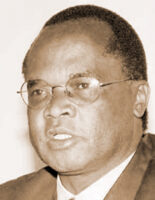
Peter Castro Oloo Aringo – Minister who implemented the 8-4-4 education system

It was during Peter Castro Oloo Aringo’s tenure as Minister for Education that the 8-4-4 system of education was introduced. Additionally, the Kenya Science Teachers’ College was expanded and the Kenya Technical Trainers’ College (KTTC) was launched to address the needs of the new technical education system.

It was also Aringo who presented bills in Parliament that were enacted into law to make Moi, Maseno and Egerton universities into public institutions. In addition, a deliberate policy was approved by the Government and promoted to start institutes of technology through fund raising in the eight provinces, namely Nairobi, Rift Valley, Western, Nyanza, Central, Eastern, North Eastern and Coast.

Besides the Education docket, Aringo also headed various other ministries during his 15-year stint in the Cabinet under President Daniel arap Moi and represented the people of Alego-Usonga Constituency. Moi’s confidence in Aringo led to his first Cabinet appointment as Minister for Information and Broadcasting before he was moved to Environment, Labour, Education and finally, the Ministry of Employment.

Aringo is an alumnus of Mbaga Primary School and St Mary’s School, Yala, where he also taught briefly after graduating with a diploma from Siriba College in Kakamega District (now Kakamega County). He graduated from the University of Nairobi with a first class bachelor’s degree in history, economics and politics in 1969. He later won a Commonwealth scholarship to study for a master’s degree in international comparative education at Toronto University in Canada.

After graduating in 1972, Aringo returned home for a holiday as he waited to start his doctorate programme, but was bitten by the bug of politics as the country was in the grip of elections fever in 1974. He used his networks in the teaching fraternity to launch his political career. Through former colleagues and the Kenya National Union of Teachers (KNUT) Siaya Branch Chairman, Ambrose Adongo (who later became the KNUT Executive Secretary), and his father, Mzee Barnabas Aringo, who was Board Chairman of Mbaga Catholic Church in the constituency, he had a good platform from which to present himself to the electorate.

His first attempt at vying for the seat in Siaya District was a huge success. Under the slogan, “Alego-Usonga needs enlightened leadership”, he romped home with a whopping 12,980 votes against the 2,900 that his closest rival, Dr Zachary Nyamodi, garnered. His candidature received a big boost when he was endorsed by the former Vice President, Jaramogi Oginga Odinga, whose Kenya People’s Union party had been proscribed while he was in detention.

“Jaramogi threw his weight behind me when I went to get his blessings. He told me, ‘I know you and your father as upright people and I have also married from your (Kakan) clan. I want you to follow in your father’s footsteps’,” recalled Aringo.

During his first term in the august House, he moved two bills. The first was to create a Truth and Reconciliation Commission; this was shot down by the Executive but revived in 1998 and Parliament passed it. The second was to create a Parliamentary Service Commission (PSC) to make the Legislature autonomous by having its own budget and its own funds drawn directly from the Consolidated Fund. This was also shot down by MPs but more than two decades later, in 2002, Aringo resurrected the bill and successfully moved it.

It was during his third term as the Alego-Usonga MP that President Moi made him an assistant minister before appointing him a full Minister. Trying to explain how he made it to the Cabinet, Aringo is quoted as saying, “I don’t know why Moi did it. Earlier, he had called me and my wife, Edidis, to visit him at his Kabarak home. He told my wife that he would like to work with me, but that he did not like my beard or my middle name, Castro!”

On their return to Nairobi, the MP decided to shave his beard. Two weeks later he heard his name announced on radio during the Kenya Broadcasting Corporation (KBC) lunchtime news bulletin – he had been appointed Assistant Minister for Education with immediate effect. The next day, Aringo and his wife drove in their Isuzu pick-up to Moi’s Kabarak home through the Nakuru District office of the powerful Rift Valley Provincial Commissioner, Hezekiah Oyugi, to thank the President for honouring him with the appointment.

During an evening meeting over a sumptuous dinner, Moi said to Aringo: “As you can see, I have already filled my Cabinet with ministers. But if you behave, I will consider including you in my Cabinet in the near future.” It was a promise Moi kept. Three days later, he was sworn in as Jonathan N’geno’s assistant in the Ministry of Higher Education. When he reported to his new Jogoo House office, he was given a secretary, an official car (a Ford Cortina) and a driver. In addition to his KES 8,000 for his work as an MP, he was paid a salary of KES 25,000. Among his other allowances and benefits was a spacious Government house in the upmarket Loresho Estate – a world apart from his rented house in Westlands. The next day he was in Parliament, sitting on the front bench and bearing the responsibility of answering questions from backbenchers on behalf of his boss and the Government.

Reflecting on that time, Aringo said, “It was not easy to switch from the back bench as a vocal MP to the front bench and be an effective Government spokesman on matters of higher education. By then I had signed the Official Secrets Act and pledged my loyalty to President Moi.” As for his work, he hit the ground running. “I have no regrets; I had a good time as Assistant Minister for Higher Education.”

Six months later, just as Moi had hinted, Aringo again heard his name on the KBC radio news bulletin – he had been appointed Minister for Information and Broadcasting in a Cabinet reshuffle. The following week, he was summoned to State House Nairobi, where he was sworn in. During a meeting attended by the Vice President and other Cabinet colleagues, Moi told him: “I want you to support me and my government, and to give KANU a better image in Nyanza.”

But barely 12 months into the appointment, Aringo ran into problems. He attributed this to the then Attorney General, Charles Njonjo, who was not amused by his policy to start vernacular radio stations under KBC across the country. He was moved in a Cabinet reshuffle to the Ministry of Environment. The irony was that the hitherto Minister for Information was having lunch with his colleagues in Parliament but was unaware of the news of his transfer until it was broadcast to the world!

His legacy in Environment was the creation of the National Environment Management Authority within a year of his transfer and after he prepared a policy paper to the Cabinet and a draft bill to Parliament for better management of the environment. By then, despite Kenya hosting the United Nations Environment Programme (UNEP) in Nairobi, the government had no policy guidelines on environmental matters.

Trouble would crop up again following the 1982 attempted coup by a number of Kenya Air Force soldiers. Aringo was accused of celebrating the short-lived attempt to overthrow the government. Moi fired him two weeks later – through a KBC radio announcement. The minister was in his office working when he learnt of his fate. He packed his personal possessions and left for his rural home and constituency in his pick-up, christened, Weg Piny (the people’s car). That evening, five people came to his Loresho residence and repossessed the official car and flag. He was ordered to vacate the Government house within a week.

“I was the only Minister to be sacked. Someone had told Moi that I was seen performing a Luo traditional mock fight, which is a sign of celebration. That was untrue,” he said.

Later, in snap elections, Aringo retained his seat by another landslide thanks to sympathy votes. He garnered 24,000 against his nearest rival’s 9,000. Back in the august House as a backbencher once again, he embarked on his reforms agenda for the Legislature. He believed it was because of this that Moi re-appointed him to the Cabinet, this time as Minister for Labour.

“Moi summoned me to his Kabarak home and said, ‘I know, after my investigations, that you were not involved in the so-called celebrations. I want you to continue with your work as a Cabinet Minister.’”

He worked in the Labour docket for one year before going back to the Ministry of Education, which he headed for seven years straight. One of his biggest challenges was the implementation of the 8-4-4 system, which had its foundation set by Professor Douglas Odhiambo, the Vice Chancellor of Moi University, and his team. But the students were not getting the envisioned practical education. The Kenya Science Teachers’ College could not produce enough science teachers, so the Minister proposed the creation of KTTC to produce more teachers to specialise in technical courses.

“As a former teacher, President Moi had a passion for education. He gave me his full support because I was always honest with him. I reported to the Cabinet that we had to achieve the aims of the 8-4-4 system. I also convinced him that we needed to split the ministry into two – technical and formal education – to make 8-4-4 a success,” he said.

The idea to start regional institutes of technology was mooted and implemented, and saw the likes of Dedan Kimathi, Rift Valley, Coast, Western and Ramogi technical institutes established around the country.

His tenure as Minister for Education was, however, cut short in 1990 by the re-entry of Njonjo as an elected MP for Kikuyu Constituency and Minister for Constitutional Affairs, after he resigned as Attorney General.

“In my war with Njonjo, Moi replaced me with William Omamo, who was so excited to hear the 1pm KBC news bulletin that he rushed to take over while I was still seated in my office!” Aringo recalled with amusement.

He was moved to the low-key Ministry of Employment but he decided not to report and instead kept his distance for close to a year in protest. His removal from Education was shortly after his friend and colleague, Dr Robert Ouko, had been kidnapped from his rural home in Kisumu District and killed. That was one of the darkest periods in Aringo’s working life.

“I spent most of my time in my constituency thereafter. I was a rebel in the Government, and the media nicknamed me ‘Rogue Minister’. I believed that people high up in Government were involved (in Ouko’s death) and I personally told Moi that it was not possible that a Minister for Foreign Affairs could be killed without involvement of the Government.”

Aringo was the only Cabinet Minister to record a statement with Inspector John Troon of the Scotland Yard Crime Unit, who came to Kenya to investigate Ouko’s death. He stated that he believed his colleague had been eliminated in a conspiracy involving senior Government officials

The Minister also strongly felt that his continued stay as KANU Chairman was untenable as his efforts to strengthen the ruling party were being frustrated from within. He had held the top party position for five years (1986 to 1991) and resigned at State House Nairobi at 4pm, before his sacking was announced on KBC at 8pm.

Aringo returned to the National Assembly as a backbencher after he was re-elected two more times. He used his academic and political experience to call the presidency to account through legislation and an oversight role. He also joined an Opposition party, FORD-Kenya, led by Odinga, and broke all ties with his former boss.

Aringo is known to have once referred to the President as “the prince of peace” during a public event. Neither Moi’s critics nor the clergy were amused. However, what he would like to be remembered for are parliamentary reforms that saw the creation of PSC, and the creation of a Budget Office and a Budget Committee to interrogate and approve the national budget before it is read, debated and approved by Parliament.

His colleagues unanimously elected him as the first vice chairman of PSC. In addition, during sessions of the National Constitution of Kenya Review Commission, dubbed the Bomas Conference (2003-2004), Aringo successfully moved the Affirmative Action Motion to recognise the sovereignty of the people in the Constitution “to dismantle the powers of the imperial presidency”; and a controversial one on impeaching the presidency, both of which were captured in the Constitution of Kenya 2010.

His parting shot, after serving as a commissioner with the Salaries and Remuneration Commission for six years, was: “A politician grows to be a statesman. A politician looks to the next elections, but a statesman looks to the horizon to see the long-term impact of policies on the society and communities, and this is what I have transformed myself into. You don’t have to be the President to be a statesman. That is the problem we have in Africa – a deficit of leadership.”

As he stares into his sunset years at 77, the ‘Rogue Minister’, who is a consultant on budget processes and rules of procedure for 11 parliaments in Africa, says he is happy that the Constitution has recognised and empowered citizens to seek redress in court to challenge actions by the President, his deputy, ministers and other top Government officials as they so wish and by right.

Peter Habenga Okondo – A loose tongue proved to be his final undoing

Throughout his political career that spanned the colonial years until 1990, Peter Habenga Okondo was known for being outrageously outspoken; so much so that the media commonly referred to him as a man with a loose tongue. During the 1992 multiparty election campaigns, he was quoted as chiding members of the Opposition in Busia District (now Busia County) in a famous statement: “Nefue baliyo, nafue baliho, khandi nafue balibaho! (It is us who were there, it is us who are here now and it is us who will be there).”

He could have been making reference to the fact that he was in high places long before any of his would-be opponents appeared on the scene. In 1961, he was one of two Africans, the other being Charles Rubia, to sit on the Industrial Development Corporation board, precursor of the Industrial and Commercial Development Corporation (ICDC). Okondo sat on the board as an alternate to Avelling Wabuti, who would later become one of the first Permanent Secretaries in independent Kenya, while Rubia became the first African mayor of Nairobi. Okondo had also earned the recognition of the colonial government, serving as Assistant Minister for Finance (1961-1962) and Works (1963) in the prestigious Legislative Council.

As a trained accountant and a first class honours graduate from Cape Town University in South Africa, Okondo founded Habenga Corporation, which later merged with Tysons Ltd, a real estate company that still exists today. He was variously described as being very frugal and a loner. Some have it that if he hosted a guest in a restaurant, he would order one bottle of soda or beer and share it. He was also said to avoid social events, even with business colleagues – lunch meetings were the farthest he was willing to go. It was, however, his unbridled tongue that stood out wherever he went.

Under President Daniel arap Moi, he worked in the Ministry of Labour and Manpower Development twice as well as in the ministries of Cooperatives, Transport and Communication, and Commerce and Industry, and seemed to enjoy courting controversy despite being a public servant tasked with casting the Government he worked for in good light.

When Okondo was Minister for Labour, he postponed the Central Organisation of Trade Unions (COTU) elections to September 1981. This was after COTU Secretary General Juma Boy was ousted from the Dock Workers Union. With the law requiring a COTU boss to be an official of a grassroots union, this meant Boy was disqualified from contesting the COTU leadership position. But with the elections postponed, Boy had time to prevail upon his ally at the Kenya Petroleum Workers Union to step down for him thus enabling him to defend his position in COTU.

In 1989, Ali Mohammed, the Secretary General of Posts and Telecommunication Workers Union, presented the Minister with a proposal for a COTU merger with the ruling party, KANU. He also proposed the setting up of a party newspaper, and that COTU should have a say in the running of the National Social Security Fund and the National Housing Insurance Fund. Okondo went ahead to ensure that COTU was affiliated to KANU in 1990 along with the powerful women’s organisation, Maendeleo Ya Wanawake. The affiliation was however short-lived as COTU itself, amid the onslaught of pluralism, fought to remain independent.

When he was moved to the Ministry of Cooperatives in 1984, Okondo found a powerful office – Commissioner of Cooperatives – solidly established by Alfred Birgen. With two strong personalities working in the same space, it turned out to be a short stint for the Minister; barely a year later, he was moved to the Ministry of Transport and Communication. There, he found bus and welfare associations fighting against public service vehicle licensing and the Government’s first attempt to introduce speed limits on the highways in an attempt to curb speeding, which was a cause of rising road carnage at the time.

Then he was moved to the Ministry of Commerce and Industry, again after spending hardly a year in the Transport docket, before returning to Labour in 1986, which was his last Cabinet assignment under Moi. It was while he was the Minister for Commerce that he would engage in one of the biggest controversies of his public service career.

Okondo went to Parliament and told MPs that he intended to remove restrictions on imported goods. His reason was that Kenyan-manufactured goods were of inferior quality. At the time, second-hand clothes and shoes (mitumba) were being imported in bulk and the effect on an otherwise strong Kenyan textile and leather industry was dire.

It is worth noting that on the eve of independence, as Assistant Minister for Works, he was quoted as having opposed the upgrading of facilities at Nairobi Airport in Embakasi, arguing that foreigners coming to Kenya had no expectations of high standards of quality or efficiency. He further opposed the construction of high-rise buildings in Nairobi and limited them to no more than two storeys, saying that the newly-independent country was setting standards that were too high for itself. In an editorial, the East African Standard newspaper told him off and reminded him that Kenya was on a new road to take her place as a member of the international community.

In the days when KANU reigned, it was the norm for dissenting politicians to be expelled from the party while the clergy was viewed as the unofficial opposition. Okondo had something to say about this. Reverend Timothy Njoya, a Presbyterian Church of East Africa cleric, was among those who were critical of President Moi’s government. Okondo was to describe him as a “cleric with the wisdom of a fool”.

Meanwhile, the Busia District KANU Branch had recommended that Okondo should appear before a party disciplinary committee chaired by Okiki Amayo to defend himself against accusations that he had been disrespectful of the party. Okondo told Parliament that the Amayo committee was “boisterous, bloated and bombastic as to make utter nonsense of truth and reality”.

When it came to the battle for control of Busia, he referred to his rival, Moody Awori, as “nusu waziri” (half Minister), in derisive reference to Awori’s long-standing status as a “permanent assistant minister” in successive Moi administrations. He also described James Osogo, another rival, as “man of nakhabuka (oath), a claim for which a voter, Nicolas Okada, went to court after the 1979 General Election.

The court found Osogo guilty of having an oath administered, which was said to have led to the death of the man in whose compound the ceremony was conducted. Consequently, he was barred from contesting in any elections for the next 10 years, as the law stipulated at the time. This opened the way for Okondo to capture the Busia South parliamentary seat in the 1981 by-election.

His aggression extended to members of the press when, during a political rally he had convened in Busia, he accused journalists of siding with his enemies. He then signalled his supporters in the crowd to round up the journalists present and throw them into Lake Victoria. It was Ishmael Chelang’a, then the Busia District Commissioner, who rescued the journalists and ordered police to ensure that they were safely escorted back to Kisumu Town.

In another incident, Okondo claimed that there was a plot to assassinate him and members of his family. Speaking in 1986 at the funeral of Achiya Echakara, an assistant minister, Okondo dramatically announced that he was on a hit list of people loyal to the President, and declared to mourners that he would not survive another week. He went on to live for another decade before dying of cancer.

Okondo’s tongue would prove to be his undoing with the death of the Anglican Church of Kenya’s Eldoret Diocese Bishop, Alexander Muge. The bishop was one of four Anglican clerics – others were Archbishop Manasses Kuria, Dr Henry Okullu of Maseno South and David Gitari of Mt Kenya East – who spoke against the KANU regime of the 1980s.

Because of Muge’s anti-KANU stance, Okondo had publicly warned him in August 1990 never to set foot in Busia or else he would not come out alive. In defiance of the warning, Muge went to Busia. On his way back, he was involved in a fatal crash on the Busia-Eldoret highway. The accident was widely viewed as a political assassination and the driver of the lorry that Muge’s car had rammed into was arraigned, charged with reckless driving and imprisoned. Following this turn of events and mounting pressure for him to resign, Okondo quietly exited from the Cabinet and the political stage.

But controversy continued to follow him even in death. When he died in 1996, a woman surfaced with a boy she claimed was his son. And while his kinsmen were busy making funeral arrangements, his European wife, Marialuisa Okondo, whom he had married in 1958, secretly had his body cremated at the Kariokor Cemetery in Nairobi. News of the cremation caught them by surprise as they were in the middle of preparing to go to court to argue why Okondo should be buried in his ancestral home.

Born on 1 February 1925 to Gaetano and Clementina, Okondo was raised as a staunch Catholic and educated at St Mary’s Yala and St Mary’s Kisubi in Uganda before going to Cape Town University. He was among the first Kenyan elite students who were educated in South African universities. Others were Masinde Muliro, Benna Lutta and Charles Njonjo.

Philip Leakey – An ‘unexpected’ voice in Parliament

Philip Leakey was the first Minister of European descent in President Daniel arap Moi’s Cabinet. This was not his only first. In 1979, he became the first white Member of Parliament to be elected in independent Kenya. He was MP for Langata Constituency from 1979, when the first General Election under Moi was held, to 1992 when the ruling party, KANU, lost all the seats in Nairobi to the Opposition.

The youngest of three brothers, Leakey was born on 21 June 1949 to archaeologists Louis Seymour Leakey and Mary Leakey. He first contested the Langata seat in 1974 and came in second. Five years later he tried again, this time beating Achieng Oneko to become MP.

Leakey was appointed to the Cabinet in 1992, when Njoroge Mungai resigned from the Cabinet to join the Opposition. Before this he was an assistant minister in several portfolios over the years: Environment and Natural Resources (1981), Foreign Affairs (1985), Environment and Natural Resources (1986), Supplies and Marketing (1987), Tourism and Wildlife (1988), Technical Training and Applied Technology (1989), and Education, Science and Technology (1989).

Whereas the credit for anti-poaching activity has often gone to his elder brother Richard, Leakey was probably among the first leaders in the world to voice concern over the destruction of African wildlife. In 1988 he received a report by tour operators that revealed the extent of poaching in Kenya and warned that the country would lose tourists as a result of the destruction.

In 1980 he had said wildlife and humans had to co-exist and that there should be a continuous wildlife management programme in Kenya. But he downplayed the crisis when he stated that poaching was at its lowest ever at the time.

As a Nairobi leader, he was naturally concerned about the plight of city residents, especially those who lived in Kibera, which was part of his constituency. He advocated for the resettlement of Kibera residents.

“If the people there were given certificates of ownership, they would develop the plots and the slums would go,” he told Parliament in April 1987.

Unlike most politicians of those days, Leakey was able to focus on the long term. He spoke and dealt with issues that may have appeared irrelevant at the time but which are now big on the global agenda.

Leakey joined Nairobi MPs when they accused the Nairobi City Commission of tribalism and nepotism at City Hall. The MPs said they were “shocked, appalled, disgusted, disappointed, horrified and dissatisfied with the manner in which the recent recruitment of employees by the Nairobi City Commission was done”. Other MPs included Charles Rubia (Starehe), Clement Gachanja (Dagoretti), Andrew Ngumba of Mathare, Godfrey Muhuri Muchiri of Embakasi, Bahati’s Fred Omido, Samuel Kivuitu of Parklands and Kamukunji’s Maina Wanjigi.

Notably, he was among the first leaders to face the issue of human trafficking. In February 1986, he received reports about eight job-seeking Kenyans stranded in Yemen after their employment agent vanished with their travel documents. They had no accommodation or money.

According to a Daily Nation report of 18 February 1986, the jobseekers had been promised monthly salaries as well as food allowance and free accommodation to take up jobs as electricians and mechanics. Instead, they were labourers in a factory, living together in a single room, and had not been paid for three months.

“An Assistant Minister for Foreign Affairs, Mr Philip Leakey, confirmed yesterday they had received the telex message and were trying to establish the truth about the eight Kenyans. If the case is found to be genuine, he said, the Government would assist them return home,” read the press report.

And in December 1982, while he was Assistant Minister for Environment and Natural Resources, Leakey asked Kenyans to establish oil distribution companies so as to stem the repatriation of foreign exchange. Kenya, he said, had been independent for 19 years and “should try to get oil directly from suppliers and refine it at Mombasa instead of getting it through foreign companies”.

In March 1992, just two months after he had been sworn in as Minister for Environment and Natural Resources, Leakey claimed that the US government was bankrolling the Opposition to fan tribal clashes in the country.

“You look everywhere in the world where Americans have been involved, be it in Latin America, Asia, Africa or even the Middle East, there has been chaos.”

He did not substantiate the claims and there was no evidence to back up his statement. Had he been Minister for Foreign Affairs, the US Embassy in Nairobi would have responded to his sentiments. Instead, the embassy declined to “dignify” him by responding to his allegations, said its spokesperson.

Leakey repeated the statement eight months later.

“Somali opposition leaders have sold their country to America and that has caused the strife in that country. Our President has refused to budge to the American wishes and that is why they want him out,” he told a political rally in Kariokor Market in Nairobi.

After he became a Minister, Leakey fought attempts by powerful countries to have the United Nations Environment Programme (UNEP) headquarters relocated from Nairobi.  After he left the ministry, questions arose about irregular deals. In a 1994-1995 report, the Controller and Auditor General questioned the tender award for the proposed Mazingira House. A contractor abandoned the project despite an initial KES 80 million being paid. The project had been projected to cost KES 280 million and was handed over to the ministry by the contractor in May 1992. The ministry had also paid KES 6.8 million to other consultants involved in the project.

When his older brother co-founded the Safina Party of Kenya in 1995, effectively joining the Opposition, it put the younger Leakey in an awkward position — his brother on one side and his position as a ruling party MP on the other.

The Weekly Review, in a story headlined “Leakey Versus Leakey”, stated: “From the time Richard made his high-profile entry into Opposition politics… Philip made it clear that he was not on his elder brother’s side.”

Ironically, KANU welcomed Philip as a Kenyan but treated Richard (an Opposition leader) as a foreigner. At one time, Philip led a delegation of people of European descent to State House to express their loyalty to Moi and KANU.

“Richard is my brother but an opponent politically… he is opposing me and we will remain opponents until he gets smarter politically…” the press quoted him as saying.

The ruling elite would use his presence in Kenya’s politics, especially as the MP for Langata, to have the world know that the country was truly multi-racial. The Weekly Review of 1 September 1989 stated: “While Leakey might be living proof of the sort of multi-racial society Kenya has evolved into after the bitterness of the colonial era, he is much more than just a novelty in Parliament, working hard to protect his political turf in Langata while dispelling the impression that the capital city is awash in political polities.”

Leakey retired from politics after he lost the Langata seat and runs an export company with his wife.

Paul Joseph Ngei – Volatile man of influence

Paul Joseph Ngei had a burning, often-expressed ambition to succeed Kenya’s first President, Mzee Jomo Kenyatta. This yearning for power would later become his albatross when he was a Cabinet Minister under President Daniel arap Moi.

Due to his close association with Kenyatta spanning nearly 20 years, Ngei regarded himself as second only to him and, therefore, the obvious heir-apparent despite Moi’s position as Vice President and the constitutional provision on Kenyan presidential succession.

Ngei was so sure of himself that in 1976, when Kenyatta’s health started failing, he joined the ‘Change the Constitution’ group fronted by Kiambu politicians, Njoroge Mungai and Njenga Karume, as well as Nakuru kingpin Kihika Kimani to introduce an amendment to the Constitution barring Moi from automatically succeeding Kenyatta upon the latter’s death. The group’s campaign reached a crescendo when it held a charged rally in Nakuru at which Ngei shocked the nation by asking Kenyans to give him the reins of power for just three days, after which he would never relinquish the position.

The group’s scheme was successfully thwarted by the combined force of Moi supporters fronted by Attorney General Charles Mugane Njonjo and Minister for Finance Mwai Kibaki.

Two years after Kenyatta’s death and Moi had taken over and formed his government, he retained Ngei in the Cabinet for purely strategic reasons; he needed to consolidate his power and authority among all communities in Kenya and could ill afford to antagonise any of them so soon after taking the reins of power.

Moreover, Ngei was the undisputed ‘King of the Akamba’, commanding a large following in Ukambani region and drawing respect from many other communities in the country for the role he had played in the struggle for Kenya’s independence. He had served a jail term in a colonial prison during the Mau Mau liberation struggle as one of the ‘Kapenguria Six’ alongside Kenyatta, Fred Kubai, Bildad Kaggia, Kung’u Karumba and Achieng’ Oneko. These were widely regarded as the ‘Fathers of the Kenyan Nation’, and Moi dared not play political poker with any of them so early in his presidency.

When Ngei, who gained a reputation as the man with nine lives, worked under Moi as Minister for Lands, he cut a rather forlorn figure compared to the flamboyant, boisterous, self-assured and powerful Minister he had been under Kenyatta. In this new dispensation, the rest of his life and political career was destined to head south.

Born in 1923 in Kiima Kimwe near Machakos Town, a mere 60 kilometres from Nairobi, Ngei’s family moved and settled in the fertile, mountainous Mbilini Village in Kangundo District in 1929. Ngei enrolled in the District Education Board Kangundo Primary School in 1932 and later Kwa Mating’i Africa Inland Church Primary School near Machakos Town in 1936. He then joined the prestigious Alliance High School in Kikuyu Town and thereafter Uganda’s Makerere University, where he studied journalism and drama.

From Makerere, Ngei, like many young men at that time, was recruited into the colonial King’s African Rifles for a four-year stint. He left after realising that he was not cut out for rigorous military discipline. There is no record that Ngei was deployed in any active battle in or outside Kenya.

He tried his hand as a reporter for the East African Standard but soon tired of it. In 1952, as the Mau Mau war raged and a State of Emergency was declared by the colonial government, he jumped at the opportunity to become editor of the Kamba newspaper, Wasya wa Mukamba (Voice of the Akamba), which had a two-pronged mission: to highlight Kenya’s liberation struggle and to champion the rights and cause of the Kamba Nation.

In what would become his trademark as a daredevil character, Ngei, a descendant of the legendary Kamba Chief Masaku, had a heated argument with a white colonial officer and did the unthinkable: he punched him in the face, earning himself a three-month jail term. The three months turned into a long and nightmarish prison detention when it overlapped with that of the other members of the Kapenguria Six, who were rounded up and detained at the Kapenguria detention camp following the declaration of the State of Emergency.

This daredevil character was honed in prison where Ngei, the youngest and most educated of the prisoners, often came to Kenyatta’s aid whenever other prisoners intended to beat him up, especially Nakuru District’s KANU maverick, Kariuki Chotara, who had made Kenyatta his punching bag and was reportedly intent on throwing the old man into a boiling pot. Kenyatta’s relationship with Ngei blossomed even more when he stopped a colonial jailer from caning the old man and instead offered himself for the caning.

Little wonder that when they were all released nine years later, in 1961, the two developed a strong personal and political bond that made them almost inseparable. Both carried fly whisks and wore matching black leather jackets.

This bond was strongly tested soon after they went their separate ways upon their release. In what was said to be the result of supremacy fights with Tom Mboya within KANU, Ngei left the ruling party in a huff and formed the Akamba People’s Party (APP), forging links with Moi’s Kenya African Democratic Union (KADU), a move aimed at denying KANU the Kamba support. Ngei was then elected Deputy Leader of the Opposition.

In that capacity, he led highly charged political rallies in the whole of Ukambani, making a habit of insulting Kenyatta and his government. He became quite an asset in the Opposition that mainly comprised minority ethnic groups in Kenya whose leadership complained about what they saw as Kikuyu/Luo hegemony.

Like a bush fire, Ngei’s campaign in the fledgling Opposition was fierce but brief. He soon folded up APP after Kenyatta persuaded him to do so and offered him a job. Those in the know say Kenyatta was genuinely alarmed by Ngei’s intentions which, he feared, could fracture the country. Kenyatta had witnessed first-hand not just Ngei’s mercurial temper while in prison, but also his penchant for fisticuffs as well as his organisational skills. For Kenyatta, therefore, it was a question of his own survival according to the adage ‘keep your friends close and your enemies closer’.

Kenyatta would have dropped Ngei from the Cabinet like a hot potato had they not had a special relationship born of mutual respect and based on mutual suspicion. This bond was perhaps what saved Ngei’s political career multiple times. In 1966, for instance, he was suspended as Minister in charge of the Maize Marketing Board on charges of smuggling maize and causing a shortage of the staple commodity. He was soon cleared of the charges and reinstated, yet the maize was eventually discovered at his wife’s shop, Emma Stores, in Tala Market, Kangundo, only a stone’s throw from their Mbilini home.

More famously in 1975, he was found guilty by the High Court of having committed an election offence. Kenyatta ordered the Attorney General to hurriedly table a Constitutional Amendment in Parliament empowering the President to forgive an MP found to have committed such an offence. The successful petition had been lodged at the High Court by Ambassador Henry Muli, Ngei’s perennial rival for the Kangundo parliamentary seat, who proved in court that Ngei had administered an oath to voters in the constituency, binding them to vote for him. The amendment sailed through and Ngei was forgiven.

When Karume, a wealthy and influential businessman, demanded that Kenyatta explain why Ngei was receiving preferential treatment, Kenyatta reportedly answered: “I cannot allow a situation where I don’t know where Ngei is. I sleep comfortably only when I know Ngei has gone to bed. If I lose him as a Minister, I will not be in a position to control him. You know what that man is capable of doing!”

Ngei went on to enjoy a 27-year uninterrupted stint in Parliament as a Minister. During this time he acquired massive wealth, which included a mansion on five acres in the prime Garden Estate suburb in Nairobi, a 3,000-acre ranch in fertile Donyo Sabuk near Thika containing thousands of head of cattle, and a prime beach property in Malindi.

Eloquent and dashing, Ngei was the most powerful politician in Ukambani and politicians generally kow-towed to him, unwilling to bear the consequences of getting on his wrong side. During Kenyatta’s sunset days, however, he became the centre of supremacy wars with certain politicians and KANU functionaries led by Mulu Mutisya, chairman of the powerful tribal association known as the New Akamba Union (NAU). During their numerous public tiffs, Mutisya, who was a nominated MP in the National Assembly, would label Ngei as an arrogant, good-for-nothing maize smuggler while Ngei would dismiss Mutisya as an illiterate homeguard, a reference to Kenyans who were recruited and used by the colonial government to suppress Africans during the pre-independence liberation struggles. To be called a homeguard, especially in Central Province, was a most demeaning political label.

When Kenyatta died, Ngei’s efforts to succeed him were thwarted and Moi was sworn in to act for 90 days after which presidential elections would be held. After a choreographed chorus of support from all corners of the country and delegations visiting him at State House Nairobi, Moi had no rival for the presidential seat and was eventually sworn in as the second President of the Republic of Kenya.

The calculating Ngei warmed up to Moi, who appointed him Minister for Lands. Ngei’s appointment to that docket was somewhat appropriate as he was a farmer, albeit an absentee one. At one time, he boasted 1,000 head of cattle and 25,000 goats on his Donyo Sabuk ranch, in addition to an enviable coffee plantation at his Mbilini farm.

Ngei was not called “Bwana Mashamba” (Mr Farmlands) for nothing. During the pre-independence political rallies held by the Kapenguria Six and others following their release, Ngei specifically spoke about the need for Africans, who were deprived of their mashamba (land) to wrest them back from the white colonial grabbers and return them to their rightful owners.

At one such rally in Ruring’u Stadium, Nyeri District, when Ngei was given an opportunity to pray at the end of the event, he beseeched “the God of Africans to urge the God of Whites to leave to Kenyans the land they occupy and go back in Britain in peace”. For this, Ngei was charged with incitement and charged KES 500. Enthusiastic crowds quickly raised the money, harambee style, and stuffed the currency notes in his pockets while carrying him shoulder high.

As Minister for Lands, Ngei busied himself with solving the many land problems bedevilling the country. In December 1983 during a debate, he surprised Parliament when he enumerated the plethora of problems faced by his ministry as it struggled to deliver services to farmers and landowners. He reported, “Owners of parcels of land, surveyed and adjudicated eight years ago, are still waiting for their title deeds.”

Ngei tried to resolve these land problems because as a farmer he knew them well; but he also needed to impress his boss, the President, not wanting to give him the slightest excuse to sack him. But Moi was unforgiving. Their old rivalry soon reared its ugly head. First, Moi tried to remove him from his long-held Kangundo parliamentary seat.

In 1988 Moi, then a budding ‘professor of politics’, sought to not only cut General (rtd) Jackson Kimeu Mulinge’s umbilical cord from the army by introducing him to politics, but also to use him to neutralise Ngei’s influence in Ukambani.

Mulinge, through entreaties from Mutisya, was prevailed upon to contest the Kangundo seat; a strange proposal as it was not his native Kathiani Constituency where he would have had a walkover in any election.

In the end, Mulinge agreed to contest the Kangundo seat where he faced off with Ngei, a veteran politician who had held the seat since independence. It was a titanic battle and after an acrimonious, widely publicised campaign in which the veteran politician hurled all manner of epithets denigrating Mulinge, the general was felled. Ngei won the seat by a landslide, leaving Mulinge not only badly bruised but also humiliated, as were the sponsors of this political misadventure.

Moi then went for Ngei’s political fulcrum: his chairmanship of Machakos District KANU branch. When Ngei lost the coveted position to his nemesis, Mutisya, his political stature in the district and in the country was significantly diminished.

Then debtors started catching up with Ngei. The debts were Ngei’s undoing and were the result of his legendary profligacy via women and booze, which caused him to blow all the wealth he had accumulated and exposed himself to perennial debt, a weapon that was used liberally by his detractors.

Ngei ended up losing all his property, including his posh home in Garden Estate, which was auctioned over a KES 38 million debt owed to Consolidated Credit Finance.

In 1991, he was declared an undischarged bankrupt by the High Court and could therefore no longer hold public office. As a result, he was forced to relinquish his positions as Member of Parliament for Kangundo and as a member of the Cabinet.

The former Minister eventually developed a severe case of diabetes, which led to the amputation of both legs and rendered him wheelchair-bound for the rest of his life. Thus was the former freedom fighter reduced to a life of penury, wheeling himself in and out of Parliament Buildings where MPs engaged in almost comic escapades to avoid him.

Ngei died in August 2004 of complications arising from diabetes while admitted at MP Shah Hospital in Nairobi. He was 81 and was buried at his Mbilini home where the Government erected a hero’s monument in his honour. Many Kenyans condemned the high and mighty who trooped to Mbilini to bury Ngei, saying the best they could have done was to bail him out of his financial woes.

The Government under President Uhuru Kenyatta would later put up a statue of Ngei in Kyumbi, at the strategic Mombasa-Machakos road junction, to honour a man who was undoubtedly one of Kenya’s most powerful and controversial politicians.

Paul Kipkorir Marsin Sang – Former teacher who dabbled in politics

Paul Kipkorir Marsin Sang was the MP for Bureti and Minister for Health shortly before the Opposition’s National Rainbow Coalition (NARC) dethroned the ruling party, KANU, from power. He had been a teacher before plugging into politics in 1997.

He mobilised grassroot support and defeated the late Jonathan Kimetet Ng’eno, who was a confidant of President Daniel arap Moi and a friend in the KANU party primaries. When Ng’eno was first elected in 1983, he worked as Minister for Basic Education and later, Minister for Public Works and Housing.

For Sang, it was a landslide win in what was then a KANU exclusive zone. At the time, Opposition parties had not made inroads into what was considered the independence party strongholds, fearing a backlash from KANU diehard supporters.

Born on 15 August 1952 in Bureti, Sang attended Koiwalelach Primary School and later joined Cheptenye Secondary School for his O’ levels. He proceeded to Shimo La Tewa High School in Mombasa before being admitted to Kenyatta University College between 1976 and 1979 for a Bachelor of Education (Science) degree. When he graduated, he was employed as a teacher in Kaplong Boys Secondary School in Bomet District (now Bomet County).

A year later he was promoted to deputy headmaster, a position he held for seven years. Those who worked with him say before he quit teaching in 1996 to join politics, he was a hard working teacher who was also good in management.

According to Sang, the President had a difficult time deciding who, between him and Ng’eno, should be cleared by the party to run for the Bureti seat. In those days, nominations in political party strongholds meant a direct ticket to Parliament.

“Ng’eno was Moi’s trusted lieutenant while I was a young promising leader with huge grassroot support. He hesitated for a while before reluctantly deciding that we should both go and face the electorate in the primaries. He promised to work with whoever would emerge victorious,” said Sang.

He earned a Kipsigis name, ‘Chemambuch’ (meaning ‘love me for free’ to insinuate that he did not have money to splash on the campaigns) and said Moi’s decision was well received by the people.

“Many thought he would stick with Ng’eno whom he had known for many years, even before I became a teacher. They were surprised when he sent both of us to the people.”

He said although he had no money, he made it because the people trusted him.

When he was appointed Minister for Health, he made public health a priority, ensuring that many health facilities, including dispensaries, were fully stocked with drugs.

“In Kapkatet in Kericho District, I ensured that a medical college was set up,” he said.

Sang takes pride in sticking with KANU during his political career, saying a principled leader should not jump ship for self benefit. In 2016, he vied for the Kericho senatorial seat but was beaten by Aaron Cheruiyot in a by-election occasioned by the appointment of Charles Keter to the Cabinet by President Uhuru Kenyatta. Although he lost again in the August 2017 General Election, he said he was not about to quit active politics.

“I will still offer myself for elective positions because I want to get people out of poverty and poor leadership,” he said. “If resources are well utilised, people can come out of poverty. There is a need for focused leadership.”

For Sang, a simple and down-to-earth man who interacts with all groups of people, politics is a calling.

“I was motivated to join politics to help lift people out of poverty. Poverty levels in Kericho and in Kenya at large are unacceptably high. Selfless leaders are needed,” he said, citing his role models as former US President Thomas Jefferson, African-American civil rights leader Martin Luther King Jr, Calcutta’s humble humanitarian, Mother Theresa, and South Africa’s iconic anti-apartheid activist, Nelson Mandela.

Sang was also chairman of the Nyayo Tea Zones for five years.

“I used the position to ensure that residents, the community and small-scale tea growers got value for their produce and good infrastructure like tarmac roads in tea-growing areas,” he said.

He will be remembered for saying, “Rain doesn’t come from trees; it comes from heaven,” in protest against a Government plan to kick squatters out of Mau Forest in efforts to restore its tree cover to beat climate change.