About Us

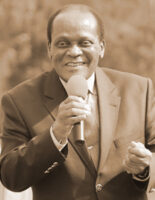
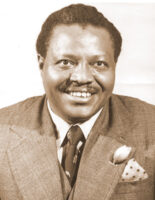
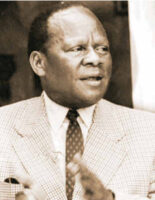
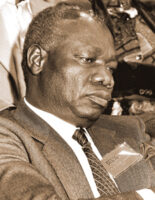
Mathews Charles Onyango Midika – Firebrand MP who championed the cause of cane farmers

Former trade unionist, Mathews Charles Onyango Midika, made a name for himself in politics because of his fiery debating skills and speeches inside and outside of Parliament. Midika, who was the MP for Muhoroni Constituency and a Cabinet Minister during President Daniel arap Moi’s last term of his 24-year tenure, was known for combining his oratory prowess with humour and fearlessness.

Midika has described Moi as a friend and said he will be remembered for his restlessness in Parliament and frequent clashes with the Speaker during debate time in the august House. He was renowned for being unafraid to ask controversial questions and even interrupting proceedings on numerous points of order. This is what made Charles Njonjo, the former Attorney General, label him as one of the ‘Seven Bearded Sisters’ – a group of radical MPs who were branded strong-headed and leftist by the Government. They were former political detainee, Koigi wa Wamwere, James Orengo, Chibule wa Tsuma, Lawrence Sifuna, Abuya Abuya and Chelagat Mutai. They were later joined by Mwashengu wa Mwachofi.

In his constituency, Midika was nicknamed Arum Tidi (Dholuo for raven, a bird that was rare and feared in the locality as it was believed to be a harbinger of evil should it perch on one’s roof). It was popularly said in the area that anyone who dared to joke around with Midika was likely to have the bird perch on their head and get clawed. The MP’s supporters praised him for his ruthless approach towards his critics and believed that anyone who confronted their representative would face a rough time in politics.

Midika was born in Kabar, Muhoroni Constituency, and attended local schools before he was admitted to the prestigious Makerere University in Uganda from where he graduated with a Bachelor of Arts in Education and Social Sciences. From there he held senior managerial posts: Personnel Manager for the East African Power and Lighting Company between 1965 and 1967; British American Tobacco Company, from 1967 to 1970; he finally moved to Chemelil Sugar Company as Personnel and Training Manager from 1970 to 1973.

It was around this time that he was bitten by the bug of politics, causing him to resign from his plum job in the corporate world and plunge into the trade union movement where he was elected Secretary General of the powerful Kenya Union of Sugar Plantation Workers’ Union.

During his first term in Parliament in 1974, Midika focused on advocating for cane farmers’ rights and pushing for the sugar industry to be given the necessary support to help it function fully. This earned him the nickname Bwana Sukari (Mr Sugar). “I moved many motions concerning the sugar industry, most of which succeeded and were implemented by the Government,” the former MP recalled with pride during a press interview.

Other than sugar industry issues, Midika also moved a historic motion to upgrade and change the police force uniforms. At the time, policemen wore shorts; he said they should wear long trousers. The same applied to policewomen, who were given the option of wearing skirts or trousers with sky blue shirts/blouses.

His lowest moment during his time in Parliament came when armed policemen stormed the House in 1976 and arrested Jean-Marie Seroney, who was then the Deputy Speaker, and Butere MP Martin Shikuku over the controversial “KANU is dead” remark. The Kenya African National Union (KANU) was the ruling party at the time and the Deputy Speaker was arrested for allowing the remark to pass and be captured in the Hansard, saying: “You don’t have to substantiate the obvious!”

The police stormed Seroney’s office in total breach of parliamentary rules. It was this violation of parliamentary privilege that drove the ‘Seven Bearded Sisters’ to step up their criticism of the Government.

Arum Tidi was first elected as the MP for Nyando Constituency (that included present-day Muhoroni) in 1974 and retained the seat in the 1979 General Election. In 1983, his political journey was interrupted when he was arrested, tried and jailed for the misappropriation of KES 210,000 belonging to the Kenya Union of Sugar Plantation Workers Union, in his capacity as the Secretary General.

But Midika termed the case a political witch hunt because he was, at that time, close to Opposition leader Jaramogi  Oginga Odinga, who had been branded anti-Government and had been put under house arrest. He was released when the Court of Appeal overturned his conviction but by then, Midika had already spent four years in jail.

As it happened, he had organised a funds drive in aid of all schools in his constituency, which was to be presided over by President Moi, who tasked his Vice President Mwai Kibaki to attend and officiate the event. According to Midika, he had planned the fund raiser for 16 January 1982 and had mobilised constituents to collect money for the big day while he did the same among his colleagues and friends.

However, five days to the event, Moi gave a directive that all funds drives should be suspended until further notice so that parents could instead pay their children’s school fees. He further directed that any money already collected should be deposited into a bank account to earn interest or with the local district commissioner’s office. After the presidential directive, things happened very fast – the MP was arrested and charged with theft of the money, which he claimed he had kept in a safe.

In the 1988 General Election, Midika bounced back when Muhoroni Constituency was hived off from the larger Nyando Constituency and he became its first MP. But he would lose his seat in the first multi-party elections in 1992 to newcomer, Justus Aloo Ogeka, who had vied for the seat via the FORD-Kenya party.

Midika had also made a name fighting for cane farmers in the Nyanza Sugar Belt. A large-scale farmer himself, he frequently stormed the Miwani, Muhoroni and Chemelil sugar factories to protest against delayed payments to farmers. In 1980, he introduced a bill in Parliament that sought to have nucleus sugar estates owned by sugar millers handed over to farmers.

Before the sugar factories were set up, the original residents were asked to leave and make way for the large-scale nucleus sugar estates. Some residents were relocated while others opted for compensation. The MP had argued that the land being used for the nucleus estates originally belonged to local farmers and should be handed back to them. Giving such land to factories, he said, would only promote land grabbing. That controversial bill was defeated but Midika soldiered on, lobbying in and out of Parliament.

The MP was appointed Assistant Minister for Labour before being made a Minister at a turbulent time in Kenya’s history, following the mysterious killing of Kisumu Town MP and Minister for Foreign Affairs, Robert John Ouko, in February 1990. To ensure that the Cabinet slot remained in Luoland, President Moi moved Ndolo Ayah, the Kisumu Rural MP, from the Ministry of Water Development to Foreign Affairs. He then appointed Midika Minister for Regional Development.

It was here that he exhibited himself as a protector of his people’s rights by declaring war on fish processing firms whose owners, he said, were exploiting local fishermen. He frequently made the headlines for randomly laying ambushes on the road to nab middlemen who bought stock from fish operators in Lake Victoria at throwaway prices and transported it to cities and towns where they sold the fish for large profits.

At these road blocks he would order lorry crews to come out of the vehicles and take them to task. In one incident, the Minister ordered a lorry crew transporting Nile Perch to drive back to Wich Lum Beach in Bondo, where they had purchased it. He followed them in his official car as they drove back to the fish landing beach where, on seeing him, the fishermen celebrated in song and dance. This one-man campaign was an instant hit and made the MP a local hero while earning him respect from his boss, the President.

As a public servant, he used every opportunity to raise his concerns with Moi, especially during the several trips the President made to the lake region.

“As a Cabinet Minister I never raised such issues with the President in public, but rather in private out of respect and protocol. One of the issues I raised was the creation of Yala Swamp under the Lake Basin Development Authority,” the former Minister said during the interview. The purpose for building the swamp was to develop the region through the introduction of rice and fish cage farming while also addressing the perennial flooding problems in Siaya and Busia districts (now known as counties).

His other achievement as Minister for Regional Development, where he worked for four years, was the creation of Uaso Nyiro North and South Development Authority to cater for the needs of residents of Narok, Kajiado, Baringo and Elgeyo districts.

Midika recalled that once Moi appointed anyone, he expected them to deliver services to the public, and there were no two ways about it.

“You were appointed by the President and you served at his pleasure. What I know about Moi is that he was a workaholic. He woke up at 5am every day and started work at 6am. My working relationship with him was cordial, although he was too fast for some of my colleagues.”

All Cabinet meetings were held from 9am to noon followed by a sumptuous lunch. The former Minister was never worried about being dropped in the frequent Cabinet reshuffles because he had confidence in his performance and Moi’s support.

“Moi was a very kind man if you knew him; he wanted work to be done speedily and well. He also promoted sobriety in his management style. He listened to people’s problems,” was how he described the President.

Those who worked with Midika remembered him as a thorn in the flesh of his Cabinet colleagues as he often raised questions touching on their ministries without notice. Midika told of a heated Cabinet meeting where the President had to step in and order him to relax and go easy on his colleagues. Still, Midika believed that Moi liked him because of his boldness when it came to raising controversial matters that others were wary of exposing for fear of victimisation.

“President Moi had a soft spot for me. He was a man with a lot of foresight. He liked sharp and tough debaters. And he liked brave people. I think he identified me when I was still a back bencher,” said the 83-year-old former Minister.

After calling it a day as a politician, Midika retreated from Nairobi to his rural home in Muhoroni, where he is a large-scale cane farmer and businessman. He still keenly follows political events in the country through the media and is still widely consulted by younger politicians in the region. He also remains involved in sugar industry matters.
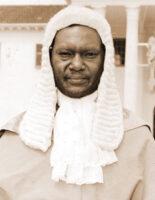
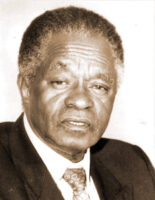
Mathew Guy Muli – He reformed the country’s judicial system

Mathew Guy Muli served as Attorney General and one of Kenya’s most distinguished jurists. He earned himself a place in the country’s history as the man who sacked himself! In an unprecedented action, Muli tabled a Government Bill in Parliament in 1987 that effectively removed the security of tenure of judges. A few years later, he was appointed Judge of the Court of Appeal.

Muli’s action shocked Kenyans and the international community. However, in the context of what was going on in the country at the time, the move could be explained. The political climate was characterised by heightening clamour for democratisation through the introduction of plural politics and respect for human rights, which led to widespread political arrests and detentions.

In 1979, a year after founding President Jomo Kenyatta died, President Daniel arap Moi appointed Muli as a High Court judge. Justice Muli termed the appointment as “unexpected and welcome”. Four years later, in January 1983, he became Kenya’s fourth AG, taking over from Joseph Kamere who had served as AG for two years. This was a time when Kenyans were beginning to call, albeit underground, for increased democratic space in the country through multipartism.

Muli served as the Government’s chief adviser for eight years between 1983 and 1991. When he was appointed, hopes were high that he would institute the badly needed reforms in the country’s judicial system. This he did, and his work was applauded around the country.

During his tenure as AG Muli recorded several successes. The speed at which inheritance cases were processed increased, by-laws were introduced to facilitate access to facilities by the physically handicapped, access to birth and death certificates was improved by separating the Department of Public Trustees from the AG’s office, the Extra Mural Penal Employment System was introduced to decongest prisons, and the Council for Higher Education was introduced to facilitate establishment of more private universities.

He also re-introduced the death penalty through an amendment of the Constitution. Most Kenyans were opposed to this move as it meant that people accused of committing capital offences could not receive bail and the sentence for a guilty verdict was death. This provision was removed from the Constitution of Kenya 2010.

Most of Muli’s achievements truly had a positive impact on many Kenyans. But these achievements were overshadowed by accusations that he was using “legal dictatorship” to silence political “dissidents” jailed as Mwakenya suspects. He was also accused of influencing verdicts by making prejudicial statements before judges made their rulings. The AG was further accused of letting the Government get away with murder in cases such as the controversial deaths of Minister for Foreign Affairs Robert Ouko and outspoken Anglican Bishop Alexander Muge.

The Mwakenya movement was accused of plotting to overthrow the Government. During the Mwakenya Trials of 1989 sedition and treason charges were levelled against many members of the movement. Others were detained without trial.

Muli was often accused of not taking appropriate actions to ensure that justice was served during “political” cases. The perception was that he was more concerned with his loyalty to the Head of State and Government than with the administration of justice.

This perception was reinforced whenever swift legal action was taken against anyone the President accused of plotting to overthrow the Government. University students, politicians, journalists and non-government organisation activists were among those arrested and charged with treason. The AG sometimes appeared in court to prosecute some of the high profile cases himself.

His actions appeared to go against the constitutional mandate and functions of the AG which make him “the Government’s principal legal adviser” and “promoter of the rule of law and defender of the public interest”.

Muli was born in 1929 in Sengani, Kangundo, in Machakos District (now Machakos County). He became a distinguished Kenyan jurist, serving as legal counsel to the East African Community, Judge of the High Court, Attorney General and Judge of the Court of Appeal.

He went to Sengani Primary School for his basic education before joining Machakos Boys High School, a stone’s throw from Machakos Town. He then moved to Alliance High School in Kiambu District before proceeding to Makerere University College in Uganda for a law degree. He graduated in 1952.

Muli returned to Kenya and was employed as a High Court interpreter and librarian. He also served as a court clerk. Intent on achieving his rather high ambitions, he resigned in 1956 to pursue further studies.

He enrolled at Lincoln’s Inn in the United Kingdom, graduating in 1961. He returned home as the country was preparing for independence and was hired as a legal adviser to the East African Community in 1962, and later became the deputy secretary.

Apart from his career as a civil servant, Muli was a businessman dealing in real estate.

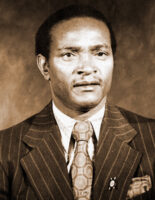
Marsden Madoka – The suave and laid back firefighter

Unlike his predecessors and successors in the Ministry of Internal Security and Provincial Administration, Major (rtd) Marsden Madoka has always given the impression of being laid back, urbane, sagacious, diplomatic and non-controversial. These rare attributes were instrumental in helping him surmount multiple security and political road blocks at a time when the country was polarised between the ruling party KANU and the Opposition.

Although Madoka, a former Member of Parliament for Mwatate Constituency, lasted just five years in the Cabinet (1998-2002) in the Office of the President as Minister for Interior Security and later in Foreign Affairs, he was severely tested throughout his tenure.

Born on 15 March 1943, Madoka served in various capacities in the Ministry of Defence between 1963 and 1973 before joining the East African Breweries Limited where he rose to the position of Director of Personnel in 1994. He left the brewing industry in 1994 at the level of General Manager of new products. In 1997, he successfully contested the Mwatate parliamentary seat, marking a new season in his life; in January the following year he was appointed to the Cabinet during his first term in Parliament. Only a few political greenhorns were accorded this rare honour by President Daniel arap Moi.

“It had never crossed my mind that I would ever be a Cabinet Minister and when my family members informed me of the development on Thursday evening, I was dumbfounded,” said the former aide-de-camp for independence President Jomo Kenyatta. Madoka was 55 at the time of his Cabinet appointment.

The position was anything but a bed of roses. Banditry and cattle rustling in the restless northern parts of Kenya, politically-instigated ethnic clashes, industrial strikes, widespread police brutality and political and religious intolerance were rocking the country’s very foundation. Although ethnic clashes had scarred the Rift Valley region in 1991 and 1992, in 1998 they were widespread and deadly.

This forced Madoka to order a police inquiry into the clashes, which many expressed scepticism about. The Daily Nation, in its editorial of 12 February 1998, questioned the wisdom of such an inquiry. “Major Madoka did not… disclose the composition of the team, let alone its terms of reference. It is unclear, therefore, whether this is just a routine police inquiry or a Commission of Inquiry. If it is indeed the latter, then it must be the most secretive such probe team in Kenya’s history.”

The editorial continued, “It is most likely a police inquiry and we feel this would be most feeble and redundant, considering the task ahead… A full-fledged Judicial Commission of Inquiry supported by eminent persons from across the political divide should be constituted to look into this recurrent and extraordinarily far-flung violence. Political violence camouflaged as ethnic animosity must cease so that the wounds inflicted through this barbarism may heal.”

One would understand the predicament. It is the same police force that was being accused of brutality against elected leaders, in particular the Opposition. The force had become a law unto itself, widely believed to be involved in extra-judicial killings, violence and extortion.

In December 1998, Madoka ordered the topmost echelons of the police force to crack down on errant officers, stating in the Daily Nation of December 1998, “The Government does not condone the evils that have been perpetrated by a few police officers and those will be removed from the force.” He envisaged a force that was “… friendly and truly civil in its actions”.

That apart, he announced that the Government would no longer provide legal aid to careless officers. Those facing litigation for failing to apply the law correctly would have to fight it out on their own, he directed. “Incidents of misuse of firearms, abuse of office, general lack of discipline and association with criminals have eroded the police integrity and people have begun to doubt the law enforcement process,” he stated. “The police code on using firearms is very clear and must be followed to the letter and cases of misuse of the firearms will not be condoned.”

Earlier, Madoka had come under scrutiny in Parliament when he released crime rate statistics indicating that incidences of murder, rape, robbery, house-breaking and car theft were down. Opposition MPs Paul Muite and Njeru Ndwiga lashed out at the Minister for what they termed “misleading” figures. “People no longer report crimes like rape and robbery to police because they (police) are so ineffective that it is virtually useless,” said Ndwiga, the Manyatta Constituency Member from the Democratic Party (DP).

One-and-a-half years later, 92 MPs drawn from KANU and the opposition urged Moi to sack Madoka over the issue of police brutality. The MPs argued that the police force was being used by powerful personalities to intimidate the Opposition. Yet despite his warnings to errant officers little, if anything, changed. The Minister would in June 1999 come into the spotlight again when police stood by watching as hooligans beat up cleric Timothy Njoya outside Parliament, along Parliament Road, on Budget Day. It was Madoka who had ordered a road closure following demonstrations by political activists. He was hard pressed to explain to MPs the reason for the physical assault on the widely respected Moderator of the Presbyterian Church of East Africa (PCEA).

Political intolerance would rise during this season because of the Moi succession battles that characterised the close of his term as Head of State. Madoka was constantly in the eye of the storm during this period of heightened political conflict. For instance, in July 1999, he was booed by MPs from both Government and Opposition sides of the House for accusing the Members of inciting the public to violence.

In a statement read to the House, Madoka warned that his officers would deal firmly with “indecent and unlawful conduct”. “If anybody acts in flagrant disregard of the law, police will have no option but to maintain law and order. Acts of incitement will not be condoned from any quarters,” he warned. But MPs responded, “Shame! Sit down!” This was after several incidents in which police had raided and used teargas at meetings organised by Opposition MPs.

During Madoka’s tenure a number of MPs, including James Orengo, were arrested under inexplicable circumstances.

The Minister was again caught in the cross-hairs of MPs when 40 KANU and Opposition MPs stormed out of Parliament to protest the disruption of a political rally at Mukuyuni by a mob allegedly bankrolled by the Minister for Planning and National Development, Gideon Ndambuki, in November 1999.

And he found himself yet again in the eye of the storm when police attacked and brutalised environmentalist Wangari Maathai as she protested the grabbing of Karura Forest by top politicians and close allies of Moi. Reports at the time indicated that authorities had quietly alienated the pristine forest on the outskirts of Nairobi without following due process of parliamentary approval.

Barely nine months into Madoka’s tenure, critics claimed that the Government was discriminating against Muslims following a move to deregister five Islam-allied non-government organisations (NGOs). He denied the accusations but went ahead to say that the Government was determined to outlaw even more NGOs if they failed to be transparent in their operations. He claimed that the decision to outlaw the NGOs was reached after it was established that their actions were in conflict with their stated objectives.

“Their activities were not for the interest of security, safety and welfare of Kenyans,” Madoka said in a statement dated 10 September 1998. He added that the Government “… has never targeted, harassed or persecuted Muslims. Deregistration of the five NGOs was purely done on security grounds.”

The previous month, six people had been killed and more than 15 others injured after police and a wedding party fought in the Masjid Anas al Malik Mosque in Diani in the Coast region. The fracas erupted when youths armed with machetes and knives attacked a police officer.

It was not just Muslims that Madoka had to calm. During his term in the Internal Security docket, a 64-year-old Catholic prelate, Father John Anthony Kaiser, was killed in mysterious circumstances. The August 2000 death of the outspoken cleric sparked so much outrage that the Kenya Episcopal Conference issued a statement virtually accusing the Government of the murder. Madoka was not amused.

“The Catholic bishops should stop their holier-than-thou attitude; we know what goes on in the Vatican,” he said in a two-page rejoinder to the bishops’ allegations on 18 September 2000. “If the bishops have any evidence implicating anyone they should report to the investigating officers instead of making unfounded malicious claims… No one has any moral right to start blaming the Government when there is no conclusive evidence to implicate anyone.”

Madoka did most of the firefighting for the Government. The politics of the day was dirty and the economy was not doing very well. Stung by high inflation, public servants, especially teachers, engaged in industrial action to demand increased pay. But loyalists like Madoka believed there were other reasons for their protests.

In August 1998 he stunned the country when he claimed that politicians paid by foreigners were bankrolling teachers to topple the Government. “Even if they bring down the Government, I assure the teachers that they will not be paid because there is no money,” he declared. “We agree that the Government succumbed to the teachers’ demands due to pressure but now there is no money to pay and we want the teachers to understand this.”

The Kenya National Union of Teachers (KNUT) immediately censured him for the remarks. Clearly, they thought Madoka was playing politics with serious matters.

Yet despite his militant defence of a system that was highly criticised at home and abroad for oppressing freedoms and good governance, Madoka still stood out as one who also did good for the common person. Indeed, at a time when communities living around game sanctuaries were losing hope in the value of the country’s wildlife heritage, Madoka gave them something to smile about. Speaking in Parliament in December 1999, he announced plans to raise the compensation for those killed by wildlife from KES 30,000 to KES 1 million.

And on Worlds Aids Day in December 2000, he spelt out a much-needed new strategy to cope with the disease that was killing an estimated 600 Kenyans daily. It mentioned the provision of clinical and nursing care, counselling and emotional support, home care, social and spiritual support, occupational therapy, reducing the impact of the disease, monitoring its prevention, research into its causes and possible cures, and the role of donors, NGOs, religious groups and industry.

The following year, he signed into law a new anti-money laundering bill that would ensure imprisonment and forfeiture of ill-gotten wealth for those engaging in the crime, which would thenceforth be punishable by 14 years in jail under Section 49 of the Act that deals with proceeds from drug trafficking.

In November 2001 Madoka was moved to the Foreign Affairs and International Cooperation docket. The Pan African News Agency wrote, “Marsden Madoka swopped a high-profile ministry for another equally high-powered one.”

While he was in charge of Internal Security, Madoka had handled the sensitive police department, often being called upon to clean up the Government’s image after the supposed upholders of the law broke the very law they were entrusted to enforce. He was now being deployed to take charge of the country’s external public relations as Minister for Foreign Affairs. The Daily Nation saw this move as “… a dramatic promotion for the KANU loyalist”.

During the handover Madoka told his predecessor, Chris Obure, “I believe we have done our best in trying to restore peace.” This, he said, was despite the “big challenges” experienced in trying to end tribal flare-ups and maintain peace in a country that had recorded a high influx of refugees and illegal firearms.

Hardly a year in office at Foreign Affairs, the Minister found himself embroiled in a war of words with British High Commissioner to Kenya Edward Clay, over the vacant position of Vice President.

“There is no Vice President more than a month after Prof George Saitoti left office. A vacancy in this office leaves a vacuum which may be worrying to citizens,” Clay had said. Madoka responded, “The British High Commissioner whom we would like to assume is a seasoned diplomat representing a friendly state should honour these obligations and respect the host State and its officials. In fact on many occasions, the Head of State himself has given diplomats private audience to air their concerns to him. Most diplomats respect this and do not resort to seeking publicity.”

Since independence, the Foreign Affairs docket has been very sensitive. But even before his appointment, Madoka had already been part of the intrigues that define this docket. Indeed, it was during his tenure in Internal Security that World Duty Free boss Ibrahim Ali was deported from Kenya in 1999 in questionable circumstances. The flamboyant businessman who owned the duty free shops complex at Jomo Kenyatta International Airport claimed that Government functionaries had seized it from him and was seeking USD 500 million in compensation. As soon as he set foot on Kenyan soil, he was hastily deported.

According to Madoka, Ali was a fugitive running from justice in Dubai. But Opposition MPs, in particular Kimilili MP Mukhisa Kituyi of the Forum for the Restoration of Democracy Kenya (FORD-K) party, claimed the businessman was being harassed for having spilt the beans on the KES 68 billion Goldenberg scandal involving fictitious export compensation, that he claimed Moi was linked to.

“MPs charged that Mr Ali was smuggled out of the country because he had ‘revealed’ the story behind the Goldenberg scam that has dogged the Government for nearly a decade,” the Daily Nation reported on 30 July 1999.

In January 2001, Madoka deported six Sudanese drug traffickers allegedly linked to Osama bin Laden. He also reintroduced visa requirements for a number of countries, sparking outrage from tour operators who feared the move could jeopardise the tourism industry. “The current fuss over the visa issue is being drummed up by local tour operators, not the tourists. What’s USD 20 or 40 in visa fees in a tour package for the tourists?” he asked.

Madoka was among the politicians mentioned as a potential VP when it seemed Moi was not keen to reappoint Saitoti. Others included Musalia Mudavadi, Kalonzo Musyoka, Simeon Nyachae, Bonaya Godana and Katana Ngala.

An astute legislator, Madoka always wanted to be regarded a loyalist. During debate on a constitutional review in 1999, he shared the opinion that presidents should be immune from prosecution. “We must have a clause to protect our presidents from being charged when some people took advantage of them without their knowledge. They should not be prosecuted for mistakes they haven’t committed,” he said.

He won the 2002 election despite the heavy casualty it inflicted on KANU countrywide. Just before the 2007 election he left KANU for the Party of National Unity (PNU) that was hastily created for Mwai Kibaki’s re-election, and became one of its spokespersons. Earlier, he had briefly joined the original Orange Democratic Movement (ODM) as a founding member before it split into ODM and ODM-Kenya. He changed parties three times in that year.

In 2008, Vice President Kalonzo Musyoka appointed him to chair a 14-member committee formed to look into prison reforms. He served as Chairman of the Kenya Revenue Authority from 2012 to 2015 and more recently he was appointed to chair the Kenya Ports Authority Board.

Madoka will always have a dignified place in Kenya’s history. He gave the Agricultural Society of Kenya character while serving as chairman in 1993-1995, and for close to 18 years as head of the Amateur Boxing Association, he oversaw Kenya’s evolution into a powerhouse in the world of boxing.

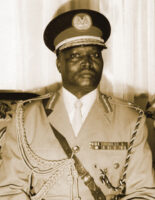
Lazarus Kipkurui Sumbeiywo – Army commander-turned-peace broker

Lazarus Kipkurui Sumbeiywo, an army commander and a decorated military leader, was an integral part of President Daniel arap Moi’s administration and the chief mediator of the Sudan peace negotiations that led to the secession of South Sudan from Sudan.

For 35 years Sumbeiywo was Military Assistant to the Chief of General Staff, as Head of Military Intelligence and as Army Commander in the two years leading to Moi’s exit from power in 2002 after 24 years. His brother Elijah was at one time the Presidential Escort Commander while his father had worked with King’s African Rifles Battalion 5, and as a warrant officer in the tribal police before he became a chief and Chairman of the African Tribunal Court in Keiyo District. His father’s long stint in the disciplined forces inspired the career choices of his two sons.

During his three-and-a-half decades in the military, Sumbeiywo witnessed some of the most epochal events in the country and was often at the centre of the action. These events include the 1982 attempted coup d’état, the transfer of power from Moi to Mwai Kibaki and acting as key mediator of the South Sudan peace process.

In his 2006 biography penned by veteran journalist Waithaka Waihenya, Sumbeiywo documented his journey that started quite innocently when his elder brother gave him KES 200 to travel to Nakuru District to enlist, encouraged by his father.

Sumbeiywo was born in 1947 in present-day Elgeyo Marakwet County to Sumbeiywo arap Limo (born Kiplagat arap Kipkatam) and Sarah Jesang’. His mother was one of the earliest converts to Christianity and would impart Christian virtues that stayed with the young Sumbeiywo for a lifetime. He is famously prayerful, starting and closing every meeting with a prayer.

He attended Yokot Primary School, where he sat for his Common Entrance Examination before joining the Government African School, Tambach for his intermediate schooling. Having sat his Kenya African Primary Education examination, he went to Tambach to begin his secondary school education, only to realise that while the school had been upgraded, they had retained the same books and teachers from the primary school. Naturally athletic and a leader, Sumbeiywo was selected to be a games captain and would later go on to lead a revolt against the school administration, leading to a term-long suspension for him and other students. When they returned, there were new teachers and new books.

One of the new teachers going by the name Lee, a member of the American Peace Corps and a trained military officer, introduced the students to the discipline of marching. Sumbeiywo was highly impressed by the marching theatrics. After his Form Four examinations, while attending to his father’s shop near Yokot Primary School, his brother Elijah, then a district intelligence officer, would one morning give him KES 200 to join the army stationed in Nakuru.

He complied and joined 2,000 recruits who were shortlisted to 100 and further trimmed down to 60 cadets, among them Sumbeiywo. He was sent to train at the world famous Royal Military Academy at Sandhurst in the United Kingdom for 44 weeks. One of his vivid early memories at the Academy is of getting punched by a junior white officer. On reporting the incident, he was the one that got punished.

Back home from the UK, Sumbeiywo was posted to the Kenya Army’s 1st Battalion Kenya Rifles in Lanet as Second Lieutenant. He would later become the Military Assistant to the Chief of General Staff.

One of the watershed moments of Moi’s presidency was the 1982 attempted coup d’état. Rumours about a coup attempt had started to circulate in June. Occupying the rank of Major at the time, Sumbeiywo had tried unsuccessfully to verify the rumours with Director of Special Branch, James Kanyotu. On 1 August the mutiny took place. His brother broke the news of the coup attempt via a telephone call at 5 am. The President was at his home in Kabarak. Sumbeiywo was instructed to drive to State House Nakuru with some soldiers, guns cocked, ready to shoot anyone who tried to stop them.

Together with his brother Elijah and Rift Valley Provincial Commissioner Hezekiah Oyugi, they were able to convince the reluctant President to leave his house, just in case it was ambushed or bombed. They wanted Moi to travel to the capital, but his Aide-de-Camp (ADC) advised against the idea, as two aircraft were unaccounted for at the Nanyuki Air Base. It wasn’t until the planes had been located and secured that they started for Nairobi, where Moi would address enthusiastic, cheering crowds in Rironi, 15 kilometres before reaching Nairobi.

When he arrived in the capital, Moi wanted to address the crowds as he drove along Moi Avenue, but his ADC was aware that the coup plotters were holed up somewhere near Kenya Cinema. Indeed, they would be flushed out the following day, from the very point where Moi had wanted to stop and address the country. Moi did address the nation later, and confidently so, according to Sumbeiywo, even though other eyewitnesses said he was visibly shaken.

In the aftermath of the attempted coup, Sumbeiywo would be entrusted with the responsibility of writing instructions on how to deal with arrested coup plotters. In appreciation of his efforts, he was promoted to Lieutenant Colonel in charge of personnel at the Air Force. His job was to draft all court martial proceedings as well as jail and reform procedures, and completely overhaul the Kenya Air Force wing of the military. Major Peter Kariuki, the Air Force Commander, was jailed for failing to suppress the mutiny while Hezekiah Ochuka, mastermind of the attempted coup, was executed.

General Jackson Mulinge, who is credited with quashing the coup, retired in 1986 and was succeeded by General Mahmoud Mohammed. Sumbeiywo left the Air Force and joined Mohammed as Director of Military Intelligence, a unit he built from scratch. Its work was to collect and collate intelligence from within and outside the country and advise military commanders. His official title was Director of the Liaison Department based in the Office of the President. From here, his career was on an upward trajectory.

In 1993 he formed the External Military Intelligence at Moi’s request. In 1999 he was appointed Commandant of the Defence Staff College and the following year he was assigned to the post of Army Commander on a four-year contract. He became Commander at a time when the military was going down a precipice, according to his biography; he had to introduce new regulations that restored discipline in the forces. Servicemen were not permitted to leave the forces without serving for a set period. In addition, he clamped down on officers taking allowances for work they had not done. He also put a stop to the misappropriation of funds, restored the mess hall where officers could assemble, and reinstated written and practical examinations for those seeking promotions. He also stopped the practice of soldiers who had been court-martialled challenging their cases in civilian courts, and ensured that soldiers were given better quality uniforms.

Sumbeiywo also disclosed in his biography, perhaps controversially, how he approved a different approach to military training called the Manoeuvristic Doctrine where soldiers are taught tactical ways of combat while seeking and exploiting the weakness of the enemy. He would earn the nickname Zero Tolerance as he considered disorderliness unacceptable; he further devised the ‘guillotine model’ through which those who could not toe the line were shown the door.

His stint as the army boss was short-lived as Moi’s regime careened to an end. When Moi left office and Kibaki took over, the transition necessitated changes in many Government departments, including the military. He was retired mid-way through his contract and was succeeded by his deputy, General Jeremiah Kianga. The handover ceremony was televised, a first in the country since independence.

The handover of power from Moi to Kibaki in 2002 was a tense moment for the nation. African leaders are known to be reluctant to hand over power once they lose an election. In Kenya, some civil servants were very concerned about the change of government. But the military is meant to be an impartial body and Sumbeiywo worked on the transition, going the extra mile to build the ramp on which President-elect Kibaki’s wheelchair would be wheeled to the dais. Unsure if Moi would readily step down, the Ministry of Public Works had declined to procure funds for the ramp, forcing the military to hire a private supplier. Nobody wanted to be seen as having written off KANU because that would have had serious repercussions if KANU won, yet the military could not afford to be caught unprepared.

The power transfer proceeded with minimal glitches, and two months later Sumbeiywo would be retired after 35 years in the military, “… not because of inefficiency, but because of politics,” he explained. His close ties with Moi were perceived as a danger by some members of the new Government, and some even wanted him dropped from the mediation process. But Kalonzo Musyoka put in a good word for him with President Kibaki.

Out of all the other things that he achieved, the job that would define Sumbeiywo’s career was the brokering of peace between Sudan and the soon-to-be-established youngest nation on earth, South Sudan. The north and south of Sudan, which at the time were one country referred to as Sudan, had been engaged in a civil war for more than four decades, claiming over four million lives and displacing millions, with the south remaining underdeveloped.

Two major wars, dubbed Anyanya I and Anyanya II after the name of the rebels, pitted the black Christian south against the Arab Islamic north. Sumbeiywo first encountered Sudan’s President Omar al-Bashir moments after he had taken power through a coup d’état in 1989. He had come to Kenya and was meeting Moi and John Garang, head of the Sudan People’s Liberation Movement (SPLM) who was then waging guerrilla warfare, in early attempts at mediation. The first encounter did not go well. Sumbeiywo was Head of Military Intelligence at the time. That first encounter would set the stage for the key role he would play in the mediation process.

When Kibaki came to power and he was retired from the military, Sumbeiywo requested that he be permitted to retain his job as mediator; a wish that Kibaki granted. He would go on to work with Kalonzo, who was reappointed Minister for Foreign Affairs, having occupied the same position in the 1990s.

Moi had wholeheartedly supported the mediation talks and even after retirement had remained actively involved, especially in the formative days of Kibaki’s presidency. The South Sudan mission was nearly imperilled for a time. The negotiations were tough, always heated, with some parties moving too fast and others dragging their feet. Many diplomats in Nairobi were not interested. There were uncomfortable incidents such as the time American ambassador William Bellamy tried to bulldoze his way into a meeting Sumbeiywo was chairing, which irked Sumbeiywo; or when Sumbeiywo nearly kicked an American, Jeff Millington, who wanted to force a truce between the two warring Sudanese factions.

At some point al-Bashir wanted South Africa to take charge of the mediation process. It took Kalonzo talking  South Africa’s Minister for Foreign Affairs, Dr Nkosazana Dlamini-Zuma, out of it since Kenya was already too deeply involved to abandon ship midstream.

The negotiation would lead to the formation of a Comprehensive Peace Agreement signed in Machakos in 2005, which made South Sudan semi-autonomous and Garang the de facto leader of the south and the overall Vice President of the larger Sudan. The arrangement was to last for six years until 2011, when the South of Sudan went to a referendum and decided to secede. Garang did not live to see this moment; he died in a plane crash in northern Uganda in 2005 and was replaced by Salva Kiir.

The young nation would have a relatively good start, but soon ran into the inevitable headwinds of inter-ethnic civil strife in 2013 and the subsequent sacking of Riek Machar, the Deputy President. Once again Sumbeiywo was called upon by President Uhuru Kenyatta to help broker the peace.

Sumbeiywo is now retired and reportedly lives on his farm in Trans Nzoia County.

Laban Maingi Kitele – President Moi’s trusted lieutenant

Laban Maingi Kitele was one of the founder members of the New Akamba Union (NAU). Through it he rose up the political ranks to become one of President Daniel arap Moi’s most trusted lieutenants in the Cabinet and the National Organising Secretary of the ruling party, Kenya African National Union (KANU).

Kitele first served as Assistant Minister for Works and Housing in Moi’s government, and was later appointed Cabinet Minister in the Office of the President in the Internal Security docket. He also served as Minister for Supplies and Marketing.

Born in 1931 in Mbee Village, Kathiani, on the northern slopes of the Iveti Hills complex some 21 kilometres from Machakos Town, Kitele completed his primary and secondary school education at Kwa Mating’i School while working on his family’s shamba (farm) and looking after his father’s cattle.

After school, he joined the Kenya Co-operative Creameries as a salesman at its Industrial Area headquarters in Nairobi, rising to the position of sales and marketing manager. He later joined Sadolin Paints where he worked in the same capacity for two years before resigning to work as a contracted distributor for the same company while dabbling in politics and the affairs of NAU as its Nairobi branch chairman.

Kitele and fellow politician Mulu Mutisya were the top two NAU officials. They made decisions on behalf of the Kamba community in Nairobi from their base at Makadara Estate in the city’s Eastlands area. Many community leaders were nurtured from this base and would later become Nairobi City councillors and Nairobi KANU Branch officials and businessmen.

Kitele, however, delegated the NAU chairmanship in Nairobi to Mutisya in order to concentrate on the paint distributorship contract countrywide. This later proved to be a major miscalculation.

By 1974, having been deeply involved in NAU and the Machakos branch of KANU, Kitele felt confident enough to take on the MP for Iveti North, Aaron Mutung’a, during that year’s General Election. However, he lost.

Between 1974 and 1979 Kitele worked hard to develop a good relationship with the influential NAU and KANU leadership while seeking voter support from all corners of the constituency. The effort bore fruit and enabled him to defeat Mutung’a in the 1979 General Election. He was appointed Assistant Minister for Works and Housing.

Kitele consolidated his support among voters and worked so closely with the district party leadership that when Moi called the snap 1983 General Election, occasioned by the attempted coup of August 1982, he beat all his rivals, among them Mutung’a, Musembi Kyalo and Kavuti Ndeti. This time he was appointed Cabinet Minister in the Office of the President in charge of Internal Security.

When Moi started launching populist activities across the country, Kitele hosted the large presidential party in Vyulya on the steep slopes of Kiima Kimwe. The team constructed gabions on the badly eroded slopes in a widely publicised exercise that involved every single Member of Parliament.

It was regarded as the first and only sitting of the National Assembly outside the precincts of the House. It also went down in history as one of Moi’s biggest publicity events at the time, as the whole exercise was covered by local and international news networks.

The activity gave Kitele, the host, an aura of invincibility. His influence in Machakos grew by leaps and bounds, along with that of party branch chairman Mutisya, who had been elected to the position after Moi proscribed NAU and other tribal groupings, including the Gikuyu, Embu and Meru Association (GEMA) and the Luo Union.

Kitele was also influential in the country’s security agencies as Moi moved to consolidate power after the coup attempt the previous year.

During the power consolidation exercise, soldiers from the Kenya Air Force implicated in the coup attempt were court-martialled and handed long prison sentences; some students and activists were also jailed along with military officers. Several lecturers and politicians were detained without trial. Special Branch officers from Kitele’s ministry spread fear among the population as they eavesdropped on private conversations, especially in public entertainment places. They raided newsrooms and other offices, made arrests, carted away documents and confiscated equipment.

At this time the provincial administration, from provincial commissioners right down to village chiefs, was strengthened and given more powers “as the ears and eyes of the president”.

As the infamous 1988 mlolongo (queue) method of elections approached, Kitele had lost some of his influence in Government and faced stiff competition for the seat. He was also replaced as the KANU National Organising Secretary by Kalonzo Musyoka. Despite this, Kitele won again.

According to political pundits, however, he only managed to win back his seat courtesy of constituency boundary delimitation by the Electoral Commission of Kenya (ECK) — later renamed the Independent Electoral and Boundaries Commission (IEBC) — which significantly altered the voting patterns of the constituency when it created Kathiani from the old Iveti North and the neighbouring Iveti South (now Machakos Town) constituencies.

“In the run-up to the 1988 elections, Kitele sensed defeat by Musembi Kyalo,” explained Wilson Masila Muema, the nominated councillor (1983–1988) and KANU branch secretary, alias Muthungulule (nominated).

Muema said Kyalo had already gained considerable support from across the constituency since he had contested the seat several times and was poised to defeat Kitele had the boundaries not been changed before the polls.

“Kitele was in power, so in order to avoid defeat, he did some political arithmetic and decided to influence the boundary review process by ensuring the areas in which he had support were included in the new Kathiani Constituency. These areas where he enjoyed traditional support were Ithaeni, Kathiani, Athi River, Embakasi, Koma and Kyumbi. The populous Mutituni area where his opponent, Kyalo, had 100 per cent support was ceded to Machakos Town where Kyalo transferred his interest and went ahead to win during the 1988 elections,” explained Muema.

The election result ensured Kitele won in Kathiani while his nemesis, Kyalo, who had resigned as Permanent Secretary for Health, moved to the more cosmopolitan urban constituency of Machakos Town.

Kitele was re-appointed to the Cabinet but moved to the relatively new and low profile Ministry of Supplies and Marketing. The ministry was set up to ensure adequate supplies of farm inputs, boost the capacity of the National Cereals and Produce Board, maintain grain strategic reserves, and ensure flawless marketing and export of the country’s agricultural produce, among other things.

However, his political relationship with Mutisya ran into problems. This political shift coincided with the announcement by General (rtd) Jackson Kimeu Mulinge in 1991 that he would contest the Kathiani parliamentary seat in the 1992 General Election.

In 1992 Mulinge, who was credited with initiating and completing several key development projects in the area, easily beat Kitele. The five-star general was highly respected and hugely popular because he had transformed the sleepy Kathiani market centre on the northern foothills of Iveti Hills into a modern, thriving town.

After his defeat, Kitele retired from politics and concentrated on farming and his hospitality business, which included his flagship Garden Hotel located in the heart of Machakos Town.

He also became a director at the Kenya Red Cross Society in charge of disaster management, where he served until his death on 22 August 2015 at the age of 84 years.

Kitele was credited with empowering numerous entrepreneurs not just in Kathiani but also in Machakos County.

“Through fundraising efforts, some involving President Moi, Kitele built many schools, churches and health centres, and enabled many youths to find gainful employment,” said Muema, a trustee of Kitele’s estate.

Kyale Mwendwa – Brilliant educationist who floundered as Water minister

Kyale Mwendwa was born into a polygamous family that had several children, some of whom were destined to achieve many political firsts. Their father, Mwendwa Kitavi, had seven wives and was one of Ukambani region’s pioneer colonial chiefs.
Kitavi was not only a paramount chief, he was also wealthy in his own right and in the league of the likes of Chief Masaku of neighbouring Machakos District, Chief Lenana of the Maasai people, Chief Mumia of Western Province, Chief Samoei of Nandi District, Chief Waiyaki of Kiambu and Chief Njiiri of Nyeri.

Kyale, one of Kenya’s most celebrated educationists, belonged to this family that produced politicians and Government bureaucrats such as Kenya’s first African Chief Justice, Kitili Mwendwa, his wife Winfred Nyiva, who became Kenya’s first female Cabinet Minister, and Eliud Ngala Mwendwa, who was part of President Jomo Kenyatta’s Cabinet.

Kyale was an educationist in the true sense of the word. He trained in education, became a bureaucrat in the Ministry of Education and later invested heavily in education. However, when he joined active politics and was appointed to the Cabinet by President Daniel arap Moi, he was made Minister for Water Development.

Kyale was born on 23 May 1926 in Kalia Village, Matinyani, in Kitui District, to Damaris Kathuka. Like his siblings, Ngala and Maluki, he looked after his father’s large herds of livestock, but more for fun than duty because there were enough farm hands to carry out that chore. He was enrolled at the local Matinyani Primary School run by the African Inland Church in 1938 and later joined Kitui High School.

He then went on to attend the prestigious Alliance High School in Kikuyu, Kiambu District, where he joined five other students who, like him, would serve as Cabinet ministers at one time or other. These were Njoroge Mungai, who would work in the Ministry of Defence, Mbiti Mati, Speaker of the National Assembly, Munyua Waiyaki in Foreign Affairs, Robert Matano in Local Government and Julius Kiano in Commerce and Industry.

Kyale joined Makerere University in Uganda in 1948 to pursue a Diploma in Education. From Uganda, he headed to South Africa’s Rhodes University in 1951 for a Bachelor of Arts Degree in Education and then to Michigan State University in the USA in 1961 for a Master of Arts in Education.

Back home at the dawn of independence, he entered the job market to do the one thing he knew best – education. He was employed as an education officer in the Ministry of Education and rose up the ranks to become Director of Education and later, Permanent Secretary. During his tenure as PS, the ministry instituted education policies that witnessed the rapid expansion of primary, secondary and tertiary education facilities in all corners of the country. This went along with the establishment of teacher training colleges. Indeed, the education sector in Kenya became the envy of many African countries thanks to technocrats like Kyale.

His entry into elective politics followed the death of his older half-brother, Kitili, in a car accident. At the time, Kitili was the MP for Kitui West, having won a by-election occasioned by a court nullification of Perminus Munyasia’s election in 1984. Before that he had served as Kenya’s Chief Justice from 1968 to 1971, leaving office under a cloud of suspicion following an alleged military plot to overthrow the Government.

After Kitili’s death, Kyale contested the Kitui West seat in the 1986 by-election and won. He was appointed Minister for Water Development despite his vast experience in the education sector. With the appointment, President Moi may have been seeking a solution to the problems associated with water scarcity in Kitui, Machakos, Makueni and other arid regions in the country.

Having grown up in the parched area of Matinyani, Kyale may have been best placed to institute policies that would translate to adequate water supplies in Kenya. However, like many ministers before and after him, his stint at the Ministry of Water did not seem to produce the desired results.

When Kyale was re-elected as MP two years later, under the notorious mlolongo(queue) voting system in 1988, he was dropped from the Cabinet under unclear circumstances. He retreated from the limelight and in 1992, he was unseated by his sister-in-law, Kitili’s widow, Nyiva. Kyale broke ranks with the ruling party, KANU, and joined Mwai Kibaki’s Democratic Party. He was elected Chairman of the Kitui DP Branch in the same year.

As owner of the prestigious St Austin’s Academy in Nairobi, Kyale has since served as the executive chairman of Educational Services Foundation since 1990 and chairman of the Academy of Professional Studies since 1993. He has also been the executive chairman of Riverside Investments, chairman of Muvokanza Ltd, and board member of Central Tobacco Distributors Ltd and Kenya Gateway Insurance Company Ltd.

Kyale is married to Susan Nthenya Masila and they have four children.

Kipng’eno arap Ng’eny – A reluctant politician

Kipng’eno arap Ng’eny, a Cabinet Minister in the final term of President Daniel arap Moi’s administration, was a career public servant who joined politics rather reluctantly. The technocrat entered politics in response to prodding by Moi, who thought Ng’eny would be a political asset to him.

Born on 1 July 1937 in Sigowet/Soin area of Kericho District, he attended Kabianga Intermediate Primary School then joined Kapsabet Boys High School for his O’ level and later Kakamega High School for A’ level. He proceeded to India for an undergraduate degree in engineering and later pursued a postgraduate qualification in the same field at Moscow University. When he returned to Kenya, Moi deployed him to the Ministry of Water as a Permanent Secretary. He is remembered as being the longest-serving managing director of the defunct Kenya Posts and Telecommunications Corporation (KPTC), a position he held from 1979 to 1993.

Nicholas Biwott, also a Cabinet Minister in the Moi administration, was among his contemporaries at Kapsabet Boys High School. William Kettienya, a fellow student at Kapsabet, confirmed that Moi trusted Ng’eny, adding that after his long tenure at KPTC, Ng’eny had wanted to retire and concentrate on his business ventures but Moi prevailed on him to go into politics. After the delimitation of electoral boundaries, Moi asked Ng’eny to vie for the newly-created Ainamoi Constituency seat.

“When he went for it, he easily won in 1997. He was later named Minister for Water Development, a position he held until 2002,” recalled Kettienya, who sits on the Board of James Finlay Company Limited, a tea manufacturing firm in Kericho. He said Moi wanted loyalists and people who could assist him scatter political opposition in Kericho and other Kipsigis-inhabited areas of the South Rift region.

Kettienya, who was Ng’eny’s confidant until his death in 2014, added that Ng’eny was a shy person who would not have made it in politics without Moi’s backing and support. Moi spent time at Ng’eny’s Mid West Hotel – which has since been turned into a constituent college of the Jomo Kenyatta University of Agriculture and Technology – whenever he visited the area. During those visits, Moi would host delegations from the South Rift, Kisii and parts of the former Nyanza Province at Ng’eny’s hotel.

Kettienya said Ng’eny spent his personal funds to mobilise support for the KANU party in Kericho and to pay school fees for children from needy families.

“Moi liked Ng’eny because Ng’eny wouldn’t go to him begging for money to popularise KANU and himself in Kericho and Bomet. He used his own money to mobilise mass support for the former ruling party.” Kettienya added that whenever Moi visited the region, there would be a huge turnout for his rallies, courtesy of Ng’eny’s mobilisation efforts.

“He only used to go to Moi when he was called. Moi dedicated time for him whenever he visited. Many development projects were initiated and education was promoted in an era when there was no Constituency Development Fund,” said Kettienya. Had the CDF been in place, he speculated, Ainamoi would have been one of the most developed constituencies in the country.

Franklin Bett, a former Cabinet Minister and State House Comptroller, confirmed that Ng’eny had a special place in Moi’s heart, explaining that there was mutual understanding between the two.

“Moi trusted and respected him. Whenever they met, you could see the chemistry,” said Bett. He said Ng’eny was respected locally and nationally, adding that his death was a blow to the people of Kericho and the country. “He served his people and the country selflessly. He was a man of few words who wanted to change things for the better,” said the former Bureti MP who is currently Chairman of the Agricultural Finance Corporation.

The humble and soft-spoken engineer, according to those who knew him, was a hardworking person who did not tolerate idleness or empty talk. Donald Bett, a former KPTC human resources manager, said Ng’eny was a focused person who ventured into politics by default; unlike other politicians who were known for rarely honouring their word, Ng’eny always kept his.

“He was a man who would not have made it in politics because he was not a liar. He reluctantly ventured into the murky waters of politics at Moi’s request,” confirmed Bett, who was later to become his political strategist. He added that Moi wanted Ng’eny to assist him in managing Kipsigis politics after the deaths of Isaac Salat and Jonathan Ng’eno.

“It was also the time when Ayub Chepkwony, another veteran politician, had exited active politics and after Kipkalya Kones’ support for KANU and Moi was being questioned,” said Bett. He revealed that unlike other popular Kipsigis leaders, Ng’eny was not an orator, and neither was he tough or forceful; indeed, emotions often overcame him during campaign rallies.

“He cried often when he was faced with challenges. I remember there was a time he cried in front of Moi during a public rally in Soliat,” Bett said, adding that Ng’eny could not withstand heckling and name-calling during political rallies and campaigns. As a Minister, he spoke in Parliament only when answering questions from MPs on matters touching on his ministry.

“He was always absent from the House (because he was busy) meeting his constituents in his office. He only came in to answer questions,” confirmed Jesse Mais, a former Eldoret South MP. “Because of this, he could influence development in his constituency; he saw no need to spend much time in Parliament.”

But Ng’eny reportedly fell out of favour with Moi before the 2002 General Election, allegedly because the President wanted to replace him with the former Criminal Investigations Department (CID) Director Noah arap Too. “Towards the end of his term of office, their relationship was not as cordial as it used to be. It was like there was a debt Moi wanted to repay to the former sleuth,” said Bett.

Bett speculates that Too was being rewarded for the manner in which he had handled investigations into the death of Robert Ouko, Minister for Foreign Affairs, as well as other mysterious political deaths during his time at the helm of the CID. “Too might have handled well the investigations in which the Government might have been complicit. I think that is why he was rewarded,” Bett speculated. Moi had many ways of rewarding retired senior police and army officers; influencing their election to Parliament was one of them.

Ng’eny lost his bid to defend his seat during the 2002 controversial KANU primaries, but remained a supporter of both KANU and Moi. In Kericho, like any other KANU stronghold at the time, a win during party nominations guaranteed the contestant a place in Parliament.

Bett said Ng’eny will be remembered for various development projects he initiated or boosted such as building of education infrastructure, roads, churches and provision of water among others. He is credited with having founded or financially assisting Boiywet Secondary School, Ainamoi Secondary School, Cheptenye High School and Soliat Primary and Secondary schools.

The politician also helped to establish Soin Sugar Company Ltd that serves more than 7,000 small-scale sugarcane farmers in Kericho and Kisumu counties today.

During Ng’eny’s tenure as Minister for Water Development, Bett said, he established and expanded a water plant in Kapsoit and tapped El Niño water in Ainamoi, which the residents still benefit from. He was also instrumental in bringing electricity to Ainamoi.

According to people who knew him, Ng’eny employed many people from his home area when he headed KPTC and the Ministry of Water.

Kericho Governor Paul Chepkwony said during his tenure in the telecommunications sector, Ng’eny created hundreds of jobs, and that as an MP he initiated projects that are still benefitting many people.

Among those he assisted when he was at KPTC are former Energy Cabinet Secretary Davis Chirchir, his former Agriculture counterpart Felix Koskei, Sarah Serem, a former head of the Salaries and Remuneration Commission, and John Mosonik, a former Principal Secretary for Transport and Infrastructure.

“He tapped talent and helped many people who are now in various positions inside and outside the Government,” said John Bosuben, a prominent wholesale trader at Kapsoit Trading Centre along the Kericho-Kisumu road who was in the same cohort as Ng’eny when they underwent the traditional rite of passage in the late 1950s.

Nick Salat, the KANU Secretary General, remembers Ng’eny as an outstanding servant who left an indelible mark wherever he was called to serve. “He remained in KANU even when he was out of politics,” said Salat. “As a senior engineer at the defunct KPTC, he helped to expand the entire infrastructure and digitalisation that led to the birth of the mobile telephony and Internet sectors.” Salat added that Ng’eny was a man of few words but full of ideas, a virtue that made his presence felt wherever he was deployed.

Ng’eny weathered a low moment in his robust life when he was charged with abuse of office by an anti-corruption court in Nairobi in 2001, when he was Minister for Water Development. He was accused of influencing the purchase of land for the ministry at an inflated price, failing to adhere to the laid-down procurement and disposal laws. In 2001, a parliamentary anti-corruption committee chaired by Musikari Kombo, the Webuye MP at the time, named him together with former Vice President George Saitoti and Cabinet colleagues Biwott and Henry Kosgey in the Corruption List of Shame. The committee recommended that he be investigated by the defunct Kenya Anti-Corruption Authority over the fraudulent purchase of land.

Moi spared him from dismissal as he defended himself in court, leaving the Opposition to speculate over why he seemed to enjoy such favour with the President. He remained in the Cabinet until the National Rainbow Coalition took over power in January 2003.

Ng’eny’s health reportedly started failing soon after he withdrew from active politics. He had lost his wife in a road accident in Gilgil along the Nakuru-Nairobi highway. Those who knew him say that his loneliness was aggravated after KANU lost power and Moi left State House. He retreated to his Nairobi home and lived a reclusive life. He succumbed to complications from a stroke he suffered some years prior to his death, and was cremated in accordance with his personal wishes.

Kipkalya Kones – A gifted orator who spoke his mind

Kipkalya Kiprono Kones, a tough-talking Cabinet Minister in President Moi’s government, was a born orator. His mastery of language helped him influence and inspire people. In meetings he could convince even his diehard opponents to back him and what he stood for.

Although among his Kipsigis ethnic community he was not considered to be well educated, he was well known for his mobilisation skills, a virtue that Moi liked and that endeared the outspoken politician to him.

Kones attended Tenwek High school for his O’ levels and Cardinal Otunga High School for his A’ level education. Franklin Bett, a former Minister for Roads and State House Comptroller, was his contemporary at Cardinal Otunga.

After high school Kones was employed as a supervisor at James Finlay Tea Company in Kericho District. William Kettienya, a director with the tea manufacturing company, said he influenced Kones’ employment immediately after he completed his Form Six.

“He came and asked for a job. I requested the Board of Directors to consider him and he got it,” he said. Kettienya considered Kones a hard-working person who rose to become a section head before plunging into politics. “He was somebody who required no supervision. He was thorough in whatever he did. That impressed the management which saw him climb the ladder.”

Before the reintroduction of plural politics in 1992, Kones, William ole Ntimama, Nicholas Biwott and Henry Kosgey organised various political meetings in Narok, Kapsabet, Kapkatet and other parts of Rift Valley Province to mobilise residents to oppose the reintroduction of multiparty politics.

Kones contested the Bomet parliamentary seat in 1983 but was beaten by Isaac Salat, an influential assistant minister in the Office of the President. After Salat’s death in 1988, Kones became the area Member of Parliament in a by-election and was subsequently appointed Assistant Minister for Agriculture. He won again in 1992 and was elevated to the Cabinet working in the President’s office.

In the 1997 General Election, he was re-elected and appointed Minister for Public Works and Housing shortly before being moved to the Research, Science and Technology docket in the same capacity. Towards the 2002 General Election his loyalty to the ruling KANU party came under scrutiny. He was moved to Vocational Training, a ministry considered less important than his previous positions.

He finally fell out with Moi and joined the James Orengo-led Muungano Wa Mageuzi movement that was pushing for a regime change in the country. His stay with the movement was short-lived because just before the 2002 elections, he switched his allegience to the Forum for the Restoration of Democracy (FORD)-People party led by the former Head of Civil Service and Cabinet Minister in Moi’s government, Simeon Nyachae.

“He was a good grassroots mobiliser. After failing to unseat Salat once, he was finally elected after the incumbent’s death,” said Geoffrey Tororey, Kones’ relative. Tororey indicated that Kones started nursing political ambitions when he was at James Finlay, and that his oratorical skills and knack for speaking his mind were an added advantage.

Kones is fondly remembered for opposing Government and church campaigns to have people plan their families. He advocated for small communities to produce more children so they could grow and become more competitive against the larger communities. In the Opposition, he found a friend in William ole Ntimama who also opposed plans to encourage the Maasai to plan their families, arguing that power was obtained through numerical strength.

“Those who are preaching to us about family planning should keep off. Our people will continue to give birth until they catch up with major tribes,” he once said during a political rally in Narok before the multiparty elections of 1992.

Kones was among several people adversely named in three reports on tribal clashes in the country. He was named and notified by the Judicial Commission of Inquiry into Tribal Clashes, chaired by Justice Akilano Akiwumi. He was also among 21 politicians named in a Kenya National Human Rights Commission report for allegedly planning and financing the 2007-2008 post-election violence. These reports recommended actions that have yet to be taken. In addition, Kones was implicated in the Kiliku Parliamentary Select Committee report on the tribal clashes that rocked parts of Rift Valley and Western provinces. However, this report was not adopted by Parliament.

He was appointed Minister for Roads in the grand coalition government in April 2008, albeit for a short time, because in June the same year, he died in a plane crash that also claimed the lives of Assistant Minister for Home Affairs Lorna Laboso, the pilot and a security guard. The plane  was flying from Nairobi to Kericho to help organise the logistics for the Orange Democratic Movement (ODM) party candidate, Benjamin Langat, in the Ainamoi by-election. An investigation into the crash by the Kenya Civil Aviation Authority established that the plane came down due to poor weather, which impaired the pilot’s judgement.

Eulogising Kones, President Mwai Kibaki said he was a hard-working public servant while Prime Minister Raila Odinga termed him a visionary leader.

In the subsequent Bomet Constituency by-election, his wife Beatrice Cherono was elected on an ODM ticket. She stated in an interview that she had lost a friend, the father of her children and a political mentor, adding that if Kones were still alive, Kipsigis and, by extension, Kalenjin politics would have greatly changed for the better. “I and my family still miss him. Politics could have changed drastically if he was alive,” she said.

She said her husband entered politics to make a difference in the lives of the people of Bomet, crediting him with building schools and other development facilities.

“His decision was informed by the need to empower locals economically and to expand education infrastructure for children of the area to access education,” she added.

Kones opposed the eviction of thousands of Mau Forest settlers, saying they were rightfully there after buying parcels of land on a willing seller-willing buyer basis. “Stay put. You don’t have anywhere to go to. From here, you will go to heaven. Back to your maker, God,” he had advised them when they were about to be kicked out by the Government in July 2005.

He took pride in opening up Narok by influencing the construction of the Narok-Bomet road for easy access by the Kipsigis as they travelled to their homes from Nairobi.

Nick Salat thought Kones had been unfairly branded a warmonger. “Though we were competitors, we respected each other. He pulled no punches, which led some people to conclude he was a warmonger,” he said.

He noted that Kones had straddled the political landscape and left an indelible mark. “His interest and that of his followers mattered to him. Other things were secondary,” said Salat.

Kones was said to be a sociable person who had the ability to mingle with people from all walks of life. He bought drinks and food for everyone — those he knew and those he did not know.

His nephew Robert Too said Kones liked to read a lot when he had time, adding that he enjoyed reading books by a prominent fiction author Nicole Machiavelli and biographies of prominent personalities, including politicians like Nelson Mandela.

“He read and did research. That was why he was informed, knew how to pass loaded messages and spoke good English despite his modest education,” he said.

Politician Isaac Ruto referred to him as someone who was friendly, who did not hold grudges and who one could count on at all times.

Kamwithi Munyi – A flamboyant servant of the people

Kamwithi Munyi was not a man who could be easily ignored. A Cabinet Minister with a penchant for eccentric behaviour, one could not help but notice him during public gatherings presided over by the Head of State, Daniel arap Moi. Appointed Minister for Cooperatives and Development following his nomination to Parliament after the 1992 General Election, Munyi attracted media cameras thanks to his heavy build and unique, well-designed and multi-coloured suits that distinguished him from his Cabinet colleagues – not to mention his famous habit of nodding at every statement the President made.

Wearing a perpetual broad smile, Munyi would nod incessantly during the entire period that Moi was on the podium as he diligently jotted down notes in his diary, thus becoming the focal point for multitudes of TV viewers.

His unusual behaviour notwithstanding, Munyi was a well-grounded politician who made history in the 1988 elections by receiving the highest number of votes for any Member of Parliament. He had garnered 29,696 votes in the parliamentary elections against his sole rival’s 13,016. In 1969 Munyi had been elected unopposed to represent Embu East Constituency and proceeded to retain the seat in the two successive elections, but narrowly lost to Silvester Mate in 1983. The loss was attributed to a plot hatched by his political rivals allegedly led by senior Cabinet Minister Jeremiah Mwaniki Nyagah, to curtail the rising popularity of the legislator who enjoyed massive support across Embu District. Nyagah was MP for Embu South Constituency (later renamed Gachoka).

In the first years of Moi’s presidency, Munyi was able to influence a number of development projects in his constituency through the Government development programme spearheaded by the District Development Committees (DDC) introduced by the Moi administration soon after he assumed power. The role of these committees was to allow people at the grassroots to select what projects they wanted the Government to fund. Previously, such projects were decided on at ministry headquarters in Nairobi. According to the new administration, it was important for people to determine priority projects.

Community leaders would therefore meet at the village or sub-location level to deliberate over the project that would best serve the people or develop an area, with the provincial administration being responsible for mobilising the leaders. Members of the DDC also included elected leaders and Government representatives. The DDC would then convene meetings, chaired by the district commissioners, to establish which project would be funded first.

Since MPs were among the leaders who attended the DDC meetings at the district headquarters, Munyi, who was very much in touch with the people, made a name for himself throughout Embu District. During the DDC meetings he would routinely accuse Nyagah of being out of touch with the grassroots.

One of the projects the MP personally initiated was the construction of Irira Bridge in Mbeere North. The bridge, which connects Evurori and Nthawa divisions, greatly benefitted the people of Embu. Before its construction, people from Nthawa and neighbouring Kitui District had a difficult time accessing Ishiara Market, a huge bazaar for grains and livestock. The bridge was likewise a panacea to the population in Evurori who had a hard time accessing Siakago Trading Centre, which housed the divisional headquarters where they went to seek Government services. Both Evurori and Nthawa divisions were part of Embu East Constituency, which Munyi represented, before the 1986 boundary review.

Another project the MP had lobbied for through the DDC was development of the Katumani maize variety for the dry lands of Mbeere area, piloted by the Kenya Agricultural Research Institute (KARI) – now renamed Kenya Agricultural & Livestock Research Organisation. As an assistant minister, he had also used his influence to secure employment for several high school and university graduates in his constituency. They were employed as clerical officers in various Government ministries while others joined the provincial administration as district officers.

Munyi’s development record further served to fan his rivalry with Nyagah. To understand it, one needs to know that there are two ethnic groups that inhabit Embu: the Aembu and the Mbeere whose language is almost similar but with distinct cultures. Historically, the Mbeeres, or Ambeere as they are locally known, have been treated as inferiors by the Aembu who are endowed with rich agricultural land on the slopes of Mount Kenya. Mbeere land, neighbouring present-day Machakos and Kitui counties, is semi-arid and the people rely mainly on pastoralism since not many crops can thrive in the harsh climate.

Nyagah, from the Mbeere community, was seen as the most senior politician in Embu District, having first been elected to the Legislative Council in 1958. The former Gachoka MP served as a Cabinet Minister for 26 years under both President Jomo Kenyatta and President Moi until he retired in 1992.

Munyi commanded the equal allegiance of both his Embu people and a section of Mbeere. As a representative of the greater Embu East Constituency – before a section of it was carved out to form what is today known as Mbeere North Constituency (formerly Siakago) – Munyi had endeared himself to the Mbeere through his personable nature; he was perceived as a man of the people.

To silence Munyi, Nyagah, a senior Cabinet Minister in Kenyatta’s government at the time, had in 1976 managed to edge him out from the leadership of the ruling Kenya African National Union (KANU) party. The Embu East MP had held the party branch chairmanship since 1962 but following his removal, Nyagah controlled the politics of Embu. When Munyi lost his Embu East parliamentary seat in 1983, his supporters were very angry with Nyagah, who they believed had sponsored candidates in the MP’s strongholds to weaken his chances. Come 1988, voters in the new Runyenjes Constituency, created subsequent to the 1986 boundary review, had to make a point by overwhelmingly voting for Munyi.

Born on 1 September 1937, Munyi is remembered as one of the nationalists involved in the struggle for Kenya’s independence in the 1950s. The young man was a student at the American University in Cairo, Egypt, where he had enrolled for a degree in political science and diplomacy. One of his roles was to propagate the ideals of Kenya’s freedom struggle. He worked closely with veteran journalist and former Managing Editor of The Standard and Kenya Times, Henry Gathigira, who was described by the Daily Nation of 6 February 2015 as the Kenya African Union (KAU) propaganda chief in Cairo.

Other Kenyan students who had arrived in the Egyptian capital with Munyi included James Ochwata and Okore Seda. The three, jointly with Gathigira, operated from KAU offices made available to Kenyan nationalists by the renowned pan-Africanist President Gamal Abdel Nasser. Nasser supported several other nationalist movements across the continent.

In his book Not Yet Uhuru, Kenya’s first Vice President, Jaramogi Oginga Odinga, also a leading nationalist leader, mentioned Munyi and his two student colleagues. He stated that they played a vital role in helping students travel outside Kenya to take up scholarships abroad, which was not easy due to the restriction on movement that the British colonial administration had imposed.

“It is in Cairo (the Cairo office Munyi and others operated) that we made our first contact with liberation figures in other parts of the continent, among them Felix Moumie of the Cameroon, Kenneth Kaunda, Chipembere, Simon Kapepwe, Joshua Nkomo and the Rev Sithole,” Odinga wrote.

On returning to Kenya in 1962, Munyi did not seek employment but decided instead to enter politics. He became an active member of KANU, which had been formed two years earlier, and was elected Chairman of the Embu branch – a position he held until 1976.

Before contesting the Embu East parliamentary seat in 1969, Munyi had represented Embu District in the Senate, having been elected during the independence elections in 1963. The Senate was to be abolished in 1966 and merged with the Lower House. Munyi was certainly a career politician. He had been involved in the building of KANU right from its formative years in 1960 until 1976 when he lost the party branch chairmanship to Nyagah.

Munyi’s political influence in Embu did not end with this loss; he was still a vastly experienced political operator. But come the 1992 elections, his mastery of the political game was put to the test. He was among the few politicians from Mount Kenya region who had decided to stick with the independence party, which had lost significant ground in the region. The people of Mount Kenya opposed the Moi administration, accusing the President of ruining the country’s economy and marginalising communities from this region, especially regarding employment in Government.

The Democratic Party (DP) chaired by Mwai Kibaki, who Moi had dropped as his Vice President and relegated to a mere Cabinet Minister, was the preferred party for most of the electorate in Embu and the other two districts of Mount Kenya region. Kibaki, who was also in the presidential race, had the support of the people from the entire region.

It came as a shock to KANU when the party lost all three parliamentary seats in Embu District. Even Nyagah, one of Moi’s trusted ministers, did not campaign for his old party despite having served as its district chairman. He had decided to retire from elective politics after having represented Gachoka Constituency since independence. One of his sons, Norman Nyaga, went on to win the seat on a DP ticket. Munyi’s period in office in Embu politics also appeared to have hit a deadlock after he failed to capture the KANU ticket to defend his Runyenjes seat, which was eventually won by his political rival, Peter Njeru Ndwiga of DP.

Moi, who emerged winner in the presidential election, had to consolidate the country, which was left sharply divided along ethnic lines. He also had to counter-balance his government by appointing ministers from regions that supported the Opposition. He did this by reaching out to politicians from the Opposition strongholds who had demonstrated their loyalty to him and the ruling party. In other words, the Head of State had to extend an olive branch to the population of voters who had rejected him in the polls.

This is what led to a dramatic change of fortunes for leaders like Munyi who had proved to be a KANU hardliner. Throughout his stint as a people’s representative, he had demonstrated his unwavering loyalty not only to the ruling party but also to the government of the day. Another factor that favoured Munyi was the need for regional balance in the Cabinet. KANU had lost to the Opposition in the populous regions of Mount Kenya and Nyanza. There was need to have influential ministers from these areas to act as Government emissaries. Additionally, with Nyagah having bowed out of active politics, Munyi was the next influential KANU leader in Embu. Moi therefore appointed him to the Cabinet.

In his 24 years at the country’s helm, Moi had one attribute that many came to acknowledge only after his exit from power; he never failed to show gratitude to leaders who worked tirelessly for the people they represented and those who demonstrated patriotism. These two traits characterised Munyi’s political career. He is one man who spent most of his time working for the electorate. The MP set aside particular days to meet with his constituents and would meet them in his rural home in Kyeni, where people would queue to present their problems to him. Following his death in 2006, people described him as a down-to-earth person who never ignored anyone seeking his assistance.

During his last days in active politics he became a KANU hardliner. In 1994 he warned ‘outsiders’ living in Embu District, especially members of the Kikuyu community, against underrating the locals. The Minister was insisting that those supporting the Opposition and showing open hatred for KANU and Moi were mainly Kikuyus residing in the district. He said the Embu people had been underrated for far too long by the Kikuyus and that it was time for this to stop.

Other KANU leaders in the district supported him, but his statement angered religious leaders. The Church of the Province of Kenya (CPK), critical of the Moi regime, responded by issuing a statement signed by Bishop Moses Njue who was in charge of the local dioceses, saying it was wrong for the Minister to put a wedge between the people of Embu and the Kikuyu.

“Mr Munyi as a Cabinet Minister should be preaching peace, love and unity but not the opposite as he’s doing,” Njue told the Sunday Nation on 10 July 1994.

Munyi led a flashy lifestyle. Besides his well-designed suits, he also wore two expensive wrist watches at the same time. People understood this to mean that he did not trust either of the watches to be correct, so he needed two of them lest he miss a presidential event. Those who knew him don’t agree with this assertion, saying the flamboyant MP was simply a big spender and an extravagant person.

Little was known about Munyi’s family life.

Maina Wanjigi – ‘Independence decade’ technocrat who spearheaded the Africanisation process

Just before independence, Maina Wanjigi was a lowly assistant agricultural extension officer being pushed around by unschooled but senior colonial officers in Nyeri District. The tables would however soon be turned as Wanjigi became the first Director of Settlement in independent Kenya, responsible for settling thousands of landless citizens.

The one million-acre settlement scheme would create homes for more than one million Kenyans whose land had been grabbed by the colonialists. At that time, there were differing opinions on how to deal with the question of land. Some politicians wanted land owned by the white settlers to be nationalised and given to the landless; others wanted the settlers to be compensated. Kenya’s first President, Jomo Kenyatta, preferred the latter option but the newly-independent country could not afford the millions of shillings required to pay the settlers.

Eventually, a soft loan of 26 million pounds sterling from the British government and the World Bank was negotiated and acquired for the purpose. As Director of Settlement, Wanjigi oversaw the implementation of the scheme. His main task was to identify the land to be used for settlement and negotiate the buy-out.

“Once the purchase had been concluded and titles transferred, I was then to oversee an orderly transfer of the land to landless Kenyans,” Wanjigi wrote in his book, Maina Wanjigi, Shepherd Boy in Pursuit of Virtue.

Having successfully implemented the scheme, although many of the Mau Mau freedom fighters would continue to complain that they were neither settled nor compensated, Wanjigi was moved to the commercial sector as Chief Executive of the Industrial and Commercial Development Corporation (ICDC), a Government agency mandated with integrating Kenyans in the industrialisation and commercial processes. He was appointed to head the corporation spearheading the Africanisation Programme in 1968.

This came at a time when commercial outlets in major Nairobi streets such as River Road and Kirinyaga Road were owned predominantly by Asians, while the whites occupied high-end outlets north of River Road.

“The entire wholesaling and distribution sub-sector was in the hands of Asians as was the distribution of mass-consumed items. Similarly the textile trade, whose hub was and still is Biashara Street (in Nairobi), was monopolised by Asians. Multinationals controlled the manufacturing and import-export sub-sectors,” he said in his book.

Under his watch, the Government set up the Kenya National Trading Corporation (KNTC), a subsidiary of ICDC meant to oversee the Africanisation of distribution of major consumables. This would launch many Africans into the business arena. Also established under ICDC was Kenya Industrial Estates (KIE), with the first estate being set up on Nairobi’s Likoni Road. The aim was to produce common-place items that were otherwise being imported from Asia and draining the country’s scarce foreign exchange.

Born in 1931, Wanjigi was educated at the Kagumo Intermediate School up to 1946, when he went to Alliance High School and then Makerere University in Uganda, where he obtained a Diploma in Agriculture. He later qualified in agricultural economics and attained a master’s degree in economics in the USA.

Before the ‘independence decade’ ended, Wanjigi left ICDC to contest in a by-election in Nairobi’s Kamukunji Constituency. The election had been occasioned by the assassination of Tom Mboya, the eloquent right-wing Minister for Planning, in 1969. Wanjigi had previously ‘tasted’ politics as a prefect at Alliance High School and later as President of the African Students Union in the Bay Area of California in the USA. He won the by-election and entered Parliament in November 1969.

The former MP takes credit for initiating and developing the expansive open-air Gikomba Market in his constituency. He however noted that in the beginning, the traders were constantly harassed by Nairobi City Council officers and the police before they established themselves in the market.

“Gikomba is a success story not just in terms of its sheer volume of business but also as a training ground for many of our businessmen and women now playing their rightful roles in the development of this nation,” he said in the book. Another project that he took pride in was helping to establish the jua kali(informal) business sector in Shauri Moyo.

At the time he joined politics, many children in the low-income Kamukunji Constituency could not access basic schooling. In a speech he made in Parliament in June 1973 advocating for free primary school education for all, he said, “Unless you have a good education to which every child has access and that can be harnessed to (enable them to) reach their full potential, you cannot build a sound population and a sound nation. It is about time somebody got the message that we want free primary education. Let every child in this country be entitled to at least eight years of free primary education.”

But it was not until 2003, during President Mwai Kibaki’s regime, that public primary school education became free for all. President Uhuru Kenyatta, Kenya’s fourth Head of State, would make day secondary school education free in 2018.

Wanjigi’s star was rising and when President Jomo Kenyatta began his second term in office in 1970, he appointed the Kamukunji MP Assistant Minister for Agriculture under Bruce Mackenzie, who was the Minister. In 1976, there was a clamour to change the Constitution of Kenya. The agitation was believed to be aimed at denying Vice President Daniel arap Moi automatic ascension to the presidency in the event that Kenyatta should die in office. Wanjigi was among a group of politicians that stood with Moi; so when Moi succeeded Kenyatta in 1978, he was one of the few ministers who remained in the new President’s good books.

In the 1979 General Election – the first under Moi – Wanjigi lost his seat to Nicholas Gor, who was the former chairman of the Luo Union in Nairobi. He blamed himself for the loss.

“I was over-confident and regarded my lead unassailable, but came to realise a little too late that the tide was turning, more so in view of my close relationship with Moi,” he wrote.

By this time, the ruling KANU party, which had been declared dead by two politicians – Martin Shikuku and Jean-Marie Seroney – only a few years before, was excessively powerful and uncompromising. Wanjigi was part of that KANU machine and when freedom fighter Achieng Oneko, previously of the Kenya Peoples’ Union (KPU), wanted to contest the Kamukunji seat against Wanjigi, he was denied the party nomination. In frustration, Oneko threw his weight behind Gor.

“Everybody knew I was close to the President and that I would get re-elected, and I also assumed nobody could defeat Maina Wanjigi. So I did not campaign… I lost by 54 votes,” Wanjigi would tell the press many years later. His election petition was thrown out of court.

Almost immediately, in December 1979, Moi appointed him Chairman of Kenya Airways, where he helped to turn around the fortunes of the national airline – it was under Wanjigi’s watch that the airline was able to offload 26 per cent of its equity to the Royal Dutch Airline (KLM). This was meant to provide funds to finance operations as well as give the airline direct access to modern management tools in the industry and credibility in aircraft financing. By the time Wanjigi left the airline three years later, it had purchased two Airbus 300 aeroplanes.

In March 1982, he was appointed Chairman of the Presidential Committee on Unemployment with a mandate to formulate viable and practical proposals for job creation. The committee submitted its report with 254 recommendations in May 1983.

“(Unfortunately) the proposed National Development Corporation, which would have been responsible for harmonising and overseeing all industrial and commercial enterprises that the Government has substantial interest in, never took off,” Wanjigi wrote in his book.

On 1 August 1982, rebel soldiers from the Kenya Air Force attempted to overthrow Moi’s government. In the ensuing chaos that Nairobi witnessed, Wanjigi had his Bata Shoes distributor shop on River Road looted, but escaped the subsequent purge when Moi restructured his Cabinet in an effort to solidify his authority. Those who lost out in the aftermath of the foiled coup included Moi’s former bosom friends, Charles Njonjo and Godfrey Gitahi (G.G.) Kariuki.

Following a snap election in 1983, Wanjigi reclaimed his Kamukunji seat and was subsequently appointed to the Cabinet as Minister for Tourism and Wildlife. It was during his time in the ministry that the dream to have Kenya receive one million tourists by 1988 was unveiled. This would however not happen until 2010 – 22 years after Wanjigi’s projected date.

He attributed the delay in achieving the goal to his removal from the ministry after only a short stay. “My suspicions (about the removal) are that my invitation to Buckingham Palace, where I met and held discussions with the Duke of Edinburgh, then the President of the World Wildlife Fund, may have fanned the paranoia that I was being groomed for some bigger role in Kenya,” he said.

Wanjigi was moved to the Ministry of Public Works and Housing where he found demoralised staff in a poorly-funded ministry. “The National Housing Corporation had just been established, had no funds, and the grandiose schemes of upgrading slums were more talk than walk,” he wrote, also recording the introduction and registration of the Sectional Titles Act as one of his legacies at the ministry.

In another Cabinet reshuffle, Moi moved Wanjigi to the Ministry of Cooperative Development. Working closely with Permanent Secretary Andrew Ligale, and Commissioner for Cooperatives Erastus Mureithi, he led the ministry in establishing savings and credit cooperative societies across all sectors and countrywide within two years.

“Such giant organisations as the Afya Cooperative, Ukulima Cooperative and Kenya Bankers Association grew out of this initiative,” he said. It was also during his tenure that Cooperative Bank was launched.

Wanjigi was then transferred to the Ministry of Agriculture, where he had cut his teeth as a young professional in the 1960s. But he was shocked by the state he found it in.

“Most of the institutions we had so painstakingly established had been run down. Research stations had been parceled out to politically connected individuals and the entire programme of the Agricultural Development Corporation was no more as all the farms had been grabbed,” his book claimed.

The Minister also found that the once-vibrant Kenya Farmers Union had been run into the ground. The Kenya Cooperative Creameries and the sugar factories were also no more; even the policies meant to ensure the country’s food security had been abandoned, including the Guaranteed Minimum Return that provided farmers with subsidised finances.

In May 1990, while the Minister was on a tour of duty in Europe, Nairobi City Council bulldozers descended on the expansive Muoroto slums in his constituency and demolished everything in sight, scattering its 2,000 residents. Some believed the exercise had the tacit approval of the Government. Wanjigi wrote about the incident in his memoirs: “The derelict mud structures had been squeezed into smithereens, the engine roars from the bulldozers drowning the squeals and cries for help from children and adults alike. Twelve Kenyans, whose singular crime was to try and eke a living in a rather difficult environment, were crushed to death.”

An enraged Wanjigi told journalists at the time that the Muoroto demolition reminded him of Operation Anvil during the colonial era. He issued a press statement condemning the raid as cruel and inhumane, and described those who had featured in it as stooges and neo-colonialists. When he tried to see the President about the matter, he was turned away by the Internal Security Permanent Secretary, Hezekiah Oyugi.

“I walked away knowing that I would never forgive or forget Moi for the atrocities that had been committed on the people of Muoroto,” he said. But neither did Moi forgive him for his spirited defence of the Muoroto dwellers. One week after the demolition, a 1 p.m. radio news bulletin reported Wanjigi’s dismissal from the Cabinet. He learnt of his sacking as it was announced on the radio. He was also expelled from the ruling party, KANU.

During the clamour for multi-party politics in 1990, Wanjigi, now an enemy of the Moi regime, was arrested, interrogated and held at the Langata Police Station for three days before being taken to court. No charges were preferred against him. When Section 2A of the constitution was repealed, Wanjigi entered the unfamiliar arena of Opposition politics and joined Kenneth Matiba’s FORD-Asili faction of the original Forum for the Restoration of Democracy (FORD) party. He and others in the Opposition tried to bring together Matiba’s and Jaramogi Oginga Odinga’s FORD factions in order to defeat KANU in the 1992 General Election.

When this failed, he and others took over the Kenya National Congress (KNC) party in the hope that it would hold the middle ground that ostensibly sensible politicians from both factions would turn to and eventually turn the tables on KANU. But the politicians from both sides of the FORD divide stood their ground and KNC was thrown out of the political contest. Wanjigi vied for the Kamukunji seat on a KNC party ticket and lost disastrously, coming fourth. The seat was won by FORD Asili’s George Nthenge.

In 1997, Wanjigi moved to his home base of Mathioya Constituency in Nyeri District to vie on a FORD-Asili ticket. The incumbent was KANU Secretary General Joseph Kamotho. Both were badly defeated by the hitherto unknown FORD-People candidate, Francis Githiari. Wanjigi bowed out of politics and focused on his business empire under the umbrella of Kwacha Group of Companies. He was also the chairman of the SOS Children’s Home programme in Kenya for 25 years.