About Us

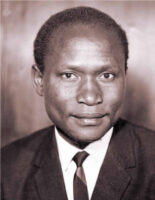
Taaitta Toweett – The odd man of Kenya’s politics

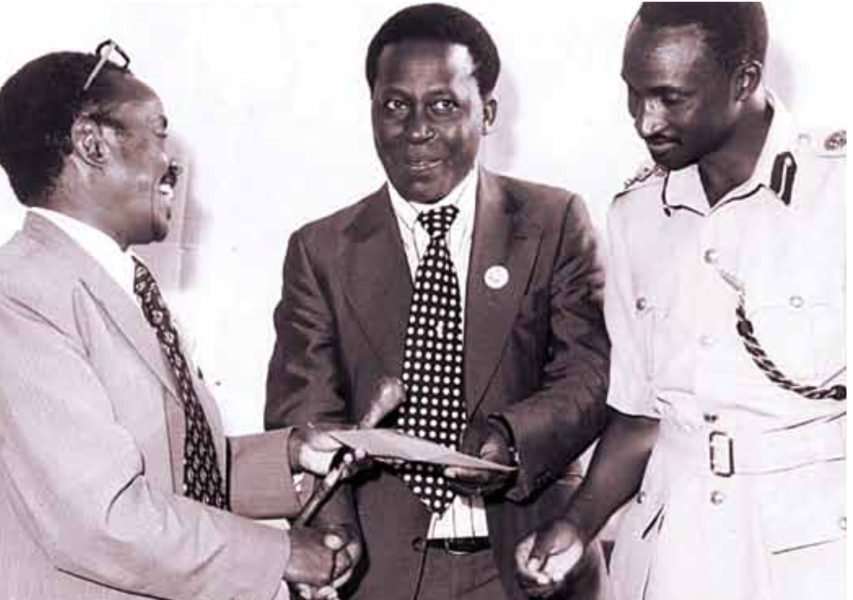
As Minister for Housing and Social Services, Dr Toweett hands over a cheque for Kshs22 million to the vice-chairman of the Kenya Amateur Athletics Association (KAAA), Dr Sam Ongeri, in aid of the association in Nairobi. Looking on is the KAAA Secretary, Senior Superintendant Isaiah Kiplagat. The cheque had been presented to the Minister by Coca Cola Africa.

Dr Taaitta Kipyegon arap Toweett was born in 1925. He started school at Litein Primary and later joined Kabianga Mission School. In the 1948 Kenya African Preliminary Examination, he emerged the top pupil in the country. He joined Alliance High School, from where he later went to Makerere College.

He then enrolled for a correspondence course with a South African university and obtained a BA degree in philosophy. He later studied for a master’s degree in philosophy at the University of Nairobi and a doctorate in linguistics at the same institution.

Toweett joined politics in 1958 when he was elected to the Legislative Council to represent Kericho. When Kadu was formed in 1960, he became its chief adviser and prophesied the death of Kanu in four months. He was among prominent Kenyan political leaders who participated in the writing of the first Constitution at Lancaster as a member of the Kadu delegation.

In 1963, he resigned and joined Kanu without the consent of his party. He also resigned as MP for Sotik to defend the seat on a Kanu ticket. But he lost to Alexander Bii. When he quit Kadu, he cited political disillusionment and was philosophical about it: “I have ceased to distinguish between what is right from what is not as a result of my metaphysical studies. I find it very difficult to take sides in political matters and to abide by one-sided political decisions despite new and changing realities of life.”

When Kenyatta became Prime Minister, Toweett gave conditions for his support — he would only work with him if those close to the Kanu leader did not stab Toweett in the back. And when Kadu was dissolved in 1964 to join Kanu, Toweett refused to cross the floor of the House and was the only one who took the principled option of seeking a fresh mandate from the electorate. He lost the by-election and was in political oblivion until 1969 when he recaptured the seat.

After the election, President Kenyatta appointed him Education Minister. He was re-elected in 1974. But he lost in 1979 and did not return to Parliament until 1992 when Kanu nominated him. He was also appointed chairman of the Kenya Seed Company. Toweett and Jean Marie Seroney, the MP for Tinderet in Nandi, were opposed to the settlement of other communities in the Rift Valley, which the Kalenjin regarded as their ancestral land. The two held public rallies in the province, culminating in the 1969 Nandi Hills Declaration in which they vowed to resist such resettlements.

He only accepted the settlement of immigrants in the Rift Valley after Moi supported it. His resentment of the mostly Kikuyu settlement ended after Kibaki and other central Kenya politicians supported Moi to become the second President. At one time, Toweett described Kenyatta as a President who kept silent when in bad company and spoke only when in good company. Toweett’s political woes began in the early 1970s when a group of politicians tried to change the Constitution to bar Vice-President Moi from ascending to the presidency should Kenyatta die. He was said to have been sympathetic to the group. This heightened tension between him and Moi, who eventually became President upon Kenyatta’s death on August 22, 1978.
Stanley Shapashina ole Oloitipitip – Crusader for Maasai land rights

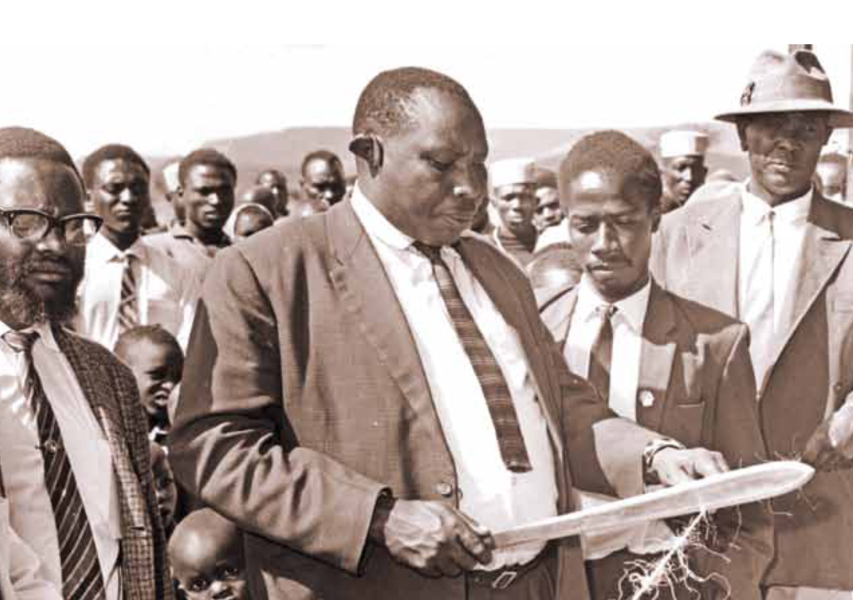
The Assistant Minister for Commerce and Industry, Mr Stanley Oloitipitip cuts a sisal rope with a Maasai sword to declare WasoKedong Primary School open on August 5, 1965.

From 1963 to 1983, Stanley Shapashina ole Oloitipitip bestrode the Maasai politics like a colossus and when he fell from the national limelight and into oblivion, his political career collapsed like a house of cards – ending with a 12-month jail term.

As Minister for Local Government, Oloitipitip upgraded numerous small towns into municipal councils, a move that cash-strapped most of them.

Born in 1924 at Endoinyo Oontawua, at the foot of Mt Kilimanjaro, Oloitipitip was the third born of Naseramporro and Olong’oyana Oloitipitip and was a member of the Irmingana sub-clan of the Ilaitayiok clan, who occupy the Olgulului Ilolarashi Group Ranch with the Amboseli National Park at the heart of it.

It was both the politics of conservation and continued allocation of Maasai land to outsiders that defined his career as the Member of Parliament for Kajiado South. Oloitipitip had little formal education, going only to Standard Four at the Narok Government School, where he sat the Kenya African Preliminary Examination in 1941.

At the outbreak of the Second World War, the Kajiado region turned into a war zone as allied troops battled German Forces from Tanganyika. Oloitipitip, then 19, joined the Kings African Rifles (KAR) as a nursing orderly and joined other African soldiers who were airlifted to the war-zones of Burma, India and Ceylon. There is little information on how he performed as a soldier, only that he rose to the rank of a sergeant before he returned in 1945 to work in the colonial health department as a medical assistant in Kajiado District. He also had a clinic at Il Bissil in Kajiado.

Five years after he returned, Kenya’s politics took a different turn following the return of Kenyatta from Britain in September, 1946, with the Mau Mau uprising and the first popular political party, KAU, gathering momentum. With the uprising, the British turned to Kenyans outside the Kikuyu, Embu and Meru tribes to help crush the Mau Mau movement. Oloitipitip, though a former soldier, refused to be conscripted, and sympathised with the African demand for independence. He also convinced his clan not to join any war on the British side.

With the jailing of Kenyatta, the next stage of politics involved the future of Kenya and land became a thorny issue, the Maasai having lost millions of acres to big colonial ranches. It was their desire to negotiate for a proper post-independence deal that brought together the most learned, among them Oloitipitip, to form the Maasai United Front (MUF) to negotiate for Maasai rights. Oloitipitip, who was elected chairman, joined hands with a young Nation newspaper journalist, John Keen, as secretary-general, and Justus ole Tipis to champion for Maasai land rights. The British government had insisted on the willing-buyer willing-seller policy rather than a blanket return of the “lost” land to the communities.

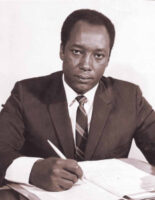
Samuel Ayodo – Defied Odinga and stuck with Kenyatta

Samuel Onyango Ayodo was one of the youngest members of Prime Minister Jomo Kenyatta’s first Cabinet. Ayodo was 33 years old when he was appointed to be part of a new crop of leaders to shape the destiny of the young nation at independence in 1963.

He was the son of a former assistant chief who had served in the 1930s under Chief Gideon Magak at a time when the current Kasipul Kabondo constituency, South Nyanza, was one location. Ayodo was from Kowidi in Kabondo.

His political slogan adich (Luo for ‘I am busy’) was used by his opponents to discredit his tenure as an MP and Cabinet Minister, saying he had no time for his voters in the village and that he spent most of his time in his Nairobi home and office.

But his supporters nicknamed him rawo (hippopotamus).

Ayodo started school at Wang’apala in his village and proceeded to Kamagambo Intermediate School in neighbouring Rongo. Both were mission schools run by the Adventist Church of Kenya.He was a bright student and passed the examinations with flying colours and got admission to the Maseno School. His teachers described him “as a man to watch”.

His star continued to rise and he passed the national examinations and got a place at Makerere College in Uganda, the only tertiary institution for East Africa’s academic cream.

After graduating from Makerere, Ayodo got a scholarship to study at Union College in Nebraska, the US. Indeed, in 1952, Ayodo made history as the first Luo not only to study in the US in1952, but also to graduate in education, history and religious studies (Bachelor of Science in Education) in 1956.

On his return, he got a job as a teacher at his old school, Kamagambo. He later moved to Agoro Sare Secondary and then neighbouring Kisii Secondary School. It was while at Kisii that Ayodo built his political foundation and career. His former students and colleagues described him as “an unusually impressive teacher,” who had rare qualities, was exceptionally well informed and whose every action was carefully thought out.

In 1959, Ayodo married Damaris, later chairperson of the National Council of Women of Kenya and official of Maendeleo ya Wanawake Organisation. They had seven children. The bug of politics bit him early in life and he participated actively in teachers’ industrial and welfare issues. Together with a former classmate at Makerere University, Samuel Ayany, Ayodo was one of the founders of the umbrella teachers’ body, the Kenya National Union of Teachers (Knut).

When elections were called for the South Nyanza Knut chairmanship, Ayodo triumphed. Not content with being a branch chairman, he lobbied his colleagues and supporters to form the South Nyanza District African Parents’ Association. His star was to rise even higher when he plunged into politics. He contested and won a seat in the African District Council to represent Kabondo location on the District Education Board.

Robert Matano – Mentor of many Coast politicians

Mzee Jomo Kenyatta tries his hand at a drum presented to him during a visit to Mazeras in August, 1966, as Kwale North MP Robert Matano (left) and Coast Provincial Commissioner Isaiah Mathenge, look on.

The terse one o’clock announcement by the Presidential Press Unit of the sacking of Robert Stanley Matano as Minister for Information and Broadcasting in 1985 hit the Kanu secretary-general like a thunderbolt.

Matano, who was en route from his Mazeras home in Coast Province by train, disembarked in Nairobi and called his office, seeking a vehicle to transport his personal effects from the Government house he occupied.

He had served both Kenyatta and Moi in various Cabinet portfolios — Culture, Social Services and Housing, Cooperative Development and Information and Broadcasting. When he was sacked, he quietly marked time until he lost his parliamentary seat in 1988 and retired to a life of farming at his rural home.

Matano was born in Mazeras, Kaloleni, in 1925 and tended his father’s livestock and helped in the farm. He started school at Mazeras Intermediate, and then joined the Church Missionary Society School in Kaloleni. He passed well and was admitted to Kaaga Secondary School, Meru, and later Alliance in 1936. He was a hardworking and disciplined student.  Then in 1946, he joined Makerere College for a diploma course in education, graduating in 1948. In 1949, he started his teaching career at Ribe Boys Junior Secondary School and later Alliance. He was promoted to District Education Officer (DEO) in Mombasa and Kwale.

In politics, Matano was drawn to the side advocating a majimbo system as opposed to Kanu’s unitary preference. Matano joined politics in the 1960s at the prodding of Ronald Ngala.

He was in the Lancaster delegation of 1960, 1961 and 1962. Kanu won the 1963 elections and formed the independence government and Kadu went into the opposition. But in 1964, the party was dissolved and the members, including Matano, who had been elected the MP for Kinango, crossed the floor and joined the ruling party.

As MP and minister, Matano’s sense of high integrity, made other party members regard him as politically naïve. But his political star started rising when he was thrust into Kanu with Mboya as the secretary-general. After Mboya’s assassination in 1969, President Kenyatta appointed Matano acting Kanu secretary-general.  But the party was not as active as it had been. After the 1966 Limuru Conference from which Odinga stormed out in a huff to found the KPU, Kanu never held sub-branch, branch or national elections until 1979. As a political strategy, Kenyatta and his advisers felt that party elections would divide the country and dredge the widening divisions between forces within the ruling party. So moribund was the party that organising secretary John Keen wrote to Kenyatta to complain that Kanu delegates had not met since 1962, a year before independence.

The secretariat had not met since 1964. The party had a 20,000 British pounds debt. Phones at the headquarters had been disconnected for failure to pay. Staff had not been paid for seven months.

Ronald Ngala – Grand master of Coast politics

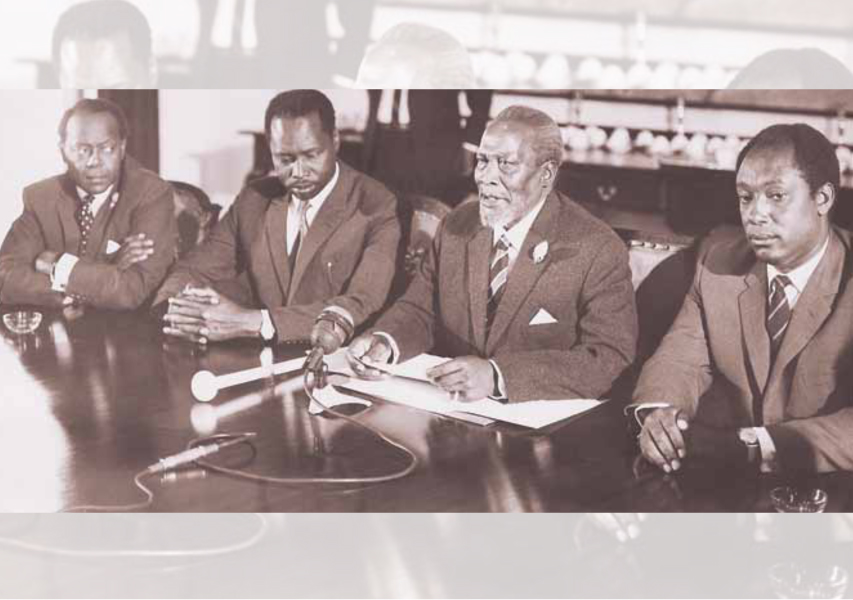
Ronald Ngala (centre) and Mzee Jomo Kenyatta chat with British Colonial Secretary Maulding at his Nairobi residence in November, 1961.

Born in 1922 in Kilifi, Ronald Gideon Ngala went to St John’s School, Kaloleni, Shimo la Tewa and later Alliance High School. He then joined Makerere College for a diploma in education. He taught at St John’s and Taveta’s Mbale Secondary schools between 1949 and 1954. He moved to Taita and Buxton (Mombasa), where he was the principal, between 1955 and 1956. He was then promoted to supervisor of schools and served in the position between 1957 and 1958.

But before long, and with the clamour for independence picking up momentum, his interest shifted to where his heart really belonged: politics. His springboard, as it were, was the Mombasa African Advisory Council (MAAC), which represented African interests on the Mombasa Municipal Board, where he was an elected representative. But he closely associated with another group, the Coast African Association (CAA), which was more political than MAAC. From then on, there was no stopping Ngala. By the time he joined the Legislative Council in 1957 to represent the Coast region, he had made up his mind to drop his teaching career for politics.

The Encyclopedia of World Biography records that Ngala’s career was marked by a realistic approach to politics as well as devotion to Kenya. He thus placed the country’s stability over his political ambition. This perhaps explains why it was easy for Ngala to become the secretary-general of the Kenya National Party (KNP), a multi-racial grouping formed in 1959.

Ngala’s election to the Legco was not surprising. After all, Ngala had solid grassroots support built over many years. For instance, when he campaigned for Legco in 1957, he concentrated on the local problems at the Coast, as his opponents dwelt on national issues. Ngala won the seat by 3,400 votes against Dawson Mwanyumba’s 2,539.  Francis Khamisi got 2,267.

Ngala had a strong following in this Mijikenda area. But in Taita-Taveta, he had to contend with Mwanyumba and Mwashumbe. Khamisi’s core support was in Mombasa. When an additional Legco seat was created for Mombasa, courtesy of Ngala’s agitation in 1958, Khamisi joined the House.

Ngala’s entry into Legco was largely attributed to his long-term association with the Education Department of the Church Missionary Society (CMS), which had brought him into contact with the educated elite at the Coast. In 1955, when the colonial authorities allowed district-based political organisations, Khamisi formed the Mombasa Democratic Union (Madu) and became its president. Ngala joined the organisation soon after.

Later, he threw his weight behind other political organisations, like the Kilifi African People’s Union (Kapu) and the Kwale African Democratic Union (Kwadu), in 1956 and 1958, respectively. These satellites of Madu operated on the outskirts of Mombasa. Pundits believed that Ngala sponsored them. After election to the Legco in 1957, he quit Madu to concentrate on Kapu and the Mijikenda Union.

Ramogi Achieng’ Oneko – Principled to the end

Tanzania’s President Julius Nyerere (right) is introduced by President Kenyatta to Kenyan ministers in 1965. Mwalimu Nyerere is shaking hands with Mr Achieng Oneko as Dr Njoroge Mungai awaits his turn.

Freedom fighter Ramogi Achieng Oneko will be remembered as a principled politician who was ready to die for his country. He was the only freedom fighter who was detained by the colonial and the Kenyatta regime, and lived to tell the story. He was in Prime Minister Jomo Kenyatta’s first Cabinet as the Minister for Information and Broadcasting.

Born in Tieng’a village in Uyoma, Bondo, in 1920, Oneko’s first job after leaving Maseno School was as a weather reporter for the Meteorological Department. He worked under a Briton he detested. Then he tried his hand in politics in 1949 when he became one of the first African municipal councillors in Nairobi.

Oneko was among the first Kenyans to establish a Dholuo newspaper, Ramogi Weekly, in 1945. Its sole purpose was to agitate for freedom. He had the support of Nairobi printer, G. L. Vidyathi. The East African Standard, the only daily newspaper, catered for the interests of the colonial Government, the British settlers and the business community.

Dr Ongong’a Oneko, the freedom fighter’s eldest son says: “He started it as a family business and later opened it up to others. The driving force of the venture was to generate an income and to spread political news to our people. The East African Standard was reporting Kenyatta in a biased manner, and that was why my dad decided to start his own weekly.”

Oneko was also the secretary of the Luo Thrift and Trading Corporation, established by his friend Oginga Odinga, between 1948 and 1951. Oneko first met Kenyatta in the late 1940s, when he interviewed him for the paper. At the time, Kenyatta was the leader of KAU. The two became bosom buddies and were later arrested, with four other colleagues, and detained for being members of the Mau Mau movement.

Oneko was the closest to Kenyatta during their highly publicised trial in the remote Kapenguria. The court did not find Oneko guilty, but he was re-arrested and detained with Kenyatta and the other four at Lokitaung, a remote outpost in north-western Kenya. They became popularly known as the “Kapenguria Six”.

An uninvited guest joins the royal party at the Treetops Hotel, Nyeri. Information Minister Achieng Oneko hands Emperor Haile Selassie a piece of cake to ofer to the friendly baboon in July, 1964.

According to Oneko, the colonial authorities believed that he was too close to Kenyatta, whom he regarded as an intellectual and articulate speaker. They were, therefore, separated and locked up in different detention camps. The two trade unionists, Kubai and Kaggia, were deemed too radical. It is claimed that they believed Kenyatta had abandoned the liberation struggle or would be an interim leader.

Kenyatta and Oneko considered Karumba illiterate, but conceded that he was more committed to the liberation struggle. Ngei, the first to start a Kikamba newspaper just before the declaration of the State of Emergency in 1952, was also labelled a radical and his colleagues thought he was a bit selfish and did not believe fully in Kenyatta.

Njoroge Mungai- Kenyatta’s doctor who brought UNEP to Nairobi

President Kenyatta holding a cheque for the Ksh1 million donation from Shell Company to build the Kenya War Memorial Hospital in 1971. He was with (from left) Attorney-General Charles Njonjo, Vice President Daniel Moi and Defence Minister Dr Njoroge Mungai. 

Apart from holding brief clerical jobs in the two years between leaving Alliance High School in 1945 and joining South Africa’s Fort Hare University in 1948, John Njoroge Mungai was a country bus driver, ferrying passengers between Limuru and Nairobi.

The later Defence Minister recalls: “I got my Public Service Vehicle (PSV) licence in 1946, a copy of which I still keep. I used to drive a 60-seater Chevrolet bus between Limuru and Nairobi via Kikuyu. Prior to that, I briefly worked for the British Overseas Airways Corporation.”

Mungai was born at Gichungo village along the border of Nairobi and Kiambu on January 7, 1926, to pioneer Christians George Njoroge Singeni ole Mbachucha and Leah Gathoni wa Kungu wa Magana. His father came from Narok and his mother from Gatundu. His family home was a breeding ground for politics and even before Mungai was born, the politics of the oppressor and the oppressed was played out in his neighbourhood. The home harboured both those who defended African rights and values, like Waiyaki wa Hinga, and “the servant of the colonial oppressors” like Paramount Chief Kinyanjui wa Gathirimu. “Being between the two opposing sides was interesting. Politics revolving around land, education and religion was the order of the day,” he says.

He recalls being told how John William Arthur, the colonial moderator of the Church of Scotland at Kikuyu, had tried to force the locals to abandon their customs and culture and follow his own.

“Of course, there was resistance from those who did not see the conflict between Christianity, education, modern living and their customs and culture,” says Mungai. “Although some customs may not have been appropriate, Arthur’s approach resulted in conflict and the split of the local people and church followers.”

A splinter group, led by Gatungu Gathuna, broke ranks religiously and started independent schools known as Gikuyu Karing’a.

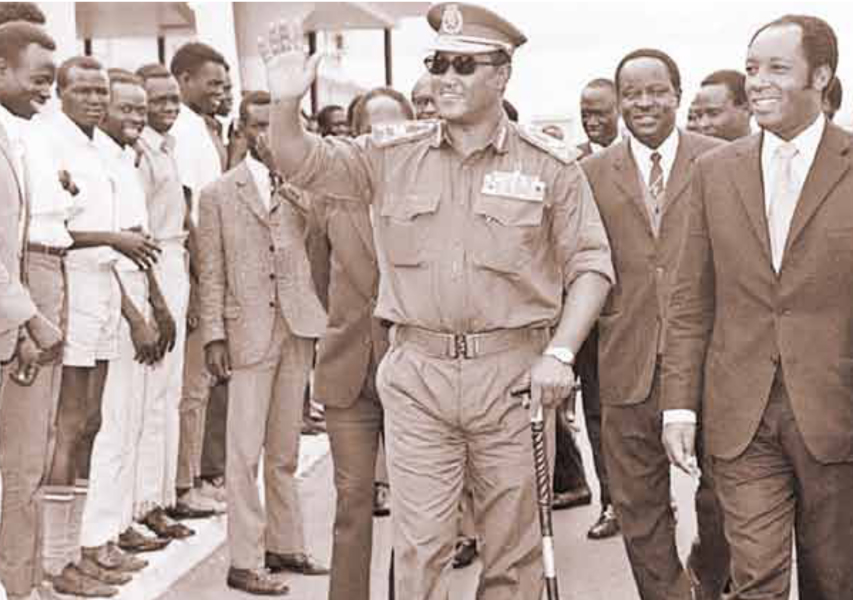
President Jafer Numeiry of Sudan waves to Sudanese students living in Kenya during a stop-over in Nairobi from Somalia on July 12, 1972. He was received by Foreign Minister Njoroge Mungai (right) and Commerce and Industry Minister Julius Gikonyo Kiano (partly hidden behind Gen Numeiry).

Recalls Mungai: “This system of education later became the breeding ground for freedom fighters. Those who broke away from the Church of Scotland became agitators for the land that had been taken away by the colonialists and for self-determination and independence,” recalls Mungai.

One reason that may have informed Mungai’s choice of career later in life could have been the fact that he was born at a hospital at a time when, for Africans, giving birth at home came naturally and a hospital birth was almost unheard of. He explains the novelty: “My mother was among the first women to go to school and learn how to read and write. She and my father were members of the Church of Torch, Kikuyu, where the records of my birth were preserved. The records are still intact at the Church and they show that my birth attendant was one Dr John William Arthur.”

His parents were staunch Christians and Mungai was baptised the same year he was born and at the Church of Torch.

Nathan Munoko – KANU boss who reigned supreme

At 90, Nathan Waliaula Munoko is amazingly physically fit and clear-minded. Much as memory fails him on some details of his political life, he narrates many defining personal and national moments with interesting anecdotes.

Munoko is agile and alert. For instance, he drives himself around Nairobi and attends to personal and official functions.

At the height of his career in the latter half of the 1970s, Munoko doubled up as the Minister for Works and organising secretary of the only political party, Kanu. Indeed, Munoko served longest in that position — 18 years. He was elected unopposed in the famous Little General Election of 1967 and retired in 1984.

Munoko was born on May 20, 1922, at Kolani, Sirisia, Bungoma District, in a polygamous family, the first born of his mother. His mother was fairly young when his father died in 1926 and she remarried. He says: “My life would have been bleak were it not that my father had given firm instructions to my elder brothers that I should not leave our home and that they take care of me.”

He praises his brothers for guardianship and care during his formative years. Fortunately for Munoko, his brothers valued education in those early years. As a child, he lived in the Quaker (Friends Church) communal setting, where he received religious and secular education at Chwele B School between 1932 and 1934.

In 1935 he was admitted to the Government African School, Kakamega, as student number 122. Munoko held the record in the inter-school half-mile marathon, beating boys from Kapsabet and Kabianga schools who had dominated the event. He also played rugby. From Kakamega, he went to the Maseno Church Missionary School in 1939, where he took his Junior Secondary School Certificate exam in 1940.

Munoko joined Alliance High School in 1941 as student number 628. He was a house prefect and member of the famous Baluhya Musical Club. He was also in the football team and played hockey and volleyball. His classmates included Robert Matano and Charles Rubia, who later became politicians in their own rights.

Munoko passed the ‘O’ Level Cambridge Overseas School Certificate exams in 1942 and proceeded to Makerere in 1943 for a diploma course in veterinary science. But, in 1946, the Veterinary School was moved from Entebbe to Kabete, Kenya. He was, therefore, one of the first graduates of the school on the Kabete campus, in 1947.

In 1944 Munoko bagged the Governor of Uganda Award for the best student “all round”. He was in the university’s First 11 soccer team and his playmates included Edward Mutesa, later the Kabaka of Buganda. Munoko was also a sharp shooter and a member of the Makerere College Cadet Corps with the rank of corporal.

After Makerere, Munoko was employed as a veterinary officer and posted to Maseno in 1948 to take charge of Central Nyanza District. He was later transferred to Mombasa as the Port Veterinary Officer. He inspected the local slaughterhouses and was in charge of hygiene of the meat supplied in Mombasa.

Mwai Kibaki – Gentleman of Kenyan politics

Finance Minister Mwai Kibaki with his wife Lucy Muthoni arrive at Uhuru Park in Nairobi for the Jamhuri Day celebrations presided over by Mzee Jomo Kenyatta on December 12, 1973.

President Mwai Kibaki’s style of governance is that of a competent technocrat. Thus, public affairs are better organised since he took over in December 2002. The economy has done well despite the post-election chaos of 2008 and Kenya is much freer than during the eras of Presidents Jomo Kenyatta and Daniel Moi.

The August 4, 2010, ratification of the new Constitution is another feather on the President’s cap. He galvanised the country — campaigning in all corners of Kenya — in support of the new laws and the outcome was the overwhelming victory of 67 per cent. For him, this was the realisation — as he told a local newspaper — of a 50-year desire to change the colonial laws. It was also the end of a chapter that would have been closed in 2005 if divisive politics had not clouded the issues.

Like his predecessor Moi, who as Vice-President had withstood disrespect from juniors, Kibaki took the demotion from the Vice-Presidency to Minister for Health in 1988 in his stride. Notwithstanding the tribulations he underwent as Vice-President and Cabinet minister, and even later as the Leader of the Official Opposition, he bid his time and was even accused of being a “fence-sitter”. But this did not seem to worry the veteran politician or remove his eyes from the prize.

Kibaki was elected Kenya’s third president in the December, 2002, General Election, with the support of politicians who had just rebelled from Kanu.

Born on November 15, 1931, in Othaya, Nyeri, Kibaki was the youngest son of Kibaki Githinji and Teresia Wanjiku. He was baptised Emilio Stanley by missionaries in his youth, names he no longer uses.

Vice-President Daniel arap Moi introduces Mzee Jomo Kenyatta to Finance and Planning Minister Mwai Kibaki and the Clerk of the National Assembly, Mr Leonard James Ngugi.

As a boy, Kibaki was expected to look after his father’s livestock, but a brother-in-law impressed it on his father to take him to school, where he turned out to be an exceptionally bright student. He went to Gatuya-ini and Karima Mission schools, and then attended Mathari School (now Nyeri High) between 1944 and 1946 for Standard Four to Six classes. In addition to academic studies, he learnt carpentry and masonry, as students were expected to repair furniture and maintain school buildings. Like everyone else, he grew his own food at school. During the school holidays, he worked as a conductor for the Othaya African Bus Union to earn some pocket money. At the end of primary school education, he performed exceptionally well and was admitted to the top Catholic school in the country, Mangu High, in 1947. He sat the final examinations in 1950 and passed with six points, the best possible grade.

Influenced by soldiers of the Second World War who had returned home in 1945, he considered becoming a soldier in his final year at Mangu. However, the Colonial Secretary, Walter Coutts, barred the recruitment of the Gikuyu, Embu and Meru communities into the army. This put paid to Kibaki’s military ambitions.

Masinde Muliro – Rebel with a cause and the voice of reason

Kenya’s Minister for Co-operative and Social Services, Mr Masinde Muliro (second right), welcomes the Ugandan Community Development and Cultural Minister, Dr Yekosofati Engur (third left), at the Nairobi Airport on August 22, 1972. Dr Engur was visiting for talks on the Second Black Cultural Festival, to be held in Lagos, Nigeria in 1974.

Henry Pius Masinde Muliro was born in 1922 at Matili village, Bungoma, to Muliro Kisingilie and Makinia after whom he was fondly referred to as Owa Makinia or Khwa Makinia.

He was orphaned at a tender age. The mother died in 1928 when he was only six and the father in 1935 on the threshold of his teenage. The name Owa Makinia referred to his maternal lineage but with a whiff of his orphan status. Because of the poverty that marked his early days, the Catholic Church played a major role in Muliro’s formative years. This explains the names Henry and Pius, given to him by the missionaries.

The underprivileged milieu of Muliro’s early years must have been a blessing in disguise. Catholic missionaries took care of his education at Matili and Misikhu primary schools. He sat the Competitive Entrance Examination at the latter.

The missionary educators in Misikhu identified his keen and abiding interest in education and seconded him as one of the few bright boys to Mwiri Intermediate School in Uganda. In 1944, he came back to Kenya to join St Mary’s School Yala, where he sat the Kenya African Primary Education examination. Muliro proceeded to St Peter’s College Tororo, Uganda, in 1947 and passed both the Cambridge School Certificate Examination and the Makerere Entrance Examination in 1948.

After Tororo, Muliro became a popular figure in his native home, having scaled educational ladders that identified him as one of the few enlightened young men among his Bukusu people. He crisscrossed Bungoma spreading the message of education and mentoring young people, an activity noticed by community leaders, who raised funds for his studies in Cape Town, South Africa. The fees and travel were topped up by the missionary benefactors who had held his hand through primary and secondary education.

Muliro was admitted to the University of Cape Town in 1949 for a bachelor of arts degree in education, English, history and political philosophy. He studied for another degree in education. His educational thirst not satiated, Muliro enrolled for a master’s degree course in political science at the same university. His independence of mind would, however, cost him the award of the master’s degree certificate when he refused to tone down his thesis that launched into the racist political set-up of South Africa.  At this point, he took a keen and active interest in South African politics, becoming a member of Nelson Mandela’s African National Congress.

Indeed, it was through his participation in ANC politics that he would meet his future wife, Mercia, who survives him to date.

Muliro returned home to Kenya with Mercia in 1954, when he was said to be the fourth most educated African in the colony.  He was posted to Alliance Girls High School, then Siriba Teachers Training College, before hanging his teaching boots to plunge into politics, a career he would follow till his death. In the North Nyanza (Western Province) Legco elections of 1957, Muliro triumphed over six candidates, including the then incumbent, Wycliffe Works Waswa (WWW).