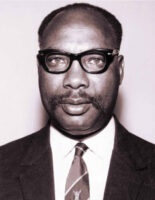
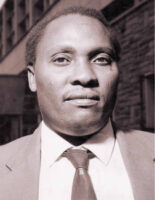
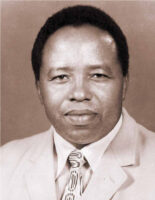
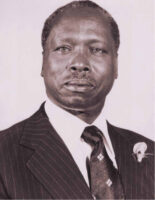
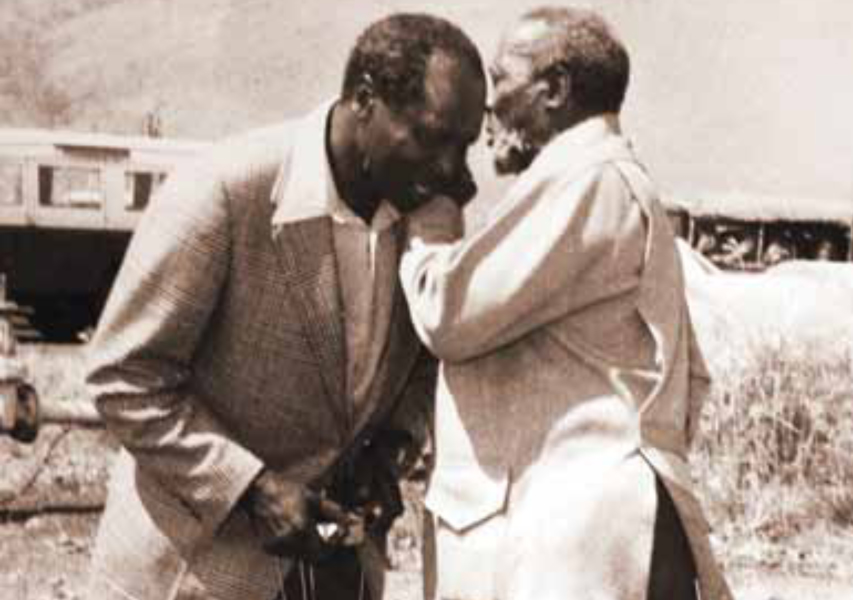
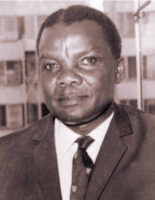
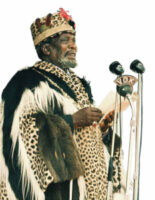
In his sunset years, Jackson Harvester Angaine styled himself the “King of Meru”. He will be remembered as the minister who had the trickiest docket in independent Kenya: Settling millions of landless Kenyans in the former White Highlands.
He also played a leading role in creating an African propertied class, leading to gross inequities in property, especially land ownership. Angaine bestrode the Ministry of Lands and Settlement like a colossus between 1964 and 1979, when he first lost his parliamentary seat.
Born in 1900 at Gautuku village, Ntima location, Meru, Angaine joined the United Methodist Missionary Society School at Kaaga for primary education in 1913. He later went to Alliance where he was a class ahead of Odinga. The son of Paramount Chief Angaine M’Itiria, Angaine distinguished himself at Alliance as a boxer. He did the London Matriculation course, but did not join university. He instead opted for a job as an accountant.
His political career started when he joined KAU and became the Meru District chairman. KAU did not have a national figure to galvanise the populace. The return of Kenyatta, with his British experience, offered KAU the political mobilisation this required. It educated its supporters on their political and social rights.
With Kenyatta at the helm, and working with a coterie of young politicians, KAU ignited passion across the Gikuyu, Embu and Meru region. It then spread to other areas and, before long, it had leaders at the national and at district levels. Angaine was the leader among the Ameru, a position that elevated him to the centre of national politics.
With KAU split between radicals and moderates, the former rubbishing the latter’s call for negotiations, the party provided the political thrust required for the emergence of the Mau Mau, whose main leader, Dedan Kimathi, was the Ol Kalou KAU chairman. Angaine’s Meru backyard, adjacent to Mt Kenya Forest, was the base of the organisation.
But on October 9, 1952, Kung’u Waruhiu, a Paramount Chief appointed to oversee colonial rule in central Kenya, was driving to a Seventh Day Adventist mission when the Mau Mau struck. They sprayed his US-made Hudson car with bullets. This assassination was the first signal that the Mau Mau were determined to change Kenya’s politics, if need be, by force.
The murder ignited a call among the settlers for decisive action against the KAU leadership, whom they argued was behind the attacks on European farms. Less than two weeks after Waruhiu’s funeral — October 20, 1952 — a State of Emergency was declared and Operation Jock Stock was launched, targeting KAU leaders and the Gikuyu, Embu and Meru communities. The terror spread significantly in the so-called White Highlands as thousands of Kikuyus, Embus and Merus were arrested. The central Kenya economy was blockaded.
Angaine could not escape the colonial dragnet. He was detained in Kajiado, Mackinnon Road, Hola and Manda Island. The last one was a hardship area for nationalist prisoners thought to be the ringleaders of Mau Mau. It was at Manda that Angaine lost most of his teeth. He was considered a hardcore criminal and was nearly starved to death.
The Minister for Labour, Mr Ngala Mwendwa, addresses the gathering after presenting certifcates and prizes to 31 students at the East African Power and Lighting School in December, 1968.
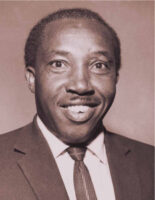
After a bright teaching career, Eliud Ngala Mwendwa was appointed to Kenyatta’s first Cabinet, served in several ministries and was the architect of some landmark achievements. As Minister for Labour, he was instrumental in the conception of the National Social Security Fund (NSSF) and the National Youth Service (NYS).
The son of a paramount chief, Mwendwa bestrode the politics of Kitui District like a colossus. He was born with the proverbial silver spoon in his mouth. He naturally turned the Mwendwa family into one of the wealthiest dynasties in Kenya. Thus the family of colonial Senior Chief Mwendwa Kitavi produced independent Kenya’s first African Chief Justice, Kitili, and three Cabinet Ministers in the Kenyatta and Moi governments — Ngala himself, his brother Kyale and Kitili’s widow, Nyiva.
Mwendwa was born in 1923 in a polygamous family at Kalia in Matinyani, Kitui. He looked after his father’s livestock, but for fun rather than duty. His father not only had enough herdsmen to tend his stock but also farm hands and armed askaris to guard and run errands for him.
Ngala joined Matinyani Primary School of the Africa Inland Church in 1935. He sat the Common Entrance Examination after three years to move to Kitui School. “It was at Kitui school that I saw white men for the first time,” says the octogenarian. “After completing my studies, I joined Alliance Boys in 1943.”
He then proceeded to Kagumo Teachers Training College. Mwendwa’s maiden trip to Nairobi was eventful because the passengers used a vehicle belonging to the county council. “The road from Kitui through Machakos was non-existent and we went to Nairobi via Thika, where we spent the night and then took a train to Nairobi and to Kagumo,” he says.
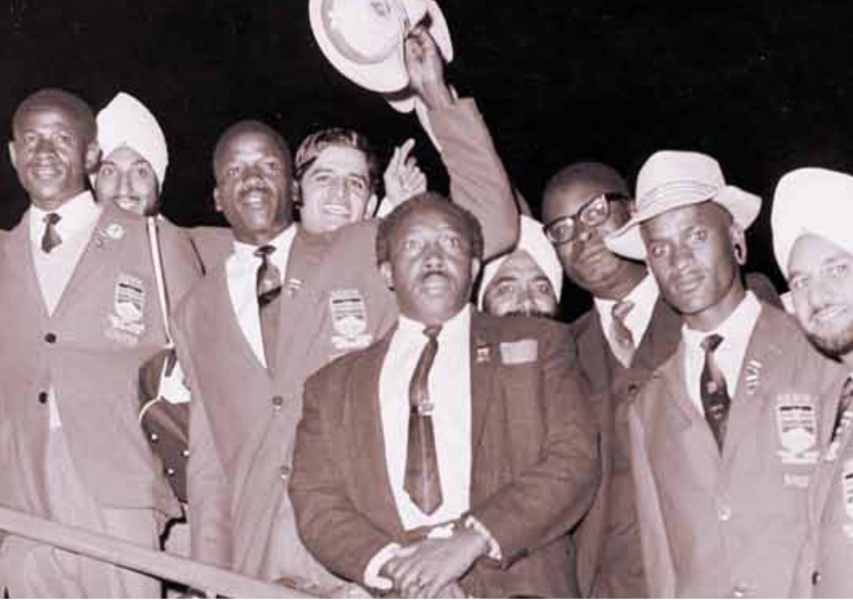
The Kenyan team before they left for the 1960 Tokyo Olympics, acompanied by Labour Minister Eliud Ngala Mwendwa (holding a fywhisk) and the Permanent Secretary, Mr Meshack Okello Ndisi (in glasses).
He graduated from Kagumo in 1946 and was employed as a teacher at his former school, Kitui, in 1947. In 1951, he was transferred to Matinyani DEB School, where he taught until 1957. As a teacher, he excelled as a sportsmaster and encouraged learners to take part in various disciplines.
Teaching was a noble profession. A teacher was not just a father to children in the village but also a community leader. It is no wonder that most Kenyans who went for higher education at Makerere College or abroad and later became prominent politicians or administrators were teachers either in local primary or in secondary schools.
In 1957, Mwendwa opened a shop. But in 1958 he left the business to his elder brother, Mang’uye, and took up a job as a tutor at Mutune Teachers Training College, now St Angela’s Girls Secondary School.
“I have never written an application for formal employment,” says Mwendwa, pointing out that unemployment for the educated was unheard of in those days. But the political heat in the country was rising with the colonial authorities having imposed emergency rules as the Mau Mau war intensified. Mwendwa was not at the forefront in the independence struggle. Indeed, he has faint memories of the freedom struggle, but says many chiefs were repressive and arrested people arbitrarily and on flimsy grounds.
The Minister for Information and Broadcasting, Mr Daniel Mutinda (left), welcomes Zambia’s Minister of State for Economics, Mrs L. Monse, when she arrived at the Nairobi Airport on June 2,1976. On the right is Health Assistant Minister James Njiru
Daniel Musyoka Mutinda is skinny, tall and dapper. He has a quiet, thoughtful mien and is scholarly-looking, complete with reading glasses. And that is not for nothing — he has a Bachelor of Arts degree in history, political science and economics from Syracuse University in New York and a law degree from the University of Dar es Salaam. Though he was the youngest appointee to the Cabinet in 1974, he towered above his colleagues.
Mutinda runs a law firm, Mutinda and Company Advocates, in Kitui and Machakos, where he is a common sight at the law courts. He is married with four children. Mutinda was born on November 25, 1942, to David Mutinda Kambi and Martha Mutinda at Katungulu village, a few kilometres from Kitui town. He lost his mother when he was four years old and was brought up by a stepmother.
His father was a well-known teacher, who also served as an Africa Inland Church (AIC) pastor. Mutinda Senior joined the Church ministry when he retired from teaching. “My father is still alive and will be 100 years old soon,” said Mutinda, the second-born in a polygamous family of six brothers and sisters. His elder brother is a former Kitui Central MP and Assistant Minister, John Kimanzi Mutinda.
Mutinda joined Ithookwe Primary School in 1952 and Government African School, Kitui, in 1958. Some of his classmates at what is now Kitui School were the late Michael Ngilu, the husband of Water Minister and Kitui Central MP Charity Ngilu, former Clerk of the National Assembly Japheth Masya and businessman Roy Mutisya.
After Kitui School, Mutinda joined Chwa II Memorial College in Uganda, where he engaged in political activism that later shaped his career. “I attended a political meeting near Makerere University that was addressed by John Kakonge, one of the anti-colonial politicians in Uganda. He was among the first politicians I saw on the platform who influenced my thinking,” he says of his stay in Uganda.
Mutinda later got a scholarship from the International Institute of Education at Syracuse University in New York where he studied history, political science and economics between 1965 and 1968. On returning home, he enrolled at the University of Dar es Salaam for a law degree. His classmates at Dar es Salaam included Chief Justice Dr Willy Mutunga, Court of Appeal Judge Emmanuel O’Kubasu, Senior Counsel Gibson Kamau Kuria, Pan African Insurance Company chairman John Simba and Justice Mathew Amukule.
After Dar es Salaam, Mutinda went to the Kenya School of Law and was admitted to the Bar in March, 1973. He served his pupilage at the prestigious Stratton and Kaplan law firm and joined Kivuitu and Company Advocates. In the 1974 elections, fresh from the University of Dar es Salaam, the soft-spoken Mutinda contested against independence hero Eliud Ngala Mwendwa in Kitui Central. David felled Goliath, who had been MP since 1961. Mwendwa had dominated the politics of Kitui since pre-independence days. Mutinda beat his opponents with a landslide.
Kenyatta appointed him Minister for Information and Broadcasting. In January, 1978, he was transferred to the new Ministry of Power and Communications, serving there until October the same year, when he returned to Information and Communications until March, 1980.
Today, few would recognise the man who ended the colourful career of one of the most formidable politicians in Kenya and went on to make history by becoming the youngest Cabinet Minister in independent Kenya at the age of 31.
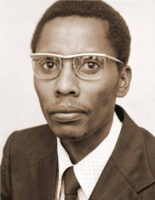
If reference checks were the key to securing a Cabinet position, Dawson Mwanyumba would not have made it to Kenyatta’s first Cabinet as Minister for Public Works, Communications and Power.
A trained mathematics teacher who was quick to anger and even faster to use his fist against those he found too slow for his liking, Mwanyumba literally boxed his way into politics after assaulting a colonial education officer in 1953.
Former Taveta MP Eliud Mcharo, who was Mwanyumba’s student at Maynard Intermediate School, traces his rise to the day he defied a summons by the district education officer.
“Based at Wundanyi, DEO Delany had travelled to Mbale to see Mwanyumba. When he did not find Mwanyumba at the office, he sent a teacher, Ayub Mwaluma, to call him from class.
“Mwanyumba was in Class Eight preparing candidates for the Kenya African Primary Examination (KAPE). He told Mwaluma to tell the DEO to wait until the class was over.”
The response is said to have surprised the DEO, who vowed to teach the “insolent” teacher a lesson.
Mwanyumba had secured a scholarship for further education in America and was planning to join his peers — Ronald Ngala, Julius Gikonyo Kiano, Robert Matano — who had already started their undergraduate studies.
But it was not to be. Mwanyumba’s scholarship was withdrawn in mysterious circumstances. He soon discovered his academic dream had been shattered by the DEO he had slighted.
“On learning this, Mwanyumba, who was poor at controlling his temper, travelled to Wundanyi and stormed into the DEO’s office. He physically assault the colonial educationist for cancelling his scholarship,” says Mcharo.
Mwanyumba then resigned from teaching.
His eldest daughter, Mary Ndigha, says: “I have always known that my father resigned as a teacher but I was not aware why. Moreover, I never understood why he never went abroad for further education, although nearly all his peers effortlessly enhanced their education after Makerere. Now I know.”
True to character, Mwanyumba did not regret taking matters into his own hands, and even asked his wife, who was also a teacher, to quit.
“He feared she would be targeted by vindictive colonial education officers. She started a new life as a dress-maker and a peasant farmer,” Mary recalls.
Out of work and with a young family to support, the former mathematics teacher fell back on his entrepreneurial skills to make ends meet. He opened a shop at Wundanyi town, dealing in all manner of household goods, and a butchery in Moshi, Tanzania.
Wundanyi resident Benjamin Mwashumbe, 56, says the shop soon became a meeting point for political debate.
“His shop was like a marketplace of ideas. Many people would come just to catch up with the latest political happenings. I learnt this from older villagers who were politically active at the time,” he said.
But politics came at a great price for the family. The more Mwanyumba was drawn into politics, the more he neglected the shop. He lost track of creditors and stock-outs became the order of the day. Said Mary: “I remember the shop was very big and busy. It sold different kinds of items like clothes and foodstuff. My father allowed customers to take goods on unlimited credit. He often gave away items free. The business suffered and later collapsed.”
Eliud Timothy Mwamunga was an astute politician in post-independent Kenya, navigating turbulent political waters to serve in the Cabinets of Presidents Kenyatta and Moi. He later co-founded the Democratic Party of Kenya (DP) that would play the initial role in catapulting Kibaki to become Kenya’s third President.
A wealthy landowner in a constituency endowed with minerals, cash crops and wildlife, Mwamunga courted the Kenyatta and Moi administrations by not only rising above other political greenhorns in Taita-Taveta and the Coast, but also playing low-profile politics at a time when the careers of abrasive and combative politicians were brutally cut short through detention, sacking from the Cabinet or rigging out of Parliament.
A lawyer, Mwamunga made history not just in Voi constituency, but also in the larger Taita-Taveta by serving as the MP for 20 uninterrupted years. None of those who came before or after him — Basil Mwakiringo, Darius Mbela, Boniface Mganga or Adiel Kachila — managed to serve for even two terms.
Mwamunga was born on July 21, 1935, at Ishamba at the foot of the Taita Hills. He grew up in an area endowed with natural resources — minerals such as rubies, cash crops (sisal) and fruits (mangoes) and wildlife as the Tsavo National Park is nearby. He attended Ishamba Primary School and later joined Shimo-la-Tewa Secondary and Alliance.
He went for higher education at Makerere and then the University of Dar-es-Salaam in to study law. If Makerere was the educational Mecca of Eastern Africa, Dar-es-Salaam was the premier law institution in the region. After graduating in law, Mwamunga taught in various schools in Coast Province at a time when the struggle for independence was at its height. The Mau Mau war was in top gear, the State of Emergency had been declared in 1952 and leaders were forming political parties to agitate for independence.
At the Coast, the kingpin of that political struggle was Ronald Ngala, a major inspiration for the young teacher. Ngala, who was against the marginalisation and exploitation of the Coast people, played a central role in the struggle for independence.
The independence constitutional conferences in London, the 1963 elections pitting Kanu against Kadu, and the dissolution of Kadu in 1964 were some of the exciting political events of the freedom struggle, independence and the birth of the young nation that inspired a young Mwamunga even as he taught at the Coast and later became the Taita-Taveta County Clerk.
As Town Clerk, Mwamunga rubbed shoulders with civic leaders and parliamentarians. He also visited all parts of Taita-Taveta and realised the dire need for basics among his people. It was also during that period that he discerned the role he could play in serving the Taita people.
In 1969, at the age of 34, he contested and won the Taita-Taveta parliamentary seat. In his first term in Parliament, Mwamunga initiated numerous development projects, made useful connections with agriculturalists, wildlife conservationists and mineral prospectors, including wealthy Kenyans and foreigners who could exploit the district’s natural resources.
Mr Moi joins Maasai moran dancers at the Namanga border point on his way home from Arusha, Tanzania, where he attended the Organisation of African Unity (OAU) meeting over the Kenya and Somalia confict on November 8, 1967.
Daniel Toroitich arap Moi was born on September 2, 1924, at Kurieng’wo, Sacho, Baringo District. He was the fifth child of his father’s senior wife. Moi was named Toroitich, which means “welcome the cattle home”, a clear indication of the central role of cattle in his culture.
Moi’s father died when he (Moi) was only four and his elder brother, Tuitoek, became the guardian. It was Tuitoek who influenced him to go to school at an early age so that he could escape poverty and colonial injustices. In 1934, Moi started school at the Africa Inland Mission School, Kabartonjo, about 45km from his home. On October 20, 1936, he was baptised Daniel. In 1938, he was transferred to the African Inland Mission Kapsabet and later to Government African School Kapsabet, where he was school captain and captain of the football team. He took menial jobs in and out of school to meet his basic needs.
President Kenyatta whispers to Vice -President Daniel arap Moi.
In 1945, Moi was selected to join Alliance High School but, to his disappointment, the colonial administration did not allow him. Instead, he was sent to a teachers training college. Questions have lingered over this: Why did the colonial authorities deny Moi the golden chance to study at Alliance? What is it they had seen in him?
When he completed the teaching course, he was posted to Kabarnet as headteacher. He studied privately and passed the London Matriculation Examinations. In 1949, he was promoted to the rank of P2 after a brief course at Kagumo College. He was then transferred to Tambach Government African School as a teacher trainer. Moi married Helena (Lena) Bomet in 1950 and they have eight children — three daughters and five sons.
In 1950 he attended a course at the Jeans School (now the Kenya Institute of Administration) and was later posted to the Government African School, Kabarnet, where he taught up to 1955 when he joined politics. Moi’s entry into politics followed a meeting with a group of freedom fighters under the command of Brigadier Daniel Njuguna who visited him in June, 1955. He was sympathetic to their cause and after feeding and protecting them for two weeks, he gave them food and Sh500.
In October, 1955, an electoral college picked Moi from a list of eight nominated candidates to fill a vacancy left by Joseph ole Tameno, who had resigned from the unofficial benches of the Legco. As Moi sat in the Legco with only other four African members on October 18, 1955, he did not know what was in store for him. He, however, adapted to the new challenges and, in 1956, moved a Motion demanding that African teachers be allowed to form their own association. The Kenya National Union of Teachers (Knut) was formed and registered in 1957.
He worked with other leaders, such as Eliud Mathu, Ronald Ngala and Masinde Muliro, to agitate for the release of Jomo Kenyatta from detention and for greater African representation in the Legco. In 1959, he led a group of leaders to visit Kenyatta in detention in Lodwar.
Zambian President Kenneth Kaunda autographs a picture of his at Parliament Buildings on June 6, 1968. Also pictured are Githunguri MP Waira Kamau (right), the Minister of State for Foreign Afairs, Mr Argwings Kodhek and Housing Minister Paul Ngei (centre)
In 1963, Prime Minister Jomo Kenyatta appointed C.M.G. Argwings-Kodhek an Assistant Minister for Defence. In 1966, he was promoted to head the Ministry of Natural Resources and eventually in 1967 the Ministry of Foreign Affairs. He was a true hero of the independence movement whose personal sacrifice, determined resistance and unfailing courage are good examples for the youth.
Argwings-Kodhek was the first Member of Parliament for Gem in Siaya, serving from independence in 1963 to 1969. He was a human rights’ lawyer based in Nairobi, where the bug of politics bit him shortly after returning to Kenya from London, where he had graduated with a law degree.
The colonial authorities branded him “a hot head” for his activism and human rights campaigns for his defence of Mau Mau freedom fighters, like Waruru Kanja (who later became Nyeri Town MP and Cabinet Minister), among other nationalists. While working in Nairobi, CMG launched his own party, the Nairobi Congress Party, to fight it out with Mboya’s Nairobi People’s Convention Party. The initials CMG stood for Chiedo Moa Gem, given to him by his parents in remembrance of one of their forefathers.
Kodhek used the initials as a political nickname in his Dholuo language. Chiedo Moa Gem literally means “fried (or cooked up) in Gem”. But his critics mistakenly accused him of being brainwashed by the British during his student days.
Born in 1923 in Malanga, Gem location, Argwings-Kodhek went to St Mary’s Yala and later King’s College Budo, Uganda. CMG was from the Kagola Ojuodhi clan, the same lineage of his successors, Isaac Omolo Okero (MP and Cabinet Minister, 1969-79) and Prof B. A. Ogot, husband of Grace Ogot, who was Gem MP between 1985 and 1992. After Budo, CMG taught at Kapsabet Boys High School, where he met Moi.
Argwings-Kodhek then won a scholarship to study teaching in England, but his interest was law, which the colonial government did not approve of. After a year, his scholarship was terminated and his father sold many cows to pay for his tuition.
He qualified as a barrister and was called to the bar at Lincoln’s Inn. This was an outstanding achievement and he had an opportunity to stay in England and be a well-paid barrister. But he astounded his colleagues when he informed them that he would leave for Kenya. Argwings-Kodhek was among the first indigenous Kenyans to become lawyers on the eve of independence. He was in the same league with Njonjo, Jean Marie Seroney (Tinderet MP between 1963 and 1975 and Deputy Speaker of the National Assembly).
He then returned home and the colonial government offered him a job as a legal assistant in the Registrar-General’s office, where his colleagues were Njonjo, Seroney and Mareka Gecaga. Gecaga later quit to join British American Tobacco Kenya Ltd as chairman. But CMG quit the job and became a legal defender of the Mau Mau, often for little or no pay. For this, he earned the wrath of the colonial government, who saw him as a Mau Mau lawyer. But to Africans, he was proof — if any were needed — of the European lie that black people were only fit for menial positions. The fact that Argwings-Kodhek had a European wife added to the colonial hatred of him.
President Jomo Kenyatta with the newly elected Kanu provincial vicepresidents at the Limuru Conference Centre on March 16, 1966. They are from left Mr Ronald Ngala representing the Coast, Mr Jeremiah Nyaga (Eastern Province), Mr Daniel Moi (Rift Valley) Mr Lawrence Sagini (Nyanza), Mr Mwai Kibaki (central) and Mr Erick Khasakhala (Western)
Before it opened in January 1926, Alliance High School was supposed to be a medical college. But how the failure to build the college would later transform both the political landscape and shape a new elite that would rule Kenya for ages is the epic story of the institution at Kikuyu.
Alliance alumni dominated senior positions in the Kenyatta Government. The ex-students would later use the Alliance-alumni connections to build a strong bond that influenced the nature of Kenya’s politics and economics.
Fifteen specific old boys have been identified as the prime movers of the new Kenya. There were no girls because girl education had low priority in colonial Kenya.
By 1945, only two girls were in the junior secondary school in the entire country. While the first aim was to preserve the colonial structure, the second was to help the Africans get employment opportunities in the colony.
It was at Alliance that the students’ political and social frustrations tied them together, thus creating the first structure of an educated elite who would prepare to lead a new Kenya by taking pivotal positions in the Government to challenge the status quo.
Alliance, paradoxically, became the place where the colonial structure and the underlying principles would be challenged.
While the then colonial structure did not favour political empowerment, Alliance shaped an educated African youth which, though a product of Western modernisation — and moderate at best — was to challenge the paternalistic colonial system that was denying them access to political and social adulthood.
On the other hand, education at Alliance was to help the colonial government erode the traditional ethnic set-up by creating a new elite. The idea, as historians have pointed out, was not to create responsible African citizens but to produce an effective obedient work force. While the students expected to be emancipated as a result of their education, this turned out to be their main cause of frustration.
Thus when Alliance was opened in January, 1926, after a lot of opposition, and finally after an agreement between the Government, the missionaries (represented by Reverend John William Arthur) and the settlers (represented by Hugh Cholmondeley, the 3rd Baron Delamere), it was agreed that Alliance be used to build character and not offer education as an end to itself.
When Carey Francis arrived at Alliance in 1940, the vocational courses initially part of the school were being dropped slowly. Two years earlier, the first batch of students had sat the Cambridge School Certificate after four years of secondary education.
That Carey Francis was to remain at the helm until 1962 put him in the prime position of moulding a whole generation that was to play a critical role in shaping the Kenyatta presidency.
Kyale Mwendwa, a Kenyatta Cabinet Minister, once said: “I became Kenyan at Alliance and East African at Makerere.”
Carey Francis had a strong personality and inculcated high standards among his students. The expectations were also high. Out of the 56 boys who enrolled in 1942, only 15 made it to Form 4.
Carey Francis
Born at Hampstead, Britain, in September 12, 1897, Edward Carey Francis was educated at William Ellis School, where he became the captain of football, cricket, athletics and tennis.
At the outbreak of the First World War in 1914, when he was only 17, he joined the army, rising to the position of a lieutenant. He got a scholarship and joined Trinity College, Cambridge, after the war and was one of the top students in mathematics. His mathematical prowess was seen in the field of analysis, influenced by such leading Trinity mathematicians at that time as Pollard, Littlewood and Hardy.
This saw him earn several awards, including the 1923 Rayleigh Prize, while his works appeared in the proceedings of the Cambridge Philosophical Society in November, 1925.
When Cambridge established a new Faculty of Mathematics, he was one of the original lecturers. He also served as secretary of the Board of the Mathematics Faculty after Cambridge established the faculties under the new statutes in 1926.
But despite all these, Carey Francis’ heart lay in the mission field and he wanted to serve in remote places.
In 1928, he abandoned his teaching position at Cambridge and took a lay teaching position in Kenya under the Church Missionary Society (CMS).
He was first posted to Maseno in Nyanza, where he was nicknamed Achuma, meaning man of steel.
Maseno was then only offering junior secondary exams and its top students were then admitted to Alliance.
“In work they do very well, indeed, but in all other ways I care most about they do badly. They seem to me to become insufferably conceited, unctuously pious, selfish, slack at everything except books and examinations,” said Carey Francis of his students who joined Alliance. “Year by year, the best boys go; the rot sets in and they disintegrate. They lose all the love of Maseno which stands for different things.”
Thus his mission was double-pronged: to produce disciplined and obedient students. That was what he wanted to do at Alliance when he arrived. From the very beginning, he wanted to dismantle the elitist behaviour of the students who, according to him, generally felt like undergraduates. “Much of this attitude still persisted, and I was ready to do anything to see that it didn’t take root here,” he wrote later.
He introduced not only the prefect system but also annual reports, which were sent to the chiefs, education officers and parents — an indicator that they were at Alliance on behalf of their communities.
This was a major contradiction to what the students wanted. Like his colonial peers, it was not his work to build an African elite. His work was to mould obedient servants of the colonial system.
“He was a good Christian but a colonial minded man … a misguided man, a victim of his time,” said Julius Gecau, who deplores the kind of authoritarianism exhibited by Carey Francis.
Gecau refused to join Makerere and did odd business -— selling illegal brew — in Nairobi to pay for his passport. He finally registered at Ewings Christian College in Allahabad (Uttar Pradesh), India, to prepare for his university matriculation. Finally, he got the M.P. Shah Scholarship from a private foundation to study economics in India, graduating in 1954.
Like other students stranded due to the State of Emergency in Kenya, Gecau did not return but applied for a fellowship from the University of Chicago, where he did his MA degree and in 1956 he joined the London School of Economics. He returned to Kenya in 1957 and joined British American Tobacco (BAT). He was later appointed the executive director of Kenya Power and Lighting Company.
The story of Gecau shows how the career path of those who defied Carey Francis and opted for higher education elsewhere was shaped.
Henry Mulli described Alliance as a “very good school, but at this time we did not like it due to Carey Francis’ attitude towards Africans for it differed little from that of colonial district officers.”
Dr Julius Kiano saw Carey Francis as a “very very difficult man”, though he described Alliance as a good place: “We had a good time, as good as it could be under Carey Francis.”
Thus, Carey Francis did not give his students a chance to become full adults. Rather they were subdued and barriers were put to their progress.
To show his determination to change the elite thinking among the students, Carey Francis banned the wearing of long trousers, fez and shoes (unless for medical reasons), which he saw as extravagance.
Dr Benjamin Kipkorir — who joined Alliance in 1956 — says that they saw these measures as a “direct challenge to the dignity of the educated African youth”.
For Carey Francis, the argument was that education should not cut Africans from their culture. He even forced the school’s African staff to wear shorts, creating a major rumpus. They felt slighted since at Uganda’s King’s College, Budo, an equivalent of Alliance, the students wore trousers and blazers. Carey Francis denied them this kind of status.
But at Alliance he built a mystical prestige by creating a brand name and giving it the reputation as a leading institution. Under the legendary leadership of Carey Francis, Alliance was modelled on the ideals of service by Christian Englishmen oozing the imperial ideal.
Cowed by Carey Francis and seeing the kind of inequity they were subjected to, the students would take various resistant steps to break away from the colonial manoeuvres. This started taking shape at Makerere.
Makerere
Makerere had been established in 1922 as the Native Technical College on Makerere Hill near Kampala. While the initial aim was to provide technical training to East African students — a two- year general diploma course — the students felt that Makerere was not a real university and opted to go abroad for real degrees.
Some, like Julius Gecau, refused to take entrance exams wondering why they should take six years to become medical assistants and not doctors. As a result, students sought scholarships to go abroad either to small university colleges in the US or to Fort Hare University in South Africa, which had students like Munyua Waiyaki and Charles Njonjo. Others like Dr Julius Kiano left Makerere after only one year for a scholarship at a small American college.
Ten of the original group of 15 from Alliance managed to get university degrees, motivated by Eliud Mathu, who had become a teacher at Alliance, and Mbiyu Koinange, who had returned from the US with a Masters degree from Ohio Wesleyan University.
Before he left for South Africa and England, Mathu had taught at Alliance until 1942, thus encouraging his students to follow his career path.
The return of Mbiyu Koinange with a masters degree after 10 years in the US fostered a strong desire among the Alliance students to seek university degrees abroad. Koinange soon became the principal of Githunguri’s Independent African Teachers College, a private teachers training college which was to produce its own teachers for a curriculum that benefited Africans.
This was a radical move and went contrary to the colonial thinking of training a small number of Africans to support the colonial enterprise as low cadre workers, clerical officers and support staff within the colonial government.
Carey Francis, for his part, did not like the idea of Alliance students going abroad to fetch degrees. He argued, like many other British missionary teachers, that graduate Africans had no room in the colony.
“I know of no one who has clearly benefited from an overseas course. Some have clearly been harmed, some ruined. Even those who are successful in getting overseas education are damaged; … and their minds are taken from their work,” said Carey Francis.
The end of the Second World War brought change in education in East Africa. Bursaries were offered to allow African students to read for degrees in the United Kingdom and Makerere became a University College – a move that annoyed most colonial officers.
In Kenya, Africans were discriminated against in the colonial system, whatever their qualifications. Merit was thus set aside for other parochial considerations.
This was the case for Njoroge Mungai, who, after studying medicine at Stanford University between 1951 and 1957, returned to Kenya in 1959. But he could not be integrated into the system and opted to open a clinic in Thika.
Former Makerere principal Bernard de Busen would later write that these young people were changing Africa “to the alarm of District Commissioners and Kenya settlers and the sadness of those anthropologists who preferred them naked”.
The churches also encouraged students from Alliance, which had strong connections with the Presbyterian Church of Scotland, to join their network of schools and colleges. That is why many students found their way to Fort Hare and Ewings. In the UK, some of the colleges included St Andrews, Robert Gordon in Aberdeen and New Battle Abbey College. It is estimated that, of the 10 students from Alliance who studied abroad, nine attended a Scottish school or university.
Carey Francis fights back
These changes did not impress Carey Francis. But his paternalistic attitude raised political consciousness among the Alliance staff and students. Two former students, James Gichuru and Eliud Mathu, had returned to teach at the school. In 1944, they were kicked out – or rather opted to keep away from Carey Francis.
Mathu was the first African master at Alliance. In 1926, he had been student number 20. After completing a teaching course in Makerere in 1929, he was hired at Alliance. He left in 1932 and went to Fort Hare, where he passed South Africa matriculation. He returned to Alliance in 1934, teaching history while studying for a BA degree through correspondence. In 1938, he joined Exeter University, graduating with a diploma in education before reading history at Balliol College, Oxford. He returned to Kenya in 1940, just as Carey Francis was being posted to Alliance.
Carey Francis refused to increase Mathu’s salary commensurate with the new UK qualifications. Mathu protested and left to start his own school at Waithaka.
For James Gichuru, one of the first Kenyans to study at Makerere, he joined Alliance staff in 1935 after graduating with a diploma in mathematics. Gichuru was the second African to have taught at Alliance after Mathu. But he resigned in 1941 after he fell out with Carey Francis.
This was significant because they all joined the Alliance Old Boys Association that had been formed in 1931 by Mathu and had a membership of 125 by the time Carey Francis arrived at Alliance.
By joining the association shortly after he quit Alliance, Gichuru became its secretary and increased its progressive nature. He was to be joined in the executive committee by Mathu and Joseph Otiende (who would become Kenyatta’s Minister for Education).
Between 1941 and 1948, Carey Francis tried to control the association and finally succeeded to remove “these politicians”, replacing them with a group of “well disposed old boys”.
The politicians opposed by Carey Francis had taken national positions, with Eliud Mathu becoming the first African appointed to the Legislative Council (Legco) while James Gichuru was by 1945 the president of KAU. Joseph Otiende was vice-president.
Thus, Alliance provided its first set of politicians, led by Mathu and Gichuru. Perhaps, had Carey Francis treated them well, they would have stayed on at Alliance.
Elsewhere, the Government stopped the Local Native Councils from giving bursaries to those seeking higher education abroad and the communities rallied together and raised money for their students.
The Akamba Union managed to send Fred Mati (later the first African Speaker of the National Assembly) and Henry Mulli (later ambassador to Beijing and Paris) to South Africa.
The Government of India, in defiance of its former colonial master, started a bursary scheme for Africans. Between 1947 and 1956, some 55 Kenyans had studied in India, among them Dr Josephat Njuguna Karanja, first ambassador to the UK, Julius Gecau and Joseph Otiende.
American universities were not left out, too, and students like Njoroge Mungai, who had been admitted to St Andrews in Scotland, opted for Stanford University on a scholarship.
The struggle for education had become political.
It had all started when Julius Kiano, bored by the diploma courses at Makerere, applied to various US colleges for admission. When he received a letter from Pioneer Business College in Philadelphia, Kiano did not even sit his exams. He registered at Storer College for a couple of months before getting a scholarship for Antioch College in Yellow Springs, Ohio, for an undergraduate course in economics. He joined Stanford University for his Masters degree (Mungai was already there) and the University of California at Berkeley, for a PhD.
Such ties and old boy connections would play a major role in Kenya after independence.
Dr Kiano returned to Kenya in 1956 and became a lecturer at the Royal Technical College (now University of Nairobi). But, as he was to say later, he felt discriminated against and opted to enter into politics.
Maseno School
As one of the oldest schools in Kenya, Maseno School, too, played a role in influencing Kenyan politics. This was because it offered junior exams in the early years, although it was eclipsed by Alliance High School.
Established in 1906 by the the Church Missionary Society (CMS) as a school for children of African chiefs, it was different from Alliance, which accepted the brightest students from all Protestant denominations.
The school’s first administrator was the Rev James Jamieson Willis, fondly remembered as J.J. Willis, who, in 1905, while exploring for a place to build a mission, pitched his tent under a hickory tree (oseno in Dholuo). A year later, and on this spot, he built a new chapel and called the place Maseno.
Willis and the missionaries sought to cater for the African chiefs, and six pioneer students joined in 1906. It would take another 20 years before Alliance opened its doors. Maseno attracted young boys from all over western Kenya for reading and writing skills. They were also taught technical subjects, such as carpentry, tailoring, printing, building, telegraphy and clerical work. Teacher training was introduced in 1920 at Siriba Teachers’ College (now part of Maseno University).
But Maseno had a slow impact on the region as the missionary teachers who led it were not interested in producing African students for university education. It was only in 1917 that the Rev J. Britton, Maseno’s second principal, introduced academic education into the institution’s curriculum and by the time he left in 1926 to become the secretary of the CMS in Kenya, Maseno was starting to shape up as an academic institution. His two successors, the Rev J. C. Hitchen, who stayed for only 10 months, and Canon Stansfeld, the medical doctor who transformed Maseno by building a swimming pool, changing the diet and constructing new buildings, left significant marks on the school and the region, with Hitchen going ahead to start the modern day Butere Girls.
It was during this period that Carey Francis arrived at Maseno. By this time the school was also used to train Africa teachers who sat the village teachers’ test and received a certificate.
Some notable alumni of Maseno School include Kenya’s first Vice-President, Jaramogi Oginga Odinga, and first African Cabinet Minister, B. Apolo Ohanga. Ohanga was Minister for Community Development under the Lyttelton Plan for Constitution Reform. Others were Achieng’ Oneko, a minister in the Kenyatta Cabinet and one of the Kapenguria Six, Barrack Obama Senior, the economist father of the 44th President of the US, Barrack Obama; Prof David Wasawo, the first Kenyan to obtain a PhD in a science subject and Festus H. Olang’, the first Anglican Archbishop of Kenya.
Mang’u and Kabaa
The story of Mang’u High School and its influence on Kenyan politics began in 1890, when the Holy Ghost Fathers arrived in Kenya.
The congregation of Catholic priests opened their first station at Bura, Taita, in 1892 and followed the Kenya-Uganda railway as it snaked its way to Uganda. They built a new station at St Austin in Msongari, Lavington, where they grew coffee. By 1908 they had seven missions in Kenya: Giriama, Mombasa, Bura, St Austin’s and Holy Family Nairobi, Kiambu and Mang’u.
Concerned that they might not achieve much with no literate congregation, they sought permission to start schools in Mombasa, Mang’u and Nairobi’s St Austin missions. They also decided to open their first mission in Ukambani at Kabaa in 1913, on a five-acre farm. But the Kabaa Mission collapsed after seven years for lack of converts.
It was the missionaries at Kilungu in Makueni, a new mission that was running a Central School for Catechists, who suggested that the school should be expanded either to Kabaa, Mang’u or Riruta. The priest in charge of Kilungu, Fr Michael Joseph Witte, opted for Kabaa because it was far from the colonial authorities.
In September, 1924, the jocular Fr Witte re-occupied the evacuated mission at Kabaa and he set up the Catholic Central School. In January 1925, he announced that the first students should join him at Thika “from where they were to walk with him 34 miles to Kabaa and begin clearing the site to build their houses, for Kabaa was an unbuilt school”. It was part of the humour that Kabaa was based on. The first 35 pupils arrived from Bura, Msongari (St Austin’s), Mang’u, Kiambu, Lioki and St Peter Claver’s, Nairobi. By March, 1925, the number had risen to 45.
These developments took place as Alliance was being constructed. A year after Kabaa received its first set of students, Alliance received its own. The two were different. While the Catholics wanted to produce teachers, Alliance was about providing a full high school African education for Africans.
But the Protestant initiative at Alliance caused the Catholics to demand a high school, too, as they did not want their students to go to a Protestant school. The Protestants also made it difficult for Catholic pupils to join their schools.
As the Government dragged its feet on granting the Catholic priests a permit to start a high school, four students — Cyrillus Ojoo, Paul Njoroge, Stefan Kimani, Lukas Kibe — in 1929 joined a pilot class and in January, 1930, Fr Witte started the high school and ignored the colonial administration.
While these pioneer boys sat the Junior Secondary exams and passed, it was not until 1933 that a few pupils attempted the Senior Secondary Examination. After that, Kabaa concentrated on the Junior Secondary curriculum. However, the most significant change took place in 1940, when the Cambridge School Certificate Examination replaced the Kenya Senior Secondary Examination colonywide.
As a result, the Catholic authorities decided to set up a senior secondary school at Kabaa catering for Form 3 and 4. While the three best pupils from the 1938 Junior Secondary class — Stephen Kioni, Philip Getao, Hilary Oduol — were enrolled in Form 3, they were all transferred to Mang’u in 1940 in a new school known as Kabaa-Mang’u High School.
This was after school inspectors visited Kabaa in 1938 and recommended that Kabaa should retain only a primary boarding school section.
The choice for the secondary, it was argued, should be accessible to everyone and the Kabaa Principal, Fr Farrelly, with two other priests,were asked to search for a suitable site. Machakos was suggested but rejected because there was no ample land and the Local Native Council appeared reluctant to allow them to build a school. Also, the African Inland Mission that was already in the area did not want a competitor locally.
Mang’u was picked as the site on October 11, 1938 and the Catholics now had an opportunity to influence the rise of the elite in Kenya. It was named Holy Ghost College Mang’u.
Mang’u was different from Alliance. The priests, led by Fr Farrelly, the first principal, did not want the mad rush associated with either Kabaa or Alliance. It was supposed to be a typical Irish school where hurry and tight schedules were abandoned for a Catholic atmosphere that would lead to academic excellence.
Thus the hurry and tight schedules – associated with Alliance – were not to be part of Mang’u life, which sought to mould a different calibre of students.
Mang’u’s approach to building an African elite circle was rather gradual without the kind of drills that went into Alliance. While the pioneer pupils were happy with Mang’u and its surroundings, with weekends at Thika town or down the Ndarugu valley, the school’s great stress on religious observance bogged some down.
But, on a positive note, Mang’u also accepted some students from rich African families. That was how Karuga Koinange, though from a Protestant family, joined the school. Karuga mastered the church music and recitals and is still remembered today for that. Most of the early school records lay emphasis on the religious character of education. The boys included seminarians Maurice Otunga (later Kenya’s first Cardinal), Ndingi mwana a’Nzeki and later on John Njenga (who became outspoken archbishops, with Ndingi succeeding Otunga as head of the Catholic Church in Kenya) after their Cambridge exams.
Other famous students who would emerge from that school included Kenya’s third President Mwai Kibaki, influential Cabinet Minister John Michuki, former Vice-Presidents George Saitoti and Moody Awori.
First Cabinet: Old boys club?
Kenyatta’s first Cabinet had 15 members; nine of them were Alliance alumni, two from Mang’u and two from Maseno. Only Joseph Murumbi and Bruce McKenzie had not attended any of the schools.
How this old-boy partnership shaped the premier Kenyatta Cabinet is hardly known. Kenyatta was not an old-boy of any of these schools, having attended the Thogoto Mission. He had opted to leave the mission and return to Dagoretti to start a family.
Kenyatta’s younger brother, James Muigai, was the first boy ever to register at Alliance and had given his name as James Muigai wa Johnstone for Kenyatta was his guardian.
In this class, together with Kenyatta’s brother, was student number 5 Mbiyu wa Koinange, a boy who would later help shape the country’s politics during the Kenyatta presidency.
Like his father – the first African to grow coffee despite a court order prohibiting Africans from growing the crop – Mbiyu set a record when he became the first student from Alliance to go overseas in 1927 for study at the Hampton Institute in Virginia, whose famous alumni included Booker T. Washington and had a legacy of black activism, only rivalled by Howard University.
Mbiyu became a powerful figure in Kenyatta’s Cabinet and was seen as the de facto Prime Minister. In Mbiyu’s class was Eliud Mathu, a man who would later become the first African to be nominated a member of the Legco in 1944 to replace the two missionaries who previously represented the Africans.
Mbiyu and Mathu became the most powerful figures inside State House, especially when Mathu was the State House Comptroller and they would decide who would see Kenyatta or send a delegation to the President and when.
When Koinange was in Form Four at Alliance, James Gichuru entered Form One with admission number 67 on his card.
Gichuru was brilliant in mathematics and would be one of the first Africans to qualify to enter Makerere in 1933.
It was through Gichuru’s efforts that the political landscape changed completely. After graduating from Makerere, he sought to teach at his former school, Alliance, but a fall-out with Carey Francis forced Gichuru go into politics, joining veteran trade unionist Harry Thuku in founding KAU.
It was Alliance old boys who were behind the Kenya African Study Union (Kasu) — which soon dropped the word “Study” from its name to become KAU — with Gichuru and Mathu at the helm.
Francis Khamisi, an Assistant Editor of Baraza, the Kiswahili sister of the colonial East African Standard, called a meeting on October 1, 1944, that formed KAU. The Sunday meeting chose Harry Thuku as president.
The work of drafting the organisation’s new rules was left to Gichuru and another ex-Alliance boy, George Josiah. The draft was handed over to treasurer Albert Owino and Khamisi, the secretary.
But leadership challenges faced KAU from the beginning since Thuku had become dictatorial and would not match the new young leaders. While he was a moderate and would spend most of his time at the farm, Thuku was reluctant to lead and the onus fell on Gichuru who had distinguished himself with his letters to the editor of both Baraza and the Standard. He was also efficient in running the Kenya African Teachers Union as its secretary.
In January, 1945, Thuku formally relinquished his KAU chairmanship citing pressure of work as a farmer. Gichuru, who was still teaching – this time at Church of Scotland School, Dagoretti – would spend the weekend in political rallies.
While Mathu was the obvious choice to replace Thuku, he said he had too much Legislative Council work and left it to Gichuru. Unpaid and without a car, Gichuru nevertheless transformed KAU into a forceful organisation, with branches in Central, Western and Coast provinces.
The Alliance group was now becoming a force to reckon with. Seven of KAU’s first executive committee members were former Alliance students.
When KAU was being formed, Koinange was starting the fee-charging Githunguri Teachers College. He had met Kenyatta in England in 1936 and the two developed strong rapport. Mbiyu was at Cambridge on a scholarship arranged by Canon Leakey, the grandfather of world renowned Kenyan conservationist, Dr Richard Leakey. Together with Kenyatta, they would become the most notable politicians in independent Kenya.
In Gichuru’s class at Alliance was a boy called Stanley Njindo. Njindo’s son, Kenneth, was among Kenyatta’s first appointments.
Kenneth Stanley Njindo (K.S.N.)Matiba would become a household name in Kenya even after he quit the Civil Service for the corporate world where he would become the chairman of East African Breweries, one of the country’s largest firms.
Behind Gichuru at Alliance was Henderson Wamuthenya, in the same class with Mbiyu’s younger step-brother, John Wesley Mbiyu – he would later become a Senator – while Wamuthenya became an Assistant Minister for Home Affairs.
How these ties were used to wriggle into the corridors of power can be attested to in the rise of the likes of Jackson Angaine, who joined Alliance in 1934, a class ahead of Jaramogi Oginga Odinga.
Angaine will best be remembered as Kenya’s first Minister for Lands and Settlement who managed the land handover from white settlers to new African owners under programmes funded by the World Bank, and other bilateral donors. The programmes transferred more than a million acres to new owners. As documents indicate, Angaine never forgot his Alliance buddies. They became huge property owners – thanks to their closeness to power.
The only trouble that Angaine faced was from Odinga, the man who would take on his colleagues for failing to settle the poor in a coordinated manner and for grabbing land. It was a position that would shape the political history of Kenya, made worse by the Cold War divide.
Odinga’s Alliance class had had Daniel Wako, the father of later Attorney-General Amos Wako. In 1937, another key figure was Charles Njonjo, who had been registered as Charles Josiah, student number 415.
After independence in 1963, Njonjo was appointed Attorney-General, a position he held until 1979, when he quit to join politics by being elected Member of Parliament for Kikuyu.
In Njonjo’s Alliance class was Jeremiah Nyagah. That the two were to remain good friends during the Kenyatta years emanated from this classroom tie more than anything else.
Nyagah was elected a member of the pre-independence Legislative Council (Legco) to represent the present-day Embu, Mbeere, Kirinyaga and Nyeri districts in 1958. He was to remain in Parliament until retirement in 1993.
In 1939, Ngala Vidzo, later known as Ronald Gideon Ngala, joined the school and his contemporaries included Njonjo and Nyagah. Ngala would later become a leader of the opposition Kenya African Democratic Union (Kadu) when the likes of Nyagah supported Kanu.
Ngala, who in 1947 formed the Mijikenda Union, went on to become the most famous coastal politician and the kingpin of Coast Province politics in the 1950s and 1960s.
Another of the Alliance alumni who played a crucial role in the early Kenyatta government was Paul Joseph Ngei, the only politician to have emerged from the group that arrived at Alliance in 1940. His class had Bethuel Mareka Gechaga, who was to later marry Dr Njoroge Mungai’s sister, Jemimah, and was catapulted to the centre of big business.
But this class had other students who would play major roles and perhaps support one another in times of commercial and economic need.
With Ngei in the same class was Alexander Njoroge, who was to become State House Comptroller in Kenyatta’s days. Njoroge’s father, Musa Gitau, was Kenyatta’s teacher at Thogoto and Njoroge’s sister, Edith Wanjiru, later married Matiba.
The 1941 entry into Alliance included Robert Matano, Charles Rubia and Nathan Munoko.
Munoko and Matano were to later become key figures in Kanu and were forceful figures in the governments both Kenyatta and Moi.
Matano was a powerful Kanu secretary general after Mboya’s death while Munoko was the organising secretary.
And that was the closeness exhibited by Dr Munyua Waiyaki and Dr Julius Gikonyo Kiano, who were classmates in 1942. Sitting in the Kenyatta Cabinet, Kiano and Waiyaki became some of the most respected politicians and schemers before they were both outgunned after Kenyatta’s death and pushed to the periphery. One man who also earned lots of respect in their class was David Wasawo, the brilliant scientist, who became chairman of the University of Nairobi Council.
Dawson Mwanyumba joined Alliance in 1943. He was to become one of Kenyatta’s ministers in the first Cabinet. Also in the same period was Ngala and Kitili Mwendwa – two brothers who would later carve out a niche for themselves in the politics of Ukambani. Kitili became Kenya’s first indigenous Chief Justice while Ngala was a Cabinet Minister.
The admission of Kenyatta’s daughter, Margaret, to Alliance enabled her to know the likes of Geofrey Kareithi (1945) and Jeremiah Kiereini (1946), who were to become senior Civil Servants in the Kenyatta Government.
During the same period was John Keen, a classmate of Kareithi and later Mukurweini MP, Henry Wareithi, one of the pioneer lawyers in Kenya. All these were ahead of Margaret, whom they knew as Mwari wa Jomo (Jomo’s daughter). Kenyatta was at that time in London representing the Kikuyu Central Association.
In Margaret Kenyatta’s class was Isaac Lugonzo. The two later worked closely in the Nairobi City Council when they were councillors.
Peter Gachathi entered Alliance in 1948 and his rapport with Margaret helped him to become one of Kenyatta’s spokesmen, gaining entry into the corridors of power, although he came from a poor background.
Both Gachathi and the Koinange family were from Banana Hill in Kiambaa and would help shape the Kenyatta Government’s propaganda machinery, especially when Gachathi became the Information Permanent Secretary at the height of the Shifta war.
To understand this influence, it was both Gachathi and later Koinange who proposed the appointment of Josephat Njuguna Karanja as the first University of Nairobi Vice-Chancellor, simply because of these Alliance ties. Karanja, who came from Githunguri, was a friend of Gachathi at Alliance having joined the school when Gachathi was in Form Two and they were in the same dormitory.
Also in the same class with Gachathi was Shadrack Kimalel, a man who would later become a diplomat and end his tour of duty as High Commissioner to the UK in the 1980s.
In Karanja’s class was also politician Phillip Gachoka, businessman and Civil Service administrator Habel Nyamu and Joseph Mwangovya, later the Supervisor of Elections.
Nyamu also became a member of the Electoral Commission of Kenya and was in 2010 honoured with the opening of the Habel Nyamu Centre at the Kenya Institute of Administration because of his work as a civil servant.
Douglas Odhiambo, who holds a PhD in chemistry, and is founder Vice-Chancellor of Moi University, and recently chaired a commission to align education to the new constitution was Kiano’s classmate in 1948.
In 1950, John Ithau joined Alliance. Ithau, who would later replace Gachathi as Permanent Secretary in the Ministry of Information when the latter moved to Education, was to become a key figure in Kenyatta’s propaganda machine. That was possible because he had been a year ahead of two key people – Bernard Hinga and James Kanyotu.
Hinga became the Commissioner of Police while Kanyotu was the Intelligence Chief. Here the Alliance group controlled the information flow and two crucial security apparatus.
The 1951 class of Hinga also had Kenyatta’s Permanent Secretary for Home Affairs, Kenneth Matiba, Chief Pathologist Jason Kaviti, writer Rebecca Njau and scholar Nimrod Bwibo. In 1997, Njau helped her former classmate, Matiba, write his biography Aiming High.
A year ahead of Kanyotu’s class was Thomas Ogada, who was later to become Director of Medical Services and then ambassador and Permanent Representative to the World Health Organisation and other UN agencies in Geneva. Such appointments would not have come without Kanyotu’s hand. With Kanyotu were Philip Ndegwa, James Kangwana, David Mwiraria and Bethuel Kiplagat. Lawyer John Khaminwa was a year behind them.
While Ndegwa was to become one of the pioneer Permanent Secretaries in the Kenyatta government and is known to have aided the rise of Kangwana to become the Director of Broadcasting, the less connected went into private legal practice or academia.
Kiplagat rose to become an ambassador in the Moi days because of the closeness he had with the Alliance group and, more than anything, Kanyotu – who held sway in most of these appointments and never forgot the old boys.
But Kanyotu had no time for two people in the 1955 class, journalist Philip Ochieng’ and novelist James Ngugi (better known as Ngugi wa Thiong’o), who were considered renegades or Marxists for challenging the status quo.
While Ngugi remained a marked man and was in 1977 detained without trial, his classmate Ochieng also found himself in Tanzania.
It was through Kanyotu’s recommendation that Ngugi was detained. When Ngugi was in Form One, Kanyotu was in Form Four.
The 1956 class had Darius Mbela and Benjamin Kipkorir and the two managed to swiftly rise during the Moi presidency. Here it was the connections of Kipkorir that mattered.
The 1959 class of George Anyona and Prof William Ochieng was one of a kind. Anyona joined the radicals at Makerere, including Ngugi, the mavericks of the time.
The 1960s saw students who became lawyers and included Tom Mbaluto and Timan Njugi (1961), Richard Kwach (1962) and Andrew Hayanga.
The1961 class had the likes of Andrew Ligale, who rose to become Permanent Secretary, MP and chairman of the Independent Electoral and Boundaries Commission, and the United Kenya Clu. In the same class were also Japheth Kiptoon and architect Joel Nyaseme.
That Simeon Lesrima, later a Permanent Secretary, was able to lobby for the rise of Green Josiah’s brother, Frost Josiah, to be appointed an ambassador, was borne out of the 1963 classroom ties at Alliance.
Behind them was Joseph Nyagah, son of Jeremiah, named an ambassador to Luxembourg and the European Union. Joseph Nyagah was to later head national carrier Kenya Airways as managing director before plunging into politics. He served as a minister in Kibaki’s Governmet.
When Nyagah was in Form Three in 1966, a student who would also help them later on, Lawi Kiplagat, joined Alliance. In Form Two then were two notable students — Julius Meme, who became the Health Permanent Secretary, and Fares Kuindwa, who rose to head the Civil Service in the Moi Government.
In the same class was a radical student called James Orengo, Land Minister in the 2008 Coalition Government.
With such radicals from Alliance, the old ties started shaking and soon these students started to find themselves in trouble from the old boys in power.
Other “Alliancers” who rose to prominence include former Permanent Secretaries Japheth Kiti, Musau Matheka and Peter Gacii, dentist Chris Obura, educationist Mwangi Kamunge, retired Attorney-General Amos Wako, who served both the Moi and Kibaki governments, Dr Job Bodo and former ambassador Peter Mburu.
Biologist Joseph Mungai, who was the founder Secretary and Chief Executive Officer of the Commission for Higher Education and Vice-Chancellor of the University of Nairobi, was also in Alliance. Others were Peter Keiyoro, also a biologist and the vice-chairman of the Commission to Align Education to the New Constitution, and corporate captains Evanson Mwaniki and Richard Kemoli.
The Kapenguria Six who were seized and jailed at Kapenguria when a State of Emergency was declared on the night of October 20, 1952, pose for a picture with Kadu leader Daniel arap Moi (third right) when he visited them. They are (from left) Bildad Kaggia, Kung’u Karumba, Achieng’ Oneko, Jomo Kenyatta, Paul Ngei and Fred Kubai.
Kenyatta’s prison term at Lokitaung ended on April 14, 1959, and the restriction order passed by Thacker and confirmed by Baring in September 1954 was immediately applied.
He was moved to Lodwar, in Turkana, the administrative centre for the Northern Frontier District, some 90 miles ( 144km)from Lokitaung, where some bungalows had been built in readiness for the Kapenguria Six once their prison term ended. Kenyatta described the conditions here as a different type of imprisonment. He received a monthly allowance of six pounds and was allowed two hours of shopping in two specified Indian shops. During these excursions, he was not allowed to discuss politics with anyone. He described life at Lodwar as “a complete monotony, where heat and dust shout their hallelujahs daily”.
Their families could join them in Lodwar. A month or so after his arrival, he was joined by his third wife, Ngina, and his two daughters, whom he had not met since October 1952. The 1959 Christmas was a special occasion for Kenyatta as he was visited by his brother, James Muigai, and his daughter, Margaret Wambui.
Kenyatta was to spend two years in the heat trap of Lodwar.
Independence was beckoning as implied by British Prime Minister Harold McMillan, in the famous ‘wind of change’ speech in South Africa on February 3, where he stated: “The wind of change is blowing through this continent and whether we like it or not, this growth of political consciousness is a political fact and our national policies must take account of it.”
The death of 11 inmates at a camp of hardcore Mau Mau supporters in Hola on March 3, 1959 had already shamed Britain, as was stated by the Colonial Secretary lain Macleod – “Hola helped to convince that swift change was needed in Kenya” (Roseburg and Nottingham). At the Lancaster House Conference in January 1960, McMillan made it clear his intention was to give Africans majority rule in Kenya as soon as possible.
Kenya’s new governor, Sir Patrick Renison’s first headache was what to do with Kenyatta. To the Europeans, Kenyatta’s return was unthinkable. On March 31, 1960 Renison stated that Kenyatta’s release would be a danger to security. He later held a meeting with Macleod and on his return to Kenya, he reaffirmed his earlier stand on Kenyatta’s restriction .
In the eyes of many Kenyans, the release of Kenyatta and independence came together and the slogan of the day was ‘Uhuru and Kenyatta’. Kanu on their part vowed not to join government until Kenyatta was freed. On his part, Kenyatta advocated for unity among the Africans as a precursor to the attainment of independence.
Restriction in Maralal
On April 14, 1961 Kenyatta was flown out of Lodwar to Maralal in Samburu District. This marked what came to be known as the final stage of his exile. It was here that the Government decided that it was time for Kenyatta to again meet the world press as he had done eight years earlier on during the Kapenguria trial.
To many whites, Kenyatta symbolised the sinister forces conjured up by the words ‘Mau Mau’, hence measured him through the eye of the newsreel cameras against the Governor’s description of the ‘leader of darkness and death’. Dressed in his leather jacket and speaking English in a slow and controlled voice, he made it clear that he was speaking from a very disadvantaged position after eight years of being ‘bottled up’ in remote districts away from public life and world affairs. This was a time during which he had greatly been misrepresented by the media. He, therefore, urged them to stick to the truth and refrain from writing sensational and misleading stories.
Kenyatta was in Maralal for four months, during which time many leaders from various political parties, religious, racial communities and of world powers, lawyers, photographers, doctors, foreign visitors, friends and priests visited him. On their return, they all were assured of one thing, ‘Kenyatta was the man to safeguard their rights in an independent Kenya’. Maralal, therefore, offered Kenyatta the much needed build-up to his return to the political scene. Among his many visitors was Michael Blundell, whom he assured that he had no ill feeling for the Europeans and that the European farmers were key to the economic future of Kenya.
On August 14, 1961, Kenyatta was allowed to return to his home and his people.
After a week in restriction at Gatundu, Kenyatta met the Governor at the DC’s offices, where he received back his ring and black carved walking stick, signalling his final walk to freedom. This was followed by triumphal appearances throughout Kenya. He accepted the presidency of Kanu on October 28, 1961. On November 26, he was interviewed for BBC’s TV programme, Face to Face.
The declaration of a state of emergency gave the Government the perfect excuse it had been seeking to not only round up all “the political undesirables”, but also start executing a system of disinheriting the seized leaders of their land.
When the issue of political repression arose in Britain days before declaration of the State of Emergency in Kenya, the then Secretary of State for Colonies, Oliver Lyttelton, told Parliament on October 16,1952 that some laws were needed to intimidate the Mau Mau.
According to Lyttelton, as quoted in the Hansard, Mau Mau was a secret society confined to the Kikuyu and was an offshoot of the Kikuyu Central Association, which had been proscribed in the 1940s.
In a crafty move to discourage other Kenyans from agitating for freedom, the Government passed the Forfeiture of Lands Ordinance in 1953, which empowered the Governor to deal a crippling blow on Kenyatta and his colleagues.
Paragraph (ii) of sub-section 3 of the ordinance empowered the Governor to seize land owned by a person who had been convicted of some crimes.
It is in exercise of these powers that Baring issued government notice number 1444, seizing 31.24 acres in Kiambu belonging to Kenyatta.
The setting apart order read: “Whereas Jomo Kenyatta (otherwise known as Kamau s/o Muigai, was on the 8th day of April 1953 convicted by acting resident magistrate at Kapenguria in Criminal case no.1 of 1953 of the offences of:
Managing the unlawful society known as Mau Mau, contrary to section 70 of the penal code;
Being a member of the said unlawful society contrary to section 71(a) of the penal code, and was sentenced to seven years and with hard labour.
And whereas the offences of which the said Jomo Kenyatta was convicted as aforesaid are offences to which Forfeiture of Lands Ordinance 1953 applies;
Now therefore in exercise of the powers conferred by paragraph ii of the sub-section 3 of the Forfeiture of Lands Ordinance of 1953, I hereby make the following order:
That the land specified in the schedule to this order being land forming part of the Native Lands in which the said Jomo Kenyatta has an interest shall be deemed to be set apart as in the said ordinance provided
The order signed by Baring on October 2, 1954, touched on four parcels of land measuring 2.9 acres, 1.52 acres, 11.06 acres and 15.76 acres. A schedule prepared by the Kiambu DC gave the survey coordinates of all the pieces of land.
After the land was alienated, the Government descended on the parcel in Ichaweri where Kenyatta had constructed his home and dismantled it block by block.
The blocks were then ferried to Gatundu town where they were used to construct a government residential house, which was allocated to civil servants in the compound, which was at the time acting as the divisional administration headquarters.
The demolition would later haunt the Government as the pressure to release the jailed politicians intensified, recalls former Commissioner of Police Bernard Njinu.
In 1961, Njinu was working in Isiolo as an intelligence officer when the Government failed to persuade Kenyatta — who had already been elected KAU leader in absentia and was about to be released — to move to another home.
Since Kenyatta was technically landless and homeless, the Government was willing to construct a new house for him but he insisted that he would only settle in his original home and land in Ichaweri.
His demand to return to Ichaweri, in Kimunyu sub-location, was not practical then as his land had since been allocated to some other people, who could not be traced.
Njinu recounts how he was temporarily shifted from Isiolo to assist in the search mission.
I was flown from Isiolo to Gatundu with instructions to locate the person who had been allocated Kenyatta’s land – recalls Njinu.
“I traced him to Ngong and the Government transferred the land back to Jomo.
“When I arrived from Isiolo, I found politicians Masinde Muliro, John Keen and Wafula Wabuge in Gatundu desperately trying to locate Kenyatta’s land. The trios’ brief was to ensure that a new house was constructed before Kenyatta was released.”
Njinu, who was born in 1932, explains how he traced the elusive beneficiary, whose name he cannot remember.
With Kenyatta’s land question now solved, Njinu found himself performing a more daunting task of offering security to the politicians as they supervised the reconstruction of the house in Ichaweri.
When all the arrangements were completed, Njinu vividly remembers the day Kenyatta was released on August 14, 1961, flown from Malaral to Kahawa in a police aircraft, and later driven home accompanied by his wife, Mama Ngina, who was expectant. The baby was later named Uhuru, Kenya’s Deputy Prime Minister in the Coalition Government formed after the disputed 2007 General Elections and Gatundu South MP since 2002.
“When Kenyatta arrived in Gatundu, there was a lot of anxiety. Some whites were not happy with him. They feared he would mobilise his supporters to oust them. The homeguards, too, feared Kenyatta would punish them for collaborating with his jailers,” says Njinu.
A story is told of one such collaborator, Ndung’u Kagoi from Gatanga, who on hearing the news of Kenyatta’s release shouted to the inanimate radio, as he whacked it with his walking stick.
“Gatutu gaka githi towe wanjirire ndakarekio na riu wandira magego wanjiira niarekio? Ndigithiria muchene!(This thing (radio), are you not the one who told me that Kenyatta had been jailed for life and now you are claiming he is a free man? Stop rumourmongering!)”
To keep Kenyatta out of harm’s way, a barbed wire was erected to keep off busloads of jubilant Kenyans who ceaselessly streamed into Gatundu to pay tribute to him.
“At that time, I did not know who could harm him. I was not supposed to let in visitors,” says Njinu. “Kenyatta, wearing his trademark leather jacket, would address the mammoth crowd from his side of the fence, waving his flywhisk.”
Njinu did not know that his job of minding Kenya’s most charismatic politician was just beginning. He also had no way of knowing that he would one day stay at the very house the colonialist had constructed using Kenyatta’s stones .
When he was later posted to be part of the Presidential Escort in 1964, he discovered that he was supposed to report to Kenyatta’s home every morning.
This made it impossible to operate from his home in Karatu, about 10km from Gatundu town. He was allocated a house in Gatundu’s administration headquarters.
Njinu was, however, forced to shift to the house constructed with Kenyatta’s stones, after Kenyatta ordered him to vacate the bigger house for a doctor.
“Kenyatta directed me to move into the house constructed with his stones. Of course he knew its history but in his characteristic philosophy of forgive but never forget, he never made it an issue,” Njinu recalls.
It was from that house that Njinu commuted for most of the 14 years he worked, first as a member of the Presidential Escort and later as its commander until Kenyatta died on August 22, 1978.
The Presidential Escort Commander became the Commissioner of Police four years after Kenyatta’s death, following the 1982 abortive coup.