About Us

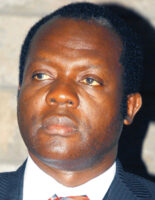
Orwa Ojode – Ardent defender of sirkal

In Kenya, Cabinet positions cannot be said to carry equal weight – or that they are one and the same. Each portfolio has its own influence and clout, and this perhaps explains why appointments to certain Cabinet positions have been a scramble. Of note are ministries of finance, internal security, health, energy and power and education which traditionally are held by the president’s men, as it were.

Implicitly, getting one of these plum positions is a seal of confidence by the government. Often, the President must balance between competence and loyalty. And it’s against this backdrop that the relationship between Joshua Orwa Ojode and Mwai Kibaki may can be viewed. By the time he perished in an aircrash on June 10, 2012, Ojode (then 53 years old) was President Mwai Kibaki’s assistant minister for provincial administration and internal security.

His boss, Cabinet Minister George Saitoti, had before this new role, served as Kenya’s vice president for 13 years. The then Samburu West MP Simon Lesirma was also an assistant minister in the same this Ministry while the permanent secretary was Francis Kimemia.

Ojode predicted the demise of the Independence political party following President Moi’s move to bypass presidential hopefuls including longest serving Vice PresidentGeorge Saitoti for the then greenhorn Uhuru Kenyatta as the party’s flag bearer in the December 2002 elections

It was Kibaki’s belief that the duo (Ojode and Saitoti) was the most competent to handle this sensitive docket, that is in charge of securing the entire breadth of the country. This portfolio is the equivalent of Homeland security, in other jurisdictions. Some of the organs within this Ministry include the National Police Service and the National Intelligence Service (NIS).

Ojode, popularly known as Sirkal – corruption of the word serikali (Swahili for government), owing to his strong, unrelenting support for the Grand Coalition Government headed by President Kibaki and Prime Minister Raila Odinga – was a workaholic. At one time he told Parliament, while responding to questions placed to him as assistant minister, that he never was a “busy bee or busybody at any time”.

Sirkal was not only active in the ministries he served; he was very alive as a backbencher. When occasion demanded, he tabled motions and questions; one such was an attempt similar to riding on a lion – he tried to persuade fellow MPs to establish a Select Committee to probe the Anglo Leasing scandal in which Kenya lost billions of shillings in fictitious supplies. “The mandate of the committee would be to investigate the origin of the Anglo Leasing company, identify the persons involved and trace the public funds looted through it”.

Sometime in September 2002, barely three months to the General Election, a leading daily newspaper carried a report with the headline, ‘Kanu warned of anarchy’. This story surprised political pundits because it was coming from a fresh member of the ruling party and a newcomer.  The warning shot on the likely disintegration of the oldest ruling political outfit was fired by an apparently hitherto harmless Ndhiwa MP Joshua Orwa Ojode.

This was vintage Ojode – never shying from controversy as long as he was speaking out his mind. In this particular case, Ojode predicted the  demise of the Independence political party following President Moi’s move to bypass presidential hopefuls including longest-serving Vice President George Saitoti for the then greenhorn Uhuru Kenyatta as the party’s flag bearer the December 2002 elections. “Ojode asked KANU officials in the Uhuru-for-President project to focus beyond the elections instead of over-investing in their campaigns,” reported the Daily Nation, in reference to candidate Uhuru Kenyatta .

Of course a rebellion against Moi was building up but Ojode couldn’t keep what was then treated as a secret within a faction of the then ruling coalition of Kanu and the Liberal Democratic Party (LDP). Not long after, the uprising erupted and which led to the formation of National Rainbow Coalition (NARC) that eventually sent Kanu packing during the December 2002 General Election.

Ojode entered parliament on a seat vacated by Tom Obondo, a defector from FORD-Kenya to KANU. At the time, defections to KANU were fashionable following the re-introduction of multi-party politics. The then Kanu bought off MPs in a spirited bid to weaken the Opposition in the new competitive politics.

A chronicle of a few documented statements and responses against government critics in and outside the legislature impressed Ojode’s friends and foes in equal measure.  This explains the confidence President Kibaki had in him.

Indeed, few political leaders were equal to the task assigned by the authority, records show but Ojode was an exception – hence the nick name Sirkal.  He was   a performer and delivered assignments within the timelines, according to legislative  records on questions and  motions  directed  at  the  ministries of Interior, Foreign, Education  and Lands  respectively where  he  served diligently in a junior capacity.

Ojode’s role in coalition politics in Kenya is markedly But it is noteworthy that to note Ojode’s role in coalition politics in Kenya. After his election in 1994, the new MP started criticizing some issues and matters that he felt, were getting in between politics and development in his native Luoland.  At a funeral in Rongo, he advocated for cooperation between Opposition and Kanu – which would later see a handshake between LDP’s Raila Odinga and Kanu’s President Moi.

At first, critics attacked Ojode over this proposal which, they felt, was tantamount to selling off the Luo community to the ruling Kanu. In Luo Nyanza, Kanu was an anathema.

President Mwai Kibaki saw a rare quality in Ojode and singled out the lanky politician out of a coalition of rebels for promotion to a full minister in a reconstituted cabinet cobbled out  of the ashes of a  fallout  between Raila and the President (Kibaki)  in  the  National Rainbow  Coalition (NARC).  Raila and a crew fleet of other ministers and MPs opposed a new draft of the constitution then fronted by Kibaki.

Kibaki dropped all dissenters and reappointed a new Cabinet; Ojode was among the new team despite the fact that he had been among the heap that opposed the draft in the just concluded ensueing Referendum. In appointing Ojode, President Kibaki hoped to bag two important political nuggets – loyalty to the party boss (Raila) and loyalty to the presidency.

It is instructive to note that the 2005 defeat of the government in a Referendum for a new constitution incensed Kibaki whose survival appeared to have been thrown into doubt with a hostile legislature and divided and potentially hostile Cabinet. He moved fast to forestall a crisis. He dissolved the Cabinet and prorogued parliament to avert the prospect of an impeachment owing to a divided Cabinet and Parliament.

Kibaki appointed Orwa Ojode as Minister for Environment while dropping his regional kingpin, Raila, hitherto Minister for Roads, Public Works and Housing. But in solidarity with Raila and d other members of the LDP brigade, Ojode turned down the offer.  “The ministry given to me will not assist my community.  It is a mere department. Why should I take  a ministry  which  is  not useful  to my people. Look at 11 critical ministries.  All of them have gone to one region. Appointing Ojode as a minister is hoodwinking Luos that that they have a ministry. The president  has to  go back  to the  drawing board because  one area  is  considered  more than others tribalism has eaten into his cabinet”, said Ojode.

Some analysts have claimed that Ojode was intent on at taking up the job but was dissuaded by powerful political players within the Luo community. Oburu warned Ojode against being selfish by assuming the Cabinet seat.

Years later, in 2008, Ojode was reappointed to the government but as assistant to the then George Saitoti, the Minister for Internal Security. In hindsight, this duo had a working chemistry amongst them – they worked and delivered as a unit. Again, this attests to Kibaki’s knack to cobble a “working” team, a unified system that works in tandem.

Ojode, as it were, was among the first-line defenders of the Kibaki government. Even when questions were raised about human right abuses at the hands of the police, he would stand his ground and defend his appointing authority. The police have never been partisan on the line of duty, he once said in response to criticism on how police  handle  crowds. Although he once admitted that the recruitment of the police was flawed and would be revised.

At the time of his appointment as Saitoti’s assistant, the country was suffering the aftermath of the the 2007—2008 post-election violence (PEV). The government was on the high alert to ensure the country remained peaceful and united in the face of diverse ethnic communities. Ojode’s Ministry was forced to deploy more police officers in Uasin Gishu, Nandi, Kericho, Nakuru, Naivasha and parts of Nairobi ahead of the ruling on the crimes against humanity  suspects at the International Criminal Court (ICC) at The  Hague, Netherlands.

Kenya has been a victim of bloody terrorist attacks by the murderous Al Shabaab militia fighting the Somalia government. It was Ojode’s and Saitoti’s responsibility to reassure Kenyans of their safety against the backdrop of this threat. Under Saitoti and Ojode’s watch, Kenya embarked on disrupting the Al Shabaab through operation Linda Nchi.

On October 24, 2011, Kenya deployed its troops in Somalia, to counter the Al Shabaab militants. It was Ojode who let Parliament know about Kenya’s incursion into Somalia, much to the chagrin of some MPs who felt that Parliament should have been consulted before the deployment. Yet, in hindsight, seeking parliamentary approval for the deployment would have opened a Pandora’s Box, as some MPs – especially those from northern Kenya – have been openly opposed to the deployment.

Months later, Ojode likened Al-Shabaab to a snake with its tail in Somalia and head in Eastleigh.

At the time of Saitoti’s and Ojode’s deaths, international news syndicate Reuters described Saitoti as “anti-Shabaab Minister”. It stated, thus “Saitoti was one of the most outspoken government politicians on the threat from Somali militants, often visiting scenes of al Shabaab’s attacks and vowing to crush the group”.

Loss of files and records in government departments and the judiciary seems to be a normal occurrence. In particular, the Lands department officials in collusion with wealthy and politically-connected people are reportedly notorious for facilitating the disappearance of files from the Ministry of Lands’ offices. The government was  not  going to  tolerate  loss or  misplacement  of  files in the  Lands  Office, the  tough talking  Ojode  warned  and  promised the sacking and prosecution of staff found  culpable.

Without naming names, Ojode revealed that some political leaders colluded with the ministry staff to hide files in the Lands department. The culprits would not only be prosecuted but prosecuted, Ojode emphasized. In a separate parliamentary question, Ojode said that squatters on the East African Tanning and Extract Company land were resettled by the government after the land was sold.

The Kibaki government had been accused of all manner of corrupt deals. Consequently, some countries slapped a ban on individual leaders on account of graft.  On the ban of a cabinet minister’s entry into Britain on account of  corruption, Ojode said the action was  against an  individual  not the state. Little could be done to reverse the decision of a sovereign power as that would couldn’t be involved in the UK travel ban of Dr Chris Murungaru, who had previously served as Internal Security Minister.

Dr Murungari Murungaru had been mentioned as a person of interest in the multi-billion shillings Anglo Leasing scandal in which Kenya lost billions of shillings in fraudulent security tenders.

The letter from the Home Office banning the minister was emphatic that he  had no right  of appeal  against the decision,  which had been arrived at on after “most serious careful consideration”. The signatory to the letter, Mr. Ray Kyle, had personally directed that Dr Murungaru be excluded  from the  United  Kingdom  on the grounds  that  his  presence  would  not  be  conducive  to the public good.

Thirteen years ago, the country tasted the dose of violent civil strife fanned by irresponsible utterances by politicians. The bloody and fatal post election violence was the product of insults and careless talk by political leaders. It took the intervention of the international community to quell the near disintegration of the nation let alone the lives lost, property destroyed and people displaced.

It was Ojode who let Parliament know about Kenya’s incursion into Somalia, much to the chagrin of some MPs who felt that Parliament should have been consulted before the deployment

The result of the inflammatory utterances was the PEV that claimed about 1500 lives, the displacement of hundreds of thousands others and widespread destruction of property.  One of those who came out to denounce the destruction was Ojode, who claimed that Kenya was home to hypocrites who preached peace in public but hate in their tribal cocoons.

It was a general belief that the International Criminal Court based at the Hague Netherlands would impose sentences that were to deter a recurrence of crimes against humanity like those witnessed in the post-election violence. The Justice Philip Waki Post Election Violence inquiry recommended that parliament should establish a tribunal to try those  who bore  the greatest responsibility.

Ojode was among the lawmakers who supported the setting up of a local tribunal to try the 2007 post-election violence suspects. He said care must be taken to ensure that implementation of the Justice Philip Waki report does not tear the country apart. However, he was in agreement that the manner the report was handled had the potential to split parties. Different views expressed by the Orange Democratic  Movement (ODM) leader  indicated  maturity and  democracy within the  party, Ojode said.

President Kibaki and  Prime  Minister, Raila  lobbied  their  respective  parties  to  implement  the report  but  the  majority  ignored their  pleas preferring  trials of the  suspects  at International Criminal Court (ICC).  The envelope containing  the  names  who bore   greatest  responsibility  in the 2007 post election violence  was   handed  over to the  Chief mediator, former  UN  Secretary General, Koffi Annan  who passed it on to  the ( ICC)  at the  Hague, Netherlands. The names of six included political figures, civil servants were for the first time revealed.  Uhuru Kenyatta and William Ruto were among the six who faced abortive trials for crimes against humanity.

Instructively, Ojode, although seen as a powerful assistant minister, was initially reluctant taking up the job. According to some political analysts, the new assistant minister felt he deserved a full Cabinet position. He may have been disenchanted with the appointment of some politicians (among them Dalmas Otieno) who reluctantly joined ODM yet were rewarded with full Cabinet positions.

This perhaps explains why, during the last days before the aircrash, he appeared to catapult towards Kibaki’s Party of National Unity (PNU) rather than his own Orange Democratic Movement (ODM), which had appointed him to the ministerial position. in the arrangement of things in the Grand Coalition Cabinet, Kibaki had picked members from his PNU while Raila selected from ODM. Ojode was an ODM legislator.

As stated earlier in this report, Oode was one of the fiercest defenders of the government.

The Ndhiwa parliamentarian was a performer like no other predecessor. He met his death on the line of duty for his constituents. Ojode was to host his boss, Saitoti, at a fundraising for worship places in Ndhiwa   constituency. He would die in a helicopter accident on his way to Ndhiwa. Saitoti also perished in the same crash.

Six people (including two bodyguards and two pilots) died in the Police helicopter crash that happened in Ngong, on its way to Ndhiwa.

Condolence messages to the Ojode family spoke volumes about the American graduate in Environmental studies. ‘”Ojode will be remembered for his focused approach  while undertaking  his duties  with  great zeal  and determination  as an assistant minister and member of parliament for Ndhiwa”,  President Mwai  Kibaki  said  in a message.

In a full page paid advertisement in a national newspaper, the  then Education minister Mutula Kilonzo said: “I  was touched by the  sudden death  of Saitoti and Ojode who were instrumental  in the  introduction of  free primary  and secondary education programmes in the  country”.    Both Saitoti and Ojode served in the Education ministry.

Others who sent messages of condolence included the then Prime Minister Raila Odinga and Kibaki’s predecessor Daniel arap Moi.

Raila said, thus “This is a terrible tragedy that has struck our country this morning. Nobody knows exactly the cause of this accident. That is why experts will carry out investigations … We will do everything possible to ensure we find we find out the cause of this accident, but for now it is just an accident”.

At the time of death Ojode was basking in unmatched popularity, celebrating 18 years of un-interrupted parliamentary representation of Ndhiwa Constituency. This in an area once represented by former Permanent Representative  to the  United  Nations, Odero Jowi and   Vice President in the  post-independence  regional  government Mathew Otieno Ogingo

Some analysts believe that had he lived, he would be among the most powerful Luo leaders about. During his last days, he had charting his own path outside the mainstream politics revolving around Raila Odinga.
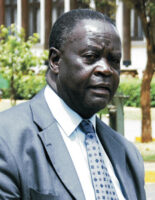
 

Noah Wekesa – NARC helmsman who missed his ark

As the biblical story goes, Noah was chosen to perpetuate the human race, leaving his wicked contemporaries to perish in a deluge. Tasked with building an ark to house the chosen few, the patriarch also let in all animals, male and female, according to God’s commandment.

Fast-forward to the story of the National Rainbow Coalition (NARC), the movement that swept Mwai Kibaki to power, and Noah Makhalang’ang’a Wekesa, the burly veterinary surgeon, becomes the builder who was nearly left out of his ark.

A former KANU stalwart who gravitated towards opposition politics in the dying days of the Moi administration, Dr Wekesa was a central cog in the NARC machine, having chaired caucuses such as The Summit – the top organ of party elders – as well as earlier formations that worked on opposition unity ahead of the 2002 elections.

Though he would later be appointed Minister for Science and Technology, then Forestry and Wildlife, a combination of regional juggling and the politician’s seeming lack of charisma, kept him out of the Cabinet in the early years of Kibaki’s rule.

First, Wekesa came from the same district as Kipruto Kirwa, the articulate Cherang’any MP, who was the most prominent NARC legislator from the Kalenjin end of Rift Valley. As did Vice-President Kijana Wamalwa.  Both Kirwa and Wamalwa had long earned their place at the high table.

Kibaki was as straight as they come. The fact that he never dished out money during campaigns also attests to this. I think Kibaki debunked the notion that you need a lot of money to be the President of this country

Secondly, besides Wamalwa, there were many NARC luminaries in neighbouring Bungoma and Kakamega counties, including the cerebral Mukhisa Kituyi, well-grounded Musikari Kombo, and the charismatic Soita Shitanda. There was also Vihiga’s Moses Akaranga, who had felled former Vice-President Musalia Mudavadi in Sabatia in 2002, to think about.

Yet Kibaki and Wekesa’s paths had crossed decades before. In his quest to become a veterinary surgeon, Wekesa went to Makerere University for studies, where he met Kibaki, who had carved out a reputation of being a brainbox extra-ordinaire. Kibaki had become the first person to graduate with a Bachelor of Arts (1st Class Honours) at the University of London’s Makerere College in 1955.

Born on 21st August 1936 in Lwandeti, Kakamega County, Wekesa first went to Lokhokho Primary School in 1945, before transferring to Kivaywa Primary School. He later moved to Lugulu Intermediate Primary School, where he sat for the Kenya Primary Education Examinations in 1951.

Wekesa proceeded to Kaimosi Secondary School and then to Kakamega High School where he studied for the Cambridge School Certificate. He joined the University of Makerere in Uganda for diploma studies in veterinary medicine. His encounter with Kibaki at Makerere was short-lived, as the latter soon left for further studies in London, even though Wekesa’s educational trajectory would later partially mirror that of his hero.

Wekesa applied for and won a scholarship to study for a bachelor’s degree in veterinary medicine and surgery at the University of Edinburgh in Scotland in 1960, graduating in 1966.

Wekesa, a former ardent rally driver and tennis player was, like Kibaki, a self-effacing political submarine. Thus, when the pivotal task of building the political vessels that would twice sail Kibaki on his voyage to the presidency, it was a labour of love.

This is how Dr Wekesa became a part of the parliamentary and civil society team of twelve who founded the National Alliance for Change (NAC). At the same time, he was elected chairman of the NAC Coordinating Committee, and once acted as chairman of the Council of National Alliance Party of Kenya. He was one of the ten elders appointed to spearhead the unification of the NARC and the National Party of Kenya (NPK). The efforts zeroed in on bringing together Simeon Nyachae, Charity Ngilu, and Kibaki, all former presidential candidates in the 1997 General Election, to put up a united front against outgoing President Moi’s choice – Uhuru Kenyatta.

Dr Wekesa would later co-chair a combined NAK Coordinating Committee and the NARC summit. He was handpicked by Wamalwa to be his representative in a committee that brought together MPs Shem Ochuodho (Rangwe), and Matere Keriri (Kirinyaga Central)

Willy Mutunga, who later became the first Chief justice under Kenya’s 2010 Constitution was the chairman, but he resigned citing a conflict of interests since he was also chairing the non-governmental Kenya Human Rights Commission (KHRC). Mutunga recommended that Wekesa takes over the chairmanship of the committee, which would later birth the National Alliance of Kenya (NAK). This is how Wekesa ended up working closely with Kibaki.

“It was a committee fraught with many challenges, mostly lack of quorum. But all indicators were that Kibaki and Wamalwa would work together,” Wekesa recalled, adding that he and Kombo would later prevail upon Wamalwa to cede the NARC presidential candidacy to Kibaki.

Wekesa says Ngilu was also instrumental in bringing Wamalwa and Kibaki together. At a time when Wamalwa had started experiencing bouts of illness, Wekesa added, Kibaki would often call Dr Wekesa’s home in Trans Nzoia to check on Wamalwa’s well-being and his availability for political meetings.

News that Kibaki and Wamalwa had struck an agreement, thanks to the political brokering of Wekesa and his cohorts, spread like a bush fire. Raila Odinga was keen to join the team and, once again, Dr Wekesa was charged with co-chairing the committee that helped form NARC, with then Kisumu Town MP, Joab Omino.

This led to the formation of the NARC Summit, a political grouping that comprised Moody Awori, Wamalwa, Ngilu, Najib Balala, Odinga, and Kibaki with Wekesa as the coordinator.

“I was the only member of The Summit that was not appointed to the Cabinet immediately after our 2002 victory,” Dr Wekesa explained.

But how did the veterinary surgeon end up in politics? On his return from the University of Edinburgh, Dr Wekesa joined the Ministry of Livestock and Agriculture as a divisional veterinary officer in Ol Kalou, then the former South Nyanza and Kisii districts, before he was promoted to the provincial veterinary officer in Nyanza. He was shortly after promoted and deployed to Kisumu in August 1969.

It was earlier, while in Homa Bay that Wekesa first met Vice President Moi who was inspecting government projects in 1967. They would cross paths again when Wekesa became the Kisii District Veterinary Officer. Wekesa recalls that the job was not interesting professionally, because it was an administrative role, whereas he was interested in animals since he was a vet.

Thus, Wekesa took a leap of faith and resigned from the government on 3rd October 1969 to set up a private veterinary practice in Kitale. It was then that residents approached him to make his first stab at a parliamentary seat for Kitale West in 1983, which he did unsuccessfully.

Wekesa resumed his private veterinary practice in Nairobi. But he could not rid himself of the political bug and would often participate in fundraisers in Kitale. He later approached James Nyamweya, a former minister in Jomo Kenyatta’s Cabinet, who was then head of a boundaries commission, to carve out a new constituency from Kitale West and Kitale East. So, from being one of the first Africans to start private veterinary practices in both Kitale and in Nairobi, in 1988 Dr Wekesa became the first MP for Kwanza Constituency.

The then President Moi appointed Wekesa an Assistant Minister for Livestock and Agriculture and charged him with the Livestock docket. To avoid conflict of interests, Wekesa sold his private veterinary practice.

Come 1992, and in line with his notable loyalty streak, Wekesa opted to defend his seat on a KANU ticket, despite the Forum for the Restoration of Democracy-Kenya (FORD-Kenya) wind that was then sweeping across western Kenya, an area predominantly inhabited by the Luhya. He lost to George Kapten of Ford-Kenya.

Impressed by Dr Wekesa’s loyalty, President Moi recommended him for the district chairmanship of KANU. His tenure as the chairman was short-lived as Moi would soon tactfully edge him out of the party in 1996 on suspicion of being sympathetic to FORD-Kenya.

Feeling slighted despite his loyalty, Dr Wekesa attempted to run for the Kwanza seat on the Ford Kenya ticket in the 1997 elections, but Wamalwa prevailed on him to leave it to Kapten, urging him to instead run his Presidential campaigns with the promise of being nominated to parliament. This was, however, not to be.

As fate would have it, Kapten died in December 1999, paving way for a parliamentary by-election in 2000. Wamalwa then backed Wekesa for the by-election which he won to become the Kwanza MP – once again.

After the NARC victory in 2002, Wekesa was confident of an appointment to the cabinet. Indeed, he had earlier received a call to go to Nairobi in readiness for the announcement. On the day President Kibaki named his Cabinet, Wekesa listened attentively to the line-up, but his name was not on the list. He felt betrayed, having been instrumental in the formation of NARC.

Little did he know that a day after leaving for Nairobi, Wamalwa had visited his home in Kitale looking for him. “Wamalwa was angered by my travel to Nairobi to pursue a cabinet appointment on my own, he had instead recommended to President Kibaki the appointment of Kipruto Kirwa as the Minister of Agriculture,” he revealed.

Though dejected, Dr Wekesa called the President and said he was pleased with the Cabinet line-up, words he confesses were difficult to utter. As a consolation, he was made the Chairman of the Agriculture Committee in Parliament, a position he gladly accepted considering his professional background.

After Wamalwa’s death in August 2003, Mukhisa Kituyi, then Minister for Trade and Industry, called Wekesa to inform him that he would be appointed to the cabinet. On the day of his swearing in ceremony, as he was preparing for the occasion, he received another call from Kituyi informing him that he would not be appointed as a minister after all, but rather as an assistant minister.

Taken aback by the change of events, Wekesa requested Matere Keriri, then the State House Comptroller, for an audience with the President. He was granted an appointment. Upon his arrival at State House, however, he was informed that he would only see the President after his swearing in. He left a message for President Kibaki and left State House.

His decision was followed by an official letter explaining his reasons for turning down the appointment and requesting to remain the Chairman of the Parliament Committee on Agriculture. He would later receive a call from a Kibaki confidant who explained the intrigues behind him not getting a ministerial appointment and prevailed on him to accept the job. Three weeks later, he was sworn in as the Assistant Minister in the Agriculture Ministry, in charge of the Livestock docket – his area of training.

Five months later, Kibaki sacked his entire Cabinet, two days after losing the national referendum on what became the Constitution of Kenya 2010. The President sought to meet Kombo, the Chairman of FORD-Kenya and MP for Webuye, in his attempt to reconstitute the Cabinet.

The FORD-Kenya members advised Kombo, who had also lost his ministerial post, not to meet the President unless he was willing to accommodate more members of their party in government. They went to State House early the following day, where they offered to support Kibaki on the condition that Soita Shitanda, who was then the MP for Malava, and Noah Wekesa joined the cabinet. This is how Wekesa joined the Kibaki administration in 2005 as Minister for Science and Technology.

From this point on, Wekesa’s fortunes took a turn for the better. He was soon appointed Chairman of Ministers of Science and Technology in Africa in a conference held in Algiers, Algeria. President Kibaki also entrusted Wekesa with heading the Ministry of Education after George Saitoti was asked to step aside over his suspected role in the Goldenberg scandal.

Though most viewed him as a pacifying force, Wekesa is also known for standing for what he believed in. As Minister for Forestry and Wildlife, he disagreed with William Ruto, then Minister for Agriculture, and Henry Kosgey, Minister for Industrialisation, accusing the two of inciting Mau Forest settlers to resist eviction.

Five months to the 2007 General Election, Wekesa would be involved in another political tussle, as he tried to wrest NARC from the grip of Ngilu. When all efforts to reclaim NARC failed, Wekesa was appointed the Chairman of the Coordination Committee that brought together fifteen parties for the formation of the Party of National Unity (PNU), the vehicle Kibaki rode to State House for his second term.

Reflecting on his time as minister, Wekesa says that Kibaki abhorred corruption, the reason he asked his ministers to step aside when accused of the vice.

“Kibaki was as straight as they come. The fact that he never dished out money during campaigns also attests to this. I think Kibaki debunked the notion that you need a lot of money to be the President of this country.”

Wekesa’s time in the Cabinet was, however, not without controversy. At the Ministry of Education, Wekesa would soon fall out with his Permanent Secretary (PS) Karega Mutahi over the reappointment of the Chief Executive Officer (CEO) of the Commission for Higher Education. At one point he approached Moses Akaranga, a minister who had the President’s ear, to voice his displeasure with the conduct of his PS. Kibaki’s response was succinct and forthright: “Is not Wekesa the minister?” Kibaki asked Akaranga rhetorically, adding, “He can fire the Permanent Secretary or do whatever else he pleases.”

Over time Wekesa’s relations with Kibaki thawed and they would often have one-on-one meetings about any issues in his ministerial docket, according to the former minister.

During the Grand Coalition Government, Wekesa worked largely under the then Prime Minister Raila Odinga, whose direct involvement in the efforts to conserve the Mau Forest and other water towers cast a long shadow on the minister’s docket.

The Kenya Wildlife Service (KWS) department also thrived under his watch, although some of his critics attribute the prudent management of national parks and reserves to Dr Julius Kipng’etich. The two never got along and Kipng’etich resigned abruptly in 2011. Soon, the slaughter of wild animals in the country became the order of the day.

Some analysts claim that Kipng’etich’s departure forced some donors who were funding crucial conservation activities to pull out. Regardless of the real reason, Kipng’etich insists that he worked cordially with his former boss, although they differed on “certain issues pertaining the running of KWS.” Kipng’etich says of Dr Wekesa: “He was an affable personality. I worked with him well, but we failed to read on the same page on some issues pertaining my office.”

In an interesting perspective, Dr David Wekesa, a veterinarian who worked with the former minister in his days as the Provincial Veterinary Officer in the former Nyanza Province, says the former Kwanza MP would complain of not receiving the attention he needed from Kibaki, despite helping to cobble together parties to form Narc and later PNU to win two presidential elections.

“I think he either wanted to be admitted to the inner circle or be given a plum ministry,” says the other Wekesa who has no blood relations with the former minister.

The NARC ship had carried many political heavyweights often coming from neighbouring constituencies, giving President Kibaki much agony in accommodating them all in government and Wekesa was caught up in this dilemma.

Wekesa, a large-scale maize and wheat farmer, insists that he worked diligently and fought corruption in the ministries he led. Since losing his Kwanza seat to Ferdinand Wanyonyi in the 2013 General Election, he has unsuccessfully tried to make a political comeback.

In the end, President Kibaki’s good record of saving the country’s water towers must be shared by the man he entrusted the job, even though the feeling of slight for being nearly left out of the ark he helped build appears to have affected Wekesa’s performance.

Away from politics, Dr Wekesa, now the chairman of the Strategic Food Reserve, is remembered for demystifying the notion that flower farming is a preserve of a few opulent individuals.

He teamed up with Reuben Chesire, a onetime MP for Eldoret North, and put up a spirited campaign in the North Rift region to encourage middle-level farmers to take advantage of the nearby Eldoret International Airport and go into flower farming for export, efforts which bore fruit.

Suleiman Shakombo – President’s coast pointman

Suleiman Rashid Shakombo was a totally unknown entity in Likoni before he entered the political arena in 1997. He left the Provincial Administration and, backed by an unfamiliar party, unseated Khalif Salim Mwavumo who was from the more familiar Forum for the Restoration of Democracy-Kenya (FORD-Kenya) party that five years earlier in 1992 had defeated the candidate from the seemingly invincible independence party, the Kenya African National Union (KANU).

Shakombo became the first and only person in the country from the previously unheard of Shirikisho Party of Kenya (SPK) to ever win a Parliamentary seat. Here emerged a savvy operator in local and national politics, pundits thought with discerning eyes.

Shakombo confirmed the perception when, shortly before the 2002 General Election, he strategically and publicly defected to the ruling party KANU without notifying SPK, only months to the polling day, triggering a crisis within the fledgling party. The matter ended up on the desk of Chief Justice Bernard Chunga for direction on whether a Constitutional court should resolve the puzzle that had deprived the party of its sole voice in Parliament.

But the Chief Justice who at the time entirely owed his appointment to the Executive was in a dilemma-as Shakombo had shrewdly defected at State House where he was President Daniel arap Moi’s guest, and was welcomed into KANU by the Head of State himself. Similar cases had hit a cul-de-sac before and there was nothing that Chunga could do. His hands, as the saying goes, were tied.

Left without an option, SPK replaced Shakombo as Chairman with the fiery and combative Mashengu wa Mwachofi. The party hoped the upcoming General Election would produce other Members of Parliament (MPs). A mirage? No new MP has been forthcoming from the party for more than a decade later.

KANU’s calculations were wanting; the party did not know who it was dealing with. Come election time Shakombo changed course, walking to Mwai Kibaki’s National Rainbow Coalition, NARC, that seemed poised to cause a political tsunami countrywide, leaving no doubt that it was destined to take over power from KANU.

Shakombo was familiar with power from his days in the Provincial Administration where he rose to the rank of District Commissioner and Deputy Secretary. He was reaching out to power when he shifted to KANU, but soon realised that the party’s grip on State House was being loosened by the surging NARC tsunami. He was an astute reader of the political barometer and, come 27 December, he comfortably retained his seat, on a powerful party ticket.

Not one to rest on his laurels, Shakombo worked hard to catch the President’s eye, seizing every opportunity, including availing himself at the airport in Mombasa and remaining visible throughout Kibaki’s tours of the coast whenever the President visited.

He was adept at playing his cards right to realise his dream. Perhaps nothing illustrates that trait better than his decision in the wake of Karisa Maitha’s death in 2004. He joined hands with MP for Changamwe Ramathan Seif Kajembe to protest when a Mombasa court tried to stop the nomination of Ali Hassan Joho by NARC to contest the Kisauni Parliamentary seat after a voter challenged its validity. Maitha was the MP for Kisauni.

The duo (Shakombo and Kajembe) led a NARC team from the coast that lodged a successful appeal to the Electoral Commission of Kenya (ECK) to give direction on the issue. ECK, then led by Samuel Kivuitu, went to court to ask for a review of the decision with both the parties present. Said ECK Deputy Chairman Gabriel Mukele who was tasked to see the matter through: “We have instructed our lawyer to file an application before the same judge for a review”, reported the Daily Nation on 7 December 2007. He added that with the by-election only nine days away, he hoped the review would take place as soon as possible. Joho got the green light to contest and won the by-election.

Shakombo waited patiently for three years before his dream came true. Towards the end of 2005 he was appointed Minister of State for National Heritage and Culture in the Office of the Vice President. That done, it did not take long before he cut a prominent figure in the politics of the coastal region, quickly becoming a force to reckon with in the post-Maitha era even with the more experienced Transport Minister Chirau Ali Mwakwere also on the scene.

Shakombo impressed President Kibaki as a performer at the constituency level. Though the launch of construction work at the bypass to the Mombasa South Coast, also known as the Dongo Kundu project, was the primary reason for the President’s presence, he did not hesitate to praise Shakombo who was present, lauding him and his Constituency Development Fund (CDF) team for making good use of the kitty, particularly in the building of girls’ schools. He singled out Mtongwe Girls Secondary School whose official opening ceremony he performed alongside the launch on 5 November 2007.

On 6 November 2007 the Daily Nation quoted President Kibaki as saying the government would support the school by ensuring physical facilities such as laboratories, dormitories and classrooms were built. “At the moment, the province is faced with a shortage of secondary schools, hence CDF should be used to create room for more enrolment of Form One students,” Kibaki stated.

From his speech, it was clear that Kibaki had found in Shakombo a dependable ally who came close to what he had lost in the late Karisa Maitha who was a trusted, loyal, committed and reliable supporter at the Coast. The President seemed more comfortable with Shakombo than with Mwakwere the MP for Matuga, the only other Minister from the coast, a diplomat of long standing who first served in the Foreign Affairs docket when Kibaki took over, before being moved to Transport.

Shakombo seized the moment to praise the government for settling more than 2,000 residents on 5 local settlement schemes and initiating a local electrification project that had greatly benefited residents.

It was during his tenure as Minister of State for National Heritage and Culture (2016 to 2017) that a historical artifact removed from Kenya years before and exhibited in a United States museum was returned. Remarked Mr Shakombo during a ceremony at the United States International University (USIU) to mark the return of the artifact in September 2006: “Today is a day of victory for Kenya as we unveil and celebrate part of our heritage that had been stolen and has now been returned. It is the first time such an object has been brought back to Kenya.”

He explained that the wooden effigy was known among the coastal Mijikenda communities as kigango, erected in honour of important deceased elders. It was acquired by Illinois State University between December 2001 and January 2002 and handed over to the Illinois State Museum.

Shakombo promised to have it returned to its owners, the Kalume Mwakiru family from Chalani Village of Kilifi District (now Kilifi County). He said the government would not relent in its campaign to push foreign museums to repatriate valued cultural items stolen from Kenya.

He told the gathering that a Bill on the protection of national heritage was awaiting the President’s assent to become law. He also revealed that the government would set up a KES 58 million memorial centre for Nandi freedom hero Koitalel Samoei, the supreme chief of the Nandi people who led resistance against British rule and was assassinated by the colonialists in 1905.

A practising Muslim, Shakombo defended the government against allegations that it was against Muslims when it tabled the Terrorism Bill in Parliament in 2007. He said in Mombasa during a fundraiser for members of the Darul Hikmah and Mrkaz Da’wash that the Bill was already in force in Uganda and Tanzania. He accused leaders making such claims of spreading hatred among Muslims through their reckless utterances and using Islam to gain political mileage.

A defender of the Kibaki regime to the hilt, Shakombo took on Opposition Leader Raila Odinga when in October 2006, he (Odinga) criticised the President for issuing title deeds, saying doing so was tantamount to reducing the status of the Presidency. The Minister rose on a point of order and praised the President for touring Coast Province and issuing title deeds to residents. He dismissed as cheap Odinga’s assertion that the President should not do the work of clerical officers.

“Is the member in order to imply that Coast people are not respectable enough to be given title deeds by the President?” Shakombo was quoted in an article published by the Daily Nation on 6 October  2006.

He agitated for the honour of national heroes, resulting in the erection of statues such as those of Tom Mboya and Dedan Kimathi in Nairobi. He also advocated for the construction of a cultural and educational centre in memory of Koitalel arap Samoei in Nandi and was passionate about the protection of the Miji Kenda Kaya forests as a national heritage.

That Shakombo had the President’s ear was never in doubt. During a function to lay the foundation for the expansion of National Museum of Kenya headquarters in Nairobi in March 2006 attended by the President, he complained that the institution was facing brain drain due to poor salaries. Kibaki responded by announcing that salaries would be harmonised with those of other research institutions to ensure skilled staff were retained.

“I can assure you we shall do everything to keep you. Please do stay, we need your expertise,” the Daily Nation quoted the President saying to cheers from the workers.
Shakombo was respected and trusted by his colleagues at the coast, a fact demonstrated by their gesture in February 2003 to elect him chairman of the Coast Parliamentary Group to petition the government to revive collapsed industries in the region, among them the Ramisi Sugar Factory, Kilifi Cashew Nut Factory and Tiwi Bixa factory.

He was among the coastal leaders who strongly agitated for the replacement of former Kenya Ports Authority Managing Director Brown Ondego, a professional from upcountry by someone from the region, culminating in the appointment of Abdulla Hemed Mwaruwa on 14 January 2006. This followed several petitions to President Kibaki by coast leaders demanding that the Mombasa based parastatal be led by one of their own.

With equal vigour, Shakombo, in tandem, with Ananiah Mwaboza, then an assistant minister, vigorously campaigned to have a coastal professional replace Juma Lugogo, the founding Managing Director of Coast Development Authority (CDA) who died in 2005 after 13 years at the helm since the parastatal was formed in 1992. Their campaign was rewarded when Lugogo, who hailed from Nyali, was replaced Nesbert Mangale, also from the Coast.

Even as an ordinary member of the Coast Parliamentary Group that he once chaired, Shakombo was the one entrusted by Muslim leaders in 2007 to deliver a memorandum to President Kibaki requesting the government to issue the proposed Islamic University with an interim certificate. He promised to deliver the memorandum with the words: “We all know that Muslims are lagging behind in education in Kenya and that we need to work hard to address this problem,” he said, according to the Daily Nation.

Notably, Shakombo was among the leaders who in 2007 teamed up to champion the establishment of a university at the coast. The team comprising leading scholars from the region was tasked to agree on the name, location and infrastructure of the varsity that adopted the name Pwani and today sits in Kilifi County.

Shakombo was an important cog in President Kibaki’s campaigns at the coast in 2007. “We should elect President Kibaki a second time because he has an outstanding performance record,” he was quoted by the Daily Nation on 30 September 2007 during a campaign rally in Magarini Constituency addressed by President Kibaki, John Michuki, Mwakwere and Morris Dzoro among other leaders.

He always ran in the fast lane when it came to coast politics as evidenced by his open support for Sharif Ali Shekue to take over as mayor of Mombasa in 2006. “I have decided to support Mr Shekue because he is working with us as the Government.” He spoke at Mweza Primary School in his constituency following the launch of a KES 21 million rural electrification project.

His closeness to the President and the government of the day seemed to earn Shakombo enemies. In March 2007 gun shots were fired at his car shortly after he was dropped at his Mtongwe residence in Mombasa. His guards shot dead a suspect in the ensuing gun battle that left his driver wounded. Shakombo was quoted saying the attack was an attempt on his life by political rivals. “This confirms that these people were after my life. Why would a gangster shoot at a GK vehicle known in Likoni to belong to me?”, quoted the Daily Nation. He vowed that the incident would not cow him.

Shakombo said Miji Kenda Kaya forests regarded as holy grounds “will be protected better and made tourist attractions where visitors will have to pay to enter. Proceeds will benefit the local communities”, according to the Daily Nation on 22 November 2006.

He keenly pursued the return to the State of grabbed lands at the coast and other places. Mama Ngina grounds in Mombasa that today have been refurbished into an attractive popular seafront and Ras Kitau in Lamu stand out among salvaged public plots, courtesy of Shakombo’s effort through the Heritage Bill whose implementation he fast tracked. “We have given our notices, and we expect that the people involved will surrender them before the Government resorts to legal action because no development will be allowed to take place on the plots,” he warned, reported the Daily Nation.

Shakombo was among close Kibaki allies who lost their Parliamentary seats during the contested 2007 elections that erupted into unprecedented post-election violence when Raila Odinga’s Orange Democratic Movement (ODM) party refused to accept President Kibaki’s victory.

In March 2007 gunshots were fired at his car shortly after he was dropped at his Mtongwe residence in Mombasa His guards shot dead a suspect in the ensuing gun battle that left his driver wounded

After two years in limbo, President Kibaki appointed Shakombo as Chairman of Kenya Petroleum Refineries Limited in 2009, a post to which he was reappointed for a year by President Uhuru Kenyatta in 2015.

Born on 10 February 1940 in then Kwale District (now Kwale County), Shakombo attended primary school in his native Kwale between 1949 and 1955 and secondary school between 1956 and 1959 after which he joined the Kenya Ports Authority as a Cadet Supervisor between 1960 and 1961, before landing a job with the Ministry of State for Provincial Administration and Internal Security as a District Assistant at independence in 1963.

After serving for a decade, one year as a cadet supervisor (1960-61) and nine as a District Assistant (1963-1972), Shakombo was promoted to the post of District Officer (DO) in 1973. Five years later in 1978, he was promoted to District Commissioner (DC), serving in that capacity in many parts of the country until 1981 when he was elevated to the position of Under Secretary in the Ministry of Culture and Social Services.

He left government service to venture into politics and was MP for Likoni for 10 years from 1997 to 2007, two of them (2006 to 2007) as a Cabinet Minister. He lost his Likoni seat to Mwalimu Masoud Mwahima of ODM in the 2007 General Election.

Newton Kulundu – The determined bricklayer

Newton Wanjala Kulundu, the medic-turned-politician, was easy to underestimate.

The Member of Parliament (MP) for Lurambi, a constituency carved out of the then larger Kakamega District (now Kakamega County) at independence, had a somewhat laboured manner of speech that underlined humble beginnings and rural schooling. It wouldn’t be a misnomer to claim that Kulundu lacked the eloquence associated with those who choose politics as a career.

Kulundu, the politician, could also be combative and undiplomatic. But those who interacted closely with him assert that that the politician was remarkably different from Kulundu, the Kibaki minister. The man in the board room was calm and collected. He exhibited admirable intellect, a keen ear and flair for managerial skill and ability that enabled him to build consensus and enforce an overriding thread of the Kibaki Presidency — reform and progress.

His, sometimes, combative nature is understandable. Kulundu hailed from the Abanyala community, a small but fiercely proud Luhya sub-tribe spread across Kakamega and Busia counties. Barring the Bukusu and Tiriki communities, the Banyala have one of the most intricate circumcision ceremonies among the Luhya and they place a big premium on a rite of passage that transforms young men into warriors.

After years of experience in public service and the private sector, Kulundu rose to Parliament on the shoulders of giants. Lurambi Constituency’s pioneer and two-term MP, Jonathan Welangai Masinde of the Kenya African Democratic Union (KADU), is remembered as one of the most eloquent politicians to emerge from western Kenya, as was the highly regarded trade unionist, Wasike Ndombi, who became MP in 1979.

Ndombi earned admiration and respect for his principled stand on national issues, challenging the government in Parliament and consistently defending the rights of workers. Indeed, his name is often mentioned alongside the ‘Seven bearded sisters’ — a group of anti-establishment MPs who kept government on its toes in the late 1970s and 1980s. And that is high praise.

It is from this background that Kulundu stepped on to the national stage in 1997, the echo of his illustrious forebears, perhaps, ringing in his ears.

Born in 1948 in a small village in Kakamega, Kulundu went to Navakholo Primary School before proceeding to Namirama Intermediate School. He sat his Ordinary and Advanced level examinations at Government African School Kakamega and Kenyatta College before enrolling at the University of Nairobi for a bachelor’s degree in Medicine. He capped his academic studies with a master’s degree in public health in California, United States.

Thereafter, he worked for the Ministry of Health, East Africa Industries and Brooke Bond Kenya before taking up politics.

Contesting on a Forum for the Restoration of Democracy-Kenya (FORD-Kenya) ticket in 1997, he defeated Javan Ommani of the Kenya African National Union (KANU) and joined Parliament, where he chaired the Parliamentary Health Committee. Five years later, he was re-elected under the banner of the National Rainbow Coalition (NARC) and was appointed Minister for Environment and Wildlife in January 2003.

The environment sector was, to say the least, in shambles. Years of illegal logging, charcoal burning and encroachment had decimated the indigenous forests that guard the water towers of the Mau Forest Complex, the Aberdare Range, Mt Kenya, and Cherengani Hills and Mt Elgon. So entrenched was the lawlessness that crooked individuals had turned chunks of the Aberdares and Mt Kenya forests into marijuana plantations. Water levels in major rivers, hydro-electric dams and the water reservoirs that serve Nairobi were at an all-time low. Power cuts and water rationing were the order of the day.

In Nairobi, an American investor was waving a government permit to build a massive hotel in the fragile Karura Forest. From one forest to the other, it was a tale of excisions, illegal exploitation and woe.

Kulundu’s Assistant Minister was the Tetu MP, world acclaimed environmental and political activist, founder of the Green Belt Movement and, later, Nobel Laureate, Wangari Muta Maathai.

A towering figure in academia, the women’s empowerment movement, forest conservation and politics, Maathai was an author and woman of many firsts whose personal force, influence and intellectual reach transcended Kenyan and African boundaries.

Maathai, Kenya’s and Africa’s first woman Nobel Peace Laureate, was also the first woman in East and Central Africa to earn a doctorate degree, and to chair of the Department of Veterinary Anatomy and to become an associate professor in 1976 and 1977 respectively.

While Wangari is better known locally for her work as a political and environmental activist, what made her a powerful and endearing global figure was her ability to link environmental conservation to good governance, democracy, peace and improved lives for women and, by extension, the community at large.

Her legacy as an intellectual who thought globally and acted locally is not only reflected in her work as a political activist during Kenya’s ‘second liberation’, her fight to save Uhuru Park and Karura Forest, both in Nairobi, or her Green Belt Movement whose mission remains alive. Her greatness is seen in the 38 per cent forest cover in her native Nyeri County and the conversation of the once parched Makuyu–Embu stretch of the Nairobi–Nyeri highway into a lush, inviting landscape covered with fruit trees; both fruits of the agroforestry campaign she tirelessly championed as Environment and Wildlife Assistant Minister.

Contesting on a Forum for the Restoration of Democracy-Kenya (FORD-Kenya) ticket in 1997, he defeated Javan Ommani of KANU and joined Parliament

As minister and assistant, theirs was an uneasy ideological relationship. One was a scientist who was passionate about trees and forest conservation and was not only more knowledgeable on the Ministry’s mandate, but an authority of global repute on matters environment. A resolute and firm campaigner for a strict forest protectionist regime that excluded any form of human activity, Maathai was opposed to the ‘shamba system’ where communities cultivate crops in government forests — a policy shift that was obviously at odds with Kulundu’s innate political instincts because kicking farmers out of forests would disenfranchise voters.

Nonetheless, together they fired and suspended forest officers deemed corrupt, toured the besieged forests, spearheaded the destruction of marijuana plantations in Mt Kenya Forest, banned the ‘shamba system’ and laid the ground for the establishment of the Kenya Forest Service Act of 2005.

Hailed as one of the most stringent wildlife laws in the world, the Act made it difficult to for ministers to excise government forests for development projects as had been the norm in the past. It also set up the Kenya Forest Service, a better resourced State parastatal to take over management of governments from the struggling, and some said, corrupt Forest Department.

The wildlife sub-sector was no different. While Kenya Wildlife Service (KWS) was regarded as one of the best established and most efficient wildlife management institutions in Africa, the reality was that the organisation was listless and broke.

The belief that KWS could generate sufficient revenue internally and from donors had backfired. Tourism had turned out to be an unpredictable enterprise that was dependent on numerous variables — like political stability and the vagaries of extreme climate and weather. KWS was also hampered by ideological wars fronted by powerful and deeply entrenched external forces. And, following the exit of the forceful Richard Leakey and David Western, the organisation had become a limping, if wounded giant, and the vultures of the conservation world were now hovering above in the sky.

As Minister, Kulundu set up a new board and tapped Evans Mukolwe to take over the reins as KWS director.

It was a curious choice. Mukolwe, headhunted from the World Meteorological Organization in Geneva, Switzerland, was a former Director at the Kenya Meteorological Department with no grounding in wildlife management or conservation science. But his appointment was a pointer to the strategic employment of highly skilled and experienced technocrats from the private sector and international organisations to buttress the public service.

Although Kulundu and Mukolwe served relatively short stints, their rein is significant in two ways.

First, the two set into motion the repeal of the Wildlife Conservation and Management Act (Cap 376 of 1976) which was deemed out of date and incapable of dealing with present and future wildlife conservation and management challenges. The repeal, though urgent and overdue, had been hampered by incessant bickering and vicious conservation politics mostly centred around whether sport hunting, banned in 1978, should be allowed to resume in Kenya.

This, the two men did, by inviting 300 wildlife conservation stakeholders, including community leaders, scientists and conservation experts drawn from government, academia and the non-governmental organisation (NGO) community to a three-day national conference in Mombasa. It was the first such indaba in Kenya’s history and notably, National Assembly Speaker Francis Ole Kaparo attended not as a leader of a legislative arm of government, but a senior Maasai elder.

And so a journey that began with bitter ideological rivals facing off across the table culminated in 2014 with the enactment into law of the Wildlife Conservation and Management Act of 2013. This act provides, inter alia, stronger participation of communities in conservation and reinforces the role of science and research.

Their second achievement is no less remarkable. Since its formation, KWS had been heavily dependent on foreign donors, which meant government officers often worked under suffocating Caucasian excesses, with the foreign NGOs, experts and consultants calling the shots. Kulundu and his new director quickly convinced the Presidency that the lofty ‘self-sustenance’ dreams of KWS were not viable and that as an essential public service institution, the organisation deserved full government budget support. Until then, the government had mainly supported management of roads and training of rangers.

One case that stands out is the historic translocation of 400 elephants from the Shimba Hills ecosystem to the Tsavos in 2005. Previously, all animal translocations were funded by foreign donors with their experts tagging along. This operation, the biggest ever in the world, was fully funded by the government at over KES 300 million and executed with military precision by the KWS Animal Capture Unit without the assistance of a single foreign expert. This not only strengthened President Kibaki’s philosophy of financial independence, but imbued an amazing sense of pride and self-belief within the cadres of KWS.

It is also worth noting that this historic translocation coincided with another first — the recruitment and training of 1,000 game rangers. This was thus far the largest cohort of game ranger recruits in Kenya’s history, again fully funded by government.

By the time this translocation was going on, however, both men who had planned it had long moved on — Mukolwe sacked on allegations of corruption (the court later dismissed the charges and awarded him damages) and Kulundu on transfer to the Ministry of Labour and Human Resource Development.

In the background of these spectacular achievements, however, lay the hand of formidable Permanent Secretary, Peter Gakunu. A holder of an MBA and a Master’s degree in Economics from the Catholic University of Louvain in Belgium and a Bachelor of Science degree in Economics and Statistics from Makerere University, Gakunu left the International Monetary (IMF) to serve as Economic Secretary and Director of Planning at the Ministry of Finance and Planning under President Moi’s ‘Dream Team’. Later, he joined President Kibaki’s government as PS in the Ministry of Environment and as Senior Advisor in the Cabinet Office in charge of economic reforms.

An international public servant of the first order, Gakunu, is an expert in formulation and coordination of government policy, planning and monitoring; and collaboration with bilateral and multilateral institutions; among others. These credentials no doubt placed him in the driving seat behind Kulundu’s and Maathai’s achievements at the Ministry.

At Labour, Kulundu had two assistant ministers — David Sudi, the KANU MP for Marwakwet West and Sammy Leshore, Samburu East MP and the first person of disability to serve in the Cabinet. His PS was Nancy Kirui.

Kenya’s labour industry has a history of unrests. Once more, his ability to engineer reform came to the fore.

In eulogising Kulundu after his death, President Kibaki described him as a politician and Cabinet minister who distinguished himself as a man of courage and whose contribution to the country he was proud of.

The Secretary General of the Central Organization of Trade Unions (COTU), Francis Atwoli, spoke of a man, “who never failed to make changes especially in the labour industry as long as they suited the workers” and had “among other things transformed the Tom Mboya Labour College in Kisumu to a vibrant institution that helps trade unionists”.

But it is Saboti MP Eugene Wamalwa who, perhaps, best summed up the man when he said Kulundu was, “one person who would take a stand and prepare to face the consequences of his decision”.

It had come to pass that while the political ground in his constituency shifted towards the Orange Democratic Movement (ODM) towards the end of his second term as MP, Kulundu stood firm behind his party and chose to seek re-election as a candidate of Kibaki’s Party of National Unity (PNU) in 2007. It was a rare show of spine and principle for a Kenyan politician, and the consequence of that decision was a loss at the ballot to ODM’s one-term candidate, Atanas Manyala Keya.

Kulundu died three years later in 2010.

Sadly, when Kulundu’s name pops up today, Kenyans rarely remember his achievements as Cabinet minister, but his acerbic public spat with former KWS Director and Head of Public Service Leakey — who he accused of being “arrogant” and “trying to control the KWS from outside the Civil Service”. This and his altercation with US Ambassador, Michael Ranneberger.

Ranneberger bristled famously and refused to shake his hand when Kulundu accused the United States and the United Kingdom, in his presence no less, of needling developing countries about human rights abuses when they were in fact “the greatest violators of human rights”.

Diplomatic, Kulundu certainly was not. But he spoke his mind, stood firm in his convictions. And most of the time, he got the job done.

Soita Shitanda – Public spirited servant

Peter Soita Shitanda epitomized what it meant to be a Cabinet Minister in President Mwai Kibaki’s government. Like his boss, he was nearly obsessive with his work and knew the ins and outs, the hits and misses and most importantly, the buttons to constantly keep under the pressure of his thumb. And, like the President who appointed him, when he pressed these buttons, the lives of the people he was appointed to serve would inevitably be affected positively and almost always changed forever.

One of the most definitive legacies attributed to the Kibaki administration was the country’s development of infrastructure projects that had been pushed aside for decades, and as the Minister for Housing, Soita Shitanda was in the middle of all this change and today, legacy housing projects baby sat and delivered by the Kibaki administration sit proudly to point to a legacy worth immortalizing.

Shitanda was not always a bricks and mortar guy. Perhaps, if fate had its way, he would be the numbers guy and chose a path in life that would lead him away from the rough and tumble of politics and into the clean cut, tie wearing life of audit and finance where everything is defined by strict codes that have to make sense on an excel sheet.

But by the time he died aged just 57, Shitanda’s path in life was everything but linear. His journey had taken him through the rough and tumble of politics and through the power that comes with being a trusted lieutenant of the head of state.

Born in 1959, Shitanda attended Tande Primary School before joining Malava High School for his secondary education where he struggled to lose his playful side that more often than was advisable came out of his years in high school.

But underneath this playful demeanor was a steel frame. And teachers soon realized that the young boy had a demeanor around him that would almost coax the best out of those around him. So the teachers, led by his headmaster then decided to officially place responsibility on his shoulders. The school administration made Shitanda a house prefect. From there on, he remained diligent and hardworking, qualities that defined most of his years in public service.

Unlike many of his peer, his early years did not have the undertones of a career in politics. He, like many young men at the time was looking to make a success out of whatever life threw at him. After his secondary education, he left Malava for the Kenya Polytechnic where he spent a year on bookkeeping courses. After that, captivated by the world of numbers, Shitanda joined the Strathmore University for his CPA 1.

With the accounting bug having bitten and latched on to him, Shitanda furthered his education. The next destination of his journey was the United States of America where for three years he pursued his Business Administration degree over three years – between 1993 and 1996.

But, as he pursued his education, Shitanda had already had a taste of government, and the sort of influence that a government job had. While he was in Strathmore, Shitanda worked as a trainee at Office of the Attorney General.

After a year with the AG, he moved on across the street from Sheria House to the Ministry of Finance, interacting with the moneymen as an employee of the accounts department. The transient nature of government jobs had him move from the ministry of finance to the Investment Promotion centre.

By this time though, as a successful young man from Malava, delegations had already been sent to him. There was a feeling that there was need for new blood to take over the mantle of politics in the region. Elders reached out to a son of the soil who had left the nest and found success away from home.

At the national level too, the politics of the day was quickly changing. There was a clamour for new faces. The electorate wanted new blood with new ideas. There was a general feeling that the political system that had remained static for far too long. And therefore electorate was demanding nothing short of sweeping change. New political parties had been founded. Shitanda read the mood.

In fact, the late eighties were characterized by a clamping down on dissenting political voices. Leading opposition figures were arrested and detained, often with no charges. Pro-change voices and people who expressed views from that contradicted those of the government that Shitanda worked for became marked men.

The 90s saw renewed energies on the political front. New parties were formed and for the first time in decades, Kenya held its first multiparty elections in 1992 in which the incumbent Daniel Arap Moi won. But already, a certain group of the elite in politics, business and even in government had got a sneak peek at what the future held.
And towards the end of 1997, Shitanda left his position at the Investment Promotion Centre. He dipped his toe into the then shark infested waters of politics and liked the feel. The water wasn’t too cold after all!. Neither was it too hot. It was just right and although he didn’t know it at the time, he became one of the sharks dominating those waters by representing Malava Constituency as Member of Parliament for the next 15 years. And when push came to shove he behaved like any other modern day politician – he acted in his best interest and looked out for himself.

Shitanda’s retaining of the Housing docket was no fluke. After years wading through Kenyan politics, Shitanda grew into a shrewd operative who knew the country’s political landscape as well as he did his constituency.

Shitanda was appointed as an Assistant Minister in the Office of the President after the 2002 watershed elections that saw Kibaki win the presidency in a landslide victory backed by some of the finest politicians the country has ever produced. At the time, which was characterized by good vibes only from not just the political class, but by the entire country, Shitanda took up his appointment with zeal.

These good vibes though, only lasted three years. In 2005, Shitanda found himself in the middle of a journey that defined his relationship with the president for the next seven years. And although this journey began in mutiny, it ended in loyalty. Loyalty to himself and to the man who had brought him into the enchanting embrace of the Cabinet.

On December 9th 2005, President Kibaki made sweeping changes to his government, which at the time was going through a fractious time and was split right in the middle following a highly divisive referendum on the constitution.

By the time the referendum was done, the Kibaki administration was split into two factions – those who supported calls for a new constitution and those who were opposed to it. The president was opposed to the constitution as was while a huge part of his government supported the constitution.

So when the public overwhelmingly voted for the constitution, his administration found itself in an existential crisis. How was he to move forward with cabinet ministers who openly opposed his views on the constitution?

The solution was simple, reshuffle his cabinet to get rid of those who openly went against him.

On that ninth day of December, that was exactly what he did. The backlash though, made things significantly worse. At the time, Shitanda was a key member of Ford Kenya, a critical player in the Rainbow Coalition that had catapulted Kibaki to the presidency. After the reshuffle was announced, Ford Kenya chairman, Musikari Kombo led his party in a mass walkout from the Cabinet. He pulled out of government with five assistant ministers: Soita Shitanda, Noah Wekesa, Moses Wetang’ula, David Were and party secretary-general John Munyes.

Dozens of others from different political parties declined their appointments. Amidst this confusion though, a statement from the Presidential Press Service insisted that the swearing in would take place.

An erstwhile Kibaki supporter and then Kangema MP John Michuki, called a Press conference declaring 24 hours in politics was a long time. This proved to be true.
After a night of horse-trading, Shitanda, and other ford Kenya legislators were back in government, taking up their appointments with fervor. True to Michuki’s words, 24- hours proved to be a long time in politics, with this came the years long relationship between Kibaki and Shitanda.

2007 was one of the most hotly contested general elections the country had ever seen, second only perhaps to the 1992 first multi-party elections. As the election date drew closer, it was clear that the polls would be too close to call between the incumbent President Mwai Kibaki and his erstwhile opponent Raila Odinga, who had managed to coalesce an impressive coalition of leaders around him.

To beat Odinga, Kibaki had to bank on a few loyal voices for that final push to retain a second term. One of those he turned to was Shitanda, whom he had appointed to his cabinet in 2005 following a midterm cabinet reshuffle.

Shitanda’s task was simple. Odinga’s coalition was in talks to bring on board Western Kenya’s most dominant party Ford Kenya as a partner in its quest for State House. If this happened, the odds would stack up more for the Kibaki re-election team.

Kibaki himself was a good student of history. Prior to his election as president in 2002, he had been on the losing side at least twice before. He took lessons from the losses to heart, and more importantly, took notes on how the formidable opposition was beaten twice by an incumbent who seemed to be on the ropes and ready to throw in the towel.

So Shitanda, and a few other leaders from Western Kenya hatched a plan that would pay back to the faith that Kibaki had showed them. And there could only be one solution. A second walkout. This time, not from government, but from the party that had taken Shitanda and many others to parliament.

For Shitanda, it was time to sever ties with a party that had stood with him since he first won the Malava Parliamentary seat in 1997. Sometime in 2007, Shitanda registered a party that would break the dominance of Ford Kenya in Western Kenya barely months into the General Elections.

Like many other splinter groups that had come before them, with his mother party one of the two splinter groups of the original FORD, Shitanda never looked too far for another vessel that would define his next step in politics.

Shitanda registered New Ford Kenya, becoming its de facto leader as the country went into the elections. In the chaotic polls that followed, his party only managed two elected seats, one for himself as Malava MP for what would be his last stint at the legislature and the other being the election of Bonny Khalwale as Ikolomani MP.
This was to come with the reward of holding on to his housing ministry docket for the rest of Kibaki’s presidency.

Away from the national limelight, the 15 years he spent as MP are termed as some of the best years for Malava by his constituents. To date, even a casual look at his long defunct social media accounts show a man who is greatly missed by the people he served.

He was known to pay school fees for those in need and was famed for nurturing talent across the region with his famous Soita Cup, a must attend football tournament organized by Shitanda, a near fanatical football fan.

Through his cabinet appointment, Shitanda ceased to belong to the people of Malava and belonged more to the country. But even these new responsibilities didn’t keep him away from the village that bred and nurtured him.

To his death, he remained true to his roots, and was loyal to a fault. Also loyal to both his ideals and his relations. For instance, he kept the same driver for decades. His former constituents say he would not pass a familiar face on the road. Instead, he would instruct his driver to park the car by the roadside and spend a few minutes talking to both familiar and unfamiliar faces.

This loyalty and his personal touch with the people and of course his move to slit the Western Kenya voting block are perhaps the things that endeared him most to President Kibaki, who upon reelection, reappointed him to the ministry of Housing.

And together, the two went on to deliver some of the best conceptualized projects meant to address chronic housing shortages not just among civil servants but among the country’s urban populations.

While home, a hotel along the Malava – Kakamega Highway that he had built became his happy place. It is here that, even years after leaving his cabinet post, that he would meet people over hot meals and loud chatter.

On October 12th 2012 the two launched one of the flagship housing projects in the Ngara Civil Servants Housing Estate at only 5 per cent interest on loans advanced to the government workers.

Shitanda too had his fair share of dirt during his stint in government, after allegations of corruption and impropriety over fraudulent allocation of houses in other government projects such as the National Housing Scheme after it emerged that his wife was one of the beneficiaries of the housing schemes over her acquisition of a unit in Kakamega Town.

His assistant Minister, Bishop Margeret Wanjiru was allocated a house in a Nairobi upmarket estate. At the time, civil society groups claimed a conflict of interest with these two.

“When I leave Nairobi I will need a house to stay in in Kakamega. Do you want me to live in a slum when I leave Nairobi,” Shitanda said at the time, insisting that there was no foul play in dealings within his Ministry.

His Permanent Secretary Tirop Kosgey, was not mentioned in any allegations of impropriety.

Earlier though, as minister he sacked several high ranking officials from the National Housing Corporation for allocating themselves housing units, but never once did he conceptualize the possibility of taking political responsibility for the mess that had become the national housing project.

The last years of the Kibaki government were characterized by a feverish rush to wrap up projects for the people. But as Kibaki’s second term came to an end, Shitanda, like many others who served the country’s third president, found themselves trying to rediscover their lives before cabinet.

Towards the end of 2012, Shitanda too found himself in this space. The times, just like they had done in 1997 when he ventured out into politics, were changing. Fast. A new political dispensation had come into play and former political heavy weights such as himself woke up to finding themselves between a rock and a hard place.

When I leave Nairobi I will need a house to stay in in Kakamega. Do you want me to live in a slum when I leave Nairobi?

The gap between being Member of Parliament, a position he had served for 15 years and a cabinet minister were too far apart, with two positions in the middle. Could he consider stepping down three positions, past the newly created post of governor, past the Senate position and settle for MP?

For an ambitious man, this was too much of a sacrifice to make. His time with Malava was done. It was time to serve the people of Kakamega County, so he took a stab at the Kakamega Gubernatorial position, losing to Wycliffe Oparanya.

The final two years of his ministerial job were punctuated with bouts of illness that resulted in a Kidney transplant in India. He was however never to fully recover from this and the vagaries of diabetes that had slowly been chipping away at him.

And on 24th May 2016, Shitanda passed away at Nairobi Hospital bringing an end to an illustrious career for a man who shared an obsession for service with the president he served.

At the time of his death, Shitanda was the Chairman of the Board of the Agricultural Development Corporation (ADC). For close to two decades, Shitanda was pressing all the right buttons in his political journey that started all those years ago with his appointment as House Captain at Malava High School.

Moses Wetangula – Diplomat who flew from the cuckoo’s nest

Moses Masika Wetangula joined President Mwai Kibaki’s Cabinet in 2008 as Minister for Foreign Affairs. Deputising him at the ministry were Richard Onyonka as Assistant Minister and Mwangi Thuita as Permanent Secretary. Before he became a Minister, replacing Raphael Tuju, he was the Assistant Minister for five years – from June 2003 to January 2008.

“Weta” as he is popularly referred to, is a lawyer, politician and diplomat all rolled into one. But it was law that served as his public profile springboard. He burst into the national limelight as a tenacious young lawyer in 1982, the year a group of non- commissioned officers from the Kenya Air Force attempted to overthrow President Daniel arap Moi’s government.

Ever since he defended Senior Private Hezekiah Ochuka and Private Pancras Oteyo in the court martial that ensued at the Langata 7th Kenya Rifles Barracks, Wetangula has remained a key figure in Kenya’s frenetic national discourse. The newly-minted law graduate had served as a magistrate for only one year before quitting to venture into private practice when the government assigned him the task of
defending the suspected coup plotters. Being a rookie did not intimidate him. Unfazed by the turbulence from the political climate of the time, Wetangula took the job, seizing the moment and meticulously leading the defence of the two soldiers, in the process etching his name in the corridors of justice as a determined and unafraid lawyer.

Although he could not save them from the hangman’s noose, the experience bolstered his credentials and added some sheen to his legal star. He would later find his way into the citadels of power as President Moi retained him as a personal lawyer. As a politician, Wetangula carved a niche as a master of survival with a rare gift of accurately forecasting the political weather and adjusting accordingly; this is what
helped him remain relevant in elective politics. President Moi initiated Wetangula’s entry into politics in January 1992, when he nominated him to Parliament. As a nominated MP for the ruling party of the day, the Kenya African National Union (KANU), he rapidly navigated his way around the political labyrinth and, aided by his sharp legal mind, worked his way to become Deputy Speaker of the eighth Parliament. Five years later he proved his political gamesmanship when he chipped in as a key negotiator for KANU in the Inter-Parties Parliamentary Group (IPPG), an influential coalition of political parties that helped to ease simmering political tensions in the country by undertaking minimal constitutional reforms.

In 2002, after a five-year political hiatus, Wetangula jumped into elective politics, this time not as part of KANU but as a member of the Opposition FORD-Kenya party. His was a case of first-time lucky as he won the Sirisia parliamentary seat. This was the year when a combined Opposition under the National Rainbow Coalition (NARC) defeated KANU and broke the party’s 40-year hold on power. NARC’s flag-bearer, Mwai Kibaki became the third President of Kenya and a new evolutionary stage began. As change was taking place, Wetangula was again deeply involved and in the process he landed an appointment as Assistant Minister in the Ministry of Foreign Affairs. This would end up being training ground in international relations for the lawyer and politician as destiny prepared him to dive into the deep end of diplomacy when he became Minister in 2008.

Wetangula took up the Foreign Affairs docket at a crucial time, when the country’s national fabric and image on the international stage were in tatters as the Opposition contested the results of the 2007 presidential election. A devastating spiral of post-election violence had ensued soon after the results were announced. It was a delicate time; an ugly moment that was not helped by the pressure coming from the West’s envoys to put out the fires. President Moi initiated Wetangula’s entry into politics in January1992, when he nominated him to Parliament The arduous task of redeeming the country’s image fell on Wetangula as the Minister.

Together with Martha Karua, who was the Minister for Justice, Constitutional Affairs and National Cohesion, and her successor and State counsel, Mutula Kilonzo, he represented the government in the internationally brokered mediations towards a power-sharing deal with the Opposition. Former United Nations Secretary General, Kofi Annan, led the Panel of Eminent African Personalities convened under the
auspices of the African Union (AU) which included former Tanzanian President Benjamin Mkapa and former South African First Lady Graca Machel alongside Tanzania’s President Jakaya Kikwete to mediate the rift. At the time, the BBC described Wetangula as a strategic ally in the Kibaki administration. “Mr. Wetangula is a key Cabinet figure and helped to form the coalition in 2008 that ended the post-poll violence,” the BBC said.

The new Minister wasted no time in bringing order to the diplomatic corps posted in Nairobi and who had made the terrain slippery for the Party of National Unity (PNU) government by openly sympathising with the Opposition. Wetangula directed his attention at the senior-most diplomat in the country, the British High Commissioner to Kenya, Adam Wood, who had openly queried the legitimacy of the government and expressed his displeasure with the electoral process. “Our elections don’t need a stamp of authority from the House of Commons,” Wetangula warned. After this, a former British High Commissioner to Kenya, Sir Edward Clay, found himself declared persona non grata in Kenya. This move sent a clear message to foreign diplomats to adhere to diplomatic etiquette. It did not stop there – Wetangula went on the offensive again, asking the AU panel – led by Professor Oluyemi Adeniji, a representative of the Annan-led mediation team left behind to shepherd a smooth coalition government operation – to pack up and leave. “The crucial part was bringing the two sides together and ensuring that a coalition government was in place.” Wetangula said. “Now that we have the coalition government and key components on the way, I think Adeniji and his team should leave.”

A year later, in April 2009, he scored another diplomatic milestone when together with Somalia’s Minister for National Planning and International Cooperation Abdirahman Abdishakur Warsame, he signed a memorandum of understanding (MoU) on the fractious Kenyan-Somalia maritime boundary. The MoU between the Government of Kenya and the Transitional Federal Government of Somalia granted Kenya a no-objection to its submission on the outer limits of the continental shelf beyond 200 nautical miles to the Commission on Limits of the Continental Shelf of the United Nations. The 62,000-square-mile triangle in the Indian Ocean attached to the Lamu archipelago has been a touchy issue irritating both Kenya and Somalia and stoking international interest. In 2014, Somalia sued Kenya at the International Court of Justice over the maritime border. The case is ongoing.

In September 2010, Wetangula secured a diplomatic victory by lobbying the United Arab Emirates to rescind a decision requiring all Kenyans visiting or transiting the Emirati to have university degrees. It was also the year he earned his place in the pantheon of global diplomacy – the Council on Foreign Relations (CfR) hosted him on what was billed as ‘A Conversation with Moses Wetangula.’ Veteran diplomat and former US Secretary of State, Madeleine Albright, presided over the conversation. “He has provided a very capable voice for Kenya on the international stage,” Albright said of Wetangula at the event. This was a rare honour and a testament that Wetangula was a diplomat to watch.

A month after being feted in the US with such a glowing recommendation, Wetangula returned home to draw out a comprehensive strategy and plans for “shuttle diplomacy” to galvanise international support under Article 51 of the UN Charter for ‘Operation Linda Nchi’ (defend the nation). This military incursion by the Kenya Defence Forces (KDF) into southern Somalia was aimed at containing the rise of Al-Shabaab extremists who had posed significant threats to Kenya’s security. It also aimed to help the African Union Mission to Somalia (AMISOM) to stabilise Somalia.

A fortnight later, Wetangula’s lowest moment and the dimming of his star at the Ministry of Foreign Affairs came visiting. Wetangula and his Permanent Secretary stepped aside to make room for investigations in what the media referred to as the “Tokyo Embassy Scandal”. The outrage unearthed by a parliamentary audit report recommended Wetangula’s removal until thorough investigations were completed to establish the true nature of the allegations. The scandal involved USD 14 million and senior ministry officials who allegedly misappropriated funds in the purchase of property for the Kenyan mission in Tokyo, Japan. Several other pricey real estate assets where Kenyan missions abroad were domiciled, notably Egypt, Nigeria, Belgium and Pakistan, featured prominently in the parliamentary report.
True to form, Wetangula fought back, terming the media frenzy a smear campaign backed by his political detractors. “I have made a personal decision to step aside as Minister for Foreign Affairs to give room and pleasure to those who have been haunting and tormenting me, and to give room for the investigation,” he said. “I can assure you I will be back to the Cabinet once the investigations are completed because I know I am innocent.”

The late Professor George Saitoti, who was by then the Minister for Internal Security and Provincial Administration, was assigned the Foreign Affairs docket in an acting capacity.

In August 2011, Wetangula returned to the Old Treasury Building, home of the Ministry of Foreign Affairs, after he was vindicated of all allegations. It was just as he had predicted; however, he had little time to celebrate as a full in-tray awaited his attention.

At the time, Kenya was chairing the AU’s Peace and Security Council. This put Wetangula at the apex of the continent’s peacekeeping operations as frontline armistice leader in Africa’s conflict hotspots, security briefings, defence negotiations and pacific champion. He had a hectic schedule. On Monday, 9 January 2012, he was in Addis Ababa chairing the 307th meeting of the AU Peace and Security Council, which was framing an AU-UN strategic partnership on the maintenance of international peace and security. On Wednesday, he was in New York to brief the UN Security Council (UNSC) on the situation in Somalia and negotiate the strategic partnership to foster a
closer working AU-UN relationship and collaboration in security matters. On Thursday morning, 12 January 2012, he stood again before the most powerful arm of the six UN bodies.

“The quest for peace and security is a pressing challenge in Africa today. Over the past two decades, the continent has witnessed a number of crises and violent conflicts, with huge negative consequences for the African people, as well as our aspiration to a peaceful and prosperous continent,” Wetangula remarked as he addressed the meeting of the UNSC in New York. “We are therefore faced with the tasks of resolving protracted conflicts, such as those in Darfur and Somalia, and of facilitating reconstruction and development in countries that have emerged from conflicts, such as Burundi, Sierra Leone, Côte d’Ivoire and, more recently, Libya, Tunisia and Egypt
— societies that have undergone radical transformation. The need to prevent conflicts and de-escalate fragile situations calls for proactive engagement.” Requesting more support for the continent was no walk in the park. Wetangula and the AU team at the UN headquarters soon found out the tough road that lay ahead when the key Permanent Member of the UNSC, the US through its ambassador to the UN, Susan Rice, rose to speak.
“Let us be candid. The periodic African Union-Security Council consultations have not, thus far, been altogether productive or satisfactory. If they cannot be improved, they risk being jettisoned by one side or the other as not useful or worse. To make the United Nations-AU relationship more effective, we must do more than consider formalising African Union-Security Council meetings.” Rice noted. “The meetings must prove their worth. The meetings must have set agendas and concrete priorities that lead to tangible improvements, not only in how we work together but in how our work helps people in Africa and around the world.”

Two months later, after successfully getting Africa in the UNSC’s good books by setting the concerted framework and cooperative pathway for the AU-UN partnership, Wetangula found himself in a situation he is unlikely to forget. On 20 March 2012, he, alongside Zimbabwe’s Foreign Minister Simbarashe Mumbengegwi and the Tunisian Secretary of State for Arab and African Affairs, Abdallah Triki, were stranded in the Malian capital of Bamako. On the second day of their trip, a coup d’état orchestrated by the Malian military unfolded as they were busy chairing the 314th Meeting of the African Union Peace and Security Council on the situation in the Sahel Region.

As soon as it was established that Wetangula and other senior diplomats were trapped in Mali, the AU swung into action, pulling out all the stops to get them out safely.

“Once informed of the plight of these officials, the chairperson of the Commission, Dr Jean Ping, set up a Crisis Management Team that worked around the clock over the weekend to secure the safe evacuation of the diplomats…,” read a communique released from AU headquarters at the time. “The team worked closely with the Kenyan Permanent Representative to the African Union, Her Excellency Dr. Monica Juma. Chairperson Jean Ping had telephone conversations with the leader of the new military junta in Mali, Captain Amadou Sanogo, who promised to ensure the security and safe evacuation of the officials.”

A few days later Wetangula was safely evacuated. A Cabinet reshuffle soon after his arrival back home saw him moved to the Ministry of Trade, where he remained until 2013 when President Kibaki retired.

Wetangula was born on 13 September 1956 and attended Nalondo Primary School, Busakala Secondary School, Teremi Secondary School and Friends School Kamusinga before joining the University of Nairobi to study law. The former Minister’s time in the diplomatic field remains a memorable rendezvous full of thrills and spills. To this day he remains eternally grateful that he was entrusted with one of
the most sensitive dockets in the entire Cabinet. “Mwai Kibaki not only appointed me Minister but also monitored my work at Foreign Affairs closely,” he told The Standard newspaper in 2016 while reflecting on his time as Kenya’s senior-most diplomat.

He is today the Senator for Bungoma County, having first contested the seat in 2013 and again in 2017.

Mukhisa Kituyi – Master of the hunt

Just like the young David felled Goliath with just five stones, to the disbelief of onlookers, so was a modern-day ‘David’ from Kimilili determined to fell a giant of his own; not with five stones, but with tsibili tsibili, the two-finger multiparty salute.

His name was Mukhisa Kituyi. Born and bred in western Kenya’s Bungoma District ― now Bungoma County ― he had studied at Makerere University in Uganda and in Norway, and worked in organisations such as the Christian Michelsen Institute in Norway and the Norwegian Agency for International Development (NORAD). But politics was in his blood and it was just a matter of time before he threw in his bid.

As the Executive Director of the Forum for the Restoration of Democracy (FORD), he was at the very helm of the vehicle that re-introduced multipartism in Kenya. When the party split into two (FORD-Kenya under Jaramogi Oginga Odinga and Kenneth Matiba’s FORD-Asili) in 1992, Kituyi aligned himself with Odinga and later that year won the Kimilili seat from Elijah Mwangale, a veteran who had been the constituency’s Member of Parliament (MP) for 23 years and had held four Cabinet portfolios: Labour, Tourism and Wildlife, Foreign Affairs and Agriculture.

Kituyi was still several years shy of his 40th birthday when he felled Mwangale. It was no wonder he earned the moniker wakifumbusia, a Lubukusu reference to a hunting dog that flushes prey from its hideout, making way for the kill. He would bring development to Kimilili by flushing out the unfortunate culture of giving handouts to the needy and replacing it with development projects, he promised during his campaign. And so he began the first of his three consecutive terms as MP for Kimilili Constituency.

Kituyi was still several years shy of his 40th birthday when he felled Mwangale. It was no wonder he earned the moniker waki fumbusia, a Lubukusu reference to a hunting dog that flushes prey from its hide out, making way for the kill

A political career spanning 15 years, and a successful one at that, is nothing to sniff at. And Kituyi’s was remarkable, at one point serving as Opposition Chief Whip. But it wasn’t until his third term as MP that he and President Mwai Kibaki finally coincided in government. By this time Kituyi had joined Kibaki’s National Rainbow Coalition-Kenya (NARC-Kenya) party, and had once more been elected to represent Kimilili.

What was it that Kibaki saw in Kituyi? Perhaps the wakifumbusia spirit in one recognised it in the other, for the President had made serious development promises that he would keep with the help of a like-minded Cabinet that would include fellow intellectuals such as Kituyi. Indeed, together with fellow liberationists, Kibaki had himself just felled his own giant, President Daniel arap Moi, whose reign had lasted all of 24 years. There was something of a commonality then, between him and his newly appointed Minister for Trade and Industry, a tenacity and determination that was not easily quenched.

They say a politician is born, not made. The politics running in Kituyi’s veins went way back. Admitted to the University of Nairobi to study political science and international relations, he had been part of a student leadership that was expelled from the university in 1979, at a time when political science was studied cautiously but not practised by its students. Just a year before, Prof Ngugi wa Thiong’o, who chaired the literature department at the University, had been detained for his play, Ngaahika Ndeenda. Events unfolded. Student’s rioted in protest. The government responded by banning the Student’s Organisation of Nairobi University (SONU). The passports of lecturers viewed as radicals, such as Mukaru Ng’ang’a, Micere Mugo, Anyang’ Nyong’o and Okoth Ogendo were seized. The intolerance towards and clampdown on persons deemed as ‘dissidents’ was, thus far, unprecedented.

Kituyi found himself out of school. His early fight for democracy was already requiring tenacity of him, a tenacity that saw him start over when, thanks to the student union he was admitted to Makerere University for the same course a year later. He completed the course, not just successfully, but with honours.

This was a young man who had clearly set his sights on exemplary performance, and it was no wonder that in the fullness of time, a president who had exemplary plans for Kenya would recognise in Kituyi a gem worthy of a position in an exemplary Cabinet. A president whose alma mater was Makerere as well, having graduated with a BA in Economics in 1955 before proceeding for further studies at the London School of Economics. Kibaki will be remembered as the President whose ideas about education involved liberating the minds of learners so that they may contribute to the resolution of Africa’s perpetual poverty.

In 2002 when President Kibaki was elected, the long fought for freedom finally came to Kenya’s public universities. The President ceased to be the chancellor of all public universities, thus liberating not only the institutions, but the minds of the students as well. When Kituyi had dared to dream of this day 23 years earlier, it is unlikely that he could have dared dream he would be in the Cabinet of the very government that would start the country on this journey.

“As we move deeper into the 21st Century, our universities must join the leaders of their nations in the search for answers to Africa’s persistent challenges of   poverty and disease in the midst of plenty,” Kibaki would later say in his remarks at Makerere University’s 90th birthday celebrations in 2012.

But we are getting ahead of ourselves. Kituyi was still a young man; he still had a long way to go when, alongside his comrades, Otieno Kajwang’ and Rumba Kinuthia, he was thrown out of university. Not only did he graduate with honours, he obtained master’s and doctoral degrees from Norway’s University of Bergen, but he would retain the zeal for democracy he had demonstrated as a student at the University of Nairobi. And he would be counted among the ‘Young Turks’ when the second liberation movement began.

A luta continua, as they say. The struggle continued.

Kituyi, who once hid Raila Odinga in his house to save him from arrest by the Moi regime would come to know, along with other liberationists, the smell of tear gas and the rankness of a police cell. But there’s no stopping an idea whose time has come. And multipartism would and did come.

It was 2002. Kibaki was President and Kituyi was Minister for Trade and Industry. But the economy Kibaki had inherited was on its knees. In his first speech as President, Kibaki made his intentions clear. “The economy, which you all know has been under-performing since the last decade, is going to be my priority,” he said, emphasising the new government’s resolve to put in place policies geared towards economic reconstruction, employment creation and rehabilitation of collapsed infrastructure. At the time, the economy was in dire straits. Trade and industry would certainly be key to raising it from the ashes. And Kituyi was just the man to help achieve this.

Kituyi’s single term as Minister for Trade and Industry was an active one. His initial team in 2003 comprised of Assistant Minister Petkay Miriti and Permanent Secretary (PS) Margaret Chemengich. Assistant Minister for Trade, Abdirahman Ali Hassan, joined the team in the 2005 reshuffle, while Miriti continued as Assistant Minister for industry and PS David Nalo took over from Chemengich. Together they took trade and industry to a new level, making a major contribution to the growth of the economy.

Kituyi’s role and emphasis on trade diplomacy in the region, the continent and beyond showed results.

For example, during the first half of 2003, under the African Growth and Opportunity Act (AGOA) trade scheme, Kenya’s exports to the United States, mostly clothing and textiles, were nearly double what they had been the previous year. AGOA provided hundreds of thousands of jobs for Kenyans, both directly and indirectly in manufacturing industries. This growth was possible because Kenya was quick to identify apparel as a promising sector. In just three years Kenyan exports to the United States increased sevenfold, from US$ 40 million to US$ 280 million. It was also under AGOA that Kenya learned to compete with trading powers such as China and India.

Certainly, trade and industry stood to benefit from a government that understood the importance of infrastructure. Industry, trade and infrastructure are inseparable, as Kituyi pointed out several times over the years. It may not take an economist to figure out that roads affect trade, but a top-notch economist like Kibaki understood the extent to which Kenya’s failing infrastructure affected the growth of industry and trade. In his 2005 presentation, Building on AGOA: Improving Africa’s Trade Capacity,’ at the Woodrow Wilson International Center for Scholars (WWICS), Kituyi emphasised the need to improve infrastructure. He illustrated this with an example of the difficulty faced by cotton trade between Kenya and Tanzania.

“North-western Tanzania is the main cotton-producing area of East Africa. The region is about 220 miles from the border with Kenya. Yet in order to reach Kenya, the cotton must first be transferred by rail to Dar es Salaam on the coast (a distance of about 625 miles), and then shipped by sea to Mombasa (another 190 miles). Finally, the cotton is again loaded onto railroad carts to make the last 310 mile leg of the journey to Nairobi. Small wonder, then, that the transportation cost of a container from northern Tanzania is about twice as expensive as the cost of shipping the same container of cotton from India to Mombasa,” he said.

Unfortunately, or so it may have seemed at the time, Kituyi lost his Parliamentary seat in the 2007 elections, at a time when being an MP was a prerequisite to a Cabinet appointment. But it was really just a bend in the road to his destiny. Like a plant that has grown too big for its pot and must be transplanted into a garden where it can spread its roots and flourish, Kiyuyi was headed to a wider arena.

It was yet another a luta continua moment, but in a different medium away from politics  a fight for the long overdue development of a region and continent. Kituyi was destined to play a major role in the growth of African trade through the formation of a formidable trade bloc.

For the next four years he served on a Team of Experts to advise the East African Community on challenges and opportunities for advancing the East African federation, and during the final year he was a consultant for the African Union Commission, helping develop the structure for a pan-African free trade area. In 2012 he was a fellow of the Africa Growth Initiative of the Brookings Institution, Washington, DC, a non-profit organisation that conducts research in search of innovative ways of solving societal problems, when he was appointed as the seventh Secretary General of the United Nations Conference on Trade and Development (UNCTAD) beginning in September 2013. At the completion of his four-year term he was re-appointed for a second term that ends in 2021.

After Kituyi’s second term at UNCTAD ends, will he rejoin the national political arena? His sharp mind and experience in development would most assuredly be an asset. He has not been silent on matters of Kenyan governance, remarking for example during an interview on Jeff Koinange Live that, “We have created for ourselves a behemoth called ‘political bureaucracy’ with thousands of MCAs, nearly 400 MPs, senators, and so on. They are such a drain on the recurrent expense of government, between them and servicing existing debt, we virtually have no money for development investment.”

Kituyi speaks with the astute common sense that brings to mind Kibaki’s ‘Working Nation’, when politics was pushed to the back seat and the development agenda took the wheel.

“Politics is a bastard. Politics does not respect rationality all the time. If we were rational economic beings, we would say ‘let us cut down the number of counties.’ But political pressure out there is against reducing the number of counties,” Kituyi said.

“Why are you asking me to run for a public office because I’m clever, when you are in the same breath telling me that clever people don’t get elected?” he quipped in response to a question on Kenyan’s voting behaviour. “Unless there’s a shift of gears, it’s an exercise in futility,” he concluded.

Kituyi continues to carry himself with the self-assured confidence of a development warrior ready to fight for his cause  economic development for a country, a region and a continent.


Sam Ongeri – The persistent doyen

In formal circles he is know as Professor Samson Kegengo Ongeri, EGH, M.P., but he has always gone by the less formal ‘Sam.’ Most know him simply as Sam Ongeri and might be surprised to hear that ‘Sam’ in his case is short for Samson, rather than the more common ‘Samuel.’  It is refreshing that the oldest Senator in the country goes by ‘Sam’ but not terribly surprising. His gait and appearance belie his age, nor does his voice give it away. Ongeri was well into his 79th year when he ran for Senate; an age when many of his age-mates counterparts are well into retirement. His persistence throughout his career has led him to this point. His is an fascinating story.

Ongeri was born and raised in Kisii, the land of hills, ridges and valleys where rich volcanic soils beget ensure bountiful crops of tea and coffee. It is the land and where maize, beans, potatoes, and of course, the green—the bananas plantains that are a staple food of the region—grow aplenty, painting the county the land a picturesque green.

Ongeri’s His early education was in his home area, at Gesusu Primary School during pre-independence Kenya, at the very height of Kenya’s fight for self-rule. And even though he ventured far from home in the quest for further education, then to work, Kisii and its affairs must have been engraved in his heart, for it was here he returned to begin a political career. Nyaribari Masaba, the constituency he has represented in Parliament for a total of three terms, and Kisii, the county he now represents in the Senate are his very roots and home backyard.

It was medicine that caught his interest after he completed his secondary school at Bugema Missionary College in Uganda (now Bugema University), so he was soon bound for India, where he qualified as a medical doctor, then as a surgeon at the University of Bombay. He would further his medical education in London, Scotland and Kenya. Looking back, but his career was destined to be as varied as it would be and colourful one. ‘Professor’ was to be a big part of his identity when he became a lecturer at the School of Medicine at the University of Nairobi in 1973. He stayed there for 15 years.

Ongeri’s life may have seemed at the time to revolve around medicine. He was teaching medicine, and had married a fellow medical professional, Elizabeth Ongeri, who had a successful nursing career. Incidentally, the medical professional couple have two daughters in the medical field, one a dentist and the other a researcher. Besides, the family boasts a top notch topnotch Wall Street banker and an engineer. Ongeri’s, no doubt, is a successful and diversely gifted family.

And speaking of diversity, even in his day as a medical professor, Ongeri concurrently wore another hat so unrelated that it testifies to his complexity. For ten years, beginning in 1974, he was Chairman of Athletics Kenya, the governing body for athletics in the country. In 1987, the All Africa Games were held in Kenya, at the Moi International Sports Centre in Kasarani, a memorable event for the country both as a host and in the stellar performance of its sport men and women. Ongeri was on the organizing committee for the historic event.

The following year, 1988, Ongeri launched his political career, running successfully for parliament on a KANU ticket. Kenya was still a single party state at the time, but his loyalty to KANU was real, remaining strong for close to two decades. Nyaribari Masaba was a new Constituency in 1988, so Ongeri had the distinction of being its first ever Member of Parliament. Interestingly, although this was the first of three wins for Ongeri as MP for Nyaribari Masaba, he never won a consecutive election, hence never served more than four consecutive years. Like a game of knots and crosses played with his friend and political rival Hezron Manduku, who also happened to be a medical doctor, they alternately alternatively lost to each other. Manduku won in 1992, Ongeri in 1997, and Manduku again in 2002 on a FORD-People ticket, losing once more to Ongeri in 2007, who remained a KANU man to that point.

As Ongeri revealed when he eulogized Manduku, who passed away in 2019, the two men went way back and were good friends, having met in 1969 when Manduku worked as an intern under Ongeri at Kenyatta National Hospital. Their wives trod a similar path. Manduku’s fiancee, Florence Moraa, who was a nurse, worked as an intern under Ongeri’s wife, Elizabeth. The couples, became close friends, and the Ongeri’s were invited to be masters of ceremony at the Manduku’s wedding in December that same year. They would later became political rivals, but always remained friends. “We enjoyed flooring each other and we knew it was never personal,” Ongeri said.

The year Ongeri joined the Kibaki Cabinet was no ordinary year.

It was 2008, a year different from any Kenya had ever seen or is likely to ever see again. It was a year of rebuilding after the post-election violence that had rocked the country. The coalition government was in place and the Cabinet was finally named. Ongeri, who had been an educator for many years, was named Minister for Education, forming a team with Assistant Ministers Prof. Patrick Ayiecho Olweny and Andrew Calist Mwatela and Permanent Secretary Prof. Karega Mutahi.  Education was an important Ministry for the Kibaki government, which had initiated the Free Primary Education programme in January 2003, one of the new government’s first and most important programmes after it was elected in December 2002. For the first time in Kenya’s history, the gross primary school enrollment topped 80 per cent, and has continued to climb over the years.

These were heady times for education in Kenya, not just for children but for adults as well who had previously missed out in their youth and now took advantage of the opportunity for free education. It was during this time that a the most world famous student in the world, Kimani Maruge, donned his uniform at the age of 84 in 2004 to join the first grade at Kapkenduiywo Primary School in Eldoret, alongside two of his grandchildren. Maruge of course earned himself a place in the Guiness Book of World Records, a trip to New York to address the United Nations on the importance of free primary education, and a movie based on his story.

It was in this environment, dangling between hope and despair that Ongeri came to the helm of the Education Ministry.

Ongeri was not a new face to Kibaki. Indeed the two had served together on the Moi Cabinet from 1988 to 1992 during Kibaki’s final term as a Cabinet Minister, which happened to be Ongeri’s maiden term in parliament. Ongeri served as Minister for Technical Training and Applied Technology, when and Kibaki was Minister for Health at the time. Now in 2007, Ongeri’s party, KANU, was allied to Kibaki’s PNU Coalition on whose ticket Kibaki ran for re-election in 2007.

Schools re-opened after the post election violence and learning gradually resumed, but the after-effects of the violence that had rocked the country reverberated in the minds and collective psyche of school children and were played out on a different battleground – schools. It was a tough year for education. Violent strikes. Buildings razed to the ground. Destruction and death. Within the month of June alone, close to 300 violent school strikes were reported. The Ministry of Education, with Ongeri at its helm, battled to bring the situation under control. It developed manuals on safety and peace in education for use in schools as part of the curriculum.

The Ministry banned the use of mobile phones in schools by students and ordered the removal of music systems and DVDs from school buses. It was a tough initiation for Ongeri during a difficult time in the country’s history, but hard times don’t last forever do come to an end. The 2008 school unrest eventually settled down.

Ongeri was Education Minister when Kenya’s Constitution 2010 was passed. The new Constitution which, among other revolutionary measures, introduced devolution of government to the counties, had a marked impact on education as well. Education was, for the first time, guaranteed as a right in the Bill of Rights.

As Minister for Education, Ongeri was concerned about, not just universal primary education, but also the quality of education. He raised concerns about the adulteration of both English and Kiswahili with sheng, resulting in a poor grasp of the two languages by students. He put a stop to a practice that had plagued children for decades, instilling terror and shame in those who were its victims. Academically weak children had traditionally been held back for a year while their classmates proceeded to the next grade in the new year. Ongeri issued a directive to headteachers to stop the practice, as studies showed it was not beneficial.

Ongeri also took a practical view to handling students whose exams results had been cancelled for irregularities. When the Kenya National Examinations Council instituted a two-year two year wait to re-take the exam on secondary school students caught cheating, Ongeri revoked the ban, saying that the ban was irregularly done and ordering the council to find other disciplinary methods to handle the matter. This meant the students could register and retake the exam the following year.

Beyond Kenya, Ongeri made his mark on the continent when he chaired the Conference of Ministers of Education of the African Union (COMEDAF) during his tenure as Kenya’s Education Minister. It was during this period that the Pan African University was launched, in 2011, comprising of five host universities spread throughout the continent, including a campus hosted at Jomo Kenyatta University of Agriculture and Technology in Kenya. The Pan African University is the brainchild of the Heads of State and Government of the African Union, aimed at revitalizing higher education and research in Africa.

The Samson of legend was an epic figure, the strongest man that ever lived; one who is said to have torn down the doors and posts of a city gate bare handed before breakfast and carried them to the top of a hill. But that Samson also had his share of struggles and disgraces. And so too his modern day namesake, Samson Ongeri.
In 2009, Ongeri found himself in the hot seat when a mega scandal over a large sum of money slotted for free primary school education and subsidized secondary education broke. The theft of money meant for children’s education shocked the nation. Donors withheld cash. Education ministry officials were suspended. The Kenya Anti-Corruption Commission began its investigation of the scandal. And Ongeri was under pressure to step down, the scandal having broken while he was Minister.

Ongeri is not shy about his participation in public service at a seniorage. His International Youth Day message to Kenyan youth on August 12, 2020 went viral, both for its delivery in sheng’ and for its content

Civil rights activists, led by renowned activist Okoiti Omtata of the Kenyans for Justice and Development Foundation, demanded that the president fire Ongeri. They emphasized the seriousness of their demand by sneaking into Jogoo House one night with a chain and padlock, and locking his office. Ongeri did not resign.
Twice, and publicly, Prime Minister Raila Odinga, whose office was responsible for supervising all Ministers, called for Ongeri to step aside for the duration of the investigations. Asserting his innocence, he stayed put, saying he had personally done no wrong but rather had initiated action against the responsible officials once the matter came to his attention.

His calls unheeded, Odinga, suspended Ongeri, alongside Agriculture Minister William Ruto whose Ministry was also embroiled in a corruption scandal, for three months to pave the way for investigations. President Kibaki overruled the suspension of the two ministers for lack of consultation.

At the close of investigations, several officials were arrested and charged for their roles in the corruption scandal.
Ongeri was appointed Minister for Foreign Affairs, in a reshuffle in March 2012, a position he served in for one year, until the conclusion of Kibaki’s term in March 2013. In this Ministry he headed the team of Assistant Minister Richard Onyonka and Permanent Secretary Thuita Mwangi. Mutula Kilonzo who had been Justice Minister was appointed to fill the position left by Ongeri as Minister for Education.

Foreign Affairs was not a far reach for the former diplomat. Ongeri had served as Kenya’s Permanent Representative to the United Nations Environmental Programme (UNEP) in Nairobi for a four-year stint from 1993 to 1997. This was an appointment during the Moi era following a loss in the Nyaribari Masaba elections.

Ongeri had stayed put through the scandals, survived the reshuffle, but come 2013, he ran for Senate and proved true to his win-one-lose-one pattern. He was defeated in his first bid for Senate by Chris Obure, who he defeated in the subsequent elections in 2017. Ongeri donned his diplomat’s hat again in 2013 when President Uhuru Kenyatta appointed him Kenya’s Ambassador to UN-HABITAT before making his political comeback in 2017.

Elected Senator at the age of 79, Ongeri is not shy about his participation in public service at a senior age. His International Youth Day message to Kenyan youth on August 12, 2020 went viral, both for its delivery in sheng and for its content.

“Niaje Mavijanaa? Muko rada?” (Loosely in slang: What’s up dudes? Are you woke?), he greeted the Kenyan youth, in their own popular lingo.

He was seeking to dispel inter-generational tension or as he said, “tension baina ya ma-boys na ma-budaa” by reassuring the youth that senior citizens such as himself and young people can work together to achieve great development goals, as both have valuable qualities. Essentially he was proposing a blend of wisdom and power, of projection and actions, to achieve development goals.

Ongeri’s message was a reaction to the protests of young people who have expressed objections to his continued service in government positions in the wake of burgeoning youth unemployment in the country. Just two months prior, Ongeri had been elected Chairman of the powerful Senate County Public Accounts and Investment Committee, which oversights the expenditure of funds given to counties under the Division of Revenue and other conditional grants.

Delivering his message in sheng would hopefully be a stepping stone towards closing the gap.

Ironically, recall that back in 2011, as Education Minister, Ongeri decried the use of sheng by politicians to endear themselves to youth, hence adulterating both Kiswahili and sheng. With the passage of time he appears to have mellowed on this stance.

During his run for Senate, opponents had also raised the issue of his age, insisting he was overdue for retirement, but Ongeri was quick to respond, asserting his competence to serve. “I am as fit as a fiddle, ready to serve the Omogusii as the Kisii Senator,” he asserted.

In 2022, at the completion of his term as Senator, Ongeri will be 84 years old. Will he continue in public service or will he retire to other pursuits? If he persists in political competition, it will be up to his younger political opponents to figure out the secret to this Samson’s gargantuan persistence.

Chirau Ali Mwakwere – The magniloquent ‘shark’

A political player par excellence, Chirau Ali Mwakwere was one of the most colourful and humorous personalities in President Mwai Kibaki’s administration. The politician from Kwale County in the coastal region was known to tickle his listeners, including the President, to the point of tears through his dramatic oratory.

Beyond his moving power of speech, analysts point to Mwakwere’s rich education, long career in public service and willingness to confront government critics as important political assets that attracted him to Kibaki – to the extent that he was given key ministries to head, such as Foreign Affairs, Trade and Transport.

Yet his route to Kibaki’s inner sanctum was a circuitous one. As a member of the Liberal Democratic Party (LDP) whose leading lights – Raila Odinga, George Saitoti, Kalonzo Musyoka and Joseph Kamotho – had left the KANU party in protest over former President Daniel arap Moi’s choice of Uhuru Kenyatta as his preferred successor, Mwakwere wasn’t among the obvious considerations for the Cabinet.

The LDP had many heavyweights who had joined hands with the National Alliance of Kenya (NAK) to form the National Rainbow Coalition (NARC) that swept KANU out of power, and only a chosen few would make it to the Cabinet. On being elected MP for Matuga on his first attempt in 2002, Mwakwere was appointed Assistant Minister for Foreign Affairs in Kibaki’s first Cabinet, deputising Musyoka.

But after just six months, ‘Zipapa’ (meaning big shark in the coastal Digo language) – as he is known in political circles – was appointed Minister for Labour and Human Resource Development. It was an opportunity for him to prove his mettle as he juggled demands from the trade unions without over-committing government resources. This was a delicate balancing act that always put him at odds with trade union leaders in the country.

He was behind the development of many of the current labour laws, which he believed even Francis Atwoli, Secretary General of the Central Organisation of Trade Unions, would acknowledge him for. Atwoli is known for having called for Mwakwere’s sacking on several occasions, accusing the Minister of sleeping on the job.

In June 2004, there were twists and turns within the ruling party that pushed Mwakwere into the inner circle. Following much bickering among some of the LDP heavyweights about alleged short-changing in the sharing of government positions, Musyoka was pushed to the less influential Ministry of Environment, leaving Mwakwere to head the Foreign Affairs docket. Zipapa, the big shark, was at home in the already charted waters of diplomacy where he had swum before as an ambassador and thrived.

In an interview, he talked about his tenure at Foreign Affairs, proudly counting the release of three Kenyan truck drivers who had been held hostage in Iraq among his biggest achievements. “We were the only country in Africa to manage the feat,” he claimed.

Mwakwere’s time as Minister for Foreign Affairs was probably the height of his political career. He represented the President at many high-level international events such as the funeral service of Palestinian President Yasser Arafat in November 2004 in Cairo, Egypt, and the funeral of Pope Paul II in Rome in April 2005. Earlier in March 2005, he had the challenging task of recalling 70 diplomats from embassies abroad owing to the government’s cash-flow problems. He said the move saved the country USD 4.1 million, which was used to cover unpaid rent and salaries. At the time Kenya’s missions owed an estimated Ksh. 600 million.

But his biggest test was yet to come. In April 2008, Kibaki appointed Mwakwere Minister for Transport, replacing the no-nonsense John Michuki, who had introduced strict rules to tame the public service vehicle sector, especially the notorious matatus.

Many expected him to maintain the zeal Michuki had; instead matatu operators slid back into the familiar chaos that was characterised by careless driving and uncivil behaviour. As the chaos increased after the collapse of the safety regulations famously known as the “Michuki Rules”, Mwakwere dismissed the rising complaints, saying he was a Minister, not a traffic policeman, driver or conductor.

“If there is madness on the roads, I am not to blame,” he blurted out. He was at pains to explain that his critics were judging him on the basis of the so-called Michuki rules, whose implementation lay with other ministries.

“My predecessors, John Michuki and Chris Murungaru, put emphasis on transport regulations and privatisation of parastatals respectively, which was really a great job. But I have put stress on development of infrastructure, which my detractors have chosen to turn a blind eye to,” he told an interviewer at the height of the criticism of his track record.

He cited the development of the Mombasa port, the laying of a foundation for the Lamu port, the upgrading of Kisumu Airport to international status and revival of railway transport as some of his successes.

Away from ministerial duties, it was clear to keen observers that the former headmaster of Dr Krapf Memorial Secondary School and Dr Aggrey High School was an asset to President Kibaki in other ways. As a masterful orator, his salvos, often fired in Kiswahili, were as piercing as they were handy in defending the government which at the time was under constant criticism from Odinga and his group.

After a brief lull following the signing of the National Accord that handed Odinga the premiership and half of the Cabinet as part of the deal that quelled the post-election violence of 2007, the grumbling hit a crescendo, with the Orange Democratic Movement (ODM) party complaining of getting the short end of the stick at every turn.

Away from ministerial duties, it was clear to keen observers that the former headmaster of DrKrapf Memorial Secondary School and DrAggrey High School was an assett o President Kibaki in other ways

This is where Mwakwere came in – with Kibaki’s allies relying on the then Matuga MP to fend off the criticism. At the height of the protocol wars pitting Prime Minister Odinga against Vice President Musyoka concerning who should be the Official Leader of Government Business in the coalition government, Mwakwere never forgot which side of his bread was buttered.

“If all the PM wanted was a toilet, then he could as well have one built for him in every constituency he visited in the country,” the then Minister for Trade said in a blistering address that was aired by all the local television networks. Asked at the time why he spewed such choice vitriol at his age mate (both he and Odinga were born in 1945), Mwakwere boasted that he had better leadership qualities and longer experience in government than the PM.

“I am better presidential material than Raila. Cumulatively, I have served one year longer than him in government,” the father of two sons and a daughter responded before going on to enumerate his qualifications: He had worked as the KANU Deputy National Executive Officer for three years, earned his first degree in politics under the tutelage of Kenya’s second President, Daniel arap Moi, then as the High Commissioner to Zimbabwe for seven years, had President Robert Mugabe confer on him a master’s degree in politics before finally earning his doctorate degree under President Kibaki.

During his long stint in Harare, Mwakwere is understood to have charmed Mugabe, and the President had liked him back. The two would converse in Kiswahili and Shona, which are related languages, according to diplomats familiar with the camaraderie they shared.

Mwakwere’s jocularity was known to evoke outbursts of laughter from Kibaki while on the campaign trail, the great dancer of sengenya, a popular Digo traditional dance, was a crowd puller whose speeches were spiced with local proverbs.

“Young people call me Zipapa, a huge shark, while old men call me Mwinza Mukulu, the great hunter, hence my slogan Zipapa lamkani kutzacha kamata adui kamata (huge shark, arise it is dawn; get hold of the enemy, get hold), he said during an interview for this book.

Despite coming from Golini in Kwale, a remote part of the country, Mwakwere was one of the most educated members of Kibaki’s Cabinet, boasting a long and colourful curriculum vitae. Born in 1945, he attended Kwale Primary and Intermediate School from 1952 to 1959 before joining Shimo La Tewa High School from 1960 to 1963. Between 1964 and 1966 he studied education at Kenyatta College (which later became Kenyatta University).

After a teaching stint, the restless ‘hunter’ joined the University of Reading in the United Kingdom for a diploma in science, graduating in 1974 before proceeding to the University of Birmingham from 1974 to 1976 and graduating with a degree in education. From 1982 to 1986 he pursued a master’s degree in international transport and maritime studies at the University of Wales (Cardiff).

Other courses he studied included Master Trainer Programme from the University of Connecticut in the United States of America; Maritime Trainer’s Course from Singapore Polytechnic and Educational Management and Administration at Moray House College in Edinburgh, Scotland.

In 1987, Mwakwere became a member of the Chartered Institute of Transport, United Kingdom. From 1978 to 1979 he was the Political Secretary at the Kenyan Embassy in Saudi Arabia before coming back home to be the pioneer principal of Bandari College in Mombasa, where he worked for 10 years until 1989.

It was after Bandari that he joined politics, becoming the Deputy National Executive Officer at the KANU National Secretariat from 1989 to June 1991. He then went into self-employment until June 1992, when he was appointed Kenya’s High Commissioner to Zimbabwe until 1998. His posting came with accreditation to Mozambique, Swaziland and Lesotho.

From 1996 to 1997 Mwakwere was Kenya’s special envoy to the Great Lakes Region before becoming Kenya’s ambassador to the United Arab Emirates based in Abu Dhabi and accredited to Qatar, from 1998 to 2000.

On retiring from government service, Mwakwere took a job with a multinational corporation based in the Middle East as a director of business development for Africa.

It was with such a rich background in public and private service that Mwakwere tried his luck in politics – less than three months to the 2002 General Election – and won the Matuga Constituency seat. In 2007, he retained his seat on a Party of National Unity (PNU) ticket after his Shirikisho Party joined the outfit that Kibaki had formed to counter Odinga’s ODM.

Earlier, Mwakwere had led a group of Coast region politicians in declaring that Shirikisho Party would field a presidential candidate to advance the region’s quest for a federal system of government.

In 2010, a court nullified Mwakwere’s election, citing irregularities. He successfully defended his seat in the ensuing by-election and was appointed Minister for Trade. But barely a day after his appointment, he found himself in more problems with the National Cohesion and Integration Commission, which accused him of engaging in hate speech during his campaigns.

“I am not aware of any hate speech by me. What I did was to respond to hate speeches,” he fired back at a press conference.

Mwakwere also headed the Ministry of Environment and Natural Resources where he once again came under criticism for failing to maintain the standards set by Michuki.

In the run-up to the 2013 elections, he joined William Ruto’s United Republican Party and unsuccessfully contested the Kwale senatorial seat, losing to ODM’s Boy Juma Boy.

After another stint as ambassador – this time to Tanzania – Mwakwere went back to politics. In 2016, as heat for the 2017 General Election started gathering, he defected to ODM to contest the governorship against the incumbent, Salim Mvurya. The former Minister’s demand for a direct nomination from ODM was met with resistance from other aspirants within the party. Some of those opposed to his return to the Odinga fold were unhappy with his previous criticism of the party leader during his time in the Cabinet. Cornered, he jumped to Musyoka’s Wiper Democratic Movement-Kenya party just days after defecting to ODM. But it was too little too late and he failed to unseat Mvurya.

Pundits attribute his failure to clinch the Kwale governorship to the perception among voters that he was a spoiler for coastal unity. They also claimed that despite holding influential ministries, his development record did not go beyond Matuga, claims the Wiper chairman denied fervently.

In the final analysis, the saxophone and golf-playing 75-year-old – whose oratory and eagerness to take on government critics with little prodding helped the President navigate his two terms at the helm – wished to be remembered as a patriotic, honest and corruption-free man.

Raphael Tuju – The ace of political messaging

If a poll were taken among Kenyans about what President Mwai Kibaki’s greatest legacy is, what would come out on top? Free primary education? Road infrastructure development? Economic growth? Maybe all of them as one inseparable package. But think again: There is a critical mass of the Kenyan population that believes Kibaki’s greatest legacy is freedom of expression, the antithesis of 40 years of repressive rule under the Kenya African National Union (KANU) party. Without it, everything else was impossible, hence the campaign catchphrase ‘everything is possible without Moi’.

The core mission of the Kibaki administration was to foster a national renewal through winning the war against graft and engineering economic reconstruction through investment in social services and infrastructure. This was not all. Restoration of Kenya’s image in the global community was not any less an endeavour for Kibaki’s government. To achieve this end, the new National Rainbow Coalition (NARC) government had to embrace a shift in paradigm in so far as the relationship between the seat of power and the fourth estate was concerned.

It was during Tuju’s time at the Ministry of Information and Tourism that vernacular radio stations began popping up in large numbers

There was no better manifestation of Kibaki’s interest in giving the media a free hand to operate than to put one of their own at the Ministry of Information and Tourism. Kibaki’s choice for this portfolio was Raphael Tuju.

In the first Kibaki administration Cabinet, Tuju was appointed Minister for Information and Tourism. His assistant at the ministry was Beth Mugo. Tuju, a renowned journalist, was no doubt a good fit for the ministry. An alumnus of the University of Leicester, United Kingdom, Tuju had in the late 1980s and early 1990s worked as a part-time television news anchor. Besides, he had produced and directed several documentaries, television and radio commercials for international agencies, private sector bodies and public institutions. And he had been a columnist for local newspapers, particularly the East African Standard.

Tuju’s professional background gave him first-hand experience of how critical media freedom was in a democratic and progressive society. It therefore did not come as a surprise that while he was at the helm of the Ministry of Information and Tourism, the Kibaki administration nurtured greater freedom of expression. State House kept its hands off media content and tolerated criticism. Further, the voice of the civil society got way louder than it had been before.

In a bid to have Kenya retain her position as the regional centre for international news, Tuju made total liberalisation of the airwaves a priority of his Ministry. Under the KANU regime, privately-owned radio stations were only allowed to broadcast in limited spaces. The State-owned Kenya Broadcasting Corporation (KBC) enjoyed unlimited airwaves access.

Even though the KANU government had partially liberalised the airwaves in 1996, rapid expansion of the broadcasting sector started in 2003. In line with the NARC vision, Tuju oversaw the allocation of numerous frequencies to private investors. This resulted in the birth of more than 50 privately-owned radio stations in Kibaki’s first term.

It was during Tuju’s time at the Ministry of Information and Tourism that vernacular radio stations began popping up in large numbers. Privately-owned vernacular radio stations such as Kameme FM, which broadcasts in Gĩkũyũ, Kass FM, which broadcasts in Kalenjin, and Ramogi FM, which broadcasts in Dholuo, among others came into existence.

Under Tuju’s leadership, the television sector also grew. New players such Sayare TV (2004) and K24 (2007) arrived on the scene. In addition to other privately-owned television stations such as the Kenya Television Network (KTN), started in 1990, and Nation TV (NTV), started in 1999, the new players in the television sector offered Kenyans a range of sources of information in Kiswahili, Kenya’s lingua franca, English and other indigenous languages to choose from.

Print media, too, did well thanks to the media freedom occasioned by the change of guard. The two leading dailies, the Daily Nation and the East African Standard maintained their dominance of the Kenyan market. But by the end of the first term of the Kibaki Presidency, the number of newspapers in the country had shot up to eight. Nation Media Group launched the Business Daily whose beat was finance and economic affairs. Patrick Quarcoo’s The Star newspaper also came into existence around the same time.

Aware of what potent tools media outlets are in the construction of a people’s popular culture, Tuju insisted that the local media creates room for local content. On 8 August 2003, Tuju announced that beginning 1 January 2004, local television stations would be required to broadcast a minimum of 20 per cent local content. For radio stations, he set the ratio at 30 per cent. Tuju’s directive was not successfully executed then. It, however, brought the subject of suitability of media content to the national discourse table.

As the Minister for Information and Tourism, Tuju took Kenya’s image redemption campaign to the global arena. Fed up of what in media parlance is called bad press, Tuju attempted to take Kenya’s broadcasting voice to the United Kingdom. His intention was to reverse the 50-year one-way broadcasting regime that Kenya and Britain had maintained. In November 2003, Tuju and Wachira Waruru, then the head of the KBC, visited London to apply for an FM radio station licence to enable KBC to be heard in the UK.

The FM station, in Tuju’s view, would offer an alternative voice to that of the British Broadcasting Corporation (BBC). Tuju argued that unlike the BBC, the Kenya-owned FM radio station would give Kenya unbiased media coverage. The bid failed. It turned out that British broadcasting laws only allowed European companies to run radio stations in Britain. Besides, at the time all the licences for the London FM spectrum were booked up to 2010. Even though the law has since changed and non-nationals can now apply for licences and run FM stations in the UK, the challenge of limited FM spectrum persists.

Tuju’s fight against the bad press Kenya was getting in the wake of Al-Qaeda terrorist attacks was boosted by the fact that it enjoyed the support of Kenyans. As a result, Kenya’s tourism industry, the third largest foreign exchange earner in the country, had lost US$ 125 million since the 1998 US Embassy bomb attack in Nairobi. Immediately after the attack, European and American authorities released travel advisories to their citizenry citing Kenya as an unsafe destination. The situation had been aggravated by the ban of UK flights to Nairobi and Mombasa by the British government in May 2003. The ban was anchored on the fear of terrorist attacks on western targets.

After his bid to establish an FM station in the UK flopped, Tuju changed tack. He made a series of appearances on international radio and television stations. Tuju gave one message at each of the talk shows. He informed the world that even though Nairobi was concerned about the terrorism threat, it had taken all the necessary precautions. He emphasised that Kenya was not any more vulnerable to terrorist attacks than other tourist destinations.

Tuju’s crusade paid off. The UK lifted the Nairobi and Mombasa flight ban.

In March 2004, Spain suffered a terrorist attack where 200 people lost their lives. Another 1,400 others suffered injuries. Western governments reacted differently to the terrorist attack in Spain. The British and American governments cautioned tourists to be vigilant. They did not impose travel bans.

This elicited a reaction from Tuju. He read double standards in Western countries’ reaction to the Spain terrorist attacks and questioned why Kenya was treated differently after suffering a similar fate.

During the Commonwealth Ministers’ conference in Malaysia that was convened after the attacks, Tuju aired Kenya’s concerns. He told the global community that Kenya found it ironical that the very countries that had issued travel advisories against Kenya were encouraging their citizens to visit Spain in a show of solidarity.

Tuju’s resolve to turn around Kenya’s tourism fortunes was not any more pronounced abroad than it was at home. His intervention soon after his appointment to the Information and Tourism docket to have the Kenyatta International Convention Centre (KICC) taken from the KANU party leadership goes to show this.

The banner headline of the Daily Nation on 18 March 2003 — Tuju’s fight to repossess KICC from claws of KANU bigwigs — memorably captures the way things had changed after only three months of NARC. The unthinkable was happening. Tuju walked into KICC and dramatically repossessed it over the spirited objections of party hacks. He cited an Executive Order by the President and pointed out that the building belonged to the government and not the ousted ruling party. It so happened that Kibaki was the Minister for Finance when the building was constructed in the 1960s.

The repossession of KICC was largely interpreted, at that time, as a pointer to the Kibaki administration’s commitment to deliver back to Kenyans what the Moi regime had over the years plundered or forcefully allocated to the ruling party or politically correct individuals.

Later in 2005, Kibaki’s government appointed Philip Kisia as KICC’s Managing Director. His first task was to give the historical building a badly needed facelift and then transform it into a proper international conference centre.

But why was KICC critical to the Kibaki administration? The NARC government envisioned a KICC that would position Nairobi as the centre for conference tourism in the region. This mission has since grown into an established fact and the days when the building served as meeting place for planning weddings and funerals are long gone.

Tuju served Kibaki’s administration as the Information and Tourism Minister until 2005. His later stint in the Cabinet had much to do with the convulsions that engulfed NARC in the lead up to the 2005 referendum.

Within months of clinching power, cracks emerged in the coalition. These cracks assumed the form of a Kibaki-Raila Odinga power-sharing tussle. Odinga claimed that his party and Kibaki’s had signed a pre-election Memorandum of Understanding (MoU) that spelt out how they would share power after winning elections. The MoU supposedly stipulated a 50-50 power sharing formula between Kibaki’s and Odinga’s parties.

Kibaki never disowned the existence of the MoU. His position, however, was that the MoU was limited to Cabinet slots. He disagreed with Odinga’s demand that the MoU extended to the civil service. Odinga and his supporters, wanted the MoU to overlap to government jobs, diplomatic appointments, State corporations and security services.

The Kibaki-Odinga feud caused divisions in Kibaki’s first Cabinet. It was in this scenario that Tuju, Moody Awori and George Saitoti switched allegiance to Kibaki.
The gap between Odinga’s camp and Kibaki’s was further widened by their divergent stances on constitutional reforms. Odinga’s faction used the 2005 proposed Constitution referendum to get even with Kibaki. They rallied their supporters to reject the proposed Constitution. Odinga and his supporters wanted an autonomous premier with a ceremonial president while Kibaki and his supporters wanted the opposite of this arrangement. The government lost the referendum.

A day after the government lost the plebiscite something historical happened. Kibaki fired his Cabinet save for Vice President Awori and Attorney General Amos Wako. In his terse message to Kenyans, Kibaki clarified that the referendum results had prompted him to reshuffle his ministers and assistant ministers for harmony and efficient service delivery to the people.

In the new Cabinet that he announced a fortnight later, he excluded Odinga (Roads, Public Works and Housing), Kalonzo Musyoka (Environment), Ochilo Ayacko (Gender and Sports), Linah Jebii Kilimo (Home Affairs and Registration of Persons), Anyang’ Nyong’o (Planning and National Development), Najib Balala (National Heritage and Culture) and William ole Ntimama (Office of the President — Public Service).
In the new Cabinet Kibaki appointed Tuju Minister for Foreign Affairs. From a purely bureaucratic point of view, Tuju’s brief was to advance the government’s foreign policy. But from a political angle, Kibaki’s elevation of Tuju to the Foreign Affairs docket was a strategic move. Empowering Tuju was one of Kibaki’s ways preparing for the 2007 political duel with Odinga.

In the run up to the 2005 referendum Tuju formed the People’s Progressive Party. Political analysts considered Tuju’s party an outfit whose aim was to eat into Odinga’s support base and consequently reduce Odinga’s camp’s chances of winning the referendum.

Tuju served as the Minister for Foreign Affairs until the end of the first term of the Kibaki Presidency.

Interestingly, Tuju, who served as the Member of Parliament for Rarieda between 2003 and 2007, got into NARC thanks to his affiliation with Odinga’s Liberal Democratic Party (LDP). This explains why his fallout with Odinga resulted in him losing the Rarieda Parliamentary seat. The political animosity between him and Odinga worked to his disadvantage since the electorate considered it a betrayal to their community kingpin.

In spite of his loss at the 2007 polls, Tuju did not slide into a political oblivion. In a demonstration of the high regard which President Kibaki had for him, Tuju was appointed as Special Envoy and Presidential adviser in the government. Tuju worked alongside Kivutha Kibwana. Whereas Kibwana advised Kibaki on Constitutional affairs, Tuju advised him on Media and Management of diversity or Ethnic Relations.

Tuju served Kibaki as one of his advisers until 2011 when he resigned to focus on his 2013 Presidential bid. Afterwards, he formed Party of Action (POA), the political vehicle through which he purposed to run for the Presidency.

Those who were familiar with inner workings of Kibaki’s two-term Presidency place Tuju right inside Kibaki’s think tank. In the Kibaki administration, he played in the same league as Mukhisa Kituyi, and Kibwana. This is the team that helped shape the policy of the decade-long Kibaki reign.

In 2017, Tuju became Jubilee Party’s Secretary General, securing his place in the list of names of nine trusted appointees President Uhuru Kenyatta inherited from Kibaki’s administration.

But as the twists and turns of politics go, Tuju has reconciled with Odinga, the man with whom they could not see eye to eye in the Kibaki Cabinet.

Tuju was born on 30 March 1959. He went to Majiwa Primary School from where he joined Starehe Boys’ Centre. Tuju holds a Master of Arts degree in Communication from the University of Leicester, United Kingdom. Before joining politics, Tuju worked as a consultant in design and implementation of public communication programmes. Among other organisations and agencies he consulted for were the World Health Organization (WHO), the United States Agency for International Development (USAID), the World Bank, the Department of International Development (DFID) and the United Nations Development Programme (UNDP). Between 1992 and 2001, Tuju was the Founder and Director, Ace Communications.