About Us

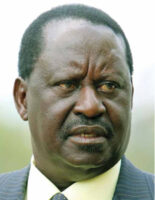
Raila Odinga – The enigma of Kenyan politics

Raila Amolo Odinga held two different portfolios in President Mwai Kibaki’s Cabinet. First, between 2003 and 2005, he served as the Minister for Roads, Public Works and Housing. He then found himself out of the Cabinet, before he returned in 2007, this time as the Prime Minister of the Republic of Kenya. There is contextual clarity on the events that occasioned his first appointment to Kibaki’s Cabinet, his subsequent dismissal in 2005 and his 2007 return.

In the political formation before the 2002 General Election, Odinga’s Liberal Democratic Party (LDP) joined National Alliance Party of Kenya (NAK), an amalgamation of parties whose luminaries, then, were Kibaki, Michael Kijana Wamalwa and Charity Kaluki Ngilu. Odinga’s arrival in the NAK corner prompted the formation of the National Rainbow Coalition (NARC). Alongside Ngilu, Kibaki, Wamalwa, Moody Awori, Kipruto arap Kirwa, George Saitoti and Kalonzo Musyoka, Odinga became a member of the NARC Summit — the main engine that ran the NARC campaigns.

By that point, many Kenyans had made it clear they were tired of the independence party, the Kenya African National Union’s (KANU) rule and wanted a change. The vexing question was who would lead a united opposition.

When it was least expected, he made two of the most consequential public statements that helped birth Kenya’s third and some say most effective  Presidency since independence

This was where Odinga’s political genius played out. He kept himself ahead of the curve.

When it was least expected, he made two of the most consequential public statements that helped birth Kenya’s third — and some say most effective — Presidency since independence.

Both statements were made in 2002. The first, “Si ata Mzee Kibaki anatosha?” was a question he asked a massive crowd at Uhuru Park in Nairobi on 22 September 2002.

Odinga’s query, which translates to “Doesn’t Mzee Kibaki suffice?” settled the debate. From then onwards, the Opposition closed ranks around the NAK leader and NARC was born. In four months, what had seemed impossible — the end of KANU’s 40 years in power — happened.

But before this new era began, Kenyans were to endure a gut-wrenching jolt about one month before it started. On 3 December 2002, the NARC Presidential candidate, Kibaki, was returning to Nairobi from a campaign rally in Machakos when his vehicle rolled several times at the Machakos-Mombasa Road junction, about 50 kilometres from the capital city. Kibaki suffered serious injuries and had to be airlifted to London for specialised treatment.

The country held its breath. The Opposition fretted about what would happen next. There was widespread despondency. But not for long because Odinga, still himself reeling in shock, went public with this statement: “Our captain is injured but the game will go on. We shall continue with our campaign until our captain returns.”

A fresh burst of energy and belief infused the opposition ranks and carried it all the way to victory. Although Kibaki had no further part in the campaigns, he did return. The sight of him in a neck brace was heart-breaking but he was soon well enough to lead an economic revival not seen in Kenya since independence.
Odinga, a football fanatic and a man given to using its metaphors in political conversation, had once again made his intervention at a critical moment in the nation’s fortunes.

Few were surprised, therefore, when upon unveiling the first NARC Cabinet, Kibaki appointed Odinga Minister for Roads, Public Works and Housing. Odinga’s LDP, however, accused Kibaki of reneging on the pre-election Memorandum of Understanding the party had entered into with Kibaki’s NAK. This pact reportedly earmarked the premiership for Odinga. The counterargument to LDP’s accusations was that the then Kenya Constitution did not make provision for the position.

The 2003 Constitution review conference aggravated the relationship between the Kibaki and Odinga factions. While Odinga’s camp pitched for an autonomous premier, Kibaki’s group favoured a ceremonial premier and an autonomous president. These divisions led the country to the 2005 referendum. Kibaki’s faction was for the new Constitution. Odinga’s camp, however, persuaded Kenyans to reject the proposed Constitution.

After losing the referendum, Kibaki made a move not witnessed before in the history of independent Kenya. He fired his entire Cabinet. He invoked the powers given to him by the Constitution and fired all ministers and their assistants and promised the country a new Cabinet in a fortnight. Only two people survived Kibaki’s axe — Vice President Awori and Attorney General Amos Wako.

Out with Odinga went William ole Ntimama (Public Service), Anyang’ Nyong’o (Planning), Kalonzo Musyoka (Environment), Najib Balala (National Heritage and Culture), Ochillo Ayacko (Sports) and Linah Jebii Kilimo (Immigration and Registration of Persons).

Here is the pertinent question of the moment. What was Odinga’s contribution to Kibaki’s Cabinet as the Minister for Roads, Public Works and Housing?

After decades of stagnation and regression, infrastructural development had to become a centrepiece of the Kibaki Administration. This means that the Cabinet docket of Roads, Public Works and Housing needed to be in especially capable hands. It wasn’t for nothing that Kibaki gave it to Odinga. And he didn’t disappoint. Grabbed land was reclaimed and many people found themselves holding fake titles. It was during Odinga’s tenure at Roads that the now famous government bulldozer became a common sight in the country, bringing down buildings big and small that had been built on road reserves.

It was not until the government started implementing its infrastructure development programme that residents of places such as Kilimani, Lavington, Runda, Red Hill, Kasarani, Ngong, Dandora and other places around the country realised that land in their midst had been earmarked for a network of roads. The term by-pass entered the national lexicon as Eastern, Northern and Southern highways started circumventing the city of Nairobi. The jewel in the crown of these new infrastructure projects was the Thika superhighway. It was a whole new travelling experience for Kenyans. Odinga was the public face of this development which comprised a key plank of President Kibaki’s Vision 2030 legacy.

The consequence of Odinga’s exit from Kibaki’s first Cabinet was complete deterioration of the relationship between Kibaki’s NAK and Odinga’s LDP. This led to the collapse of NARC in 2006. Odinga moved on to the Orange Democratic Movement (ODM). Afterwards, in preparation for the 2007 Presidential elections, Kibaki formed his own coalition, the Party of National Unity (PNU).

On 27 December 2007, after months of fierce and divisive political campaigns, Kenyans went to the polls to elect a new Parliament and President. The frontrunners in the Presidential race were Kibaki of PNU, then aged 76, and Odinga of ODM, then aged 62.

The ODM party won most of the Parliamentary seats but Kibaki beat Odinga in the presidential poll. Odinga immediately contested the election results. Protests ensued in Odinga’s support bases. The protests degenerated into horrific acts of violence. More than 1,000 Kenyans consequently lost their lives. Over 350,000 others were displaced.

Concerned that the violence in Kenya could morph into a civil war, the international community put Kibaki and Odinga under pressure to call a truce. Under the auspices of a group of African leaders led by former United Nations Secretary General Kofi Anan, the Kibaki and Odinga factions negotiated for 41 days. Eventually, on 28 February 2008, the two sides of the political divide struck a deal. Under the peace deal, Kibaki retained the Presidency while Odinga became the Prime Minister, a newly created position.

The agreement, known as the National Accord and Reconciliation Act, clearly spelt out the Kibaki-Odinga power relations. The President remained the Head of State while the Prime Minister had powers to coordinate and supervise the execution of government functions and affairs, including those of ministries. Further, the National Accord stipulated that: “the composition of the coalition government shall at all times reflect the relative parliamentary strengths of the respective parties and shall at all times take into account the principle of portfolio balance”.

The cooperation between the newly created office of the Prime Minister and the Cabinet Secretariat was critical. The Cabinet Secretariat was the unit that then managed the Cabinet agenda and ensured that ministers had the policy documents they needed. Odinga appointed Mohamed Isahakia, his former campaign manager, as Permanent Secretary (PS) in charge of his office. Isahakia who has a doctorate from Oregon Health Sciences University in Portland, Oregon, was to work closely with Caroli Omondi, a lawyer, and the chief of staff at the Prime Minister’s office. The two were to collaborate in ensuring that the Prime Minister’s office delivered in its supervisory role. Kibaki retained Francis Muthaura, one of his closest allies and advisers to serve as the Head of Civil Service and Secretary to the Cabinet.

Odinga and Kibaki faced a number of challenges in setting up the Government of National Unity, as the coalition government was officially called. To begin with, the ambiguity of the National Accord on the size of the Cabinet caused confusion. The Accord left such decisions to the discretion of the coalition partners. Besides, Kibaki and Odinga had the challenge of creating and staffing new executive offices.

A bloated Cabinet was the other challenge that the Kibaki-Odinga coalition government had to contend with. There were valid fears that a large Cabinet would impede supervision and coordination.

The fact that PNU and ODM had premised their campaigns upon different manifestos did not help matters. Kibaki and Odinga therefore formed a task force co-chaired by Nyong’o and Saitoti and charged it with the task of integrating the PNU and ODM manifestos. The intention of this initiative was to develop a common coherent script from which the coalition Cabinet would read. The harmonisation of the two manifestos took a very short time.

Once ministry portfolios had been filled, the Kibaki-Odinga Government of National Unity got to work.

So, what were Odinga’s contributions to the Kibaki legacy during his stint as Prime Minister?

Despite the development of a common manifesto and improvement of inter-ministerial coordination, fears that intra-ministry infighting and deadlocks would jeopardise implementation of government programmes lingered. To minimise such developments, Odinga introduced performance as a strategy to cultivate a sense of competition in the Cabinet.

Performance contracting entailed the creation of a clear set of performance targets for each ministry. The strategy rode on systematic collection of data on ministries’ performance and rewarding good performance.

According to Odinga, by the time the coalition government commenced its term in 2008, the Kibaki Administration had already had experience with performance contracting but it had not yet been institutionalised.

Earlier in 2003, Kibaki’s government had launched a performance contracting pilot programme in 16 state corporations. Later, in 2005 and 2006, the pilot programme was expanded to include PSs and major municipalities. The Kibaki Administration’s successful implementation of the pilot programmes won Kenya global recognition. In 2007, Kenya won the United Nations Public Service award for its performance-based contracting system in the public sector.

Keen to avoid the mistakes that had plagued efforts to introduce performance contracting in the 1990s, Odinga adopted a different approach. He appointed Richard Ndubai, the PS for public sector reform and performance contracting into the picture. He tasked him to sell the performance contracting concept to the Cabinet and to develop mutually agreeable, failsafe and credible appraisal criteria.

Both Odinga and Kibaki demonstrated their commitment to performance contracting. Besides rolling it out in 2003, Kibaki showed his support for performance contracting by transferring the line department to the Prime Minister’s office. Odinga leveraged Kibaki’s goodwill and lobbied the staff at his office to readily accept performance contracting.

With Kibaki and Odinga’s support, Ndubai expanded performance contracting across the entire government structure. So as to encourage ministries to own performance contracting, ministries were involved in the annual setting of performance targets. Towards the end of each year, every ministry developed a strategic plan. It was from the objectives outlined in the strategic plans that ministry performance targets emanated. There was, however, a standard performance contracting template. It had about six performance criteria under which specific performance indicators were listed.

Performance contracting provided the coalition government a mechanism to encourage members of the coalition’s Cabinet and the entire civil service to remain focused on service delivery. It mobilised people to work towards common goals.

In 2009, Kibaki directed Odinga to move in and reclaim Mau Forest. This decision was informed by concerns expressed by experts that the Mau Complex had then lost 107 hectares of its trees over the last two decades. Experts attributed this worrying development to illegal settlement, logging and charcoal burning that went on in the forest right under the watch of corrupt officials.

Experts warned that the ripple effect of the Mau Forest degradation would affect tourism, water supply to cities and industries, agriculture, energy generation and consequently damage East Africa’s largest economy. Even though Odinga’s intervention in the Mau Forest had Kibaki’s blessings and the support of the Cabinet, it set him against his political allies.

William Ruto, Odinga’s right-hand man at the time, opposed the eviction of people from the Mau Forest. Odinga, however, refused to budge. He insisted that all the forest land that KANU had illegally allocated had to be reclaimed by the government.

Odinga anchored his resolve to restore the Mau Forest Complex on the conviction that by so doing, he would secure the livelihoods and economies of all the people who directly or indirectly depended on the Mau Forest ecosystem

Since the Mau Forest Complex reclamation had received the Cabinet’s nod, Odinga advocated for an inter-ministerial approach in its reclamation process. The Ministry of Forestry was to spearhead the eviction process.

There is no doubt that the greatest milestone of the Kibaki-Odinga coalition is its delivery of the new Constitution. In 2010 Kibaki and Odinga rallied the country to vote in favour of the proposed new Constitution. The new Constitution significantly checked Presidential powers, addressed corruption, political patronage, land grabbing and tribalism, among other problems that Kenya had been grappling with since independence.

Addressing an electrified crowd at the Kenyatta International Convention Centre soon after receiving the provisional results of the referendum, Kibaki hailed the adoption of the new Constitution as a win for Kenya. Besides, he said it was a win for all those who had fought long and hard for a new constitutional dispensation that reflects the country’s hopes and aspirations.

On 27 August 2010, Kenyans witnessed the promulgation of the 2010 Constitution. The new Constitution heralded a new dawn. It brought open and inclusive governance, whose face is devolution. Thanks to devolved governments, Kenya has narrowed the gap between rich and poor regions.

When Kibaki’s second term in office ended, Odinga took a third shot at the Presidency. But contrary to the expectations of many, he lost the elections to Jubilee Party’s Uhuru Kenyatta and Ruto.

Odinga anchored his resolve to restore the Mau Forest Complex on the conviction that by so doing, he would secure the livelihoods and economies of all the people who directly or indirectly depended on the Mau Forest ecosystem

Election loss has become a recurring theme of Odinga’s political existence. Few people in Kenya, even those who do not like him, believe he is not qualified to be President.

“I also don’t believe there is anything impossible in this world. I believe that things are possible. But I also want to say that it must not necessarily be Raila; like now, I am not even saying that I am going to run again because that is too far-fetched now. I am always willing to support somebody else. The last time we went for a nomination and if I had lost I would have supported somebody else. I came up with Kibaki Tosha and people thought that I had committed political suicide. Many told me that Luos could not vote for Kikuyus, but I said, ‘I’ll show you.’ And I convinced them.

Apart from President Kibaki himself and probably the other presidents before him, only Odinga consistently galvanises the nation’s heaviest intellectual artillery into the most heated debates about Kenya’s destiny. He shapes the nation’s political agenda while not occupying State House.

Odinga remains the political sultan of the street with powerful friends in high places in Kenya and abroad. His supporters won’t allow him to go quietly and he is their willing hostage. Even before he has made his announcement, there is widespread belief that he will again be one of the big draws in the 2022 race. He made a big mark as a member of the Kibaki Cabinet. Who knows, he may finally get a chance to form his own.
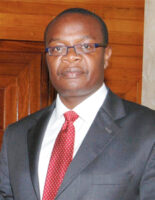
Paul Otuoma – Vet with passion for the blue economy

When he recounts President Mwai Kibaki’s leadership style, Paul Nyongesa Otuoma paints the picture of an impresario of unrivalled brilliance.  The former Funyula Member of Parliament (MP) who served in three ministerial dockets in Kibaki’s administration is, however, quick to note that the President’s well-coordinated government had an unfortunate interlude in 2008 after a disputed election that triggered violence in parts of the country.

Otuoma attributes this blight on Kibaki’s leadership to the road accident in 2002 that the President was involved in and a cabal of politicians who surrounded him as soon as he took over power. The 2008 post-election violence, explains Otuoma, was a crescendo of unmet political expectations from his first term in office after Kibaki fired Raila Odinga and his team from the government.

The father of four first was elected to Parliament as the Funyula MP in 2007 on an Orange Democratic Movement (ODM) ticket and later appointed Minister for Fisheries in President Kibaki’s and Prime Minister Odinga’s Government of National Unity in 2008.

His re-election in 2013 was challenged by John Okello, a voter who filed a petition seeking to annul Otuoma’s election as the Funyula legislator. The court ruled that Funyula constituents duly elected Otuoma and that the Independent Electoral and Boundary Commission (IEBC) followed due process when it declared him the winner. The petitioner had lined up about 20 witnesses to support his allegation that Otuoma’s election was not free and fair because it was tarnished by electoral malpractices and irregularities.

Born on 15 September 1966 in Busia Otuoma to Chrispinus Nyongesa Otuoma, a civil servant, and Mary Nyongesa, Otuoma went to school in Khalsa Primary School in Nairobi in 1974 where he sat for his Certificate of Primary Education examinations in 1980.

When Kibaki ousted President Daniel arap Moi with a resounding victory in the 2002General Election, the wave of optimism that had swept across the nation would lure Otuoma back to Kenya

He transitioned to Eastleigh High School for O’ levels from 1981 to 1984 and later joined Nairobi School for A’ -levels, finishing in 1986. Otuoma, a keep-fit enthusiast who plays rugby for leisure, is an alumnus of the University of Nairobi where he attained an undergraduate degree of Bachelor of Veterinary Medicine and Masters in Business Administration.

Like most university students in modern-day Kenya, Otuoma didn’t immediately find a job after graduation. He worked as a waiter at a popular fast-food restaurant in Nairobi at the time. In 1992 he took a second job at Agromed Limited who were then agents for Bayer, a multinational pharmaceutical.

His two-year stint would later pave the way for him to join the veterinary pharmaceutical department of Bayer AG as a sales representative. That was 1994. Otuoma gradually rose through the ranks and relocated to South Africa in 2000 where he was in charge of business development for East and Central Africa for Bayer.

When Kibaki ousted President Daniel arap Moi with a resounding victory in the 2002 General Election, the wave of optimism that had swept across the nation would lure Otuoma back to Kenya in 2003 to set up a chemicals distribution company called Mwanga Agrovet. He has doubled as a Keg distributor in Nyanza and the western region for Kenya Breweries Limited through his Kisumu-based company called Nyando Limited.

The veterinary doctor says his resolve to join politics and vie for the Funyula Parliamentary seat was inspired by the need to contribute towards rebuilding the country. “At one point in your career progression, you reach a level where you are a professional but you no longer execute. Instead, you work through people to make things happen. Whether in the public or private sector, the principles of management are the same,” said Otuoma during an interview for this article.

In 2007, when he won the Funyula seat for the first time, ODM declared its Presidential candidate, Odinga, the winner, and called on President Kibaki to concede defeat and prepare to hand over the instruments of power. The ensuing civil strife would lead to post-election violence that necessitated the formation of a coalition government between the warring political forces. Otuoma later joined the Cabinet as Minister for Fisheries Development in 2008.

“At the time we were focused on uniting the country. During the peace negotiations, there were talks on which side of the coalition would steer the different ministerial dockets. But I was not part of those negotiations,” revealed Otuoma. The talks would later beget the National Accord and Reconciliation Act of 2008 that temporarily re-established the office of Prime Minister, along with the creation of two deputy prime minister positions.

This would later lead to the power-sharing agreement between President Kibaki and Opposition leader Odinga, who became the first Prime Minister under the Government of National Unity. “There were challenging moments. We were coming from a very acrimonious electioneering period and parties that had a dispute were now working together,” Otuoma explained.

Otuoma vividly remembers the first meeting they had with Kibaki after the formation of the coalition and lauds the President’s ability to manage the government during a turbulent phase. “His ability to bring the two sides of the coalition together and make the government work despite the political challenges is something generations need to reflect upon,” Otuoma said.

During his first encounter with the President, Otuoma recalls Kibaki’s insistence that ministers were to be cognizant of the fact they were not serving him as the appointing authority, but the country. He applauds Kibaki for giving him a free hand to run his ministry. There were instances, he recalls, where ministers would have tussles with permanent secretaries working under them, but Kibaki never interfered.

“There were no phone calls from him to influence ministerial decisions. There is a nugget of wisdom that I picked from him that has been my guiding principle in politics; that we should not personalise our positions, that we only hold public offices in service of the people,” said Otuoma. In expounding on this maxim, he remembers an anecdote Kibaki shared about being appointed as a Cabinet Minister after having served as the Vice President under President Moi.
At the time, Kibaki’s friends and confidants saw this as a demotion and advised him to turn down the ministerial appointment. He recounts that Kibaki intimated that he took the new assignment in stride and saw it as an opportunity to serve Kenyans in another capacity.

Though operating in an environment marred by belligerence and infighting, Otuoma recollects that decisions were not made based on affiliation but policies whose soundness was evaluated critically in the interest of the nation. “I liked the idea of performance contracts. We were running on programme-based budgeting to make sure there were resources for proposed projects. One of the main challenges that the Kibaki administration faced when they took power in 2002, was issues of pending bills,” he explained

Otuoma revealed that at the time accounting officers such as permanent secretaries and undersecretaries would attend ministerial meetings to cascade the proposals down to implementing officers. He said that because the President gave ministers free rein over their dockets, they were also no incidents of policy makers interfering with procurements officers or other officials lower in the command chain.

Though there was a push to have both sides of the coalition to appoint the respective permanent secretaries for the dockets they were responsible for, they finally resolved not to meddle with civil servants and the structure of government. Permanent secretaries and accounting officers, Otuoma explained, were not appointed based on political affiliation, but on merit.

“Thought it happens in other jurisdictions where political parties in a coalition, based on the key issues in their manifestos, appoint civil servants. This was not the case in the Kenyan context, permanent secretaries were appointed by the President,” he revealed.

Otuoma said the ethos he picked from the private sector, where he was a leader with little or no supervision, guided his style of leadership when he joined the public sector. “If you can’t measure it, you can’t achieve it,” he asserted. He recalled having access to Francis Muthaura, the Head of Civil Service, who was always at hand to sort out any bureaucratic challenges that could hinder the implementation of government projects.

“Muthaura was very good in coordinating government functions, he was accessible and had prompt answers to your challenges,” said Otuoma. Kibaki, he says, was a very accessible President with Cabinet meetings held weekly “without fail”. As members of Kibaki’s Cabinet, they were always conscious that they would have to report the progress of any assignments at the next Cabinet meeting, he recounted.

After these meetings, , there was always a circular to ministries and permanent secretaries on deliverables that needed implementation that was sent the same afternoon even before the ministers got back to their work stations, narrated Otuoma. “Ministers appointed boards to parastatals under their ministries and gazette the appointments promptly,” he said.

While at the Ministry of Fisheries Development he had a cordial working relationship with Ntiba Micheni, a former Director of the School of Biological Sciences at the University of Nairobi and they jointly made far-reaching policy changes that helped develop aquaculture and the Blue Economy. “We had a harmonious working relationship and worked jointly in developing the Fisheries Management and Development Bill,” he reported.

Otuoma who first tabled the Bill to the Cabinet before sponsoring it in Parliament, said Kenya had until then relied on precolonial era laws. His successor completed the assignment. Before formulating the Bill, Otuoma and officials under his docket went benchmarking tours in Israel and Indonesia to study what the two countries were doing in aquaculture. They would later visit almost every constituency in Kenya setting up fish ponds to demonstrate the feasibility of fish farming.

The Bill, which was later signed into law by President Uhuru Kenyatta in 2016, provides for the conservation, management and development of fisheries and other aquatic resources to enhance the livelihood of communities that depend on fishing. Besides offering guidance on the import and export trade of fish and fish products, fish quality and safety among other provisions, the Act also established the Kenya Fisheries Services and the Kenya Fisheries Advisory Council.

The roles of the Kenya Fisheries Services include ensuring the appropriate conservation, development of standards on management, sustainable use and protection of the country’s fisheries resources. The Act also ensures that Kenya’s marine resources are used for the benefit of Kenyans, especially coast residents, and protects marine resources from exploitation by foreigners.

Otuoma is keen to debunk the perception that Kibaki was hands-off. He said his engagement with the third President of Kenya points to a leader attuned to the workings of his government. “I remember taking Prince Edward (Earl of Wessex) to President Kibaki’s private office at State House. During a private conversation, Kibaki said he had to keep abreast of decisions made in parliament as they at times have adverse effects on the operations of the government or are not feasible,” Otuoma added.

Though Otuoma appreciates the concept of separation of powers and the fact that all arms of government might not read from the same script, during the interview he cautioned that there was need for some level of synergy and consultation for methodical implementation of government policies. He, however, pointed out that he had challenges working with Karega Mutahi who served as the Permanent Secretary (PS) in the Ministry for Local Government between 2010 and 2013. “My leadership and interpersonal skills helped me tackle the hurdles,” he said.

One incident that demonstrated to Otuoma that the President kept tabs on both government operations and national politics was when he approached the Kibaki as the Minister for Sports and Youth Affairs requesting to conduct Kenya Football Federation (KFF) elections to end wrangles at the sports body.

Since Otuoma had cited finances as a challenge, Kibaki made sure some of the funds were available. After the elections, the same group of football officials was back at the helm of KFF. On the day of the elections, Kibaki and Otuoma were in Australia for a Commonwealth meeting.

When Otuoma approached Kibaki with the news, the President informed him that he knew of the intricacies of the election. Otuoma would later learn that former Kenya African National Union (KANU) politicians had vested interests in the outcome of the KFF elections and Kibaki was privy to that information.

Despite the political intrigues during his tenure at the Sports and Youth Affairs Ministry, Otuoma oversaw the formulation of the Sports Bill, now an Act of Parliament, that led to the establishment of the Sports Fund. Otuoma says he worked closely his James Waweru, the PS.

Before the enactment of the Act, most sports bodies were registered as societies and the government had little or no say in their regulation. The Act also led to the creation of Sports Kenya which is now in charge of sports facilities and talent in the country. “As a result of the Act, any organisation involved in sports in Kenya is registered under the Sports Act,” he said.

While in charge of the Ministry, Otuoma also oversaw the ratification of the African Youth Charter, the first legal framework in favour of youth development. The framework was provided to the continent by the relevant stakeholder in youth affairs, to support national policies, programmes, and actions in favour of youth development.

Otuoma, who currently serves as the Chairman of the Privatisation Commission, said President Kibaki came up with policies and made sure they were implemented. He cited this as one of the reasons why revenue collected more than doubled during Kibaki’s administration. “He discouraged people from going to State House with envelopes, that helped him stem endemic corruption that was rife in government,” Otuoma explained.

Otieno Kajwang’ – The mapambano slapstick star

Among the individuals who served in President Mwai Kibaki’s Cabinet, a few stood out from the rest. They had their own way of making their presence felt wherever they went and whatever they did.

One such charismatic Minister was the towering Gerald Otieno Kajwang.

Kajwang’s trademark hearty laughter and sense of humour made him irresistible even among his political foes, who named him a ‘political comedian’; many did not take him seriously because of the way he clowned in public.

When he died in November 2014 the political class united to mourn the eloquent debater, patriot and nationalist who turned political gatherings into mass songfests and a man who commanded a presence whenever he walked into a room or on to a political podium.

He was a good dancer, a very jolly guy and outgoing. You could not hate him even when you wanted to

“He was a good dancer, a very jolly guy and outgoing. You could not hate him even when you wanted to,” his former Cabinet colleague, now Isiolo Governor Mohamed Kuti, recalls.

Another Cabinet colleague, current Kisumu Governor Prof Anyang Nyong’o, wrote in The Standard newspaper, “I write today to mourn Senator Gerald Otieno Kajwang’ of Homa Bay. Otieno Nyakwar Nyakwamba. Otieno DeLoks, as I used to call him, meaning ‘Okil Kamaloka’, which in Dho-Luo simply means ‘the lawyer who can turn everything around, so even a lie becomes the truth’.” Prof Nyong’o added that the late Kajwang had “mastered his own art of debate and delivery” with a “knack of wittingly laughing at his own arguments, with a quiet chuckle and facial expression that no doubt conveyed the seriousness of what he was saying.”

President Kibaki eulogised him thus: “The late Kajwang, be it in Cabinet or public rallies, expressed his views with notable flair and exuberance. Indeed, one did not need to necessarily agree with him every time but few, if any, would fail to notice, let alone ignore, his trademark charm and charisma.”
Throughout his personal and political career, Kajwang lived a controversial life from his youth to his death. He entered active politics in the early 1990s and in 1997 was elected to Parliament to represent the people of Mbita Constituency on a National Development Party (NDP) ticket. He retained the seat in 2002 on a National Rainbow Coalition (NARC) ticket and again in 2007, under the Orange Democratic Movement (ODM) party.

In 2013 Kajwang’ vied for and won the Homa Bay County senatorial seat.

“Except for the period in Kibaki’s second term when he held a Cabinet position, Kajwang’ was always the vanguard of Opposition ranks both in and out of Parliament, playing his role with copious enthusiasm until his death. He was an ebullient debater; and an argumentatively stubborn backbencher in the August House. His stint in the Senate was short and undramatic,” Joe Khamisi, a former Member of Parliament (MP) and author of The Politics of Betrayal: Diary of A Kenyan Legislator, wrote about Kajwang.

In April 2008, Kajwang was appointed Immigration and Registration of Persons Minister in the Government of National Unity formed by Kibaki and Raila Odinga following the disputed 2007 General Election, which resulted in post-election violence.

Before his appointment as Minister, Kajwang had proved his worth in the divisive politics of the time, moving a vote of no confidence against the Vice President George Saitoti and proving himself as Odinga’s trusted lieutenant.

Kajwang, who was among Odinga’s advisers and confidants, never even once went against the wishes of the ODM leader.

“Yes, he was a political irritant to the ruling elite but he was also a patriot, a democrat and a principled and consistent leader, one of few politicians whose support for party leader, Raila Odinga, remained intact to the end,” Mr Khamisi wrote about him.

Unlike many polished politicians who are hesitant to eat in public places either for fear of embarrassment or poisoning, Kajwang mingled and ate with the masses generous helpings of ugali and fish or matumbo (tripe) in places like Burma Market in Nairobi. He never left a funeral without eating.

Born into a political family, he was the first born of 12 children: three girls and nine boys. Three of his brothers followed in his political footsteps — Homa Bay Senator Moses Kajwang, Ruaraka MP T.J. Kajwang and Kaptembwa Ward MCA Peter Kajwang, were all elected in the 2017 General Election. His father, the late David Ajwang’ Nyakwamba, was a teacher while his late mother, Dorcas Akumu Ajwang’, is remembered as one of the first female African primary school teachers in the 1940s.

Kajwang joined Waondo Primary School in 1964 and sat for the Certificate of Primary Education (CPE) examination seven years later. Friends remember him as a playful and notorious pupil who arrived in school late leading to frequent punishment. After the CPE exams, he joined Mbita High School for O’ Levels, where he caused even more trouble. “He was sent away for leading a strike against badly cooked food. Since his father was the deputy headmaster at Mbita High School, he managed to secure him a place in Form Two at the school,” his former schoolmate, Ochieng Oreng, said in an interview with the Daily Nation.

He was a member of the school choir and performed well in his O’ Level examinations emerging as the best candidate. Kajwang proceeded to Homa Bay High School for A’ Levels, from where he was expelled after leading a strike following an altercation with the school librarian. He would later secure a slot at the prestigious Maseno School where he completed his A’ levels. In 1977, he was admitted to the University of Nairobi to study Law, setting the stage for his activism and political career.

After being elected as the Secretary General of the Nairobi University Students Organisation (NUSO) in 1979, Kajwang led the first demonstrations against newly elected President Daniel arap Moi, resulting in his expulsion from the university. He was expelled alongside Rumba Kinuthia and Mukhisa Kituyi. He later competed his studies at Makerere University in Uganda through the help of progressive lecturers from the University of Nairobi. Upon graduation from Makerere, Kajwang joined the Kenya School of Law and graduated with a Diploma in Law after which he was admitted to the bar as an advocate in 1984.

He remained a rebel.

In 1990, Kajwang led a riot by lawyers, protesting the arrest of lawyers Mohamed Ibrahim and John Khaminwa who had presented politicians accused of plotting to overthrow the government. The riots resulted in the closure of courts for two days.

His legal career suffered a setback on 11 August 1999 when the Law Society (LSK) Disciplinary Committee banned him from practising as an advocate for allegedly stealing from a client. He was subsequently struck off the Roll of Advocates for professional misconduct.

“I felt like I was being persecuted for my opinions on certain issues. It is very painful to work so hard to qualify for a profession only to be denied the opportunity to practise. I am still very bitter with the decision to bar me,” he defended himself in an undated interview.

Kajwang practised as a lawyer for several years and served as the legal adviser for both the original Forum for the Restoration of Democracy (FORD) party, and one of its offshoots FORD-Kenya, and the National Development Party (NDP), a party led by former political detainee, Odinga.

Kajwang joined NDP from FORD-Kenya where he was the legal secretary. This was after Odinga left FORD-Kenya to Kijana Wamalwa and his faction following endless disputes over its control. It was through NDC that Kajwang joined the Odinga political dynasty. In the 1997 General Election, Kajwang was elected on a NDP ticket becoming one of the 21 MPs to be elected from this party; Luo Nyanza voted overwhelmingly for Odinga and the NDP in that election. Only James Orengo in Ugenya and Joe Donde in Gem Constituency were re-elected on a different party ticket in Luo Nyanza in the 1997 General Election.

Soon after his win, Kajwang proposed a vote of no confidence against Vice President Saitoti over corruption in relation to the Goldenberg scandal. This was a political scandal in the 1990s where the Government of Kenya had subsidised exports of gold beyond standard arrangements. The government had paid 35 per cent more (in Kenya shillings) than the country’s foreign currency earnings for the deal. When the motion did not go far, Kajwang filed a private application before a magistrate on behalf of Odinga seeking to have Saitoti prosecuted in relation to his alleged involvement in the Goldenberg issue. He obtained leave to institute criminal proceedings against the Vice President. However, Attorney General (AG) Amos Wako invoked Section 26 of the Constitution and terminated the case. Not ready to give up, Kajwang went to the High Court to challenge Wako’s move but did not succeed.

Through that case, the prosecution brought into question the law that gave the AG absolute discretion over cases. This would later form part of the basis for the constitutional reforms, which saw a new Constitution promulgated in 2010 without such an exploitative clause.

Before the 2002 General Election, few politicians had had the nerve or the flair to jump on to the stage in unrestrained song and dance. Then came Kajwang, apart from making others smile, lit the fire of rebellion with grace and robust humour. He became more famous with the use of the song ‘Mapambano’ during political events. Kajwang first used the mapambano slogan at the beginning of the Orange “No” campaign against the proposed Constitution during a rally in Makadara Constituency.
“In our efforts to stop the enactment of the proposed new Constitution, we had to engage our opponents in the battlefield. I set out to harness public imagination and crystallise the campaign in a slogan,” Kajwang told the Daily Nation in a June 2008 interview.

He explained that mapambano was a religious song about the struggle between good and evil and that he used to sing it when he was a member of his church choir.
He also had a stint as a panellist in one of the most listened to radio programmes in the country, Crossfire, a weekend radio show that aired from the early 2000s.
Other than Kajwang, the other seasoned debaters on the show included the current UNCTAD (United Nations Conference on Trade and Development) boss Kituyi, political analyst Tony Gachoka and lawyer Mutula Kilonzo.

Both Mutula and Kajwang were lawyers with opinions about the government. Whereas Mutula enjoyed close ties with President Moi as personal lawyer, Kajwang was a dissident who had rubbed the government of the day the wrong way before he was expelled from the University of Nairobi. These different political inclinations always came up in the debate. When it came to hitting out at the ‘system-man’ Mutula, Kajwang minced no words:

“We can’t sit here and listen to narratives perpetuated by guys who formed the first row of the government’s choir. Give us another substantial subject for discussion”, said Kajwang during one of the shows.

In September 2009, Kajwang voted in a divisive vote against the appointment of Aaron Ringera and his two assistants to the Kenya Anti-Corruption Commission.

In 1990, Kajwang led a riot bylawyers, protesting the arrest of lawyers Mohamed Ibrahim and John Khaminwa who had presented politicians accused of plotting to overthrow the government. The riots resulted in the closure of courts for two days

In the decision, the Cabinet was divided, with at least 13 Cabinet ministers and assistant ministers voting in favour of the resolution by 2 House committees to annul the gazette notice that appointed Kenya Anti-Corruption Commission Chief Ringera and his two assistants.

He was also very dismissive of his Cabinet colleague William Ruto whom he dismissed as leader who had no capacity to destroy ODM and stall Odinga’s political career.
Following the 2007–2008 post-election violence, Kajwang was among the ministers who backed a local tribunal to try the post-election violence instead of going the Hague (International Criminal Court) route. He threw his weight behind backbenchers in their push for a special tribunal weeks after the Cabinet decided to give the Truth, Justice and Reconciliation Commission (TJRC) a shot at trying post-election violence suspects.

While serving as Immigration Minister, he created a diplomatic issue after Sudanese soldiers manning a roadblock on the Kenyan side of the border blocked him from opening an immigration office at Nadapal border post. The Minister was turned back at the roadblock just a kilometre from the country’s border with South Sudan.
In May 2009, he announced that senior civil servants, most of them appointed by the first Kibaki Administration, seemed unwilling to take orders from coalition partner appointees.

“A good partnership can be crystallised in two words: consultation and concurrence. In this partnership, there is neither of those ingredients. The fact is that although the coalition is written into the Constitution, PNU [Party of National Unity] does not accept there is a partnership and their view is that this is their government,” Mr Kajwang remarked.

Among his successes as Immigration Minister was setting the ground for the introduction of dual citizenship and introducing third-generation identity cards.
He was, however, unable to actualise centralisation of personal data records through a KES 300 million government project. The project, known as the Integrated Population Registration System (IPRS), aimed at bringing together information from different agencies undertaking population registration functions in the country.
The centralised registration system was supposed to link individual information on both citizens and foreigners to various population registries. The project was also expected to help the government broaden its tax base by easing the identification of potential taxpayers. It was meant to be implemented over a period of three to four years.

There were also grumblings within the ODM party that he did not use his position as Immigration Minister to sensitise the youth to acquire national identity cards that would qualify them as voters in the 2013 General Election. Also buried under party loyalty were claims of bribery in the issuance of work permits to foreigners that dogged Kajwang’s last days in office.

In November 2014, almost a year after winning the Homa Bay County Senator seat, Kajwang succumbed to a heart attack at the age of 58 years. He spent his last days as he had always lived. He was in Parliament contributing to debate in the Senate and later relaxed over drinks at the bar as he laughed and talked politics with his colleagues.

On that night, he collapsed at one of his homes and was pronounced dead on arrival at the hospital.

Dr. Sally Kosgei – The bold woman of many firsts

It clearly emerged in her highly acclaimed eulogy at Moi’s funeral in February 2020, that Sally Kosgei has great insights into not just the workings, the controversies, the power play, and the failings of Kenya’s past presidential regimes but also the geopolitical realities they have had to weather.  Besides, she knows a load about key scions of politics and business in Kenya, some now holding top government positions and many who were her mentees since her memorable days as the Kenya’s High Commissioner to the United Kingdom in the 1990s.

Kosgei also has interesting snippets of American politics, having studied with high profile Americans, such as Condoleezza Rice, former US Secretary of State, at Stanford, and being bosom friends with Jendayi Frazier and a phalanx of other American heavy hitters in the academia and the foreign service, which in America, is often the same crowd.

From a distance, Kosgei strikes one as reserved but one soon realizes that it is a façade fit for the consummate diplomat

Unfortunately, Kenyans will have to wait for a while before they can access these interesting tidbits, for Dr. Kosgey’s book is not about to come out. Her musings about arcane aspects of quality combines with her bureaucratic orientation and lingering vestiges of the Official Secrets Acts that Kenyan civil servants take upon joining the service to conspire against the local publication of her tell-all book. Just to underscore her reticence to let it all hang out, she also politely declined an interview for this profile.

From a distance, Kosgei strikes one as reserved but one soon realizes that it is a façade fit for the consummate diplomat. When she is not on her guard, she comes out as a great conversationalist, made more so by her intelligence and first-hand knowledge of major issues and events in Kenya and around the world. No wonder she is reputed to be one of the most influential and powerful leaders in post-independence Kenya. This reputation was stamped when she was selected in early 2008 to be part of the four-member negotiation team from the Orange Democratic Movement (ODM) that was tasked with holding talks with their Party of National Unity (PNU) counterparts, in efforts to quell the post-election violence experienced in the Rift Valley, Nyanza and Nairobi after the vigorously disputed elections of 2007. To have been selected by ODM to join this strategic team while she was clearly not a radicalized insider speaks to her unique possession of much-needed skills, moderation, toughness and firmness. But it is also most likely that she was chosen because of her vast knowledge of government.

During the mediation talks, she played a critical role in leading discussions between the two opposing factions, using her acumen in diplomacy, and by activating her international networks to drive the talks. Pitied against her and her ODM team of James Orengo, William Ruto and Musalia Mudavadi were PNU’s Martha Karua, Sam Ongeri, Moses Wetangula and Mutula Kilonzo. While everyone in both teams was accomplished in their fields and in politics, and was capable of an extended exegesis of arcane points of constitutional law and politics, none could wag a finger at her credentials as a highly trained Africanist, a highly experienced diplomat, and a top civil servant – having been Head of Public Service – and as a politician in her own right.

Her credentials were such that she looked like she was on the wrong side of the table, her lengthy curriculum vitae qualifying her as a member of the Panel of Eminent African Personalities that was brokering the peace. The dynamics of the negotiating teams were such that everyone could huff and puff, and there was a lot of this as it emerges from Kofi Annan’s book, Interventions: A life in War and Peace and Ben Mkapa’s book: My Life, My Purpose, but everyone knew whose contribution was tempered by a 360 degrees perspective and it was in most cases Kosgei’s.

“Adversaries or not, we had a collective responsibility, which propelled us to upgrade our thinking to appreciate that we were not adversaries, we held divergent views, which needed to be narrowed to achieve peace. Our views of the way forward nearly converged, but not quite, that was left to the two principals to agree and sign,” Dr Kosgei is quoted as having said by the East African Standard of November 23, 2008, in an article titled: “How we achieved peace.”

After the signing of the National Accord, Kibaki appointed her the Minister for Higher Education, Science and Technology (MoEST) in the coalition government that was formed after the negotiations where she served for two years before being transferred to the Ministry of Agriculture in the same capacity. Her stint in the cabinet was characterized by much silence and it often appeared as though she had lost her previous oomph.

Nevertheless, she went on to represent her party, ODM, in the drafting of the Harmonized Draft Constitution of 2010 that was later ratified and promulgated in August 2010. This was yet another cap in her feather. The country had waited for two decades for a new constitution, and what was delivered is often described as the one of the post progressive constitutions in the world. Later, Kosgei was instrumental in the push for the deferment of the two Kenyan ICC cases back to Kenya in a bid to spare the then presidential candidate Mr. Uhuru Kenyatta and his running mate Mr. William Ruto from potential foreign incarceration.

Dr. Sally Jepngetich Kosgei was born in Aldai constituency in Nandi District to a family of farmers. In an interview for the 10th Parliament Book, Kosgei said her parents encouraged her to take the lead in everything she got involved in, thus laying the foundation for her career in long-running leadership. In her eulogy to Moi, Kosgei revealed that she owed her academic success to the late former president, who she says made her promise to pursue her education up to the PhD level. She went to the University of Dar es Salaam in Tanzania, then to Stanford where she studied for an MA and PhD in Diplomacy and African Studies.

Upon returning to Kenya, she worked for five years as a junior civil servant before Moi kick-started her diplomatic career by appointing her to head Kenyan missions in different countries before promoting her to head the Foreign Affairs Ministry back home. She is the person Moi entrusted to head the public service as his stranglehold on national politics neared its end in 2002. The position of Head of Public Service was an extremely powerful position at that time, more powerful than the vice-presidency. That she did not use this position to stonewall the transition to the new government of Mwai Kibaki is an ample statement of her patriotism. Despite the taunts, catcalls and stone throwing witnessed when Moi publicly handed over power to Kibaki at Uhuru Park, she was courageous and magnanimous enough to serve briefly as the head of the public service in the Kibaki government.

When she decided to run for political office in 2007, she unsurprisingly got mentorship from the former president, who was at that time already five years into retirement. In an unexpected twist, Kosgei surprised many when she joined ODM, supporting Raila Odinga, the man who had broken ranks with Moi when the president needed him most during the 2002 transition. She told off those who questioned her wisdom, saying that she needed not follow the crowds as long as she was committed to serving her electorate. Apparently, her independent streak, coupled with her vast experience and knowledge, impressed Raila Odinga so much that she became one of his most trusted advisers. She captured the Aldai Constituency seat in Nandi and represented it between 2008 and 2013, capping her profile as a trailblazer and a great example for women empowerment, having held not only political and diplomatic positions that would traditionally be reserved for men, but also by being elected in a rural seat deep in Kalenjin land where patriarchy is palpable.

Having immediately joined the cabinet after her election as a member of parliament, we will never know how she would have fared as a backbencher. In her role as a Cabinet Minister, however, she attended parliament regularly in her conservative, Margaret Thatcher suits and handbag (those were the days when ministers were picked from the house) and perfunctorily answered ministerial questions posed by various parliamentarians. Like most people who move from the inner sanctums of government to join politics, it was clear that overt politics was not her cup of tea. She detested the limelight, the verbal parlays and the obnoxious turnarounds.

Nevertheless, she remained a strong defender of women and their abilities. She has often retaliated that people should never doubt the capacity of women to perform their duties with excellence in whichever position they may be placed. She detests any hints of having played the gender card in her career advancement, insisting on her achievements being recognized on merit and exclusive of her gender. She was once quoted by The Standard newspaper as having said, “I have fought for my space not as a woman but as any other person. I am not an affirmative action person. I don’t operate in the women’s corner.” In an address to students of Alliance Girls High School, her Alma mater, in 1991, she said that women do not need to shout or be aggressive to be heard, and that humility not only attracts respect but is also key to success. This could explain her soft but firm demeanor while navigating politics and public office.

Dr. Kosgei has had a long running career in diplomacy, having been appointed the first secretary, Kenya High Commission in Zimbabwe in 1984, after working briefly for the UN HABITAT as well as the OAU. Between 1986 and 1992, she was appointed the Kenya High Commissioner in London, joining 150 other ambassadors, who were all men. She was later promoted to the position of Permanent Secretary in the ministry of Foreign affairs, working first under Kalonzo Musyoka and then under Dr. Bonaya Godana.

After this appointment, she was moved to the Office of the President, where she acted as a president’s advisor in foreign affairs, drawing from her experience both as a high commissioner and as a PS. This goes to show that a big part of her early career was driven in no small part by Mzee Moi, to whom she demonstrated unwavering loyalty. It is no wonder then that she is alleged to have shed tears when the former president boarded a helicopter to fly out of state house for the last time after handing over the presidency to H.E. Mwai Kibaki.

Her rich career portfolio include appointments to: the Organization of African Unity (OAU), Kenyan High commissions in Zimbabwe and UK, Permanent Secretary of Foreign Affairs, Ministry of Foreign Affairs, Permanent Secretary in the Office of the President and Head of the Public Service, Ministry of Agriculture, Ministry of Higher Education, Science and Technology, among others. At MoEST, formed by merging the Ministry of Science and Technology with the Department of Higher Education, formerly under the ministry of Education, she served alongside PS Prof. Crispus Kiamba.

The most urgent mandate of the newly formed ministry was to develop a national policy on biotechnology – which outlined the role of biotechnology in poverty reduction, enhancing food security and environmental conservation. It was during her tenure at MoEST many colleges were upgraded into fully fledged universities. One of President Mwai Kibaki’s campaign promises was to make higher education accessible to the hundreds of thousands of students who qualified for university but were not admitted due to a shortage of slots. His government embarked on a mission to upgrade middle-level colleges into universities. The process was undoubtedly rushed, a fact that Kosgei herself warned could affect the quality of education offered.

For example, the government upgraded Kenya Polytechnic, Kisii, Pwani, Chuka, Mombasa Polytechnic and Kimathi Institute, all in just two months. During the same period, four university campuses, Kitui, Kabianga, Taita Taveta and Kenya Science were upgraded to be under Kenyatta University, Egerton, Moi, Jomo Kenyatta University of Agriculture and Technology (JKUAT) and University of Nairobi (UoN), respectively. In 2008, Narok Teachers Training College, the South Eastern Meru University College of Science and Technology were upgraded into constituent colleges of Moi, UoN, and JKUAT, while Bondo Teachers’ College was placed under Maseno University. No doubt this increased access to higher education.

However, Dr. Kosgei was not blind to the fact that diploma and certificate institutions were also important, and called for the systematic process of developing higher education from certificate level to degree level without undermining higher education. Her speeches at the time shows she tried to champion courses that created links between the education sector and the job market, and was keen on tertiary institutions deepening the scope of their curricula to match the demands of the job market in efforts to increase the employability of students graduating from these institutions.

In 2013, Kosgei was moved to the Ministry of Agriculture where she served with PS Romano Kiome. When criticism arose that she was appointed to the position as a reward for her loyalty to the then Prime Minister Raila Odinga, she quieted the dissenting voices by pointing out that she was as qualified as any man to handle the mandate. She further reminded her detractors that it was she who had reduced the number of parastatals under the ministry from 49 to 29 during her stint as the head of civil service during President Moi’s regime.

One of the biggest challenges she faced while steering the ministry was the drought experienced in the country in 2010 and part of 2011, which caused severe food shortages to approximately 4 million Kenyans residing in arid and semi-arid regions. She was however able to coordinate relief food distribution from the Kenyan government, the World Food Program among other partners, to rescue the populations most at risk of starvation. To stave off a similar occurrence, the minister mobilized programs which saw farmers in these regions supplied with drought resistant maize seeds, while securing huge donations for the construction of water harvesting structures. She was a strong believer in the combination of short term (relief), medium term (recovery) and long term (resilience) measures as a surefire way to assure sustainable livelihoods for the population in arid and semi-arid areas.

During her time at the ministry of agriculture, Kosgei decried the decline of agriculture as a subject both in primary and secondary schools around the country, saying that agricultural product had funded her whole education journey. She went ahead to launch a competition dubbed ‘Steers Mkulima Junior Competition’ that involved giving castrated bulls to high school students from five schools around Nairobi to compete on whose bull would be the fattest after a given amount of time. In the same period, the Ministry of Agriculture in conjunction with the Agricultural Development Corporation set out to train high school students from the same schools in the latest technologies in Agriculture, in a program called ‘Mkulima Junior Mentorship Program’. These programs were aimed at presenting agriculture as a viable source of income to students who were found to have low regard for the field.

Kosgei has never been one to stand for injustices, which is why in 2010 when cartels and unscrupulous individuals were pushing the government to declare hunger a national disaster so that they could benefit from duty free imports of maize, she was among those who publicly called them out. She was adamant in her stand that until all government silos were emptied, there should be no imports of cheap maize allowed. She knew that cartels were not shy of buying all the maize from farmers and hoarding it to drive up prices at the expense of the common citizens. She was also strongly opposed to the importation of GMO maize.
Kosgei was justifiably proud of her achievements at the MoA, particularly ensuring farmers were paid their dues on time. She also implemented a new tea bill aimed at improving the quality of tea in the country and in the process improving income drawn from the cash crop by grass root farmers.

Kosgei has never been one to stand for injustices, which is why in 2010 when cartels and unscrupulous individuals were pushing the government to declare hunger a national disaster so that they could benefit from duty-free imports of maize, she was among those who publicly called them out

Her public careers can be summed up in a single phrase: A woman of “firsts.” She was among the first Kenyan women to earn a PhD. Kosgei was also the first woman to hold the powerful position of head of public service and secretary to the cabinet. Additionally, she was also the first woman to be appointed Kenya High Commissioner to the United Kingdom, a position in which she is said to have ‘aggressively pushed Kenya’s agenda.’ Kosgei was the first woman to vie for the Aldai parliamentary seat in the heart of Kalenjin land, one of the most patriarchal communities in Kenya. Likewise, she was the second woman in post-independence Kenya to be a permanent secretary after Margret Githinji.

In 2004, Dr. Kosgey was questioned by Anti-corruption police over the 7 billion Anglo-leasing and Financial Scandal. The police wanted to find out whether she played any role in the issuance of the contract. However, she emerged unscathed from the investigations. It is noteworthy that she was questioned in her capacity as the serving secretary to the cabinet when the corruption scandal occurred.

In 2009, Dr. Kosgey was accused of orchestrating the sale of a property worth Ksh. 174 million belonging to the Kenya Railways Corporation. The accusation was that in the duration that she served as the Head of Civil Service in President Moi’s government, she had forced the board of trustees of the National Social Security Fund (NSSF) to undertake the purchase of the Parkland’s property at an exorbitant price. She was similarly able to defend herself against the allegations.
Her name also came up in connection with the Paradise Papers leak regarding the purchase of a $ 1 million apartment in London. Upon being interviewed by journalists from the International Consortium of Investigative Journalists (ICIJ), her response was that she had acquired the property legal means.

Musa Sirma – A come-lately Raila ally

Just like Kipkalya Kones, Musa Cherutich Sirma was another old wine in new wineskin, a carryover from a bygone era whose inclusion in the Kibaki Cabinet was courtesy of his closeness to Prime Minister Raila Odinga, the President’s partner in the Grand Coalition Government formed after the disputed 2007 elections.

Unlike Mr Kones, however, who was appointed right at the inception of the restive coalition in early 2008, Mr Sirma joined the Kibaki administration only in 2011 after the tectonic shift within the Odinga side of the government saw his erstwhile allies led by William Ruto, the ambitious MP for Eldoret North, purged for disloyalty. In appointing Mr Sirma to his Cabinet, President Kibaki had brought to his
government a hardline defender of the old order he dislodged in the euphoric 2002 election that ended Kanu’s 40-year-grip of the country. In fact, long before the Constitution was changed in 2010 to introduce devolved governments under the command of a county chief, Mr Sirma, the pioneer Eldama Ravine MP, had been nicknamed Governor of the Rift Valley for his brinkmanship.

The combative and ebullient politician had earned the moniker after he teamed up with 16 other legislators from the Kalenjin-dominated constituencies to ‘encourage’ sections of the community feeling lost after Kanu was beaten in the election. With Daniel arap Moi retiring after 24 years in power and his preferred successor Uhuru Kenyatta defeated, the community that had voted overwhelmingly for the
Kanu candidate found itself smack in the opposition and in dire need of a guide in the uncharted waters outside government.

The country was reeling under a new political dispensation following the resounding defeat that the National Rainbow Coalition (Narc) had handed the independence party at the ballot in December 2002. President Mwai Kibaki of the Democratic Party (DP) and his coalition partners, Michael Kijana Wamalwa of Ford Kenya, Raila Odinga of LDP, and Charity Ngilu of the National Party of Kenya, had taken office with gusto promising to teach the retired President and his Kanu hawks a lesson or two in matters governance. In their boisterous assumption of office, some senior Narc officials had betrayed a sense of arrogance and vindictiveness against members of the outgoing regime. It fell on Mr Sirma and his ilk to ‘defend’ the community, as he put it in an interview last year. “I was branded the Rift Valley governor after the 2002 elections because I was in the forefront speaking for the people from the region who had been sacked in numbers by the Narc government. I spoke for all and everyone knew I was their defender,” he told a television interviewer.

As it turns out, Mr Sirma was not only a defender of other people’s interests. After college, he was employed as a forester, a position now known as ecosystem conservator in the Kenya Forest Service (KFS), in the environment ministry, working in his hometown, Eldama Ravine, and in Nakuru in a senior capacity. It was while in this position between the late 1980s and mid-1990s that he owned a sawmill in the Mumberes area of Eldama Ravine, a clear conflict of interest for the man charged with preventing trees from being cut down. Besides, he was accused by critics of using his position and influence with relatives and friends in high places in the Moi administration to get a licence to run the then lucrative business.

Mr Sirma, now the director of the betting company Mozzart, is related to the Moi’s through his mother. Most of the more than 100 sawmills were in the Maji Mazuri, Solian, Poror and Mumberes areas around Eldama Ravine. It was at this time that forests in the country were being decimated by saw millers and loggers, leading its forest cover to drop below the internationally recommended 10 percent. In the early 2000s, a consignment of sandalwood believed to belong to the politician, was seized in Nakuru by forest officials led by Edward Charana, then District Forest Officer. At the time of the seizure, Mr Sirma was the Eldama Ravine MP and an assistant minister. Throughout his 10 years as elected MP, he dodged questions about his handling of the Constituency Development Fund (CDF), which he had mandated his younger brother to oversee.

His political nemesis claimed he favoured areas where he drew huge political support and people close to him, including relatives. “He used CDF, bursaries and other funds as a bait. Those opposed to his style and leadership were denied access,” says an Eldama Ravine town businessman, who declined to be named because of his close association with the former legislator. It was while in his second term as MP for Eldama Ravine constituency in 2003 that Mr Sirma and other senior legislators, among them Henry Kosgei of Tinderet and
William Ruto of Eldoret North, crisscrossed the Kalenjin Rift Valley to reassure a people who felt orphaned by Moi’s exit. The team of 17 included first-term MPs such as Baringo Central’s Gideon Moi and Nick Salat of Bomet. Mr Sirma, as well as the latter two, have since fallen out with Deputy President William Ruto and are now on opposite sides of what is playing out to be a tough Uhuru Kenyatta succession battle.

Eldama Ravine and Mogotio constituencies were established after the former Baringo South Constituency was hived from Baringo district in 1995 to create Koibatek district. Mr Sirma, then the District Forest Officer, threw his hut in the ring for the new constituency and won on a Kanu ticket in the 1997 General Election. His entry and victory in the race was widely believed to have been influenced by powerful forces in the Baringo, among them Hosea Kiplagat, the long-serving Kanu executive Chairman in the district and an aide of President Moi.
A holder of a Bachelor of Science degree in environmental science from Mount Kenya University, Sirma was born on July 17, 1961 and comes from the Lembus sub- tribe of the Tugen group. He went to Baringo High School and Njoro Boys High School for his O Level and A Level education, respectively. He later joined Egerton College (now Egerton University) for a diploma course in forestry where he graduated with a distinction. Mr Sirma’s appointment as minister for East African Cooperation in the dying days of the Government of National Unity under President Mwai Kibaki and Prime Minister Raila Odinga did not surprise many. Already a nominated MP in Odinga’s ODM party, he was an avowed loyalist of the PM, who under the terms of the National Accord adopted following the 2007/2008 post-election violence had a say in Cabinet composition.

Moreover, even after nearly all the Rift Valley legislators who supported Odinga in 2007 had left his camp and were bitterly opposing him at every opportunity, Mr Sirma was one of the few MPs who stuck with him. Others were Henry Kosgey, Sally Kosgey, Magerer Lang’at and Franklin Bett. Mr Odinga seized the moment of a mini-Cabinet reshuffle in August 2011 to purge ministers who were deemed loyal to William Ruto, who had emerged as the leader of the restive Rift Valley after Moi’s exit from State House. By then, the political relationship between Mr Odinga and Mr Ruto, an important ally in the 2007 election campaigns, had soured beyond repair. Mr Sirma was thus appointed minister for East African Cooperation and Regional Development replacing Prof Hellen Sambili (a Kanu MP from neighbouring Mogotio thought to be a Ruto sympathiser).

I was branded the Rift Valley governor after the 2002 elections because I was in the forefront speaking for the people from the region who had been sacked in numbers by the Narc government. I spoke for all and everyone knew I was their defender Mr Sirma’s critics from Ravine and Mogotio chided the appointment as akin to a man snatching a cloth from a woman and wearing it, in a figurative reference to the ministerial flag.

Nonetheless, Mr Sirma, who was deputised by Peter Munya and whose Permanent Secretary was John Ambuka, a career administrator, took his ministerial assignments at the Cooperative House-based offices on Haile Selasie Avenue in good stead despite facing strong opposition from Mr Ruto’s allies who saw him as a traitor. In May 2012, Mr Sirma got the rare opportunity to present the East African Community’s budget speech as the chairperson of the Council of Ministers of the East African Community. In the speech, whose theme was ‘Implementation of the Common Market and laying the foundation for the Monetary Union’, Mr Sirma, who served for only 18 months, implored the five EAC states to deal decisively with the non-tariff barriers he identified as the biggest impediment to successful trading within the bloc.

“A major challenge is the removal of Non-Tariff Barriers (NTBs) or restrictions other than customs duties or tariffs and other specific market requirements that make importation or exportation of products difficult and costly within the region namely weighbridges, police roadblocks, non-recognition of the EAC certificates of origin, lack of mutual recognition of quality marks, re-testing of products, delays by statutory boards in releasing the results of analysis of samples and delays in issuance of import licences among others,” he said.

Even though the period was characterised by suspicion among partner states, they managed to widen and deepen cooperation in the economic and social spheres. Owing to the importance of the Mara River in the tourism sector for Kenya and Tanzania, the two countries started a sensitisation on the need to conserve its catchment areas in the Mau forest complex, a role that Mr Sirma took with gusto. The forest – the largest in East Africa – had for two decades up to 2009 been under severe pressure from encroachment, with water in the major river declining to unprecedented levels. Conserving the Mau was a familiar, yet controversial role for the politician who had earlier opposed the eviction of settlers from the forest. “Tanzania was worried about the future of tourism in the Serengeti National Park. Mara River, which is the lifeline of both Serengeti and Masai Mara Game Reserve, was almost drying up. That is why Sirma and his Tanzanian counterpart set aside a day that is still known as The Mara Day to sensitise on the need to conserve the catchment areas. Subsequent meetings pushed the government to end settlements in Mau,” says Julius Munge, Mr Sirma’s former personal assistant who now works for the Baringo County government.

Our attempts to speak to the former minister for this book were unsuccessful, but some of his associates confided in us that he was not close to President Kibaki and could only meet with the Head of State in functions concerning his ministry, during Cabinet meetings and when accompanied by Mr Odinga. “Kibaki was forced by circumstances into picking ministers, some of whom he didn’t really know nor like, because of the accord which saw the formation of the coalition government. Sirma is one such minister,” said Joseph Kokoyo, a constituent of Eldama Ravine. The President’s inner circle viewed the minister with suspicion, especially, having campaigned for Mr Odinga against Mr Kibaki in the controversial 2007 elections. So tense were the negotiations at Kilaguni Lodge, where the Grand Coalition Cabinet was crafted, that insiders of the two leaders say Mr Sirma’s name was rejected alongside that of Zakayo Cheruiyot, a former powerful internal security permanent secretary in the Moi administration who had won the Kuresoi constituency seat in Nakuru and counted himself first among equals in the Cabinet composition.

“Kibaki’s handlers were bitter. When he was declared the winner, violence in areas inhabited by the Kalenjin in the former Rift Valley province erupted. The President’s supporters bore the brunt,” says a relative of Mr Sirma’s who was conversant with the intrigues surrounding the formation of the coalition government. As it turns out, the Kibaki Cabinet was the pinnacle of Mr Sirma’s political career. In 2013 he tried to regain his old constituency seat on an ODM ticket but failed to stem the Ruto-led United Republican Party (URP) wave that was sweeping through the Rift Valley. By the 2017 elections, Mr Sirma, whose surname means he who jumped over fire, had mended fences with Mr Ruto and vied on the dominant Jubilee Party ticket, but lost in the primaries. Then he contested the seat as an independent candidate using the symbol of a buffalo, his clan’s totem. He lost, again.

Not content with the results, he charged like a buffalo to the courts in Kabarnet town and filed a petition to overturn the outcome, citing irregularities in the polls. After losing the petition and subsequent appeals, Mr Sirma took a low profile until July 2019, when he surfaced at Baringo Senator Gideon Moi’s residence in Mogotio and declared that he had ditched DP Ruto and was joining Kanu to support the former President’s youngest son. Ironically, it was Mr Sirma who hosted a big rally in 2006 that installed Mr Ruto as a Kalenjin spokesman and blessed him through the famous Eldama Ravine Declaration to seek the highest office in the land through ODM. He has since regretted leading the Eldama Ravine Declaration that catapulted Mr Ruto to be the numero uno of the Rift Valley, saying he did not know that he was building up someone who would later turn against him. He contends that the declaration played a significant role in the DP’s political career and that all his subsequent achievements can be traced to it.

Granted, the former minister is a considerable grassroots mobiliser with an aggressive personality. He is good at crafting political networks and people who have worked with him say he can hold various campaign meetings deep into the night and be up early the next day to get updates and plot others. However, his often-stated weakness is a tendency to promote cronyism and fight petty wars with villagers and junior government officers. He can be unduly vindictive with anyone who dares to cross him. A case in point is when he disagreed with government officers in the district, disputes that often resulted in their transfers or dismissal from the line ministries.
Nevertheless, former President Moi had a soft spot for Mr Sirma and he tasked him with keeping the opposition out of Baringo and also expanding the Tugen’s interests in Nakuru.

After ditching Kanu in 2007, he together with other politicians from the Rift Valley, joined ODM. It is for this steadfast support even when the tide had changed for Mr Odinga in the Rift Valley that Mr Sirma found himself working for Mr Kibaki, the man he had so bitterly opposed from 2002 to 2007.

Musalia Mudavadi – Dynamo with nonchalant mien


Wycliffe Musalia Mudavadi was part of Kenya’s first power-sharing government, which was unveiled in April 2008 and headed by President Mwai Kibaki. He was appointed Deputy Prime Minister and Minister for Local Government, making him the most powerful Opposition leader in Parliament and the second-highest ranking official in government after his party leader, Prime Minister Raila Odinga.

For the second time in less than 10 years, Mudavadi was finding himself in a high- profile government position that he had not been elected to. In 2002, Kibaki’s predecessor, President Daniel arap Moi, had surprisingly appointed him Vice President. And years earlier, at the tender age of 29 years, he had been picked to replace his father as MP for Sabatia Constituency before being appointed to the Cabinet. By the time he became Deputy PM, the perception was that this was a man cloaked in luck, who did not have to work for leadership as it always seemed to find him wherever he was.

Mudavadi’s appointment was one of the outcomes of the power-sharing pact that created the coalition government established following the violent aftermath of the disputed 2007 General Election. The unwieldy coalition government was a necessary crisis management innovation if the political stalemate that hit the country in early 2008 was going to be unlocked. Power sharing was seen as the logical means to ending a vicious power struggle that had precipitated political turbulence following claims by Kenya’s two main political parties at the time – the Party of National Unity (PNU) and the Orange Democratic Party (ODM) – that each had won the presidential election.

Although certainly the most violent, this turbulence was not an isolated case as the country had experienced violence in nearly all elections since the re-introduction of multiparty democracy in the early 1990s. In the years preceding the 2007 election, there had been a steady increase of tensions between different political parties in the country. By 2002, Kenyans were raring for a change from Moi’s administration under the Kenya African National Union (KANU) party, which had set the country on a largely downward trajectory for decades. To remove Moi and KANU from power, the Opposition parties came together to form the National Rainbow Coalition (NARC)
and fronted Kibaki as the preferred presidential candidate.

The anti-Moi wave was so strong that even his closest allies were having second thoughts. One such ally was Mudavadi, who crossed over to the Opposition in a short- lived act of political adventurism – almost as soon as he had defected, he had a change of heart and returned to KANU. Just ahead of the General Election, Moi appointed Mudavadi Kenya’s seventh Vice President. When Moi named Uhuru Kenyatta as his successor, bypassing a long line of more experienced hopefuls, several KANU loyalists protested by ditching the party.
Perhaps sensing the disappointment, Moi made sure Mudavadi was Kenyatta’s running mate in the 2002 elections. But the Kenyatta-Mudavadi ticket lost and Mudavadi’s stint as VP came to an abrupt end. He had served for only 90 days. In addition, he lost his Sabatia parliamentary seat to Rev. Moses Akaranga, a political greenhorn. That aside, NARC’s resounding win against KANU, which had been in
power for 39 years, also ended Moi’s 24-year rule.

But there was trouble ahead for the coalition that had carried the day. Member parties of NARC had signed a memorandum of understanding that became the object of dissention when the commitments agreed on were not honoured. The coalition partners – the National Alliance Party of Kenya and the Liberal Democratic Party – finally broke up in 2005. In an attempt to make a comeback to the political scene, an isolated Mudavadi aligned himself with Odinga, who had formed ODM after he led a majority ‘No’ side that rejected a government-backed referendum to change the Constitution in 2005. This was the beginning of an Odinga-Mudavadi political alliance.

The December 2007 elections marked Kenya’s tenth since independence and fourth since the re-adoption of multipartism in 1991. They were also the most disputed elections in Kenya, with claims of widespread irregularities, including sale of voter identification cards. The trend of early presidential results put Odinga and his running mate, Mudavadi, in the lead, raising expectations among ODM supporters that the party was well-placed to win. But a delay in announcing the official results changed those expectations to tension and before long, there were pockets of unrest countrywide. By the time the Electoral Commission of Kenya declared Kibaki the winner, a deadly crisis was
unfolding. Meanwhile, ODM supporters led by Odinga, who was the Leader of Opposition, disputed the results.

Moi made sure Mudavadi was Kenyatta’s running mate in the 2002 elections. But the Kenyatta Mudavadi ticket lost and Mudavadi’s stint as VP came to an abrupt end The unrest sparked into violence that left at least 1,300 people dead, thousands of others displaced and property of unknown value destroyed. It was one of the lowest moments the country had lived through since the Mau Mau struggle for independence. It took a team of eminent African personalities led by United Nations Secretary General Kofi Annan to broker peace negotiations to end the chaos. Mudavadi was part of the four-member ODM team that, together with a team from Kibaki’s PNU, played a key role in the mediation process that culminated in the signing of a National Accord, as the return-to-peace formula was called.

The new government ascended to power with a basket of promises, key among them the ratification of a new Constitution to replace the independence one that had numerous flaws. Other promises included a much-needed revival of the economy, streamlining of government, eliminating corruption and reforming the Judiciary. Mudavadi was at the forefront in pushing for judicial reforms. He admitted that the State was struggling to set up systems for the reforms as desired by Kenyans in various spheres of society. On 5 April 2009, at a meeting in Geneva, Switzerland, on reforming the Judiciary, he openly acknowledged the slow efforts being made. “The
Kenya National Dialogue and Reconciliation team promised a new Constitution within a year of the formation of the coalition government. The government is in its second year and struggling to set up review structures,” he said.

These sentiments were backed by Martha Karua, the Minister for Justice and Constitutional Affairs, who claimed to have been frustrated in her efforts to bring about changes that would set the Judiciary on the right path. She ended up resigning on 6 April 2009. Mudavadi’s mandate at the Ministry of Local Government was partly to oversee a system of county and municipal councils. The ministry was beset by challenges, chief among them the fact that the local authorities were not providing efficient services due to lethargy and corruption as well as lack of adequate capacity and legal empowerment. Local government institutions were also experiencing difficulties in sustaining themselves financially.

For example, in December 2008, workers at the Kisumu Municipal Council downed their tools and vowed not to go back to work until their salary arrears dating back to 2002 and amounting to KES 165 million had been paid. Meanwhile, at the Nairobi City Council, extra councillors had been appointed. Mudavadi was set on doing away with them and announced his intentions. “The law requires that a maximum of one- third of the elected councillors should be nominated. We have cases where more than the stipulated one-third were nominated,” he said before releasing a Kenya Gazette notice in 2009 in which he sent 65 councillors home. And he was just getting started.

He then presented a report to the Cabinet calling for the merger of 67 local authorities in Nyanza, which elicited a strong reaction from the local authorities in the province. But he was determined to clean up local authorities despite the resistance. In October 2009, during the release of the Sub-National Doing Business in Kenya report 2010, he warned local authorities that they risked perishing if they failed to reform. “We must bite the bullet and fold some of the local authorities that have failed to meet their obligations. It is a politically explosive issue and even as you resist there is no option. Some surgery will have to come through the boundaries review commission because local authorities also fall there,” he said.

Despite what seemed like an eternity, the new Constitution was finally promulgated on 27 August 2010. Following this, a two-tier system of government was introduced in Kenya comprising the national government and county governments. This gave Kenyans an opportunity to establish more participatory governance. In a move aimed at protecting local council assets and inculcating a culture of transparency and accountability, Mudavadi stopped the sale of local authorities’ assets ahead of their transformation into county governments. During a launch of the new strategic plan for the Local Authorities Provident Fund, he warned that any government officer found disposing of property belonging to local authorities would face the full force of the law. The assets belonged to Kenyans and government officials were only trustees, he said.

As chairman of the Task Force on Devolved Government (TFDG) set up in 2011, Mudavadi was at the centre of the transition from councils to county governments, and can be credited with establishing the foundation for what Kenyans currently enjoy today as devolution. A key achievement was setting up guidelines for the transition and overseeing the initial steps of that transition. Among others measures, the TFGD proposed laws that stipulated the powers and functions of county governments and qualifications for Members of the County Assembly.

Mudavadi is one of the longest-serving Members of Parliament for Sabatia, from 1989 to 2002 and from 2008 to 2013. He had an easy ride to Parliament following the death of his father, Moses Mudavadi, in 1989. The young Musalia was plucked from his job as a land economist to replace his father. Upon winning the by-election, he was immediately appointed Minister for Supplies and Marketing. In this position, he revealed his neo-liberal bent by arguing that Kenya should be a market-driven economy. He went on to influence the Cabinet to scrap restrictions on the movement of grains and cereals, and opened up other aspects of hitherto restricted trade as part of the implementation of the World Bank-sponsored Structural Adjustment Programmes.

In 1993, he was appointed Minister for Finance to replace Prof. George Saitoti, only to get caught up in the Goldenberg scandal in which the government lost more than KES 80 billion through a fraudulent export compensation scheme involving fake gold. Although the scheme had started before he joined the National Treasury, Mudavadi found himself being accused of culpability in the scandal. He was only able to shake off the Goldenberg stink when his name was cleared by a Commission of Inquiry into the scandal chaired by Justice Samuel Bosire. Agreeing that Mudavadi was a whistleblower, the commission concluded that the scandal was stopped during his tenure as Minister for Finance after he almost single-handedly opposed payments worth KES 2.1 billion.

As Minister for Finance, Mudavadi had to deal with the funding of the 1997 General Election, which drained the national economy, depleted foreign exchange and caused high inflation. International aid reduced to a trickle as donor states and multilateral agencies exerted pressure on the Moi regime to open up politics and relinquish power. He also served as Minister for Transport and Communication between 1999 and 2002. In March 2010 his name would feature in yet another scandal when the Kenya Anti- Corruption Commission (KACC) started investigating him over fraud involving KES 283 million and cemetery land in Nairobi. The investigators said they wanted to know if Mudavadi was party to the fraud in which the City Council of Nairobi lost money after buying land valued at only KES 24 million. Mudavadi protested his innocence again, saying KACC should have given him a chance to be heard. Ten years down the
line, the matter has never been resolved. Mudavadi was born on 21 September 1960 in Sabatia, Vihiga District (now Vihiga County). Between 1980 and 1984, he studied land economics at the University of Nairobi where he also played rugby for the university team, Mean Machine. Thereafter he worked for the National Housing Corporation from 1984 to 1985 after which he joined the private sector just before his debut into politics in 1989.

For someone who has made tremendous contributions in government, Mudavadi does a poor job of tooting his own horn. Neither has he received much recognition or appreciation, at least not publicly. Indeed, he has been taunted for his reserved, laid- back, non confrontational demeanour, which is interpreted as lacking the spine to make tough political decisions. Some analysts have blamed his religious background for this – he was raised as a staunch Quaker, whose adherents are known for pacificism, blunt honesty and plain dressing. The image of an amiable, hands-off, non-controversial leader however appears to have worked well for him and may be responsible for the numerous positions he has held in government.

In 2013, he contested the presidency as flag bearer of the United Democratic Party and came third. He is the current party leader of Amani National Congress, which he founded in 2015.

Musikari Kombo – Minister Kibaki inspired in high school

Musikari Nazi Kombo was a Form Six student at Nyeri High School in 1966 when his class invited newly-appointed Minister for Commerce and Industry, Mwai Kibaki, to  give a lecture at the school. The topic was the much-acclaimed blueprint on Kenya economic growth, the Sessional Paper No. 10 of 1965. Delivering the lecture, Kibaki was at his oratorical best, giving facts and figures without the aid of written notes. He was spellbinding and left his listeners awed by his mastery of the subject and brilliance of his delivery. There and then, young Kombo resolved to emulate Kibaki by studying economics at the university, and maybe one day get appointed to the Cabinet. Kombo’s high school dream was fulfilled 37 years later, in November 2004, when President Kibaki appointed him Minister, first in the Ministry of Regional Development and then Local Government. The number one credential in Kombo’s curriculum vitae when he joined the Cabinet was his attitude towards corruption, which fitted well with President Kibaki’s agenda – one of his campaign pledges had been to combat corruption gone wild during the previous regime’s 39-year grip on power.

Elected to Parliament on a FORD-Kenya party ticket in 1992, Kombo had established himself as an almost one-man crusader against corruption. With mounting local and international pressure to rein in graft, the previous government, under the Kenya African National Union (KANU) party, had in the mid-1990s established a State- controlled agency purportedly to fight corruption. It was headed by John Harun Mwau, a presidential appointee and business ally of State House mandarins.

Kombo was the first to denounce KANU’s move as mere window-dressing and argued in Parliament that only an independent and constitutionally protected outfit could be trusted to fight corruption in the country. Questions were also raised about Mwau’s personal integrity. To save face, the KANU government made a quick about- turn and came up with the Prevention of Corruption Act. Once again Kombo led the opposition to the proposed Act, which was widely perceived as yet another half-baked measure by KANU intended to hoodwink international development partners into believing that something was being done to tackle corruption in the country.

Kombo and like-minded colleagues in the Opposition came up with radical amendments to the government bill, resulting in the formation of the Kenya Anti- Corruption Authority, which would later mutate into the Kenya Anti-Corruption Commission. Today it is known as the Ethics and Anti-Corruption Commission. But Kombo wasn’t yet done with the lords of corruption. As chairman of the Parliamentary Public Accounts Committee, he oversaw the extraction from the reports of the Auditor General of all cases of stolen public funds and compiled them into one report that was famously referred to as the Kombo List of Shame. With lengthy appendices and annexes on who had stolen what, the report reads like an encyclopedia on graft in Kenya!

Kombo would further champion the fight against corruption in the political arena. He is credited with advocacy that caused enactment of the Political Parties Act 2011, which provided a framework for the registration, regulation and funding of political parties. He is also acclaimed for his contribution to the formulation of policy and charters on anti-corruption elsewhere in Africa and the Caribbean when he served on the board of the African Caribbean and Pacific Group of States-European Union (ACP-EU) bloc.

During an interview for this book, Kombo disclosed another aspect of Kibaki’s development agenda which, unfortunately, never saw the light of day. According to the former Minister, the President did not support the creation of 47 counties under devolution based on ethnic and political considerations. Instead, he wanted just 10 to 15 regional blocs anchored on economic viability and national cohesion. Kombo remembered Kibaki cautioning the Cabinet during a conference that it would be ill-advised to split the country into small units that were economically unviable just to serve the parochial interests of the political elite. For instance, he wondered why Murang’a, Nyeri, Kirinyaga, Embu, Meru and Tharaka Niithi should be independent units when they had common and shared economies and it would make better sense to constitute them as one regional bloc that would benefit from economies of scale! And why not the same for Kisumu, Siaya, Homa Bay and Migori, or Mombasa, Kwale, Kilifi and Taita Taveta; Tana River, Garissa, Wajir and Mandera?

Kombo said it was the philosophy of viable economic blocs that made Kibaki create the Ministry of Regional Development immediately he assumed office, and the Ministry of Nairobi Metropolitan Development in his second term. Kibaki’s desire  was to see the old regional development institutions that had been abandoned and looted during the previous regime restored. These included the Tana and Athi Rivers evelopment Authority, the Lake Basin Development Authority and the Kerio Valley Development Authority. He also wanted two more created to cater for the upper- eastern and north-eastern regions.

Instead, politics and ethnicity prevailed and Kenya ended up with 47 devolved units –the result was counties that existed at the mercy of the national government; some could not even sustain themselves. This was in great contrast to the county councils of old, such as Murang’a, Narok and Kirinyaga which at one time had surplus money to lend to the National Treasury! “When I was Minister for Local Government, about two-thirds of the county and municipal councils met their targets on revenue collection,” he recalled. Regrettably, with devolution hardly a third of the counties were able to meet their targets. He also regretted that the absence of an economic model for the counties resulted in some having to return funds to the National Treasury because of low absorption in development projects. On the economy of western Kenya, Kombo recalled the President asking several times why the region, despite having some of the best soils and climate for sugarcane production, still had the lowest yields and most expensively produced sugar in the entire COMESA region. Neither did he understand why Mauritian investors in Kwale County could harvest 120 tonnes of sugarcane per hectare while western Kenya was
harvesting only half that amount. He wanted the problems in the sugarcane sector addressed comprehensively – from ownership and management of the industry to poor cultivation methods and wastage in production.

Also close to Kibaki’s heart, recalled Kombo, was the Bungoma-based Pan-African Paper mill, a great regional success story inaugurated when Kibaki was Minister for Finance but which had been left to die. The mill was resuscitated during his presidency only for it to once again be left to rot. Away from development matters, Kombo and Kibaki had good political chemistry that became a significant unifying factor in those politically turbulent times. The FORD-Kenya party, whose leader was Kijana Wamalwa, had formed a pre-election coalition with Kibaki’s Democratic Party in the countdown to the 2002 General Election. Together with Charity Ngilu, they came up with the National Alliance Party of Kenya, which was later joined by a group of KANU renegades to form the National Rainbow Coalition (NARC) that won the election, with Kibaki as the presidential flag bearer. Wamalwa was appointed Vice President but he died in office eight months into the NARC administration. Kombo replaced him as the new FORD- Kenya leader.

However, soon after Kombo took over the party reins, a rebellion emerged in NARC, with Raila Odinga from the KANU side and Ngilu pulling in different directions. FORD-Kenya aligned itself with DP in what was left of the original NARC even through the 2005 government-backed referendum on the Constitution and all the way to the hotly contested and disastrous 2007 elections. This alignment would cost Kombo greatly – he lost his Webuye parliamentary seat in 2007 and this development eventually led to a split in his party, giving rise to the New FORD-Kenya, which has since become moribund. He was nominated to Parliament in 2008.

Kombo attributed his 2007 electoral loss to what he called the “curse” of western Kenya politics. He said over the years, the destroy one another’ type of politics in the region had made it impossible for the electorate to vote as one bloc. According to him, this goes back to 1992, when the region scattered its votes among President Daniel arap Moi’s KANU, Kenneth Matiba’s FORD-Asili and Jaramogi Oginga
Odinga’s FORD-Kenya. The reason for this, he said, was that each of the region’s kingpins in that election – Elijah Mwangale, Martin Shikuku and Kijana – had been promised the vice presidency should their respective parties win the parliamentary seats in the election. Eventually none of them got the position because as a bloc vote, western Kenya was too thinly spread to bargain after KANU won the election. In any case, Mwangale, the KANU point man, had lost his parliamentary seat. Come 1997, Shikuku and Wamalwa were on the presidential ballot, effectively putting the region’s bloc vote to “waste”. Kombo said the saving grace came in 2002 when the region’s vote was in one basket – NARC. Subsequently, the region got two vice presidents in a row – first Wamalwa then Moody Awori, and three Cabinet appointments in Mukhisa Kituyi, Newton Kulundu and Kombo.

The number one credential in Kombo’s curriculum vitae when he joined the Cabinet was his attitude towards corruption, which fitted well with President Kibaki’s agenda But in 2007, the old ‘I’ll destroy you’ mentality crept back in. He said the feeling within FORD-Kenya then was that the vice presidency should be snatched from Awori. With this, two rival factions emerged within the party, one leaning towards
Kombo and the other towards his Cabinet colleague, Kituyi. In the ensuing supremacy war, both politicians lost their seats, as did Awori. The vice presidency had effectively slipped away from western Kenya! A second problem in the region was that it did not register voter numbers that corresponded with the huge population. In 2017, western Kenya, with the second largest population of 6.82 million, registered only 1.93 million voters or 28.5 per cent of the total population. A third peculiarity was low voter turn-out. Kombo gave the
example of the 2013 General Election, when the region had a presidential candidate in the person of Musalia Mudavadi and was expected to come out to vote in large numbers. But the four counties in the region – Vihiga, Kakamega, Bungoma and Busia – had a voter turn-out ranging between 60 per cent and 75 per cent.

Compare that with the Mount Kenya region where 11 counties in the winning presidential candidate’s backyard had a voter turn-out of 85 per cent and above, or runner-up Raila Odinga’s strongholds in Luo Nyanza where more than 80 per cent of the voters showed up on D-Day. Of surprise was the fact that Odinga even floored Mudavadi in Vihiga! The former Minister, who quietly retired from active politics and is the currently chairman of the Water Trustees Board, concluded that the only way his home region could ever hope to bargain for a share of the national cake was through unity of purpose.

Mutahi Kagwe – Initiator of Kenya’s digital take off

Mutahi Kagwe joined President Mwai Kibaki’s Cabinet as Minister for Information, Communications and Technology in 2005, replacing Raphael Tuju who moved to head the Ministry of Foreign Affairs. His Permanent Secretary was Bitange Ndemo, who replaced James Rege.

The 2005 date of Kagwe’s inclusion in the Cabinet is significant. It marked the final split of the coalition – National Rainbow Coalition (NARC) – that had won Kibaki the presidency three years before. The split was caused by the constitutional referendum of that year as several NARC affiliate parties felt short-changed by Kibaki’s first Cabinet in which they expected more slots. The disaffection of missing out on the so-called prime Cabinet positions festered all
the way into the referendum campaigns, with key coalition affiliates such as the Liberal Democratic Party (LDP) taking opposite sides in the plebiscite. President Kibaki led the ‘Yes’ side (symbolised by a banana) in the referendum while Raila Odinga, then the Minister for Roads and a member of LDP, led the ‘No’ side that was symbolised by an orange.

The ‘No’ side emerged victorious by rejecting the proposed new Constitution Kibaki had championed. To ward off the incessant squabbling and disenfranchisement in his Cabinet, he dismissed all seven ministers who had voted against the proposed document. At the time, Kagwe was the Member of Parliament for Mukurwe-ini Constituency in Nyeri District (present-day Nyeri County).

Kagwe’s rise to the Cabinet is best captured by the Bible verse in Ecclesiastes 9:11: “The race is not to the swift, nor the battle for the strong, nor does food come to the wise or wealth to the brilliant or favour to the learned, but time and chance happen to them all.” Veteran politicians with more leadership acumen and gravitas than Kagwe had
rebelled. In response, Kibaki fired these seasoned politicians, which was shocking because the majority of them had come to be largely viewed as indispensable. This was Kagwe’s “time and chance” as Kibaki sought loyalists to carry on his economic revival agenda. Loyalty overrode political experience. Kagwe took the job.

Born in 1958 and raised in Mukurwe-ini in Nyeri, Kagwe attended Kihate Primary School between 1965 and 1971 before joining Kagumo High School for his O’ and A’ levels between 1972 and 1977. He joined the University of Nairobi in 1978 and with a Bachelor of Commerce degree in 1981. In 1992 he graduated from the United States International University with a Master of Business Administration degree. Kagwe joined the Standard Group’s advertising division in 1987 and rose to become the commercial director. He left in 1994 and opened an independent media house (publishing The East African Chronicle and Business Chronicle), a regional consumer research consultancy named Research International-East Africa, an advertising agency and a public relations firm, Tel-Em Public Relations (EA) Limited. He was well versed and grounded in mass media communications, consumer products research and image making. To this end, he developed his own niche and thrived as a media maven with ‘gold card’ membership in the Marketing Society of Kenya and Kenya Institute of Management. In 2002, he plunged into politics, running on a NARC ticket.

In Parliament, Kagwe cosied his way to the influential post of chairman of the Parliamentary Committee on Finance, Trade, Tourism and Planning. Meanwhile, his background in marketing, consumer research and communications were turned into veritable assets at the ministry as at that time Kibaki was embracing newer forms and platforms of communications as envisaged under the United Nations World Summit for Information Society (WSIS) framework. Kenya could no longer afford to remain behind and isolated as the world incorporated newer forms of ICTs. Global pressure and targets streaming in from WSIS were piled on Kagwe and his team to fulfill and overcome.

The core of WSIS was premised on the info-knowledge society through information and communication technologies such as radio, television, newspapers, the Internet and telephony (cellular, fixed, satellite) among others. The seeds of WSIS were planted back in 1998 at the International Telecommunications Union (ITU) Plenipotentiary Conference in Minneapolis, USA, where Tunisia under Resolution 73 proposed the holding of a WSIS and placed it on the UN’s top agenda.

The first summit was held in Geneva in 2003, just as NARC was settling into power. It brought together over 50 heads of governments and dozens of ministers from 175 countries. That President Kibaki prioritised this meeting was not in doubt. Still recuperating from injuries sustained in a road accident just before the 2002 elections, he had dispatched his Vice President, Moody Awori, as head of the Kenyan delegation. “We are going through a historic transformation in the way we live, work, communicate and do business. We must do so not passively, but as makers of our own destiny,” said Kofi Annan, the UN Secretary General at the time. “Technology has produced the information age. Now it is up to all of us to build an information society.”

The tough task of turning Kenya into an info-knowledge society fell on Kagwe. In April 2004, the President initiated an ambitious and all-encompassing e-government strategy, setting up the Directorate of e-Government in the Office of the President. However, while on paper the telecommunications sector was liberalised, it was different in reality. The international gateway was still a monopoly that made both domestic and international communications expensive. All this was by design – vested interests that benefited from the monopolism stifled competition, dissuaded innovation and suppressed investments. In addition, the eastern coast of Africa remained the only major land mass in the world that lacked fibre-optic connectivity. To address this, in 2003 the African leaders and telecom operators had launched the East African Submarine System (EASSy) and sought to finance the undersea fibre-optic cable from Durban to Djibouti. The estimated budget was USD 200 million and start date was primed for 2006, with a projection that by mid-2007, the cable would be operational. Both the African Union’s New Partnership for Africa’s Development (NEPAD) and the World Bank backed EASSy.

However, the role of governments in the project, ownership structure and access became battlegrounds that delayed the project. The South African investors, who preferred a closed access yet expensive system with exorbitant fees, found themselves at odds with Kenya which was keen to provide faster, affordable, reliable and cheaper connectivity services to its broader populace.

Kagwe was obligated to move fast to secure affordable infrastructure and capacity building in readiness for the information and knowledge economy. Pooling in public- private partnerships, wealth creation and employment generation were the critical policy areas the Minister and his team had to deal with. PS Ndemo had this to say about those defining moments. “Kagwe was a well-known media personality, and he represented Mukurwe-ini Constituency that neighbours Othaya, President Kibaki’s constituency in Nyeri. He is sharp minded and a great listener. His first meeting with me was brief and succinct on the rules of engagement.

We agreed to be brutally honest with each other considering the fact that relations between the two offices can be obstructive to development and unnecessarily wasteful. He said, ‘My role is to give you political support while you run things at the ministry.’ The President, a charismatic, affable and confident person also offered support and told us, ‘Mambo ya Information and Communication Technologies ni yenu sasa. Sisi ni wazee. (Everything to do with ICTs is for you to deal with; we are now old), referring to himself and Francis Muthaura, the Head of Public Service and Secretary to the Cabinet. Muthaura was a career civil servant, congenial, with a quiet demeanour, who also gave us support to change things.”

At first, he had to get adequate and accommodative policies and legal framework to facilitate the burgeoning ICTs. Secondly, he had to ensure availability of affordable alternatives. Third, he had to find a way of getting a cheaper fibre-optic cable. Two painful decisions were made. Kagwe and Ndemo laid down a new ICT strategy in which they outlined a roadmap on the privatisation of Telkom Kenya. This way the government could free the sector from this State corporation’s monopoly on international gateway licences for mobile phone operators. It also called for the establishment of broadband wireless services, issuance of additional national licences and expansion of domestic fibre-optic networks through private sector involvement. The core of the plan was to launch Kenya as the continental ICT hub. The second decision involved leaving the expensive EASSy Consortium for an affordable ‘northern loop’ alternative.

Fibre-optic connectivity was Kagwe’s highest priority as it was much cheaper and faster than satellite options. Given the expectations and pressure from Kibaki, Kenya’s entire ICT strategy was hinged on it. In leaked diplomatic cables attributed to Robert Bellamy, the US ambassador to Kenya at the time, there was immense political will devoted to helping Kenya realise the quest to become an ICT hub. “Fibre-optic connectivity may sound too technical for some but the economic future of Kenya and her neighbours depends on it. If it doesn’t get it soon Kenya’s new ICT strategy may be dead on arrival,” read the leaked cables. “It is an ambitious strategy indeed. But it differs from other grandiose Kenyan government strategies of the past in that there is actually leadership in place working feverishly and against great odds to make it a reality.”

In November 2006, Kenya and the United Arab Emirates collaborated to establish.The East African Marine Systems (TEAMS) fibre-optic cable. This was a major score by Kagwe as he had found a smart way of achieving the country’s core ICT objectives as well as a polite way of nudging the EASSy movers to accelerate and accommodate other stakeholders.

Five months after signing the TEAMS partnership, Kagwe was at it again. On 6 March 2007, Safaricom, Kenya’s largest mobile phone network operator, launched M-Pesa, a mobile money transactions platform. This stands out as perhaps one of the greatest innovation successes of the seven-page strategy Kagwe and Ndemo were spearheading. M-Pesa revolutionised banking and money transfers and is today modestly ranked as “Africa’s leading mobile money service, with over 42 million active customers and almost 400,000 active agents operating across seven countries”.
The reality is that it is a global brand nurtured by the boldness of the Kenya government.

In October 2007, Alcatel-Lucent was awarded a USD 79 million contract to lay the TEAMS undersea cable from Fujairah to Mombasa. The cable began being laid in January 2008 and landed in Mombasa in June 2009. In the same year, the African Silicon Savannah Konza Technocity, occupying a 5,000-acre property south-east of Nairobi, was launched. By the time these milestones were being achieved, Kagwe had left the government after he lost his parliamentary seat to Kabando wa Kabando in the 2007 General Election. The successful trajectory he had initiated at the ministry continued long after he had left.

He took a sabbatical from politics and re-emerged in 2013, when he won the Nyeri County Senate seat. And just as he had managed when he first joined Parliament in 2002, he became chairman of the Senate Committee on Information and Technology while also serving on the Finance and Budget as well as the Liaison committees. In 2017, Kagwe contested the Nyeri governorship but lost to Dr. Gakuru Wahome. Two years later, he was appointed to the board of the Energy and Petroleum Regulatory Authority.

In early 2020, President Uhuru Kenyatta appointed Kagwe the Cabinet Secretary for Health and he instantly became the government’s voice on matters concerning the COVID-19 pandemic. Looking back, Ndemo acknowledged much of the success in the ICT ministry to the pragmatism accorded by President Kibaki and inventiveness of Kagwe, who correctly interpreted the President’s agenda.

“The success of the Kenyan ICT landscape was a series of accidental interventions starting with my appointment and that of Minister Mutahi Kagwe.” Ndemo said. “Kagwe happened to come from Kibaki’s Nyeri County and had unfettered access to the President. He was also smart, committed to seeing change, and the President respected his decisions. The President was a pragmatist, never prescriptive when delegating authority, a quality that gave the team leeway to properly change things.”

Mutula Kilonzo – An astute overseer

The July 2012 debate on how long (or short) school uniform skirts should be aptly brought out Mutula Kilonzo’s bold and witty personality both as a politician and minister. As Minister for Education between March 2012 and February 2013, Kilonzo stood in defence of schoolgirls demanding to be allowed to wear miniskirts. “I am in total agreement with them. Why do you dress a schoolgirl like a nun? These girls do not want to be nuns; they want to be modern like Mutula!” he was quoted saying, and even went against the wishes of school heads and provisions of the Education Act without blinking. In fact, he vowed to push for a repeal of the Act, which he said had been in force since 1968, to ensure flexibility so as to provide “smart” uniforms for school girls – long enough to appease conservatives and short
enough to please the students.

Kilonzo served in three ministries during President Mwai Kibaki’s second term, namely Nairobi Metropolitan Development (April 2008 to May 2009), Justice, National Cohesion and Constitutional Affairs (May 2009 to March 2012) and Education (March 2012 to February 2013). He was a member of the Orange Democratic Movement-Kenya, which had entered into a post-election coalition deal with Kibaki’s Party of National Unity. The Ministry of Nairobi Metropolitan Development was seen as low-key and created more to appease political interests than to improve service delivery as most of its mandates were already covered by the Ministry of Local Government. His Assistant Minister was Elizabeth Ongoro, the MP for Kasarani Constituency, while Philip Sika was the Permanent Secretary.

Nairobi’s urban growth was based on a 1973 strategy until 2008, when the ministry under Kilonzo developed the Nairobi Metro 2030: A World Class African Metropolis, which was a five-year master plan aimed at transforming the Nairobi metropolitan area into a “world class” hub offering sustainable wealth creation and high quality of
life by the year 2030.

The plan was to upgrade Nairobi’s status to that of cities such as Cairo, Kuala Lumpur, Johannesburg and Lagos. It proposed the creation of the Nairobi Metropolitan Region, consolidating 12 local authorities and establishing a Nairobi Metropolitan Authority. The proposed metropolis would cover areas within a 40- kilometre radius of Nairobi, including the municipal councils of Thika, Machakos, Mavoko, Kiambu, Ruiru, Karuri, Tala/Kangundo, Kikuyu and Ol Kejuado.

Central to the plan was the development of regional and global service hubs for business, trade and finance, development of Nairobi’s tourism sector through investments in hotel and transport facilities (including a massive upgrade of the Jomo Kenyatta International Airport), and crime prevention. This would in turn spur development of industrial parks and facilities within the city, investing heavily in building modern infrastructure to improve access to electricity, water and sanitation utilities.

The transport master plan would effectively improve infrastructure and land use planning. Among the focus areas was an urban mass transit strategy that centred around high-occupancy buses and modernisation of the existing commuter rail network.

Kilonzo even oversaw the preparation of a bill to make the ministry legally independent from that of Local Government. Instead of amending the Local Government Act, he opted for a totally new act that gave the Minister powers over 13 councils, including Nairobi City Council. Had it gone through, councillors and mayors would have been given new names and portfolios.

Being a newer ministry meant that Kilonzo achieved little in the one year he was Minister. Then and even later, it was a ministry long on ambition but short on delivery. The closest it came to achieving one of its goals was November 2012, when the Syokimau-Nairobi commuter train was launched by the Ministry of Transport. Kilonzo was born to Wilson Kilonzo Musembi and Rhoda Koki Kilonzo on 2 July 1948. After high school he attended the University of Dar es Salaam to study for a law degree, and was the first student in the East African region to graduate with first class honours. He was not afraid of blowing his own trumpet. “I am one of the best lawyers this region has ever produced. I was the first East African to score a first class law degree. I was the best student at the Kenya School of Law… I am as good as you can get, and I charge as much,” he once said when challenged to account for his wealth.

It is easy to understand why he was retained by Kibaki’s predecessor, President Daniel arap Moi, as a private lawyer, and why he litigated many high-profile cases. In 2013 he was among a battery of lawyers assembled by the National Super Alliance to lead its presidential election petition. The petitioners won.

At the Ministry of Education, which he took over from Prof. Sam Ongeri, Kilonzo was known for cracking jokes and smiling even when situations called for a more serious demeanour. But he was also a workhorse – those who worked with him at Jogoo House, the Ministry of Education headquarters, say he was always focused on bringing change to the education sector. During his one-year tenure, he reportedly never took a trip abroad, choosing instead to delegate the trips because, he always said, he wanted his bills passed in Parliament first.

In his short stint at the ministry, Kilonzo brought about changes that transformed education in Kenya and will have a long-term impact for generations to come. For instance, the Basic Education Act that requires all parents to ensure their children are enrolled in school was passed under his watch, working with Patrick Olweny as Assistant Minister and Prof. Karega Mutahi as Permanent Secretary.

The law sets out stiff penalties for parents and guardians who fail to enrol their children in school. It also outlaws child labour and spells out necessary interventions. The legislation enhanced enrolment in schools, building on the gains of free primary and secondary school education introduced during President Kibaki’s first term in office.

Mutula also oversaw enactment of the Kenya National Examinations Council Bill that changed the way examinations were administered. The law prescribes tough measures to prevent cheating in examinations, with specific provisions for students, teachers and even parents.

A sneaky clause in the Bill also outlaws teachers’ strikes during national examinations. Under the Kenya National Union of Teachers, they often called for strikes just before exams as a way of arm-twisting the State into honouring their demands. The Teachers Service Commission (TSC) Act was also passed under Kilonzo’s watch. In June 2012, Parliament passed the Teachers Service Commission Bill 2012 which, among other things, required teachers to register afresh with TSC.

The new law also gave the commission powers to ensure that those in the teaching profession complied with the teaching standards prescribed by the Act, which in turn made TSC somehow independent, with minimal interference from the Ministry of Education concerning the hiring and promotion of teachers. The law sets clear criteria for the recruitment of TSC members, including a university degree in education, to eliminate canvassing for certain people to be appointed. The Minister said the TSC Act would bring radical reforms that would enable students to get high-quality education. He also implemented the ban on weekend and holiday tuition in primary and secondary schools during school holidays.

Other barely acknowledged achievements were the development of Sessional Paper No. 14 of 2012 on reforming education and training sectors in Kenya, and the Kenya Institute of Curriculum Development Bill. Mutula Kilonzo Jr, Kilonzo’s son, described his father as “goal-driven and unbelievably ambitious”. So ambitious that as a little boy, the elder Kilonzo walked around the village where he grew up with his shirt unbuttoned to show just how tough he was.

When it came to his sense of humour, Kilonzo never missed a chance to poke fun at serious issues. For instance, when judges, magistrates and lawyers launched a quest for a new official dress code, Kilonzo said the colonial-era wigs and gowns had overstayed their usefulness. “Gowns and horse-hair (wigs) made lawyers look like witchdoctors,” was how he expressed his support for change.

Never one to shy away from speaking his mind, Kilonzo once described the current Constitution as “NGO-driven” that would be a nightmare to implement. His argument was that it was not easy to achieve affirmative action and gender balance using the Constitution. His ‘prophecy’ has come to pass as the two-thirds gender rule has proved to be a major nuisance, especially in the public service. Nonetheless, when he was appointed Minister for Justice, Cohesion and Constitutional Affairs in May 2009, replacing Martha Karua, he made an about-turn and took up the role of mid-wifing the Constitution. His Assistant Minister was William Kipkorir and Amina Mohammed was the Permanent Secretary.

From a critic of the new Constitution, Kilonzo morphed into one of its fiercest supporters. The new Constitution was presented to the Attorney General on 7 April 2010, officially published on 6 May 2010, and subjected to a referendum on 4 August of the same year. It was approved by 67 per cent of Kenyan voters and promulgated on 27 August 2010.

At the Ministry of Justice and Constitutional Affairs, just like at Jogoo House, his plate was full. There was the unfinished business of the National Accord, which had established the post of Prime Minister, and Agenda Four to address historical injustices, including establishment of the Truth, Justice and Reconciliation Commission and the emotive issue of Kenya withdrawing from the International Criminal Court.

An intelligent, articulate and seasoned lawyer, Kilonzo was one of the eight panellists who crafted the National Accord and was aware of the pending business of Agenda 4. Initially, he was among the strong proponents of a local tribunal to try post-election violence suspects, which was shot down. He argued it was the best way for Kenya, noting that “this country has got what it takes to address an issue such as the eruption of post-election violence through good legislative policies”.

While President Kibaki and Prime Minister Odinga were still dithering over forming a local tribunal, Kilonzo, in spite of being a Cabinet Minister, shocked many by publicly calling on the two leaders to resign. His argument was that the government would use the clauses in the Rome Statute to challenge the jurisdiction of the court and admissibility of the cases.

“What I was taught in criminal law is that in a country that respects the rule of law, it is far better for 100 guilty persons to be acquitted by a court of law than one innocent person to find his way to jail through irregularity,” he said at the time. Critics often argued that while Kilonzo had the right credentials to head the Justice and Constitutional Affairs portfolio, his past, which included being Moi’s legal adviser, robbed him of the moral ground to deliver reforms in a democracy. For years, he had defended a regime that placed obstacles in every path of a new Constitution until that regime – under the Kenya African National Union party – was removed by the ballot in 2002.

If Moi’s actions reflected the counsel he was getting from those around him, then Kilonzo cannot escape blame for some of the darkest moments in Kenya’s political history, which included detention of Moi’s opponents and the former President’s stubborn stance on multipartism and later, constitutional reforms.

All in all, Kilonzo proved to be an independent mind that was ready to stretch the rules and stick his neck out during his time in Kibaki’s Cabinet. In 2013 he became the first Senator for Makueni County but not for long. He died on 27 April of the same year at his Maanzoni farm in Machakos County – where he kept four lions, two cheetahs and rare eagles. His son, who had followed him into the law profession, succeeded him as the Makueni Senator.

Henry Obwocha – The bespectacled ‘dragonfly’

Having both been educated in the UK – Mr Obwocha with a master’s degree in economics from Oxford, and Mr Kibaki with a master’s degree also in economics from the London School of Economics – Mr Obwocha had come into the President’s court under the wings of Simeon Nyachae’s Ford People.

The party, together with KANU, had been roped in after the Raila Odinga-led Liberal Democratic Party (LDP) wing of the National Rainbow Coalition (NARC) was ejected and Government of National Unity formed following incessant squabbles over a pre-election Memorandum of Understanding and a referendum on the Constitution that the government lost.

Besides Mr Obwocha, others who joined the government at this time were Mr Nyachae (Agriculture), John Koech (East African Community), Njenga Karume (Defence) and Mutua Katuku (Water Resources).

Mr Obwocha, Mr Kibaki’s minister of Planning and National Development from 2006 to 2008, the man with a professorial look, was a reputed early riser, with 5am often finding him in his office at the Treasury Building on Nairobi’s Harambee Avenue.

In Plato’s The Republic, the best form of government is that in which philosophers rule. He believed that these philosopher kings – leaders who possessed both a love of wisdom and intelligence as well as a willingness to live a simple life – were best suited for a just society. In Mr Kibaki’s book, these, too, were the people who should run the key Planning and National Development ministry.

And so it was that even before Mr Obwocha came to the scene, Kibaki’s first Planning minister right from 2003 to 2005 (when he was sacked alongside fellow LDP rebels) was Prof Anyang Nyong’o, another cool and collected intellectual who had earned a PhD in political science from the University of Chicago. Wycliffe Oparanya, who, though not bookish in mien—his education up to master’s level notwithstanding—seemed to command a reflective and serene personality, succeeded Mr Obwocha.

While Mr Obwocha earned his ministerial position courtesy of the falling-out among leaders of NARC following the 2005 referendum that forced Mr Kibaki to look for allies in KANU and Ford People, he is reputed to have gelled well with the President and his lieutenants – and only lost his Cabinet position after he failed in his re-election bid in 2007.

The MP for West Mugirango from 1992 to 2007 counted negotiations with the Kenyan community abroad in the push for dual citizenship that was later included in the 2010 Constitution as one of his proudest achievements.

Many Kenyans abroad had for years clamoured to enjoy the economic prosperity of their adopted homelands while retaining the warmth of their motherland. They had also indicated they would invest more if they had dual citizenship.

In May 2007, Mr Obwocha launched a new national atlas that was aimed at establishing the links between poverty and the environment. Known as ‘Nature’s Benefits in Kenya’, the atlas established a correlation between natural resources such as water sources, wood supply and wildlife populations to information including human habitation, economic activities and household expenditure.

According to Mr Obwocha, the atlas, which was developed by the Kenyan government jointly with the private global bodies International Livestock Research Institute and World Resources Institute, helped in formulating government policy.

During the launch Nobel Laureate Wangari Maathai praised the atlas, saying that if properly implemented it would help break the “cycle of unenlightened decision-making that is not accountable to the people most affected by economic or environmental changes.”

A member of the National Economic and Social Council (NESC) that drafted Kenya’s Vision 2030 development blueprint launched by President Mwai Kibaki on 30 October 2006, it fell on Mr Obwocha to drive the Head of State’s pet project that sought to transform Kenya into an economic powerhouse in the region.

Mr Obwocha’s first task on assuming office was to drive the initial implementation process that identified the means of eradicating poverty, hunger, widespread unemployment, and the diffusion of curable mortal diseases such as malaria and waterborne diseases.

But the MP, then in his third term, was not new to economic planning. Prior to his elevation, Mr Obwocha, an accountant by training, had had a stint as Assistant Minister for Finance.

Regarded as one of the high performers in the Cabinet, Mr Obwocha in 2006 doubled up as the Minister for Energy, making him one of the few ministers in the Kibaki government to run two full ministries concurrently. Kiraitu Murungi, the substantive energy minister, had resigned under a cloud of corruption allegations.

Mr Obwocha, in August 2007, faced a major test in Parliament when nominated MP Julia Ojiambo moved a motion to introduce the Arid and Semi-Arid Land (ASAL) Development Bill, which sought to guarantee the channelling of investment capital into ASALs to increase Kenya’s land productivity by involving residents of ASALs in Kenya’s wealth creation.

The minister was hard-pressed to explain what the government had done for the ASALs, which cover 80 per cent of Kenya’s total land surface and support 20 per cent of the human population in addition to over 80 per cent of the country’s livestock production and 65 per cent of the country’s wildlife.

He explained: “The Government recognises the potential of ASALs as highlighted in the Economic Recovery Strategy (ERS) and development for North Eastern Province, that is, Isiolo, Marsabit and Moyale, as a first step. This programme has been expanded to other areas with a view to opening up these areas and fully exploiting the untapped potential in the ASALs.”

Mr Obwocha calmed the agitated Parliament when he explained that the key development initiatives targeted human resource development, production, marketing, drought and food security, proper land tenure, natural resource management, infrastructure development and security.

“The aim here is to improve the livelihoods and build human development capacity as well as that of the community to improve their incomes,” he said.

Speaking in tenor, the highest male voice, Mr Obwocha was also game at fending off criticism from the Opposition benches. In Parliament in April 2007, Kenneth Marende, the then MP for Emuhaya constituency, asked Mr Obwocha what the government was doing to reduce poverty levels. “Surely, this Government must wake up and substantively address the plight of Kenyans,” Mr Marende said.

Mr Obwocha had a ready sharp rejoinder: “When this Government took power, it was awake. It cannot, therefore, wake up again! We are saying that in the new Budget, these [poverty-alleviation] programmes are going to be there.”

The following month, in May, he was at the forefront of explaining the government’s position after a dispute arose within NARC over the nomination of members of the East African Legislative Assembly. The LDP side was complaining that the NAK side had unilaterally nominated members of EALA without consulting their partners who were entitled to their share.

“This is an internal matter, particularly in political parties. These are issues that are resolved within either the political parties or in our own case, within our own country. If there is an issue, it can be sorted out by our own High Court. I am sure that is why these rules were proposed here,” he told Parliament, adding, tactfully, that the country needed permanent rules for the nominations of EALA members so that such disputes would not arise in the future.

Born in 1949, Mr Obwocha attended Kianungu PAG Primary School in Nyamira from 1957 to 1964 before proceeding to Kisii High School from 1965 to 1968 for his O Levels. He completed his A levels at the same school in 1970.

Mr Obwocha joined the University of Nairobi in 1971 where he studied commerce for his bachelor’s degree before proceeding to Oxford University in the United Kingdom for a master’s in economics and management. He also became a fellow of the Institute of Certified Public Accountants of Kenya as well as a member of the Institute of Certified Public Secretaries of Kenya.

From 1974 to 1992, Mr Obwocha worked with the Pyrethrum Board of Kenya in various positions in the accounts department, rising to chief accountant. In the meantime, in 1988, he founded Obwocha & Associates, an auditing firm that he ran until his death in 2018.

A founder member of KCA University (formerly Kenya College of Accountancy), Mr Obwocha collapsed in his Nairobi home after returning from the funeral of a relative in Nyamira. He was pronounced dead on arrival at Nairobi Hospital.

Mr Obwocha, who died aged 69, had lived with a donated kidney for 18 years and managed to keep the transplant so close to his chest that even his closest friends and relatives were shocked to learn of the secret when it was disclosed during his burial.

Mr Obwocha burst onto the political scene in the late 1980s during the agitation for multiparty democracy and the height of the crackdown on so-called “dissidents” by agents of President Daniel arap Moi’s government.

He contested the West Mugirango parliamentary seat in 1988 against incumbent David Onyancha Anasi. But that year, President Moi had introduced the queue-voting system that sought to weed out dissidents within KANU during the single-party rule. KANU bigwigs did not trust Mr Obwocha, a firebrand yet Mr Onyancha won the seat despite trends on the ground showing Mr Obwocha was more popular.

But with the reintroduction of multiparty politics, Mr Obwocha joined the opposition Ford Kenya ahead of the elections in 1992 and easily won against KANU’s Mr Onyancha. One of the lieutenants of the then Ford Kenya leader Jaramogi Oginga Odinga, Mr Obwocha worked closely with the group that was known as the “Young Turks”. The group included Raila Odinga, James Orengo, Gitobu Imanyara, Paul Muite, Kiraitu Murungi, Anyang’ Nyong’o, and Dr Mukhisa Kituyi.

An eloquent speaker and fiery critic of the KANU regime, Mr Obwocha was good on the podium as he knew how to work up crowds. On joining Parliament, he became one of the most outspoken debaters who kept the government side on its toes.

In 1997, he retained his seat on a Ford Kenya ticket, but come 2002, he switched over to Mr Nyachae’s Ford People, the party that was dominant in the Kisii region, and won. In 2007, however, James Ondicho Gesami of the Orange Democratic Movement (ODM), which had made inroads in Gusiiland, beat Mr Obwacha. Mr Obwocha’s defeat also marked the waterloo of Mr Nyachae, the regional supremo who was also defeated on his Nyaribari Chache turf.

Even after Mr Obwocha lost his seat and failed in his subsequent attempt to clinch the Nyamira senatorial seat in 2013, the Ford People national chairman remained active politically, aligning himself to the government of the day.

For this reason, in April 2015, having returned to private practice, he was appointed chairman of the Privatisation Commission of Kenya by President Uhuru Kenyatta.

He was tasked with turning loss-making government corporations — which included banks and sugar companies — into profitable entities, but died without achieving much, because several county governments had sued to stop the privatisation of some of the institutions that are based in their territories.

Speaking of Mr Obwocha’s simple life as opposed to the ostentatious lifestyles of many government ministers, former Vice President Kalonzo Musyoka said following the politician’s death: “As a Minister for Planning he could have planned not to live in one acre which we actually saw in Karen; he could have planned to live in thousands of acres. Instead, he chose to plan Vision 2030 and therefore stood out as an icon of integrity.”

Interviews with Nyamira residents and the region’s political analysts also painted Mr Obwocha as a courageous man who loved politics and the common man.

An early bloomer, Mr Obwocha campaigned for various West Mugirango politicians, including Matthew Ondeyo Nyaribari and David Onyancha, while still working as an accountant for the state-funded Pyrethrum Board of Kenya, in what later turned out to be understudy endeavours.

As an MP, Mr Obwocha distinguished himself as a crusader for human rights and champion of development projects at the grassroots.

By 1992, no single inch of tarmac existed in West Mugirango and this would be his pet project in pressing the KANU government to help tarmac the Kisii-Chemosit road, which was in the hearts of residents as it passed through the heartland of the constituency.

At one time, during the infamous cross-party defections, Mr Obwocha publicly turned down a request by President Moi that he defect from Ford Kenya to KANU.

This was during a fundraiser for Sironga Girls High School in Mr Obwocha’s constituency. The MP, who had a deceptively self-effacing mien, told the then dreaded Moi to his face that he could only defect once the Kisii-Chemosit road was fully tarmacked.

Timothy Bosire, the ODM national treasurer, remembers Mr Obwocha as a populist who blended well with common folk.

“Obwocha’s name was big. To date, you will hear it being mentioned in political debates across Nyamira County even though he is long dead. He knew how to get to his people’s hearts, his eloquence coming in as a great advantage to him,” says Mr Bosire, a former MP for neighbouring Kitutu Masaba.

Mr Bosire, however, thinks Mr Obwocha scored dismally on the development front. “There is no development project worth mentioning attached to his name in Nyamira,” he claims.

Be that as it may, the philosopher king, who was often found enjoying a mug of porridge with friends at Nairobi’s Kahawa restaurant on Kaunda Street after he lost his seat, may well have been curved out for planning and activism – in the mould of other outspoken politicians such as George Anyona and Martin Shikuku, and not so much for the development bit.

For on the planning and national development front he scored highly, earning the moniker of the “five-star performer” and helping President Kibaki oversee an epoch with one of the highest economic growths in Kenya’s history.

A study of Mr Kibaki’s choices for his Cabinets reveals a pattern. There were ministers he appointed because he thought they could help him achieve his vision for Kenya. Others came into his court by virtue of power-sharing dynamics or real politik. Henry Obwocha is one of those he most likely would have appointed if he had a clean slate to write on, because of the politician’s excellent work ethic and articulate defence of government programmes.