About Us

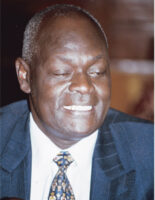
Henry Kosgey – The every party chairman

Kosgey was a loyal aide to President Daniel arap Moi, evident in the six Cabinet positions (including Transport and Communications, Culture and Social Services, Education, and Cooperative Development) he served in the Kenya African National Union (KANU) government between 1979 and 2002. “I was a good student of Moi and loyal to the government … Without him, I would not have ventured into active politics,” Kosgey said in March 2020 in an interview with the Daily Nation. And according to Wikileaks Cables, “although (Kosgey) is a member of the Nandi sub-tribe and not (former President Daniel arap) Moi’s Tugen sub-tribe, he was for many years a close and trusted associate of the former president.”

Understandably, Kosgey chose to stick with the Orange Democratic Movement (ODM) leader Raila Odinga although after 2008, the political ground in his Kalenjin land had shifted towards William Ruto, who had fallen out with ODM leader.

Yet it is instructive to note that this loyalty has never taken away his ultimate survival instinct. He’s loyal, yes. But he is also a politician deft at reading the signs of the time, as it were. Once KANU was defeated at the elections in December 2002, Kosgey ditched his cradle political party and opted for the nascent ODM at a time his mentor, Moi, was supporting his successor Kibaki.

Kosgey, like Kibaki, is composed and carries a gentleman’s mien; and both are steely inside, so to speak. Kosgey isn’t the swashbuckler of Kenya politics, but he is felt everywhere and those aspiring for political posts often scramble to seek his blessing or support — or even to be just seen as friendly with him. Just like Kibaki, Kosgey became a Member of Parliament (MP) at a nascent age of 32. Both quit their jobs — Kibaki from Uganda’s Makerere University and Kosgey from Kenya Breweries Limited — to plunge into the murky world of politics. And both endured for a long time in politics, and are now listed among Kenya’s longest-serving MPs (Kibaki 50 years; Kosgey 29 years).

Kosgey is among a handful of politicians privileged to have served both in the Moi and the Kibaki governments as Cabinet Ministers. Others include Odinga, Musalia Mudavadi, Kalonzo Musyoka, Simeon Nyachae, William ole Ntimama and Dalmas Otieno.

He is among the Opposition leaders who came out strongly to support the healing of the country even as the embers of the 2007–2008 post-election violence simmered. He was quick to mobilise in March 2008 the ODM party’s 107 MPs to endorse the handshake between Kibaki and Odinga. The Daily Nation captured this when it stated in May 2008: “the minister (Kosgey) called on Kenyans to forget the events of early this year and coexist as brothers and sisters”.

At the time, Kenya was heavily polarised following the divisive December 2007 General Election. But Kosgey chose to remain middle-of-the-road although he was in a camp clearly opposed to Kibaki’s win. Indeed, his respect for a person he once worked together in the Moi Cabinet was apparent. And Kibaki had a fondness for Henry Kosgey and wanted to have him in the Cabinet. So much so that in September 2006 the Head of State sent emissaries to Kosgey (then serving as KANU vice-chair) to convince him to join the National Rainbow Coalition (NARC) government. Kosgey turned down the offer.

“Having previously served in various ministries for over 15 years, I challenged them (emissaries) to state the specific ministry (President) Kibaki had assigned me. Of course they had no answer,” he confided in a September 2006 interview with the Sunday Nation. “I turned down the Cabinet offer because it was selfish and the wrong thing to do. I challenged the emissaries to instead negotiate through ODM or Uhuru (the then KANU chairman).”

The newspaper reported, thus: “the truth is that Kosgey and President Kibaki have come a long way and it is not surprising that he was targeted. He is in relatively good books with the past (retired President Moi) and present (Kibaki) leadership of this country. Apart from Kibaki with whom he worked closely and suffered in the infamous 1988 mlolongo (queue) voting system (Kibaki was dropped as VP), the MP coincidentally served as Minister for Education (1999–2002) with the Vice-President, Mr Moody Awori, as his deputy.” (Note that Moody Awori was Kibaki’s Vice President in 2006.)

And at times, despite the cordial relations, they sometimes disagreed — as happened in March 2007 just when Kenya was preparing for the General Election. Kosgey, as ODM-Kenya interim chairman, was among the first Opposition leaders to ask for calm and welcomed President Kibaki’s acceptance of minimum Constitution reforms. But he did this with the rider, reported in the Daily Nation: “We hope he is genuine and not hoodwinking Kenyans as he has done in the past.”

KANU’s defeat nearly ended Kosgey’s political life. But the 2005 change-the-Constitution moment gave him a lifeline; he joined forces with those opposed to a draft prepared by the Kibaki government. This camp, known as ‘Orange’ (the electoral symbol of those opposed the draft), included Uhuru Kenyatta, Odinga, Ruto, Musyoka, Mudavad, and Najib Balala. This camp defeated the draft in the ensuing referendum, and formed the ODM lobby that later became a political party, ODM-Kenya.

Kosgey became the ODM-Kenya interim chair. This gave him a lifeline, resulting in his re-election as Tinderet Constituency MP in the December 2007 elections on an ODM ticket after ODM-Kenya split following a disagreement between Odinga and Musyoka.

Given his top position within the party, he was in April 2008 appointed Minister for Industrialisation in the expanded 40-member Cabinet. His Assistant Minister was Ndiritu Muriithi. He oversaw the implementation of Vision 2030 (Kibaki’s signature legacy development plan) and the importation and manufacture of quality products. He was in charge of 10 parastatals under the Ministry.
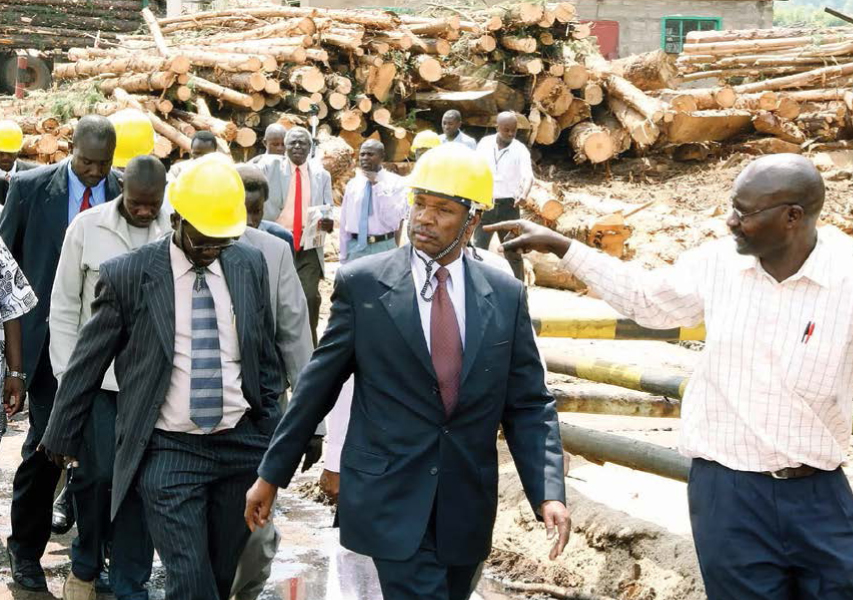
Ideally, as the Minister of Industrialisation, Kosgey was in charge of the formulation, coordination and implementation of the national industrialisation policies and industrial property rights, provision of an enabling environment for domestic and foreign direct investment, promotion of the development of industrial tooling and machining, industrial research and development, innovation and technology transfer, and the initiation and promotion of industrial programmes and projects, among others.

David Nalo was the Permanent Secretary (PS) and was succeeded by Kibicho Karanja. Notably, the Ministry of Industrialisation was hived off from the Ministry of Trade and Industrialisation which had been led Mukhisa Kituyi. Kenyatta became Minister for Trade.

In 2009 Kosgey attempted to ban the importation of auto-spare parts after the Kenya Bureau of Standards (KEBS) argued that used vehicle parts were the cause of the many road accidents recorded at the time. Although the move was supported by the Kenya Motor Industry Association which described it as “political courage and technical good sense” in an interview with the Sunday Nation, a section of influential car dealers strongly opposed it. Since then, there have been various attempts to outlaw the importation but all have come to nought.

That apart, he was central to the establishment of the Anti-Counterfeiting Agency.

But more important, Kosgey superintended the initial implementation of Vision 2030, one of Kibaki’s major economic pillars that continue to define Kenya’s road to industrialisation. He was also the architect of the Memorandum of Understanding between the Kenya Industrial Estates (KIE) and the National Small Industries Corporation of India, to assist local entrepreneurs benefit from business incubation, technology transfer, marketing and training.

He encouraged manufacturers to take advantage of the international market by embracing unique packaging. “Kenya has merely scratched the surface in international trade. We need to move to the next level by branding Kenyan products using packaging as a key differentiator … We are not able to differentiate our products from South African or Egyptian based companies because we are in a comfort zone,” Kosgey said in an interview with the Daily Nation in November 2008.
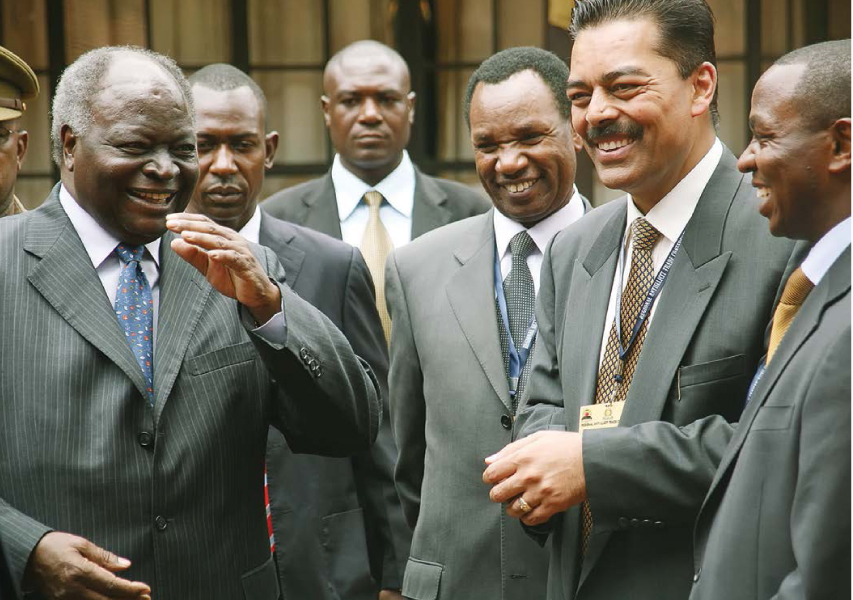
However, during his tenure as Minister, his performance wasn’t extraordinary, perhaps because party matters took up the best of his time and effort. In October 2009 he was summoned by the Parliamentary Committee on Implementation for failing to achieve on his Ministry’s goals. And in February 2008 he was interrogated over a scandal (irregular sale of subsidised maize) that also implicated fellow Cabinet colleagues, Ruto and Naomi Shaban (Special Projects) and some 19 MPs.

Three years later, he was dropped from the Cabinet over accusations of facilitating the importation of cars whose age was over the limit set by the government. However, the President reinstated him seven months later after he was cleared of the charge.

Yet it is instructive to note that Kosgey, during the tail-end of his tenure as Minister had frosty relations with Assistant Minister Muriithi, PS Kibicho and some parastatal heads. The toxic atmosphere in the Ministry was evident in October 2010 when Kosgey’s appointment of Joseph Kipketer Koskey as the chief executive of KEBS was opposed by Murithi, the PS, and the National Standards Council.

As it were, Kosgey has been there, seen it all. He’s been accused of corruption, even hauled to the world’s top criminal court. Yet he has never been convicted.

Indeed, his accusers have failed to account for their claims, and 41 years since he joined Parliament, he is yet to be convicted of the myriad corruption allegations often arrayed against him — in particular that he embezzled funds earmarked for the 1987 All African Games, and that he superintended over the collapse of the Kenya National Assurance Company.

Wikileaks, for instance, claims Kosgey defrauded the government, grabbed public land, was involved in post-election violence, and lacked transparency in exercise of his job as Cabinet Minister.

In 2008, American authorities sought to declare Kosgey persona non grata. The US Ambassador to Kenya at the time, Michael Ranneberger, wrote to Washington, thus: “there is strong evidence that Kosgey has consistently engaged in official corruption from at least 1987 to the present while holding a variety of ministerial and parastatal director positions, and that corruption has had serious adverse effects on both U.S. foreign assistance goals and on the stability of Kenya’s democratic institutions,” according to Wikileaks.

He was in January 2011 forced to resign as Industrialisation Minister following accusations of abuse of office — that he facilitated the importation of hundreds of cars that were older than the statutory limit of eight years. “I wish to state that my actions in this matter are above reproach. I have committed no wrongs,” he told a press conference. However, the accusations fell flat and he was reinstated to the Cabinet in August 2012.

Kenyans recall the image of Kosgey in the dock at the International Criminal Court (ICC) based at The Hague, the Netherlands, answering charges of crimes against humanity following the post-elections violence of 2007–2008. The ICC Prosecutor Luis Moreno Ocampo had described Kosgey as a “principal planner and organiser” of violence against supporters of the Party of National Unity, as reported by Al Jazeera.

The charges were dropped. However, the arraignment in the global court marked Kosgey’s lowest moment in his political life. In an interview with the Daily Nation after ICC cleared him of the charges he stated: “facing crimes against humanity charges is traumatising. It does not take a weak man to go through. I will not wish anybody to go through that experience.”

Kosgey is very resilient — easily responding to the politics of the time and discarding any tag that risks holding him accountable for past misdeeds. In essence, he’s a survivor in his own right.

For instance, even after serving as KANU vice chair and a Cabinet Minister in the KANU government, he would later in July 2007 label the party as “an empty shell of a bee hive”, according to the Sunday Nation. And when Kibaki’s NARC party defeated KANU in the December 2002 General Election and Moi relinquished its leadership, Kosgey and Nicholas Biwott (a powerbroker during the KANU regime) fought over control of KANU in 2004–2005.

Although he had been a key cog in Moi’s administration, Kosgey immediately made an apparent about-turn during the reign of Kibaki. At one time in February 2007, he clashed with the then KANU factional leader Nicholas Biwott, who was always Moi’s right-hand man. “Biwott, why are you reducing the Kalenjin community to the culture of hand-outs instead of empowering them economically? This must stop, and let the community chart its own political destiny,” Kosgey told Biwott Iten.

Kosgey’s leadership role in ODM was essentially to make it a national party. He ensured that almost every part of the country was represented in ODM’s top leadership. He was very influential in moulding ODM to be as we know it today, always at the centre of the party’s move to counter any policies and laws deemed repressive and oppressive.

In another survival tactic, Kosgey was a key player in the implosion of the ODM-Kenya, in 2007. Despite being the interim chairperson, he sided with Odinga who was battling Musyoka for the party..

Notably, Kosgey has been a key figure in Rift Valley region politics, along with Ntimama, George Saitoti and Ruto. Kosgey has fought and won many battles in his 30 years in Parliament. In fact, if he had not lost his seat during the 1988 General Election, he would have been an MP for 34 unbroken years, equivalent to 7 electoral cycles. But now, how he reinvents himself after twice failing to win an electoral seat — Senator in 2013 and Governor in 2017 — is anybody’s guess.
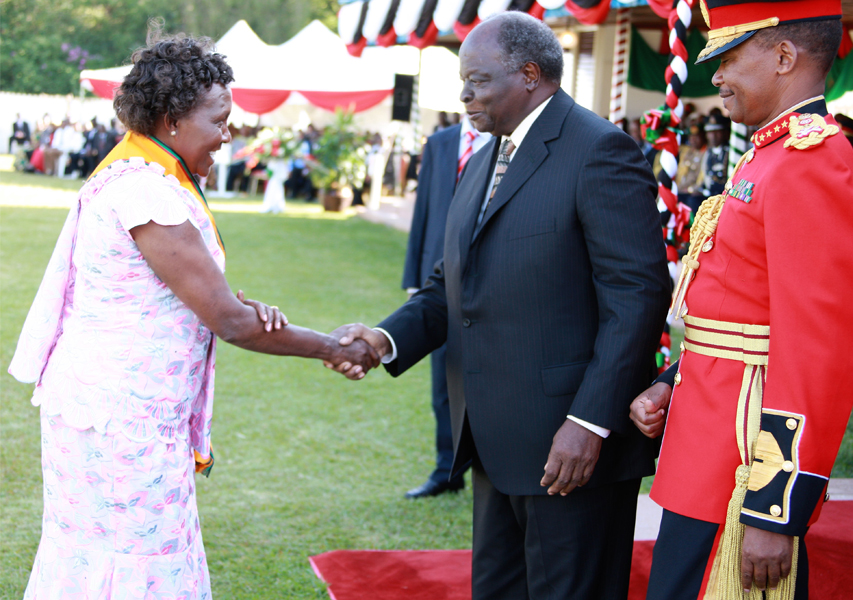
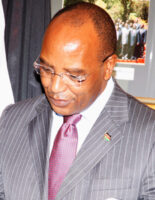
Hellen Sambili – The quiet pioneer

She joined 15 other women elected to Parliament in the December 2007 elections, after she swept aside five male candidates and made it on a ticket of an almost inconsequential political party, the United Democratic Movement (UDM). Instructively, since its establishment before the 1997 General Election, Mogotio Constituency has been dominated by the independence political party — the Kenya African National Union (KANU) — and was therefore considered a KANU zone.

Yet this feat by Sambili could appear offhand, if looked at casually and not placed in perspective. One, she had only months earlier decamped to the UDM after narrowly losing in the Orange Democratic Movement (ODM) party nominations. Two — and perhaps more important — she rode to victory in an election considered the most violent in Kenya’s history. An estimated 1,500 people died and hundreds of thousands were displaced from their homes in the violent aftermath of the disputed elections.

Women and children bore the brunt of the violence. And this explains why Sambili’s win could be regarded as epochal in a sense — she defied the violence and electoral bribery, and humbled Kenya’s patriarchal custom to win, becoming the first Tugen (a subset of the Kalenjin ethnic community) woman elected to the National Assembly Sambili was the sole UDM legislator in the Tenth Parliament (2008–2013).

This achievement, as it were, marked Sambili’s tumultuous journey in politics, nay government. But more importantly, as will be seen later in this profile, it also underlined President Mwai Kibaki’s humility, resilience and inherent ability to navigate egos in the coalition Cabinet of the Government of National Unity.

To be able to lead such a government comprising the Opposition and the ruling party, one needed to be resilient, humble and compassionate, yet firm. From decades in government and in politics, Kibaki had ably developed the requisite father-figure image that came in handy in managing a jumbled Cabinet during his tenure as Kenya’s third president.

To succeed in this situation, Kibaki had to plan carefully and, above all, be surrounded by competency.

Indeed, as a protégé of the first President, Jomo Kenyatta (1963–1978), Kibaki was conscious of the fact that people are appointed to key public positions on merit, character, competence and on the strength of their potential to achieve. Yet again, he knew that you have to empower the less privileged to also become part of the greater bureaucratic ecosystem. This is the only way you can reap maximum benefit from people.

Sambili’s standing in society came in handy as Kibaki — and his coalition partner, Prime Minister Raila Odinga — weighed Cabinet appointment options. Before joining politics, Sambili (born in 1959) was an education scholar at Egerton University, one of Kenya’s public universities. She had taught in high schools (including Moi High School, in Kabarak), where she shaped careers and the minds of the youth, and prepared them for the future.

It is against this background that she was, in 2008, appointed the Minister for Sports and Youth Affairs in the Government of National Unity Cabinet, joining 12 other women chosen as either full ministers or assistant ministers. Others included Charity Ngilu (Water and Irrigation), Sally Kosgei (Higher Education, Science and Technology), Martha Karua (Justice, National Cohesion and Constitutional Affairs), Naomi Shaban (State, Special Programmes), Esther Murugi Mathenge (Gender and Children’s Affairs) and Beth Mugo (Public Health and Sanitation).

A greenhorn, both in politics and political administration, Sambili found the going a bit tough when she was in charge of the Sports and Youth Affairs docket. As discussed later in this article, her successes in this position were peppered with controversies and slipups, forcing President Kibaki to step in to restore order at one point. In August 2010 the President moved Sambili to the East African Community (EAC) Affairs portfolio. This new development put her on a new tangent, for it was seen as a promotion.

Not long after, she assumed another responsibility in an acting capacity — that of Higher Education, Science and Technology — following the suspension of William Ruto from the Cabinet over corruption allegations. It was a case of the ‘rise and rise’ of Sambili, the first Tugen woman to be an MP and a Cabinet Minister.

The fact that she held two substantive Cabinet positions at the same time was evidence of the trust the President and his coalition partner had in her, and of her capability as a leader. The two leaders had the option to choose from 40 ministers and 52 assistant ministers but instead settled on Sambili. However, there’s a subplot to her intriguing story. Sambili is a political dribbler adept at changing or transforming her playing style to suit a particular game, even scenting trouble or good tidings from afar. She has a knack for positioning herself for convenience and for the impossible.

Once in Parliament following the December 2007 elections, she appeared to go lukewarm on her political party and instead appeared to align herself with ODM. This political move catapulted her to the Cabinet that drew members from the Odinga-led ODM and President Kibaki’s Party of National Unity (PNU). And that wasn’t all. Despite owing her political career to Daniel arap Moi’s family — she considered Moi a mentor — Sambili switched her allegiance to Ruto who then wasn’t on good terms with the retired Head of State. She also later dumped Odinga, who had facilitated her appointment to the Cabinet.

And in 2016 KANU, the party that sponsored her re-election, threatened to kick her out following her dalliance with the ruling Jubilee Alliance. “We all know she has a rich history of party hopping and we were not surprised by her latest move to join Jubilee,” said the Mogotio Branch Secretary, Mr Ezekiel Cheruiyot, according to an article in the Daily Nation. Instructively, Sambili had ditched UDM, the party that sponsored her to Parliament in 2007 and moved to KANU, the vehicle she used to retain her Mogotio Parliamentary seat.

Indeed, Sambili’s tenure as Sports and Youth Affairs Minister was very colourful — and tumultuous — in equal measure. She often met and welcomed heroic athletes on their return home at the Jomo Kenyatta International Airport (JKIA). She was at the airport in March 2010 to welcome back the national cross-country team that had swept all the medals at the World Cross Country Championships in Bydgoszcz, Poland.

“We are extremely happy to have these kinds of results and this is a great day for Kenya,” remarked Sambili, according to a report in the Daily Nation. “There’s need to revise (upwards) the bonuses these athletes are getting.”

The Minister, in conjunction with the United Nations Children’s Fund (Unicef) and a group of local artistes, released the video for the song Umoja, that encourages the youth to foster peace and understanding in the country through dialogue..

During her tenure, Sambili proposed the official age definition of youth be raised from 30 to 35 years. In March 2010 she organised a summit on youth empowerment that was opened by President Kibaki.

However, she didn’t have good working relationships with her juniors at the Ministry of Sports and Youth Affairs. At one time in July 2009, a disagreement with her two assistant ministers (Kabando wa Kabando and Wavinya Ndeti) had to be referred to President Kibaki for arbitration. She also had a tense relationship with her Permanent Secretary (PS), Kinuthia Murugu.

Apart from this, Sambili’s decisions and appointments were continuously challenged. In May 2009 the Sports Stadia Management Board countered her decision to appoint Benjamin Sogomo as its chief officer.

These divisions and lack of coordination angered Kibaki. By November 2009, he was fed up and said as much. “If we are to move forward as a united country, the government position should be seen as superior and overriding individual views and party positions,” the Daily Nation reported Kibaki as saying. Odinga, pressed down by dissent at the hands of Ruto, and Sambili’s failure to cultivate a cordial working relation with her juniors, also weighed in, thus: “We are yet to see a seamless working relationship among ministers, assistants and permanent secretaries … In a number of ministries, ministers still refuse to delegate duties to their assistants and (permanent secretaries) still refuse to refer to their ministers”.

The reprimand by the two followed a closed-door session between the assistant ministers and President and Prime Minister in which Sambili’s conduct was “discussed at length”, the Daily Nation reported.

At times, Sambili let her political inclination get in the way of work, best evident in her refusal to have the Nyayo National Stadium renamed to Coca Cola National Stadium when this soft drinks’ company proposed to funding the stadium in exchange renaming rights.

Although the deal fell through, Kibaki supported Sambili and ordered that the word ‘Nyayo’ be retained. Despite the President’s public spat with Moi, in particular during his days as Vice President, Kibaki always respected the elderly Moi and never antagonised or humiliated the old man. And this is to do with his loyalty to friends and foes, and to his principles and philosophy.

Some analysts believe Sambili’s missteps at the Ministry of Sports and Youth Affairs arose from the fact that she lacked prior experience in political administration, and that she wasn’t savvy as a politician. This may explain the absence of such controversies in her later ministerial positions.

During her tenure as acting Minister for Higher Education, Science and Technology, Sambili stressed the role of research in economic development. “A major contribution of university education to national development is through conducting research and ensuring utilisation of research findings,” she said in February 2011, as reported in the Daily Nation.

Instructively, Odinga and Kibaki appointed her to this position, fully recognising that she is a scholar. No wonder, she strived hard to help streamline this sector. “Under the current law, no institution should offer any education and training services without prior inspection and registration. In addition, no person should purport to be managing an education or training institution without approval in writing by the minister responsible for the sub-sector of education and training,” the Daily Nation reported her as saying in November 2010.

She moved to streamline the higher education sector by closing what she perceived as bogus colleges. She closed 400 middle-level colleges.

As stated earlier in this profile, Sambili has a knack for scenting fortunes. She probably was the first government official to recognise the role China could play in Kenya’s economic development. That was as early as 2010, when she served as the Minister for East African Community. For example, in January 2011 she appealed to the Chinese to assist the region in infrastructural development. “Possible areas of partnership include development of renewable power generation projects such as geothermal and wind plants and cross-border electrification power interconnection,” she said when she hosted a visiting Chinese delegation in her office, and reported in a story published by Capital Business.

Sambili and her PS David Nalo pushed for respective national budgets of EAC member countries to be read concurrently, on the same day. Captial Business reported these sentiments. “This is an issue that we have to deal with squarely because the Constitution is very ambitious with very good provisions but in certain sections, we have a challenge,” the PS said. And according to Sambili, “the (Kenyan) budget should be implemented within the framework of EAC and secure the spirit of the Constitution which is to deliver services to the people in accordance with the Bills of Rights”.

Despite her sterling performance at the EAC Affairs Ministry, Sambili found herself in the political crossfire between arch-rivals Odinga and William, and as they say, when elephants fight, it’s the grass that suffers. That’s how she was edged out of the Cabinet in August 2011, alongside Ruto. Her position was taken up by Musa Sirma. Media analysts claimed she had failed the loyalty test.

In 2013 the Sunday Nation branded her “the iron lady of Kalenjin politics”, after she defied the United Republican Party (URP) wave and retained her seat on a KANU ticket after dumping UDM. “In a region where women have generally shied away from competitive politics, Sambili has remained an example and a role model for aspiring young women politicians,” the Sunday Nation said.

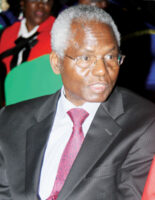
Githu Muigai – Doyen of circumspect phraseology

Muigai is a founding partner at one of the most successful indigenous law practices in Kenya, Mohammed Muigai LLP, where his prowess was undisputed. His legal scholarship, already well developed at graduation from the University of Nairobi in 1983, was solidified at Columbia Law School where he earned his Master’s in Law. Upon returning to Kenya, he taught at his alma mater and grew his legal practice, rapidly establishing himself as an authoritative scholar, consultant and practitioner.

As his professional stature rose to commanding heights, Muigai found himself inexorably drawn to public affairs locally and globally. In 2000, he was selected to the Constitution of Kenya Review Commission (CKRC), a panel of eminent (mainly legal) scholars and intellectuals tasked with delivering Kenya’s first serious attempt at a fundamental constitutional overhaul. Undiminished in the company of colossal luminaries, Muigai made his mark, distinguishing himself as a patient, incisive and effective dissector of delicate and controversial issues.

After his appointment to CKRC, he went on to earn a PhD in Law in November 2002. In 2008 he was appointed a United Nations’ Special Rapporteur on Contemporary Forms of Racism, Xenophobia, Racial Discrimination and Related Forms of Intolerance. Muigai also served a term as a judge of the East Africa Court of Justice between 2008 and 2010.

He entered government, therefore, as a celebrated and accomplished professional, more than suited for the office of Attorney General. Indeed, he took over his new job with relish, continuing the work of transitioning the country into the new constitutional dispensation through conscientious stewardship of the evolving statutory and policy framework. As a captivating public orator, he was also much in demand as a speaker, panellist and rapporteur for professional gatherings across many sectors.

Believing that example and teaching are effective means of influencing organisational culture and developing institutional leaders, Muigai brought a law firm approach to case management at the State Law Office, treating counsels as partners or associates, depending on their seniority. He convened and led regular strategy meetings to develop plans for approaching various tasks such as negotiations for treaties, litigation in court and legislative drafting.

The previously impersonal bureaucratic approach to case management had led to lethargy, disengagement and disillusionment among counsels, creating fertile ground for indolent, negligent and often corrupt (mis)management of cases. According to Muigai, these were classic signs of disengagement resulting from low to absent motivation and an unsupportive, if not toxic, workplace. Lawyers in private practice took lethargy at the State Law Office as a given and saw opportunities to strike big wins with little or no resistance.

The impact on the public purse was tremendous, and national interests suffered immensely. Parliament and the Auditor General frequently lamented about negligent collusion costing the exchequer billions of shillings in much-needed public funds, and the country became used to revelations of unsuitable contracts and agreements binding the State to expensive, illegal arrangements. Likewise, the country’s management of remedial litigation – when a beneficiary to such contracts sought to extract their pound of flesh, or when Kenya decided to terminate the improvident arrangements altogether – was uninspired, lethargic to the point of collusion, incoherent to the point of sabotage and uncoordinated to the point of negligence.

The number of high-profile cases lost by Kenya to shadowy entities in pursuit of questionable gain, locally and abroad, is large. Although the Goldenberg and Anglo-Leasing scandals were the high water mark of institutionalised corruption aided and abetted by commission and omission from the State Law Office, they were by no means exceptional. The public, civil society, Parliament, commissions of inquiry, investigative agencies and international partners had long become accused to the torrential succession of sordid conspiracies that could have been forestalled through diligence, vigilance and professionalism at the Attorney General’s Chambers.

Everyone was therefore quite surprised by the charge of battling troops who livened up proceedings and raised the standard of performance in and out of court when Muigai took over as AG. His management approach accompanied deeper reforms to make Sheria House – which houses the State Law Office and the Attorney General’s Chambers – the hub of efficient service delivery in keeping with the AG’s position as the titular head of the Bar, chief legal adviser of government and provider of a wide range of public legal services.

Sheria House has always been an understated institution. Its importance to the institutional health and integrity of the country is not widely acknowledged. Certainly, it is not politically constructed as indispensable the way, for example, internal security is. Yet Sheria House is where the Public Trustee, and the registrar handling companies, societies and marriages, counsels handling litigation, treaties and agreements, and legislative drafting are domiciled.

Intestate succession, bankruptcy, liquidation, cooperatives, clubs, trusts and civil nuptials are some of the critical functions handled at Sheria House on behalf of the government and its citizens, to facilitate the smooth functioning of State, society and its engine, the economy. These functions exist alongside advising and representing the government in all legal matters

Leading by example, Muigai inspired many Kenyans, especially practising and aspiring lawyers, by personally appearing in court to argue cases at the High Court, Court of Appeal and Supreme Court. In particular, his meticulous presentation, parsimonious sparring and rhetorical flamboyance were impressive. As a veteran of the Kenyan Bar, his successful forays into courtroom drama elevated him to the venerated realm of doyens of his profession.

In international litigation, Kenya’s stature was elevated by Muigai’s intellectual authority, courtroom fluency and eloquent persuasion as he represented the country before international courts and tribunals regionally and farther abroad.

Boldly departing from a practice of hiring international lawyers to represent Kenya, the AG established a practice of assigning the work in-house. He generously shared the spotlight with his counsels and empowered them to grow and enrich their international law practice.

Another unique legacy of Muigai at the State Law Office is the appointment of states counsel to take charge of corporations as CEOs and serve on boards. This strategy was a bold signal that the Attorney General’s Chambers had ample space for career growth.

Muigai strived to strike a balance between his technocratic and managerial imperatives, and the need to surmount political tides whose continuous flux rocked his ship within and without. Freeing his chambers from the captivity of collusive tendencies with outside players both in the public and private sectors was always going to be challenging.

Influential actors had substantial interests in the favourable (mis)management of cases at the chambers. Pressure, inducement and bribery were deployed to compromise officers at various levels. Powerful offices in government were likewise enlisted to procure advantageous concessions out of the AG’s Chambers. These entities stood to gain stupendously out of such collusions and were therefore willing to invest all the effort necessary to have their way. Already, many had made a killing out of such behaviour and had resources at their disposal to buy their way.

Managing politics and reforming institutions inevitably entails coming to grips with corruption. So entrenched is corruption in the public sector that it is basically institutionalised. Any reform attempt must therefore carefully tip-toe around the interests of powerful cartels. As former Permanent Secretary John Githongo famously said, corruption fights back. Muigai’s salutary interventions at Sheria House ran directly into the way of these cartels. Predictably, they responded harshly through their myriad tentacles in government and politics. For a man who had endured public vetting, Muigai’s sudden political challenges were mystifying.

Appeasing the gods of politics can be a full-time occupation for public managers. Managing internal dynamics of a sprawling and influential organisation can be equally taxing. Add to this the spectral hand of virtually omnipotent and amorphous interests who bestride all boundaries between local and international, public and private, political and business, legitimate and illicit activities, and the task is fundamentally Sisyphean.

A point came, therefore, where astute political management went hand in glove with appeasing corruption cartels, and choices had to be made. For Muigai, this was antithetical with his reform agenda and the project of restoring the State Law Office as the lynchpin of integrity in the administration of the public’s legal interests. His ethical inflexibility and inability to innovate interpretation and application of the law to accommodate grey areas began to irritate, then antagonise impatient and formidable actors.

Ever the juggler, he braved on, empowering his partners, associates and pupils at his firm to become effective advocates for the State and government of the Republic of Kenya. In the era of implementation of the new Constitution, the State Law Office began to acquire the image of a modern, responsive, effective and accountable institution. The registries were digitised, and the tradition of missing files was finally retired. Kenyans could now find information on matters recorded at Sheria House online.

States counsel began to give private advocates a run for their money and internationally, Kenya’s legal cases turned out in Kenya’s favour in unprecedented numbers. The rule of law, integrity, efficiency, transparency and accountability stopped being the exclusive vocabulary of civil society activists and the Anti-Corruption Commission as State lawyers embraced and zealously advocated them as well.

Although Muigai applied himself to the mastery of the technocratic imperative of balancing management and appeasing political interests, it did not come easy to him, and it showed. Institutional politics is just politics, and requires the performance of certain rituals to get on the right side of various operatives in order to grease the wheels of progress and service delivery. The optics of glad-handing and elaborate and public pledges of fealty contradicted his sense of professorial dignity.

Add to all this the fact that Muigai was literally a stranger in the State Law Office and government. All the AGs since independence had been Alliance High School old boys, as had been many solicitors general. They also tended strongly to the pedigree of the typical independence era elites. His significantly different background meant that Muigai shattered this archetype. His genteel mannerism and turn of phrase belied a scrappier, battling drive that had stood him in good stead on an alternative academic and career path, which converged with the beaten track only at the university. With this came a certain independence and ability to retain a disinterested posture and scholarly abstraction within institutions deeply embedded in long-standing networks of reciprocity. Unlike his predecessors, he did not possess the inclination to conduct politics in the elite networks along several strands.

This independence often manifested in awkward ‘body language’ but also earned him grudging respect, for it was felt that he could stand his ground whenever the Executive desired to exceed its constitutional and statutory constraints. Yet because he could not vocally contradict or criticise government, his reticence ended up being criticised as complicit awkwardness rather than principled hesitancy.

The transitional provisions of the constitutions required government to pass a raft of legislations for the implementation of the new dispensation, work that commenced with Wako and was ongoing when Muigai was appointed. The Executive and its bureaucracy, faced with onslaughts that chipped away its immense power, began to react. Legislative proposals started to carry provisions whose effect was to consolidate a powerful Executive and claw back on the freedoms of the Bill of Rights, as well as the separation of power. A broad coalition of stakeholders mobilised to resist these changes, and government was widely criticised as retrogressive. In the eye of this storm was Muigai, who was then viewed as doing nothing to reassure concerned stakeholders.

This criticism spilled through to allegations of extra-judicial excesses in the security system, widespread corruption in the heart of the Executive and perceived impunity and human rights abuses. Muigai was ultimately unable to satisfy critics that he was doing anything near enough to call government to order and entrench the Constitution.

The bitterly contested 2017 presidential election led to ill-tempered litigation before the Supreme Court. The petitioner, Raila Odinga, who had come quite close to winning the contest, alleged fraud, malpractice and other irregularities in his bid to nullify Uhuru Kenyatta’s victory. Several government institutions were implicated, and Muigai appeared on their behalf, conducting a blistering, masterful rebuttal of Odinga’s allegations.

Odinga’s petition was dismissed, to the disappointment of nearly half of the country’s voters and a tremendous coalition of interest groups who were traditionally allied to Odinga’s politics. Coupled with his political insularity, this blistering onslaught from vociferous antagonists assaulted Muigai’s position intensely. A moment of triumph and vindication instead opened doors to the opening act of an uneasy and long drawn out conclusion of his tour of duty as Kenya’s Attorney General.

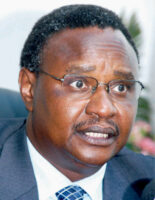
Gideon Konchella – The eagle that dared

Immigration Minister Gideon Konchellah, a former military officer, surprised friend and foe alike when he went before a Commission of Inquiry to disown the so called Artur brothers who he described as “dubious international crooks”. Observers expected him to cover up the situation to save the government’s face.

The saga came to light in early 2006 when Artur Margaryan and Artur Sargsyan entered the country claiming to be businessmen and management consultants. But none of that was visible as they went about town partying with abandon and breaking the law. Though landing from Dubai, they said they had come from Armenia and claimed to have blood relations with the Kenya’s Prime Minister. Their passports, however, were only stamped Dubai as their country of origin. It later would emerge they operated from Dubai but travelled on fake papers from their country of origin, Armenia.

The spotlight descended on them when the offices of the Standard Media Group at I & M building in the city centre, were raided by hooded men said to have been led by a Caucasian-looking man. Opposition Leader Raila Odinga told Parliament he had impeccable evidence it is one of the Artur brothers who had led the attack at the media house.

The straw that broke the camel’s back came when the two brothers stormed Jomo Kenyatta International Airport (JKIA) brandishing guns and threatening airport staff and passengers. They were immediately arrested and deported back to Dubai.

President Kibaki appointed a Commission of Inquiry to establish the truth of the matter. The commission was headed by former Commissioner of Police Shedrack Kiruki.

Appearing on day one of the commission hearings was the Cabinet Minister for Immigration, Konchellah. Going by past experience, everyone expected the minister would go round in circles and cover up for the government officials who either let down their guard or were compromised into allowing the Artur saga to happen.

However, Minister Konchellah was disarmingly honest when he appeared before the Commission of Inquiry. He narrated the facts as he knew them and — more importantly — admitted that mistakes had been made and lapses had happened.

He began by describing the Artur brothers as ‘crooks’ who had entered the country on forged documents. He also readily admitted that there could have been laxity or complicity in government systems for the mistake to happen. The Minister said appropriate action was taken as soon as the facts came out in relation to the saga.

Asked by the lead counsel, Dorcas Oduor, when as Minister he came to know about the duo, he said he first heard about them while on an official duty in western Kenya when members of the press accosted him on an issue that was in the media that morning. “I asked my officers about it and they said these were people who may have come from the former Russian republics, but said they didn’t have full information because the files were in Nairobi,” he told the Inquiry. “So, I told the media the said foreigners could have come from Armenia or Czech. The press jumped on it and said that I had categorically stated they were from Czech. When I returned to Nairobi, I checked out the facts and called a press conference to clarify. I said the two were nationals from the republic of Armenia and not Czechs as earlier indicated,” he told the Inquiry, and regretted that the media houses deliberately left out the clarification yet they had erroneously introduced the Czech angle.

He told the Inquiry he personally took charge on the matter when the Principal Immigration Officer informed him the Commissioner of Police had requested that four people — Artur Margaryan, Arthur Sargsyan Arman Damidri and Alexander Tashchi — be deported for security reasons. Pursuant to Section 3 (1) (f) of the Immigration Act, the Minister considered the information and facts given and immediately requested the Principal Immigration Officer to prepare the required deportation orders. The papers were completed and the Minster signed them the same day.

The Minister said though investigations established the Artur brothers were Armenian citizens, they were deported to Dubai as that is where they had come from before landing in Kenya.

The Minister went further to tell the Inquiry that the brothers were “dubious international criminals”, but candidly admitted they could only have entered Kenya and stayed for several weeks with the knowledge and/or connivance of “criminal elements” in the government. He promised prompt action would be taken on those found to have abetted the serious breach of law and security.

He was particularly angered that the men could evade checks and make their way into an international airport carrying guns and, to rub it in, brandish the weapons when a Cabinet Minister was within vicinity of the facility. Trade Minister Mukisha Kituyi happened to have just arrived from official duty abroad at the time of the incident.

A few weeks after the Artur drama, Tom Cholmondeley, a descendant of the colonial settler Lord Delamere, killed an innocent stonemason, Robert Njoya, at the Delamare family’s expansive Soysambu ranch in Naivasha. The act sparked national outcry and demands that action be taken on the spoilt, murderous son of privilege.

In an act of solidarity with common wananchi (citizens), Minister Konchellah attended Njoya’s burial. At the function, he implored the Police Commissioner and the Attorney General to expeditiously get to the bottom of the matter and dispense justice as per the law. He also called for national land reforms as a way to address land conflicts such as one that led to shooting of the stonemason on grounds that he had “trespassed’ on private land.

Previously such bold statements wouldn’t have been expected from a Cabinet Minister. But during Kibaki administration, there would be no such gag and ministers, like other citizens, could freely speak their mind without looking over their shoulders worried about who was listening.

It was on Minister Konchellah’s watch at the Immigration Department when a law, the Refugees Act 2006, was enacted to deal with issues to do with refugees in the country.

The Act established the department of refugees to handle administrative matters concerning refugees in Kenya, and gave it the mandate to coordinate activities and programmes relating to welfare of the refugees. It also provides for establishment of the office of the Commissioner for Refugees, and the Refugees Appeals Board.

Previously Kenya relied on archaic colonial era legislation, the Control of Alien Act, a hostile law that treated refugees as bothersome and unwanted intruders. The domesticated law would change that to conform to the international conventions on treatment of refugees.

Shortly after enactment of the law, Konchella addressed hundreds of refugees at the City Stadium where he outlined Kibaki’s government policy on refugees in a speech titled: ‘Kenya standing with refugees for a peaceful Africa’.

In the speech, delivered during commemoration of the World Refugee Day, the Minister said: “This is a celebration of the strength that the refugees demonstrate show daily, overcoming the challenges they encounter from the outbreak of insecurities in their countries of origin, and the hardships they have to bear and overcome in their host countries.”

Konchellah also took the opportunity to make a historic announcement that Rwanda and Burundi nationals living in Kenya would no longer be taken as refugees since the two countries had since been admitted to the East Africa Community, hence become “Kenyan brethren by adoption”.

Hardly a month in office, Konchella learnt first-hand how entrenched cartels in cahoots with corrupt government officials work to sabotage even the most well-meaning of governments.

Officers in the Ministry of Immigration and Registration of Persons informed him that about 4 million Kenyans couldn’t be issued with national identity (ID) cards because the government had run short of the security paper on which the IDs are printed.

He was informed that the shortage came about because a local company contracted to supply the security paper and paid millions in taxpayers’ money to do so had failed to deliver because it did not have the capacity to do so.

It so happened that 10 years earlier, a French company had won the contract to supply the requisite paper and been given a government office at the National Social Security Fund (NSSF) building from where to operate.

However, five months before coming to office, the Minister was told, the French contract had arbitrarily been terminated and awarded to a local company. The local company had supplied the ‘required paper’ only for the same to be rejected by the government computers which had been ‘configured’ to only accept paper supplied by the French firm. In the end, the government awarded the contract to the British company, De la Rue, a time-tested and credible establishment.

In an interview for this profile, Konchellah disclosed that in wake of the debacle with the ID issue contract, he sought audience with the President for guidance on how to handle pending contracts signed with the Kenya African National Union (KANU) regime but inherited by the Kibaki administration.

The Head of the State instructed the head of the Kenya Anti-Corruption Authority (KACA), Justice Aaron Ringera, to audit all such projects and give a report on the way forward. He further instructed the anti-corruption body to probe any possible loopholes in the Immigration and Registration of Persons Ministry and recommend how to seal them.

The report was made and handed to the Minister. In it were recommendations, including that, first and foremost, the law on registration of persons and immigration be reviewed to address emerging issues of terrorism, human trafficking and cybercrime. The report also recommended ways be sought for capturing and storing security related data. It further recommended issuance of new generation passports.

Recommendations made by Justice Ringera are yet to be fully implemented.

The three-time Member of Parliament (MP) for Kilgoris has a reputation as a come-back kid. After the 2007 debacle where two-thirds (22 out of 33) of the Kibaki Cabinet — including Vice President Moody Awori — lost their seats, Konchellah was one of only four who bounced back in the 2013 elections. Others were Maina Kamanda who elected as MP and Mutahi Kagwe and Kivutha Kibwana, who returned as Senator and Governor respectively.

Elected on Deputy President William Ruto’s United Republican Party (URP) wing of the Jubilee coalition, Konchellah dropped something of a bombshell when he told a press conference that he felt let down that the first Jubilee Cabinet announced by President Uhuru Kenyatta and Deputy President Ruto included people with a history of corruption.

“Some of those appointed are the most corrupt Kenyans I know,” he said. He regretted that much as the President may have acted in good faith, he would soon be let down by some of his nominees. True to the prediction, five of the Cabinet secretaries appointed in Jubilee’s first Cabinet would step down on graft allegations. They included David Chirchir (Energy), Felix Kosgei (Agriculture) and Kazungu Kambi (Labour). Others were Michael Kamau (Transport) and Charity Ngilu (Water Resources). Much later Treasury Cabinet Secretary Henry Rotich would follow suit.

Konchellah would be elected MP again in 2017, but faced a petition from his perennial rival, former Cabinet Minister Julius Sunkuli. He won round one at the High Court, but lost the second round at the Court of Appeal. He had the last laugh, however, when the Supreme Court upheld his election.

Gideon was born into one of the four famous families in Narok County. Others are the Ntimamas, Ntutus and Sunkulis. His uncle, John Konchellah, was in the African delegation at the famous Lancaster House constitutional talks that preceded independence for the Kenya colony. At independence, he was elected first MP of the the Narok West Constituency. He was long-serving assistant minister in both the Jomo Kenyatta and the Daniel arap Moi governments.

Before William Ntimama made his way on to the scene, the elder Konchellah was the undisputed kingpin of Narok politics, and competed for overall crown of Maasai politics with Kajiado contemporaries, John Keen and Stanley Oloitiptip.

His wife Grace Konchellah, was first Maasai lady broadcaster and for many years worked at then then Voice of Kenya (VoK). Later she was appointed cultural attaché at the Kenyan Embassy in Paris. She is author of the inspiring book: The Maasai Girl

Their first-born son, Bill Konchellah, is world famous athletic champion whose 800 m world record of 1.43.06 minutes in 1987 lasted until 2009 when it was broken by another Kenyan from Narok, David Rudisha. His younger brother, Patrick Konchellah, is also in the world charts as the 2004 Commonwealth games champion gold medallist.

So is their sister, Ruth Konchellah, who wears another hat: a warrior against female genital mutilation (FGM) and child marriages. She was in the news when she and former US Ambassador to Kenya, Michael Ranneberger, went through traditional Maasai marriage rites. The American had to travel to her rural home village at Ololchani in Transmara west and pay the bride price (enkaput) of 20 cows. The media dubbed the occasion: ‘Love served in African calabash!’

Bill’s son, Gregory Konchellah, followed in the family footsteps and is 800 m and 1500 m world athletics championships. He became a Bahrain national in 2003 and changed name to Yusuf Saad Kamel. His cousin, Felix Konchellah, son of Patrick, also has flown the Kenya flag abroad by representing the country at the 2019 world junior athletic championships in Poland.

Konchellah continues to serve the people of Kilgoris in Parliament.

George Musengi Saitoti – Blue-eyed taskmaster

Having been a long serving and successful Finance and Planning Minister, two of the Es — economy and empowerment — wouldn’t be unfamiliar territory for him. He needed to entrust the third E, education, to a veteran. And that fell on no less than George Musengi Saitoti.

During his 2002 Presidential campaign Kibaki had promised Kenyans free primary education, a proposition his political nemesis laughed off. Once he became President, he needed to prove them wrong. The taskmaster who Kibaki entrusted to deliver this promise was Saitoti, a former University of Nairobi professor.

Kibaki’s campaign had pledged to deliver free and compulsory primary education within the first 100 days of his Presidency. The pledge sounded easy on paper until you were hit by the reality on the ground. The classrooms were not enough to accommodate the numbers expected, teachers were too few for the envisaged huge number of learners and there was a lack of resources in the public coffers to facilitate the same.

However, President Kibaki was determined. And Saitoti was the man to see it happen. In Saitoti, it wasn’t just faith in his ability to perform, but perhaps also a shared background. They were both practising Catholics and alumni of Mangu High School. While Kibaki branched into economics, Saitoti studied mathematics. Both would later serve as ministers for Finance and Planning, and also vice presidents under President Daniel arap Moi, with Kibaki preceding Saitoti.

So far there is an unshared story about the two men. Just before the National Rainbow Coalition (NARC) and Kibaki came to power, the two gentlemen had made a secret pact to support the other to the hilt, when and if NARC won the election. There was a background to that. NARC was a union between the National Alliance Party of Kenya (NAK) to which Kibaki belonged and had already been picked as the presidential candidate. The other partner was the Liberal Democratic Party (LDP) where Saitoti was the senior-most front-runner in the presidential race having, like Kibaki, been a long-serving Vice President.

According to politician Joseph Kamotho, an insider in the power-sharing negotiations preceding the 2002 elections, during the final stages of the negotiations at a meeting held at the home of politician Moody Awori (later appointed Vice President), Kibaki and Saitoti met privately to agree on which of the two would be the NARC presidential candidate. Saitoti stepped aside for Kibaki and pledged his full support towards making Kibaki’s Presidency a success. For Kibaki, compulsory free primary education and later secondary education wasn’t a sudden, impulsive 2002 campaign pledge. It is what he had always believed in ever since he was main architect in writing of the 1963 pre-independence Kenya African National Union (KANU) manifesto that helped the party win elections and form the first independence government. In the manifesto, team Kibaki was resolute about the direction education should take in independent Kenya.

The manifesto read in part:

“In the past it has been the policy to educate a relatively small number of children on the grounds that the country doesn’t possess the money to build the schools necessary to accommodate all the children. We firmly believe that it is better to educate all the children in huts than to waste huge sums on expensive buildings only to cater for a part of our children… KANU is strongly opposed to the practice of eliminating students by process of examinations… Not only is this unfair to a section of our children but it brings with it numerous social problems as well as risk to security and stability. KANU believes all children should access primary education and thereafter secondary education… But for those who attain primary education and cannot go further for any reason, they should be compulsorily required to attend a technical or vocational school for two years. Such a programme would, in addition to mitigating other factors, would accelerate the pace of our efforts to create a pool of skilled and semi-skilled labour…The children of Kenya must be taught to build their motherland and to love her rather than be allowed to develop a slavish mentality under a stilted education system inherited from the colonialists…”

Thus, for President Kibaki, compulsory free primary education wouldn’t be a trial-and-error project. It would be central pillar of his transformational agenda. Within days of taking power, there was an executive order that all eligible primary school children report to the nearest public school. It didn’t matter there were not enough classrooms, desks or teachers. First report to school and leave the rest to us was the government directive, and which the provincial administration had instructions to implement to the letter.

It worked. The children reported to school. With time, the classrooms came, so did desks, and teachers. In the first place, the government allocated more resources to education from whatever meagre resources were available at the Exchequer. Then as the government sealed loopholes in tax collection; reined in tax evaders; and made it increasingly difficult for looters to steal tax-payers money, more budgetary allocation was available for the education kitty. In the meantime, Kenya’s development partners realised indeed it could be done, and chipped in as well.

At the end, Kenya’s free primary education model gained traction and world acclaim. A most celebrated success story on the experiment came from Eldoret where 84-year-old Kimani Maruge decided to go to school. His story became an international cause célèbre, and formed the basis of a Hollywood movie! And on his retirement, US President Bill Clinton when asked which man or woman he thought of as hero, he named Kenya’s President Mwai Kibaki on the account of making possible universal free and compulsory basic education in his country.

At the operational level, Kibaki must have been proud that it was Saitoti he’d entrusted to implement his flagship project.
Kibaki’s second term began on sad and regrettable note. Results of presidential poll of December 2007 had been disputed leading to widespread violence, deaths and destruction of property well into the early days of 2008. So, the first priority in his second term was to restore peace, law and order. It is regrettable that just one month of violence would claw back on most of the economic gains and prosperity of the first five years of Kibaki administration.

As part of the national healing and reconciliation, when naming his second term inaugural cabinet, President Kibaki left half of the vacancies unfilled, itself a signal that he was ready to accommodate his rivals in a government of national unity.
In the new line-up, Saitoti was named Minister for Internal Security. Once again, the President demonstrated the great faith he had in the mathematics professor.

There were indeed trying times, as the post-election violence threatened to obliterate not just the achievements of Kibaki’s first term, but literally the very fabric of the Kenyan nation as it existed. It is Saitoti Kenyans — and indeed the whole world — were looking to help the President restore sanity in the country, previously regarded as oasis of peace in a troubled region. The future looked bleak.

Once more, Saitoti didn’t disappoint. Peace and tranquillity eventually returned to the country, a situation that allowed the mediation talks to take place with former UN Secretary-General Kofi Annan as chief mediator of the negotiations team that included former Tanzania President Benjamin Mkapa and former South Africa First lady, Graca Machel.
Heading the Internal Security docket in the prevailing circumstances of the day was no walk in the park. First, it required the trust of all parties involved. In that, it helped that Saitoti had previously, and at different times, worked closely with the various parties in the post-election conflict.

Secondly, Kibaki’s new Minister for Internal Security had won the trust of the international community over the years. In 1990–1991, Saitoti had worked as chair of the joint board of the World Bank and the International Monetary Fund on Africa, while in the 1999-2000 period he served as President of the Africa, Caribbean, and Pacific/European Union (ACP/EU) group that negotiated the Lomé III development partnership agreement. In the Kenya post-election peace mediation, it also counted for something that Saitoti was a personal friend of the lead negotiator, Annan, which helped open many a door when the mediation process appeared headed for the rocks.

Eventually, the talks bore fruit.

In the Government of National Unity formed after signing the peace pact, Saitoti was retained in the Internal Security docket to the satisfaction of all parties.

In the new dispensation, he found himself with an added — and delicate — responsibility. He would be the chair of the inter-ministerial committee handling the matter of the Kenyan cases at the International Criminal Court (ICC) at The Hague in the Netherlands. It was no easy task given the high emotions attendant to the ICC matter.

Meanwhile, Saitoti also found himself with extra duties as the acting Minister for Foreign Affairs after then minister, Moses Wetangula, was requested to step down pending investigations on corruption allegations. Saitoti took it all in his stride.
Then sprang up yet another major security challenge: The terrorist grouping Al-Shabaab and their backers, the Al-Qaeda, who, so far, had made sporadic attacks on Kenyan soil. In time, these attacks became so bold that they began to appear, for all intents and purposes, like a declaration of war on Kenya. The terrorists would strike in bold daylight to kill or take hostage Kenyans and/or foreign nationals visiting the country.

Something had to be done and urgently so. The National Security Committee chaired by President Kibaki mandated Saitoti and his Defence counterpart, Mohamed Yusuf Haji, to devise a solution to the Al-Shabaab. They recommended that — for the first time in the country’s history —o a full-scale war outside Kenya’s boundaries. Before that, Kenyan troops had only been to combat zones outside the country as part of the UN peace-keeping missions.

Yet another indicator that Kibaki had trust in Saitoti to handle delicate assignments in his administration is that it was Saitoti not his defence counterpart or the military generals who in 2011, made the formal announcement that Kenya was going to war on Somali soil.

The incursion into Somali was adjudged a great success when Kenyan troops single-handedly stormed the terrorists’ hotbed of Kismayu, and started dismantling the otherwise seemingly formidable Al-Shabaab. Over time, the hitherto chest-thumping ragtag force, has progressively been reduced to a disjointed grouping of motley bandits.

Before he died in a helicopter crash in June 2012, Saitoti had embarked on yet another delicate mission: taking head on the drug cartels and kingpins in the country. Actually, it is through the process he initiated that Kenya upped the war on drug barons to a point of extraditions and long jail sentences for notorious Kenya-based drug barons who for years had evaded justice either by corrupting or bullying the bureaucracy.

The day before he died, Saitoti gave a keynote address at a high-level government seminar attended by Kibaki at a coast hotel. The Minister passionately warned politicians against allowing their selfish ambitions to threaten peace and stability ahead of the 2013 General Election. Late in the evening of the same day Saitoti returned to Nairobi so he could leave early the next morning to Siaya County. He never arrived.

In both dockets —Education and Internal Security —Saitoti was fortunate to work with professionals and like-minded people as his assistant ministers and permanent secretaries. At the Ministry of Education, his assistant ministers were Kilemi Mwiria, a career educationist and, like Saitoti, formerly a university lecturer. The other was Beth Mugo, a trained broadcaster who, while working at the State broadcasting station, the Voice of Kenya (VoK), headed the schools broadcasting section. Working with Saitoti as Permanent Secretary (PS) was another veteran in the education field, Karega Mutahi, a former primary school teacher who studied privately and became a university professor.

The team worked seamlessly and the members complemented each other. Those who worked closely with them indicate that it is the good chemistry between them that made it easier to implement the free primary education project.

At the Ministry of Internal Security, Saitoti’s Assistant Minister was Orwa Ojode, then Member of Parliament (MP) for Ndhiwa, who died in the same helicopter accident as the Minister. The PS was Francis Kimemia, a career administrator who had risen through the ranks from a district officer to PS. He was succeeded by Mutea Iringo, another veteran on security matters who had been transferred from the Defence Ministry.

Saitoti’s tragic death cut short an impressive career only a year before the next General Election.

Franklin Bett – A man of many hats

It was a significant year, 1953. Kenyan nationalist leaders, among them the country’s first president-in-waiting, Jomo Kenyatta, were sentenced to jail by the colonial government at the height of the emergency period. That same year in Britain, a 25-year-old young woman was crowned queen. Princess Elizabeth had been on a tour of Kenya with her husband, Prince Philip, the previous year when her father, George VI, died. So it was in Kenya, then a British colony struggling to break its shackles, that she became Queen, though the coronation wouldn’t happen until the following year. Queen Elizabeth II would become the world’s longest serving monarch.

It was in these tumultuous and uncertain times that Franklin Bett was born; but resistance to colonial rule was already legendary in this region, where the Kalenjin, led by Orkoiyot Koitalel Arap Samoei, an indefatigable warrior of the Nandi and Kipsigis people, resisted British colonialists successfully for more than a decade. Koitalel was so successful that the enemy eventually tricked him into a ‘truce’ meeting where he was killed by the notorious Colonel Richard Meinerzhagen in 1905.
Born to a people of unbowed courage, tough times then, did not prevent Bett from embarking on his life’s journey decades later. And though no one could have known it at the time, it was set to be an interesting life. He was born in the tea-growing highlands west of the Rift Valley in a little village called Kiptiriri in Cheborge location of what was then Kericho District, and when time came, the young Bett was enrolled at Cheborge Primary School, and later at Korongoi Primary School, from where he finished as the top student.

No wonder then, that his path was set to, at some point, intersect with that of Mwai Kibaki, who had also grown up among tea fields, albeit in different part of the country in the central highlands near Mount Kenya. There too, in Gatuyaini primary school in Othaya, Kibaki was star student in his days. But by 1953 when Bett was born, Kibaki was studying economics at Makerere University.

Four years at Tenwek High School in Bomet County, and two years at Shimo La Tewa High School in Mombasa provided fertile opportunity for Bett to distinguish himself as a bright student, acing his ‘A’ levels in 1974. He qualified to study for a Bachelor of Commerce degree at the University of Nairobi, graduating with honours. It was 1979, the year when Bett turned 26 and independent Kenya turned 16. The same year saw Mwai Kibaki elected Member of Parliament for Othaya Constituency for his second term. That one would become president and the other would some day be a member of his cabinet, however briefly, was not predictable at this time. After all, three decades stood between this eventuality.

In hindsight, one might have noticed some common ground between the two men, separated by the happenstance of time and space though they were, that might endear the young man to the older one as a potential team leader. The destinies of the two men, presaged by common interests and circumstances, it may seem, were bound to meet.

Kibaki had returned to teach at Makerere after his studies at London School of Economics. He maintained a zeal for education that saw him make important reforms in this sector during his tenure. The most memorable pro-education policy of the Kibaki presidency was no doubt the free primary education. Bett’s zeal as an educator showed itself early. Upon graduating from high school, and before he began his university studies, he founded Tebesonik Secondary School in Cheborge and served briefly as its first head teacher. The school has been providing a high school education to girls and boys in Cheborge for more than four decades.

What is the fuel that charges an enthusiasm for education? It seems likely that if one tries to get to the very bottom of it, a genuine desire to enhance the quality of people’s lives will surface. It’s no wonder then that their interests can hardly be pegged down to one particular profession or area of interest. This may explain the diversity of Bett’s career.

A civil servant from the outset, it would be two decades before he ventured into politics, and three before he joined the Kibaki Cabinet. But these were pivotal decades. The Treasury, where he was appointed Assistant Secretary in 1987, was perhaps the first manifestation of the young Bett’s potential, and an opportunity to hone the management skills that would come in handy later in his career. Later he was appointed to head the Supplies Branch of the Ministry of Roads and Public Works. It may seen to have been the initial foundation for his future role heading the Roads Ministry, but it was a really brief appointment; just a couple of months really.

Bett was appointed Deputy State House Comptroller, then State House Comptroller in 1996 by then President Daniel Arap Moi. The Comptroller of State House is responsible for finance and administration, and until 2009 also fulfilled the role of Private Secretary, handling the President’s diary and Presidential programmes. His work at State House was followed by a stint as Permanent Secretary in the Ministry of Environmental Conservation, then a year and a half as Kenya’s High Commissioner to Australia, his final civil service position before his entry into politics in 2002.

Foray into politics
It was an exciting time politically for Kenya. Multipartyism was no longer an idea but a reality whose time had come. The 2002 elections were in the horizon, and they would be the first featuring a united opposition under the NARC coalition since the transition from the single-party system in 1991. Bett had joined the Liberal Democratic Party (LDP), lead by Raila Odinga, when the marriage between LDP and the Mwai Kibaki lead National Alliance of Kenya (NAK) was consummated. The political newbie was entrusted with the coordination of the alliance’s activities in the South Rift, and did well at it. The coalitions victory meant a victory for Bett as well, who was nominated by the new NARC government as a member of parliament in 2003 and elected to chair the Parliamentary Select Committee on Agriculture, Land and Natural Resources.

His political career had began with a nomination to parliament, but Bett would run for election as Member of Parliament for Bureti Constituency, and win. His was a historical win, having ran on an ODM ticket. Prior to his election, every Member of Parliament for Bureti since 1963 had been a KANU man. Bett had started something new. In subsequent terms, Bureti has been represented by URP’s Leonard Sang and Jubilee’s Japhet Mutai. Bett himself did not run or parliament again, but it was during his one elected term that he wore another vital hat.

Rehabilitating the country’s roads
In 2009, following the unfortunate death of his predecessor, Kipkalya Kones in a plane crash, Bett was appointed Minister for Roads. This was a crucial appointment because developing the country’s roads was an important priority for the government of the day. The Kenya Urban Roads Authority, Kenya Rural Roads Authority, and the Kenya National Highways Authority had all been created and legislated for in 2007 in preparation for major road construction and repairs.

Writer Johann Wolfgang von Goethe once said that “The greatest thing in this world is not so much where we stand as in what direction we are moving.” In a very literal sense, roads enable movement and growth. People, goods, services, economic growth all come to a standstill if the roads are impassable or non-existent. Show me a country without good roads and I’ll show you an economy that is going nowhere. Fast. Roads impact trade, tourism, agriculture and industry, affecting countries, regions and continents. And for the East African Community, with its mission to widen and deepen economic, political, social and cultural integration, road networks were certainly a priority.

Bett’s management experience and his training in commerce were no doubt an asset in a position that required careful management of large and important projects and which were closely linked to commerce and economic growth. His team, including Assistant Ministers Wilfred Machage and Lee Kinyanjui, and Permanent Secretary Michael Kamau were in for a busy term.

The Arusha- Namanga-Athi River road and Thika Superhighway are just two examples of the country’s important roads under construction during Bett’s time at the helm of the Roads ministry.

Bett’s 2009 appointment coincided with the commencement of the rehabilitation of the Arusha-Namanga-Athi River road. This was one of six road corridors identified by the East African Communitty as priority areas for action. On the construction of this road, Bett collaborated with the late John Pombe Magufuli, who was Minister of Works in Tanzania from 2010 to 2015 before he became that country’s president, and whom Bett has described as a “diligent and profuse worker.”

The completion of the road in 2014 resulted in increased traffic flow, faster travel times, and lower vehicle operating costs. Kenya’s imports from Tanzania in recent years have included, among other items, cereals, paper, wood, charcoal, iron and steel, live animals and textiles, while Tanzania imports from Kenya have included soaps, waxes, machinery, electrical and electronic equipment and animal and vegetable fats, among other products.

One of Kenya’s greatest road projects, the transformation of the fifty or so kilometres of road connecting Nairobi to Thika into an eight-lane superhighway was completed under Bett’s stewardship. It was a project described by then president Mwai Kibaki as “the most ambitious infrastructure project in the country’s history.”

With the growth of Nairobi city, its burgeoning population had desperately sought affordable accommodation in its outskirts, in towns such as Thika. The trouble was the road, one of the busiest, not just with commuting city workers but with goods enroute to Nairobi from the industrial town of Thika and beyond, from towns such as Ruaraka, Kasarani, Kiambu Town, Githurai, Ruiru and Juja. Besides, the road is part of the international trunk road A2, which originates in Nairobi City Center and extends to Moyale, Ethiopia. Yet before its upgrading it had become one of the most dilapidated and unsafe roads, with high accident and fatality rates.

The completion of Thika Superhighway in 2012, right at the end of Bett’s term, has had a profound impact. Five years after its completion, the African Development Bank reported that the superhighway “has contributed to improvements in accessibility, affordability and reliability of the transport infrastructure system to promote economic growth and socio-economic development in Kenya. It has also contributed to regional integration in the Eastern and Horn of Africa regions. Commuters enjoy faster, reliable comfortable and more affordable journeys. The time taken to cross Thika town and Nairobi has dropped from 2-3 hours to 30-45 minutes.

The huge traffic snarl-ups that used to occur along Nairobi-Thika road are no more, freeing up time and fuel consumption savings. The superhighway has now attracted a long list of businesses from supermarkets, car dealerships, hotels and real estate developers.”

Final run
Bett made a final foray into politics In 2015 when the Senatorial seat for Kericho County fell vacant after its previous holder, Charles Keter, was appointed Cabinet Secretary in the Ministry of Energy by President Uhuru Kenyatta. He lost to businessman Aaron Cheruiyot, a 30-year-old first-timer in politics, in a very tight race with less than 600 votes between them. In 2017 Bett, who had previously moved from ODM to Jubilee Alliance Party announced his retirement from politics when he lost in the party primaries, again to Aaron Cheruiyot. Whether this was indeed his final bow at the age of 64, time will tell.
Meanwhile, Bett continues to serve as chairman of the Agricultural Finance Corporation (AFC), a position to which he was appointed in 2016 by President Uhuru Kenyatta. AFC is a Development Finance Institution that assists in the development of agriculture and agricultural industries by making loans and providing managerial and technical assistance to the loan beneficiaries.

Chepkooit the ‘one who delivers’ has striven to deliver in a a wide variety of areas and positions, from the Treasury, to Comptroller of State House, to High Commissioner, to Roads, to Agriculture, with some gigs in between. Bett seems to have run the full gamut in his career. But he still has one more under his hat. Health.

Bett is Chairman of Siloam Hospital, a private 110-bed medical facility in Kericho, which he founded with his wife Alice Bett, a lawyer by profession. The hospital has been in operation for more than 20 years and has continued to grow and expand its services.  And so he continues to deliver in a surprising variety of roles. Living up to his alias – Chepkooit.

Fredrick Gumo – Dean with a piercing gaze

During his heyday in politics, Gumo came to be associated with two Kiswahili phrases — jeshi la Mzee and kaa ngumu — which earned him mileage and admiration in a political environment where right connections triumphed over polished speeches and presentation.

‘Jeshi la Mzee’, or Mzee (Daniel arap Moi’s) army, was a ragtag militia Gumo commanded while Member of Parliament (MP) for Westlands Constituency in Nairobi, which would do anything to protect Moi’s and the Kenya African National Union’s (KANU) interests in Kenya’s capital. ‘Kaa ngumu’ (relent not) became Gumo’s slogan in his final years in politics. Little wonder that he represented Westlands for nearly 20 years (1994 to 2013).

Gumo often used the ‘kaa ngumu’ slogan to encourage other politicians to fight for their space, resulting in the rallying cry, ‘kaa ngumu kama Gumo’ (be as tough as Gumo). That phrase summarises a man who rose from clerk to senior government minister but who somehow found the right connections almost always at the right time. His aggressive side worked for him well. He pushed through his will both in government and in politics and was mellow when it required him to, just like when, in 2013, he was appointed Minister for Regional Development Authorities, and he adopted a more official mien.

Gumo’s no-holds-barred and sometimes confrontational approach to politics, especially his poll battles with Betty Tett for the Westlands seat, placed him in the league of politicians for whom the end justified the means. Against all expectations, Gumo successfully served as Minister for Regional Development Authorities and later had the additional responsibility of heading the Local Government docket in an acting capacity. This was when Deputy Prime Minister Musalia Mudavadi for the Coalition for Reforms and Democracy (CORD) wing of the Government of National Unity, quit to focus on his Presidential campaigns. At Local Government the Assistant Minister was Robinson Githae while the Permanent Secretary (PS) was Samuel Kirui.

Gumo’s political career was always controversial. He became mayor of Kitale, Trans Nzoia District (now Trans Nzoia County) in 1974 at the young age of 27 and held the position for 6 years. He quit to enter Parliamentary politics in 1979 and even defeated Masinde Muliro, a veteran politician, in polls that were riddled with claims of rigging. The no-nonsense Gumo started emerging.
In 1984 the High Court ruled that his victory over Muliro in the 1983 elections for Kitale East Constituency was “massively rigged”. Gumo did not contest in the subsequent by-election. He tried to make a political comeback in Kwanza Constituency in 1988 but failed, this time defeated by Noah Wekesa.

In 1989 he was appointed chairman of the Nairobi City Commission, the first by the Office of the President, as previous appointments to this position had been made by the Minister for Local Government.

Gumo’s political appetite was growing stronger and in 1992 the first born son of Pius Gumo and Martina Gumo shifted base from Trans Nzoia to his original home, Bunyala, in the then Busia District (now Busia County), but he was defeated by James Osogo in the nominations.

Four years later, his luck changed through a strategic calculation. In 1996 he took a gamble and contested the Westlands by-election following the death of MP Amin Walji, winning with a paltry 1,200 votes, the lowest to be recorded in any election in the multiparty era. In the 1997 General Election, Gumo, running on a KANU ticket, defeated Betty Tett of the Democratic Party (DP) in the most controversial parliamentary poll that year.

His political star started to shine and, backed by his no-compromise attitude, he ended up earning the distinction of being the only KANU MP in the then Opposition-dominated Nairobi region. This feat caught President Moi’s eye and Gumo would be rewarded with appointments as assistant minister.

Gumo was appointed Minister for Regional Development Authorities on 14 April 2008 by President Mwai Kibaki under the coalition Government of National Unity, it was expected that his tough style would barely change.

Having served as an assistant minister during President Moi’s tenure, Gumo knew one or two things about running a ministry. In fact, during Kibaki’s first term under the National Rainbow Coalition (NARC) government, Gumo was Assistant Minister for Tourism and Wildlife and, later, Education.

This was a relatively a new Ministry, created in an expanded Cabinet to serve the interests of the Government of National Unity after the December 2007 General Election, and Gumo became its second Minister, steering it until the end of Kibaki’s tenure in 2013. The Ministry of Regional Development Authorities later became a directorate in the Ministry of East African Community and Regional Development.

Gumo, enthusiastic to be part of the coalition government of Raila Odinga’s CORD party and Kibaki’s Party of National Unity (PNU), hit the ground running, learning the ropes of living under a fledgling coalition and balancing his political allegiance to his party boss and Prime Minister Odinga and President Kibaki, the appointing authority. His Assistant Minister, Judah Katoo ole Metito, was a good match and the two worked well together. The PS was Carey Orege.

One of Gumo’s first policy pronouncements was a warning in August 2008 to workers in loss-making parastatals under the Regional Development Authorities Ministry that they would be sacked to improve efficiency. Some of the parastatals, he said, had excess workers hired for political expediency. He somehow forgot that the Cabinet he was now part of was, in fact, the epitome of political expedience, where positions had been shared out between ODM and PNU as part of the pact reached to ease tensions of the post-election violence.

“The rural-based authorities were specifically created to uplift the living standards of our people at the grassroots through the creation of viable projects,” Gumo is quoted as saying. “It is unfortunate that currently, most of them have failed to deliver the required services and are unable to even pay sitting allowances to their board members.” That advisory, as fate would have it, fizzled out.

Barely months into the job, Gumo had to deal with sugar politics. In July 2008 he led a delegation of top Regional Development Authorities Ministry officials to Tana River with incentives to drum up support for the KES 24 billion Mumias-Tana River Development Authority sugar project.

The Tana and Athi Rivers Development Authority (TARDA) and the Mumias Sugar Company were seeking to produce sugar cane for local consumption in Kenya and for export (ethanol) on 20,000 of TARDA’s 40,000 hectares. An alliance of pastoralists and conservationists, however, stopped the project.

Gumo and his team had proposed a review of the shareholding structure to increase the portion reserved for local communities to appease them, but the community’s concern over the likely negative impact of the venture on their livelihoods carried the day.

Mumias Sugar Company was the majority shareholder controlling 51 per cent, TARDA held 30 per cent with 10 per cent and 9 per cent reserved for the local communities and other stakeholders. An environment impact assessment (EIA) was carried out for the project but it received major opposition from environmentalists. Nevertheless an EIA license was issued in June 2008. A court case put an injunction on this project, but the case was thrown out on a technicality in June 2009. While the court injunction was still in force, in April 2009, TARDA was given a title for 40,000 hectares of land in the Tana River Delta, on which the authority decided to grow maize and rice because Kenya was facing a food emergency as a result of the drought. Local communities, including farmers and pastoralists were evicted from the area to give way for the agricultural developments.
In August 2010, a new court case was filed by representatives of Tana Delta local communities in the Kenya High Court, which stopped the project in 2013.

All projects were put on hold pending a planned Master Land Use Plan for the delta. The Plan was finalised in 2014 and called for hybrid zoning. By 2016 the TARDA-Mumias project had been discarded. The project would have been a major score for Kenya in the Common Market for Eastern and Southern Africa (COMESA) region and other regions which offer ready market for sugar exports. Besides, it would have diversified the livestock-dominated Tana River economy and lifted hundreds of pastoralists out of poverty.

Another project that ran into problems during Gumo’s tenure as Regional Development Authorities Minister emerged in March 2009. The project involved setting up a cement processing plant in West Pokot. The area is endowed with substantial deposits of raw material. A row erupted between area residents and Kavee Quarries Limited, a company licensed to extract limestone deposits in area, over delays in constructing a factory.

When the community issued an ultimatum to the Uganda-based cement firm to either set up the factory or leave the deposit-rich Sebit-Ortum areas, Gumo supported the move, as did the Industrialisation Ministry. Setting up a factory in the area would be more beneficial to locals than limestone exports.

Gumo and his Industrialisation counterpart, Henry Kosgey, visited Ortum in 2008 and ordered a stop to the export of limestone by Kavee Quarries. The company had been mining raw materials and transporting them to Uganda for processing.
Two mining companies — Mehta Group, and Cemtech — had already expressed their interest in setting up a cement factory at Ortum. However, government delays slowed the process and the company eventually chosen was unable to proceed due to logistical delays.

As Gumo gathered momentum, shuttling up and down the country evaluating regional development authorities, someone was planning to spoil his party. In June 2009, a new government Bill was published requiring Cabinet ministers to be degree holders.

Gumo, who has a higher diploma in mechanical engineering from Metropolis College in London, was among at least five ministers (including ministers Beth Mugo — Public Health; Charity Ngilu — Water and Irrigation‘ Yusuf Haji — Defence; and Soita Shitanda — Housing), who were to be affected if the new proposal was effected. The Bill never went through, as the country awaited the new Constitution that would provide for how the Cabinet is constituted. This would have effectively locked Gumo out of the Cabinet or forced him back to class to acquire the necessary academic qualification.

Gumo never shied away from even the most controversial political issues of the day. In October 2008 he was among those who rejected the Waki Report, going against their party leader, Odinga. This was a sensitive political issue on which Raila’s political fate hinged. The post-election violence report by the Waki Commission was handed over to the President and the Prime Minister on 15 October 2008.

The report, however, did not publicly disclose the alleged perpetrators of the violence. Instead, the commission handed the list of alleged perpetrators — which included six Cabinet ministers and five MPs — to Kofi Annan, the mediator of the talks which culminated in the power-sharing agreement. The list was later forwarded to the International Criminal Court (ICC).
Gumo was also involved in the contentious issue of the Mau Forest Complex evictions. He argued that conservation of Kenya’s water catchment areas should spread beyond the Mau to areas such as Masinga and Kiambere dams, where encroachment was threatening the country’s power supply.

“The government must evict people from all forests and water catchment areas to avoid a dispute like that of Mau. Politics must be separated from development,” he said, well aware of the political implications for his boss Odinnga, who was eyeing the Presidency in the 2013 General Election and yet had been thrown right in the middle of the Mau conflagration.
With his uncompromising style, Gumo would often run afoul the law in his official duties, especially when it came to appointments to the regional authorities and parastatals under his Ministry. Several of his appointments attracted scrutiny from the authorities, especially Parliament, pointing to the delicate political balancing of the time.

Members of the committee on Delegated Legislation faulted some of Gumo’s appointments after complaints that they had been made outside the law. His appointment of the TARDA Managing Director, Francis Musumba Agoya, in September 2009, was, for example, flagged within a month, with MPs demanding that the Minister updates the House on the status of Agoya’s file during his service in the diplomatic corps in the 1990s.

Gumo said he was unaware of the investigations and appointed the managing director courtesy of his qualifications.
When he got a chance to skip Parliamentary session, Gumo would do it noticeably. In July 2009, Gumo was banned from Parliamentary Business by Speaker Kenneth Marende after he skipped a sitting where he was expected to explain appointments in the ministry.

MPs led by Igembe South MP Mithika Linturi (KANU) had sought to establish whether due process was followed in appointing the managing director of TARDA. With neither Gumo nor Assistant Minister Metito in the House to respond, Marende gave the ruling, which applied to Gumo, his assistant “or any other minister purporting to hold brief for the ministry until such a time that an acceptable and plausible explanation is given to the House.” In fact, Gumo was reprimanded several times for absenteeism while serving as minister.

Another key project he launched as minister was through the Coast Development Authority to increase the water supply and acreage under irrigation to boost food production. Under the five-year strategic plan, more than KES 10 billion would be invested to make the region self-sufficient in food. The agency was to put 2,000 hectares under irrigation. That, too never, came to fruition.

In 2013, after serving in the Government of National Unity as Cabinet Minister and MP for Westlands, Gumo exited the political scene, satisfied that he had done what he could during his professional and political life. “I have decided to retire from politics peacefully,” he said in 2013. “I know if I decided to run for any seat I can easily win. I am now 66 years old and I think I have done enough. I also need my own time so that I can travel around the world and my country and enjoy myself… I appreciate the phrase ‘leaving while it’s still sweet.”

Francis Thuita Kimemia – The transition headman

That is how Francis Thuita Kimemia reached the pinnacle of Kenya’s civil service, joining the desirable list of the few career civil servants to have ascended to this coveted post. Before him and his predecessor were such notable luminaries as Duncan Ndegwa, G.K. Kariithi, Jeremiah Kiereini, Simeon Nyachae and Sally Kosgei among others.

The appointment was in an acting capacity, waiting for the verdict of the International Criminal Court (ICC) where Muthaura alongside five other Kenyans had cases to answer. Muthaura had stepped aside along with Deputy Prime Minister and Finance Minister Uhuru Kenyatta after the presiding judges at The Hague, the Netherlands (home of ICC), ruled that they had cases to answer in relation to the post-election violence triggered by the disputed Presidential polls results from the 2007 General Election. Muthaura and Kenyatta alongside William Ruto, Henry Kosgei, Major General Mohammed Ali and Joshua Sang had been charged with crimes against humanity at the ICC. It was a sensational, global, attention grabbing case.

Coincidentally, the ICC had rubbed Kimemia the wrong way when a dossier attributed to the court’s prosecutor Fatou Bensouda alleged that he had regular contacts with senior Mungiki commanders and supplied the sect with weapons. The sect was alleged to have attacked members of communities who had been opposed to Mwai Kibaki’s Presidency. “These concocted falsehoods sound like a movie. It is sheer madness,” Kimemia said as he pointed out an obvious much ignored fact that he was not in charge of internal security when the post-election violence broke out.

Kimemia became Interior Permanent Secretary (PS) in 2008 long after the Government of National Unity was formed. In retrospect, the ICC had helped elevate Kimemia to the powerful position. A year after the appointment, he proved his mettle and rightfully earned the position. In December of the same year when he was appointed as civil service chief, Kimemia was confirmed to the position.

This was not entirely surprising. In choosing Kimemia, President Kibaki demonstrated his preference for experience and leanings on aptitude in public administration. Kimemia’s longevity and systematic rise in the government within the critical nexus of internal security and public administration are the qualities Kibaki was looking for in addition to a stable lieutenant to effect policy in a hard to navigate bureaucracy.

The appointment to this coveted perch, the highest public service position came 32 years after Kimemia joined the civil service.
Kimemia was born in 1957 in Sobugo, Ol Kalou in Nyandarua County. He graduated with a Political Science degree from the University of Nairobi (UoN). A staunch Catholic, Kimemia was destined to become a priest and had even enrolled in a seminary. Of note is that many who recall Kimemia’s youthful days as a seminarian, remember a pious young man who had already earned the fond and respectable title of ‘Father’ long before ordination. His family, however, could not allow two of its sons to join the priesthood vocation and its solid vows on celibacy.

“My brother and I were in the same seminary and both wanted to be priests and the family was against it,” Kimemia confessed to a local channel, NTV, a few months before he was voted in as Nyandarua’s second Governor. “Catholic priests do not marry, so the family decided that one proceeds and one quits. I was the sacrificial lamb. I am married and we have children.”
Before this appointment, it is instructive to note that Kimemia was an insider in government administrative affairs. He had long stints as a District Commissioner (DC) in Mandera and Kakamega before progressing to serve in various ministries at different middle level civil service positions. These included Under Secretary in the Ministry of State for Education, Assistant Secretary in the Education Ministry and Assistant Secretary in the Ministry of State for Provincial Administration and Internal Security. He also served as a Director of Personnel Administration and as PS for Provincial and Internal Security.
Kimemia became a public figure on 21 April 2008 when he was appointed PS in the Provincial Administration and Internal Security Ministry. The George Saitoti was the Minister at the time.

As the chief bureaucrat of the country’s Interior Ministry and the heartbeat of its administrative structure and security architecture, the holder of this office is constantly in the news. Even though at first Kimemia appeared to be one who preferred to work in the background, the unwieldy nature of internal security matters and the peculiar circumstances of the provincial administration compelled him to eschew privacy and embrace public appearances. Kimemia’s rise to the top of the ministry came at a crucial time just as the country was exorcising itself from the ignominy of the post-election violence. The role of the police during the elections and after had generated enormous heat, pressuring the government to fast-track police and provincial administration reforms.

Instituting police reforms was an elaborate and expensive process estimated to cost some KES 81.4 billion over a period of 4 years. Envisaged in this undertaking was the review of police laws equipping the police, operationalisation of a new police structure, increasing the number of police aircraft, modernisation of the police system, incorporation of technology, doubling the police fleet and instituting the National Police Service Commission, and the Independent Policing Oversight Authority (IPOA) along other critical reform areas.

Kimemia was tasked to marshal this process intended to enhance service delivery and clean up the image of the police to project a responsive service as opposed to the colonial hangover of a coercive force. In 2010 Kimemia stood firm as his boss, Saitoti, named several legislators and businessmen as targets of investigations in a global narcotics trafficking ring.

In March 2011 Kimemia accompanied Minister Saitoti to unveil the new training curriculum for the Kenya Police. The Police Reforms Implementation Committee (PRIC) had developed the curriculum, which recommended a thorough and gruelling 15-month training regimen for the police services. Other partners roped in by Kimemia in the police reorganisation initiative included the Kenya Institute of Education (KIE), several UN agencies dealing with justice, law and order services together with the National Police Improvement Agency of the UK and the Linnaeus University of Sweden. It was one of the boldest steps by the government to transform the police in line with current demands.

In 2011, a year after Kenya promulgated a new Constitution, Kimemia vigorously defended the much-maligned provincial administration. A task force led by law professor Mutakha Kangu on devolution had proposed that the provincial administration be scrapped as it had no place in the new constitutional dispensation governing the country.

Kimemia did not take this lightly.
Fully aware of the significance of the role and breadth of the reach of the provincial administration apparatus in effecting policy from the central government to the grassroots, Kimemia strongly castigated the task force and its proposals. In a rare and yet candid interview with a local radio station, QFM, Kimemia took an untrodden path as a hardliner and bold government administrator who insisted that the entire architecture that defines the provincial administration would not be interfered with.
“Their terms of reference did not entail looking at the Provincial Administration. Internal Security minister George Saitoti wrote to them a letter to that effect, explaining very well, that this issue was being handled from the Office of the President,” Kimemia said, about the Kangu-led devolution task force. “We already have a committee looking at the way we shall operate in the counties. It is not their mandate to say that the Provincial Administration will cease to exist under the current Constitution. It is clear that provincial administration will be restructured in five years.”

Kimemia’s stance remains official government policy 10 years later. The provincial administration has evolved to reflect the contemporary times of regional and county governments and offering the same services.

Along the way to the top post of the civil service, Kimemia had advanced his education by securing a second degree in Public Administration from Moi University and a master’s degree in business administration from the prestigious civil service academy based in Arusha, Tanzania, the Eastern and Southern African Management Institute (ESAMI)/Maastricht University.
The stint at the Interior Ministry was ample preparation for Kimemia as he took up the position of Head of Public Service.
This was a major milestone for Kimemia who had joined the Kenyan civil service in early 1980s. He was a career civil servant who rose to the highest position in the service through sheer determination, loyalty and consistency.

Even though Kimemia was not a stranger to the boardrooms where the levers of power were a common feature, this appointment elevated him to the nerve centre of Kenya’s political power play. As holder of the office that links the civil service machinery to the political power class and the nexus of the citizenry, Kimemia wielded immense influence.

As the Head of the Public Service, Kimemia’s most fundamental duty was to coordinate an elaborate transition management to ensure a smooth transfer of power from Kenya’s third President to the fourth one, in line with the Constitution. Kimemia was the chairman of the Assumption of Office of the President Committee whose main duty was to facilitate the Kibaki succession to whoever would win the 2013 Presidential Elections as Kibaki retired after two successful terms.

Along with this task, he was responsible for assisting in firming up legacy projects of the Kibaki administration. The timing of his appointment just a few months before Kibaki’s retirement was quite revealing. A firm hand was needed to steer the civil service and assure stability as a new administration took over. Kimemia was the man entrusted with the arduous responsibility.
The gruelling task of managing a transition was made more laborious given that at the time the coalition government made up of the Orange Democratic Movement (ODM) and PNU was in place. The outgoing President was from PNU and Prime Minister Raila Odinga came from the ODM. The main contestants in the upcoming polls were drawn from these key partners in the Government of National Unity. As Kibaki was leaving, Odinga was already leading in all the opinion polls as successor. However, Kenyatta, who was a key PNU member, was also running for President irrespective of his ICC tribulations.

This was not all.
A third option was that of a former second Deputy Prime Minister and Vice President Musalia Mudavadi who was said to be fronted by senior civil servants among them Kimemia and security chiefs. The civil service bureaucrats and ‘securocrats’ were reportedly afraid of losing their jobs if either Odinga or Kenyatta were elected, hence propping up Mudavadi who was seen as a ‘safe’ pair of hands. These scenarios with genuine fears of a paralysis in government complicated Kimemia’s job and his team of 16 senior bureaucrats in the civil service alongside the security top brass serving in the Assumption of Office Committee.
“We had principles that guided us even as we worked round the clock,” Kimemia would later tell The Daily Nation.

On 8 April 2013, at the Moi International Sports Complex, Kasarani in Nairobi the country and the region watched as Kimemia’s elaborate handiwork was on full display. The obvious blunders, gaffes and disorganisation witnessed in 2003 as President Kibaki was taking power from President Daniel arap Moi had left the civil service blemished.

But 2013 was different. It was a historic moment, filled with pomp, colour and splendour. The world witnessed a smooth transition ceremony where Kibaki handed over the reins and instruments of power to President Elect Uhuru Kenyatta.
On that day in April, which remains one of the greatest highlights in Kimemia’s public life, he had successfully overseen the archiving of one era of Kenya’s history and the opening of a new epoch. He managed a successful handover as more than a dozen world leaders trooped to Nairobi to witness the grand occasion.

Interestingly enough, Kimemia’s qualities as a tough yet highly organised and methodical civil servant saw him being retained by the in-coming administration. “In order to ensure a smooth transition, we have nominated Kimemia as the Secretary to Cabinet,” President Kenyatta said.

In September 2014, Kenyatta named former Treasury PS Joseph Kinyua as State House Chief of Staff and the new Head of the Public Service.

In April 2015, Kimemia left the civil service. He stepped aside from his post as Secretary to the Cabinet after being adversely mentioned in a dossier released by the Ethics and Anti-Corruption Commission (EACC). He had been accused of alleged irregularities in the awarding of a tender while serving as PS in the Interior Ministry in 2006.

Those who knew Kimemia well understood this to be just a retreat and that he would soon bounce back in the public service where his reputation preceded him as a hands-on administrator. He personified the biblical adage in Matthew 10:16, “Behold, I send you out as sheep in the midst of wolves. Therefore be wise as serpents and harmless as doves.”
They were proven right as Kimemia was later cleared of all charges for “lack of evidence”.

True to their expectations in March 2016 Kimemia re-emerged in the most unlikely of places. The President appointed him as chairman the blue chip State corporation, the Industrial and Commercial Development Corporation (ICDC). Kimemia succeeded Martin Muragu who was retiring. In August 2017 Kimemia joined politics and was elected Governor of Nyandarua County.

Francis Muthaura – The quiet heavy lifter

Muthaura was Kibaki’s replacement for Sally Kosgei, the last Head of Civil Service in the Kenya African National Union (KANU) government. To date, Kosgei is the only woman to serve in that position in independent Kenya.

The office is a powerful and pivotal one, and that Muthaura’s appointment came in an extraordinary context only served to maximise his influence in the government. He joined the Cabinet at a time when Kenya was transiting from the KANU party’s monolithic regime to the National Rainbow Coalition (NARC) administration. By virtue of his office, Muthaura facilitated Kibaki’s operations; he was the link man between the President and line ministers or ministries.

His position was also strategic – he chaired the National Security Advisory Council, which allowed him a firm hand on and unfiltered access to national security and intelligence. Needless to say, he enjoyed express access to the President, ministers and senior officers in government and the private sector.

Courtesy of his chairmanship of the government’s cohort of permanent secretaries, he also moderated many policy discussions. This would explain his role in the formulation and execution of the NARC government’s strategies and policies. In a publication titled Three Key Lessons on Growing the Economy from Kenya’s Vision 2030, Muthaura reflected on what it took for Kibaki’s government to resuscitate Kenya’s economy.

He explained that Vision 2030 was a sub-strand of the Economic Recovery Plan for Employment and Wealth Creation. The successful implementation of the latter, which was NARC’s economic blueprint, inspired the formulation of the former. He said Vision 2030 was NARC’s strategy for departing from the tradition of having national development plans running on five-year timelines.

He recalled the enthusiasm with which Kibaki received the proposal that his administration should adopt a long-term development vision. With the President’s blessings, the document was fine-tuned and fleshed out with input from the civil service. The implementation of Vision 2030 commenced in earnest once it was approved by the Cabinet and endorsed by Parliament. It was eventually launched on 10 June 2008.

According to Muthaura, the blueprint was modelled on the economies of South Africa, Malaysia, Singapore and South Korea. However, the focus was not limited to the economy but overlapped into the quality of life for Kenyans. Vision 2030, in his view, was designed to promote issue-based, people-centred politics for national cohesion and equitable distribution of resources.

Some of the high-impact sectors, flagship projects and programmes targeted in Vision 2030 were agriculture, tourism, manufacturing, retail and wholesale, financial services, ICT, roads, energy and education. The document also informed the Kibaki administration’s interest in health and housing, Lapsset (the Lamu Port-South Sudan-Ethiopia Transport Corridor project), Konza City, Jomo Kenyatta International Airport, the Standard Gauge Railway, Mombasa Port and the Special Economic Zones.

One of the key elements of the NARC manifesto was a government commitment to deliver a new progressive constitution within 100 days of assuming office. It was in an effort to deliver this promise, albeit belatedly, that Kenya had a plebiscite in 2005. Kibaki’s ‘Yes’ side (symbolised by a banana) lost to his ally-turned-political nemesis, Raila Odinga’s ‘No’ faction (whose symbol was an orange). In the aftermath of this development, President Kibaki dismissed his entire Cabinet. To date, this remains the only case in Kenya’s history where a President has dismissed the Cabinet in one go.

This marked a turning point in Kibaki’s first term and was the crack that morphed into the hot political contest of the 2007 General Election.

Muthaura was a key player in the Government of National Unity, which was an offshoot of the 2007 elections. Odinga became Prime Minister and appointed Mohamed Isahakia as the Permanent Secretary in charge of his office. Kibaki, on the other hand, retained Muthaura as Head of Civil Service and Secretary to the Cabinet.

Although the new political arrangement helped to end the violent protests that followed the elections, the question of how to make it work presented something of a headache. Fears loomed large that the deep divisions between the coalition partners would impede the Cabinet’s capacity to function effectively.

Jointly with Isahakia, Muthaura had to support Kibaki and Odinga in implementing the National Accord and Reconciliation Act. He therefore played a critical role in the formulation of the new government’s policies and ultimate delivery of its promise to lay a firm foundation for Kenya’s future.

Muthaura and Isahakia had a good working relationship that dated back to Daniel arap Moi’s presidency when they both served as permanent secretaries. This good relationship enabled the functioning of a government that had been formed out of traumatic circumstances. But there was a gap in the National Accord and Reconciliation Act – it was vague on the composition of the coalition Cabinet. This lack of clarity caused an immediate impasse between the coalition partners. To mitigate the situation, Muthaura and Isahakia met and mooted a Kibaki-Odinga meeting that culminated in what became known as the Sagana Lodge meeting. Away from the rest of their teams, the two leaders haggled and eventually agreed on what was deemed to be a suitable compromise.

In addition to reaching a consensus on the list of names to fill Cabinet portfolios, Kibaki and Odinga wholeheartedly embraced Muthaura’s proposal for a party interchange arrangement in the ministries. This suggestion, according to Muthaura, would ensure that the management of ministry responsibilities was shared – which is how the coalition Cabinet ended up with a Party of National Unity (PNU) Minister and an Orange Democratic Movement (ODM) assistant or vice versa. This strategy was based on a formula he had used while working as an East African Community diplomat.

The party interchange recommendation included the appointment of permanent secretaries in the coalition government. Thanks to the Sagana Lodge agreement, every ODM minister would work with a PNU Permanent Secretary; similarly, PNU ministers would work with ODM-affiliated permanent secretaries. This enhanced accountability by creating a reliable check-and-balance system for the coalition government.

According to Isahakia the conversation he had with Muthaura at Sagana Lodge set a precedent that heavily influenced their subsequent engagements. At the onset of the coalition government, it was Muthaura’s proposal that the Ministry of Finance should vacate one floor in the building where it was housed to make room for the PM’s office. This ensured that the offices of the Prime Minister and the President were directly across from each other. Isahakia also recalled how Muthaura worked with him to ensure that the PM had adequate office support as well as official escort and security details.

Once they were done with Cabinet appointment and staffing decisions, Kibaki and Odinga instituted a joint task force to develop a single coherent policy framework on which the work of the coalition government would be based.

The task force was co-chaired by professors Anyang’ Nyong’o representing ODM and George Saitoti, a PNU luminary and Cabinet old hand. Muthaura was the senior-most civil servant on this task force, which harmonised the PNU and ODM campaign manifestos. The integration of the two manifestos, in Muthaura’s words, “took a matter of one week” and was guided by reforms stipulated in Agenda 4 of the National Accord and Reconciliation Act. The harmonised manifesto was officially introduced and adopted in June 2008.

To enhance coordination and unity of purpose in the Cabinet, Muthaura and Isahakia facilitated the expansion of the role of Cabinet committees. In the Moi administration, these committees were engaged only on special occasions. In the coalition government, they assumed a central role in the policy-making process. Ministries were put into function-based clusters and the government ended up with five Cabinet committees – service, production, finance, infrastructure and security. The Cabinet committee meetings were held every Tuesday under the chairmanship of the Prime Minister and were open to permanent secretaries and technical experts.

In consultation with the President and the PM, Muthaura’s office set the agenda for the fortnightly meetings. To encourage the Cabinet to exhaust its deliberations in one sitting, Muthaura split the agenda into two groups, A and B. Group A had issues that required discussion while group B had only those issues that needed to be brought to the attention of the Cabinet. In his appraisal of the adoption of active and more prominent Cabinet committees, he felt that the bloated coalition Cabinet was way more effective than the lean ones that had come before it.

Muthaura was born on 20 October 1946 in Meru District (now Meru County). He attended Nkubu Secondary School in 1966 before joining Nyeri High School in 1968. He joined the University of Nairobi the following year, graduating with a Bachelor of Arts in Economics and Political Science in 1972. He also holds a Diploma in International Relations from the University of Nairobi.

Upon graduating, he was appointed District Commissioner for Mombasa District (since renamed Mombasa County). A year later, in 1973, he was appointed Assistant Secretary in the Ministry of Foreign Affairs. This marked the beginning of his long and illustrious diplomatic career during the Moi era.

Muthaura later served as Under Secretary and Head of Economic Division in the Ministry of Foreign Affairs, as well as Kenya’s ambassador to Belgium, Luxembourg and the European Community. He was also Kenya’s Permanent Representative to the United Nations based in New York. Between March 1996 and April 2001, he was the first Secretary General of the East African Community. In 2003 he was appointed Head of Civil Service and Secretary to the Cabinet.

Concerning his relationship with President Kibaki, Muthaura recalled a humble leader who served the nation selflessly. He said Kibaki was so humble that he had to constantly remind himself, during their interactions, that he was the Head of State.

He also had vivid memories of behind-the-scene incidents that played out shortly before the announcement of the 2007 presidential election results. In a 15 August 2015 interview with The Standard newspaper, he revealed how apprehensive they were in the initial stages of the vote tallying process. He recalled calling Kibaki, who was then at his Othaya home, to share his analysis of the results. The President, Muthaura said, was ready and willing to accept the results regardless of whether he won or lost.

For Muthaura, the 2007-2008 post-election violence should never have happened; he believed it could have been averted. This was the premise on which his submission to the Building Bridges Initiative (BBI) Task Force stood. In his memorandum to the task force, Muthaura strongly rooted for the re-introduction of the office of Prime Minister, arguing in favour of the expansion of the Executive to facilitate the formation of an all-inclusive government. In his view, this is the panacea for Kenya’s ethnic divisions and divisive elections.

He proposed that once presidential election results were declared, the winner and the first runner-up should team up and form a government of national unity. In this arrangement, as soon as the winning candidate is sworn in, he or she should immediately appoint the first runner-up as Prime Minister. The President and PM would then share Cabinet slots and other State positions in proportion to the number of votes they garner in the elections.

In addition, the President would appoint members of the Cabinet while the PM would recommend his or her nominees for appointment by the President. The caveat to this proposal, however, is that the President shall have the power to appoint or dismiss a member of the Cabinet. It was also his suggestion that the President should chair the Cabinet as the PM chairs Cabinet committee meetings and coordinates government functions under the executive authority of the President.

In his recommendations, Muthaura envisioned a more consultative and less confrontational government. He also advised that the manifestos of both the President’s and PM’s parties should be merged to align aspirations, visions, philosophies and ambitions of the government.

It is not hard to see where he was coming from – the tried and tested methods that were used to enhance the coalition government under Kibaki and Odinga.

To date, Muthaura remains the second-longest serving Head of Civil Service and Secretary to the Cabinet after Geoffrey Kariithi, who served for 13 uninterrupted years under Kenya’s founding President, Jomo Kenyatta. Upon his exit, Muthaura was succeeded by Francis Kimemia.

All said and done, his role in Kibaki’s government went well beyond his official job description. According to political analysts, Kibaki’s power men and women joined his inner circle through three channels: some came from his political base in central Kenya; others were his long-time friends and collaborators from a political career spanning decades, and the rest were professionals who got into the stable courtesy of their expertise.

Muthaura fit into all these categories. He was known as Kibaki’s long-time close ally and confidant. He was also the quintessential professional besides being loyal, competent, level-headed and highly efficient. He was one tasked with getting the job done, and he did so quietly. Having retired from government service, Muthaura today chairs the Kenya Revenue Authority Board of Directors.

Christopher Ndarathi Murungaru – The Man from Kieni

After all, the Member of Parliament for Kieni had checked all the boxes. He was the Secretary General of the Democratic Party (DP), the President’s political vehicle. He was the only legislator to have been re-elected from the President’s home region of Nyeri District (since renamed Nyeri County). He had been part of the elite group that crafted the original alliance (National Alliance Party of Kenya, NAK) that brought together Kibaki, Charity Ngilu and Kijana Wamalwa together to form the core of the party that eventually rode to power in 2002. In addition to all this, Murungaru had a solid degree from the University of Nairobi and the physique of a security chief to boot.

Just four years earlier, Murungaru was a little-known pharmaceuticals merchant and an ordinary dairy farmer in Nyeri, worrying about hay, semen and the price of milk. Then Munene Kairu, the long-serving MP for Kieni Constituency and Kibaki’s associate of many years, died. And the farmer-cum-pharmacist became the new MP following a by-election in 1998.

Following his re-election in 2002 and Kibaki’s ascension to power, Murungaru occupied one of the most influential offices in the land. In the words of William Shakespeare, greatness had been thrust upon him. And this wasn’t hard to see from the way he conducted himself, dismissing real and imagined opponents of his boss in a manner that suggested he was totally oblivious to the circumspection and nuance required of someone in his position.

At the time, Kibaki was not in his best physical form, having been involved in a car accident just a few weeks before the 2002 General Election. The new Minister for Internal Security may have seen his role as including the President’s personal protection. But then he crossed the line, or so his critics thought.

After graduating from university in 1978, Murungaru would dabble in low-key politics. On the return of multiparty politics following the repeal of Section 2A of the Constitution of Kenya in 1991, he became an activist for DP in Nyeri before clinching the Kieni seat following Kairu’s demise.

Come 2002, Murungaru and his close friend, Kipruto arap Kirwa, MP for Cherangany, were key behind-the-scenes players in DP, Ngilu’s National Party of Kenya (NPK) and Wamalwa’s Forum for the Restoration of Democracy-Kenya (Ford-Kenya), which came together to form NAK. The other strategists were Musikari Kombo and Mutua Katuku.

This group made up the key NAK negotiators during talks for the merger with Raila Odinga’s Liberal Democratic Party (LDP) to form the National Rainbow Coalition (NARC), the party that handed Kibaki presidential victory. No wonder Murungaru was a clear choice for the Cabinet, being appointed to head one of the most influential ministries — Provincial Administration and National Security.

It was still in the early days of the new Presidency that critics of the regime started to claim that key Kibaki associates, later named ‘Mount Kenya Mafia’, were in charge. The critics charged that besides Murungaru, fellow ministers Kiraitu Murungi and David Mwiraria, State House Comptroller Matere Keriri, Joe Wanjui (Chancellor of the University of Nairobi) and Matu Wamae, a Kibaki confidant and MP for Mathira, were the coterie that all but ruled at that time.

In his biography, Riding on a Tiger, former Vice President Moody Awori wrote how the ‘Mount Kenya Mafia’ hijacked the NARC dream.

“The people who had campaigned the hardest for NARC, and sacrificed the most, soon found that they could no longer even secure an appointment to see the President,” read the 2017 publication.

Whether the cabal came to control the government by design or they simply took advantage of the President’s ill health to pursue their personal interests remains inconclusive nearly two decades later.

Being in charge of the police, military, intelligence service and the general security of the country, Murungaru’s rise to power was as sharp as his fall a mere three years later owing to a multi-billion shilling scandal.

The Kibaki government had in 2003 commissioned a company to print passports with improved security features and build a modern forensic laboratory for the police. The items were never delivered even though an estimated USD 250 million had been paid out. To be fair, 13 of the 18 contracts were made during the tenure of President Daniel arap Moi, Kibaki’s predecessor. It is still ironic that the Kibaki government that had sought to change this legacy went ahead to sign five questionable contracts upon coming to power.

Anglo Leasing was a series of security-related scandals involving 18 security contracts, totalling USD 770 million (KES 55 billion) in which the government entered finance lease and suppliers’ credit agreements to pay for forensic facilities, security equipment and support services for Kenya Prisons, the Police Air Wing, Kenya Police Service, the Directorate of Criminal Investigations, the Administration Police, the National Security Intelligence Service (NSIS), and the National Counter-Terrorism Centre.

The names of Murungaru, Energy Minister Murungi, Finance Minister Mwiraria, Head of Civil Service Francis Muthaura and Awori came up as suspected players in the scam.

Uhuru Kenyatta, then chair of the Public Accounts Committee, described the scam as “an organised, systematic and fraudulent scheme designed to fleece the government through the so-called special purpose finance vehicles for purported security contracts”.

While Murungaru was later transferred to the Ministry of Transport, in the public opinion and the donors’ view he was a blot on the record of the Kibaki government that had been elected on the promise to end the Moi regime’s almost two-and-a-half decades of kleptocracy. Indeed, the new government had made strides on many fronts, the most visible being infrastructural development.

The UK government in July 2005 barred Murungaru from visiting the country and cancelled his visa. A year earlier, British High Commissioner Sir Edward Clay had accused the Kibaki government of arrogance and greed.

“They can hardly expect us not to care when their gluttony causes them to vomit all over our shoes,” said Sir Clay in his famous quote.

Murungaru, however, did not take it lying down. He took the British Government to court challenging the cancellation of his visa. In court he lined up an impressive array of legal counsel. In Kenya he was represented by Senior Counsel Paul Muite, while British lawyers Rabinder Singh, a Queen’s Counsel of Matrix Chambers, London, Richard Stein and Tessa Hetherington represented him in London.

But pressure mounted unabated, with the US withholding USD 2.5 million in aid to the country’s anti-corruption war. In October 2005 Murungaru was barred from travelling to the US as well.

The World Bank followed suit, stopping the payment of about USD 266.5 million that was earmarked for education, the fight against HIV and AIDS, and banking reforms, charging that the country failed the accountability test.

Mwiraria – a long-time associate of Kibaki’s whose friendship goes back to their days in Makereke University, Uganda – resigned two weeks after news of the scandal broke out, though a number of Kenyans saw him as a scapegoat to cover for the real beneficiaries of the scam.

Murungi capitulated too, but not so Murungaru, who stayed put despite mounting public and donor pressure for the President to deal with the misuse of public funds.

Murungaru attracted the most attention, with critics saying he was the personification of what went wrong with the Kibaki government despite the third President having radically transformed the economy and governance structures after the previous regime.

It appears that Kibaki was in a dilemma as to how to deal with Murungaru, who had been his close associate and a grassroots mobiliser in Nyeri. He was also a leading campaigner for the 2005 Draft Constitution that the government pushed in a referendum unsuccessfully.

The opportunity presented itself in November 2005 after the ‘No’ side victory in the referendum on the Constitution, when the President disbanded the entire Cabinet and left out Murungaru on reconstituting it in December 2005.

Wikileaks, the confidential cables released by the US Embassy in Nairobi, celebrated the Minister’s sacking: “The only apparent good news in Kibaki’s announcement is the exclusion from the new cabinet of former Transport Minister Chris Murungaru,” said the cables sent to Washington on 8 December 2005.

In January 2006, Murungaru returned to the limelight when John Githongo, who had been Kibaki’s Ethics and Governance Permanent Secretary and had fled to exile in London – released a dossier that implicated Kibaki’s associate in the Anglo Leasing scandal. Githongo named Murungaru, Murungi, Mwiraria, Muthaura and Awori as the key players in the USD 600 million Anglo-Leasing scam.

Murungaru sued Githongo for defaming him and won. Githongo, however, appealed; the matter is still in court.

Three weeks after Githongo’s dossier was released, President Kibaki allowed the Kenya Anti-Corruption Commission (KACC) chief Aaron Ringera to request Murungaru to declare and account for his wealth. But the Minister moved to court to prevent KACC from investigating, saying fulfilling the commission’s request would amount to self-incrimination.

In February 2006, KACC arraigned Murungaru in a Nairobi court charging him with failing to declare and account for his wealth. The basis of the suit was that the Minister had grown rich all of a sudden. He denied refusing to declare his wealth, and was released on a bond of KES 200,000.

The case was dismissed in December 2006, when the High Court ruled that KACC’s notice to Murungaru did not follow the laid down law. This subsequently led to the High Court quashing KACC’s case against him. The court gave a window that was still free to investigate Murungaru but in a legal manner.

Born in Nyeri on 19 August 1954, Murungaru attended Munyu Primary School and later Nyeri High School from 1968 to 1974 where he did both his O’ and A’ levels. He later joined the University of Nairobi where he graduated with a Bachelor of Science Degree in Pharmacy in 1978.

After his meteoric rise in politics, representing Kieni for nine years and becoming a Cabinet Minister, Murungaru lost the Kieni seat in 2007 to Nemesyus Warugongo, a little-known candidate, during the Party of National Unity (PNU) nominations.

Remaining true to Nyeri voters’ traditional high turnover rate of their MPs, the county in that election sent away all their incumbents except Kibaki who was defending his presidential seat.

Apart from Murungaru, Kabando wa Kabando ousted Cabinet Minister Mutahi Kagwe in Mukuruweini, Ephraim Maina defeated Nderitu Gachagua in Mathira, while Francis Nyamo beat Nobel Laureate Wangari Mathai in Tetu. Former activist Esther Murugi won the Nyeri Town seat, replacing P.G. Muriithi.

Defeated, Murungaru went back to Nyeri. He would later lament in court that damning allegations ruined his political and private life, leading to his being dropped from the Cabinet and losing the Kieni parliamentary seat.

“The contents of the report had a devastating effect on my political career. A man who had been elected twice in Kieni Constituency in a landslide win lost his re-election in 2007 to a little-known newcomer,” Murungaru told Justice David Onyancha.

Murungaru claimed that Githongo instigated falsehoods, rumours and gossip to be published about his role in the Anglo-Leasing scandal in local and international media as well as in a book titled It’s Our Turn to Eat, by British journalist Michela Wrong which starred the anti-graft boss.

“I can only conclude that the sole reason for being dropped from Cabinet in 2005 was because of the extreme pressure placed on President Kibaki,” Murungaru later said while testifying in his defamation case against Githongo.

But Githongo defended himself saying that senior government officials knew the players and those involved in the Anglo-Leasing scandal, and that investigations revealed that Murungaru and others were behind the scam since his name was mentioned again and again.

In December 2016, Githongo told a judge in the defamation case that Dr Murungaru filed against him — and later won — that the former Minister was a primary challenge in the fight against corruption during the Kibaki regime.

In May 2019, Justice Joseph Sergon, who had taken over the case from Justice Onyancha, ordered Githongo to pay Murungaru KES 27 million for defamation in the case that took 13 years.

Githongo appealed the decision.

The ruling was met with outrage from the civil society fraternity. George Kegoro, the Executive Director of the Kenya Human Rights Commission said: “This case was about isolating John and exposing him financially. It was to embarrass and ruin him and to silence him.”

Samuel Kimeu, the Executive Director of Transparency International-Kenya, asked: “How is it that a perceived injury to one person trumps public interest?”

In 2013, the former Minister who had been shunned by DP, the party he nurtured and chaperoned to power under NAK and NARC in 2002, and unable to join Kenyatta’s The National Alliance (TNA), attempted to win the Nyeri Senate seat on the Democratic Labour Party of Kenya ticket to no avail.

Away from politics, Murungaru is a celebrated breeder, running one of the biggest farms in central Kenya. His 22-acre Amboni Farm in Mweiga, outside Nyeri Town, produces 1,200 litres of milk a day from 60 cows.

Established in 1986 before Murungaru entered politics, the farm also supplies semen to local research stations such as Kabete and to farms in countries as far away as Zambia, Malawi, the US, Canada and New Zealand.

“Animal breeding has been my passion through most of my working life. This is something I started long before I went into politics. It is something I can’t let even politics interfere with. This is my other life,” Murungaru told an interviewer.

He now leads a laid-back life, shuttling between Nairobi and Nyeri.