About Us

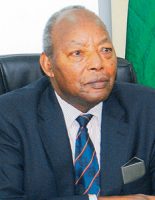
Karisa Maitha – The coastal hurricane

From humble beginnings in his native Mombasa County where he was born in 1954, Karisa rose from a dedicated Clinical Officer to a leader of note and a Cabinet Minister, packing a full life and career into the 50 years that turned out to be his lifespan.

Historically, leaders who are larger than life have earned themselves a variety of nicknames, while conversely, no one bothers nicknaming a colourless fellow who blends into the background. In Kenya politician’s nicknames like ‘Baba’ ‘Hustler’ and ‘Baba Yao’ are quickly identified with their owners. Around the world, nicknames of leaders who have stood out in either a positive or negative way are also quite common―Mahatma Gandhi was commonly called ‘Bapu’ (Papa); Margaret Thatcher was ‘The Iron Lady,’ as is Kenya’s Martha Karua, and Zimbabwe’s president Emmerson Mnangagwa is known as ‘The Crocodile.’

Maitha earned himself both a nickname―’The Hurricane,’ and a title―’Mugogo’. But to understand the relevance of either, we must go back to the beginning of his career.

Man of the people

They say true leadership is action, not position. Maitha started his career as a Clinical Officer. To qualify as a Clinical Officer one must complete a four or five-year professional diploma or degree programme accredited by the Clinical Officers Council, which enables the officer to provide medical services within the full scope of family and emergency medicine or within their narrower area of specialisation. They may practice in a public or private medical institution, or independently as a private practitioner. It was in this position that Maitha began to distinguish himself, by serving the underprivileged, even when they could not afford to pay. His service of the vulnerable endeared him to the people. As a Clinical Officer, Maitha’s ability to prioritize the health of his patients over financial gain was a hint at his heart for helping the less fortunate in the community, a theme that would be repeated throughout his life.

Maitha’s political career began in 1979 as a Councilor of Mwakirunge Ward in Kisauni Constituency, a position he maintained until 1992 when he was elected Member of Parliament for Kisauni. As a politician, just as he had been as a healthcare professional, he remained an advocate for the dispossessed.

Maitha lobbied for the legalization of mnazi, upon which many coastal palm tapers and traders depend for a livelihood. Mnazi, a traditional palm wine brewed at the coast, is made from the sap extracted from palm fruits. It is not a simple task. The tapper must climb the tall tree carrying with him a knife and a gourd, make an incision between the kernels which are deep inside the palm fruit, and tie the gourd in place to collect the sap. After a couple of days he will return to collect his fresh palm juice, which is then fermented to make mnazi.

Mnazi is more than just a source of income however. It has been touted as a healthy drink, taken in moderation, due to its iron and Vitamin B content. But more than that, it has age-old traditional value and holds a special place in celebrations and ceremonies such as weddings and funerals in the coastal region. In 2015, the Kilifi County Assembly unanimously passed a Bill that legalizes Mnazi, completing the job that Maitha started more than a decade ago when he championed the rights of Mombasa and Kilifi mnazi tapers and sellers.

Then there was his penchant for the youth. Himself a family man and the father of many children, he took every opportunity to help young people, even taking the details of their academic qualifications at the end of his political rallies to help them get job opportunities. It was therefore not surprising that college and university students came to his home by the busload to pay their respects at his funeral.

Nationally, Maitha’s concern extended to the most disenfranchised in Kenyan society―the street families. He was responsible for the establishment of the Street Families Rehabilitation Trust Fund (SFRTF) when he was Minister for Local Government in 2003 after he started a project to help street children. He established the SFRTF to address the concerns of all homeless, destitute and vulnerable people in urban areas.

It is Maitha’s heart for the people and his fearless drive to solve their issues that earned him the title of ‘Mugogo wa Pwani,’ the Coast kingpin.

A Kingpin and a Hurricane

If you’ve ever been bowling or watched the game, you’re familiar with the arrangement of bowling pins that stand at the end of the bowling lanes in a triangle formation. The point of the triangle, the single pin in the front row, faces the bowler. Behind it is a row with two pins then a third row with three pins and a fourth row with four pins―ten pins altogether. The kingpin is the fifth pin, the one in the very centre. In a vehicle, the kingpin is also the large bolt that was used to connect wheels to a vehicle’s axle in the past.

A person referred to as the kingpin is the one at the centre of things, the one in charge, the one who holds it all together. So for Maitha to earn the title of Kingpin of the Coast was no small feat. He had obviously earned the trust of the people right from the start. Only one person had held that title, conferred by the costal people on a leader who, in their estimation, has earned it. The first Kingpin had been a man with big shoes to fill―Cabinet Minister Ronald Ngala, one of the country’s foremost nationalists after whom Ronald Ngala Street in downtown Nairobi is named.

But while at the coast he was Mugogo, as Minister for Local Government he quickly earned the nickname ‘Hurricane Maitha.’

The speciality of a hurricane is its sped. A Category 1 hurricane, the lowest category, has winds moving at 74 mph (119 km/h). Below this it is merely a tropical storm. A Category 5 hurricane has wind speed exceeding 156 mph (256 km/h), which literally blow the roofs of almost any building. Hurricane Maitha’s category may never have been specified by those who nicknamed him thus, but a hurricane of any category is nonetheless nothing to be trifled with, and neither was Maitha. He was appointed Minister for Local Government in Kibaki’s cabinet in 2003, a job he did with great zeal, sometimes with the result of causing quite a stir―hence the nickname. Like a hurricane, he came unbidden and left behind him a trail of dismissed senior officials before he was transferred to the Ministry of Tourism and Wildlife.

The Likoni Massacre

It was August 1997, and Kenya’s general elections were due to be held in a few months, at the end of December; the second general elections since the introduction of multiparty politics. Something was stirring at the coast, specifically at Likoni, the site of the southern terminus of the Likoni Ferry, which carries both road and pedestrian traffic across the Kilindini Harbour, between the Likoni mainland side and Mombasa Island. The travel activity aside, Likoni is normally a quiet resort area.

But on the night of August 13th, unprecedented violence broke out. About 100 raiders armed with guns and bows, arrows and machetes attacked Likoni Police Station, as well as a police post at the ferry. They killed at least six police officers, stole guns and set the police station and nearby offices and homes on fire. Then they turned on civilians, killing and maiming those they identified as non-locals and burning down kiosks and buildings. Their dirty handiwork was done in the cover of night, and once the security forces began to arrive in the morning, the raiders retreated into the nearby Kaya Bombo forest and Similani caves, where some of them remained for months and continued to launch attacks.

Testimony from various parties to the Akiwumi Commission of Inquiry later revealed that the attacks were politically instigated in a bid by some KANU politicians to retain their political dominance at the coast in the face of competition from other political parties by getting rid of non-locals whose votes might be against them. It was against this background that Karisa Maitha was running for election as Member of Parliament for Kisauni, having served as a Councilor for three terms. He was himself implicated and investigated, but denied any involvement. Following the Likoni clashes, Maitha decamped from KANU, joined Mwai Kibaki’s DP party, and won the elections. His victory marked the beginning of an opening up of the coast to multiparty politics.

Cabinet Appointment

The DP presidential candidate, Mwai Kibaki, lost to KANU and the sitting president, Daniel Arap Moi, in 1997. But Kibaki’s time would come in 2002, and when it did, Maitha was his point man at the coast. This time round, DP had affiliated with several other parties to form the NARC coalition. It was on this ticket that Kibaki was elected as President and it was on the same ticket that Maitha was re-elected as Member of Parliament for Kisauni.

And in early 2003 when Kibaki announced his first cabinet, Maitha was on it as Minister for Local Government, forming a team with Assistant Minister Shaaban Ali Isaack. During his brief time at the helm of Local Government, some of Maitha’s passion for helping the underprivileged bore fruit. The Ministry’s immediately embarked on a programme to rehabilitate street families, which also involved training in vocational institutions for some. Under Maitha, the Ministry also began the resettlement of hawkers from the streets of Nairobi’s CBD, which over time culminated in their resettlement in markets on the outskirts such as Ngara and Muthurwa. But as we have seen, this appointment was short-lived.

Still, Kibaki’s faith in Maitha persisted, and he was appointed Minister for Tourism & Wildlife, teaming up with Assistant Minister Fred Gumo, who would later become a Minister for Regional Development Authorities. The Ministry was brand new, carved from the Ministry of Tourism and Information. Tourism is Kenya’s second largest foreign exchange earner, and the country’s spectacular wildlife plays a large role in this, so this was an important portfolio. Besides, the coastal beaches and historical and heritage sites such as the Vasco Da Gama Pillar, ruin of Gedi and the Fort Jesus are major tourist attractions. Certainly this was an important and high profile portfolio, and Maitha, in typical form took it on with enthusiasm, even promising to take on a more genteel manner in his politics so as not to scare away tourists. Indeed he died on the job on August 26th 2004, while on an official visit to Germany to market Kenya as a top tourism destination. Just a few days before his death, he had remarked on the growing popularity of Kenya as a tourist destination, noting that the number of tourists who had visited the country in the first half of 2004 had already surpassed the previous year’s arrivals during the same period.

Maitha had been one of 20 people who formed the team that was Kibaki’s first cabinet, but the two men shared a deeper connection. Describing him as “a friend and a comrade,” Kibaki traveled to the coast for Maitha’s burial. Newspaper reports said that the evening before the funeral, he viewed his friend’s body, condoled with the family, then viewed the body a second time―a final farewell.

Rather appropriately, Maitha was laid to rest at his home in Mtwapa at the foot of a Kapok tree, in a spot which he himself had chosen. Kapok trees, also known as cotton seed trees, are gigantic. They easily grow up to 70m in height and their trunks about 3m in breadth. This is not a tree to plant in a small backyard. The fruits of a Kapok tree produce a silky cotton fibre used for stuffing pillows or mattresses or to make yarn. Amazingly, a single kapok tree can produce between 500 and 4,000 fruits at one time, with each fruit containing 200 seeds.

How fitting then, that Maitha, a man with a larger-than-life personality, who had impacted so many lives, would be buried there. The seeds of his life’s work are many, and some continue to bear fruit, such as the protection of mnazi palm wine tapers and vendors, and the of course the careers of many young people that he impacted. Then of course there’s the Karisa Maitha Grounds and stadium in Kilifi, and the title of ‘Mugogo’ that has yet to find a new owner close to two decades later.
 

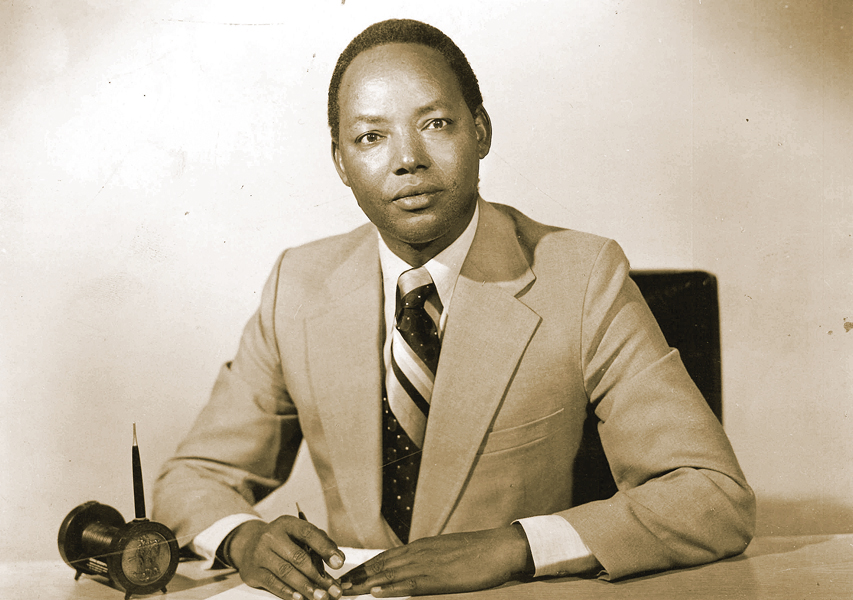
Kijana Wamalwa – The master orator

Wamalwa, the son a former senator, was the eighth Vice President of the Republic of Kenya and the first of three vice presidents who served in Kibaki’s two-term presidency. His ascent to the vice presidency was occasioned by the historic victory of the National Rainbow Coalition (NARC) in the 2002 General Election. His charisma transcended tribal boundaries and ethnic chauvinism, and in him many saw Kibaki’s automatic successor.

Wamalwa was born on 25 November 1944 in Sosio, a village near Kimilili in present-day Bungoma County. At birth, he was named Michael Christopher Simiyu. He was the son of William Wamalwa, an influential politician of his time, and Mama Esther Nekesa.

He attended St Joseph’s Primary School in western Kenya before transitioning to Chewoyet High School in Rift Valley Province. In 1962, he joined Strathmore School where he scored straight A’s in history, English and economics besides being the best debater and school head boy. It was at Strathmore School that he won a national essay writing competition and represented Kenya at a United Nations students’ forum.

In 1965, Wamalwa was awarded a Commonwealth scholarship that enabled him to join King’s College, Cambridge University, to study law. He graduated with a Bachelor of Law degree in 1968. Wamalwa wound up his King’s College sojourn by studying for an intercollegiate Diploma in Comparative Religions, earning himself the prestigious title of Associate of King’s College.

He proceeded to the London School of Economics and in 1970 was called to the bar at Lincoln’s Inn. He returned to Kenya to join the University of Nairobi’s Faculty of Law as a lecturer. During this time he also ran his family’s farming business in Kitale Town. He was also the director of the Kenya-Japan Association as well as the general manager of the Kenya Stone Mining Company.

Wamalwa made his political debut in the 1974 parliamentary elections, running for the Kitale West Constituency (present-day Saboti Constituency) seat. But he was just 30 and his age worked against him – his detractors dismissed him as a neophyte who could not effectively represent his constituents, and he lost to Wafula Wabuge.

He walked out of his first electioneering season with a new name, Kijana (youth), given by the people. In 1979 he was back in the running, with the blessings of veteran politician Masinde Muliro whose protégé he was, and clinched the seat. He would be re-elected two more times, in 1992 and 1997.

When the clamour for multi-party politics gained momentum in the early 1990s, Wamalwa threw his lot with the FORD-Kenya faction of the Forum for the Restoration of Democracy (FORD) party. In the 1992 General Election, he ran for the Saboti parliamentary seat and won. He was also elected vice chairman of FORD-Kenya.

Following the death of Opposition politician Jaramogi Oginga Odinga on 20 January 1994, Wamalwa took over the chairmanship of FORD-Kenya. This was met with opposition from some quarters, not least Odinga’s son, Raila Odinga, which would morph into a protracted tussle. It was not until 1995 that Wamalwa sealed his chairmanship during the chaotic party polls held at the Thika Municipal Stadium. Soon after these elections, Raila walked out of FORD-Kenya and took over the National Development Party (NDP).

In 1997, Wamalwa vied for the presidency and emerged fourth after Daniel arap Moi, Kibaki and Raila. In the run-up to the 2002 General Election, he teamed up with other Opposition luminaries, Charity Ngilu and Kibaki, under the umbrella of the National Alliance Party of Kenya (NAK), which had been founded in July 2000. The party worked with 13 smaller parties and would later grow to include Raila’s Liberal Democratic Party (LDP) and some disgruntled Kenya African National Union (KANU) party stalwarts. This prompted the transformation of NAK into NARC, which rode on the strength of a strong and broad Opposition alliance to a landslide victory that brought KANU’s 40-year rule to an end.

In the NARC power structure, Wamalwa became Kibaki’s running mate and, as expected, was appointed Vice President when the 22-member Cabinet was named. Curiously, President Kibaki did not assign Wamalwa a ministerial docket.

Wamalwa’s appointment elicited mixed reactions among his supporters. Many were happy because the President had honoured a pre-election pact and named their man VP. But there were others who had misgivings about the ‘incomplete’ portfolio – without the Ministry of Home Affairs that had hitherto come with the vice presidency, these naysayers considered Wamalwa nothing more than a ceremonial VP.

Wamalwa handled the dissent in his camp with characteristic self-assuredness and equanimity, assuring his supporters that there was nothing amiss and insisting that the President meant well and that they should trust him. Not long afterwards, Kibaki named Wamalwa the Minister for National Reconstruction. The VP was tasked with overseeing the revival of projects that had collapsed under the KANU regime, including the Nyayo Tea Zones, Nyayo Bus Corporation and development of a reconstruction policy.

According to some legislators allied to Wamalwa, this was a featherweight portfolio. But contrary to their expectations, he never showed any dissatisfaction with his new role or even a hint of disaffection with the President. Unknown to many, Wamalwa had a special place in Kibaki’s inner circle as a trusted adviser. And it was this relationship that informed the President’s keenness to keep his VP’s hands free.

Wamalwa’s vice presidency was short-lived. In the dying hours of the 2002 election campaigns, Kibaki was involved in a road accident and consequently flown to London for medical treatment. It was while visiting Kibaki in hospital that Wamalwa was also taken ill. In early 2003, he was hospitalised in London again. When he recovered, he returned to Kenya to marry his longtime partner, Yvonne Nambia, in a memorable wedding that bore pronounced marks of his Anglophile persuasions – he not only submitted his proposal to the bride in Shakespearean parlance but also arrived in church in a vintage Ford and dressed in a morning coat.

On 1 June 2003, Wamalwa travelled to Geneva, Switzerland, to represent Kenya at the International Labour Organization’s 91st session. He led a delegation of government officials, trade unionists and employers to the meeting. After staying three weeks in Geneva, he flew to London for a medical checkup accompanied by his wife and daughter. Unfortunately, Wamalwa died in London on the morning of 23 August 2003.

Wamalwa’s was not the first death to plague the NARC government in its first year in office. Apart from being the first sitting Vice President to die in the history of independent Kenya, he was the third Cabinet Minister and fifth NARC MP to die within the first eight months of the coalition’s reign.

The first was Ahmed Khalif, NARC’s first Minister for Labour, who died in a January 2003 plane crash in which several other ministers suffered injuries. He was followed by Naivasha MP Paul Kihara, who passed on in a South African hospital in February of the same year. In April, Yatta MP James Mutiso drowned in raging floods and in June 2003, Geoffrey Parpai, a Minister in the Office of the President, who started ailing soon after he was sworn in, also died.

Within the Cabinet, Wamalwa was considered a gentleman; a good competitor who kept the game clean. Almost all his colleagues captured this quality in their tributes to the fallen Vice President.

Due to the special working relationship they enjoyed, Kibaki suffered a huge loss in Wamalwa’s death. Wamalwa’s successor, Moody Awori, captured this well in his memoirs, Riding on a Tiger, revealing how overcome with grief Kibaki was on losing his deputy.

In his book, Awori recalls how Wamalwa was hospitalised in London just six months after assuming office. He gives vivid recollections of how the President relied on his ministers and other members of his government who made stopovers in London en route to other destinations for briefs on Wamalwa’s health. When Awori made a trip to London in August 2003, the President also asked him to check on the Vice President.

When Wamalwa’s body arrived at the Jomo Kenyatta International Airport, there was a huge crowd led by President Kibaki. The sombre atmosphere was overpowering as the President declared that Wamalwa would be accorded a State funeral – the second in the history of independent Kenya after that of founding President Jomo Kenyatta in 1978.

Wamalwa’s body lay in State at Parliament Buildings for public viewing as the country went into mourning. And in a public manifestation of his personal grief, President Kibaki let tears for his fallen friend flow freely during the burial in Kitale.

Kibaki’s opinion of Wamalwa was crystallised in a 2016 memorial article titled Wamalwa was not merely a politician, he was a political leader (Saturday Nation, 20 August 2016), in which he wrote candidly about his departed deputy.

The President talked about Wamalwa’s personal attributes such as wit, charm and authenticity. He also acknowledged Wamalwa’s critical role in the formation of NARC and his contribution to its victory. In the President’s view, Wamalwa was a man whose politics and leadership were distinguished by unequivocal convictions and causes. He was a leader with a national outlook – his worldview resisted tribal or ethnic limitations.

It was a rare and fascinating glimpse into the character of the Vice President from a person imminently qualified to talk about him. As a constant and calm voice of reason during the agitation for political pluralism in the 1980s and 1990s, Wamalwa shunned the confrontational style that some of his peers and contemporaries found attractive, Kibaki noted, while hailing Wamalwa’s ability to work with other leaders towards the realisation of a progressive agenda.

Wamalwa’s mastery of government operations made him an asset to NARC. He had a particularly good understanding of the working dynamics between the Executive, the Legislature and the Judiciary. Kibaki often relied on Wamalwa to smooth the rough edges that are the hallmark of this relationship.

As noted earlier, Kenyans knew Wamalwa most for his gift of the gab. There was hardly any subject that he couldn’t convey to ordinary people to bring them on board. It was an asset that did not escape the President’s praise in his recollection. Kibaki noted that eloquence was not just about mesmerising the masses; it was an instrument for building consensus and amassing political capital for the benefit of the teams he worked with.

But Wamalwa could also be pointed, pithy and perhaps even brutal when he directed his wit at his opponents. At FORD-Kenya, his long-running dispute with Raila led him to say: “Raila is not my peer intellectually by any description. I don’t think he has any leadership capabilities because he is a very dictatorial fellow. Whenever he talks in NEC meetings, he always says, ‘We must do this’ and people answer back, ‘You can’t force us to do this.’”

That Wamalwa was the gentleman of Kenyan politics is not in doubt. Maybe the working chemistry between him and Kibaki can be attributed to this – the two politicians were generally non-confrontational in their politics. Either by design or default, Wamalwa consistently cut the image of a reliable and trustworthy deputy. Some believe had he lived, this might have averted some of the political misfortunes that stalked Kibaki’s presidency, such as the 2005 referendum on the Constitution of Kenya that split the NARC government into ‘banana’ and ‘orange’ factions, and the 2007-2008 post-election violence that enveloped the country. In fact, given his affability and charisma, many like to think Wamalwa would eventually have succeeded Kibaki.

Because of the well-established culture in Kenya of politicians using public office for personal gain, it was generally expected that Wamalwa was no different. But when he died, many were shocked. Put on a scale against other Kenyan VPs, he emerges as the ‘poorest.’ Compared to an average contemporary Kenyan politician, Wamalwa had puny assets. Those who knew him attributed this to his generosity. Stories abound of how on many occasions he would walk into a social place with money in his wallet and walk out without a penny. He was also known to bail out those in need of school fees or food among other necessities.

Wamalwa was still living in a rented house at the time of his appointment as Vice President in 2002, perhaps another indicator that in a setting where politicians are known to live large, he was a different kettle of fish. Given this disposition, would he not have been a great asset in helping the NARC government slay the dragon of corruption? This is certainly not an idle thought.

When Wamalwa passed on, Kibaki appointed Moody Awori as the Vice President and Musikari Kombo took over the FORD-Kenya chairmanship. There is, however, one gap he left that is yet to be filled – the long-sought dream of enduring unity among the Luhya community.

Under Wamalwa’s stewardship, the Luhyas bought into the NARC vision. In addition to his sociable personality that endeared him to the people, the Luhyas considered him a homegrown politician who fitted well in the league of legendary Luhya politicians who had gone before him, such as Masinde Muliro and Moses Mudavadi.

Ultimately, the young man they had initially rejected as being too immature – the kijana – in their view progressively grew into a political giant; one whose promising career as Vice President turned out to be poignantly brief.

John Michuki – The man in a hurry

He was one man in a hurry to help the newly-elected President reverse the economic decline and indiscipline that had taken over the transport industry. At the time, most public taxis (known as matatus) in Kenya operated under the Matatu Owners Association, which had replaced the Matatu Vehicle Owners Association formed in 1982 to allocate matatu routes but proscribed in 1987 after calling for a nationwide strike.

While matatus provided cheap transport for the general public, Michuki realised that the owners were losing billions of shillings every year to cartels and members of the Mungiki sect, a self-styled vigilante group that had taken control of matatu routes in Nairobi. He had also to deal with Mungiki offshoots such as Taliban, Jeshi la Mzee and Kamjeshi – which extorted money in the name of protection fees from matatu owners. Those who didn’t pay up had their vehicles burned or owners killed.

This was the kind of mayhem Michuki inherited from his predecessor, and one of his first promises was to bring order to the sector. He told Parliament that the “matatu industry is not different from any other industry, where ownership, be that of land or any other property, is guaranteed”.

Born in 1931 in Iyego, Murang’a District, Michuki had had a distinguished administrative career since he joined the civil service at the tail end of colonial rule, first as a clerk before his appointment as a District Officer in Busia District. Aged only 27, he became the first African District Commissioner for Nyeri District in 1961. That was shortly after he graduated from Worcester College, a constituent college of Oxford University in the United Kingdom, where he studied public administration and economics.

Shortly after independence in 1963, Michuki was one of the young administrators picked by President Jomo Kenyatta to shape the course of the new republic. These were men in their late 20s and early 30s, and included young economist Mwai Kibaki, Kenneth Matiba, Duncan Ndegwa, Tom Mboya, Peter Shiyukah, Geoffrey Kariithi, John Koitie and Julius Kiano.

Michuki was first appointed Permanent Secretary in the Ministry of Finance on 1 July 1965, having worked as Deputy Permanent Secretary in the National Treasury since 12 December 1964. He soon started to assert himself as a strict disciplinarian who eschewed disorder in the public service. He was young, aggressive, and spoke his mind. And so it was that almost four decades later, on 3 January 2003, Kibaki would pick him as Minister for Transport and Communication in an effort to turn around an economy that had a gross domestic product growth of 0.5 per cent, down from 4 per cent the previous year.

Deputising him were Assistant Minister Andrew Ligale and Permanent Secretary Gerishon Ikiara, an economist who had been plucked from the University of Nairobi. Michuki started tackling the problems in the transport sector with gusto. That October, he announced that all public service vehicles would be fitted with speed governors and seat belts as part of efforts to reduce road carnage and increase safety. He was in essence confronting a cartel that controlled a fleet of more than 40,000 matatus in urban areas and bringing order to a multi-billion shilling industry that was largely unregulated.

The unveiling of the new regulations – which quickly came to be known as the ‘Michuki Rules’ – was, unsurprisingly, met with opposition considering statistics that showed matatus constituted around 78.2 per cent of the country’s public transport system. Michuki’s rules also stated that 14-seater matatus, which previously crammed in as many passengers as possible, could carry only 14 at a time. Buses were restricted to 62 sitting passengers.

In addition, all public services vehicles were required to have speed regulators that limited them to 80 kilometres per hour. Meanwhile, matatu crews were required to wear uniforms and the drivers, especially, had to display proper identification documents in their vehicles.

The sector reacted by calling a strike that paralysed the entire public transport system. But Michuki had the President’s backing and ordered the matatu owners who did not wish to comply with the new rules to simply remove their vehicles from the road.

“Some of the matatu owners were expecting that I would soften,” Michuki told a news conference when the strike collapsed. “We have been enslaved by these matatus. We want to get out of this, and we must get out once and for all.”

Michuki also maintained that those who failed to fit their vehicles with speed regulators would have their licences withdrawn. The Matatu Owners Association went to court, and lost, as the return of discipline to the sector became one of the hallmarks of Kibaki’s legacy.

With the 1990s clamour for multi-party politics, the one-time MP for Kangema Constituency in Murang’a (1983 to 1988) threw his weight behind Kenneth Matiba, the FORD-Asili party’s founder and presidential candidate. It was a delicate relationship since Kangema bordered Matiba’s Kiharu Constituency and Kibaki’s home village of Othaya in Nyeri. By then Kibaki had founded another Opposition outfit, the Democratic Party.

But this did not damage his relationship with Kibaki. Interestingly, even after Matiba’s FORD-Asili broke up and he boycotted the 1997 elections, Michuki did not join Kibaki’s DP but instead decamped to FORD-People, a splinter group of FORD-Asili. It was not until 2002 that he joined the National Rainbow Coalition (NARC) and became part of the team that removed the Kenya African National Union (KANU) party from power.

After two years of a colourful performance at the Ministry of Transport, Michuki was appointed the Minister of State for Provincial Administration and Internal Security, swapping positions with Chris Murungaru. He worked with Mirugi Kariuki as his Assistant Minister and Cyrus Gituai as the Permanent Secretary at a time when organised criminal gangs reigned in urban centres. It was time for Michuki to run the likes of Mungiki out of town.

He clashed with Chief Justice Evan Gicheru when he accused the Judiciary of frustrating efforts to tame crime. While Gicheru said it was not the Judiciary’s role to investigate and prosecute suspects, Michuki said the courts were supposed to send a message that crime does not pay but instead they were releasing suspects.

A man known for speaking his mind, Michuki declared total war on Mungiki and warned them to either stop their activities or face the full weight of the government. “Tutawanyorosha… Nyinyi mtakuwa mkisikia mazishi ya fulani ni ya kesho (We will deal with you… You will only be hearing about your colleagues’ funerals),” he was quoted as saying.

His statement did not go down well with human rights activists, who accused him of promoting an extra-judicial killing culture. He also came under the spotlight when he came out in support of a police raid on the Standard Group, which suffered losses when the media house’s TV station and printing press were temporarily shut down. The next day, Michuki said the raid was a State security matter: “If you rattle a snake, you must expect to get bitten!” he told the press, sparking another uproar.

Michuki was the man at the helm in the run-up to the 2007 General Election that erupted in bloody violence across the country. At one point he even ordered a ban on live television broadcasts of the chaos that followed the announcing of the presidential results; he believed the footage would do the country more harm than good.

Following that election, on 8 January 2008, Michuki was appointed Minister for Roads and Public Works. He would however hold this brief for only a few months as negotiations on a power-sharing structure of government commenced. When the coalition government – that had Kibaki as President and Raila Odinga as Prime Minister – was put in place, he was appointed Minister for Environment and Mineral Resources.

One of the things he did in Environment was order all squatters in Mau Forest to leave. He countered criticism for his action from Rift Valley region MPs with: “As the Minister for Environment, I will have failed in my responsibility to ensure that the Mau is conserved. We should not allow ourselves to play politics with an issue that is so internationally charged.” He added, “I would prefer that we lose out on politics because we will get an opportunity to recover it (referring to the forest). But as we lose Mau, we should know that it will be gone forever.”

He also set out to save Nairobi River from pollution and was honoured with a United Nations Environment Programme award for his efforts. He also created a park that had previously been known as a base for criminal activities in the capital city. The park was named Michuki Park in his honour.

Michuki also set about restoring the country’s water towers in the Aberdares and Mt. Kenya, and stopped encroachment by loggers. However, his determination to tackle the country’s environmental issues was slowed down by ill health. On 21 February 2012, at the age of 79, Michuki passed on at the Aga Khan Hospital in Nairobi. There was an outpouring of praise from those who knew him. President Kibaki described him as a “dear friend, colleague and patriot”.

Aside from politics and public service, Michuki was also an astute businessman and community organiser. In the 1960s he had rallied Kangema residents to form a land-buying company called Kangema Farmlands. In later years, inspired by the Gleneagles Golf Club in the United States of America, he decided to turn part of his coffee farm in Kiambu District into a golf and country club. The Windsor Golf and Country Club was born out of a passion to offer world-class golf in Africa.

Michuki brought in Jim Archer, a graduate of the Oxford School of Architecture, and Tom Macauley, a renowned golf architect at the time, to lead the design team. That was typical of how this no-nonsense public servant approached all issues – with perfection and as a visionary.

Lawrence Munyua Waiyaki, Conscientious to the end

The Minister for Foreign Afairs, Dr. Munyua Waiyaki (left), welcomes the founder-leader of the Zimbabwe African People’s Union (ZAPU), Mr Joshua Nkomo, who made a stop over at the Nairobi Airport in transit from London on June 22, 1976.

Suave, witty and distinguished even into his sunset years, over the course of his colourful life Frederick Lawrence Munyua Waiyaki cultivated an enduring international reputation as a man who could hold his own in the highest echelons of power; one who demonstrated uncommon courage in a sycophantic era and could be trusted to think on his feet. It is no wonder, then, that his service to the nation spanned the administrations of both founding President Jomo Kenyatta and the man who succeeded him as Head of State, Daniel arap Moi.

As a qualified medical doctor of impeccable repute, Waiyaki was part of the Cabinet first in the key docket of Foreign Affairs under Kenyatta and then in Agriculture under Moi.

A trusted confidant of the elderly Kenyatta, Waiyaki went down in history as the first person to be sent for by State House Mombasa in the early hours of 22 August 1978 when the President breathed his last. Celebrated as Kenya’s top diplomat, Waiyaki was awakened from his bed at the Nyali Beach Hotel where he was hosting an annual retreat for Kenyan diplomats – a delegation that had paid a courtesy call on the President a mere few hours prior to his demise.

The Minister was telephoned by Kenyatta’s son Peter Muigai and was among the first people to see the President’s lifeless body when he arrived at 3am. Together with Kenyatta’s personal physician Dr Eric Jumwa Mngola, who doubled as the Permanent Secretary for Health and Director of Medical Services, the trusted medic issued the official confirmation that Kenyatta was indeed dead.

Also present at that moment in addition to Muigai were the President’s wife, Mama Ngina Kenyatta, and Coast Provincial Commissioner Eliud Mahihu. Waiyaki had been one of the few people privy to the details concerning Kenyatta’s failing health, along with Mngola and Minister for Defence Njoroge Mungai, also a medical doctor.

But not having been fully briefed about the reason for the call, it came as an immense shock to learn what had happened. “When I entered State House, I sensed that something was seriously wrong,” recounted Waiyaki in a press interview. “His face looked so peaceful in death. He could have been asleep.”

Waiyaki and Kenyatta were such close friends that the Minister visited Kenyatta at his residence in Gatundu regularly, so it was no accident that he was one of the first to be informed when the old man died. “I got on very well with Mzee and had free access to his home,” he said.

Waiyaki first met Kenyatta at the Green Hotel Restaurant on Latema Road, Nairobi, in 1951 when he was a fresh university graduate. His father had taken him to the restaurant for lunch and they found Kenyatta and Mbiyu Koinange in one of the cubicles. Waiyaki suspects his father knew Kenyatta would be there and purposely took him there to meet him.

“I knew Mbiyu as he was my father’s age-mate. I was introduced to Kenyatta, a man who was interested in young educated men as the struggle for independence intensified,” Waiyaki remarked.

Later, when Kenyatta was detained in Maralal by the colonial government, which then began spreading propaganda that he was not medically fit to lead the country, Waiyaki would volunteer along with medical colleagues Njoroge Mungai, John Nesbitt and Jason Likimani to visit him in detention to ascertain the contention by the mzungu that he was not in good shape. “We found a jolly, intelligent and fantastic man who not only was fit medically but had a very sharp brain,” Waiyaki recalled.

Waiyaki commanded great respect in Kenya and internationally as Kenya’s Minister for Foreign Affairs. He became Kenya’s unequivocal voice on the local and international scene in the 1970s. He clearly articulated the country’s position, especially on two contentious international issues: apartheid and colonialism. Credited with bringing pride and recognition to the ministry, Waiyaki valiantly fought the apartheid regime in South Africa, of which he had first-hand experience.

Career diplomat Ochieng’ Adala, who headed the African Division in the ministry, often travelled to international and continental meetings with Waiyaki. According to Adala, Waiyaki was a man who developed ideas and initiatives. “He was able to handle situations that arose outside the prepared text and make impromptu decisions,” he revealed.

In 2007 Bethuel Kiplagat, a former diplomat and Chairman of the Truth, Justice and Reconciliation Commission, described Waiyaki as “a committed Pan-African, a great and outstanding Foreign Affairs Minister and a pleasant individual. He provided no-nonsense leadership, was courageous and spoke his mind. He was brilliant, wise and did not throw his weight around.”

When Moi took over the reins of power following Kenyatta’s death, he retained Waiyaki in the Ministry of Foreign Affairs until the 1979 General Election, after which the doctor was moved to the robust Ministry of Agriculture. As was his nature, Waiyaki plunged into his new job with zeal and integrity, immersing himself in the issues affecting local farmers. He was conscientious in finding solutions aimed at removing various hurdles exacerbated by the transition period from the overbearing colonial approach to land ownership and agricultural practice, to the newly instituted Government policies aimed at prospering the indigenous farmers.

It was an uphill battle, as was to be expected. Erroneous perceptions among the largely unschooled farming fraternity at times sabotaged efforts to boost crop production in post-colonial Kenya. As reported in a 28 July 1983 New Scientist magazine article on soil conservation in eastern Africa, under British rule Kenyan labourers had been habitually forced to dig terraces in addition to other back-breaking work on coffee and tobacco farms to protect the soils. As a result, by 1960 virtually all arable lands had been terraced. This practice, however, produced a substantial and widespread resentment among farmers, who equated the ‘slave’ labour with the colonial master.

According to the article, the resentment proved to be useful fodder for the independence movement, which promised the farmers freedom from the heavy toil. The result was that the terraces inevitably deteriorated once independence came.

Quoted by the magazine, the Minister commented, “It took a long time to persuade people that (soil) conservation was not part and parcel of colonialism.”

The former diplomat faced other obstacles in the agricultural sector head on, determined to secure cohesion in its management systems. At a time when coffee was the country’s main foreign exchange earner, Waiyaki campaigned diligently for harmonious working relations among the local coffee industry players, who included the Coffee Board, the Kenya Planters Cooperative Union, the Kenya Coffee Growers Association as well as commission agents and brokers. In his customary forthright manner, he reprimanded them for the unnecessary controversies and personality clashes that were bedevilling the lucrative sector.

The Minister was diligent in driving an agenda that could lead to coffee producers and workers earning a fair wage through subsidies for inputs, as well as keep operating costs at a minimum level consistent with efficiency. He encouraged growers to soldier on with determination to succeed in spite of inflation and other major challenges. He employed his considerable diplomacy skills in lobbying at the international level for recognition of African coffee growers as a bloc.

Waiyaki is on record as berating Government authorities for short-sightedness in their dealings with coffee producers. Responding to a concern expressed in 1982 by the CBK about exorbitant taxation the Minister said, “I required local authorities to justify the use of that money but so far they have not bothered to give details of how they had aided the coffee farmer. I hope they will not blame anyone except themselves when the hammer falls.”

His words, it turned out, were prophetic and Kenyan coffee growers would later abandon the crop in favour of less labour-intensive and expensive agricultural pursuits.

Waiyaki descended from colonial resistance figure Waiyaki wa Hinga, who was killed in 1891 by a British soldier for protesting the harassment of his people and takeover of land in Dagoretti by employees of the Imperial British East Africa Company. He was also a brother of the controversial freedom fighter Wambui Otieno, remembered for participating actively in the struggle for independence and later striking a blow for women when she resisted the traditions of the clansmen of her late husband, S.M. Otieno, who insisted that his body be shipped for burial to his ancestral home in Nyanza in contravention of her wishes.

Waiyaki was born in 1926 in Kiawariua (place of the hot sun) in Muthiga, Kikuyu, to Tirus Waiyaki and Elizabeth Wairimu. His father was the first African police chief inspector. He was stationed at Nairobi’s Central Police Station and among Muslims at Pumwani, near the mosque.

“Over the holidays, my brother Kimani and I would be shipped from our rural home to the city where my father would tutor us especially in English. I was, therefore, a child of two worlds – at home I was born among, went to school with and was surrounded by Christians of the Church of Scotland Mission, but in the city most of my playmates were Muslim youths,” he said.

When the young man enrolled at Alliance High School in 1942, his classmates included Paul Ngei, Jean-Marie Seroney, Mbiti Mate and Kyale Mwendwa. Unlike many former Alliance students of his generation, he held no fond memories of the legendary school principal and mathematician, Carey Francis. Instead, he remembered him as a “huge, bad-tempered bachelor” who, when angry, menacingly stamped his feet, took repeated long strides and puffed up his cheeks. Waiyaki was not one of the principal’s favourites either and, at the end of the first term the teacher told him bluntly that he would never master algebra.

His deliverance came via another maths teacher, J.M. Ojal, who offered to give Waiyaki extra evening classes in his house five days a week, and thanks to this intervention he eventually became as good as the other students in algebra.

Waiyaki would spend his final year of high school at Adams College, Natal, in South Africa prior to joining Fort Hare University. There he came to know Jonah Kinuthia, a Kenyan who worked in the laboratory at the McCord Zulu Hospital, and through him had the opportunity to do elementary clinical work at the hospital for a year. He read physics, chemistry and botany for three years at Fort Hare where he would meet his future Cabinet colleague Mungai, who was studying physiology.

Waiyaki had sailed on an Indian ship, the SSS Kalagola, through Beira and Lourenço Marques (Maputo) to Durban in 1946.

In April 1951, defying the colonial government which had refused to clear him, Waiyaki boarded a ship for Britain along with others who included Likimani, renowned lawyer Sammy Waruhiu, two Asian boys from Mombasa and a “brilliant” mathematician named Minjo from Luhyaland. “For 28 days, we travelled through the Indian Ocean and the Suez Canal to the Mediterranean, then through Gibraltar to the English Channel and finally landed at the Albert Docks on the east side of London,” Waiyaki recalled.

But once ashore he faced an uphill battle. The Director of Colonial Scholars had denied him a university place in Britain, insisting that he should instead have taken a course at Makerere. Waiyaki spent a whole year in London seeking admission to a university. Finally, in 1952, he was admitted to St Andrew’s Medical School in Scotland. His joy knew no bounds.

“Even before I set foot on the campus, I felt that I was now a medical doctor,” he said. He graduated in general surgery, neurosurgery and psychiatry in 1957 followed by a year-long internship.

When he returned to Kenya in 1958, the Director of Medical Services offered him a job at the Murang’a District Hospital which he declined because he did not like the house assigned to him. He later took up a surgeon’s job at the Machakos District Hospital where, apart from performing up to seven surgeries a day, he doubled up as a psychiatrist.

Waiyaki left Government employment a year later to set up in private practice. He also began to engage in politics through the Nairobi People’s Convention Party (PCP) fronted by trade unionist Tom Mboya. In 1960, when nationalism was at fever pitch with independence in the air, Waiyaki was elected Chairman of the Nairobi branch of the Kenya African National Union (KANU) party which was jostling for position with the Kenya African Democratic Union (KADU) in a competition to become the independence party.

At independence in 1963, Waiyaki was elected Member of Parliament for Nairobi North-East (Kasarani) on a KANU ticket. With Kenyatta as Prime Minister, Waiyaki was appointed Assistant Minister in the Office of the President in charge of Internal Security and Defence. He was subsequently elevated to Minister for Foreign Affairs and re-elected MP in 1969, 1974 and 1979. The constituency was renamed Mathare in 1974, and became Kasarani in 1997.

Waiyaki would abandon 24 years of competitive politics after a snap election called in 1983 by President Moi to consolidate his authority following the attempted coup of 1 August 1982 that was seen to have considerably weakened Moi’s presidency. The election cost Waiyaki his career, as he lost the Mathare parliamentary seat to Nairobi Mayor Andrew Ngumba.

Waiyaki involved himself in real estate development, farming and business after retiring from politics. He lost his wife Naomi early in 2008 after a devastating battle with cancer. “In 2003, my wife was diagnosed with cancer. She underwent surgery, and we were convinced that the disease had been controlled. But it spread to her kidney eight weeks later,” Waiyaki recalled. He would later engage in teaching diplomacy at a university in the US and briefly practised medicine.

He died on 25 April 2017 at the age of 91.

Amos Wako – The stealthy solicitor

Wako served undisturbed under two presidents whose political and policy outlooks were so starkly different as to be diametric. He also served with and without a Minister for Justice and Constitutional Affairs, and was AG in the single-party era as well as the multi-party democratic dispensation.

Wako was appointed AG by President Daniel arap Moi on 13 May 1991. There is consensus among observers and critics that from 1983 to 1991, the Kenya African National Union (KANU) party’s style of governance intensified in repressiveness, autocracy and corruption. Many commentators framed Wako’s appointment as a desperate ruse by the regime of the day to exploit well-regarded professionals to clean up the government’s reputation.

In this regard, Wako was also seen as a renegade who had betrayed his colleagues on the righteous reform bandwagon for a high appointment in an unpopular and abusive regime. None of his critics, therefore, was amenable to seeing, much less saying, anything positive about his appointment. Indeed, a lot of ink and airtime has been expended in portraying him as a key enabler of the single-party era’s excesses.

On the other hand, Wako had been a highly accomplished and decorated lawyer, well regarded locally, regionally and internationally. A year after completing his Bachelor of Laws at the University of East Africa, he was enrolled as an advocate of the High Court of Kenya. As he honed his skills as a legal practitioner, Wako also pursued a Bachelor of Science in Economics – specialising in international affairs – at the University of London from where he graduated in 1977. Evidently disciplined and highly motivated, Wako evinced a self-application that saw him get admitted as a fellow of the International Academy of Trial Lawyers in the same year.

In 1978, he graduated with a Master of Laws from the University of London. Again, he had pursued a specialisation in international dimensions of economic law and the law of treaties as well as comparative constitutional law. Long before the Kenyan chapter of the Chartered Institute of Arbitrators was inaugurated, he had been admitted as a fellow in 1983.

In this highly active season of his life, Wako was involved in a busy legal practice, beginning as an associate at the prestigious Kaplan & Stratton Advocates in 1969, before rising to partner in 1972. A decade later, United Nations Secretary General, Javier Perez de Cuellar, appointed him to represent Africa on the Board of the United Nations Voluntary Fund for Victims of Torture. His term was subsequently renewed by Boutros Ghali and Kofi Annan. Wako served on the Board until 2004.

In the same year, he was appointed Special Rapporteur of the United Nations Commission on Human rights on the Question of Summary or Arbitrary Executions. In this capacity, he undertook special missions to Uganda, French Guyana, Colombia, Zaire and Suriname, and visited Denmark and the Netherlands for consultations. He also held Annual Joint Hearings with the UN ad hoc Working Group of Experts on Southern Africa, which took him to London, Lusaka, Harare and Dar es Salaam. Additionally, he gave lectures in workshops in the Philippines, Zambia, Rwanda, Togo and Cameroon on international human rights and reporting mechanisms as well as international humanitarian law. He also advised many countries on setting up human rights commissions.

Such was his international profile that the government of New Zealand invited him as guest of honour for the 40th anniversary celebrations of the Universal Declaration of Human Rights.

The year of his appointment as AG also marked the end of his eight-year term as a member of the Human Rights Committee. He had been elected under the International Covenant on Civil and Political Rights and served his final year as the committee’s vice chairman.

In 1981, Wako was elected as a commissioner of the International Committee of Jurists and joined its executive committee in 1985, where he remained until 1991. Between 1984 and 1991, Wako was a member of the Churches Commission on International Affairs at the World Council of Churches. In 1991, he also undertook a number of missions on behalf of Amnesty International and between 1988 and 1990 was Deputy Secretary General of the International Bar Association and chairman of its 1990 Biannual Conference in New York.

Wako also served as Chairman of the Law Society of Kenya, Association of Professional Societies of East Africa and the Public Law Institute. He was Secretary General of the Africa Bar Association and Inter Africa Union of Lawyers, and a member of the International Advisory Panel of the World Copyright Arbitration Centre and the International Bar Association.

This was Wako’s colossal professional stature at the time of his surprise appointment to the Cabinet under Moi. A close examination of his tenure as AG, however, reveals that his appointment coincided with the beginning of welcome changes in governance. These incremental democratic and constitutional reforms gathered momentum under Moi and hit a historic crescendo under President Mwai Kibaki with the promulgation of the Constitution of Kenya 2010.

Only months after his arrival, momentous legal and political changes were launched. In December 1991, Section 2A of the Constitution, which made Kenya a de jure single-party State, was repealed. This was swiftly followed in 1992 by the permission of greater freedom of expression and association. Political prisoners were released around this time and many of them went on to contest the General Election. The multi-party Parliament of 1993 had members who had left prison hardly a year previously, steadfastly holding government to account from the Opposition benches. It also had Wako’s former Cabinet colleagues who took advantage of the emerging democratic space and left government to compete against Moi for the presidency, including the Democratic Party’s Kibaki.

In 2002, he was at hand to oversee the first transition of governments through an election between rival parties when the Opposition coalition, National Rainbow Coalition (NARC), trounced the ruling party, KANU. In 2008, he oversaw the transition from NARC to the Government of National Unity, whose creation he had also overseen through the National Accord following a post-election crisis. Finally, Wako oversaw the transition from the old Constitution and promulgation of the new, which ushered in a progressive, rights-based, citizen-centred democratic dispensation.

Wako had drafted the proposed new Constitution based on the Constitution of Kenya Bill of 2005 as drafted by the National Constitutional Conference and amended by the National Assembly. The draft eventually came to be known as the Wako Draft, which became the foremost casualty of the tumultuous fractures that beset NARC as one faction mobilised vehement opposition, leading to the government’s resounding defeat in the ensuing referendum.

Kenyans generally felt that a lot of the reforms Wako steered to dismantle the one-party regime were long overdue. For this reason, their gradual and incremental pace was never going to placate a nation impatient for change. Although the AG prevailed in the Herculean task of coaxing the KANU system to embrace changes that were certain to ultimately retire it, the milestones were never quite enough. His achievements were diminished by popular expectations.

A major milestone in this arc of change was the shift to multipartism in 1991. KANU retained power in the General Election a year later, but only by the skin of its teeth. Violent tribal clashes, police brutality and abuse of State resources were cited as the principal explanations, but the statistics tell a different story – the Opposition’s fission into disparate rival factions destroyed any chances of overthrowing Moi, who scraped by with only a third of the vote.

For the second onslaught, reformers demanded the expansion of democratic space through greater freedom of assembly and expression, as well as the enhancement of electoral integrity and credibility. These demands culminated in the famous Inter-Parties Parliamentary Group reforms package that significantly levelled the playing ground in the 1997 contest, which Moi won again albeit with an even weaker lead against a more divided Opposition.

As 2002 approached, the question of whether Moi would accept term limits preoccupied Kenyans and international observers. The other concerns were whether, having retired, he would countenance the electoral defeat of his anointed successor. In the end, the answer to both was affirmative, and Kibaki, by then a veteran Oppositionist, took over government with a very strong mandate. Once more, Wako was at hand to counsel Moi to restrain KANU and graciously exit.

To everyone’s surprise, Wako retained his place in government. No doubt Kibaki was fully aware of the AG’s sterling contributions to the creation of the enabling conditions leading to his presidential triumph. This thesis is supported by Kibaki’s well-known attitude towards his predecessor’s approach to government and is further buttressed by the purge that ensued of powerful officials perceived to have been enablers of KANU’s worst excesses. That a highly visible member of government like Wako survived suggests that his reformist credentials were well recognised.

In addition to his vast local and international experience, and admirable track record of overseeing incremental institutional reform, Wako was unflappable in the face of daunting political power and possessed prodigious diplomatic nous to enable him to get on the good side of every player he interacted with. Wako also had inexhaustible patience and stamina, enabling him to endure daunting obstacles and patiently negotiate his way around arduous complications of bureaucracy, political intrigue and resistance.

As he settled in, Kibaki resolutely initiated key institutional changes to align bureaucratic delivery with his vision for government and deliver on the raft of transformative commitments his NARC campaign had made. The milestone feats Wako accomplished in Kibaki’s first term include the preparation and negotiations around the Wako Draft and the legal framework for the 2005 referendum. Kibaki’s pledge to put a constitutional review proposal to a referendum only materialised three years after he took office, and failed spectacularly – while Wako could weave compromises around conflicting interests among competing groups, he was sorely ill-equipped for the unprecedented fractiousness of intra-administration animosity that buffeted the new President’s first term.

The schism precipitated by claims of a dishonoured power-sharing pact tested the fragile unity of NARC and threatened the effectiveness and resolve of the administration. The debacle at the plebiscite was a warning signal that the foundation of Kenyan nationhood and the principles underlying the State, as expressed politically, were no longer adequate, and would easily unravel in the face of unbridled contestation.

It was understood, post-referendum, that unfinished business had been deferred to the 2007 General Election. A triumphant ‘No’ faction – spearheaded by Raila Odinga, the man who had more or less paved the way for Kibaki’s triumph at the ballot in 2002 – mobilised under the electoral symbol of an orange and brought together diverse interest groups that were against the draft Constitution. On the other hand was the government side which, smarting from the shocking humiliation at the referendum, rallied around the Government of National Unity that had replaced the NARC administration. By election time in 2007, the orange group had splintered into the Orange Democratic Movement (ODM) party and the ODM-Kenya party. Meanwhile, the Government of National Unity had formed a last-minute alliance to beget the Party of National Unity (PNU).

The mains contention was a Kibaki-Odinga rivalry expressed electorally. The stakes were stratospheric – ODM was eager to replicate its referendum coup and take over national power, and PNU gave its all to avenge its shameful rout. The election was close, and there was no institutional mechanism to manage the volcanic upheaval that exploded following the declaration of Kibaki as the winner. As Odinga dug in with demands for a repeat election, Kibaki named his first Cabinet. Wako was on the list and he immediately embarked on back-channel mediations while identifying possible neutral umpires to settle the bitter contest over presidential power.

A Kofi Annan-led team of eminent persons was finally selected to mediate the dispute. The final settlement, reached after months of gruelling adversarial encounters, was a National Accord. This memorandum was the settlement that set out a roadmap towards implementation of specific reforms to right the wrongs that had precipitated the post-election crisis and stabilise Kenya’s democracy. It was enacted by Parliament as the National Accord and Reconciliation Act 2008, and subsequently entrenched in the Constitution by a parliamentary amendment. Among other things, the Act provided for the formation of a coalition government, and creation of the positions of Prime Minister and deputy prime ministers.

Wako played an active, visible role in all this and subsequently, the four-step agenda to implement far-reaching reforms had to be shepherded through the legislative process. In particularly, the so-called Agenda 4 provided the opportunity to undertake a wide raft of institutional changes, including the creation of what came to be known as Agenda 4 commissions to investigate and make recommendations on the electoral system, post-election violence and historical injustices. The Kriegler Commission (the Independent Review Commission), the Waki Commission (Commission of Inquiry into Post-Election Violence) and the Truth, Justice and Reconciliation Commission affected developments in the country tremendously.

In April 2008, the coalition government was finally inaugurated, with Kibaki as President for his last term and Odinga as Prime Minister. Uhuru Kenyatta and Musalia Mudavadi were Odinga’s deputies and Wako remained as Attorney General. It had become clear that the National Accord, Agenda 4 commission recommendations and the Kenya National Vision 2030, as well as other factors, made constitutional change imperative if Kenya was to acquire a new lease of life as a peaceful, prosperous, united and stable nation.

The work of constitution making was therefore a fundamental deliverable of the coalition government. Wako oversaw the assembling of the Committee of Experts, among whom he sat, that spearheaded the patient collecting of views from a diversity of individuals and interest groups throughout the country, before collating a final report that informed the drafting of the Constitution. The harmonised draft that came out of this process was published and thereafter submitted to the Parliamentary Select Committee and the National Assembly. Again, Wako, as an ex officio member of the National Assembly, was at hand to shepherd the draft through the legislative turbine. After Parliament’s affirmative vote, the draft was published as the proposed new constitution, which was subjected to a referendum on 4 August 2010.

Despite a fiery campaign by a ‘No’ coalition, the proposed document was approved by 6,092,593 voters who made up 66.9 per cent of the total vote. On 27 August 2010, therefore, Wako flanked President Kibaki as he delivered a legacy-shaping document whose transformational impact reverberates in every part of Kenya to date.

This culmination was especially dramatic in Wako’s case as the Constitution he had painstakingly midwifed after several false starts dictated that he must retire within a year. His two-decade crusade of reform nevertheless went on. Within a year he was required to draw up bills for passage in Parliament in order to give effect to the new Constitution. In the process, he was also expected to effect the constitutional and statutory frameworks necessary to create institutions required by the Constitution.

Wako’s admirable career was not without blemishes. The KANU government in particular executed, or condoned, the perpetration of the most scandalous corruption rackets in the country’s history. At the same time, there were egregious violations of human rights and democratic freedoms committed by the State and its agents. While formally in the clear in many cases, it has been widely agreed that Wako could have done more to counsel the government to do the right thing, or at least avoid or prevent the wrong things.

The Goldenberg scandal, in which the government paid more than KES 50 billion to dubious entities in an outrageous export compensation scheme whose hallmarks were fraud, forgery, deception and plain theft, is a case in point. Although the chain of responsibility pointed towards abuse of office at the highest levels of government, Kenyans were frustrated by the absence of intervention or other involvement by Wako.

Similarly, the notorious Anglo Leasing scandal, in which government paid a fortune for goods not delivered and services not rendered to companies not existent did not reflect favourably on Wako. State officers entered these transactions and created binding instruments under circumstances that painted the AG as having been complicit, oblivious or otherwise negligent in his duties. As a result, he endured immense local and international opprobrium. The United States of America went to the extent of publicly designating him and sanctioning him in various ways allegedly for “aiding and benefiting from significant corruption”.

Moreover, alleged cases of extra-judicial killings, abductions and torture caused a local and international uproar, with human rights advocates accusing the government of incorporating units within the security services to conduct these outrages. Again, there was frustration at Wako’s allegedly lacklustre interventions to steer government policy towards more enlightened practices.

A notorious and equally celebrated attribute of Wako is his perennial grin. Also legendary are his work rate, his voracious appetite for reading and a painstaking attention to minute details.

Born in July 1945, Wako was accustomed to power by his upbringing, learning to hold his own with formidable authority figures at an early age. Raised by the redoubtable patriarch Daniel Wako, a noted pioneer educationist and public figure, Wako was a senior prefect and later school captain at Alliance High School under the legendary disciplinarian and fabled schoolmaster, Edward Carey Francis. What would later serve him well as his key strengths were already well developed before he joined university – it is clear that by the time he entered government service as Attorney General, he was more than prepared for the huge task that lay ahead.

In the 2013 General Election, the first under a devolved system of government, Wako contested the Busia County Senate seat and won, becoming the first senator for the county. He successfully defended the seat in 2017.

John Katuku – Strategist at the right place at the right time

As it turned out, Katuku was a beneficiary of a rebellion within the National Rainbow Coalition (NARC) that had swept into power in 2002 with Kibaki as the presidential flag bearer. After forming his first Cabinet, President Kibaki’s government set about backing a referendum on changing the Constitution of Kenya. However, a disgruntled group of politicians coalescing around Raila Odinga, whose Liberal Democratic Party was part of NARC, joined Opposition legislators from the Kenya African National Union (KANU) party to defeat the vote. In response, Kibaki disbanded the Cabinet.

As a member of Ngilu’s National Party of Kenya (NPK) – one of the other parties that made up NARC – Katuku supported the draft Constitution and reaped the fruit of this rather risky decision. Nearly all the MPs from the Ukambani region (where he hails from) who had been elected to Parliament on the NARC ticket had rallied behind Kalonzo Musyoka, the regional kingpin, to oppose the draft Constitution.

To achieve ethnic balance in the Cabinet he formed after sending all his pre-referendum ministers home, Kibaki had to pick one other Minister, besides Ngilu, from Kambaland. Katuku was in the right place at the right time. That he came from the Machakos side of Ukambani – away from Ngilu’s Kitui – worked even better for the President, who was at the time desperately angling to bring all parts of the country together.

Keen to deliver a service that had the biggest catalysing effect on development, Kibaki had in 2003 created the Ministry of Water Resources out of the Ministry of Environment and Natural Resources that had been maintained by both Presidents Jomo Kenyatta and Daniel arap Moi since independence in 1963.

As Minister for Water, a lot was expected of Katuku from the people of Mwala and Ukambani in general, as water in the region has always been scarce and precious. He was deputised by John Munyes of FORD-Kenya, who was the Assistant Minister for Water Resource Management, and KANU’s Major (Rtd) Aden Sugow, who was in charge of Water Services.

Instructively, the Minister and his deputies all came from arid regions (Machakos, Turkana and Garissa respectively); their appointments were a political calculation intended to appeal to these constituencies, long considered marginalised.

On a regional level, Katuku’s appointment came at a time when Kenya and other Nile riparian countries had launched negotiations for a new Nile River Basin Cooperative Framework, which culminated in the Nile Treaty of 2011. He was involved in the negotiations on behalf of Kenya, which had joined Burundi, Democratic Republic of Congo, Ethiopia, Eritrea, Rwanda, Tanzania and Uganda in pushing for a new deal that would allow riparian countries to carry out projects like dams and irrigation along the Nile.

Ethiopia used the 2011 Nile agreement – officially known as the Cooperative Framework Agreement (CFA) – that outlines principles, rights and obligations for cooperative management and development of the Nile Basin water resources, to build the Grand Ethiopian Renaissance Dam.

There was another factor that may have played a weightier part in Katuku’s inclusion in Kibaki’s Cabinet. A keen follower of the events leading to the creation of the National Alliance Party of Kenya (NAK), which would form the core of NARC, will find Katuku right at the centre of Kibaki’s ride to power.

He was the chairman of the strategy caucus that formed NAK, the coalition that brought together Kibaki, Ngilu and Kijana Wamalwa, before the eventual culmination in NARC. The caucus comprised Kiraitu Murungi, Chris Murungaru, Musikari Kombo and Katuku. Murungi and Murungaru represented Kibaki while Kombo and Katuku took care of Wamalwa’s and Ngilu’s interests respectively.

Katuku also sat on the larger coordinating committee that had nine members. Kibaki’s Democratic Party (DP) had Murungi and Njenga Karume, while the FORD-Kenya party’s Wamalwa had Kombo, Kipruto Kirwa and Newton Kulundu. Katuku, Titus Mbathi and a Ms Kanini represented Ngilu’s NPK.

“The smaller committee met almost daily to develop strategies to capture power from (President Daniel arap) Moi. We would share the ideas with Kibaki, Wamalwa and Ngilu. Once in agreement we would share them with the coordinating committee, and later with MPs to sell the product to the public,” Katuku explained in an interview for this book.

The two committees would meet the principals every Thursday for nearly two years ahead of the General Election. The strategy committee was instrumental in deciding who would play what role in the campaign and in government.

Katuku, a former MP for Mwala Constituency in present-day Machakos County, is very proud of this role and considers his initial appointment as Assistant Minister for Finance to be just as consequential as that of a full Minister. He said President Kibaki had a soft spot for him and regretted that the DP leader’s car accident ahead of the elections, and the coming into NARC of Musyoka and Odinga muddied the waters for him and estranged him from his ‘buddy.’

Katuku opened up about the heady days of NARC’s euphoric victory and his times with Kenya’s third President. Commenting on Kibaki’s legendary frugality, Katuku recalled an incident in the early days of the NAK campaigns when he went to him to ask for money for a campaign rally.

“We had a rally in Nakuru and I went to him. We needed some money to hire security and he asked me: ‘Is it an illegal rally? Why do you need security?’ I explained that the police were not there to guard us but to disrupt us. He understood and gave us his contribution.”

He praised Kibaki’s style of governance and wondered what Kenya would have been like had he become President before the freak accident that occurred a few weeks to the elections (Kibaki would be sworn in as the third President of the Republic of Kenya while seated in a wheelchair, his right leg in a cast) and a stroke he suffered on assuming office. According to Katuku, these two events robbed Kibaki of his physical sprightliness and legendary eloquence.

“Kibaki consulted his ministers. He would ask you: ‘What do we do?’ And if you told him something good he would implement it. I had KES 3 billion for water in the two years I was Minister and we did many projects in the arid and semi-arid lands – sand dams and boreholes,” recalled Katuku, now a farmer and golfer.

He could not remember a time the President ever called to dictate anything that needed to be done. “What he did was proper delegation. When I was appointing my directors in the ministry, for instance, he never interfered with my list.”

If Katuku’s strategic place in Kibaki’s vehicle to power paved his path to greatness, his stubborn pride is the brake that stunted his growth.

“After I lost the Mwala seat I went to Kibaki and he told (Francis) Muthaura, his Head of Civil Service, to give me any job I wanted. Muthaura explained that once Musyoka had become the Vice President in 2008 (after the 2007 election stalemate that resulted in a coalition government), any appointment in the (Ukambani) region would have to go through him. I said: ‘Over my dead body; I will not bow to Kalonzo to get a job.’”

His refusal to kowtow to Musyoka kept him out in the political cold throughout that term. He later made up with the Ukambani kingpin and even supported his bid for State House as Odinga’s running mate in 2017 under the National Super Alliance (NASA).

“My kind of politics is never to go for money or dish it out. If I needed money I would have gone to Moi, but I was always in the Opposition until we formed the government in 2002,” he said in an interview after his failed bid for the Machakos Senate seat in 2017. And he has no kind word for the culture of politicking in between elections, which he believed was the reason for Kenya’s under-development.

The son of a councillor and KANU official, Katuku was a student leader in university and a grassroots mobiliser who cut his teeth in national politics campaigning for Joseph Munyao, the long-time DP stalwart and one-time MP for Mbooni Constituency.

“I was a leader in the students’ body, SONU (Student Organisation of Nairobi University), and also the chairman of all Ukambani college students in Kenya. After campaigning for Munyao I decided to go for it myself,” he explained.

He was elected to Parliament in 1997 aged 32 and would be a member of the House for 10 years. Come 2007, Katuku, running on a NARC-Kenya ticket, was defeated by Daniel Muoki of the Orange Democratic Movement-Kenya party that had overrun almost the entire Ukambani region in support of Musyoka’s presidential bid.

In 2008, when Musyoka struck a deal with Kibaki that earned him the post of Vice President, Katuku led a group of Kamba MPs who had been defeated in the 2007 elections in accusing the President of betrayal. The leaders were Kalembe Ndile (MP for Kibwezi), Kivutha Kibwana (Makueni), Joseph Munyao (Mbooni) and Adelina Mwau (nominated).

Katuku and his group complained that they had been sidelined despite campaigning for Kibaki in a hostile environment, and accused both the President and Musyoka of sealing a deal based on political desperation rather than ideals.

In 2013, however, he sought the nomination of Musyoka’s Wiper Democratic Movement-Kenya party for the Machakos governorship. He lost to Alfred Mutua alongside former Kathiani MP Wavinya Ndeti and ICT engineer Titus Ndundu. Katuku later joined Ndeti in decamping to Chama Cha Uzalendo (CCU) and contested the governor’s seat as her running mate. Again, they lost to Mutua.

In the 2017 General Election, Katuku initially planned to try and recapture the Mwala seat but changed his mind and formed the People’s Trust Party to “break the hold of the big political parties with ethnic following and personalities” as well as to contest the Machakos Senate seat. He lost to Boniface Kabaka of CCU. The fact that he has switched parties seven times in the last 23 years prompted critics to label him impatient and overly ambitious.

Born in 1965, Katuku first attended Kitile Primary School from 1974 to 1980 before joining Miu Secondary School in Machakos, where he sat his O’ levels in 1984. He proceeded to Kilungu High School in Makueni for his A’ levels from 1985 to 1986 after which he worked as an untrained teacher at Kalawa Secondary School until 1990. He joined the University of Nairobi and graduated with a Bachelor of Arts degree in Social Work in 1993 and did his Master of Arts in Sociology at Kenyatta University between 1994 and 1996.

From 1996 to 1997, Katuku worked as a community development officer and administrator at the Child Welfare Society of Kenya before entering politics.

Despite his failure to clinch an elective seat since 2007, Katuku retains pockets of support in Mwala and the larger Machakos. To date it is not uncommon during political rallies for chants from his campaign slogan, “Mundu ni Katuku!” (Katuku is the man!) to erupt spontaneously whenever he stands up to address the crowds.

Outside of politics, the avid golfer and convener of the Kambasome Golf Series said he picked up the sport after he left Parliament to keep himself occupied and fit.

James Orengo – The indefatigable soldier

Only he knows his next move. But undoubtedly, he’s the swashbuckler of current Kenyan politics — daring and in a hurry to tackle the powerful and the mighty, and rarely shying away from divisive matters, such as impeaching the President or Cabinet members. This has been his fodder for 40 years. And this explains why, just days after his appointment to the Cabinet in April 2008, the Daily Nation reported thus: “any rumour (Orengo) was to visit a corner of the country would see the adrenaline of the police rise with scores of them reaching for either a club, a tear gas canister or any other riot dispersal gear available to them”.

As it were, the Presidency is always the ultimate prize for every politician worth his salt. For Orengo, December 2002 was momentous. He ran for President of the Republic of Kenya and came a distant fourth with polling 0.4 per cent of the total vote. Orengo ran on the Social Democratic Party (SDP). Ahead of him were Kibaki (61.3 per cent), Uhuru Kenyatta (30.2 per cent) and Simeon Nyachae (5.9 per cent).

The seasoned politician that he is, Orengo isn’t timid about reinventing himself. His plan in 2002 to weaken Raila Odinga’s grip on Luo Nyanza politics floundered. But now Orengo is the Orange Democratic Movement (ODM) leader’s hatchet man. That apart, as Senate Minority Leader, Orengo is currently arguably the most powerful elected Opposition legislator in the country, much to the chagrin of his critics who had predicted the end of his political career following his failed presidential bid.

First elected to Parliament in 1980, and despite his proactive approach to politics and governance, Orengo has mostly been in the Opposition. The only time he has been in government was during the Government of National Unity, a coalition government, where he served as Minister for Lands and Settlement, for five years. As documented elsewhere in this profile, he had mixed success in this very sensitive ministry. The Daily Nation, on 24 April 2008, aptly captured his rise, in an article titled ‘Orengo’s long and windy route to the Cabinet’.

Orengo’s Parliamentary tenure has not been without its fair share of drama. Just after President Daniel arap Moi succeeded Jomo Kenyatta, a group of MPs emerged that kept the new government on its toes by challenging almost all repressive policies. It was a group of young MPs, energetic, outspoken and combative. The MPs were Orengo, Abuya Abuya, Onyango Midika, Mwashengu wa Mwachofi, Lawrence Sifuna, Chibule wa Tsuma, Koigi Wamwere. Their close allies included Chelagat Mutai, Wasike Ndombi and George Anyona.

The group emerged and become powerful enough to counter Moi’s attempt to consolidate power after taking over from Kenyatta. Currently, some of the members of this group remain politically active while others have since retired or died. Abuya’s attempt to relaunch his fortunes in Nairobi’s Kibera during the 2019 by-elections failed. Midika has retired, as have 78-year-old Tsuma, Wamwere, Mwachofi, and 74-year-old Sifuna. George Anyona passed away in 2003.

Orengo was born in February 1950. His father, Orengo senior, went to school with Kenya’s first Vice President, Jaramogi Oginga Odinga, at Maseno School. Orengo senior was also a friend of Argwings Kodhek (a member of the Colonial Legislative Council). Orengo schooled in various primary schools in Nairobi, Kiganjo and Ugenya, and later at Ambira and Alliance high schools for his O’ and A’ levels. He then studied law at the University of Nairobi.

After he completing his studies, Orengo worked at the Ministry of Lands and Settlement as an Assistant Secretary.

Orengo was first elected to Parliament in 1980. But before long, he got into trouble with President Daniel arap Moi’s government and was forced to flee to Tanzania. He was later extradited back to Kenya in June 1983 alongside the 1982 coup plotter Hezekiah Ochuka. Orengo lost his seat in January 1983 after he fled the country, accused of, among other crimes, forgery, issuing false cheques and stealing client’s money.

Luckily, with the onset of multiparty politics in Kenya, he was re-elected in 1992 and retained his seat in the subsequent election. Years in the political cold didn’t suppress Orengo’s hatred for the Kenya African National Union (KANU) and Moi. His proposal to impeach President Moi in 1998 failed to marshal enough support in Parliament. But it drew a sharp reaction from KANU leadership. Nominated MP George Ndotto said Orengo was treading on dangerous grounds. “Had the vote of no-confidence passed, the whole government including Parliament would have stood dissolved,” Orengo would later recall in an article in the Daily Nation.

Earlier, in March 1996, Orengo had claimed that Moi wouldn’t have been in power then if the Constitution had been changed. “When an old bull is praised all the time, it becomes unconscious to its age … President Moi asked for a job, and if he cannot do it, he should take a break … He has been at the helm for far too long and needs to take a rest,” he told Parliament. The following year, Orengo presented a motion seeking Parliament to declare a vote of no confidence in the government. He attempted the same in 1998.

Apart from a plan to oust President Moi, Orengo also always put pressure on Vice President George Saitoti and Cabinet ministers to resign. At one time he claimed in Parliament that Cabinet ministers in the KANU government had “made the government part of their economic enterprise for self-enrichment”, the Daily Nation reported.

When Oginga Odinga — at the time leader of the Forum for the Restoration of Democracy-Kenya (FORD-Kenya) party — and Moi had agreed to ‘cooperate’, Orengo appeared to oppose the liaison. He maintained the same position when Odinga’s son, Raila, would later come to an understanding with Moi. While Raila decamped to the National Development Party (NDP), Orengo remained in FORD-Kenya, and this change of status was evident in frequent skirmishes between the two parties.

Raila’s decision to tango with KANU appeared to suggest that he, the NDP leader, had abandoned his Luo ethnic community known for its decades-long opposition to KANU. Eventually, when Raila disagreed with Moi and decided to throw his weight behind Kibaki as his preferred Presidential flag-bearer, Orengo seized the opportunity to run for President, expecting to benefit from a disillusioned community. However, his dismal performance in the Presidential race run jolted him.

But it is instructive to note that the fight for the Luo turf between Orengo and Raila had started much earlier, indeed way back before 1996 when seven of the community’s MPs ‘anointed’ the former as the Luo spokesman and Achieng Oneko as the Chief Adviser. “We are fed up with talk that the Luo have no leader. And we declare here today for all to hear that Orengo is our political spokesman after he beat Raila Odinga at an election attended by all MPs from the community,” said the then Kasipul Kabondo MP Otieno K’Opiyo, as reported in the Daily Nation of 23 September that year.

In May 1996, Orengo, then Vice Chairman of FORD-Kenya, tabled a motion in Parliament calling for a national convention to discuss the Constitution ahead of the 1997 General Election. This motion, which was ferociously opposed by the KANU leadership, was seconded by Democratic Party (DP) chairman Kibaki, who called on KANU MPs to “stop the pretence and be honest with themselves on the need for constitutional reform”. According to the DP leader, some laws, including the Public Order Act, the Chiefs Authority Act, the Vagrancy Act, and the Preservation of Public Security Act were repressive as they were not in agreement with the spirit of democracy, reported the Daily Nation.

Yet, it is instructive to note that with all his fiery attacks on fellow politicians, Orengo always avoided antagonising Kibaki — the person who allowed him to work as a Cabinet Minister. Perhaps this explains why, during the back and forth negotiations between the then Opposition leader Raila Odinga and Kibaki while cobbling together the Government of National Unity, Kibaki agreed that Orengo should take up the Ministry of Lands and Settlement.

Apart from the respect between the two, Kibaki was aware of Orengo’s resourcefulness, not only in the Opposition but also in government. Having worked in the Lands office before joining politics and being a lawyer who is able to discern the legal imbroglio in land matters, Orengo was first among equals in the list of possible holders of this Cabinet portfolio.

In June 2003, just six months into his rule, President Kibaki appointed a commission to look into the thorny issue of land grabbing in Kenya. It ultimately came to be known as the Ndung’u Commission, as its chairman was Paul Ndiritu Ndung’u. Its eventual report detailed the widespread abuse of public and State land at the hands of well-connected individuals and top government officials. Interestingly, among the culprits the report mentioned was Moi, the man Kibaki succeeded as President.

Orengo took up the Lands docket with palpable vim. Just days after his appointment, he put land grabbers on notice, promising to implement the Ndung’u Report to the letter and to repossess grabbed land. “If I go to Limuru and Nyeri, people are concentrated in congested land whereas stretches of land in the same regions belong to a few rich landowners,” he said, pledging to right historical injustices, reported the Daily Nation.

Indeed, he embarked on the task with exuberance. In 2009 he cancelled all leaseholds granted in 1909, declaring that the pieces had reverted to the government. The cancellation affected leases in Kirinyaga Road, buildings on Tom Mboya and Kimathi streets, Parklands, and plots in Mombasa Old Town and tea estates. President Kibaki had to step in after public outcry. “Those who have leaseholds or letters of allotment that have expired should renew them in the normal way and there should be no reason for panic. Processing of these documents should always be expedited by relevant government authorities,” Kibaki said during the 2009 Madaraka Day celebrations.

Orengo’s exuberance caused substantial concern within the sector. People thought he was ruffling feathers too much and too fast. But others thought he was up to the job. “Mr Orengo, you know the law but you also have expressed that you shall use political will to achieve justice in the shortest time possible. You have many supporters on this and Mombasa residents have in the past shown that they will support the government to get back what is theirs,” journalist Njuguna Mutonya wrote in a commentary in the Daily Nation in May 2008, the month after Orengo’s appointment.

But was he aware that the Ministry of Lands and Settlement is a hot potato, in a manner of speaking?

In 2009 he found himself embroiled in controversy occasioned by his Ministry’s decision to purchase land for the resettlement of the 2007–2008 post-election violence (PEV) victims. It emerged that some of the land pieces earmarked for this had been irregularly acquired and should have been repossessed by the government, as recommended by the Ndung’u Commission. Yet, despite his earlier promise to go after landgrabbers, Orengo would argue that the government lacked a mechanism to reclaim grabbed land. Instead, he opted to purchase the land pieces.

Boni Khalwale, the then the chairperson of the Parliamentary Public Accounts Committee (PAC) said: “As Parliament and as PAC, we will be reluctant to allow public funds to go towards purchasing land belonging to the public. Orengo should tell Kenyans whose interests he is protecting if they are not the interests of the public,” according to a report in the Daily Nation.

Two months into the job, Orengo raised the official land search fees from KES 100 to KES 3,000. This sparked uproar, forcing him to review the increase. “Due to the public outcry, and in view of the current economic hardships affecting the majority of Kenyans, especially in the rural areas where most land is registered under the Registered Land Act (RLA), the ministry is considering revising the newly gazetted fees,” Orengo told Parliament in June 2008.

He unearthed a scheme where fraudsters had infiltrated government registries and were issuing out fake titles. “They are so daring and arrogant,” Orengo stated in a December 2008 article in the Daily Nation.

The National Land Policy was drafted during Orengo’s tenure but surveyors accused him of delaying the production of a Sessional Paper on the policy. The policy has had far-reaching effects on the land ownership pattern in Kenya, in terms of land rights and dispute resolution, among other issues. The Institute of Surveyors of Kenya in July 2009 described the policy as “the only gift that Kenya has received since independence”, said the Daily Nation.

He also issued titles to group ranches hit by controversy, especially those in Kwale.

In August 2009 Orengo announced that the government would not allow the converting of leasehold title deeds to freehold titles. This is because the government spent huge sums buying back land from individuals with freehold titles when it sought to expand public utilities such as roads. “Everywhere, everyone wants their land to be converted into freehold. We will not give people freehold land because it means they hold it for eternity and we cannot get it back,” he told Parliament.

During his time as Lands Minister, Orengo memorably nullified the allocation of 30,000 acres of land in Lamu and Tana River counties to a foreign investor.

As Minister he strongly supported dialogue in the resolution of the squatter resettlement issue in the Mau Forest. He saw politics and not necessarily conservation in attempts by some Rift Valley leaders to block the eviction of squatters in the key Mau water catchment area. An article in the Daily Nation reported the Minister as saying: “MPs from this region should not employ populist politics over the Mau issue … They should, instead, let this matter be resolved professionally.”

Orengo was a member of the team hastily put together to work with retired UN Secretary General Kofi Annan to return peace to Kenya following the extensive violence over the December 2007 Presidential election results that claimed about 1,500 lives. The team, aptly called the ‘Serena Team’ for the venue of its meeting, Serena Hotel in Nairobi, sat for 39 days before coming up with the roadmap to peace and recovery.

In 2009 Orengo, Mutula Kilonzo and Attorney General Amos Wako were at the centre of finding ways to prosecute the masterminds of the PEV in Kenya rather than at the International Criminal Court (ICC) in The Hague. The option was either a division of the High Court, a special tribunal — Truth, Justice and Reconciliation Commission — or ICC. When the government failed to establish a special tribunal within a stipulated time, Annan forwarded the suspects’ names to the ICC Prosecutor, Luis Moreno Ocampo.

Orengo supported the move. “His action is completely justified because one year down the line, we do not have a system to implement recommendations of the Waki Commission,” Mr Orengo told the Sunday Nation.

Still, Orengo soldiers on. Forty years since he was first elected to Parliament, it’s everybody’s guess where his eyes are now set. Almost 70 years ago, General Douglas MacArthur coined the catchphrase ‘Soldiers Don’t Die’; Orengo’s politics is still alive — and isn’t fading away any soon. He is truly an indefatigable soldier.

Jebii Kilimo – A model servant leader

Linah Jebii Kilimo recalls that teacher well — the one who introduced the aspirations and hopes that changed the course of her life. She was just a Class 4 pupil at the time, but the impact has endured.

“He would tell us stories of uncircumcised, educated women who lived in a big city called Nairobi. He would tell us of the big cars they drove. They carried their luggage in their big cars. I wanted to be like that. So, I ran away from home when the time came for the rite of passage,” she reminisced in an interview with The Standard newspaper.

Not only did the young Kilimo decide there and then to avoid ‘the cut’,’ she determined to continue with her education, which would have been replaced by an early marriage had she undergone the rite of passage. Instead, she grew up to become a leader of her Marakwet people and a staunch crusader against female genital mutilation (FGM).

FGM is an internationally recognised human rights violation; one most commonly perpetrated against the most vulnerable population — young girls. An estimated 200 million women worldwide have undergone FGM. It involves intentionally altering or injuring the female genital organs for non-medical reasons, usually as a cultural rite of passage from childhood to womanhood.

The medical repercussions of FGM are grievous and can include severe bleeding, infections, infertility, complications during childbirth and mental trauma. FGM is often carried out by traditional practitioners without anaesthetic or antiseptic interventions, and using crude instruments such as knives, scissors, scalpels, pieces of glass or razor blades, the UNFPA reports. In Kenya, FGM is illegal, but it wasn’t always so. Kilimo has described FGM as “the worst form of gender-based violence”.

Kilimo rallied Parliament to embrace the anti-FGM Bill, which was drafted by the Kenya Women’s Parliamentary Association (KEWOPA), and passed into law as the Prohibition of Female Genital Mutilation Act, 2011. She was Chairperson of KEWOPA from 2008 to 2013. The Act established the Anti-Female Genital Mutilation Board, to which Kilimo was appointed as the first Chairperson in 2014.

The Prohibition of Female Genital Mutilation Act 2011 is tough on FGM, criminalising both the performance of FGM, and assisting in its performance, availing premises for it or even failing to report that it is being planned or performed. Indeed, under Section 25 of the Act: “Any person who uses derogatory or abusive language that is intended to ridicule, embarrass or otherwise harm a woman for having not undergone female genital mutilation, or a man for marrying or otherwise supporting a woman who has not undergone female genital mutilation, commits an offence and shall be liable, upon conviction, to imprisonment for a term not less than six months, or to a fine of not less than fifty thousand shillings, or both.”

Kilimo was at this time Assistant Minister for Cooperative Development, having been appointed to that post in 2008. She has expressed her admiration for President Mwai Kibaki, stating that she viewed him as a father figure and that he mentored her into leadership. And in Kibaki, Kilimo had a boss who was very much on the same page when it came to abolishing FGM. Kibaki himself had spoken publicly against the practice as early as 2001 while he was Leader of the Opposition, when he thanked President Daniel arap Moi for taking a strong stand against FGM. In 2001, through the Children’s Act, Kenya had outlawed FGM for any child under the age of 18 years. That same year, the Ministry of Health circulated a policy directive making FGM illegal in all health facilities.

The Kibaki government took it a step further by signing the Maputo Protocol in 2003 — which stipulates in Article 5 that FGM should be prohibited and condemned — and in 2004 launched a toll free helpline for children in distress. But FGM proponents were not easily deterred, and news reports of hundreds of children forced to undergo FGM continued to run in the media. For example, a 2003 BBC report indicated that “100 Kenyan girls are in hiding from their parents as they seek to escape forced [FGM]”. Various non-governmental organisations (NGOs) and women’s groups continued to work to end FGM, and so when Kilimo introduced the anti-FGM Bill to Parliament, it was a very welcome law indeed.

For Kilimo, the fight against FGM has been very personal; one that has continued from the day she made her decision to reject the practice. She has had to go through various embarrassing situations since the cultural belief in and practice of FGM among her Marakwet people did not fade away overnight. She has recounted how during her election campaigns her political opponents made reference to the fact that she had not undergone ‘the cut’ as a reason why she was not fit for leadership. This may have worked against them, as not only was Kilimo elected, but the law was on her side and their remarks gave her a platform to speak out against the practice.

Kilimo’s fight against FGM is therefore one she has fought from inside government and from the outside. She established the Jebii Kilimo Foundation, which focuses on bringing an end to FGM in the North Rift. She continues to work ceaselessly with NGOs and other activists towards the eradication of FGM.

But Kilimo is much more than an anti-FGM activist in her community. She is a peacemaker and an environmentalist.

Eyaa Kalya, Mother of Peace. That’s the name by which she is fondly known among the Pokot and Marakwet communities in the Rift Valley. And what a compliment it is, coming from communities that did not see eye to eye for a long time.

Perennial cattle rustling between the two pastoral communities has been at the root of the dispute and has spanned decades. Because the dispute was traditionally seen as a men’s affair, the women hadn’t really had a voice in it. Now they had one, a very wise one, in Kilimo.

“I went and spoke in their barazas in a language they could understand. I knelt as I spoke to them so that they could understand that mine was not a command but a plea.

I spoke to them of the aged woman who now had to live with the pain of losing a son in old age when she could no longer conceive. I spoke of the reality of the intermarriage between our communities, to show them that we really are just two sides of the same coin,” she explained in a 2018 interview with The Standard newspaper. “I told them that the pain of Marakwet woman watching her children sleep hungry was just as deep as that of a Pokot woman in the same shoes.”

Kilimo went beyond persuasion with words; she worked on solving some of the underlying problems in a practical manner, reviving markets, ensuring access to both communities and securing government food aid.

Her efforts, alongside those of other regional leaders, were instrumental in laying a foundation for peace between the two communities. As a result, the Marakwet-Pokot peace deal in 2002, popularly known as the Kolowa Declaration was brokered. Although there have been intermittent outbreaks of clashes since then, these talks planted the notion in the minds of the people of that region that lasting peace is an attractive possibility.

Kilimo has used her negotiation skills to bring peace, not just between warring communities, but also to bring solutions to the discord that oftentimes occurs between man and environment. In 2009 she led a taskforce on the restoration of Embobut Forest in Elgeyo Marakwet County. By 2008, nearly three-quarters of the forest, covering an area of 16,000 ha, had been decimated by squatters, loggers and charcoal burners, resulting in massive soil erosion, siltation of rivers and a drastic decline in their water levels.

A consultation meeting in April 2009 had determined that the population settled in the forest must be removed to save it. The issue now was how to identify and satisfactorily resettle the genuine forest residents. Kilimo personally resided within the forest for 120 days during the negotiation process which resulted in temporary relocation of forest residents to the forest glades as they awaited relocation to alternative land.

Kilimo has turned out to be a real asset to her community. The reality of her achievements has surpassed the aspirations she had as a young girl, for how could she have foreseen the impact she would have on a community which did not have a tradition of women as leaders?

For a time, Kilimo focused on her education. She aspired to be a doctor, but did not get the opportunity to study medicine. Instead she studied mathematics, and for more than 10 years, she worked for Kenya Commercial Bank. It must have seemed then that, like for most people who worked in banks back then, she would be a banker for life, rising through the ranks and ending with a comfortable retirement.

A wife and mother of five, Kilimo cuts a dignified and gentle figure; a humble lady with a ready smile. She keeps her family life out of the limelight but has described a satisfying family life, where she can just switch off her phone and enjoy time with her loved ones. It is said that you can tell a lot about a woman by what she carries in her handbag. In Kilimo’s handbag, she carries a Bible; a testament to her faith in Jesus, who she confesses to be her Saviour and greatest inspiration, and who is legendary for his servant leadership.

Kilimo’s faith and personality are reflected in her leadership style as well. She endeared her constituents to vote for her by expressing herself as a servant leader; a woman who was out to serve them, not one who sought to be powerful or masculine. They could relate to a woman serving her husband and children, so if service was her goal as a leader, they had no reason to deny her their votes.

Kilimo ventured into politics in 1997 on a Kenya African National Union (KANU) ticket, but lost at the party primaries. She ended up running that year on a Social Democratic Party of Kenya (SDP) ticket, and losing. In 2002 the tables turned when she ran on a National Rainbow Coalition (NARC) ticket, unseating the KANU candidate and outgoing Member of Parliament (MP), John Marrimoi. She was appointed as a Cabinet Minister of State in the Office of the President, where she served for a year, forming a team with Permanent Secretary (PS) W.P. Godo. She was a NARC MP in the NARC government, and a Cabinet Minister for Immigration and Registration of Persons when she made the bold move of opposing the proposed Constitution in 2005. She explained that as a servant leader, she had to represent her constituents wishes and interests, which however, she asserted, did not negate her respect for authority. Nevertheless, she lost her Cabinet position as a result of her stand.

Kilimo retained her seat in 2007, this time on a Kenya National Democratic Alliance (KENDA) ticket, hence serving her constituents for 10 fruitful years, from 2002 to 2012. The all-weather roads built during her tenure as MP for Marakwet East reflect the legacy of Kibaki, her boss and mentor, who is perhaps best remembered for infrastructure development in the country. Kilimo also ensured appropriate funding for local schools to ensure adequate provision of books, teachers, food programmes and clothing. She also had her downs, bearing the brunt of a scandal in her constituency over the misuse of Constituency Development Funds during her second term that resulted in a probe of her CDF team.

Kilimo served as Assistant Minister for Cooperatives Development from 2008 to 2012, with Minister Joseph Nyagah and PS Patrick Khaemba; a fast-growing sector that flourished during this time.

In 2013 Kilimo ran as a candidate for The National Alliance (TNA) party but lost to the United Republican Party (URP) candidate, David Kangogo Bowen. Again in 2017 she failed to recapture the seat when she ran as an independent candidate. In 2020 she was appointed a Chief Administrative Secretary in the Ministry of Agriculture, Livestock and Fisheries. By fate or coincidence, her name ‘Kilimo’ means agriculture in Kiswahili. It is undeniable that this is a fitting position from which she continues to serve, not only her former constituents, who are traditionally pastoralists, and increasingly farmers, but the nation as a whole.

Kilimo continues to model servant leadership as a peace builder and a human rights champion, defending the rights of girls to health, education, hope and a future. With Kilimo as their role model, they have reason for hope indeed.

John Koech – The gentle lion from Bomet

In Chepalungu, where John Kipsang Koech was MP for the larger part of the period between 1979 and 2007, his supporters fondly refer to him as “simba” (lion). And it is not for nothing. He had a streak of rebelliousness that seemed to fit well with his gentle mien – this lionised him and set him apart from his peers.

For instance, in 1997, as a Minister of State in the Office of the President, he drove to the Nation Media Group’s Nakuru Bureau where he asked for a pen and paper and wrote a one-sentence resignation letter. He was protesting the humiliation he had suffered at President Daniel arap Moi’s Kabarak home where he had been denied entry while ordinary MPs, including some from his own Bomet District backyard, were ushered in.

Even though Koech was later persuaded – or pressured – to rescind his statement and take back his job, he had made a name as one of the most principled politicians in Kenya, especially at a time when it was almost taboo to reject a presidential appointment much less resign from one.

Before him, only Mwai Kibaki had resigned, six years earlier. Kibaki was the Minister for Health at the time and surprised Moi on Christmas Day 1991 when he announced his resignation via the newly-launched Kenya Television Network (KTN) – the first independent TV station in the country.

The 1997 incident was not the first time Koech was getting in the crosshairs of power. In 1989 he was sacked as Minister for Public Works and expelled from the Kenya African National Union (KANU) – the ruling party at the time – with then Vice President Josephat Karanja for being “disloyal” to Moi.

Koech would bounce back in the 1992 elections, get booted by voters in 1997, but win their favour again in 2002. He joined the Cabinet even though KANU, the party that sponsored him to Parliament, had been obliterated in the elections.

The now 74-year-old former Minister for East African and Regional Cooperation in the Kibaki administration is at ease with himself. He believes he made the right decision in joining the Cabinet in 2004, even though he was a member of the Opposition.

Even before this, Koech’s path had crossed with Kibaki’s many times in their long public careers, enabling them to forge a working relationship despite being in different political parties. In an interview, Koech expressed admiration for Kenya’s third President.

“Kibaki never misused money. At President Moi’s desk there was always a briefcase full of cash. This was never the case in Kibaki’s State House,” he said. He also hailed Kibaki for changing the way Kenyans viewed the Presidency – away from the previous, somewhat autocratic style that was characterised by roadside declarations to one that was largely issues-oriented.

“He was a professional man and a politician who knew where the country needed to go, and steered it there,” recalled Koech of the man he first met in 1978 in Nyeri District (now Nyeri County) where he was a director in the provincial education office.

Their common love for education drew them closer.

“It was then that I saw, firsthand, his love for schools and development,” said Koech. He would later interact more with Kibaki when he joined Parliament after the 1979 General Election.

According to Koech, a Makerere University-trained economist, he had a lot in common with Kibaki, a fellow alumnus of the same department (although Koech joined Makerere six years after Kibaki had left his teaching stint there). While this bit of shared history may have played a role in Koech’s appointment as Minister for East African and Regional Cooperation on 30 June 2004, he maintained that he got the job on merit and as part of President Kibaki’s desire for “a government in which every Kenyan had a stake”.

At the time, Kibaki was facing a rebellion within the ruling National Rainbow Coalition (NARC) from the Liberal Democratic Party (LDP) wing owing to what the latter said was failure to fulfil a pact contained in NARC’s pre-election memorandum of understanding. Bringing Koech and other Opposition members into the Cabinet would no doubt boost his support in Parliament.

Koech, the KANU MP for Chepalungu, Njenga Karume, KANU’s MP for Kiambaa, and FORD-People’s Simeon Nyachae and Henry Obwocha – all came into the Government of National Unity, as it was called, during this period.

“He wanted to incorporate the whole country and reduce politicking,” said Koech in an interview in which he maintained that he and Kibaki were birds of a feather and that he had supported the President even before his Cabinet appointment.

“The incessant feuding between the National Alliance (Party) of Kenya and their coalition partner, LDP, had begun to affect NARC’s performance,” Koech told an interviewer after his appointment.

Kibaki had argued that a united government could never be woven simply along party lines. “Today, I have decided to re-organise my government to reflect the diversity of the Kenyan people,” he said at the time, as he announced a reorganised Cabinet.

It was not lost on observers, however, that the inclusion of members of the Opposition was aimed at clipping the wings of the increasingly intransigent LDP that, led by Raila Odinga, was threatening to impeach the President. If he had lost the vote of no-confidence in Parliament, he would have had no option but go home, which could have plunged the country into chaos, writes Nyachae in his autobiography, Walking through the Corridors of Service.

Koech’s friendship with Kibaki paid off again in August 2004, when the President handed him the chairmanship of the Sudan and Somalia peace talks. The position had been taken away from Kalonzo Musyoka, a member of LDP.

Koech took over the East African Community (EAC) ministry at a time when Kenya was playing the lead role in peace negotiations in Somalia and Sudan. Thankfully, he was up to the task – he had been Kenya’s Permanent Representative to the United Nations Environment Programme (UNEP) between 1998 and 2000. He threw himself into the new task and was soon the chairman of the Inter-Governmental Authority on Development (IGAD) ministerial committee mediating the Somalia peace talks.

His first major diplomatic assignment was on 29 August 2004, when he presided over the swearing in of a Somalia Transitional Parliament at the United Nations headquarters in Gigiri, Nairobi.

After that he turned his attention to Sudan’s peace negotiations, which were in the final stages. He was also in charge of the IGAD ministerial committee on Sudan peace talks when the parties involved signed the Sudan Comprehensive Peace Agreement (CPA) in January 2005 at Nairobi’s Nyayo Stadium, ending 21 years of civil war between the north and the south of Sudan. The CPA was signed by the leader of the Sudan People’s Liberation Movement (SPLM), Dr John Garang, and Ali Osman Taha, Sudan’s First Vice President.

“We are going to replace war with peace and hence enhance economic development in the region. The intra-regional trade is bound to increase with the restoration of peace in southern Sudan and installation of a government in strife-torn Somalia,” Koech later told the media.

He is credited with delicately juggling Kenya’s interests at a time when President Kibaki was trying to chart a new chapter in relations with Uganda and Tanzania – then the only members of the EAC. Beyond this, Koech boasts of having brokered the talks that finally admitted Rwanda and Burundi to the EAC as chairman of the community’s Council of Ministers.

“I also handled Tanzania well. The thing with our southern neighbour is to appreciate their pride and find a way of pandering to it,” Koech said against the backdrop of thawing relations between Kenya and Tanzania following the tiff that arose from the two countries’ divergent methods of handling the Covid-19 pandemic.

In 2006, presidents Kibaki, Yoweri Museveni of Uganda and Jakaya Kikwete of Tanzania launched a campaign for a political federation by 2013, a timeline critics dismissed as too ambitious because negotiations on a customs union, common market and monetary union were yet to be completed.

The three presidents simultaneously launched national campaigns that were to promote debate among the people of East Africa on the type of political federation they would want and when they wished it activated.

While critics argued that the push for a political federation was against the order of regional integration that had been set when the community was revived in 1999, Koech maintained that the campaign was necessary because the majority of people in the three countries lacked sufficient understanding of the importance of the community and its operations.

“The EAC is a vehicle that is going to free our people from poverty because it comes with numerous opportunities for economic growth. A federation will help to reduce the high unemployment rate in Kenya and boost trade,” he said at the time.

Koech recalled with nostalgia Kibaki’s management model, which he said was consultative and respectful of expertise.

“I remember his passion for Vision 2030. During Cabinet meetings, he would call technical experts to take us through the blueprint. After they left he would ask us to ensure our respective ministry policies were aligned to the strategy.”

He said Kibaki ensured the best people ran the government, and named Head of Civil Service Francis Muthaura as the most committed and selfless of them all. The economist also hailed Kibaki for ensuring micro- and macro-economic stability in the country – micro having to do with pricing and macro with money supply – he explained.

But despite his admiration for Kibaki, the shifting political ground at the time would lead him to defect from KANU to Odinga’s new party, Orange Democratic Movement (ODM). When he defected, on 11 October 2007, he said Odinga was popular in villages across Kenya. Five days later he was sacked from his ministerial position and his place taken by his Assistant Minister, Wilfred Machage.

Koech soon changed parties again, this time to Kalonzo Musyoka’s ODM-Kenya after Isaac Ruto beat him to the ODM ticket in chaotic party primaries. Ruto also won the Chepalungu seat in the 2007 General Election.

Koech, who had joined the NARC government against his (KANU) party’s wishes, could not successfully fend off complaints from his ethnic Kipsigis community that during his tenure in Kibaki’s Cabinet, close to 20,000 members of the community – who had bought land in Mau Forest – had been evicted from their farms.

The thinking in Kibaki’s government was that conserving the Mau Complex, the largest water tower in East Africa, was for the greater good, including the good of those forcefully removed from the forest.

Born in Olbutyo, Chepalungu, Koech attended Segemik Primary School before proceeding to Tenwek High School, also in Bomet District (since renamed Bomet County), where he did both his O’ and A’ levels. Having successfully completed 13 years of basic and advanced schooling in the remote location, Koech became something of a celebrity in the region for qualifying to join Makerere University in Uganda in 1969.

He graduated with a Bachelor of Arts in Economics in 1972 and between 1973 and 1975, worked as a high school teacher. At only 28, he resigned from his teaching job and unsuccessfully contested the Chepalungu parliamentary seat in 1974.

He went back to his teaching career and would be promoted to senior manager in the provincial education office in Nyeri before resigning ahead of the 1979 elections, which he won this time.

Before he joined politics, Koech had been introduced to Moi by Isaac Salat, father of the current KANU Secretary General Nick Salat, at a time when it was near-impossible for anyone to win a parliamentary seat in the Rift Valley without the blessings of a political patriarch.

Koech represented Chepalungu Constituency until 1989, when he was expelled from KANU. His seat was taken by Kimunai arap Soi in the ensuing by-election.

In the first multi-party elections of 1992, Koech was back in Parliament until 1997, the year of his resignation drama, when he lost to Ruto. To date Koech believes he was rigged out because Moi wanted to fill Parliament with loyalists.

In 2002, Koech was back again as the Chepalungu MP. After his 2007 defeat and a half-hearted run for the Bomet governorship in 2013, he retired from active politics, content that he had done his best for his constituents and his country. He now divides his time between his two homes – one in Bomet Town and another in Olbutyo, 15 kilometres away – where he engages in dairy farming.

“My interest was always to change people’s lives. If you look at my record as MP you will see projects that had the most impact on my constituents,” he said, listing electricity, water and dairy farming as some of his key contributions in Chepalungu. He pointed out that the remotest parts of the constituency – a largely arid hinterland – were connected to the national grid long before the high potential areas of the county because of his efforts.

John Munyes – The soft spoken manager

As Head of State, his persona was the opposite of that of most of the people who helped him ascend to power. When the politics of the day demanded one shouts out loud, Kibaki whispered. When they demanded abrasion, Kibaki applied a soft touch. And when the times settled for political horse-trading in settling on ministers, Kibaki not only honoured agreements but went a step further to choose the most qualified individuals from the names given to him.

Very few individuals in his Cabinet fell short of this general characterisation. John Kiyong’a Munyes, who served in various ministries in Kibaki’s government, fell well within the shadow that the President himself cast.

Munyes is similarly soft spoken. And like the President, is also known to let the work of his hands do the talking. Rarely would he come out to defend himself or add voice into the fires of political debate unrelated to what he was entrusted to do.

Just like Kibaki would never boast of his achievements while president, Munyes too would never openly speak about his accomplishments either as Minister or as a veteran politician. Yet both men, in their own right were near peerless in their circles. They preferred to keep away from the spotlight and get on with the work at hand.

Munyes, a gentle giant with chubby cheeks and deceivingly boyish looks, is naturally self-effacing which might point to the humble beginning of his life. He was born in Lokichar, Turkana North.

All through his childhood, Turkana was talked about by the rest of the country as a near-mythical place somewhere within the borders of the country. At the time, Turkana was almost a bad cliché to anyone who had never ventured to Kenya’s food basket of Kitale, past the hills of Kapenguria and onwards to Turkana, one of the most magical places in the country.

To Munyes, Turkana not only represented the cradle of mankind, but its vastness painted a picture of the possibilities that life could offer for a young child with ambitions to go further than most.

There were not many options in education for a young Munyes. When the time came for children to stop tending their father’s goats and start formal education, the choice of primary schools was limited.

One of the available choices was Lokitaung Primary School where Munyes started his elementary education. Transitioning from primary to secondary school was not an easy choice to make. Having completed his primary education, Munyes was already one among the very few native sons and daughters who made this journey and choosing to go to high school could certainly mean crossing the Rubicon for him.

Primary education hadn’t done enough to quench his thirst for knowledge, and he proceeded to Lodwar High School for secondary education. It is here that his true sense of purpose was born and after the final examinations there was no debate in his mind about what he wanted to do.

“I knew very early on that I was meant to serve the people,” he said during the vetting of nominated Cabinet secretaries at parliament in 2018. The committee was looking into his suitability to serve as a Cabinet Secretary.

“So I went straight into charity work,” he said of his time after high school.

His journey in charity broadened his horizons and enriched his experiences. As a young man, Munyes worked for several non-governmental organisations at this time, including the United Nations Education, Scientific and Cultural Organisation (UNESCO), Oxfam and Practical Action, and for the Catholic Church.

Like many professionals of his generation who had now travelled the world and seen functional systems, he was bitten by the bug of change. The only thing that could ease the itch from this was elective politics and in 1997, the Electoral Commission of Kenya created Turkana North Constituency.

At the time, the call to service had outgrown the confined spaces of the aid sector, so he chose to cross over to public service and make a stab at being the first Member of Parliament (MP) for the newly created constituency. While he was doing this, the man who would later appoint him to the Cabinet was making a second attempt at the Presidency.

Elective politics proved to be a different ball game from the life he had enjoyed as a high-flying employee within the aid sector. He learnt quickly that although PowerPoint presentations were good and boardroom strategies seemed invincible, nothing would get him ahead of the campaigns like old school door-to-door campaigning.

Those who have worked with him or against him say that one of Munyes’s key strengths is his ability to connect with people and prioritise their needs. In that election, Munyes won against a handful of other candidates. His future boss, vied for the Presidency on a Democratic Party (DP) ticket during that same year and lost. The two men would, however, find their fates interlocked five years later.

In the years that followed his election, Munyes proved to be an asset to the Forum for the Restoration of Democracy-Kenya (FORD-Kenya), rising to become the party’s chairman in a few years. In 2002, Munyes defended his seat, again on a FORD-Kenya ticket, and recaptured it amid stiff competition.

At the time, there was a shift in national politics as well. The country was going through a revitalised season and Kibaki, was in a now or never run at the Presidency. Kibaki and many of his supporters believed he would be third time lucky.

Unseating the ruling party, however, was not going to be an easy task. In 2002 President Daniel arap Moi was celebrating 24 years in power. His party, the Kenya African National Union (KANU) had been in power for much longer. No other political party had occupied the top seat. In fact, at some point in history, even imagining a KANU-free future would have been interpreted as high treason.

Beating KANU needed the support of the other opposition parties and for the first time in history, political leaders found a common purpose and coalesced around Kibaki. FORD-Kenya, led by Michael Kijana Wamalwa, who would become Vice President under Kibaki, agreed to be part of the National Rainbow Coalition (NARC) — a collage of opposition political parties.

Kibaki’s victory in the December 2002 General Election meant that the trappings of power had to be shared among the other political parties that supported his campaign for, were the Opposition to crumble and go it alone as they had done in the previous two elections, KANU and their candidate Uhuru Kenyatta, would surely have won.

On 3 January 2003 Kibaki named his 22-member Cabinet, handing out the lion’s share of senior posts to his Opposition allies and defectors..

Still confined to a wheelchair, as he recuperated from a road accident that had occurred towards the tail-end the election campaign of 2002, Kibaki announced his new team at a news conference at State House in Kenya’s capital, Nairobi.

As widely predicted, Kibaki confirmed Wamalwa, a British-trained lawyer, as his Vice President. Wamalwa was a key player in NARC’s historic election victory, on 27 December, over KANU, the legacy of outgoing President Moi and his hand-picked successor, Kenyatta.

More importantly though, was that Wamalwa was Munyes’ party leader at FORD-Kenya and soon his loyalty and determination to stick with the party was rewarded. He was named as Assistant Minister in the Ministry of Water and Irrigation, capping off a fine campaign in public service.

His constituents at the time thought this would cap his impressive rise to the top. But Munyes was only getting started. A Cabinet reshuffle resulted in him being appointed Minister in the Office of the President in charge of Special Programmes.

Munyes took up this position when Kenya was facing one of its worst climate crises — a prolonged drought that started in 2004 and stretched well into 2006. As Minister, he was responsible for making sure Kenyans emerge from the famine with as little damage as possible.

His longest stint, though, in the Kibaki Cabinet was as Labour Minister, a position he held for the 5 years that followed the formation of the Government of National Unity, as the coalition government was officially called. The contentious elections of 2007 brought out another side of Munyes.

In the run-up to the 2007 polls, FORD-Kenya supported a Kibaki candidacy and later formed part of the coalition of parties that eventually made up the Party of National Unity (PNU). In the highly charged politics of the day, Munyes campaigned for his re-election and that of Kibaki but rarely antagonised the Opposition.

Although it seemed fashionable to mudsling or badmouth opponents, Munyes, just like Kibaki kept it civil and banked on his development record and connection with the people to carry the day. Both he and Kibaki were re-elected. Munyes, for his loyalty to the Presidency, was named Minister for Labour. He occupied the seat for the duration of Kibaki’s second term.

Even when things fell apart within the coalition government, Munyes kept his position.

The years that he has served as Minister have had a noticeable effect on his personality. From a self-effacing individual, over the years Munyes has become comfortable enough to show outright ambition about wanting bigger and better things in life.

Unlike during Kibaki’s tenure, Munyes now freely expresses ambition for bigger office and he has learnt that it is not enough to let your work do the talking. Once in a while, as a politician, it is important to talk about yourself and if you don’t, opponents may just take your laid back attitude for a weakness and run you out of town.

He may have learnt the art of self-defence the hard way.

Being a leader from a frontier region, Munyes has always been involved in peace matters traversing three countries, Kenya, South Sudan and Ethiopia. In 2009 when he was busy dealing with labour unrest, something else was brewing.

Munyes, at the time was not only on his third term as MP, but had held several ministerial positions that enabled him pursue a childhood dream. Growing up as a young Turkana boy, he had always marvelled at the science — although back then it looked more like magic — that kept planes afloat.

His curiosity with airplanes had earlier led him to acquire a six seat Cessna Fixed Wing 6. But what he thought would bring the freedom offered by the open skies came with something else.

In 2009 a delegation of South Sudanese officials wrote to Kenya’s Ministry of Foreign Affairs accusing Munyes of spying. According to them, Munyes, who was involved in the South Sudan Peace negotiations was acting as a double agent for the Khartoum government as the two nations discussed a cessation of hostilities.

They insisted that the Cessna plane was one of the payments Munyes received for his espionage for the north. So too were what they termed as ‘several expensive’ properties around the capital.

Munyes fiercely defended himself and vehemently denied the charges. He further clarified that he bought the plane using a loan from a local bank and termed the accusations as the “biggest lie about me as minister”.

The events surrounding the accusations of espionage forced Munyes out of his shell and he quickly shed his laidback demeanour. After all, an election was fast approaching and he needed to be more visible if he were to win the seat that most government officials who served in Kibaki’s last term were coveting — that of Governor.

Kibaki’s exit from government presented Munyes, and many other politicians who had served with Kenya’s third president, with a problem. While he was in government, the political dynamics had shifted considerably.

As a politician, he couldn’t ride on the achievement of a government on its way out. Secondly, the 2010 Constitution had brought with it uncharted waters. He had to choose between being a Minister or an elected politician; he couldn’t be both. And after serving as Cabinet Minister for many years, there was no way he would vie for MP again. In the 2013 elections he vied for the Turkana County Senate seat and won on a FORD-Kenya ticket, where he continued to serve until the 2017 General Election.

In between the elections he was in the news again for something less scandalous than allegations of espionage. While on his way back from a peace building mission in Ethiopia in 2014, Munyes’ bodyguard accidentally shot him in the back while removing his pistol from the holster. Munyes was hurriedly evacuated to Lodwar District Hospital but was later on flown to the Nairobi Hospital where he remained for weeks.

When the 2017 elections came knocking, he was well recovered and ready for the bruising battle. In a season underpinned by defections, Munyes dumped the party that had built his political career for more than a decade. He decamped from FORD-Kenya to the Jubilee Party with the hope of becoming Turkana’s Governor.

He was beaten by Josphat Nanok who secured a second term as Governor. Munyes challenged Nanok’s election in court.

“The Turkana Elections were conducted in a shambolic manner. There was so much violence, corruption, bribery and intimidation,” he said at the time of filing his case in a Lodwar court. “I believe in the rule of law and we will fight corruption and witchcraft,” he said at the time.

He lost the case.

A year after the polls though, Munyes found himself back in Cabinet. This time as the Cabinet Secretary for Petroleum and Mining after successfully going through the nomination and vetting process.

When auditioning for his new job, he listed some of his key achievements that included midwifing of the 2002 Water Act that eventually resulted in President Kibaki being named the UNESCO Special Envoy for Water in Africa, getting Kenya a seat on the International Labour Organization’s Executive Council as well as moving the National Social Security Fund from a provident fund to a pension scheme.

“I am a reformer. I have introduced reform in all ministries I have worked in,” he said during his 2018 vetting for the Cabinet position.