About Us

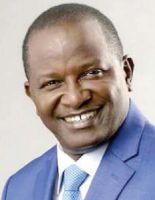
Joseph Nyagah – The cooperatives maestro

“Change is the law of life,” a wise man once said, and while ‘constant change’ may be an oxymoron, it is also a stark reality as Joseph Nthiga Nyagah can confirm. For starters, Gachoka Constituency, which he once represented as MP when it was in Mbeere District, is now Mbeere South Constituency. And Mbeere District, which was split from Embu District in 1996, ceased to exist in 2010 when it was merged into Embu County. In addition, the name Nyagah was once literally synonymous with the leadership of Gachoka for many years.

But things change.

Fortunately, Nyagah is not averse to change. Indeed, he is a man who has learned to change and adapt with the times.

Born in 1948, Nyagah is the firstborn son in a family that has always been in the limelight. His father, Jeremiah Nyagah, was a politician whose career began before Kenya’s independence, when he was elected to represent Embu, Mbeere, Kirinyaga and Nyeri districts on the pre-independence Legislative Council (Legco) in 1958. Come independence, he served as MP for Gachoka for close to three decades until his retirement in 1992. During most of this time he was also a Cabinet Minister in key ministries, including Education, Information and Broadcasting, Agriculture, Environment and Health.

Nyagah’s younger brother, Norman Nyagah, was once the MP for Gachoka before he moved to represent Kamukunji Constituency in Nairobi; he also served as Government Chief Whip. Another brother, Nahashon Nyagah, was once Governor of the Central Bank of Kenya. His sister, Mary Khimulu, was Kenya’s envoy to the United Nations Educational, Scientific and Cultural Organization (UNESCO) and his niece, Annie Nyagah, was appointed Chief Administrative Secretary for Cooperatives in January 2020.

Could Nyagah be described as a chip off the old block?

Undeniably, he bears an uncanny resemblance to his father. But the same cannot be said of their political careers, which are like two streams that for a time followed a similar path and then diverged sharply.

Like his father, Nyagah represented Gachoka, his birthplace, in Parliament; he held the seat for a decade after his brother Norman moved to Kamukunji. Nyagah first waded into politics as a member of the Kenya African National Union (KANU) party. His father had been a KANU man throughout his political career, retiring at the dawn of multiparty politics in the early 1990s.

But Nyagah’s KANU stint expired with President Daniel arap Moi’s era, for by then he was Opposition-bound. Having read the writing on the wall, he boarded the National Rainbow Coalition (NARC) ship and sailed to victory in 2002, the year when KANU’s almost 40-year grip on power was broken.

It was then that he first became an Assistant Minister in the brand new Ministry of East African Community, becoming part of a team with John Koech as Minister and Peter ole Nkuraiyia as Permanent Secretary. The Treaty for the Establishment of the East African Community had been signed in Arusha, Tanzania, at the end of 1999 and come into force in 2000; this was 23 years after the previous Community had collapsed.

In his first term, President Mwai Kibaki had inherited the East Africa Community mantle and run with it, so putting together a competent team to drive this agenda was crucial. Kibaki was keen to achieve the Community’s integration, establishing the new ministry and serving a stint as chairman of the Heads of State Summit―the Community’s supreme decision-making organ.

During this time, the East African Passport was introduced to ease travel within the Community. In addition, investment opportunities in the region were expanded, propelling Kenya to become the second largest investor in Tanzania. Indeed even in retirement, Kibaki has continued to champion the Community’s integration. Speaking at a public lecture at Makerere University in Uganda in February 2015, he proposed that courses on East Africa Studies be introduced in universities in the region.

Nyagah, who would become the national coordinator for the Northern Corridor Integration Project years later, stood to gain valuable experience in this ministry.

But it was in the Ministry of Cooperative Development – where he was appointed Minister in Kibaki’s second term – that he really found his milieu. Together with Assistant Minister Linah Jebii Kilimo and Permanent Secretary Patrick Khaemba, he got down to work. After his high school education at Alliance High School, Nyagah had studied economics and political science at the University of Nairobi and also had a Master of Business Administration degree in Finance and Management from Northwestern University in Illinois, USA. This, coupled with experience he had gained managing Kenya Airways, prepared him for the assignment. Besides his Cabinet posting, Nyagah chaired the Inter-Ministerial Committee of African Co-operative Ministers.

In Kenya, the first School of Cooperation was started in 1952 at the Jean School (now Kenya School of Government). It grew into a college in 1967, over time becoming an important training ground for personnel from co-operative societies and unions as well as middle-cadre government officers involved in the activities of the cooperative movement on behalf of the Ministry of Cooperative Development.

By 2005, the college was offering undergraduate degrees in cooperative business, in collaboration with Jomo Kenyatta University of Agriculture and Technology. In 2016 it became a fully-fledged university – Co-operative University of Kenya, where Nyagah was chancellor from 2016 to 2017.

With unprecedented economic growth and infrastructure development taking place during Kibaki’s tenure, it was an exciting time to be in charge of cooperative development. The sector flourished and in 2008, additional legislation was passed to strengthen and guide this growth. The Cooperative Bank went public and was listed on the Nairobi Stock Exchange in December 2008. The Savings and Credit Cooperative Organisation (SACCO) movement in Kenya grew in leaps and bounds into one of the largest in Africa, with the total membership in the country peaking at 10.1 million in 2010.

The Kenya Union of Savings and Credit Cooperatives (KUSCCO), the umbrella body for SACCOs, thrived, and the Cooperative Alliance of Kenya, a lobby and advocacy organisation for the cooperative movement, was formed, as was the SACCO Societies Regulatory Authority (SASRA), the body charged with regulating deposit taking SACCOs in Kenya. In addition, new SACCOs such as the Kenya USA Diaspora SACCO and various youth cooperatives were registered. It was also during Nyagah’s tenure that matatus were required by law to organise themselves into SACCOs to bring order to their sector.

That Nyagah was genuinely passionate about the cooperative movement is evident in his book, An African Minister’s Lessons for Co-operatives, in which he highlighted challenges and issues faced by the movement in Kenya during his time at the ministry’s helm.

He wrote about his struggle to save the Kenya Planter’s Cooperative Union (KPCU) through the receivership process when one bank and the union’s board members did not seem keen to act in the farmers’ best interests. The union had fallen on hard times in the 1990s, after the liberalisation of the coffee industry, when many members left the cooperative for greener pastures. In a last-ditch effort, a special general meeting was called and the farmers authorised the new team to do whatever was necessary to save the cooperative. Nyagah’s term ended before the issue was resolved; meanwhile KPCU continued to struggle and was eventually taken over by the State and rebranded as New KPCU in 2019.

The former Minister still has a deep concern for farmers and is disappointed by the decline of coffee farming in Kenya. In an article he wrote for The Standard newspaper in March 2020 titled Somebody do something, we are producing less coffee than we did in 1963, he recalled that coffee was once the number one foreign exchange earner for Kenya, which was the leading coffee producer and exporter in the region. He wrote that “last year (2019), we produced less coffee than we did in 1963, at independence. In the eighties, the country reached an annual production of about 140,000 tons. Today, we are below 40,000 tons. What a shame for a country with so much potential to produce more!”

He blamed poorly introduced liberalisation of the sector, which destroyed cooperative institutions such as KPCU.

In his book, Nyagah also wrote about his attempts to organise sugar farmers, with the help of their local leaders, to buy a large stake in five sugar mills – Sony, Chemelil, Nzoia, Muhoroni and Miwani – during the privatisation process.

“I was terribly disappointed that despite my efforts, only some MPs from these two regions showed support. Very few turned up for meetings that we would hold with farmers,” he said.

And things continue to change – the Ministry of Cooperatives is no longer an entity on its own but a department under the Ministry of Industrialisation.

Nyagah retired from public life in April 2013. A few months later, President Uhuru Kenyatta appointed him as an adviser on the National Coordinator for the Northern Corridor Integration Projects. His days in the Ministry of East African Community under Kibaki would stand him in good stead here.

But he was not done with politics yet. In 2017 he threw his hat in the ring for the presidential race, perhaps confirming that once bitten by the political bug, the infection lasts a lifetime.

Interestingly, despite his father’s active involvement in politics, Nyagah’s own foray into the political arena did not follow an obvious path. He was a diplomat for four years, as Kenya’s ambassador to the European Union, Belgium and Luxembourg, and also worked as CEO of Kenya Airways for another four years. Nyagah said it was President Moi, a long-time friend and colleague of his father’s, who encouraged him to move to the public sector.

So in 1997, he ran for the Gachoka seat, and won. His brother Norman, who was the outgoing Gachoka MP, opted to contest the Kamukunji seat rather than compete against his brother. With both brothers in Parliament, Nyagah on a KANU ticket and Norman as a member of the Democratic Party, sibling rivalry reared its head. From different sides of the floor, they wrangled over the use of the family name.

“Mr. Speaker (Francis ole Kaparo), I should be referred to as Nyagah, and that other honourable member on the other side as Joe because the voters will get confused and assume that I am the one supporting bad government policies,” Norman asserted.

“If the Standing Orders permitted it, we should have referred to the honourable gentleman on the other side as the Junior Nyagah,” Joseph retorted.

“You are putting me in an awkward position to arbitrate between the Nyagah siblings,” Kaparo reproached. “For the avoidance of doubt I will refer to the one on the government side as the ‘Nyagah to my right’ and the one on the other side as the ‘Nyagah on my left.’ Since I have only one right and one left there should be no doubt as to which Nyagah I am referring to.”

And so the brothers managed to represent their respective constituencies on different sides of the same House.

After another victory in Gachoka in 2002, Nyagah lost the seat in 2007 to Mutava Musyimi of the Party of National Unity. Nyagah had decamped to NARC in 2002, then to the Orange Democratic Movement (ODM) as a founder and member of the ‘Pentagon’ – the party’s decision-making organ – alongside Raila Odinga, William Ruto, Musalia Mudavadi and Najib Balala. Having suffered a loss at the ballot box, Nyagah was nominated to Parliament by ODM in the coalition government of Kibaki and Odinga (who was Prime Minister), and appointed Minister for Cooperative Development.

He made his 2017 stab at the presidency as an independent candidate. Among his campaign promises, he said he would bring an end to what he termed “irresponsible and reckless borrowing that is crippling our economic growth”. He also promised to prioritise education by setting high standards for schools and providing the resources necessary for success, as well as restore the dignity of teachers. He declared his dream for the youths of Kenya – that each one would receive skills training that would lead to jobs or self-employment. He also emphasised the importance of cooperative action in helping people achieve what they could not as individuals, leaning on the experience he had gained during his time in the Cabinet.

When the presidential election results were announced, Nyagah was a distant third in the first tally. He lost again in the repeat election, but importantly, he pointed out that the repeat vote should have included all eight candidates, not just the top two, since all eight had been victims of the unacceptable transmission of election results that led to the dispute and repeat election.

Joseph Nyagah, one of the few delightfully and genuinely charming politicians Kenya has ever known, died at the Nairobi Hospital on December 11, 2020 at the age of 72. Among his last wishes before he died, according to his brother Norman, was that his body not be viewed before burial.
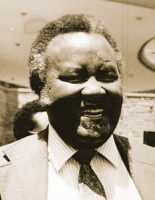
 

Joseph Munyao – A trusted ally

Despite their different backgrounds, they hit it off instantly and would go on to become life-long friends. Kibaki encouraged his friend to enhance his skills by enrolling for part-time classes in accounts after which he helped him get a job as an accounts clerk in the Office of the President. To give him exposure abroad, Kibaki also secured his friend a posting to London as the financial attaché at the Kenyan embassy. When the diplomatic posting lapsed, he convinced his friend to dabble in politics by contesting the Mbooni parliamentary seat in 1974. He won.

At one time Munyao was even an Assistant Minister in Kibaki’s office when he was Vice President. But their friendship would cost Munyao his seat in the infamous 1988 mlolongo (queue) voting method after Kibaki fell out with President Daniel arap Moi. Munyao was part of the collateral damage.

The two would reunite politically with the return to multi-party politics at the end of 1991. They formed the Democratic Party (DP) the following year and Munyao recaptured his Mbooni seat on a DP ticket. When John Keen, who was the DP secretary general, defected to KANU in 1995, Munyao was easily Kibaki’s choice of replacement. He kept the party flag flying as Kibaki was not known to have the stomach for routine politics. Indeed, the joke was often that Kibaki needed to be constantly reminded where the party offices were located!

Munyao first assignment as the party secretary general was to bring back to the DP fold Charity Ngilu, who although had been among the party founders in 1992, had bolted in the countdown to the 1997 General Election when she contested – and made a good showing – on a Social Democratic Party ticket. With Ngilu back in DP’s orbit, it wasn’t too difficult to convince FORD-Kenya’s Kijana Wamalwa to come on board, hence the formation of the National Alliance Party of Kenya (NAK), which would later be joined by a renegade KANU faction that had coalesced as the Rainbow coalition. The two came together to form the National Rainbow Coalition (NARC) that broke KANU’s 39-year hold on power. Munyao was Kibaki’s right-hand man in the negotiations that led to the creation of NARC through which the latter won the presidency.

In the NARC administration, Munyao was first appointed Assistant Minister for Agriculture but given a full ministerial slot six months later in the first of Kibaki’s Cabinet reshuffles. He became Minister for Livestock and Fisheries; it was a new docket that had been hived from the larger Ministry of Agriculture.

To illustrate how important agriculture was on Kibaki’s agenda is a meeting he held with a core team – immediately after taking over as President – to explain exactly what he wanted done in the sector he rightfully described as the engine of Kenya’s economy. Present at the meeting held at State House Nairobi, and a follow-up one at Sagana State Lodge, were Minister for Agriculture Kipruto Kirwa and his assistant, Munyao. Others were Minister for Cooperatives Njeru Ndwiga, Minister for Finance David Mwiraria, and Francis Muthaura, head of the Civil Service. Two other people Kibaki would soon thereafter appoint to chair agriculture-related State corporations were also invited. They were Matu Wamae and Reuben Chesire.

The fact that Munyao was the only Assistant Minister invited to these meetings is a statement in itself.

In an interview for this book, Munyao recalled what transpired at the two meetings. The President began my expressing regret that in the previous decade or so, Kenya’s agriculture sector had been completely run down by “fellows with no brains to see logic” and who did not realise that killing agriculture amounted to indirectly killing the country’s population, more than 80 per cent of who derived their livelihoods from the sector.

Kibaki told the team assembled that he had full faith in their ability to help him restore agriculture to the glory of the 1970s, when Kenya was a thriving economy with a double-digit growth rate.

Then followed a discussion on the institutions and facilities he wanted revived. The first was the facility once known as the Guaranteed Minimum Return (GMR), a State-provided financial tool to cushion Kenyan farmers against unforeseen calamities like weather changes, price fluctuations and any other circumstances that could lead to losses they could not recover from.

Under the scheme, farmers would be assured of a certain minimum pay for their produce whatever the circumstances. It is a facility provided by progressive governments all over the world as a means to ensure farming remains a worthwhile and profitable enterprise.

While admitting that the GMR could not be revived in the form it existed before, the President believed some form of minimum return could still be worked out even in the prevailing free market economy.

Next, Kibaki wanted the Agricultural Finance Corporation (AFC) reactivated. It was the institution that guaranteed GMR and was also tailor-made to offer purpose-built financial packages for the Kenyan farmer. It facilitated the farmer through loans either in cash or kind (the latter in the form of farming inputs such as seeds and fertilisers).

As an indication that he meant business, in the first financial year of his administration (2003/2004), KES 1 billion was earmarked as seed money to revive AFC.

Next on Kibaki’s radar was the Agricultural Development Corporation (ADC). Established through an Act of Parliament in 1965, ADC was primarily meant to ensure the Kenyan farmer had high-quality seeds (hybrid bulls in the case of livestock farmers) to make farming not just an occupation for subsistence and survival but a going business concern and economic pillar. The institution had extensive parcels of land all over the country where seeds were produced and tested before distribution to farmers. It also served as training ground for farmers.

Sadly, ADC was systematically killed over the years, first by massive theft of land via illegal allocations, then by raids on its coffers. It was on Munyao’s watch that ADC was revived. His first task as Minister was to secure title deeds for the corporation’s remaining 19 farms from the original 37. Among those retrieved and secured were the 100,000-hectare Galana-Kulalu in the Tana Delta, now earmarked for a major irrigation project by the Jubilee government under President Uhuru Kenyatta.

Others are Mutara Ranch in Laikipia County, famous as a breeding centre for the rare Boran studs, Lanet Farm known for award-winning Holstein and Friesian breeds, the Molo Potato Centre, Japata Farm on the slopes of Mount Elgon known for Doper sheep breeds, and Katuke and Sabwani farms, home of Ayrshire and Jerseys cattle breeds respectively.

Another of Munyao’s accomplishments was the establishment of the Kenya Dairy Development Project, a partnership between ADC and the US Agency for International Development. The project was aimed at capacity building for increased production and profits in the dairy value chain through modern breeding techniques, real-time provision of veterinary services and feeds management. The project also had a business component through market information and policy advocacy. Related to this was the reactivation of the Kenya Agricultural Research Institute vaccines production centre in Kabete. It was during Munyao’s tenure that foot and mouth disease in Kenya became a thing of the past.

Kibaki was also keen on reviving the National Irrigation Board (NIB). Aware that rain-fed agriculture was only practical in less than a third of Kenya’s land mass, NIB was created to open up as many swathes of land as possible to agriculture through irrigation. The Board also had the mandate to come up with creative water conservancy ideas.

The Kenya Farmers Association (KFA) was a public-cum-private institution with a mandate to purchase and store grains produced in the country besides making available requisite farm implements for farmers. It became such an economic giant that farmers equated it with the government, even going so far as to refer to it as “serikali ndogo” (small government). And with good reason – KFA was there for farmers any time, advancing payments on what they expected to harvest and paying full amounts owed on delivery.

Chesire became the executive chairman of KFA, which was why Kibaki had included him in the two meetings.

The Kenya Cooperative Creameries (KCC) was another institution that added value to the agriculture sector. The giant cooperative not only purchased milk from farmers at a premium price, and in real time, but also facilitated agriculture extension services to enable the farmers to maximise production. It also opened buying centres and built coolants all over the country to ensure no milk went to waste. Further, it partnered with the Kenya Railways Corporation to ensure there were no transport hitches in the value chain.

The revival of KCC was the reason Wamae had been invited to the two meetings.

Kibaki also believed streamlining the operations of the Kenya Tea Development Authority and the Kenya Coffee Planters Union was the way to go. According to Munyao, the President had no problem with tea and coffee farmers engaging in direct sale of their produce, but he thought trading as cooperatives would be more rewarding for them on the basis of economies of scale and capacity for value addition.

The President was also keen to return to pyrethrum farming, reminding his audience at the two meetings that after failing with an experiment with artificial (synthetic) pesticides, the world would soon return to natural products. He said Kenya had a great advantage because the country grew the best crop in the world and had retained patents for its products. He talked about resurrecting the Pyrethrum Board of Kenya, which had been neglected in the same style as the other institutions.

He also wanted the reactivation of the Cotton Lint & Marketing Board, reasoning that the once-vibrant cotton farming sector would not only put money in the pockets of the Kenyan farmer but also create hundreds of jobs via revival of the once-thriving local firms – Rift Valley Textiles (RIVATEX), Kisumu Cotton Mills (KICOMI) and Mount Kenya Textiles (MOUNTEX).

Munyao revealed that his greatest regret was that bad politics in NARC could not and did not allow him to implement the great vision Kibaki had to put Kenya’s agriculture sector back on track.

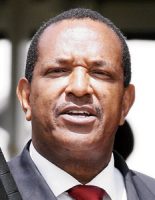
Jamleck Kamau – Nairobi Metropolis vision carrier

Satellite towns – the city’s burgeoning bedroom communities – have kept mushrooming by the day, causing a huge traffic nightmare as millions of commuters try every morning and evening to squeeze themselves in and out of the central business district, the heartbeat of the country’s economy.

Meanwhile, Kenya’s Vision 2030 development blueprint called for the creation of a 24-hour Nairobi city as a way of boosting wealth creation and providing employment through double shifts, the formation of a metropolitan police service to enhance security in the metropolis and the creation of a platform to oversee better planning for the city.

A precursor to today’s Nairobi Metropolitan Services, now under a director-general, the Nairobi Metropolitan Ministry was formed by President Mwai Kibaki in April 2008. It had hitherto been the most decisive effort to try to unclog the transport arteries of East and Central Africa’s transport, commercial and diplomatic hub.

The master stroke solved yet another headache. It helped the President to accommodate one member of the expanded Cabinet that followed the inclusion of his political rival Raila Odinga and his allies in a Grand Coalition Government formed after the disputed 2007 elections.

The Cabinet – the largest in Kenya’s history – had 42 ministers, 21 from each side of the political divide.

The late Mutula Kilonzo, MP for Mbooni, was the pioneer minister even though he was moved to the Justice department within a year. That created an opening for Ndia MP Njeru Githae, who held the reins for three years before being moved to the Finance docket after Uhuru Kenyatta quit to concentrate on his case at the International Criminal Court.

Mr Kilonzo and Mr Githae, who mostly played foundational roles, had mixed success and by the time Jamleck Irungu Kamau, MP for Kigumo, Murang’a, took over in early 2012, the ministry was up and running.

President Kibaki appointed the first-term but vocal MP to the docket to replace Mr Githae a few weeks after the death John Michuki, who came from Kangema, also in Murang’a.

He was one of the youthful and fierce defenders of the Kibaki administration in the President’s second term, which was characterised by squabbling amongst coalition members who had been bitter political foes.

Mr Kamau’s appointment shortly after the death of Mr Michuki in February 2012 was also seen as an act of regional balancing as both came from Murang’a. Yet Mr Kamau and Mr Michuki had been joined at the hip in another sense.

Mr Kamau was the hatchet man for a group of fence-sitting Mt Kenya politicos, led by Mr Michuki, who had been unenthusiastic about the 2010 Constitution. The MP, at the behest of the group that came to be known as the ‘Watermelon Axis’, moved a motion in Parliament seeking a constitutional amendment to postpone the August 4, 2010 referendum date, and only withdrew it after Mr Michuki had unequivocally joined the ‘Yes’ group.

So hardline was the group’s stance that Mr Kamau withdrew the motion only a month to the referendum, after Mr Kibaki held a ‘Yes’ rally in Murang’a.

Mr Kamau does not regret his initial opposition to the 2010 Constitution. “Michuki and I had foreseen the wage bill problem with the advent of counties. Now you see that we cannot manage it. We also feared – and we have been proved right – that we were going to devolve corruption to the counties. Already, Wanjiku has lost so much money. A lot of money has also gone into recurrent expenditure at the expense of development.”

He also opposes the idea of appointing ministers from outside Parliament, arguing that a rogue President would have nobody with the political mettle to rein him in.

As minister, Mr Kamau oversaw the installation of surveillance systems and security installations in the city. The project was conceptualised as a security project that involved installing security cameras and vehicle number plate recognition cameras. It also included rehabilitating signalised junctions and setting up one main control centre at the Nairobi area police headquarters in Milimani and the now redundant control centre at City Hall Annex.

“I served for a very short time, but I can proudly say my number one achievement was the traffic lights. That is my baby. Some of the things were never actualised, but we had planned to have even loudspeakers in specific areas so that officials in the command centres could listen to them.

When the Sh2 billion project ran into controversy, with MPs alleging corruption, Mr Kamau put up a spirited defence of it in Parliament. “I can tell Hon. Members that the CCTVs we are bringing in are hi-tech. They will be able to capture somebody’s face using technology called ‘face-recognition technique’,” he said.

“If your face is captured and you walk anywhere else within the vicinity of any other camera, that particular camera will reveal that Hon. Sonko is there, and he is the one we need. If, for example, the camera reflects on the number plates of a vehicle we are looking for, at the end of the day we will only need to press a key to know where that vehicle is at any one given time.”

He is also credited with laying the foundation for the Nairobi transport network currently being implemented by Infrastructure Cabinet Secretary James Macharia and Nairobi Metropolitan Services-Director General Mohamed Badi.

“The transport system that is being implemented now was also our brainchild. We wanted to have cable cars going to different major corridors of Nairobi. Some of the corridors included the Kangemi-Mombasa Road stretch and the Donholm-Jogoo Road-Ngong Road line. In our estimation, it was going to greatly help transportation within Nairobi,” he said in an interview for this project.

He explained that there was an elaborate masterplan that would take care of transport, water, and the sewerage system.

“We also had a plan to control development. We had not envisioned high-rises in places like Kilileshwa, for instance. You can imagine if this happened in every other area of Nairobi,” he said.

Mr Kamau also lobbied for the inclusion of Murang’a County in the jurisdiction of the Nairobi Metropolitan area, which consisted of Nairobi, Machakos, Kajiado and Kiambu counties. Only Gatanga, which borders Thika town, had been included in the original metropolitan area.

For this effort, Murang’a received funding to set up a dumpsite known as Mitumbiri Sanitary Landfill to the tune of Sh2 billion.

The landfill would, upon completion, receive solid waste material from the four counties in the metro area, but locals near Gikono village are not excited about the project. They claim the waste would find its way to underground water and pollute their water sources.

Apart from the landfill, the Nairobi Metropolitan Services Improvement Project (Namsip), which took over from the Nairobi Metropolitan Ministry, has also been tarmacking connector roads in Kenol town. It also oversaw the tarmacking of a 13km road from Kabati to the landfill.

Murang’a County also received firefighting vehicles as part of the Namsip project thanks to Mr Kamau.

He describes President Kibaki as a principled man who keeps his word. “He is the kind of person who gives you work and supports you to the hilt. But if you make a mistake, you will carry your own cross.”

Mr Kamau was born on 10 May 1965 in Itururu village, Kigumo. He attended Githumu High School and Njiri School for his O and A levels after which he studied for his Certified Public Accountants (CPA) course. He later enrolled at the University of Nairobi for a bachelor of arts degree in economics and political science before proceeding to the United States International University in Africa (USIU-A) for a master’s in business administration.

After a brief work stint in Kenya and the United States, he went full time into business in transport, security, and manufacturing.

He joined politics in 2002 and vied for the Kigumo MP’s seat but lost. Five years later, he was elected through the Party of National Unity (PNU).

Nicknamed ‘Kabisa Kabisa’ for his campaign slogan of ‘Maendeleo Kabisa’ (Development Indeed), Mr Kamau says that when he first joined Parliament, enthusiasm for education in the constituency was very low because of lack of tuition fees for many children.

“I requested my people to allow me to spend the money which should have gone towards my homecoming party, in vogue at the time, to set up the Kigumo Education Endowment Fund. We raised Sh10 million to start us off at a harambee whose chief guest was then Vice-President Kalonzo Musyoka. Uhuru Kenyatta and many other leaders were there too.”

He said he then resolved that any child who did well academically, and was admitted to any school of their choice, would attend whether their parents could raise fees or not. This, together with the Constituency Bursary Fund, which he entrusted a respected clergyman, went a long way in raising educational standards in the constituency.

The Kigumo Education Endowment Fund, which mobilised resources to educate poor but bright children, raised performance standards and saw the electoral area taking the lead in matters of education in the county.

He is also remembered for his contribution in the establishment of Kigumo Girls High School, a centre of excellence. He partnered with the Economic Stimulus Fund under the Ministry of Finance to build the school from scratch.

For this and other development projects such as water and roads, Mr Kamau was rewarded with a second term in the 2013 elections.

His strong support for the newly formed political party of establishment presidential candidate Uhuru Kenyatta, The National Alliance (TNA), which won nearly all the parliamentary seats in Central Kenya, also helped his re-election.

Mr Kamau was a prolific debater, with the Hansard (parliamentary record of proceedings) indicating he spoke in the National Assembly hundreds of times in his 10-year stint as an MP. Most of his statements were made in defence of the government and while tabling reports from his committee.

Among the notable comments he made were remarks in 2016 when an altercation arose between pro-government MPs and Opposition legislators over standing orders and proposals to defer House sittings to discuss election laws.

“We are honourable Members, and the country is watching. We should carry ourselves with decorum and respect and we should never wash our dirty linen in public,” the MP counselled.

In the same year, he zealously defended the Energy Committee, which he chaired, during a motion to discuss a report of the mediation committee on its consideration of the Energy Bill 2015.

Among other objectives, the Energy Bill sought to end Kenya Power’s more than 50-year near monopoly in power distribution and electricity retailing, entrenched under the repealed Energy Act No. 6 of 2006 (the Energy Act).

The bill outlined that power distribution in the energy sector plays a crucial role in the government’s efforts to ensure that every Kenyan has access to electricity by the year 2020.

Under the bill, the government birthed the last mile connectivity programme that took electricity, which had for decades been a reserve of the rich, to ordinary citizens. To dramatise the power ‘revolution’, President Kenyatta and Deputy President William Ruto were often photographed switching on newly connected power in the modest homes of ordinary Kenyans.

The bill, which was later approved by Parliament, also sought to change the process by which power distributors apply for licensing.

The bill reads in part: “Any person that wants to distribute electricity must apply for a licence to the Energy Regulatory Authority (the Authority) provided that the person will not require authorisation to generate electrical energy for their own use of a capacity not exceeding one MW. If any person carries out any electricity undertaking without a licence, they commit an offence and will be liable upon conviction, to a fine not exceeding KES 1 million or to an imprisonment of not more than one (1) year or to both.”

A man of fabulous wealth, Mr Kamau also spent considerable time in his second term in his 26th-floor office at the Kenyatta International Convention Centre in central Nairobi puffing his favourite cigarette and peering into Murang’a on the horizon, scheming how to wrest it from Governor Mwangi wa Iria.

He won round one of the contest when members of the county assembly voted to impeach Mr Wa Iria for alleged gross misconduct and abuse of office. Among other reasons, MCAs alleged lack of accountability in the use of county resources, claiming an “unsustainable debt of Sh2.5 billion”. That victory was short-lived, as senators acquitted the governor after a trial, citing insufficient grounds.

Undeterred, Mr Kamau kept up his onslaught against the governor in the ridges of Murang’a. Ahead of the 2017 elections, the candidacies of the two political heavyweights scared away other potential contenders, leaving the duo to face off in a bruising campaign.

In a show of might, Mr Kamau in December 2016 hosted then National Assembly Majority Leader Aden Duale and other leaders from across the country in a rally at the Mumbi grounds in Murang’a town where Mr Wa Iria’s record as governor was roundly criticised.

But his use of the government machinery, owing to his connections to top State House honchos, seemed to have worked against him.

His critics accused him of misusing his political influence to get his way and believing political brokers instead of creating links directly with the grassroots. These were some of the reasons cited for his failure to capture the Murang’a governorship though he had been endorsed by State House operatives and ran a spirited and well-oiled campaign.

Analysts also believe that his appearances with a fleet of police vehicles also worked against his political agenda, with the electorate seeing him as an unapproachable leader that they could not have accessed if he had clinched the governor’s seat.

In the end, Mr Kamau lost the Jubilee primaries by a narrow margin, a loss he challenged at the Political Parties Disputes Tribunal, believing he had been rigged out. But he later withdrew the complaint partly because he was close to President Kenyatta, who had pleaded with runners-up to support the party’s candidates, with the promise of State appointments.

In 2018, Mr Kamau was appointed chairperson of the Tana and Athi Rivers Development Authority (Tarda). He also spends time overseeing his businesses, which include a flour-milling plant in Thika, from where he can easily access Thika Greens Hotel, where he likes to golf.

Jamleck Irungu Kamau helped establish the foundations of the defunct Nairobi Metropolitan Ministry, and had the dreams of its pioneer ministers been anchored in law and carried through, the pace of the ongoing regeneration of the inner city and the development of the transport network under Nairobi Metropolitan Services would have been faster.