About Us

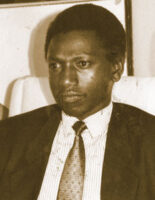
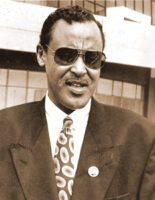
Yusuf Haji – Provincial administrator who had the President’s ear

It was in 2002, at the tail end of President Moi’s regime, that Mohammed Yusuf Haji became a Cabinet minister. Until then he was a career civil servant who had worked in the provincial administration for three decades.

As he was considering a much-deserved retirement, Moi plunged him into politics by nominating him as an MP in 1998. The President wanted Haji in politics to help him in his mission to pacify the people of North Eastern Province (NEP), as it was known then who had for a long time claimed to have been neglected by the government. Moi also wanted Haji’s help in campaigning for his preferred successor, Uhuru Kenyatta, in the province in the 2002 presidential election. His wealth of experience in the public service, especially in the areas of security and conflict resolution, was also valuable to the President.

Haji was the second minister of Somali origin to serve in Moi’s Cabinet after Hussein Maalim Mohamed, who also hailed from Garissa District (now Garissa County). The region had been somewhat isolated since independence because of the secessionist Shifta war that played out between 1963 and 1967. During this time the people of NEP, who were almost all exclusively of Somali origin, wanted to secede and become part of the greater Somalia. But their efforts were thwarted and the region was largely treated as a pariah territory – until Major General (retired) Mohammoud Mohamed, the elder brother of Hussein, helped to crush the attempted coup by a section of Kenya Air Force soldiers on 1 August 1982.

After the 1983 snap General Election and in appreciation of the General’s work, Moi appointed Hussein as a minister in his office. Mohammoud later succeeded Major General Jackson Mulinge as Chief of General Staff.

Born on 23 December 1940 in Garissa, Haji, who hails from the Abdalla clan of the larger Ogaden Darod, started school in 1946 in his native locality. In 1954, he sat for the Kenya African Preliminary Examination (KAPE) and later joined the British Training College, graduating in 1958. He enrolled at the Kenya Institute of Administration between 1970 and 1971 to study Advanced Public Administration before joining the provincial administration. Haji also studied for a Diploma in Management and Financial Control at the University of Birmingham in the UK. He graduated in 1983 and began his career in administration and management.

In the Ministry of State for Provincial Administration and Internal Security, he started off as a District Officer (DO) and rose through the ranks to become a District Commissioner (DC) in various parts of the country before being appointed Provincial Commissioner (PC), serving in Western and Rift Valley provinces and becoming widely known. As a long-serving administrator in the province where Moi hailed from, Haji was able to work closely with and cultivate a long-term friendship with the President, who spent most of his weekends at his Kabarak home near Nakuru in the Rift Valley. At Moi’s behest, he worked for many years in the expansive region.

In those days, provincial administrators were actively involved in politics and crowd mobilisation for Moi and the KANU party rallies. They also acted as returning officers during elections in the single-party era.

The former administrator was a humble person who was known to steer clear of commenting on issues he had no facts about. He was also among the few people who could see Moi without making an appointment

According to John Nandasaba, a retired DC who worked with Haji in various capacities, Moi liked the Rift Valley PC because he was an honest and forthright man. Nandasaba was of the opinion that these traits were what informed the President’s decision to nominate Haji to Parliament – so he could better help him politically and in matters of security.

The former DC described Haji as a government official who respected the President and those close to him, and who dealt firmly and successfully with insecurity. Indeed, he said, Haji earned respect for his ability to resolve conflicts among warring parties in the province. Nandasaba also said while Moi regularly called DCs and PCs directly to keep tabs on the political and security situations in their administrative areas, it was not unusual for Haji to receive more than one call a day. He praised Haji as a good administrator who left people with fond memories of him.

Julius Sunkuli, a Minister for Internal Security in the Moi government, recalled that Haji was respected by Moi as well as his Cabinet colleagues, adding that even as an Assistant Minister, he got along with all Members of Parliament. According to Sunkuli, Haji’s contributions in Parliament concerning his ministry were informed and well researched. “He earned Moi’s respect long before he joined the Cabinet. On issues concerning security, he was always on top of things,” said Sunkuli, who worked closely with Haji in the Cabinet.

In addition, the former administrator is credited with the reputation of a humble person known to steer clear of commenting on issues he had no facts about. He was also among the few government officials who could see Moi without making an appointment.

When KANU nominated Haji as an MP, he was appointed as an Assistant Minister in the Office of the President, a position he held until 2001. In 2002, he was appointed Minister of State for Cabinet Affairs. And in the December 2002 General Election, he was elected MP for Ijara Constituency.

Despite a successful career in public service, Haji, now the Senator for Garissa County, did face some low moments. One was when he was indicted by both the Judicial Commission of Inquiry into Tribal Clashes and the Truth, Justice and Reconciliation Commission of Kenya for involvement in the 1992, 1997 and 1998 ethnic clashes that reportedly left more than 1,000 people dead and hundreds of thousands of others displaced.

He was the Rift Valley PC when the clashes broke out amid agitation for the introduction of multiparty politics. Among the areas that were hard hit by the clashes in the province were Nakuru, Burnt Forest, Narok, Molo, Olenguruone, Eldoret, Nandi Hills, Turbo and Kamasai. The Judicial Commission chaired by Justice Akilano Molade Akiwumi noted that in 1989, Haji allegedly ordered the eviction of non-Maasai people from Lolgorian Division in Transmara District. The Commission’s report further said that he sent Administration Police to evict people from the Kuria community, who were considered non-locals, from Lolgorian.

“During a baraza that he held on January 9 1989, Mohammed Yusuf Haji threatened non-Maasai who did not move out within 14 days would be forced out and their houses burnt. Indeed, during the execution of the eviction order on February 23 1989, all houses belonging to non-Maasai were burnt,” read the report. The violence, it stated, was aimed at evicting people considered to be supporters of the government opposition movement.

The report further claimed that in the clashes that erupted in Olenguruone in 1992, there was possible collusion between Haji and Ishmael Chelang’a, who was the Nakuru DC at the time. It stated that on 28 April 1992, the two advised clash victims to return to their farms on grounds that security had been improved, yet they had flown over the area and seen that most houses had been burnt down.

“It was illogical to expect people to return to their farms when they didn’t have shelter and when the security situation was still volatile. This was conduct which showed extreme callousness on the part of security forces and the provincial administration for the plight of the victims and possible connivance of the clashes by them,” the Akiwumi report read.

The inquest also indicted Haji for preparing, but failing to implement, an action plan that would have prevented tribal clashes in Njoro and Ol Moran in January 1998. It further noted that after a tribal and politically motivated brawl erupted in Ndeffo near Njoro in December 1998, the PC chaired a joint security meeting to discuss the incident and its implications. According to the minutes of the meeting, there was consensus that the 1992 tribal clashes had erupted in a similar manner, and as 1997 was an election year, it was felt that the problem had to be instantly and decisively dealt with, hence the need to adopt the action plan.

The report nonetheless noted that although the action plan was impressive and appropriate, little if anything was done to implement it and as a result, the area was engulfed in violence a month after the 1997 General Election.

Justice Akiwumi recommended that Haji be investigated and prosecuted for his role in the clashes. The same recommendations were made in the Truth, Justice and Reconciliation Commission report and today, human rights groups continue to call for the prosecution of all those who were mentioned in the two reports.

Haji is the father of Noordin Haji, the Director of Public Prosecutions, and Abdul Haji, who is remembered for his heroic efforts to rescue people trapped inside the Westgate Mall in Nairobi during the September 2013 terrorist attack.

In honour of Haji’s long and dedicated service to Kenyans, a school in Garissa County has been named Yusuf Haji Secondary.

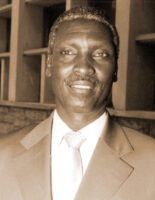
Winfred Nyiva Mwendwa – An accomplished politician who scored many firsts

Winfred Nyiva Mwendwa made history when she was appointed by President Daniel arap Moi as Kenya’s first female Cabinet Minister in 1992. She served as Minister for Culture and Social Services.

The widow of Kenya’s first African Chief Justice, Kitili Maluki Mwendwa, the accomplished politician, now in her late 70s, has scored many firsts in her momentous life. She was the first Minister to champion the empowerment of women from a position of true authority and influence. Known to have the ear of the President, her leadership laid emphasis on the education and empowerment of women, and the fight against female genital mutilation and gender violence. She championed women’s political and economic empowerment through elective positions and financial capacity building.

A shrewd political player, Mwendwa knew how to read the signs of the times in order to be in the right political party at the right time. During her colourful political career, she navigated four different political parties. She managed to successfully contest two separate elections on Kenya African National Union (KANU) and National Rainbow Coalition (NARC) tickets. She later stood on an Orange Democratic Movement-Kenya (ODM-K) ticket but lost and later served as Kitui County Women’s Representative on a Wiper Democratic Movement-Kenya (WDM-K) ticket.

A charismatic leader, she pulled crowds and was admired by her constituents. In a field dominated by male politicians, she stamped her authority on Kitui West constituency where she served as Member of Parliament for 15 years: in 1974 and 1992 under KANU and in 2002 under NARC, with a gap in between.

She was the first Minister to champion the empowerment of women from a position of true authority and influence

During the 2007 elections, she contested on an ODM-K ticket but lost. A close ally of Wiper leader Stephen Kalonzo Musyoka, Mwendwa was elected the first Women’s Rep for her county during the subsequent election held in 2013.

However in 2016, she announced her intention to hang up her boots and retire from politics, drawing to a close a tumultuous political career spanning 40 years.

Born in 1941 in the populous Matinyani Sub-County of Kitui County, Mwendwa attended the local Matinyani Primary School before joining the prestigious Alliance Girls High School in Kikuyu, Kiambu. From Alliance, she pursued a Diploma at the University of Nairobi and later studied for a Diploma in Education at the University of Manchester in the United Kingdom. Thereafter, she proceeded to Cornell University, Ithaca, New York in the United States of America for a Master’s Degree in Textile Science, specialising in Interior Design.

Back home, Mwendwa had a one-year stint teaching at an all-girls’ secondary school between 1965 and 1966.

Her husband was the son of Senior Chief Mwendwa Kitavi, a pioneer colonial Chief in Ukambani who had 17 wives. Kitili Mwendwa became one of Kenya’s top legal brains and was appointed first as Permanent Secretary in the Ministry of Home Affairs under Jaramogi Oginga Odinga before being appointed Chief Justice by Kenya’s founding President Mzee Jomo Kenyatta at a time when Charles Mugane Njonjo was the Attorney General.

He died tragically in 1985 in a grisly and mysterious road accident on Thika Road while serving as MP for Kitui West. His death came at a time when the country was rife with rumours of an impending military coup by elements of the Kenya Army led by Armed Forces Chief General Joseph Ndolo; Kitili was rumoured to have been waiting in the wings to take up the position of Vice President. After his death, Kitili’s half-brother Kyale Mwendwa occupied his parliamentary seat in a subsequent by-election and was appointed Minister for Water Development. His elder brother, Eliud Ngala Mwendwa, was a member of Kenyatta’s first Cabinet, serving in the Labour docket.

Thus Nyiva Mwendwa had been married into a huge family that produced some of the most prominent personalities in Kenya. With her political exposure and education, it seemed only natural that she join politics. Indeed, before her debut into elective politics in 1974, she frequently accompanied her husband and addressed political rallies and other functions that further sparked her interest in elective politics.

She also mobilised women to form self-help groups and initiated other development initiatives, notably water projects in Kitui, a semi-arid area that often experiences drought. Her entry into politics was made easier when her brother-in-law, Eliud Ngala, moved base from Kitui West to Kitui Central, thus guaranteeing her election.

She served as MP from 1974 and made her mark as an able debater in the House who worked tirelessly for the interests of her constituents. Her success notwithstanding, she was unseated in the 1978 elections by Parliamentary Chief Whip and fiery politician Perminus Munyasia.

Mwendwa recaptured the seat in the 1992 General Election and was appointed Assistant Minister for Public Works and Housing. But her most momentous day came on 9 May 1992 when she was promoted to full Cabinet Minister for Culture and Social Services. Her ministerial appointment triggered an avalanche of messages of congratulations from local politicians and organisations, as well as foreign governments and international organisations commending the great strides Kenya had achieved in promoting the position of women in politics.

Indeed, not many women held Cabinet positions on the African continent during that time. Notable figures who blazed this trail in Africa included Gaositwe K.T. Chiepe who was appointed to the senior ministerial portfolio of Foreign Affairs of Botswana in 1985, and Ivory Coast’s Jacqueline Oble who served as Minister of Justice between 1991 and 1994. During Mwendwa’s term in the Cabinet, Rwanda had a female Prime Minister, Agathe Uwilingiyimana (1993), while neighbouring Uganda boasted a female Vice President, Specioza Kazibwe (1994).

Mwendwa’s appointment had come only a few days to the Fourth World Women’s Conference in Beijing, China. An impeccably dressed and well-groomed woman, Mwendwa is widely remembered for a rather controversial decision in 1995 to include her hairdresser as part of her delegation to the conference. She offered a spirited defence for her decision, saying that as leader of the delegation, she had to take good care of her appearance.

In Parliament, she sat on several Parliamentary Committees such as Catering and Health Club, and also the Departmental Committee on Defence and Foreign Relations. She is remembered for her sterling performances when she presented government motions in Parliament or when she answered questions from Members of the august House. Quite often, her entry into the Chamber was preceded by a thunderous foot-thumping welcome from the members, some out of deference to the gracious lady.

As Cabinet Minister, Mwendwa forged close working relations with the Head of State and kept close tabs with top officials of KANU, both at the Kitui Branch and at the national level. Quite adeptly, and in order to make her work easier, she invited Moi to preside over numerous women’s activities that she initiated in order to promote the women’s agenda. She also roped in powerful KANU functionaries, mostly Cabinet Ministers and Assistant Ministers, whenever she was presiding over fundraising rallies in aid of women’s projects in her constituency.

The activities she was involved in were mainly centred on women’s education and empowerment, and the fight against female genital mutilation and gender violence. She championed women’s political and economic empowerment through elective positions and financial capacity building. Many of these areas she supported have since borne fruit.

Given her unique position as the only female Cabinet Minister, Mwendwa was kept extremely busy officiating at numerous functions for women-based organisations. Her clarion call was the empowerment of women not only in Kenya, but in Africa. She forged close ties with and strengthened the capacity of women’s organisations across the country, especially the influential Maendeleo Ya Wanawake (empowerment of women) then led by Zipporah Kittony.

Today, the fruits of her efforts are clear for all to see, what with the impressive number of women in elective positions at all levels in Kenya, the number in the Cabinet and the civil service, CEOs in multi-million shilling parastatals and private companies involved in hospitality, real estate, consultancies, agriculture and manufacturing, not to mention the millions in the informal sector.

Speaking during the launch of the David Musila Foundation in Kitui in 2016, Mwendwa told the media, “I want to declare today that I have decided to retire from active politics to do other business. I will not seek any elective position in future.” She said she would strive to become a political advisor and family counsellor.

Mwendwa looks back on her 40-year political career with pride at her achievements at national, county and constituency level. In particular, she prides herself for not having been implicated in corruption either as a Cabinet Minister, MP or Women’s Rep.

Mwendwa has not only been an inspiration to women in general, but also to fellow widows, having lost her husband 23 years ago. In an interview with The Standard newspaper in January 2017 soon after her retirement from politics, she advised widows to “…never allow despair to get the better of you. You should march on with determination and resolve. Complete whatever work you started with your husband, if you can. Do even better where possible.”

Although Mwendwa never remarried, she advised widows to remarry for the sake of the children if they feel they cannot manage on their own. “Do not accept a ‘come-we-stay’ arrangement,” she advised. She dismissed wife inheritance as “…a good thing overtaken by time and circumstances.”

Mwendwa considers herself lucky in this regard, because her two children, Kavinya and Maluki, were aged 19 and 17 respectively when their father died. She ensured that they pursued their education overseas uninterrupted. “Keeping aloof will break you. Share your problems with other widows. Mama Ngina Kenyatta (Kenya’s pioneer First Lady), Pamela Mboya and Mrs Argwings Kodhek (both widows of Cabinet Ministers in the Kenyatta government) were close to me and I consulted them a lot,” she said. She takes credit for advocating for women’s rights during the Beijing women’s conference, but regrets that the lot of women has not improved to the levels anticipated in the conference objectives, especially in areas of water, food security and poverty. Successive governments, she laments, have failed to address women’s needs.

“When we passed the new Constitution, I was sure that the position of the County Women’s Representative would serve to address the plight of women right from the village level, but things have not changed, especially because the position is not supported through funding,” she remarked.

Her exit from politics brought to an end a political era.

Given her sterling performance in the Cabinet of Moi’s government, Mwendwa will go down in history as a leader who opened the floodgates for the empowerment of women in Kenya.

William ole Ntimama – The Die-Hard Majimboist

Once, faced with a question by an international journalist, William Ronkorua ole Ntimama thundered: “In Africa, you need some level of regimentation to be able to lead; that’s what Africans understand!” And the straight-talking, self-styled champion of Maasai community rights wasn’t apologetic at all.

Ntimama, who died in September 2016, was definitely a force to reckon with in Kenya, and even as far as Tanzania. He was the poster boy for the struggle for the rights of indigenous people in Eastern Africa.

Born in 1927 in Melili area, Narok, Ntimama attended Ole Sankale Primary School in Narok where he sat for his Kenya African Primary Education (KAPE) examination. He later joined Kahuhia Teacher Training College and thereafter was deployed to teach at his former school, then known as Government Maasai School.

Ntimama always claimed to be a self-made man. In 1953, he approached the renowned Carey Francis, the headmaster at Alliance High School, requesting that he be allowed to sit for the ‘O’ level examination as a private candidate. The young man, who hailed from the populous Purko clan of Narok and the Nyangusi age set, the highest in Maasai community, was granted four weeks to prepare himself for the exam.

After this chapter at Alliance High School, where veteran politician Kenneth Matiba was his desk-mate, he returned to teaching and simultaneously enrolled for a Diploma course in Law through correspondence at Worsley College in the United Kingdom.

In 1954, he joined the Narok African District Council and rose to the rank of Secretary.

Ntimama was at the forefront of defending the political status quo. He was often referred to as a KANU party hawk, together with his counterparts Shariff Nassir and Darius Mbela. When in 1994 the civil society and the Opposition drafted a model Constitution, he rushed to brand it the work of ethnic-based outfits.

The self-declared champion of majimboism (federalism) once declared through The Economic Review of July 1994, “…any force used to stop us from federalism could create separatist sentiments (which could lead to) separatist movements.”

“Whenever he called news conferences we were always sure it would either be the lead story the following day or at least a front page story, depending on the events that were happening in the country,” revealed Joseph Kimani, a former correspondent for the Daily Nation in Narok. “He never minced his words nor later recanted his statements nor claimed to have been misquoted.”

Kimani, who covered most of Ntimama’s political meetings, further described him as “… the last breed of politicians who stood by what they said both in public and in private.”

Ntimama fought a protracted war with George Saitoti during the latter’s term as Vice President, over the amorphous post of Maasai spokesperson in the Moi succession battle. At one time he lured John Keen, a Saitoti rival in Kajiado, from the Democratic Party to KANU with the sole aim of intimidating Saitoti. Keen was as powerful as Ntimama before Moi propped up the scholarly Saitoti.

During an interview with The Weekly Review news magazine in September 1995 Ntimama, ever the guardian of his community’s vulnerabilities, declared, “I am merely fighting to create awareness among the Maasai to stand up to defend their fundamental human rights. Non-Maasai think they have the right to own our land and throw us out. For years, our people have been cajoled, coerced and threatened to sell their land. Imagine a Maasai who is illiterate, no skills, no land and no cattle. It will be irrelevant to give people kikombe cha amani (a trophy of peace) when they are hungry and landless. Even in Nairobi, where the Maasai have provided most of the labour for the security industry, they are today being replaced by sirens and hi-tech equipment.”

Ntimama served in the African District Council in 1954 and was elected to the Legislative Council (LegCo) four years later. He left the following year after being appointed as a District Officer. He quit the Civil Service in 1964 to become a farmer before venturing back into politics in 1974 when he was elected Councillor and thereafter Chairman of the Narok County Council.

In the early days, before he had decided to champion Maasai interests in his trademark ferocious way, Ntimama’s brand of politics was defined by his wars with the Narok political titan Justus Kandet ole Tipis. Ntimama captured the Narok North Constituency from Tipis in 1988; just as 12 years earlier, he had grabbed the Kanu Branch chairmanship from his arch-rival.

Tipis wasn’t just any ordinary politician. He was counted among Kenya’s eminent pre-independence leaders, as a member of the Legislative Council. After Kenya gained its political freedom from colonial rule, he embarked on a battle with Stanley Oloitiptip for the amorphous position of Maasai spokesperson.

As a civic leader Ntimama was the Chairman of Narok County Council, a very powerful position that always placed him at odds with the political leaders in the area. In 1983 Ntimama failed to dislodge Tipis from his parliamentary seat, after Moi prevailed upon him to stand down for the MP. He was rewarded with an appointment as Chairperson of the National Housing Corporation (NHC). Because he had relinquished his Council position, that he had held since 1974, Ntimama was basically out of the political loop.

Moi would appoint Tipis to the powerful Ministry of State in charge of Internal Security and Defence, after the 1983 elections. In hindsight, this was the most powerful docket in the nation’s history, because since then, it has been broken down into two separate dockets. In August 1989, The Weekly Review painted Tipis as a titan of Maasai politics: “The political history of Narok from the immediate post-independence years might well read like a history of Tipis, who stamped a near-indelible mark, punctuated by his intense and bitter (30-year) rivalry with Ntimama…”

The Economic Review noted in July 1994, “It is difficult to decipher what might have gone wrong between Tipis and Moi. But it is instructive, in light of current politics, to recall that at the 1988 elections, Ntimama’s campaign in Narok North was based largely on accusing Tipis of being behind large scale settlement of the Kikuyu in Narok District”. Perhaps this is what led to the fallout between Tipis and Moi.

Ntimama, as it now appears, was inching his way back into the corridors of power, and Moi was preparing him to take over from a now out-of-favour Tipis. In fact, in 1988 Ntimama would wrestle the KANU National Treasurer’s post from Tipis, who had held it for 22 straight years (1966-1988).

In the 1988 elections, Tipis – who had been unchallenged as Narok North MP in 1979 and 1983 – faced a more fierce Ntimama. As Chairman of Kanu Narok Branch, Ntimama was a powerhouse in national politics.

Whereas Tipis was a Minister, Ntimama was also powerful in his own right. It was at a time when, as one news publication put it, the line between the presidency, Parliament and the government was as thin as the edge of a razor blade. Apparently, KANU leaders were perceived as being more powerful than even Cabinet Ministers – and they wielded immense powers, thanks to Moi, who believed that the party was more important than the other structures of governance. Indeed, in those days the party was a mass movement, a political cult.

Ntimama survived the anti-Kanu onslaught of 2002 and still became a Minister in the Mwai Kibaki government. By the time he died in September 2016, three years after retiring from politics, Ntimama had served in various Cabinet positions, including Local Government, National Heritage and Culture, Ministry of State in the Office of the President, Ministry of Home Affairs and National Heritage, and Ministry of Transport and Communications.

He had served in the colonial government, as well as in the first three post-independence administrations of Kenyatta, Moi and Kibaki. The month prior to his death, he led a delegation of Maasai leaders to State House to meet Kibaki’s successor, Uhuru Kenyatta.

Unlike most first-time MPs who served as backbenchers, Ntimama was rewarded with a Cabinet slot in Supplies and Marketing immediately he captured his parliamentary seat in the 1988 General Election, before he was assigned to the powerful Ministry of Local Government.

As Minister for Local Government, he had to deal with the issue of ‘ghost workers’ at City Hall, in addition to the legendary corruption, mismanagement, debilitating debts and incessant leadership wrangles. By 1995, the Nairobi City Council was paying KES 108 million annually to fake workers. An audit released by Ntimama identified 1,294 fakes – some who were long dead, had deserted duty, resigned or were under disciplinary measures with no pay.

His was a powerful Ministry. He had the authority to hire and fire officials of any civic authority (City Council, Municipal Councils, Town Councils) in the country. He could also dismantle a council and replace it with a commission. He had the authority to approve budgets for respective civic bodies. But more importantly, he could use his position to popularise and entrench KANU at the grassroots level.

But Ntimama also exercised his powers in a manner that had far-reaching effects on the operations and performance of civic authorities. For instance, in March 1993 he came up with a circular that essentially made Mayors, Town Clerks and committee Chairpersons subjects of the central government. The central government now had sweeping powers over the local government. Those affected complained, but the directive remained.

Ntimama decided to further use his sweeping powers to champion the interests of his Maa community. In August 1992, he declared Enoosupukia Forest to be under the management of the Narok County Council – the institution he had headed for many years. Implicitly, those who were squatting in the forest had to be removed. Incidentally, most of the squatters here were members of the Kikuyu community, and were targeted for eviction under the guise of protecting the water tower.

Ntimama declared that the invaders were guilty of causing deforestation in the area and organised a delegation – among them Minister for Environment and Natural Resources John Sambu, Chairman of Narok County Council Shadrack ole Rotiken, Narok District Commissioner Calestous Akelo, Maasai leaders and a horde of journalists – to visit the area to prove that it was being destroyed by squatters. A conflict pitting Kikuyus to Maasais would erupt, claiming 20 lives.

Ntimama was blamed for the ethnic bloodletting. Kimili MP Mukhisa Kituyi demanded that the Local Government Minister be sacked and prosecuted over the conflict. But leaders from the Rift Valley rallied round Ntimama. Among those who defended Ntimama was the all-powerful Cabinet Minister Nicholas Biwott, who claimed that the Minister was defending the Maasai “…who have been oppressed for too long by the Kikuyus in Enoosupukia”. Later Biwott, President Moi’s closest confidante, would remark that the Kikuyus were “playing the camel and the tent game”.

Ntimama viewed the Kikuyu as “immigrants”, while the Maasai were the indigenous inhabitants of the area. In a statement that came to define his perspective and perhaps his legacy, he advised the “immigrants” to “lie low like antelopes”.

Somehow, as fate would have it, the journalist who reported the phrase thought the burly politician had stated “lie low like envelopes”. Asked about it, Ntimama was anything but apologetic. In fact to him, the inadvertent twist to the statement made it even more dramatic.

In an interview with The Economic Review in July 1994, Ntimama stated: “Let us just say envelopes because it has gone all over the world now … but to elaborate on my ‘lie low like antelopes’ remark, I think somebody must teach these immigrant communities to try and integrate as much as possible with indigenous communities. Some of these immigrant communities have in most cases demonstrated uncontrolled greed and arrogance and this has always brought them into conflict with the local communities. If only they would adapt and integrate, I do not see any problem at all with people living together in harmony.”

Kikuyu leaders, among them Timothy Njoya of the Presbyterian Church of East Africa (PCEA), Opposition leaders Mwai Kibaki, Cabinet Minister Joseph Kamotho and MP Njenga Mungai, complained bitterly about Ntimama’s onslaught on the Kikuyus, but Moi was unmoved. Nor was this a new phenomenon. Apart from Ntimama, other powerful leaders including Simeon Nyachae and Kipkalya Kones had also accused the Kikuyus for oppressing other communuities.

In defending himself, Ntimama was always quick to use the phrase “my hands are clean”.

In an interview with The Weekly Review of 29 September  1995 he said, “I am not anybody’s basher. I have merely been sounding an alarm that the land rights of my community were being trampled upon under the excuse of the so-called willing-buyer willing-seller policy. I want people to realise the fact that Maasai land rights must be put onto the human rights agenda.

“The Kikuyu community have contributed more than any other community to the alienation of Maasai land. Their massive encroachment into maasailand was assisted by corrupt land adjudication committees. They even settled in water catchment areas and destroyed the livelihood of Maasai pastoralists. If speaking against these injustices is what is causing me to be branded a Kikuyu basher, then I have no regrets.”

The self-educated politician always said he was inspired by renowned civil rights activists Martin Luther King, former American President Abraham Lincoln, Winston Churchill and India’s Mahatma Gandhi.

“They were his heroes because like him, they fought for the oppressed and the marginalised, and were advocates of human rights,” explained Ntimama’s daughter Lydia Masikonte, who unsuccessfully vied for Narok Women’s Representative seat on a Chama Cha Mashinani ticket in the 2017 General Election. She also unsuccessfully vied for the same seat on an Orange Democratic Movement ticket in 2013.

“He was fearless and loyal. He believed that in politics, loyalty was a necessary input, but any sound politician must know when to release the punch and when to withhold it,” she added.

She described her father as a no-nonsense personality and relentless in his pursuit of truth and wisdom.

Just before the 1997 elections, the Opposition jointly with a section of the civil society sought constitutional reforms to level the electoral playing field. Ntimama was one of the strongest voices opposing the model reforms drafted by the KANU critics. According to him, any constitutional reform that hardly provided for Majimbo (a loose form of federalism) would not be accepted.

“The Majimbo Constitution of 1963 which was agreed upon in Lancaster House was very well thought (out), and it glorified local government. It was a Constitution which gave autonomy to the regions to control their economic, social and political set-up,” said Ntimama.

During a news conference that he convened in 1994, he launched into a subject that had been considered out of bounds; Ntimama blamed Independence President Jomo Kenyatta for Kenya’s ills. “I believe in regionalism and federalism. But although I would actually support equitable distribution of land in the Rift Valley even as late as now, it’s because Kenyatta in his own wisdom wanted to give the Kikuyu … both an economic and firm political base,” he said.

He would later tell The Economic Review in July 1994, “Kenyatta made sure that it was only the Kikuyu who benefitted in replacing the white man in the agricultural lands of the Rift Valley … what I am trying to say is that Kenyatta committed a breach of trust because he had the Rift Valley exclusively for the sons and daughters of Gikuyu and Mumbi.”

Further, in an opinion piece in The Weekly Review of June 1995, Ntimama argued, “There is nothing like a model or ideal Constitution. The Constitution is not intended to serve a preconceived political agenda, but it is supposed to build structures that would establish immortal humanist foundations. It is therefore important that people of this country try to frustrate and discourage attempts by elitist, affluent, professional, aristocratic and other recognised groups to monopolise or hijack the preparation of the Consitution.”

Towards the tail end of the 1990s, when he was moved to the Ministry of Transport and Communications, the politics of Kenya had changed drastically. Moi was nearing the end of his final term, part of the Opposition was now cooperating with KANU and the rest were amalgamating into a united front against the ruling party. The new Ministry was a different ball game. Kenya Railways (KR) was on the verge of collapse and the road network was in tatters.

KR, in particular, was near bankrupt. Ntimama proposed that the government take over the corporation’s debts because they had been incurred in the course of KR’s operations. He oversaw the process of the corporation leasing 10 locomotives from South Africa and the rehabilitation of dozens of others. But he was opposed to the privatisation of KR, claiming that the timing was not right.

A man who had strongly resisted political pluralism, constitutional reforms and the possible demise of KANU, the party that had ruled Kenya since independence, faced a dilemma after Moi, through Uhuru Kenyatta, lost in the 2002 elections.

Ntimama survived as an MP. Just before the 2007 elections, he decamped to KANU and was appointed Minister for Home Affairs and National Heritage in the Coalition Cabinet of President Mwai Kibaki and Prime Minister Raila Odinga.

Ntimama would later describe Moi as “one of the worst dictators who did not want anybody to go ahead of him.” In total, Ntimama served as Narok North MP for 25 consecutive years.

To his critics, Ntimama was a war-lord. However, without doubt, he fought for the rights of his Maasai community. He was the pioneer activist of Maasai rights. He championed the community’s interests in Kenya and even across borders in Tanzania and Uganda. It was during his time that many Maasais embraced education.

Ntimama gave the Maasai a voice. A people who since time immemorial had felt inferior and of lower status, could now stand tall. The elite among the community came to realise that they could invest in things other than livestock. The Maasai shuka became a common household icon globally, and the red dresses were both recognised and coveted internationally.

Ntimama loved reading. His favourite authors were Shakespeare, Mark Twain, Chinua Achebe and Wole Soyinka. He had built a magnificent home library to house his numerous books. Before his death, he donated what he often described as his “heritage to the Maasai community” to a library in Narok.
William Odongo Omamo – Kenya’s eloquent and polished politician

William Odongo Omamo will go down in history as a smooth operator, one of the few Cabinet ministers who served in the first and second governments as a Member of Parliament in an opposition zone.

Like his nickname, Kaliech (like an elephant), Omamo’s contribution to Kenya’s political landscape was gigantic. On top of this, he was one of the most eloquent and polished politicians Kenya has ever had.

Omamo was first appointed to the Cabinet by Founding President Mzee Jomo Kenyatta, and later by his successor President Daniel arap Moi. He served both leaders with loyalty and commitment in several ministries.

Standing at nearly six feet tall and weighing over 200 kg, Omamo had a great sense of humour and could speak for hours without boring his audience or hosts.

His loyalty to Moi was unquestionable and he has been quoted saying, “My day is incomplete unless I start off by seeing Wuod Odongo (nickname for his boss, Moi).”

Omamo was one of the few ministers in Moi’s 24-year tenure who survived the frequent Cabinet reshuffles because he worked hard and was a results-oriented, development-conscious leader and politician.

Describing his relationship with his former boss, Omamo said, “Moi was like an African chief — decisive, dignified, consulting, and had an open-door policy in the office and in his home.”

The Bondo Member of Parliament (MP) served through three presidencies and served in two Cabinets of two different presidents. He died on 27 April 2010 at the age of 82, leaving his peers and all who knew him with fond memories of their interactions with him.

In his usual humorous style, when MPs had difficulties relating a pothole to a crack in the road, Omamo came up with a perfect definition: “A pothole is a crack on the road large enough to rest a pot on!”

His sense of humour was unmatched. He once declared to Moi at a public rally, “As much as I can tell the amount of honey Kenya produced, I cannot tell His Excellency the number of bees that produced the honey!” accompanied by an uproarious laugh.

While on the campaign trail on another occasion, just before a by-election, he was hard pressed by his Bondo constituents in Siaya County to identify the development projects he had initiated as their representative in Parliament. Omamo retorted that his name was in every school, church and women’s group, while his rival’s name was in every bar in the expansive constituency!

Omamo attended Maranda Sector School (now called Maranda High School). His oratory skills endeared him to his teachers and they groomed him to be a leader. One of his former classmates noted that Omamo “…was a bright student and stood out like a cockerel among chickens.” His hobbies were hunting and planting trees and flowers. These hobbies aptly prepared him for the ministerial portfolios he was to later hold.

He proceeded to Maseno School, where he fell in love with agriculture as a subject. This prepared him to serve as Minister for Agriculture under Kenyatta and Moi.

In a media interview, Omamo narrated how from Maseno School he won a scholarship to travel to India on an Indian government scholarship. “I went to Punjab Agricultural College for two years, and then I moved to Madras Agricultural College, where I graduated with a Bachelor of Science Degree in Agriculture in 1955,” Omamo recalled with pride. He said it was through the support of Jaramogi Oginga Odinga, one of the panellists vetting the students, that he was awarded the scholarship. That first encounter with Odinga, who later became the first Vice President of Kenya, made a lasting impression on his life.

The only Kenyan he remembers meeting in India was Titus Mbathi, who was studying in the neighbouring Madras Christian College, and who would later also serve in the Cabinet in the Kenyatta and Moi governments.

Back in Kenya, Omamo was appointed as an Assistant Agricultural Officer and was posted as a lecturer to Siriba Teachers College in Western Province (the area now covered by Kakamega, Bungoma, Busia and Vihiga counties). But his thirst for further education compelled him to resign after two years to pursue a postgraduate degree in Agricultural Economics at Lahore University, Pakistan, for two years.

Omamo worked hard, and was a results-oriented and development-conscious leader and politician

Armed with a Master’s Degree in Science, he was re-absorbed in the civil service and posted to Embu District (now Embu County) as an Assistant Agricultural Officer in charge of extension services, with a brief to promote bee-keeping, grade cattle rearing, coffee, tea and pyrethrum farming in the area.

In 1960 he resigned again to pursue another Master’s degree in the USA, this time in Agriculture. Again, he was re-hired on his return to Kenya and posted to Nyeri District (now Nyeri County) in Mount Kenya region where he was promoted to Central Provincial Officer in charge of agricultural economics surveys.

Omamo’s star continued to rise as he was transferred to Homa Bay District (now Homa Bay County) in Nyanza with the same responsibilities. He was later moved to Kisumu District (Kisumu County) and promoted to Nyanza Provincial Agricultural Officer and then to Nyanza Regional Agricultural Officer.

In 1965 the Deputy Principal’s post at Egerton Agricultural College (now Egerton University) in Nakuru District (Nakuru County) fell vacant. Omamo was interviewed and became the first African to occupy that office. Six months later his boss, Mike Baretti, retired and Omamo became the first African to head the prestigious college which had 300 enrolled students at the time.

But Kaliech was itching for better things. Three years later he resigned to contest the Bondo parliamentary seat previously held by his mentor, Odinga.

“I believed I had developed a plan for the college and it was therefore time to move on,” said Omamo. “I had no plans to go into politics, but the tragic events of 1969 made me change my mind.”

He was referring to a road accident that killed Foreign Affairs Minister Clement Argwings-Kodhek in Nairobi, the assassination of Economic Planning Minister Tom Mboya, and the outlawing of Odinga’s opposition party, the Kenya People’s Union (KPU).

Omamo said, “I joined politics because of what I saw as a leadership vacuum dangerous for our community following the three unfortunate developments.”

As he was leaving Egerton College, Omamo had in his possession a letter of appointment to head the Natural Resources Division of the United Nations Economic Commission for Africa headquartered in Addis Ababa, Ethiopia. He turned down that offer and headed to Bondo to start campaigning for the seat that had fallen vacant following the arrest and detention of Odinga.

After Moi became President, Omamo was appointed Chairman of the University of Nairobi Council and later as head of the Agricultural Finance Corporation (AFC) because of his academic and work experience and political connections.

However, he resigned in 1980 after the Bondo MP, Jonah Hezekiah Ougo Ochieng, resigned in favour of Odinga, who had been appointed Chairman of the Cotton Marketing Board.

But the ruling party, which was the sole political party in the country at the time, turned down Odinga’s application for nomination on grounds that he was “not KANU enough!” This was shortly after he had accused Kenyatta of being a “land-grabber” at a public function in Mombasa.

Omamo won the seat and Moi appointed him Minister for Environment and Natural Resources because of his unswerving loyalty — that was 10 days after the Moi government had crushed the aborted coup attempt in August 1982.

In the subsequent snap elections held in 1983, Omamo recaptured the Bondo seat and was appointed Minister for Agriculture and Livestock Development, an office he had held before and had a passion for.

In 1987 the Bondo MP was transferred to the Ministry of Science and Technology, but was soon relieved of his duties. In an interview conducted shortly thereafter, Omamo accused his detractors of misleading the President. Apparently his opponents had told Moi that he had praised Odinga for supporting his application for the scholarship to study in India for his undergraduate degree in the 1950s at a thanksgiving party after the Indian university gave him an honorary degree.

Moi pardoned him after the truth of what had transpired at the party emerged. Omamo was appointed to head several commissions, including one on local authorities that recommended that Mombasa and Kisumu be elevated to city status and that the capital city be divided into boroughs.

But Omamo’s attempts to recapture his Bondo seat in 1988 and 1992 were futile because of the popularity of the opposition in Luo Nyanza. He failed yet again in the 1994 by-elections following the death of Odinga.

In 1997, when he defected from KANU to the National Development Party (NDP) formed and led by Jaramogi’s son Raila Odinga, he captured the Muhoroni seat in Kisumu County where he served for one five-year term. Omamo resigned from politics in 2002, saying he was “like a balloon”, which at one time or another must be deflated.

William Ruto – Former ‘hustler’ with his eye on the goal

As a boy, William Kipchirchir Samoei arap Ruto hawked chickens to truck drivers along the Great North Road. Today, he owns thousands of imported chickens from which he collects more than 2,500 eggs a day. The self-proclaimed ‘hustler’ who once called a mud-walled house home, today lives in a multi-million shilling mansion complete with a private airstrip. So much opulence surrounds the house that one of his friends once remarked, “It is such a big house… It is like a hotel.”

But then the man who has often reminded Kenyans that he was once one of them – a jostler who had to shove his way to the table – is no longer counted among the ranks of the ordinary. Today he is the Deputy President of the Republic of Kenya and no longer refers to himself, or others, as hustlers. They are now “my friends”, a phrase he popularised so much that during election campaigns it was on the lips of the President as well as primary school children.

Born in 1966, Ruto would start serious hustling as soon as he graduated from the University of Nairobi, where he attained a Bachelor of Science degree in Botany and Zoology in 1990. He started a company known as African Venture Tours and Hotels, and today owns the Weston Hotel in Nairobi’s Langata Estate. He then taught for a while at Sirgoi and Kamagut primary schools before arriving at his destination: elective politics.

As the re-introduction of multiparty politics took effect, it appeared that the opposition movement – led by Jaramogi Oginga Odinga and Kenneth Matiba – was gaining traction and was ready to oust President Daniel arap Moi in the 1992 General Election. One of the strategies that the President devised to defend his seat was the formation of a youth group named Youth for KANU ’92 (YK92) to drum up support for him. Ruto was the group’s Organising Secretary; from then on, he would become a household name.

The idea behind YK92 was partly to counter the perception that the ruling party, KANU, had lost the hearts and minds of young middle and upper-class Kenyans to the emergent opposition. The group, headed by Cyrus Jirongo, was therefore designed to be an elitist unit composed of polished young businessmen and political activists with close ties to Moi’s sons. At first, the ‘hustler’ was not part of the group because he did not quite ‘fit in’.

While most of the group’s leaders lived in the fast lane – ‘hitting’ companies and parastatals ostensibly to support Moi’s re-election campaign – they needed something to show for their existence, and found in the struggling Ruto a godsend for their Secretariat. He took on the role of Organising Secretary and worked so hard that the powers that be soon took notice of him.

There would be a fallout between Moi and the group after the 1992 elections, and YK92 gradually crumbled as individuals and organisations accused the members of corruption and underhand deals. Due to his minimal role, Ruto was spared the fallout and even found a voice to criticise bigwigs in Moi’s administration, including Vice President George Saitoti and the powerful Cabinet minister Nicholas Biwott, for not adequately rewarding the youths following KANU’s win in 1992.

The efficient, hard-working and committed Ruto was able to use his time in YK92 to build his political network, getting close to Moi’s confidants including the presidential Private Secretary, Joshua Kulei, and Mark Too. It was implied that if you were not in Kulei’s good books, you could not survive in the Cabinet let alone get close to the President. Too, on the other hand, was often referred to by the media as “Mr Fix It” or “Bwana Dawa” (medicine man) for the role he played in brokering political deals for the President. Ruto’s proximity to Kulei and Too was not explicitly reported, but was obvious from public appearances.

At the same time, he continued campaigning in Eldoret North for the parliamentary seat then occupied by the wealthy Reuben Chesire. During the 1997 General Election, Ruto surprised friend and foe alike when he dislodged Chesire from the seat. Even Moi, who had dismissed him as an immature noisemaker during previous campaigns, noticed the young man and appointed him Assistant Minister in the Office of the President in 1998. The hustler was on his way up. He would hold the Eldoret North seat until 2012, when he joined Uhuru Kenyatta’s campaigns for the presidency as his running mate.

As Moi prepared to hand over the mantle to the younger generation in 2002, he promoted the young politician to Minister for Home Affairs. Although his tenure lasted a very short time (from August to December), Ruto was a first among equals in Moi’s ‘Project Uhuru’, a campaign intended to endorse Uhuru as his successor.

When Moi announced Uhuru as his preferred successor, those who had been angling for the ‘anointment’, including Raila Odinga (who had merged his National Democratic Party with KANU in 2001), Kalonzo Musyoka and George Saitoti, rebelled and joined the opposition. However, Musalia Mudavadi (who was serving as Vice President for that period) and Ruto stayed with Moi and supported his decision. For the time he was Minister for Home Affairs, Ruto’s major occupation was to rally support for Moi’s decision and campaign for Uhuru. Little in terms of his Cabinet duties is recorded or known.

‘Project Uhuru’ was, however, scuttled when Odinga joined the opposition led by Mwai Kibaki. Uhuru and KANU lost the presidential election to the National Rainbow Coalition (NARC) under Kibaki and Odinga. Ruto was by Uhuru’s side when he conceded defeat. For several years, he stayed close to Uhuru and continued to support him even after MPs from Uhuru’s back yard in Kiambu District (now Kiambu County) decamped to Kibaki’s side and some were appointed to government positions.

“The incorporation of some of our members into government has impacted negatively on democracy as it is unthinkable that somebody can belong to the official opposition party and be a member of the Cabinet at the same time. The so-called defection of the Kiambu MPs to government significantly affects our party and impacts more negatively on our party Chairman, Uhuru Kenyatta. (However) Uhuru still commands national respect across the political divide and community lines as he has cut his own image as Uhuru and not as a tribal but a national leader,” Ruto told the press in September 2004.

When Kibaki was overwhelmingly elected as the third President of Kenya in 2002, he was expected to form a coalition government in which Odinga would become Prime Minister. The ‘KANU rebels’ were also expected to get half of the Cabinet posts. This, however, did not materialise and Odinga’s supporters started to oppose the government from within. In this, they were joined by the opposition, KANU, led by Uhuru.

During the campaigns for a referendum on a new Constitution in 2005, Ruto joined Odinga in opposing the draft document and caused its defeat. Kibaki sacked his entire Cabinet following this embarrassment and denied ministers from the Liberal Democratic Party wing that had fought the draft slots in the subsequent appointments. He instead invited influential KANU figures to join his government.

Meanwhile, Odinga, Mudavadi and Ruto spearheaded the formation of the Orange Democratic Movement (ODM), which would become a political party to face Kibaki in the 2007 General Election. A consummate public speaker, Ruto joined Odinga – himself a crowd-puller – in creating a support base that went full out against Kibaki.

Even after Kibaki was announced winner of the 2007 presidential election, the two influenced their supporters to reject the results. This led to unprecedented election-related violence in which close to 1,500 Kenyans were killed and about half a million displaced. The chaos forced the Kibaki administration to compromise and, through the intervention of the international community, a Government of National Unity was formed with Odinga as Prime Minister.

A fierce ODM supporter with a sharp mind, Ruto was instrumental in the dialogue that led to the formation of the Government of National Unity and was subsequently rewarded by Odinga with an appointment as Minister for Agriculture. On the other side of the political divide, his former KANU Chairman, Uhuru, was named Deputy Prime Minister by Kibaki.

Ruto would later be implicated in a maize scandal where the Ikolomani MP, Boni Khalwale, accused him in Parliament of selling subsidised maize to well-connected and undeserving individuals and companies. The imported maize had been introduced to stabilise prices after the 2007-2008 election violence, but the individuals and companies that exploited the scheme purportedly skimmed off money running into billions of shillings.

Although a no-confidence motion brought against him failed, controversy continued to dog Ruto and he was transferred from Agriculture to Higher Education in April 2010. In 2011, he was suspended from the Cabinet after the High Court ruled that he had a case to answer in connection with an alleged payment of millions of shillings arising from deals involving the Kenya Pipeline Company.

During the campaigns leading to the referendum for the 2010 Constitution, Ruto and the Clergy rooted for the ‘No’ side that was opposed to the draft document. He argued that some sections of the draft were unsuitable and should have been tackled before the draft went to the referendum. Although they agreed that 20 per cent of the document was not good enough, Kibaki and Odinga campaigned for its adoption, saying amendments could always be made once the Constitution had been enacted.

Towards the end of 2010, Ruto and Uhuru were cited by the International Criminal Court (ICC) for crimes against humanity and the duo, which was on opposite sides during the mayhem, would face the charges even after they were elected Deputy President and President respectively in the 2013 General Election. The court would, however, abandon Ruto’s prosecution in April 2016. Charges against Uhuru had similarly been dropped a few months earlier.

During public rallies, Ruto is known for throwing spikes at his political enemies. For example, when Jubilee Party delegates nominated him and Uhuru in May 2017 to run for the presidency, he told the delegates at the Bomas of Kenya, “Hustlers are among the delegates here present. There are also cooks and shoe-shiners amongst us and so are gardeners and watchmen. These men and women have been elected because they have visions and are ready to work with you (Uhuru) to change this country. So I want to tell my ‘friends’ on the other side that now cooks are here and so are watchmen and designers. They believe in power sharing, we believe in empowerment of our citizens. We are telling them that this country belongs to us all. Wata-do (what can they do)?”

Between 5 and 8 October 2014, when Uhuru was required to personally attend a session at the ICC in The Hague, he appointed Ruto Acting President, an action that raised eyebrows in some quarters but brought to the fore the chemistry between the two leaders. Back in 2012, under the umbrella of the Jubilee coalition made up of Uhuru’s The National Alliance (TNA) party and Ruto’s United Republican Party (URP), the two had mounted a spirited campaign for the presidency.

Their campaign was mainly hinged on the ICC trials and the unity of Kenyans, especially their Kikuyu and Kalenjin communities, which had engaged in tribal clashes every election cycle since 1992. The tyranny of the numbers of their two communities combined with swing votes from other parts of the country brought to nought – for the third time – Odinga’s hopes of becoming President. They won the presidency in March 2013.

Many view Ruto as a hard go-getter who will stop at nothing to achieve his goal, but the Deputy President is also a very religious and emotional man. A day after the Independent Electoral and Boundaries Commission confirmed that Uhuru and Ruto were the President and Deputy President, Ruto and his family attended a church service in Karen, Nairobi, and he wept uncontrollably as he addressed the congregation, apparently overwhelmed by the victory.

In his acceptance speech later, he admitted, “I am lost for words… For us to get where we are today, God, and I say God, did it for us. God turned every hurdle into a bridge. He turned every roadblock into a stepping stone and turned every challenge into an opportunity. Our victory today is, in all manner of definition, a miracle.”

Uhuru and Ruto won the presidency for a second time in August 2017, this time under a unified Jubilee Party, but their victory was overturned by the Supreme Court of Kenya. However, in a repeat presidential election a few months later, they won again. Ruto has announced that he will vie for the presidency when Uhuru’s second and final term expires in 2022.


William Morogo – The roads he built helped to curb banditry

William Cheruiyot Morogo’s Cabinet colleagues talk about a gentleman who got along with colleagues as well as backbenchers in the House. “He respected all and never promised what he couldn’t do,” recalled Stephen ole Ntutu, a former Minister for Tourism, while Philip Chebogel, a friend and former classmate, said, “He was a humble man who was easily accessible to all. He didn’t segregate. He worked for those who voted for him as well as those who didn’t.”

Morogo was the Minister for Roads and Public Works from 2000 to 2002 and was elected to Parliament for 10 years – from 1992 to 2002. In 1992, President Daniel arap Moi backed Morogo’s bid for the Baringo South parliamentary seat. The President and Morogo’s father, Chebet arap Lagat, who had worked as a colonial chief, met in the 1950s. At the time, Moi was in the Legislative Council representing Rift Valley. The two remained friends even after Moi became President. When, in 1992, arap Lagat (as Morogo’s father was popularly known) requested him to support his son’s bid to enter Parliament, Moi agreed.

Morogo, who is now 73 years old, attended Kisanana Primary School up to Standard Four, when he sat for the Intermediate Examination. He then joined Tenges Secondary School where he studied accounts. After Tenges, he helped his father to manage the family farms and businesses in various parts of Baringo and Nakuru districts (both are now counties).

When the Rift Valley Institute of Science and Technology was established in Nakuru in 1979, Morogo was employed as an accountant until his entry into politics in 1992, when he successfully vied for the Baringo South seat. When Mogotio and Eldama Ravine constituencies – both of which were hived out of Baringo South – were established in 1997, Morogo moved to the former, contested and won despite stiff competition.

“His loyalty to Moi and the long friendship his father had with the former President were instrumental in his decade-long stay in parliamentary,” said Chebogel.

Ntutu recalled that as Minister for Roads, Morogo spent much of his time on the ground inspecting roads that were under construction to ensure that they were built according to specifications. Most of these roads are still in good condition 17 years after the minister left office.

“He ensured that all roads that were earmarked for upgrading or improvement were completed on schedule,” said Ntutu.

William Lotodo, a former Baringo East MP, confirmed that Morogo left an indelible mark on the development of road infrastructure in the country and added that even though his actions did not attract much media attention, he achieved a lot in repairing roads that had been in a sorry state for many years. “What he achieved was never highlighted. He was controversy-shy but a hard-working person. He upgraded roads even in the remotest parts of Kenya, such as my former constituency,” Lotodo said.

Today, those roads are being used even by security personnel to fight banditry. “Banditry thrived in the absence of roads. It is now much easier to tackle because the areas are accessible.” Chebogel said the former minister took advantage of his relationship with Moi to ensure that electricity reached rural areas such as Kisanana, and to sink several boreholes in the arid Mogotio Constituency. Yet despite Morogo’s cool and easygoing demeanour, he kept a close eye on his political opponents.

“He had his finger on the pulse of his constituency. He kept tabs on everything that was happening. Although he wasn’t outspoken or violent, he closely monitored his opponents.” As MP, Morogo tried to sort out land ownership wrangles in the constituency. A case in point is the Banita Sisal Estate, an expansive farm whose lease expired more than three decades ago. The farmland was being claimed by two ethnic communities in the area, each claiming it had been ancestral property before an Asian investor acquired it for sisal production.

Morogo also faced a challenge in ensuring that hundreds of acres in Alfega and Majani Mingi sisal estates, which had been in the hands of foreign investors, reverted to locals when the investors started to leave with the collapse of the sisal sector in the country. In the 2002 General Election, Morogo failed to clinch the KANU party nomination, which went to Joseph Korir, a former Nairobi Province Deputy Provincial Commissioner.

John Changwony, a businessman from Mogotio township, recalled how difficult it was for the former minister to accept his loss. “He believed he had done a lot for his people and couldn’t believe it when they showed him their backs.”

After quitting active politics, Morogo now leads a quiet life in Kisanana.

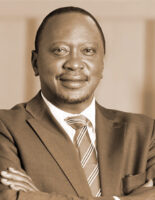
Uhuru Kenyatta – The president Moi built

The saying that an old man sitting on a three-legged stool sees much farther than a young man standing on his feet, best describes the vision of Kenya’s second President, Daniel arap Moi.

While most may have given up on Uhuru Kenyatta’s political career when he was beaten by rookie politician Moses Muihia in 1997, Moi was confident that the son of his former boss would one day make an ‘A’ politician and president. This belief was apparently shared by Mama Ngina Kenyatta, Uhuru’s mother and behind-the-scenes mover and shaker.

The son of Mzee Jomo Kenyatta, Kenya’s founding President, hesitantly embarked on his political career in 1997, a move many believe was set in motion by Mama Ngina with the tacit approval of Moi.

He contested and won the Gatundu KANU Branch chairmanship and was well on the way to bigger political fortunes. However, his plans and those of his mentors were stopped dead in their tracks when he contested the Gatundu South parliamentary seat later that year.

To his surprise and that of many Kenyans, Uhuru was floored by Moses Muihia, a hitherto little-known land valuer. Muihia disappeared on the eve of the election and it was rumoured that his opponents had abducted him. Fingers were pointed at the Uhuru camp and by the time the land valuer reappeared on the afternoon of polling day, tables had significantly turned against the son of Jomo.

For one who grew up in privilege, the bitter experience must have shattered young Uhuru, his family and close friends. Following his political defeat, he is said to have immersed himself in the expansive family business that includes luxury hotels (Heritage Hotels), airlines and commercial farming among other undertakings, and contemplated abandoning politics altogether. After all, it was not he who had set his political train in motion.

But just when everyone thought they had heard the last of Uhuru, at least in political circles, Moi, the self-proclaimed professor of politics, turned his attention back towards him and set his ‘giraffe sight’ into gear.

Clearly mapping out the political journey for the young Kenyatta, in 1999 Moi appointed him Chairman of the Kenya Tourism Board (KTB), a position Uhuru unwittingly or knowingly used to air his leadership abilities as a launching-pad to national politics.

But just how powerful Moi wanted to make Uhuru would not be very well defined until 2001 when he nominated him to the National Assembly, later elevating him to a Cabinet post in the Local Government Ministry. In fact, Moi prevailed on his ‘Mr Fix-it’, one Mark Too, to step down from his parliamentary seat to make room for Uhuru’s nomination.

Years later, during Mark Too’s burial in January 2017 while serving his first term as President, Uhuru narrated the circumstances that led to his elevation. He told mourners how his bid for political office was frustrated by his defeat in 1997 and implied that he had been ready to give up politics were it not for prodding by Moi and Too.

“Mark was in the frontline in pushing me to join elective politics… he often encouraged me, saying that there is no other way to initiate the change that I wanted to make in the country except through politics,” Uhuru disclosed to mourners at the funeral.

Although Too was urging Uhuru to join politics, the former nominated MP did not imagine he would be the sacrificial lamb in the high stakes game. He had intimated to Uhuru that his scheme was to entice a nominated MP from the coast to cede his seat so the younger Kenyatta could be nominated to Parliament. However, Moi had his own plans. One evening in 2001 he called Too and told him that he would be the one to give up his seat for Uhuru.

“So later that evening, Mzee Moi called me, and said that Mark Too had agreed to vacate his seat (for me). I was confused, but I just said it is okay. Moments later, Mark Too came to my house, and I eagerly asked him what happened, because I thought we were to try and convince the MP from Mombasa to give up his seat. But Mark Too simply told me Mzee had arrived at a decision,” Kenyatta recalled.

While this discussion about who would give up his position for the younger Kenyatta was ongoing, Uhuru unknowingly let the cat out of the bag when he met and told Moi of Too’s scheme. He further divulged that Too had told him (Uhuru) that Too had said to Moi that he would show Uhuru around Parliament and teach him how things were done. Apparently, no such discussion had been held between Moi and Too, and so the President turned the tables on Mark Too.

At the behest of his political mentor, Uhuru, nicknamed the ‘Moi Project’, went on to contest the presidency in 2002. He lost to Mwai Kibaki, but courtesy of the old constitutional order, he retained his Gatundu South parliamentary seat and would serve as area MP until 2013 when he was elected President.

The man with a firm and friendly handshake was born to Mzee and his fourth and favourite wife Mama Ngina in 1961 as the country prepared for independence – hence his first name Uhuru (‘freedom’ in Kiswahili).

He may not have been literally born with the proverbial silver spoon in his mouth, but that would soon be his portion barely two years later, when Kenya gained independence from British rule. His father became the country’s first Prime Minister in 1963. The following year, Kenyatta would become the first President of the Republic and his family would become the first family.

The young Kenyatta attended the prestigious St Mary’s School in Nairobi and then Amherst College in the United States where he graduated with a Bachelor’s degree in Politics and Economics.

While serving in Moi’s government as a Cabinet Minister, the game plan that the Head of State had set in motion started playing out, when during the 2001 KANU national elections in March, Kenyatta was elected one of the four National Vice Chairmen of the party. He had joined the big league in the high-stakes game of politics.

Raila Odinga, who had joined Moi from the opposition ranks and married off his National Development Party (NDP) to KANU, became the party’s Secretary General, side-lining the long-serving Joseph Kamotho.

Chancing on a divided opposition that had allowed Moi to sail through in two multiparty elections (1992 and 1997), each of the four Vice Chairmen, as well as the Secretary General, was hoping that Moi would anoint him as KANU’s flag-bearer for the 2002 election, the signal for a paved walk to State House.

The public had initially thought that George Saitoti, Moi’s trusted Vice President of several years, was the first among equals, but the President had surprisingly dismissed his (Saitoti’s) presidential bid in public. This left the shrewd Raila Odinga, who had joined KANU, to ostensibly boost Moi’s image along with the long-serving KANU senior official Kalonzo Musyoka as the most likely candidates.

Greenhorn Uhuru was a distant fourth behind Musalia Mudavadi, who had served for a short period as VP. But ostensibly out of the blue, Moi decided that Uhuru was his preferred successor and influenced his nomination for the race to State House. There was an outcry from the other contenders who termed the move undemocratic and a ploy meant to perpetuate Moi’s leadership through his ‘puppet’ Uhuru.

According to his detractors Moi was, through an Uhuru presidency, trying to insulate himself against any charges of abuse of office that might be brought against him in future. Moi’s decision annoyed the other contenders; their ambitions nipped in the bud, they abandoned Moi and KANU in a huff, with the exception of Musalia Mudavadi. The group, whose departure signalled the beginning of the end for KANU, was led by Raila.

Despite the lukewarm support he got from his colleagues in KANU, to his credit the young Kenyatta conducted a spirited presidential campaign that is said to have cost his family millions of shillings. However, as largely expected, he lost to the Kibaki/Raila onslaught.

When the results of his election loss were released Uhuru, flanked by William Ruto, the man who would be the strongest Raila supporter in 2007 and Uhuru’s running mate in 2013, conceded defeat and took up his role as Official Leader of the Opposition when government was formed.

Uhuru’s tenure as opposition leader was at best lacklustre. The only time Kenyans seemed to hear from him was when he would dismissively describe Kibaki as “a hands-off president”.

When the 2005 campaign for the new Draft Constitution was taken to the road, Uhuru joined the ‘No’ brigade and appeared to be playing second fiddle to Raila who was clearly charting his route to State House by urging Kenyans to reject the Draft Constitution.

Later, when Kibaki sacked Raila and the other ODM Ministers for influencing the rejection of the Draft Constitution, Uhuru abandoned opposition politics and started working with Kibaki. In fact he played a crucial role in the ‘Kibaki Tena’ campaigns and many have acknowledged that were it not for people like him, Kibaki would have been defeated by Raila.

Following the 2007 General Election, Uhuru joined the Kibaki administration and served as Minister for Local Government, a position he had held during the Moi regime. But after the presidential election results were announced, violence was instigated by those disputing Kibaki’s win and the international community had to intervene to halt the carnage. When Raila and his ODM outfit joined the coalition government following post-election negotiations chaired by Kofi Annan, Uhuru was elevated to Deputy Prime Minister and Minister for Trade in April 2008.

He was later transferred to head the Ministry of Finance while maintaining his deputy premiership. He gained a reputation for being among the very few Cabinet Ministers without financial scandals, but on 29 April 2009, Uhuru faced a scare after he presented a supplementary budget that was subsequently approved by Parliament. The purpose of the supplementary budget was to cover a budget gap that had arisen due to slow economic growth. The government required an additional KES 38 billion, but compromised on a figure of KES 22 billion with non-essential proposed expenditure being postponed.

Later, however, MP Gitobu Imanyara raised questions concerning a discrepancy in the amount that had been approved by the House. It appeared that Parliament had voted on KES 31 billion as opposed to the KES 22 billion that they thought they were voting on – the difference totalling KES 9.2 billion. Uhuru initially defended the budget that had been passed, but later admitted that there were computer or typographical errors in the budget bill. An investigation by the CID and a parliamentary committee was ordered by the Speaker to question him on the discrepancies. He was later cleared of any wrongdoing by the Joint Finance and Budgetary Committee on the issue.

As Minister for Finance, Uhuru spearheaded a number of reforms including the creation of the Integrated Financial Management Information System (IFMIS) and a fund for inclusion of the informal sector in the mainstream economy. He is also famed for an unpopular move to conserve resources by denying State officers fuel-guzzling luxury limousines and four-by-four vehicles, downgrading these to the much cheaper but adequately comfortable Volkswagen Passat.

In December 2010 Luis Moreno Ocampo, a prosecutor with the International Criminal Court (ICC) included Uhuru in the list of those suspected to be most responsible for the atrocities committed during the 2007/2008 post-election violence. Also in the list was William Ruto, a former Raila ally turned fierce foe. Uhuru was charged as an indirect co-perpetrator in the violence that followed the announcement of the 2007 presidential poll results. The charges against him were confirmed by the ICC on 23 January 2012. Prior to and after his installation as President, Uhuru attended his trial hearings at the ICC whenever required. In fact, after his election in 2013, the ICC ordered him to appear before it on 8 October 2014 for a Status Conference, a summons that he honoured. Before leaving for The Hague, the President signed off his powers to his deputy Ruto and proceeded to his appointment with the ICC in his private capacity in order not to “…compromise the sovereignty of Kenyans”. The charges brought by the ICC against Uhuru Kenyatta were dropped on 13 March 2015.

Nicknamed ‘Moi’s project’ by the media once Moi named him heir-apparent in 2002 at the expense of Raila and others, Uhuru had his work cut out to shake off the notion that he was not his own man. This perception persisted right up to the time of the 2013 election when, flanked by his running mate and ICC co-accused William Ruto, Uhuru won the presidency, defeating Raila Odinga among other contenders. Although Raila disputed the results at the Supreme Court, his plea was dismissed.

Following the 8 August 2017 General Election, Uhuru garnered 54 per cent of the popular vote and was announced President-elect for a second term on 11 August 2017. Elements associated with Raila’s NASA contested these results at the Supreme Court, which subsequently annulled Uhuru’s win. A second election was held later that year. Once again Uhuru won with 98 per cent of the vote and a 38 per cent voter turnout. Raila refused to acknowledge the victory and formed a resistance movement ostensibly to force electoral reforms.

In 2012, leaked WikiLeaks US embassy cables from Nairobi indicated that Uhuru was the only senior Kenyan politician who was not corrupt. Whether this is as a result of character or by virtue of having been born into wealth, only he knows. In a previous interview, Uhuru commented on how his father taught him and his siblings to be fair to all despite their privileged upbringing.

Said Uhuru, “He taught us the essence of justice and fairness”.

Titus Musembi Mbathi – Beneficiary of a by-election and victim of a snap poll

At independence, Titus Musembi Mbathi was one of Kenya’s pioneer technocrats together with the likes of Kenneth Matiba (Permanent Secretary) and Duncan Ndegwa (Governor, Central Bank of Kenya). Mbathi served as a Permanent Secretary (PS) under President Jomo Kenyatta and President Daniel arap Moi, first in the Ministry of Economic Planning and Development and later in the Ministry of Labour.

As a PS, Mbathi worked closely with Mwai Kibaki and the two became great friends when the latter worked as the Minister for Finance in the Kenyatta and Moi governments. He took advantage of a provision that existed at the time for civil servants to retire at age 40 or after working for 10 years. Mbathi opted to resign in 1969, when he was 40 years old, to go into business.

He then joined politics and vied for the Kitui Central parliamentary seat in 1980, when the youthful Minister for Information and Broadcasting, Daniel Mutinda, lost an election petition. Mbathi managed to sail through and was appointed Minister for Labour by President Moi. He would serve as an MP and Cabinet Minister for three years.

Born in 1929 in Kitui Central, Mbathi attended local schools before joining Mang’u High School in Kiambu District (now Kiambu County). He was two years ahead of Ngala Mwendwa, Tom Mboya and Kibaki, who would play key roles in his future life as a technocrat, politician and captain of industry. Mbathi later went to India where he enrolled at the Madras Christian College. From there he was awarded a two-year Fulbright Scholarship at the New York State University and graduated with a Master’s Degree in Economics.

Mbathi was also instrumental in instituting policies that resulted in the rapid growth of NYS from a few recruits to a major service corps that has since developed several training workshops that include a variety of courses

On his return to Kenya, he immediately plunged into public service, his entry point being the Secretariat of the East African Common Services Organisation (EACSO), which would later become the East African Community (EAC), as an Under Secretary in the Treasury in 1962 and part of 1963.

Kenya’s independence came with blessings for the budding technocrat, who was then 34 years old; he was promoted to the position of Director of Personnel Management in the Office of the President, a post that was equivalent to that of a PS. In 1964 he rose to become a substantive PS, serving in the ministries of Economic Planning and Development under Mboya, and Labour under Mwendwa.

According to Mbathi, his early days in government were like a high school reunion of sorts: “The 1964 trio of Minister Tom Mboya, Assistant Minister Mwai Kibaki and I as Permanent Secretary in the Ministry of Economic Planning and Development was a unique re-ensemble of Mang’u High School old boys.”

In 1980, he tired of it all and decided to change careers. He resigned from his orderly, cushy position in the civil service to try the turbulent and murky waters of politics. His chance at political leadership came when the Kitui Central parliamentary seat was declared vacant after the incumbent MP, the youthful American-trained lawyer, Daniel Mutinda’s election was nullified by the High Court, which found him complicit of an election offence. Moreover Mutinda was barred from vying in the subsequent by-election.

After a hotly contested battle, Mbathi won the seat. He was also appointed to the Ministry of Labour docket, which was fitting as he had a wealth of experience in matters labour. He served as PS under Mwendwa, who was instrumental in developing the National Social Security Fund (NSSF) and the National Youth Service (NYS).

When Mbathi took over the reins at the ministry he was able to further develop and implement the initial concepts of NSSF and NYS, which would evolve into some of Kenya’s key pillars of development. Today, all workers outside the civil service contribute part of their earnings to the social security kitty through a mandatory check-off system and are paid their savings upon retirement. The NSSF has since grown into a multi-billion shilling investment entity engaged in real estate and other business ventures.

Mbathi was also instrumental in instituting policies that resulted in the rapid growth of NYS from a few recruits to a major service corps that has since developed several training workshops that include a variety of courses. It has also established many work stations in far-flung parts of the country engaged in civil works ranging from construction of water canals and irrigation works to rural access roads.

Mbathi’s tenure at the Ministry was, however, short-lived. After the infamous August 1982 coup attempt by a section of Kenya Air Force soldiers, the President called a snap election in 1983 as part of efforts to re-organise his government, tighten security and exercise more control. So while he had benefited from a by-election, he was now a victim of a snap election and, therefore, unable to complete a five-year term as either Minister or MP. Mbathi lost his parliamentary seat to John Mutinda, older brother to the man he had unseated three years before.

Explaining his short stint in Moi’s Cabinet, Mbathi recalled an incident in 1983 that he believed cost him his job and his political career.

“I joined other ministers at a social function graced by President Moi when, out of the blue, he publicly ordered the immediate deregistration of the Kenya Civil Servants’ Union (KCSU) and the University Academic Staff Union (UASU) for not serving the interests of the country,” he said during an interview carried by a local daily. “I sought clarification from then Head of Civil Service Jeremiah Kiereini as to why my Ministry had been overlooked in such a momentous decision with serious repercussions on labour issues. I was in a daze too. My conscience could not let go. I drew the President’s attention to the issue after a Cabinet meeting a few days later, striving to impress upon him that as members of the International Labour Organisation we were duty-bound to liaise with the world body. He looked me straight in the eye and wondered if I did not know that Kenya was a sovereign state. I braved an answer that we were tied to covenants of ILO and other international bodies where we were members.”

The article quoted Mbathi as saying that the President’s next words numbed him. “Are you the same person I appointed a Cabinet Minister?” Later, Mbathi knew his goose was cooked when an intelligence officer casually alluded to his political career being on the edge. “I was not sacked, but I lost my Kitui Central parliamentary seat in hazy circumstances,” he said.

Mbathi’s relationship with President Moi during his three-year stint was described as formal. The Minister did not seem to have become an insider in the Moi government and nor did he forge close links with KANU functionaries which, at that time, was deemed necessary for political survival.

After leaving politics and government, Mbathi concentrated on business until the introduction of multiparty politics and the subsequent formation of the Forum for the Restoration of Democracy (FORD), an opposition party under Jaramogi Oginga Odinga, in 1991. With the birth of FORD, Mbathi became enamoured with the idea of removing KANU from power and decided to jump back into politics. He became FORD’s Kitui District Branch Chairman.

When FORD split into FORD-Kenya and Matiba’s FORD-Asili in 1992, Mbathi opted to work with Matiba. Then in 2002, he joined the newly-minted National Rainbow Coalition (NARC) led by Kibaki and became the committee Chairman. When NARC took over the government after defeating KANU in the 2002 General Election, President Kibaki appointed him Chairman of KenGen, a parastatal organisation and Kenya’s largest electric power generating company.

Mbathi was one of the President’s close confidantes and was even on his advisory and election Boards. He was also among a group of high-ranking government officials named by the Kenya National Commission of Human Rights (KNCHR) accused of engaging in Kibaki’s election campaigns in its 2007 report titled ‘Still Behaving Badly’. Government employees are banned from engaging in political campaigns for any candidates.

Mbathi was also a Director of the Central Bank of Kenya and sat on the University of Nairobi Council. He has worked with the National Shipping Line and Kenya Ports Authority, and headed the Athi River Mining Audit Committee as well as the Rhino Cement Foundation, a corporate charity that invests in education, health and environment.


Taita Kipyegon arap Towett – The odd man of Kenyan politics

Taita Kipyegon arap Towett first joined politics in 1958, when he was elected to the Legislative Council to represent Kericho District. When the Kenya African Democratic Union (KADU) party was formed in 1960, he became its chief adviser and even prophesied the death of the Kenya African National Union (KANU) within the next four months. He was also among prominent Kenyan political leaders who participated in the writing of the country’s first Constitution during the Lancaster House Conference.

In 1963, Towett joined KANU without the consent of his party. He also resigned as MP for Sotik Constituency to defend the seat on a KANU ticket, but lost to Alexander Bii. When he quit KADU, he cited political disillusionment.

When Jomo Kenyatta became Prime Minister, Towett gave conditions for his support: he would only work with Kenyatta if those close to him did not stab him (Towett) in the back. When KADU was dissolved in 1964 and merged with KANU, he refused to cross the floor of the House and was the only one who took the principled option of seeking a fresh mandate from the electorate. He lost the by-election and stayed out in the political cold until 1969, when he recaptured the seat.

After the election Kenyatta, who had since become President, appointed him Minister for Education. He was re-elected in 1974, but lost in 1979 during President Daniel arap Moi’s tenure, and did not return to Parliament until 1992, when KANU nominated him to the House. He was also appointed Chairman of the Kenya Seed Company.

Towett was born in 1925 and started his education at Litein Primary School before joining Kabianga Mission School. In the 1948 Kenya African Preliminary Examination (KAPE), he emerged the top pupil in the country and joined Alliance High School. From there he proceeded to Makerere College in Uganda.

In 1981, he caused a stir when he disclosed that he had written a will directing that when he died, his corpse should be donated to the University of Nairobi’s School of Medicine

He then enrolled for a correspondence course with a South African university and obtained his Bachelor of Arts in Philosophy. He would later study for a Master of Philosophy degree at the University of Nairobi and a Doctorate in Linguistics at the same institution.

Towett’s political woes began in the early 1970s, when a group of politicians tried to change the Constitution of Kenya to bar Moi, who was then Vice President, from ascending to the presidency in the event of Kenyatta’s death while in office. He was said to have been sympathetic to the group and this heightened tensions between him and Moi, who eventually took over as President upon Kenyatta’s death on 22 August 1978.

Towett lost his parliamentary seat to Professor Jonathan Ng’eno in the General Election that followed, and attempted a comeback in 1988, only to bow out of the race because of what he termed “dirty politics”. In the early 1990s, during the clamour for multipartism, he advocated for a partyless state. He would be appointed as a Director of KANU’s Kenya Times Media Trust, which owned the now-defunct Kenya Times newspaper.

Prior to 2007, Towett cautioned the Kipsigis community not to jump onto the bandwagon of multipartism, saying the new opposition political parties could eventually lock them out of the next government. He advised the community to weigh its options — joining other parties or sticking with KANU. He said the Kipsigis had found themselves in the opposition in 2002 due to lack of strategic planning, and advised them not to ignore Moi’s call to them to remain steadfast in KANU. At the time, the Orange Democratic Movement led by Raila Odinga had gained ground.

Towett was controversial, mercurial and known for many eccentricities. In 1961, he declared himself a tribalist and said his Kalenjin community should be proud of their ethnicity. But 10 years later he changed his tune and said people who valued their tribes to the exclusion of all others suffered from shortsightedness.

Not a man to shy away from speaking his mind, he once denounced parliamentary reporters as “semi-deaf and mediocre”. Years later, he would dismiss boarding schools as “useless creations of the colonialists”. When free primary school education was introduced in 2003, he said it should  be abolished because it was a drain on the resources allocated to the Ministry of Education. On crime, Towett once addressed a press conference and said thieves should be arrested and shot in public.

As Minister for Education between 1969 and 1979, he was angered by widespread failure in national examinations. As a result, he placed an advertisement in the press urging students not to give up but to seek his help.

“I do not believe that a person’s chance in education should be curtailed by results. Everyone should get a chance to pass examinations for a bright future,” he said in the advert. Within two weeks, he had received more than 1,000 letters from students. It was not, however, reported how he responded.

Several years before his death, he told journalists at the Nakuru Railway Restaurant that he ate his dinner at exactly midnight. When drinking in a bar, he insisted on using his own bottle top opener and kept the bottle tops in his pocket. Asked why, Towett explained that this ensured that bar attendants could not cheat him if he got drunk. When his bill was brought to him, he would fish out the bottle tops, count them and then pay.

Towett’s strong convictions led many to believe he was arrogant. But during many meetings with journalists in Nakuru, he expressed his belief in the independence of the individual and disagreed with the inclination to judge others. He was an accomplished scholar in Philosophy and Linguistics and authored publications on Kipsigis literature and language as well as Kalenjin social life. His titles include A Study of Kalenjin Linguistics and The History of Kipsigis.

He also had an insatiable appetite for reading and always had a book in his car, which he read during long trips. In appreciation of the role he played during the struggle for independence, he was decorated with the Freedom of the City of Nairobi Honours Award.

In 1981, he caused a stir when he disclosed that he had written a will directing that when he died, his corpse should be donated to the University of Nairobi’s School of Medicine. But it was his research on moles in the 1980s that was a spectacle. He studied their sleeping habits and established the effects on human beings if they ate moles. At first, he wanted to use cats for the study but abandoned the idea because he discovered that they are naturally heavy sleepers. He paid KES 15 for each mole delivered to his Mashimoni home, which was another peculiarity; the house was not built on the ground but below it, hence the name mashimoni (bunker).

He was married five times and divorced twice. In an earlier interview, he said he had divorced his first wife because she sued him over the custody of his children. The second wife, he said, could not cope with his lifestyle and opted out of the marriage. His wives and 26 children could not just walk into his house – he insisted that they book an appointment.

On 8 October 2007, Towett was involved in an accident in Free Area, six kilometres from Nakuru Town. The politician did not survive the crash. He was 82 when he died.

Timothy Mibei – Not cut out for politics

Timothy Mibei served as Minister for Public Works between 1989 and 1992. His entry into the Cabinet came as a consequence of President Daniel arap Moi’s policy to replace Cabinet Ministers who he had relieved of their duties, with new ones from the same region. Thus Mibei replaced John Koech after the latter differed with Moi.

Mibei attended Kabianga High School and later taught at Gitarwet Primary School in Bureti area before changing his profession to join the Judiciary. He studied law through correspondence while teaching, and eventually graduated with a Law degree from Dar es Salaam University. Shortly after, he was posted to Nandi as a Resident Magistrate in Kapsabet.

After falling out with Jonathan Ng’eno, Moi needed a Kipsigis kingpin. The powers that be, namely Isaac Salat, Ezekiel Barngetuny and Ayub Chepkwony, recommended Mibei. “Moi agreed to support him in the mlolongo (queue-voting) General Election of 1988,” recalled Paul Sang, who later became the area MP.

He said that Moi brought in Mibei as a stopgap measure, explaining that he wanted someone who could execute his political agenda of cementing his grip on the larger Kericho District. According to Sang, although Moi had a soft spot for Mibei, he disappointed the President because he failed to execute the agenda. Moi therefore reinstated Ng’eno later in the 1992 General Election.

Throughout his life in active politics, Mibei was a KANU fanatic and was among the politicians who campaigned against the introduction of multiparty politics. He joined other KANU enthusiasts in various meetings held before the advent of pluralism in different parts of the former Rift Valley Province to warn residents against embracing the multiparty form of government.

Because of the competitive and dynamic Kipsigis politics, Mibei could not keep pace with the strategists, forcing those who brought him into politics to go back to the drawing board as pressure for a multiparty Kenya was rising.

“He was not aggressive. Moi and KANU wanted somebody who was visible and vocal to keep opposition out of the larger Kericho district,” said Chepkebit Mibei, a former Kericho branch KANU Chairman and current Chairman of the Kenya Farmers’ Association. “Kipsigis bordered Kisumu and other areas where opposition to the ruling party was strong. Party leadership had to be active to ward off opposition. If you were not active, you were kicked out. That is why there was frequent change of leadership. Those who couldn’t withstand the opposition or were complacent were shown the door by the electorate or the party decision-making organs.”

Mibei did not fit well in the vibrant Kericho politics of the day which Nick Salat, an Assistant Minister in the Office of the President, and his Belgut counterpart Ayub Chepkwony, controlled. Like Barngetuny in the neighbouring Nandi, Salat and Chepkwony had Moi’s ear and could make or break political careers. Chepkwony was Moi’s brother-in-law. He was married to a younger sister of Lena Moi, the President’s wife.

Those who knew Mibei say he was a family man who was contented with what he had. “He valued his cows, his land and loved his children. He had no greed. He had respect for both young and old,” said Salat, a former Bomet MP and current KANU Secretary General.

Franklin Bett, a former State House Comptroller and Bureti MP between 2007 and 2013, remembers Mibei as a good listener who respected Moi and served the country with dedication. “He was somebody who did things to the satisfaction of all. He never complained even when things were against him. He respected authority,” Bett recalled.

Samuel Too, a former Director of the Board of Ewaso Nyiro South Development Authority (ENSDA) who hails from Litein, said the former Minister “…spent much time fighting for his survival and expended energy defending his boss at the national level, at the expense of development in the local area.”

Chepkebit Mibei believes that the former Minister could have done better in public service than in politics, and that he was a gentleman fit for corporate leadership.

Though a one-term MP, Mibei enjoyed easy access to Moi. He enjoyed the privilege of calling or meeting him at any time. Unfortunately, he was neither aggressive nor a good ground mobiliser. Unlike other Public Works and Housing Ministers who made the Ministry their cash cow, he left the Ministry without being mentioned in any scandal involving loss of money earmarked for projects.

“Despite controlling huge infrastructure funds, he did not receive kickbacks that would have changed his life for good. He died a poor man,” said Sang.

As a loyal KANU member against the introduction of multiparty politics, Mibei joined the independence party hawks like Kipkalya Kones, William ole Ntimama, Nicholas Biwott and Henry Kosgey in various meetings held before the advent of pluralism in different parts of the former Rift Valley Province to warn residents against embracing it.

Samson ole Tuya, former Narok South MP, remembers him as a generous person who contributed in harambees, adding that he never reneged on his pledges. “I once went to his office to request him to fix a road in my constituency and it didn’t take long before the works started. He also used to give me money for fundraising,” he recalled. Tuya said Mibei only spoke in Parliament when answering questions about his Ministry, adding that before becoming a Minister, he spoke in support of the government policies especially after presidential speeches. “He spoke when there was need. He was always on the right side of things when loyalty counted,” he said.

Said his childhood friend William Kettienya, “He once told me that he was reading law because he wanted to join the Judiciary and become a Chief Justice.  I think politics stood in the way of that ambition.”

After losing his seat, Mibei left Nairobi for his ancestral home in Bureti where he lived a quiet life. He later died from a degenerative nervous system disease in 2013.

“He couldn’t even afford specialised treatment. Had it not been for local politicians who noticed his deteriorating health, he could have died unnoticed.”