About Us

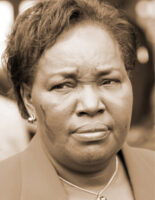
Stephen Kanyinke ole Ntutu – MP who joined politics under pressure

Stephen Kanyinke ole Ntutu ventured into politics in 1997 when he won the Narok South parliamentary seat from the incumbent, Samson ole Tuya. The following year, President Daniel arap Moi appointed him as an Assistant Minister in the East African Community.

Born on 1 January 1958 in Narok District (now known as Narok County), Ntutu attended Ole Sankale Primary School in Narok between 1970 and 1976 before joining Kilgoris Secondary School in 1977. After completing his Form Four his father, Lerionka ole Ntutu, a one-time Senior Chief, tasked him with managing his vast property, which included land holdings.

His father was a polygamist with several wives and 72 children, and was also a close friend of Moi. It was this friendship that led Ntutu senior to bow to pressure and give his son permission to venture into politics after Maasai elders prevailed upon him to do so.

The former MP’s younger brother, Kitilai Ntutu, recalled that their father was not too keen on the idea at first.

“Our father did not want to let him join active politics. He wanted him to continue managing his property. He gave in after the pressure became too intense for him to handle,” said Kitilai, who himself unsuccessfully vied for the Narok South seat on a KANU party ticket in the 2017 General Election.

In October 2001, Moi appointed Ntutu as Minister for Tourism. At the time, his ministers were defecting from the ruling KANU to opposition parties in an effort to secure their political future. Ntutu went on to be re-elected in Narok South and subsequently served in President Mwai Kibaki’s Cabinet. He is renowned for his fierce engagement with William ole Ntimama, a former MP and Cabinet Minister, over Maasai leadership.

Another of Ntutu’s brothers, Patrick Ntutu, is the immediate former MP for Narok West and ran, albeit unsuccessfully, for the governorship of Narok County in 2017.

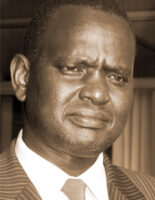
Stephen Kalonzo Musyoka – From poor village boy to consummate diplomat

It is said that one should never despise one’s humble beginnings, for who knows where they could lead? This saying rings true for Stephen Kalonzo Musyoka, who rose from being a poor village boy in the dry, windswept town of Tseikuru on the northern fringes of present-day Kitui County to become a Cabinet Minister and eventually the 10th Vice President of Kenya.

It was a combination of hope, courage, resilience, determination and faith that saw him overcome the harsh realities of his childhood to distinguish himself as one of the most seasoned diplomats on the Kenyan landscape during his tenure as President Daniel arap Moi’s Minister for Foreign Affairs and International Co-operation, especially owing to his efforts to mediate conflicts in the African region.

Musyoka clawed his way up the nation’s political ladder first by becoming Kenya’s youngest Member of Parliament at age 31, when he was elected for the first time in 1985. He went on to serve in public office for 28 years until March 2013, when his political coalition party lost in the General Election.

Musyoka was born in Tseikuru on 24 December 1953 to peasant, Christian parents. His father managed a shop in the sleepy town located in the semi-arid area of Mwingi, which was part of Kitui District as it was known at the time. He attended Tseikuru Full Primary School for his basic education between 1960 and 1967. He then moved to Kitui High School and later in 1973, joined Meru School in Meru District (now Meru County) for his ‘A’ level studies. He went on to the University of Nairobi in 1977, from where he graduated with a Bachelor of Law degree before doing the requisite Postgraduate Diploma in Law at the Kenya School of Law the following year.

After working briefly in the Customs Department at the Port of Mombasa, he did his pupillage at Kaplan & Stratton Advocates then worked as a manager in the Legal Department of the Comcraft Group. He would later go into private practice and in 1979, attended the Mediterranean Institute of Management in Cyprus for a Postgraduate Diploma in Business Management on a scholarship from the Rotary Club.

As Foreign Affairs Minister and mediator of various conflicts in Africa, Musyoka travelled extensively to various countries as Head of Government Delegation representing the Head of State

Musyoka’s debut in elective politics saw him vie for the Kitui North Constituency seat in 1983. He lost, coming fourth in a crowded field that was won by veteran politician Peter Manandu. At the time, Kenya was a one-party state, so the only party fielding candidates was KANU.

A second chance presented itself just two years later, albeit through tragedy. Manandu, who was quite popular in the constituency, was shot and killed in controversial circumstances by an Administration Police officer at the shopping centre in Tseikuru. Although Musyoka was at first reluctant to participate in the subsequent by-election given the circumstances, he was eventually prevailed upon by his supporters to relent. After a rigorous campaign, he won amid wagging tongues that claimed the development had been a little too convenient for him.

After just one year in Parliament, Musyoka was appointed Assistant Minister for Works, Housing and Physical Planning, where he worked until 1988. He was re-elected as an MP in the controversial mlolongo (queue voting) system in 1988. In Parliament, the young lawyer was being recognised for his articulate expression and regard for detail during his contributions on the floor of the House. This was perhaps why he was elected to the coveted position of Deputy Speaker of the National Assembly, which he held from 1988 to 1992. Another feather in his political cap was his election by the KANU National Delegates’ Conference – the party’s top organ – as the KANU National Organising Secretary. This effectively made him a national leader overnight. He held that position until 2002.

When Kenya experienced a significant political shift following the introduction of multipartism, Musyoka stayed on in KANU as other politicians formed or joined other parties that sought to oust the ruling party in the 1992 General Election. He once again retained his parliamentary seat and started working to align himself with Ukambani’s emerging power broker, the late Mulu Mutisya, who was then the President’s point man in the region. The two forged a close political relationship and Musyoka remained a notable leader in the region. With his political star still rising, he won the newly-created Mwingi North parliamentary seat after which he was appointed to the prestigious Foreign Affairs and International Cooperation docket as Minister, where he once again distinguished himself.

As an MP, Musyoka was credited with initiating several development programmes in his constituency, including major water projects following successful negotiations for funding with the Italian government. Mwingi, his home base, is one of the fastest growing towns in Kenya because of the water it gets from the Kiambere-Mwingi pipeline.

In the diplomatic arena, he made his mark when, as the President’s envoy, he mediated the Sudan peace process, an initiative of the Inter-Governmental Authority on Development (IGAD) and a consortium of donor countries. The negotiations led to the signing of protocols on power-sharing, wealth-sharing, conflict resolution, ceasefire and withdrawal of troops. The Machakos Protocol, which was the agreement on the principles of government and governance, was signed on 20 July 2002.

This led to the signing of the Comprehensive Peace Agreement, also known as the Naivasha Agreement, on 9 January 2005 by the Sudan People’s Liberation Movement and the Government of Sudan. A referendum was held in Sudan from 9 to 15 January 2011 to determine if South Sudan should declare its independence from Sudan. Some 98.83 per cent of the population voted for independence and the Republic of South Sudan was born on 9 July 2011.

As Foreign Affairs Minister and mediator of various conflicts in Africa, including Mozambique, Musyoka travelled extensively to various countries as Head of Government Delegation representing the Head of State. He also addressed the United Nations General Assembly in 1993 and 1998. When British Prime Minister, Tony Blair, praised Musyoka in the presence of Moi after the 1997 Commonwealth Heads of Government Meeting, Musyoka was quoted by the media as saying that he was likely to lose his Foreign Affairs docket. Sure enough, after that year’s General Election, he was moved to the Ministry of Education and Manpower Development. In 2001, midway through his term, which was also Moi’s final term in office, he was transferred to the Ministry of Tourism and Information in yet another Cabinet reshuffle.

Meanwhile, Musyoka had been under pressure from friends, supporters in his constituency and advisers to run for the presidency in the run-up to the 2002 multiparty elections in which Moi was no longer eligible to vie. In his autobiography entitled Against All Odds, Musyoka wrote that soon after joining politics as a young lawyer, he had an ambition to become President of Kenya. “I was ready to run for the highest seat as early as 1997 except that Moi was still President and I could not run against him as I regarded him as a father,” he revealed.

Fuelled by determination to contest the presidency, he went to see Moi to find out whether he would allow KANU to choose its flag bearer in a democratic manner. Moi did not respond to him immediately, but a few weeks later, he publicly declared his support for Uhuru Kenyatta as his successor.

“I retreated to my constituency for some time to cool down and seek solace. When I returned, Moi summoned me to State House. I went into his office and he told me, ‘You know Stephen, I have been thinking over this issue. Don’t bother bringing Mzee Mulu Mutisya and Kamba elders to meet Kalenjin elders, because the Kalenjin elders have decided to support Uhuru Kenyatta’,” Musyoka wrote.

Together with a few other leaders, he advised Moi to drop the ‘Uhuru Kenyatta Project’, which they said would lead to KANU’s defeat, but the President inexplicably stuck to his guns.

“I have never understood Moi’s decision to pick Uhuru. It seemed almost desperate. Moi could have left office as a hero instead of enduring the humiliation he faced at the polls and during the official handing-over ceremony at Uhuru Park when (Mwai) Kibaki was sworn in as the third President.”

In view of this turn of events, Musyoka decamped from the ruling party to the little-known Liberal Democratic Party (LDP) as a founder member. Once Moi announced Kenyatta as his preferred successor, political bigwigs such as Raila Odinga, George Saitoti, Kijana Wamalwa and Charity Ngilu left the ruling party and other parties and coalesced under the banner of the National Rainbow Coalition (NARC), with Kibaki as the leader.

Musyoka was once more re-elected MP for Mwingi North in the 2002 elections that saw Kibaki win the presidency, thus ending KANU’s 40-year rule. Musyoka was re-appointed Minister for Foreign Affairs but in a Cabinet reshuffle two years later, he was moved to the less prestigious Ministry of Environment and Natural Resources.

In late August 2004, he was removed from his position as Chairman of the Sudanese and Somali peace talks and replaced by John Koech. However, he remained actively involved in politics and in 2007, vied for the presidency through the ODM-Kenya party, having decamped from LDP. According to official results, Kibaki won the election, defeating Odinga and Musyoka, who was placed a distant third with 9 per cent of the votes. Following the post-election violence that was an expression of dissatisfaction with the poll results, Kibaki appointed Musyoka as Vice President and Minister for Home Affairs on 8 January 2008, but this did little to pacify the violence in the country.

Amid the mayhem, former UN Secretary General Kofi Annan agreed to mediate between Kibaki and Odinga after the African Union failed to broker a deal through former Ghanaian President John Kufuor. In less than a month, Annan managed to deliver a successful mediation that led to the signing of the National Accord and the formation of the Grand Coalition Government that saw Odinga’s key lieutenants being appointed Cabinet Ministers as he took the newly-minted position of Prime Minister and Co-coordinator of Government Programmes.

With Musyoka as Vice President and Odinga as Prime Minister, there was often some jostling over who between them was second in command after the President. Yet curiously, the two joined forces ahead of the March 2013 General Election and formed the Coalition for Reforms and Democracy (CORD), with Musyoka even shelving his presidential ambitions to run as Odinga’s running mate. However, their main opponent, Kenyatta, was declared the winner and was sworn in as the fourth President of Kenya.

Stanley Shapashina ole Oloitiptip – The man who stood up to colonialists for Maasai land rights

From 1963 to 1983, Stanley Shapashina ole Oloitiptip bestrode Maasai politics like a colossus, and when he dropped out of the national limelight, his political career collapsed like a house of cards – ending with a 12-month jail term.

Born in 1924 in Endoinyo Oontawua, at the foot of Mt Kilimanjaro, Oloitiptip was the third born of Naseramporro and Olong’oyana Oloitiptip and a member of the Irmingana sub-clan of the Ilaitayiok clan. The clan occupies the Olgulului Ilolarashi Group Ranch, with the Amboseli National Park at the heart of it.

It was both the politics of conservation and the continued allocation of Maasai land that defined his career as the Member of Parliament for Kajiado South Constituency. Oloitiptip had little formal education, only going up to Standard Four at the Narok Government School, where he sat for the Kenya African Preliminary Examination (KAPE) in 1941.

When World War II broke out, the Kajiado region turned into a war zone as allied troops battled German Forces from Tanganyika. Oloitiptip, then aged 19, joined the Kings African Rifles as a nursing orderly and joined other African soldiers who were airlifted to the war zones of Burma, India and Ceylon.

He rose to the rank of Sergeant before he returned in 1945 to work in the colonial government’s Department of Health as a Medical Assistant in Kajiado District. He also ran a clinic in Il Bissil.

During the Mau Mau freedom fighters’ uprising, the British colonialists turned to Kenyans outside the Kikuyu, Embu and Meru communities to help crush the movement. As a sympathiser of the struggle for independence, Oloitiptip refused to be conscripted and managed to convince his clan not to support the British.

With the jailing of Jomo Kenyatta, who would later become the country’s first President, the next stage of politics involved the future of Kenya, and land became a thorny issue.

The Maasai had lost millions of acres to big colonial ranches and wanted to negotiate a post-independence deal that brought together their most learned people, among them Oloitiptip, to form the Maasai United Front (MUF) to advocate for Maasai rights. He was elected Chairman and joined hands with a young newspaper journalist working for the Daily Nation, John Keen, as the Secretary General, and Justus ole Tipis.

The British government insisted on a willing-buyer willing-seller policy rather than a blanket return of the ‘lost’ land to the communities. While the Kenya African National Union (KANU) party also pushed for the right to buy land anywhere as enshrined in the Constitution under the Bill of Rights, the MUF wanted to safeguard Maasai interests against the large tribes, especially the Kikuyu and the Luo, who had congregated under KANU.

As MUF Chairman, Oloitiptip was part of the Maasai delegation that went to press for Maasai rights during the Lancaster House Conference in the pre-independence period.

In the June 1963 General Election, Oloitiptip vied for the Kajiado South seat on a Kenya African Democratic Union (KADU) party ticket and won, thus launching a parliamentary career that would span an uninterrupted 23 years. From this victory, he emerged as the senior-most Maasai politician after Keen failed to capture the Kajiado North seat.

Post-independence party politics in Maasailand revolved around the personalities of Keen and Oloitiptip as they both jostled for KANU leadership. Determined to oust his rival, Keen organised local party branch elections in 1969 in which all of Oloitiptip’s supporters were locked out. In his victory speech, Keen accused Oloitiptip of keeping the Maasai “under a thick blanket”.

But it was Oloitiptip who had the last laugh. Robert Matano, the KANU Secretary General, overturned the elections and returned Oloitiptip’s men. Keen was by then the KANU Organising Secretary and Oloitiptip a Cabinet Minister. Oloitiptip, a conservative Maasai, believed the Maasai should not be forced to change their lifestyle, which kept him at constant loggerheads with Keen and his supporters.

Oloitiptip was pivotal in all discussions that involved the Maasai, and any policies formulated either by donors or international conservation groups had to involve him as the link man to the community. Money from wildlife started to stream into the community, along with the building of schools as well as hotels to cater for tourists. Oloitiptip’s wealth also grew.

When development of the Kimana Group Ranch was proposed outside the expansive Amboseli National Park, Oloitiptip seized the chance to own a lodge next to the ranch. The Kimana Safari Lodge was opened in 1978 and was expected to cash in on tourists outside Amboseli. This endeared him to the powers around Kenyatta, and he became a close friend of many politicians also eager to set up tourist camps outside the national park.

In national politics, Oloitiptip was eclipsed by powerful Cabinet figures from Central Province as he headed the Ministry of Natural Resources, at the time considered to have scant prestige.

He distinguished himself during the Change-the-Constitution episode of 1976 by confronting Central Province heavyweights who included Njenga Karume, Kihika Kimani, Jackson Angaine and Njoroge Mungai.

Oloitiptip joined the group supporting the Vice President, Daniel arap Moi, which comprised Attorney General Charles Njonjo and Cabinet Minister G.G. Kariuki. Oloitiptip was credited with collecting protest signatures from MPs opposed to the Karume-Kimani-Angaine campaign, which he called unethical, immoral and bordering on criminality. By then, only Shariff Nassir, a Cabinet Minister from Coast Province, had openly opposed the leaders from Central Kenya.

Oloitiptip collected 98 signatures from MPs, among them 10 Cabinet ministers, sounding the death knell to any possibility of the Change-the-Constitution lobby group forcing any changes through Parliament. In addition, they were unable to muster the two-thirds majority required.

When Kenyatta died in 1978, Moi took over as President and after the 1979 General Election, he appointed Oloitiptip as Minister for Home Affairs. But it was a later appointment as Minister for Local Government that enabled Oloitiptip to change the landscape of local authorities by increasing the number of municipal and urban councils through the elevation of obscure rural shopping centres to municipal and town status.

The Minister also promised government funding for water, sewerage and other infrastructure, an issue that would feature during a Commission of Inquiry set up by Moi to investigate the conduct of Njonjo in 1984. With powerful forces within the Moi presidency all fighting for a place at the table, Oloitiptip had sided with Njonjo in his bitter wars with the VP, Mwai Kibaki.

In 1981, the two sides held separate political rallies; Njonjo was in Kikuyu Constituency while Kibaki was hosted in Mathare by Cabinet Minister Munyua Waiyaki. The Njonjo meeting attacked “anti-Moi elements”, while Kibaki held the view that no one had the mandate to screen who was or was not loyal to Moi.

Oloitiptip took Kibaki on for that slur, saying the VP was ignorant of how the government operated. He would also answer Martin Shikuku, the MP for Butere, who had questioned the source of wealth of some Cabinet ministers. Oloitiptip dismissed Shikuku and his friends as a “bunch of communist agents too lazy to work to get rich”.

Yet it was Kibaki who would earn Moi’s support when, in 1984, the President warned politicians against undermining the VP. This soon triggered a debate speculating about a “traitor” in the ranks, which would lead to the downfall of Njonjo and his allies. Those targeted were Oloitiptip, Zachary Onyonka, Charles Rubia and G.G. Kariuki.

Oloitiptip was the only Minister allied to Njonjo who won back his seat after the snap 1983 General Election. However, Moi relegated him to the backbench.

He was later arrested for flouting tax laws, and in June 1984 was jailed for 12 months for failing to pay taxes on a hotel he owned in Loitokitok Town. He was then expelled from KANU and lost his parliamentary seat in a by-election that was won by Moses ole Kenah.

Upon his release from jail as an ailing man, he retreated from public life to manage his wealth, which included residential houses in Nairobi’s Lavington Estate, a slaughterhouse, several ranches and a tourist lodge. Troubled by health issues, Oloitiptip died on 22 January 1985, aged 61.

Simeon Nyachae -Fiery administrator who faced cartels head on

As perhaps one of the most prominent provincial administrators in Kenya, Simeon Nyandusi Nyachae was the embodiment of hard work and resilience; a man who painstakingly scaled the ranks of public administration to become a contender for the presidency – from District Commissioner to Provincial Commissioner, parastatal head, Head of Public Service and Secretary to the Cabinet, Cabinet Minister and presidential candidate.

While in the Cabinet, Nyachae strove to bring financial probity to the government. His quest for a leaner public service and a clean National Treasury was said to have made him unpopular among business cartels and political power brokers. At one time Nyachae, a man who would never allow himself to be held hostage, even resigned from government in a huff.

As Minister for Finance, he once decreed that all State officers, including Cabinet Ministers, should no longer use official cars with an engine capacity bigger than 2,000cc. But public servants resisted the directive and it wasn’t long before he was ejected from the National Treasury. This is the man who came up with a budget that was considered balanced, bold and austere. He proposed salary cuts at a time when the Kenyan economy was in the doldrums, sparking unprecedented industrial action by teachers, bankers and other professionals.

All through his working life, Nyachae was known for his authority and power – to the point where as Head of Public Service and Secretary to the Cabinet, ministers were said to fear him. In fact, the position of Chief Secretary would be scrapped by Parliament in December 1986 following accusations that Nyachae and his predecessors had elevated themselves to the status of small gods and created unparalleled centres of power during their tenure. Critics felt the position carried as much power and authority as that of a Prime Minister.

The British Broadcasting Corporation (BBC) once said of the career civil servant, “Simeon Nyachae has been described by opponents as arrogant, dictatorial, overbearing, self-righteous, pushy and given to flaunting his massive wealth. He is known to friends and foes alike as a fiery speaker who does not suffer fools gladly – crossing swords with fellow ministers…”

Nyachae was born 87 years ago in Nyaribari, Kisii District (now Kisii County). His father, Senior Chief Musa Nyandusi, was said to have 15 wives and 40 children. Nyachae joined Nyanchwa Seventh Day Adventist School in 1941 and advanced to Kereri Intermediate School in 1947. He then joined Kisii Government School (later renamed Kisii High School) in 1949. Before sitting for his Ordinary Level School Certificate in 1953, Nyachae left school and got a job as a District Clerk at the Chief’s camp. But his father decided that his son should further his education and sent him to study Public Administration in London in 1957. Nyachae returned to Kenya the following year and went to work as a District Officer in Kangundo.

He would later return to the UK for a Diploma in Public Administration at the prestigious Churchill College, University  of Cambridge, in 1963. He became a District Commissioner in 1964 and rose up the provincial administration ladder to the position of Provincial Commissioner (PC).

Nyachae served as a PC in Central Kenya until November 1979, when President Daniel arap Moi appointed him Permanent Secretary in the Office of the President. It was during this time that he built his business, Sansora Group Ltd, which had interests in garment manufacturing, baked goods, milling, animal feed processing, metal works and finance.

Nyachae’s path to national politics was littered with landmines. First, he was inexplicably denied clearance by the all-powerful KANU National Governing Council when he declared his interest in a parliamentary seat in 1988. Secondly, local legislators afraid of his financial muscle and national appeal opposed his entry into Kisii politics. Four Members of Parliament – David Onyancha, Chris Obure, Zachary Onyonka and Andrew Omanga – were uncomfortable with what they saw as Nyachae’s attempt to control the politics of an area they had hitherto dominated without much opposition. The four politicians, who spearheaded an anti-Nyachae campaign, were referred to as the ‘Four Os’ in reference to the initial they shared in their second names.

In 1986, a number of elected Kisii politicians led by Onyonka, who was then the Minister for Planning, came together in Kebirigo in West Mugirango Constituency with the intention of stopping Nyachae from influencing politics in the area. They called their effort the Kebirigo Declaration. Nyachae had just retired as the powerful Head of Public Service and Secretary to the Cabinet.

More trouble awaited him on the business front as press reports indicated that his animal feed plant, situated not far from Airport Road and the Traffic Controllers School in Nairobi, was a hazard to air traffic into and out of the neighbouring Jomo Kenyatta International Airport. The reports stated that the plant was attracting birds that posed a danger to aircraft.

Interestingly, the refusal by KANU to clear Nyachae and concern over the location of his business were viewed as more than coincidental. Some believed that the scheme was hatched to stop the retired civil servant from engaging in politics. However, he eventually won the Nyaribari Chache seat in 1992 and, despite initial reservations, turned out to be a Moi loyalist. Indeed, Nyachae became a man of great influence in the entire length and breadth of Gusiiland and the larger Kenya.

After holding on to the presidency in the 1992 General Election, Moi faced some difficulty in restructuring his government to balance tribal and regional interests. Kenya was now a multiparty nation and for the first time, the President faced an official opposition. One thing that became clear during the elections was that the country was highly polarised along ethnic lines. The major tribes – Kikuyu, Luo and Luhya – were not for Moi or KANU. In fact, it was thought that Moi won by winning the support of smaller tribes that were fearful of domination by more populous communities.

Despite being harangued by KANU four years earlier, Nyachae had decided to remain in the party and support President Moi. As a result, he was rewarded with an appointment to head the Ministry of Agriculture, Livestock and Marketing. Moi appeared to have a soft spot for him; Nyachae would later preside over major Cabinet positions to such an extent that he was regarded as the President’s heir-apparent. He would also serve as Minister of Land Reclamation, Regional and Water Development. In 1997-1998, he served as Minister for Finance but was removed after declaring that the government was bankrupt. He was moved to the less powerful Ministry of Industry but declined the appointment. He quit government in 1998, joined the FORD-People party and contested for President in December 2002. He came a distant third with just 5.8 per cent of the votes.

His docket as Minister for Agriculture (1993-1997) included, among other parastatals, the Kenya Cooperative Creameries (KCC), National Cereals and Produce Board (NCPB), Kenya Tea Development Authority (KTDA), Kenya Seed Company (KSC), Kenya Planters’ Cooperative Union (KPCU) and Coffee Board of Kenya, which were all saddled with accusations of corruption and mismanagement.

It is possible that Moi didn’t just appoint Nyachae as a reward for the Kisii vote he got in 1992. The President may have been convinced that the Nyaribari Chache MP would come to the Cabinet with the fire and power he had exhibited in his previous positions as PC and Chief Secretary. Indeed, Nyachae was the architect of the famous District Focus for Rural Development (DFRD), an affirmative action programme aimed at decentralising development planning at the district level.

However, upon taking over the Ministry, Nyachae was railroaded by a number of challenges in the agriculture and marketing sectors. First was the liberalisation of agriculture and its attendant problem of increased production costs. The liberalisation of agriculture was a conditional policy by the International Monetary Fund (IMF) to open the aid taps for Kenya.

Despite farmers’ complaints across the country, Nyachae took the bull by the horns, as it were, announcing some of the boldest measures ever. However, torn between liberalisation and national food security concerns, he was against the full liberalisation of maize marketing, fearing that cartels could destabilise the market unless the government accumulated enough strategic reserves in the NCPB silos. Less than a year into his job, Nyachae decided to give farmers an incentive to produce more, by increasing the producer price of maize.

The reorganisation of NCPB was one of the key agenda items in meetings between Kenya and donors in February 1995. The plan by the government to retain a maize marketing monopoly so as to protect farmers was contrary to demands by the World Bank and IMF that the private sector should play a role in maize marketing. Critics claimed that NCPB was purchasing maize at a higher rate than the market price. But Nyachae justified the government decision to give farmers an incentive to produce more.

In addition, he was confronted by a feud drawing KPCU, a key umbrella for coffee farmers, and the coffee sector’s regulator, Coffee Board of Kenya, over a KES 150 million debt the Union owed the Board. Nyachae had to act fast to forestall a threat by the Board to stop remitting farmers’ dues.

Then he had to move to contain factional wars in the tea industry in Central Kenya. At one point, directors of tea factories in Meru, Kirinyaga and Embu districts threatened a farmers’ strike if he lifted the suspension he had slapped on Cyrus Irungu, the KTDA Managing Director. Nyachae had accused the authority of irregularities and even cancelled a tender for the expansion of 39 tea factories. What should have been a purely administrative matter became so politicised that some felt Nyachae had become anti-Kikuyu.

Those opposed to his approach branded him anti-reform, but Nyachae was unfazed. He liberalised the sector and fought cartels in the industry. In 1997, just before the General Election, he set about cleaning up the sugar sector, which was in the grip of cartels. Nyachae came up with a paper that argued that sugar imports were hurting farmers and could lead to the collapse of local millers. He advocated for a ban on imports.

But this war against cartels may have endangered his tenure in the Ministry because not long after, in January 1997, he was moved to Land Reclamation, Regional and Water Development. He didn’t last there for too long; he was appointed Minister for Finance just after the 1997 General Election. Immediately, his critics claimed that he lacked grounding in finance management skills. But according to observers, this didn’t matter because Kenya’s economic policy was being directed by the donor community, the IMF and the World Bank; Nyachae just needed to comply. Indeed, even his predecessors, James

Shariff Nassir bin Taib – KANU’s pied piper

Shariff Nassir bin Taib was the most voluble politician in Coast Province, perhaps even in Kenya, during President Daniel arap Moi’s regime. The Mvita MP who served from 1974 to 2002 was known to comment on anything and everything under the sun. In his eyes Moi was omnipotent, second only to deity.

Nassir even threw caution to the wind and reminded those opposed to the President that the political party KANU would rule for another 100 years. Indeed, he is known for what many consider utterances that often reflected official thinking within the corridors of power. He was widely regarded as the absolute political monarch in Mombasa and much of the Coast province.

Indeed, Kenyan newspapers often described him as the ‘KANU Mombasa supremo’ or ‘maestro’, in reference to his colossal political weight. To his detractors within and outside KANU, Nassir personified KANU’s ultra-conservative structure. For instance in March 1999 he came up with a controversial suggestion that Moi should stay in power beyond his constitutionally mandated two terms of five years each. At that time Moi was serving his second and final term in office. Nassir, of Arab descent, was born in Mombasa as were his forefathers. His father Shariff Abdulla Taib, moved to Lamu, but the young Nassir retuned to Mombasa for his elementary studies at Serani Primary School (formerly Arab Boys School) before attending Shimo la Tewa High School where he undertook junior and senior Cambridge examinations.

Upon completing his studies, he worked as a clerk, rising through the ranks over the years to become the Marine Manager at the Maritime Company of East Africa.

Nassir joined the Coast People’s Party (CPP) led by Ronald Ngala in pre-independent Kenya. He would then move to the Kenya African Democratic Union (KADU) of which Ngala became Secretary General after CPP was dissolved. At the time, KADU was the most popular political party in the Coast region.

After independence the two leaders, Nassir and Ngala, collapsed KADU in favour of KANU, and served as the party’s Mombasa Branch Vice Chairman and Chairman respectively. Nassir eventually became the Branch Chairman after Ngala’s death in 1972. He would later contest the Mvita parliamentary seat and triumphed over Mohamed Jahazi who had established himself as a powerhouse in Mombasa politics.

Nassir had served as Councillor for Makadara Ward, Mombasa, before vying for MP.

It is important to note that during the bitter presidential succession wars that preceded founding President Jomo Kenyatta’s death, a number of politicians aligned themselves to KANU factions revolving around either Vice President Moi or Mt Kenya politicians under the Gikuyu, Embu and Meru Association (GEMA) banner. The ‘Change-the-Constitution’ lobby group led by Nakuru MP Kihika Kimani was so virulent that it polarised parts of the country against Moi. Nassir was among those who sided with Moi. Others were Attorney General Charles Njonjo and Cabinet Ministers Mwai Kibaki, Julius Kiano, G.G. Kariuki and Stanley Oloitiptip. So it was payback time for Nassir and other loyalists when Moi finally ascended to power in August 1978. Consequently, Nassir’s position as a Moi ally was cemented. Nassir rushed to propose Moi as President immediately after Kenyatta’s death.

Despite being close to Moi for many years, Nassir didn’t rise to the position of Cabinet Minister until later in Moi’s presidency. He landed his first full ministerial appointment in February 1998 following the December 1997 General Election, thereby joining Hussein Maalim Mohamed as the only Muslim Ministers in the Cabinet.

However, Nassir served as Assistant Minister in many Ministries, including Information and Broadcasting, Environment and Natural Resources, Lands and Settlement, Labour, Commerce and Industry, Finance, National Guidance and Political Affairs, and Home Affairs and National Heritage.

Following the Cabinet reshuffle of February 1999 in which Shariff was handed the Home Affairs docket, Moi said the changes were aimed at “…ridding the government of irregularities in tendering and procurement procedures and to enhance efficiency in delivery of service.” Nassir’s Assistant Ministers were Marere Wamwachai and John Marimoi. He was moved to the Office of the President in November 1999.

Inexplicably, Nassir was either a backbencher in Parliament or served as an Assistant Minister for a very long time – 24 years precisely. But many people attribute Moi’s reluctance to appoint Nassir to the Cabinet to his relatively low level of education; his English wasn’t as good as his impeccable Kiswahili. His appointment was, nonetheless, a reward to Nassir for the role he evidently played in boosting the fortunes of the ruling party KANU in Mombasa.

If there is any political leader in the country who has been totally committed to his boss, the government and KANU, then it is the Mvita legislator, who has been one of the most outspoken defenders of the political establishment against all detractors, both local and foreign

Upon his appointment to the Cabinet, a popular news magazine of the day, The Weekly Review, wrote, “…fierce loyalty had finally been recognised and rewarded”. Under the headline ‘Fitting Reward for Loyalty’ the news magazine added, “Indeed, if there is any political leader in the country who has been totally committed to his boss, the government and the ruling party, KANU, then it is the Mvita legislator, who has been one of the most outspoken defenders of the political establishment against all detractors, both local and foreign.”

Despite the mouthful of a name, the Ministry of Home Affairs, National Heritage, Culture and Social Services was considered a lacklustre docket. Once again, Moi had shown that despite considering Nassir an asset for the party, the Mombasa maestro didn’t have much management capacity and skill to navigate a worthwhile ministerial position.

Nonetheless, when it came to matters concerning KANU, Nassir was unmatched. The late 1990s saw KANU’s popularity swell in the Coast region. In the 1997 election, Moi received 63.4 per cent of the presidential vote in an area that had, five years earlier, given him 62.1 per cent. KANU won 18 out of the 21 parliamentary seats in Coast Province. Consequently, the Cabinet reward for the Mvita MP wasn’t unexpected.

As an Assistant Minister for about 20 years, Nassir wielded as much political power as any Minister of his time. For instance in 1980, while serving as Assistant Minister for Labour, Nassir moved to assert himself in the labour movement by orchestrating the ouster of perceived critics.

For obvious reasons, including turf wars, Nassir disliked Juma Boy, a powerhouse in the Coast labour movement. Therefore, when Nassir was appointed to the Ministry of Labour, he immediately targeted Juma Boy with the singular intention of crippling his hold on the Mombasa Dockworkers’ Union. Juma Boy was eventually ousted from the Union.

In 1999, President Moi announced a Cabinet reshuffle following widespread lamentation about the inability of his government to deliver. The public was eager for a lean government. But the new government configuration was confusing; it was a vintage Moi move, reducing the number of Ministries yet retaining the same people. In fact he went ahead to increase the number of Ministers in his office from three to four: Marsden Madoka, Julius Sunkuli, William Ntimama and Nassir.

Moi cut the Ministries from 27 to 15, but almost all the old faces stayed put. Some Ministries had two Ministers, raising questions about the rationale of placing two Ministers in charge of a single docket. Stock analyst Namu Runyenje of Shah Munge brokerage once told the Daily Nation that in such circumstances, coordination between Ministries with more than one Minister would be difficult. “Who will be the final policy maker in a Ministry with two Ministers?” he asked.

Nassir moved to the Office of the President from the Ministry of Home Affairs which had now been sent back to its original home, the Office of the Vice President.

At times it was hard to understand Nassir’s ways. He had a knack of catching people flat-footed, so to speak. Although perceived as the President’s mouthpiece, he at times confounded all and sundry by appearing to speak at variance with his boss.

For instance, in 1987 when Moi suggested the removal of a clause in the KANU Constitution stipulating that candidates who attain 70 per cent of the vote in the preliminary polls be declared elected unopposed, Nassir opposed it. Although he was widely condemned, he managed to get some backing from a number of MPs including Peter Ejore, Josephat Karanja and Isaac Salat.

Some bigwigs in KANU, among them Francis Karani, asked that Nassir be expelled from the party for appearing to challenge the President’s position.

It was around this time that Nassir would make an outrageously contentious statement viewed to have summed up his character. When the country’s mood was evidently against queue-voting in the election, Nassir evoked the “wapende wasipende” (whether they like it or not) edict to lash out at critics of the method. Implicitly, he was declaring that the electorate had no option but to accept this infamous method of conducting elections and move on.

Whereas a full ministerial position should have placed Nassir in a different league and on a fresh new trajectory, he continued to operate as if there wasn’t any change in his political status. His demeaning remarks and public outbursts against those perceived as being opposed to Moi elicited public anger.

His critics often demanded that he be sacked from the Cabinet owing to his odd utterances that ignited the mood of the public as well as the party. For instance majimbo (regionalism), a loose form of political federalism, was his pet subject. He never lost any opportunity to attack those who maligned this form of governance, as he believed it to be the panacea to Kenya’s problem of negative ethnicity. He once threatened to move the Coast people out of KANU to a regional political party were the country to resist majimbo.

Yet, instructively, Nassir wasn’t really concerned about good governance and tribal equity in sharing national resources. Essentially, he was among a group of diehard politicians who appeared to believe that the Kikuyu community was so dominant in politics and business that it needed to be contained. Others who shared this opinion included his Cabinet colleagues William ole Ntimama and Francis Lotodo. The media described them as ‘tribal warlords’; they didn’t seem to mind this deprecating tag.

Debate on majimboism split Nassir and his Cabinet colleagues from the Coast, namely Katana Ngala (Lands and Settlement) and Madoka (Office of the President). The two remained fairly balanced in any public discourse by avoiding taking sides in matters that threatened to destabilise public sensibilities. Nassir would deride them for their non-participation in any public discourse.

The cardinal principle of ‘collective responsibility’ appeared alien to Nassir. For example in 1999 he took on his colleagues, Ngala and Madoka, over the issue of constitutional reform. Ngala had not taken lightly a suggestion by an assembly of Muslim scholars that, in the event of a federal system, the Coast region should be sharia-compliant. Madoka warned against separatist tendencies and called for cohesion and unity.

There is, interestingly, hardly any information on record to quantify Nassir’s achievements in the Cabinet. Apparently, his role was not meant to add value to the management of the government. Rather, it was designed to strengthen KANU and to stabilise the Coast region – a feat he achieved very well.

A year before his elevation to a full Cabinet post, Nassir was called upon to stem the tide of secession violence that engulfed Kwale and parts of Mombasa, especially in Likoni. Nassir had to call a news conference to calm fears that the violence had dealt a big blow to the tourism industry. “Last year’s Likoni violence adversely affected tourism, leading to the closure of a number of hotels and the laying off of hundreds of workers, but now the government is determined to restore the industry’s glory,” he told the media.

As Assistant Minister for Finance in 1983, Nassir is on record as having defended workers against industrialists who sought to sack their employees.

“The industrialists want to close down their factories so that they can get rid of long-serving employees who are about to retire and get retirement benefits,” he complained. “Such factories only close for a short period of time before they resume their operations, and the government will take severe action against any industrialist who does not treat their workers fairly.”

In retrospect, it is people like Nassir who made KANU stronger than the other arms of government. Once, in an interview with The Weekly Review, Nassir said of the Legislature, “Parliament has many things to do but not to quarrel with KANU. It should help KANU.”

Nassir is on record as having demanded that KANU take action against Mombasa West MP Kennedy Kiliku for statements he uttered in Parliament. Kiliku had complained about the terrible condition of roads in his constituency, but Nassir felt the legislator was laying bare the failings of Moi’s government. It took the person of Deputy Speaker Samuel arap Ng’eny to remind Nassir that parliamentary statements were privileged and that MPs enjoyed immunity for whatever they said in the House.

Not happy with the ruling, Nassir would later call for an amendment of the Powers and Privileges Act to entrench KANU’s supremacy. It was reminiscent of the 1975 situation when MPs Martin Shikuku and Jean-Marie Seroney were detained for declaring in Parliament, “KANU is dead”.

For his role in reshaping party politics in the country, Nassir benefitted from an amorphous position created by Moi to reward him. The Ministry of National Guidance and Political Affairs was created with James Njiru as Minister and Nassir as Assistant Minister.

Nassir did not have it all easy.  Apart from the many brickbats thrown at him at the national level, he smothered a number of coups at the KANU Mombasa Branch. He once suffered the indignity of expulsion from KANU. He even survived the onslaught that befell perceived allies of the all-powerful Attorney General and later Cabinet Minister Charles Njonjo, who had fallen from grace after his name was linked to a coup attempt against Moi’s government.

The Njonjo link was intriguing. During the subsequent Commission of Inquiry into the conduct of the fallen Minister, it was claimed that Nassir and Said Hemed, who would later become fierce rivals, used money to buy support for Njonjo. Whereas Hemed was thrown out of KANU, Nassir inexplicably survived expulsion and went ahead to recapture the position of KANU Mombasa Branch Chairperson.

But the slide that eventually saw him finally elbowed from the political landscape started in 1995 – three years before he was appointed Cabinet Minister. The architect of the downfall was none other than Moi himself.

Faced with a more energetic and youthful opposition within and outside of KANU, Moi had to reform the ruling party even as he appeased the public that he was out to transform the country’s politics. The opposition was eating into KANU’s support base; the young people in KANU were becoming restless and were demanding bigger roles in the party.

That year, 1995, Moi urged Nassir (then KANU Mombasa Branch Chairperson) to let young leaders take over leadership of the party. The President who, ironically, was older than Nassir and had been in politics longer, had an eye on Rashid Sajjad, a tycoon who was obviously younger than Nassir.

But the real reason Moi wanted Sajjad in the limelight was not chiefly that the young man was a worthwhile replacement for Nassir. Hardly. Multi-billionaire Sajjad could bankroll the forthcoming 1997 elections at the Coast. Ultimately, Moi chose Sajjad over Nassir to be the KANU coordinator for Coast region in the 1997 elections. For Nassir, the die had been cast. He was not elected at the grassroots level and therefore couldn’t defend his party seat. This time round the tactic he used to steamroll rivals was employed against him.

Sajjad would later wield great influence at the Coast until KANU was removed from power in December 2002.

As difficult as it is to quantify Nassir’s successes as a Cabinet member, putting a figure to his wealth is near impossible. He often said he owned very little, yet his father Abdulla Taib had vast business interests at the Coast. Taib owned many houses in Mombasa, Lamu and Malindi, in addition to coconut farms.

According to Arye Oded in the book Islam and Politics in Kenya, Nassir “…(showed) an uncompromising ambition to be the only well-known Muslim political leader in Mombasa and the coastal region and to be the decisive influence in the coastal branch of the party, the municipality, and the trade unions”. He would use his State House connections to fight off rivals and those he considered renegades.

Nassir died in 2005.
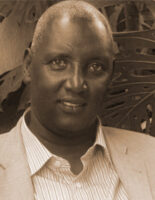
Prof. Sam Ongeri -Champion of the Jua Kali sector

After clinching the Nyaribari Masaba Constituency seat in the 1988 General Election, Professor Sam Ongeri was immediately appointed as Minister for Technical Training and Applied Technology. This was a newly-created ministry, therefore Ongeri and his team had to define what its mandate was going to be.

“I remember we were given the eighth, ninth and tenth floors in Jogoo House B and a desk, and we sat down and conceptualised, strategised and came up with a format. We interpreted its mandate as vocational training and youth polytechnics, institutes of technology and then national polytechnics,” Ongeri recalled.

Close acquaintances describe Ongeri as a man who would never pick a fight

“However, we faced many challenges because at that time Kenya was facing hostility from the West and hence no donor funding was available. We decided to take advantage of the Directorate of Industrial Training, which had been moved from the Ministry of Labour, and embarked on upgrading the skills of workers both in the public and private sectors at its facilities in Mombasa, Nairobi and Kisumu,” he added. Ongeri is currently the Senator for Kisii County.

The net effect was to completely change the mentality of Kenyans as the goods produced by the jua kali (informal) sector became more presentable.

“That is how we were able to replace the Asian business community on Biashara Street, Moi Avenue and River Road, among other places,” he said.

Ongeri admitted that he is proud of what he achieved because after five years of hard work, jua kali became the beacon of hope for Kenyans and provided 40 per cent of employment opportunities.

“While the rest of the world expected us to collapse, we did not,” he said. “That is how we were able to sustain the country.”

In the multiparty elections of 1992, Ongeri lost in the KANU party nominations to Dr Hezron Manduku, who went on to clinch the seat. After the elections, Moi appointed Ongeri as Kenya’s Permanent Representative to the United Nations Environment Programme (UNEP). He also appointed him Chairman of the University of Nairobi Council.

At UNEP, he led a successful fight to defeat a plan to move the body’s headquarters from Nairobi to either Europe or New York. According to Ongeri, those behind the scheme cited the reason as lack of communication between Nairobi and New York.

“I thank Kipng’eno arap Ng’eny, who was the Managing Director of the Kenya Posts and Telecommunications Corporation, for moving very fast and, together with me and the President, laid a fibre optic cable linking GPO and Gigiri. So the excuse they used was no longer valid,” Ongeri recalled.

At the same time, he engaged in intensive shuttle diplomacy to secure various Conventions, including the Framework Conventions on climate change, biodiversity and biosafety, and hazardous wastes.

Ongeri reclaimed his seat from Manduku in 1997 and made a comeback to the Cabinet after he was named Minister for Local Government. On joining the ministry, he was confronted by mountains of solid waste, potholed roads and dilapidated infrastructure. With the support of the World Bank, he launched the Kenya Urban Development Programme and embarked on rehabilitating all roads in Nairobi and other towns. It was during his tenure that the fountain at the Kenyatta Avenue/Uhuru Highway Junction was built.

In a Cabinet reshuffle in 2000, he was moved to the Ministry of Health. Among the successes he cited were the purchase of ambulances, improvement of the National Hospital Insurance Fund (NHIF) and promotion of preventive and promotive healthcare.

“We conducted massive immunisation campaigns and hence were able to deal with communicable diseases. The number of immunised children rose to 93 per cent but now it has gone back to 80,” he said. He also worked towards improving the remuneration of workers and creating various professional cadres.

In 2002, he was once more defeated by Manduku. In this election, the FORD People party, whose leader Simeon Nyachae was gunning for the presidency, won all the seats in the entire Gusii region, and candidates from other political parties stood no chance.

Ongeri married Elizabeth Wangari, a fellow medic, in 1968 before they both went to the UK for further studies. They both studied at Kamagambo Mission School and Bugema Missionary College in Uganda. The couple have five children. Ongeri comes from a family of staunch Seventh Day Adventists and is a church elder at Nairobi Central SDA Church, Maxwell.

Coming from a humble background, Ongeri described his parents and the entire community as simple people who stood for the truth and took part in the fight for Kenya’s freedom. His father, Benson Ongeri, was an Assistant Chief in the colonial era but quit his post when he was instructed to travel to Nairobi to help suppress the colonial uprising. His grandfather, Nyamatenga, was shot dead by colonialists while resisting them in Kiogoro, near Keumbu, so Ongeri never got a chance to meet him. In his opinion this legacy of struggle created an impression in the minds of the younger generation that they had to fight for every right.

Close acquaintances described Ongeri as a man who would never pick a fight; that he is tolerant even under extreme pressure. Mobisa Ondimu cited an incident during the 1992 election campaigns when supporters of one of Ongeri’s opponents in the KANU primaries attacked him with molehill soil at Ibacho Secondary School. Ongeri simply kept his cool and went back to his vehicle. He went on to win the nomination.

“Having served as minister during the previous term, he had armed bodyguards and could have easily asked them to react. But he chose to retreat, almost in shame,” said Ondimu.

A medical doctor by profession, Ongeri started his education at Gesusu Sector (now Moi High School, Gesusu). His teachers told him that his grandfather had prophesied that one of his grandchildren would be a leader. Because he was always at the top of his class, they identified him as the ‘anointed one’.

After his Kenya African Preliminary Examination (KAPE), he attended Kamagambo Mission School and obtained a Cambridge School Certificate before joining Bugema Missionary College in 1952. He left in 1957. For part of this time, Ongeri lived in Nairobi selling SDA books.

After graduating from Bugema, Ongeri was hired as a teacher at Nyachwa SDA Primary School in Kisii between 1958 and June 1959. The Inspector of Schools, Solomon Adagala, wanted him to go to Siriba Teachers’ Training College for further training because he wanted to promote him to the post of P1 Teacher on account of his efficiency. But Ongeri declined, choosing instead to study medicine. When he came across an advertisement seeking applicants for Indian government scholarships, he immediately applied. Out of the 300 applications, he was among the eight that were shortlisted. He studied at Delhi University and graduated with a Bachelor of Medicine (Surgery) in 1966.

On returning to Kenya, he joined Kenyatta National Hospital (KNH) as an intern. Upon graduation, he was seconded to the Kenya Army, Kenya Police and Kenya Prisons. He revealed that it is during this time that he first met Moi, who at the time was the Vice President and Minister for Home Affairs. Moi had come to check on his driver, who had been involved in an accident. Ongeri was in charge of the casualty ward and Moi was pleased to see KNH staffed by young African doctors.

Ongeri worked as a registrar at the hospital for two years before leaving for the University of Edinburgh, Scotland, for his postgraduate education. In 1970, he joined the University of London where he trained and qualified for a Diploma in Child Health. He returned to Kenya in 1972 with his wife and re-joined KNH as a medical doctor while teaching medicine at the University of Nairobi. He was part of a team of doctors that established the first renal dialysis unit in the country and conducted the first kidney transplant at KNH.

At the University of Nairobi, he rose through the ranks to become a professor and admitted that he was proud of having trained many undergraduate and postgraduate students who are now steering the country’s schools of medicine and health facilities.

Asked how politics had affected him businesswise, personally and professionally, Ongeri explained that one does not enter politics for gain but to serve. He therefore has no regrets taking the political route.

“Politics is one of the service points. You go in to address challenges people face. When you are an MP or senator, people come to you to solve almost anything. It is not their choice; it is because of poverty, which you must tackle,” he said.

At a personal level, he advised that once you enter politics, there is no privacy and as a public figure, one was not at liberty to engage in things that were repugnant to society since one was expected to be a role model.

Ongeri believes there is an urgent need to seize the destiny of the country. In this regard, he was fully in support of the Building Bridges Initiative spearheaded by President Uhuru Kenyatta and former Prime Minister, Raila Odinga.

“One thing I learned from Moi is that he always sought peace and pursued it, and would always engage when the stability of the country was threatened,” he said.

Richard Leakey – A swashbuckler with intent

President Daniel arap Moi stunned the country and the world at large when he appointed his erstwhile critic, Dr Richard Erskine Frere Leakey, to head Kenya’s Public Service in July 1999. Leakey’s mandate was to head a group of rapid response technocrats, succinctly called the ‘Dream Team’, assembled by the President to bring discipline to the Public Service. The goal was to help boost donor confidence in Kenya at a time when the World Bank and the International Monetary Fund (IMF) had suspended loans to Kenya to protest against the hitherto rampant corruption and political intolerance.

In appointing Leakey, Moi – who three years earlier had branded the global conservation icon “a foreigner unsuitable for any public office” – said, “(He is) recognised, both at home and internationally, as a man of determination and integrity… attributes which are greatly needed at this time. He will have my complete and undivided support.”

Born on 19 December 1944 in Nairobi, Leakey is the second of three sons of world-renowned archeologists Louis Seymour Leakey and Mary Leakey. He is a third generation Kenyan.

The entire Dream Team was fished from the private sector. Leakey himself was drawn from an illustrious career at the helm of the Kenya Wildlife Service (KWS) and the National Museums of Kenya. He was appointed Secretary to the Cabinet and Head of Civil Service. Martin Oduor-Otieno (previously Director of Finance and Planning at Barclays Bank) was named Permanent Secretary for Finance and Planning, Mwangazi Mwachofi (previously a representative of the International Finance Corporation) as Permanent Secretary to the National Treasury, and Titus Naikuni (previously Managing Director of Magadi Soda Company) as Permanent Secretary for Transport and Communication.

Others were Shem Migot Adholla (from the World Bank), appointed as Permanent Secretary in the Ministry of Agriculture, and Wilfred Mwangi (from the International Maize and Wheat Improvement Centre) as Permanent Secretary in the Ministry of Energy.

Leakey was assuming a very powerful position. The post of Permanent Secretary has been described as key, since ministers and assistant ministers were political appointees and seldom had experience in the areas for which they were responsible.

Although Moi had on numerous occasions publicly stated his aversion to Leakey, the archeologist was highly esteemed in international circles. The Tribune News Services reported on 24 July 1999 that he was “…throughout recognised as an efficient and charismatic manager who will be called on to revive Kenya’s once well-functioning civil service”.

Leakey’s team embarked on its task of restructuring the bottom-heavy civil service, eradicating corruption at all levels, reviving the crumbled infrastructure and jump-starting the ailing agriculture sector. In fact, two days after moving into the job, Leakey vowed to end widespread corruption, inefficiency and nepotism. In September 1999, after just two months in office, Leakey swooped on the corruption-laden Coffee Board of Kenya by sacking the organisation’s General Manager and Financial Controller and placing it under State control. An audit team dispatched to look into the affairs of the board reported that it had become an impediment to the full liberalisation of the coffee industry. At the time, the board enjoyed monopoly of coffee marketing, but it was under the grip of mafia-like cartels.

Imenti South MP Kiraitu Murungi described it thus: “… it is controlled by a powerful reactionary State and co-operative elite which has immensely benefited from the unjust and exploitative colonial coffee production and marketing system… This powerful clique has for years captured, sabotaged and paralysed any genuine liberalisation of the coffee sector. They continue portraying the farmer as an ignorant person who does not understand reforms and who cannot make rational economic choices.”

Initially, Moi sent out signals that he had full confidence in the Dream Team. During their first year, the President appointed Maseno University College Principal, William Ochieng’, as a Permanent Secretary in the Office of the President to strengthen Leakey’s office in order to enable it to meet its mandate. The Standard reported, “All seemed fine at the beginning as the members hit the ground running.”

But it didn’t take long for the team to run into headwinds. Grumbling in the civil service over the huge salaries the IMF and World Bank were paying the Dream Team would soon boil over.

“They (donors) were funding the payment of some of these accounting officers, so the interests of these foreign countries prevailed, which was very painful to some of us,” Joseph Kaguthi, Permanent Secretary in the Directorate of Personnel Management, told The Standard when the Dream Team was disbanded.

During their tenure, Leakey and Mwachofi earned KES2.4 million each, Adholla KES2 million, Oduor-Otieno and Naikuni KES1.5 million and Mwangi KES1.2 million.

A plan to retrench 250,000 civil servants was met with resistance. The anti-corruption agenda came a cropper as cartels joined hands with politicians to frustrate the efforts of Leakey and his team. Indeed, on 18 October 2000, MPs defied party lines and voted against the retrenchment exercise. They criticised Leakey, claiming that he had spiced his latest assignment with the “dictatorship he exhibited during his tenure at the helm of the Kenya Wildlife Service and the National Museums of Kenya”.

Thus, when Moi was done with Leakey in 2001, he hastily dropped the Dream Team like a hot potato. Leakey left a forlorn and frustrated figure, having been unable to hack into and launder the close-knit corrupt ethnic politics that drive Kenya.

“In the process and in trying to seal the corruption loophole, the team stepped on many powerful and/or politically connected toes and by early 2001, it became obvious that its expiry date was close at hand. Leakey was side-lined,” The Standard newspaper reported.

An Associated Press (AP) article of 27 March 2001 reported, “Mr Leakey’s blunt approach has earned him enemies on all sides in Kenya. Parliament overruled his attempt to reduce the number of employees in Kenya’s bloated civil service. Two days after moving into the job, he said he would work to end widespread corruption, inefficiency and nepotism.”

That was the day Leakey left Moi’s government and was replaced by Dr Sally Kosgei. The circumstances weren’t clear; while the government insinuated that it had retired him, international news reports indicated that he had quit. The Standard reported, “Leakey and two senior members of his team (Otieno and Naikuni) were shown the door towards the end of March 2001. Even as the team’s detractors called for the rationalisation of the salaries of the remaining members to the level of other civil servants, it was just a matter of time before they too left or were sacked.”

The AP article also reported, “Richard Leakey, chief of the ‘dream team’ meant to extricate Kenya from its myriad economic problems, has resigned from his key post as head of the civil service and from President Daniel arap Moi’s Cabinet.” The news agency continued, “Mr Moi’s office said the President ‘noted that with the completion of stage one [of Kenya’s recovery strategy], it is therefore time for others to take over and move the process of reform forward.’ President Moi said that he had agreed with Dr Leakey that he would stand down.”

The team’s achievements are rather difficult to quantify. However, it won back donor confidence and the aid taps opened once again. Some level of discipline was inculcated in the civil service. Corruption slowed and budgetary hygiene was restored.

Instructively, Moi’s choice of Leakey hadn’t been mere chance. The son of the renowned proponents of the Theory of Evolution was a global powerhouse in his own right. A decade earlier, in 1989, he had single-handedly rallied the entire world around the issue of protection of the elephant and the rhino, forcing a global ban on transnational trade in ivory and rhino horn.

As head of KWS, Leakey had transformed the organisation from a loss-making entity to a sustainable machine able to attract foreign funding at a time when even the Kenya government couldn’t source a coin from donors. In fact, in 1991 he personally raised USD150 million (about KES15 billion at the current exchange rate) towards the organisation’s projects.

Here was a global icon who had earlier stood up to Moi and his ruling party KANU by co-founding and leading Safina, an opposition party, alongside other founding members including Paul Muite, Gitobu Imanyara, Farah Maalim Mohamed, Kiraitu Murungi, Robert Shaw, Maoka Maore, Muturi Kigano, Kimani Rugendo, Ntai wa Nkuraru and Koigi Wamwere.

The conservationist’s foray into politics really angered Moi, who claimed that Leakey was scheming to divide Kenyans along ethnic lines. But observers felt that Moi’s hostility arose from the fact that Leakey’s mobilisation and fundraising skills were causing discomfort within the ruling party. There was also a feeling within KANU that Safina’s main architect was former all-powerful Attorney General, Charles Njonjo, Moi’s key nemesis since the early 1980s.

Indeed, fear was rife that Njonjo was using Leakey and Muite to make a political comeback. “Running Scared?” is the way The Economic Review (28 May – 4 June 1995) described Moi’s ranting over Leakey’s entry into politics.

“Who is he that I should be scared?” Moi fumed. He branded Leakey, a third generation Kenyan, a foreigner and a colonialist. Cabinet ministers Simeon Nyachae and William ole Ntimama, along with Assistant Minister Shariff Nassir, took their cue from Moi in casting slurs at Leakey.

In an article dated 29 May 1995, the influential New York Times reported, “Late last week The Kenya Times, a government-run newspaper, went further, asserting in a front-page article that the opposition party had sought financial backing from the Ku Klux Klan. It charged that Klan members were present at a luncheon attended by American and British businessmen and diplomats as well as Leakey.”

American and British diplomats immediately protested the allegations in a letter to the editor of The Kenya Times.

Indeed, Leakey’s entry into politics was a nightmare for the ruling party. The Safina party spokesperson was even whipped by an anti-opposition mob in Nakuru in August 1995.

“A missile hit me. I think it was an egg, and the next think I knew, I got an enormous bump on the back with a whip, and then was whipped solidly as I made my way back into my car. Whilst trying to get into the car, because getting into the car is quite difficult, I really got thoroughly thrashed, then they smashed the windscreen with pick-axe handles,” he recalled.

According to media reports at the time, Moi asked Europeans to respect the leadership of the African lest their deeds evoked memories of the colonial oppression of Africa. “For Leakey to dismiss both my government and the existing opposition leadership in Kenya as lacking credibility is not only the height of ignorance but also an insult to the people of this country,” he said.

Leakey’s younger brother, Philip (a KANU member who served in the Cabinet in 1992), was forced to assure Moi of his support for the ruling party. Philip also led a delegation of people of European descent to State House to express their loyalty to Moi and KANU. “Richard is my brother but an opponent politically… he is opposing me and we will remain opponents until he gets smarter politically…” Philip reportedly remarked.

The Weekly Review of 7 July 1995 headlined the encounter “Leakey Versus Leakey”. It opined, “From the time Richard made his high profile entry into opposition politics… Philip made it clear that he was not on his elder brother’s side.” Indeed, in a twist of irony, KANU and Moi were welcoming Philip as a Kenyan while treating Richard as a foreigner.

Although Safina didn’t field a presidential candidate, it managed to win an “impressive” five parliamentary seats, according to The Weekly Review of January 1998. Muite won in Kabete, Philip Gitonga in Lari, Ngenye Kariuki in Kiharu, Elias Bare Shill in Fafi, and Adan Keynan Wehliye in Wajir East. Leakey didn’t run for any political seat. Reports later indicated that he had fallen out with some of his colleagues in the Opposition. Apparently, his appointment to the Cabinet infuriated the Safina party leadership.

“Dr Leakey’s management style does not promote institutional development. (His) style is based on cronyism and patronage,” claimed Farah Maalim, the Safina Chairman.

Perceived as arrogant, he refuted the perception saying, “I am not impatient at all. But I still find it rather difficult to tolerate fools and I find inefficiency and incompetence as unacceptable as ever.”

After the debacle, Leakey retreated to a quiet life away from the limelight until President Uhuru Kenyatta appointed him Chairman of KWS.

According to reports, Richard was originally reluctant to follow his parents’ career and instead opted to become a safari guide. However, at age 23 and during an expedition to the Omo River Valley in Ethiopia, he became fascinated with the Koobi Fora along the shores of Lake Rudolf (since renamed Lake Turkana). He would lead a team that uncovered 400 fossils of individuals, marking Koobi as the cradle of humankind. This remains the largest fossil find in the world.

He co-authored two books with Roger Lewin: Origins (1977) and People of the Lake (1978) that explained the link between the fossils (which he named Australopithecus africanus, Homo habilis, Homo sapiens and Homo erectus) and the modern human. He proposed that Africa was the home of human ancestors 3.5 million years ago. His other book, The Making of Mankind (1981) essentially focuses on his anthropological work.

In 1977, Leakey appeared on the cover of the famed Time international magazine posing with a representation of Homo habilis. The cover was titled ‘How Man Became Man’. About 22 years later, Time again named him among the great thinkers of the century.

His wife, Meave, and daughter Louise also did ground-breaking work in Turkana.

Robert Stanley Matano – The man Moi used to re-engineer KANU

Robert Stanley Matano was the veteran coast politician whom President Daniel arap Moi used to re-engineer the moribund ruling party, KANU, into a well-oiled political machine. Matano had presided over what had been described as a “dead” party as Acting Secretary General for 13 years from 1966 to 1979, when he was confirmed to the position by the party organs presided over by Moi a year after the death of President Jomo Kenyatta.

KANU was doing so badly that Organising Secretary John Keen wrote to Kenyatta to complain that the party had not held a delegates’ conference since 1962, nor held elections since 1964, and had a debt of GBP20,000. Phone lines at the party headquarters had been disconnected for non-payment and staff had not been paid for nearly a year. In short, Keen reported to the party leader that since the party did not meet or hold elections, it had no powers and had been subordinated to the government.

The party’s weakened position was not an accident. As a political strategy, Kenyatta and his advisers felt that party elections would divide the country and widen divisions between forces within the party.

Vocal Butere MP, Martin Shikuku, raised the matter in Parliament in 1975: “KANU is dead,” he declared. But when another MP asked him to substantiate the allegation, Jean-Marie Seroney, the temporary Speaker and a government critic, said there was “no reason to substantiate the obvious”. Shortly after that, Shikuku and Seroney were arrested in the precincts of Parliament and detained.

As one of KANU’s top officials, Matano had a rough time, particularly during parliamentary elections, when candidates complained of being “barred” or not “cleared” to contest constituencies or ward seats for one reason or another. KANU was the only vehicle through which politicians could contest parliamentary or ward seats since the country was a de facto one-party State.

Unlike Kenyatta, Moi, a founder member of the independence opposition party, Kenya African Democratic Union (KADU), believed in running the country through the various organs of a political party. After confirming Matano as Secretary General, the President embarked on an elaborate process of reorganising KANU by way of injecting fresh finances, establishing a strong secretariat, opening branch and sub-branch offices in every district and division in the coun try, and holding elections from grassroots to national level. In the end, the party became so powerful that it appeared to be running the government; the party’s national leaders were among the most influential in government. The party even set up its headquarters in the State-owned Kenyatta International Conference Centre (KICC) in Nairobi.

Matano represented Kinango Constituency in Kwale District (now Kwale County), for 27 years — from 1961 to 1988, when a political newcomer, Ali Bidu, beat him in the infamous queue-voting system. Moi had introduced this system that was condemned both locally and internationally as flawed.

Matano was the political mentor of many coast politicians, including Shariff Nassir and Noah Katana Ngala, who later became members of the Cabinet. Matano was also among the founder members of Shirikisho Party of Kenya, whose leader is Chirau Ali Mwakwere, former Matuga MP and Cabinet minister.

Matano is credited with having played a leading role in the quest for multiparty politics precisely because he knew exactly how the single-party system had been used to finish the political careers of many leaders. Moreover, he became a victim of the queue-voting elections introduced by KANU in 1988 to remove politicians who were considered disloyal to Moi.

For him, political pluralism would not be just about the restoration of people’s rights around the freedom of speech and association, but also political accommodation and tolerance.

Matano was born in Mazeras, Kaloleni, in 1925 and tended his father’s livestock and farm. He started his education at Mazeras Intermediate School before joining the Church Missionary Society School in Kaloleni. As a hardworking and disciplined student, he did well and was admitted to Kaaga Secondary School in Meru District, and later Alliance High School in Kikuyu in 1936. In 1946 he joined Makerere College in Uganda for a diploma course in education, graduating in 1948.

He started his teaching career at Ribe Boys Junior Secondary School in 1949 and later moved to Alliance. He was then promoted to District Education Officer in Mombasa and Kwale.

Matano joined politics in the 1960s at the prodding of Ronald Ngala. Politically, he was drawn more to the side advocating for a majimbo (regional) system as opposed to KANU’s unitary preference. He was in the Lancaster House Conferences delegation of 1960, 1961 and 1962. KANU won the 1963 elections and formed the independence government as KADU went into the Opposition. But in 1964, KADU was dissolved and the members, including Matano who had been elected the MP for Kinango, joined the ruling party.

As MP and minister, Matano’s high sense of integrity made other party members regard him as politically naïve. But his political star started rising when he was thrust into KANU with Tom Mboya as the Secretary General. After Mboya’s assassination in 1969, Kenyatta appointed Matano Acting KANU Secretary General until 1979, when he was confirmed to the position at the beginning of the revitalisation of the party.

During the process of strengthening KANU, Matano fought many battles with politicians. The most memorable was his violent confrontation at the party headquarters with KANU National Treasurer, Justus ole Tipis, over the clearance of former Kenya People’s Union  members, including Jaramogi Oginga Odinga, to vie for political seats in 1979.

In 1985 as Matano was travelling from his Mazeras home in Coast Province by train, he heard a terse one o’clock radio announcement by the Presidential Press Unit. He had been dismissed from his position as Minister for Information and Broadcasting. He remained in Parliament until he lost his seat in 1988, then settled on his farm in Kinango.

Matano did not cut a niche for himself as a local or a national leader. No development project can be associated with him. The former minister will, however, be remembered for his role as founder member of the largely coastal Shirikisho Party. However, the party is yet to make any political impact. Suleiman Shakombo described Matano as a down-to-earth politician who eschewed corruption and other vices.

“Matano was a clean man,” said Shakombo, who was a Cabinet minister between 2005 and 2007.

A civil servant who worked with Matano in Nairobi pointed out that he did not use his influence to get his children and other relatives employment in the government. When he died in absolute poverty, those who eulogised him blamed the government for having neglected him.

Ngala described him as a great team player who shunned controversy while former Bahari MP, Joe Khamisi, said he was a laid back leader who preferred to work behind the scenes. Shirikisho Secretary General Yussuf Abubakar said the former minister encouraged local MPs to support the party.

But Matano’s critics accuse him of failing to fight for the landless and protect them against unfair distribution of national resources in the coast region. There are claims that Matano did not comment on the collapse of industries at the coast — the Ramisi Sugar Company and the Kilifi Cashewnut Factory — which had offered a lifeline for thousands of people in Kwale and Kilifi.

Matano retired from farming and moved to his rural village, Ndugu ni Mkono, in Mazeras. He died in a Mombasa hospital in 2008 aged 83 years.

Dr Sally Jepngetich Kosgei – Moi’s most trusted diplomat and advisor

At a time when women in senior positions in the civil service were few and far between, Dr Sally Jepng’etich Kosgei not only reached the high glass ceiling but also shattered it to become an internationally respected diplomat, a politician and a Cabinet minister. She was the second woman to become a Permanent Secretary in 1991 after Margaret Githinji, who was PS in the Ministry of Commerce. What stands out most was her proximity to President Daniel arap Moi, who trusted her with some of the most onerous tasks of his 24-year tenure. Indeed, such was her focus on hard work and loyalty that she often overshadowed the ministers she worked under.

Beneath her quiet and media-shy demeanour was a skilful schemer, so good at behind-the-scenes machinations that she was able to survive in a field crowded with men. Her reputation preceded her in Kenya and in global diplomatic circles. According to Expression Today of 16 March 2000, many foreign governments recognised her significant role “and would deal with her knowing that her word was final”.

Many Kenyans remember her crying outside State House Nairobi in 2002 as President Moi was airlifted to his Kabarak home after handing over the reins of power to a wheelchair-bound Mwai Kibaki. It was a solemn moment. Considered as one of the greatest beneficiaries of Moi’s regime, she later denied that she cried because Moi was leaving State House for good and said the tears were because of how he was handled in the charged excitement of new leadership after 24 years in power that many thought had been characterised by ineptitude, economic failure and human rights abuses among other charges.

She was an effective worker, often overshadowing the ministers she worked under

Kosgei was born in Aldai, Nandi District, in 1949. She attended Aldai Primary School before joining Alliance Girls High School for both her O’ and A’ levels. After high school she went to Dar-es-Saalam University, graduating with a Bachelor of Arts in Education. She taught briefly at Nakuru High School and the University of Nairobi before she won a scholarship to pursue MA and PhD degrees in history and political science at Stanford University in California in the United States.

Between 1978 and 1981, she taught at the University of Nairobi’s Department of History and Archaeology. In 1981 she joined the Ministry of Foreign Affairs as the First Secretary to UN-Habitat. She then held the position of Senior Assistant Secretary Africa and Organisation of African Unity (OAU), acting head, Africa and OAU Division at the Ministry of Foreign Affairs.

In 1984, Kosgei became Kenya’s High Commissioner to Zimbabwe. She was transferred in the same capacity to the United Kingdom (as well as Ireland and Switzerland) in 1986 and held the position until 1992. She represented Nairobi in London during a time of strong political headwinds; with the clamour for multiparty politics growing, Moi and other African leaders suddenly found themselves out of favour with their foreign allies as the Cold War ended.

Moi was facing a legitimacy crisis, as there was increased suppression of free speech and many opposition leaders were being jailed. Notably, the February 1990 assassination of Dr Robert Ouko, the Minister for Foreign Affairs, and the ethnic clashes of 1992 were some of the issues that Kosgei had to grapple with during her time in London and during her formative days as PS for Foreign Affairs under Ndolo Ayah. Kosgei famously defended Kenya and at one point issued a rebuttal to the British media on its coverage of the unravelling events in Kenya in the late 1980s and early 1990s.

As for breaking the proverbial glass ceiling, she was a diplomat at a time when nearly all the 150 Kenyan foreign missions were headed by men. According to the Sunday Times of 22 December 1991, she once told students at Alliance Girls High School that someone had once tried to point out how exceptional she was, hoping to either flatter or intimidate her. But she felt neither special nor intimidated.

In December 1991, she was appointed PS for Foreign Affairs and International Cooperation and was sent to restore Kenya’s image abroad following the ethnic clashes in Rift Valley Province. She was transferred to the Ministry of Finance in 1997. According to the March 2000 issue of Expression Today, the move was intended to clip the wings of Simeon Nyachae, who had just been appointed the Minister for Finance. But while she may have been influential, Nyachae proved to be no pushover. At the time her husband, Yusuf Nzibo, was the Commissioner General of the Kenya Revenue Authority. Nyachae had him transferred without her knowledge, causing a rift between the minister and the PS. Six months later, Nyachae was sacked; an indicator of who was really calling the shots.

In 2001, she replaced Dr Richard Leakey as Head of the Civil Service and Secretary to the Cabinet, moving her closer to the centre of power. She remained the Civil Service boss until Moi stepped left office.

By 2002 she had come to symbolise the good, the bad and the ugly of KANU. The image of her crying at State House Nairobi was seen as a comeuppance by many Kenyans for being an accomplice to a man whose regime many viewed negatively.

In 2007 when Uhuru Kenyatta joined the Opposition, Kosgei abandoned KANU and joined the Orange Democratic Movement (ODM) party under the tutelage of William Ruto, then a principal in ODM in the Rift Valley region. She ran for the Aldai Constituency seat and won. When the election results were released declaring Kibaki the President (and not ODM frontrunner Raila Odinga), her constituency was one of the most affected during the countrywide violent clashes that ensued.

During the Kofi Annan-led reconciliation negotiations in Nairobi, the ODM party used Kosgei’s consummate skills in reaching an agreement for a coalition government: the Government of National Unity headed by Kibaki as President with Odinga as Prime Minister. She was later rewarded with a ministerial post, heading the Ministry of Higher Education, Science and Technology.

The coalition government created the new ministry, carving it out of the mainstream Ministry of Education. The new ministry’s role would help to pass a Biotechnology Bill and establish at least four technical universities, according to SciDevNew.com edition of 22 April 2008.

In 2010, she traded places with Ruto, becoming the Minister of Agriculture during a reshuffle in the coalition government. Here, Kosgei helped distribute 490 metric tonnes of drought-tolerant seeds worth KES78.8 million that had been donated by the German government. The seeds were used in Ukambani region during the short rains of 2011. At the time, drought and famine were ravaging parts of the country.

Ahead of the 2013 General Election, she stuck with ODM even though Ruto’s United Republican Party (URP) was the party of choice. According to the County Weekly (a now defunct publication of the Standard Group) of 3 February 2013, she remained in ODM as she was a close advisor to Odinga, then a presidential candidate. She lost her seat to URP’s Cornell Serem and was appointed Chancellor of Taita Taveta University in 2016.

Kosgei’s life in politics was not without considerable controversy. For example, according to a Daily Nation report of 25 November 2017, she had recalled Kenya’s ambassador to the US, Samson Chemai, refused to talk to him when he returned to Kenya, and then replaced him with her husband, Nzibo, who also served as ambassador to the Netherlands and Saudi Arabia.

Chemai filed a case in 2001 and in 2017, was awarded KES60 million by the High Court of Kenya for wrongful dismissal.

In November 2017, it emerged that Kosgei’s name was among those mentioned in an exposé of politicians who had hidden their wealth from public scrutiny. According to the Daily Nation of 6 November 2017, Kosgei’s name was listed in The Paradise Papers, a trove of 13.4 million files taken from the law firm, Appleby, and leaked to Süddeutsche Zeitung, the same paper that leaked the Panama Papers in 2016.

The paper indicated that Kosgei owned a Mauritius company, Zonrisa Limited, that was previously registered in the Isle of Man under the name Aisha Limited. She denied the charges.

Kosgei has maintained a low profile away from the public eye since she lost her parliamentary seat in 2013.


Samuel Losuron Poghisio – A deep desire to defend his people drove him to politics

As the Minister for Information, Assistant Minister for Education and a Member of Parliament, Samuel Losuron Poghisio set himself apart as an avid debater and regular commentator on topical issues. As one of the most visible national leaders from the Pokot community, he was among the fortunate few who, in the 1960s and 1970s, managed to escape a vicious cycle of poverty to go to school.

Poghisio was born on 25 November 1958 in Kacheliba, West Pokot, which was then a Kenyan territory being administered from Uganda following a colonial directive by the British government that at the time controlled both Kenya and Uganda. The Karamoja and Pokot were put under one jurisdiction in the hope that either community would swallow the other culturally and solve the persistent cattle rustling and inter-ethnic conflicts. This experiment failed and is believed to have contributed to the marginalisation of the Pokot community, which for years after was plagued by poverty, disease and lack of education, made worse by cattle raids and inter-ethnic violence.

Poghisio started school when the Pokot were still under Ugandan administration. In 1970, the region was handed back to Kenya under the supervision of Simeon Nyachae, who was the Provincial Commissioner of Rift Valley. Poghisio was fortunate enough to have an educated father who had worked as a nurse/dresser in the first hospital in Uganda and later as an assistant chief. He ensured that his children went to school.

Poghisio later went to Makerere University in Uganda from where he graduated with a Bachelor of Science degree in Biology. He started teaching at Chewoyet Secondary School and resigned in 1985 to pursue a Master’s degree in Communication at Daystar University. By 1987, only he and District Commissioner Augustine Lomada could be counted as graduates from Kacheliba, according to an interview with the Sunday Standard in March 2017.

Between 1982 and 1984, the government carried out ‘Operation Nyundo’, which was a crackdown on the ngoroko (as a group of armed Pokots were known at the time). The military was deployed and what followed were allegations of human rights abuses that became part of the Truth, Justice and Reconciliation Commission report. According to press reports, the operation left many people maimed or dead. Having witnessed the effects of the operation, and the silence from the international community, Poghisio resolved to stand up for his people. This, coupled with the desire to help them get access education, is what spurred him to join politics. His slogan for he 1987 elections was Kalamu Mrefu (the long pen).

By then he was working for one of the fiercest critics of President Daniel arap Moi’s government, the outspoken Anglican Church of Kenya Bishop Alexander Muge, who headed the Eldoret Diocese. Poghisio managed projects run by the Anglican Church in West Pokot. He was also a close associate of Francis Lotodo, the Kapenguria MP who had been accused of leading the Pokot Liberation Organisation (a dodgy accusation according to Poghisio, who said it was a creation of the government to justify Operation Nyundo).

Running against him in the parliamentary elections was a man who had stood as best man at his wedding just months earlier, Peter Nang’ole. According to Poghisio, Nang’ole was bankrolled by KANU, the ruling party, and given a brand new Land Rover as well as the backing of the Provincial Administration, then a powerful organ of the government. In the party primaries, which were conducted using the mlolongo (queue voting) system, Nang’ole won but failed to garner the 70 per cent required for one to be declared the outright winner. This called for a repeat election as per party regulations.

Poghisio won the repeat elections but it was Nang’ole’s name that was gazetted as the area MP. It took the intervention of the Speaker of Parliament, Moses Keino, to correct the ‘mistake’. However, Poghisio’s victory was short-lived. On 14 July 1988, the KANU National Executive Council expelled him and Lotodo from the party and, with a stroke of the pen, they lost their parliamentary seats.

Poghisio didn’t waste any time. He took a sabbatical from politics and went to the United States of America to study for a PhD at the Lincoln University in Illinois. When he returned four years later, KANU approached him to contest in the 1992 multiparty elections but he declined, choosing instead to teach at Daystar University.

He re-entered the political scene in the 1997 elections, once again running against his old foe Nang’ole and beating him by a landslide (80 per cent). Over the next five years, he would serve in a parliamentary commission and as Assistant Minister for Education after Lotodo, a fellow Pokot who was by then Minister for Energy, died in office.

In 2002, he won the Kacheliba seat again on a KANU ticket, but with the former ruling party now consigned to the Opposition, he served as the Shadow Minister for Planning and Economic Development. Professor Anyang’ Nyong’o worked in the corresponding role in the main government. In 2007, he joined Kalonzo Musyoka’s Orange Democratic Movement Kenya party. And when Musyoka joined the coalition government as the Vice President, Poghisio was appointed Minister for Information.

It was in the Ministry of Information that he left an indelible mark by the sheer volume of work he did in efforts to modernise Kenya’s ICT apparatus, digitise government records, launch the Media Council of Kenya and initiate the Kenya Year Book among other projects.

Poghisio is also credited with the Communication Act 2008, which streamlined the communication sector in a time of rapid technological growth that necessitated amending the law to capture the new realities in broadcasting and ICT needs.

In 2013, having represented the Kacheliba constituents for 15 years, he decided to expand his horizons by vying for the West Pokot seat as a member of the United Republican Party, against Professor John Lonyangapuo of KANU. By then he was deeply involved in the presidential election and hardly campaigned for himself on the ground, making it easy for Lonyangapuo to win the election. In 2017, he joined hands with Lonyangapuo, this time going for the West Pokot County Senate seat while Lonyangapuo vied for the governorship. Both ran successful campaigns and won.