About Us

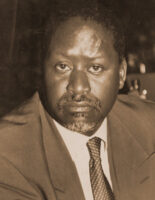
Raila Amolo Odinga – Minister who ditched the Opposition in hopes of succeeding Moi

Following the infamous August 1982 attempted coup, Raila Amolo Odinga was accused of complicity, charged with treason and subsequently detained for six years by President Daniel arap Moi’s government. A biography released in 2006, as Odinga was gearing up to contest the presidency in 2007, indicated that he was more involved in the attempted coup than he had previously admitted. When the book was published, leaders, especially those on the side of his political nemesis, Mwai Kibaki, called for his arrest. But the statute of limitation had already passed and the information was contained in a biography so it did not amount to an open confession.

Odinga’s route to the Cabinet and beyond started when he joined elective politics after the re-introduction of multipartism in 1992, the year he was elected as Member of Parliament for Lang’ata Constituency in Nairobi. He would go on to win the seat again in 1997, when he also vied for the presidency but lost to Moi. He retained the Lang’ata seat in 2002 and 2007.

Odinga was identified with the country’s so-called second liberation; notably, he was in jail for treason between 1982 and 1988, when the agitation for change was at its peak. He was released in June 1989 but incarcerated again in July 1990, together with Kenneth Matiba and Charles Rubia, for calling for the return of multiparty politics. He was released in June 1991 after which, fearing for his life, he fled to Norway.

In February 1992, Odinga returned to Kenya and joined the Forum for the Restoration of Democracy (FORD) party, which was led by his father, Jaramogi Oginga Odinga. Later that year, when FORD split into FORD-Kenya (led by the senior Odinga) and FORD-Asili (led by Matiba), he was elected as the former’s Deputy Director of Elections.

In his first bid for the presidency in 1997, Odinga finished third after President Moi and the Democratic Party candidate, Kibaki. In the lead up to the 2002 elections, he ditched a fragmented Opposition to join Moi’s party, KANU, in the hope that the President would anoint him as his successor.

So in March 2001, having joined the National Development Party (NDP), he merged with KANU to form New KANU.

To solemnise the marriage between the two parties, Moi gave Odinga and a few other NDP leaders Cabinet positions. He was appointed Minister for Energy, a position he held from June 2001 to late 2002. When Moi eventually revealed his preferred candidate for the New KANU 2002 presidential contest, it turned out to be Uhuru Kenyatta, the son of Kenya’s first President, Mzee Jomo Kenyatta.

Odinga resigned on 13 October 2002, on the eve of a New KANU meeting in Kasarani, Nairobi. It was the meeting at which Moi would officially announce his choice of successor. A previous meeting at the same venue when NDP joined KANU in 2001 had made Odinga the new party’s Secretary General, in effect sidelining Joseph Kamotho who had held that position for many years.

In his first bid for the presidency in 1997, Odinga finished third after President Moi and the Democratic Party candidate, Kibaki

On resigning from the Cabinet, Odinga accused Moi of reneging on a pact reached when NDP joined KANU by imposing Kenyatta as the presidential candidate. Moi had apparently promised to back Odinga’s bid for the presidency once his term expired.

During the 2007 presidential election campaigns, claims came to the fore that Odinga had made billions of shillings during his tenure as Minister for Energy. It was alleged that he had been introduced to a rich Saudi family that had interests in the petroleum business and which initiated him into the lucrative oil trade. It was also alleged that during this time, the minister had re-established his links with the Libyan government and did some business in oil imports.

Towards the end of 2002, Moi publicly asked him and other presidential hopefuls in New KANU to support Uhuru’s campaigns, but this was unpalatable to them. When Odinga left the party in a huff, he took with him his NDP brigade and a host of KANU ‘rebels’ who had also expected to be named heirs to the throne. They included Musyoka, Kamotho and Professor George Saitoti. The group went on to form the Rainbow Movement, which would later merge with Kibaki’s National Alliance Party of Kenya (NAK) to form the National Rainbow Coalition (NARC), the political machine that defeated Moi’s ‘Project Uhuru’ in the 2002 General Election.

As soon as he joined NARC, Odinga declared “Kibaki tosha” (Kibaki is enough), thereby endorsing a candidate who had already been chosen by other opposition leaders. This would be the declaration that signalled the defeat of ‘Project Uhuru’ and hopefully ensure Odinga’s entrance into State House later. Odinga traversed the whole country campaigning for Kibaki, and when the presidential candidate was involved in an accident that left him indisposed just before the elections, he took the lead and ensured that Kibaki was elected with an overwhelming majority of 67 per cent.

Prior to the 2002 elections, there was apparently a memorandum of understanding that guaranteed Odinga the post of Prime Minister and his Liberal Democratic Party (LDP) wing of government half the number of Cabinet posts once Kibaki took over power. But this did not happen. Instead, the Cabinet was occupied  by NAK and even a number of MPs from opposition parties (KANU and FORD-People). However, between 2003 and 2005, Odinga and some of his lieutenants held key portfolios – he was Minister for Roads, Public Works and Housing, while James Orengo was appointed the Minister for Lands.

The perceived betrayal of LDP by NAK started a simmering disquiet, which in time led to an open rebellion and a split within the Cabinet. A key point of disagreement was a proposed new constitution for the country, which was a major campaign issue that had united NAK and LDP in the lead up to 2002 General Election.

Kibaki’s government instituted a Constitutional Committee that submitted a draft constitution that was perceived to consolidate presidential powers and weaken regional administrations, contrary to the pre-election draft. Raila opposed this and when campaigns for putting the draft constitution to a referendum kicked off, he and his LDP colleagues campaigned on the ‘No’ side, opposing the President and his ‘Yes’ side. When the document was put to the vote in 2005, the government lost by 43 per cent to Odinga’s 57. A disappointed President Kibaki sacked the entire Cabinet on 23 November 2005 and when it was reconstituted two weeks later, Odinga and the LDP group were left out.

He then formed a new opposition outfit, the Orange Democratic Movement (ODM) and went straight into campaigning for the 2007 presidential elections (the orange fruit had been the symbol of the ‘No’ campaign during the referendum). However, in August 2007, ODM suffered a setback when it split into two – he became the head of ODM while Musyoka led the ODM-Kenya splinter faction.

At the ODM National Delegates Conference held at the Moi International Sports Centre in Kasarani in September 2007, Odinga was elected the party’s presidential candidate when he garnered 2,656 votes against his opponents, Mudavadi who got 391 votes, and William Ruto, who had 368. The defeated candidates expressed their support for the winner and Mudavadi was later named as his running mate.

On 30 December 2007, the Electoral Commission of Kenya declared Kibaki the winner of the presidential election, placing him ahead of Odinga by about 232,000 votes. The Opposition, led by Odinga, rejected the results and what followed was mass action that resulted in widespread violence and death. Over the next one month, more than 1,300 Kenyans were killed and more than 250,000 others displaced. The tragedy attracted the attention of the international community. With the former United Nations Secretary General, Kofi Annan, acting as mediator, a power-sharing deal created a Government of National Unity with Odinga as the Prime Minister. He became the second Kenyan Prime Minister after Jomo Kenyatta, who had held the position from 1963 to 1964.

Later, Odinga would face the wrath of Kalenjin community leaders because of his stand on those being investigated for crimes against humanity arising from the 2007-2008 election-related violence. Ruto and two other Kalenjins were among those being investigated by the International Criminal Court (ICC).

Odinga would contest the presidency in 2013, this time under a new constitutional order that adopted a presidential system of governance. Under the new winner-takes-all format, those vying for the President and Deputy President positions were not allowed to compete for any other political seats.

Observers thought this was Odinga’s best chance as his opponents, Uhuru and running mate Ruto, were facing charges at the ICC for their alleged role in the 2007-2008 violence. Despite their pending case, the duo had been nominated by the Jubilee coalition, while Raila’s ODM merged with Musyoka’s new Wiper Party and Moses Wetangula’s FORD-Kenya to form the Coalition for Reforms and Democracy (CORD) for the presidential race. Odinga was the presidential candidate and Musyoka was his running mate.

Uhuru won the election held on 4 March 2013, garnering 6,173,433 votes (50.51 per cent) against Raila’s 5,340,546 votes (43.70 per cent). Uhuru was declared the President-elect on 9 March 2013 by the Independent Electoral and Boundaries Commission (IEBC) and was set to take office as Kenya’s fourth president, but Odinga filed a petition at the Supreme Court of Kenya citing “massive failure of the Biometric Voter Registration (BVR) kits”.

Chief Justice Willy Mutunga rejected Raila’s second affidavit comprising 900 pages on the basis that it amounted to “new evidence”, which was not permissible. The Supreme Court dismissed the petition on 30 March 2013 but while declaring Uhuru the next President, it also ruled that the IEBC should not have included the invalid/spoilt votes in the calculation of the final figures. Uhuru’s inauguration on 9 April 2013 marked the end of Odinga’s tenure as Prime Minister.

On 27 April 2017, he was endorsed by the National Super Alliance (NASA) to vie for the presidency, once again with Musyoka as his running mate. When the 8 August General Election results were announced, Uhuru was declared the winner with 54 per cent of the votes cast against Raila’s 43. Again, the results were contested in the Supreme Court, which under Chief Justice David Maraga made a finding that the presidential election had not been validly conducted. The election outcome was annulled and the Supreme Court ordered a fresh vote for the presidency. But on 10 October, Odinga announced his withdrawal from the repeat election. Uhuru won again and was installed as President for a second term.

Over the course of his political career, the 74-year-old Odinga has been given several nicknames, including ‘Nyundo’ which means hammer in Kiswahili, ‘Tinga’ which means tractor (the symbol for NDP) and “Mtu wa vitendawili” meaning man of riddles, which is often how Deputy President William Ruto refers to him.
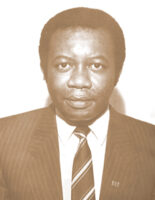
Noah Katana Ngala – Business student who inherited his father’s seat

Save, diplomatic and easy-going; that’s how colleagues, friends and relatives describe Noah Katana Ngala, the first-born son of pre-independence nationalist leader, Ronald Ngala.

In April 2002, a local daily newspaper, The Standard, once described the now septuagenarian Ngala thus: “… too cool for the rough and tumble of Kenyan politics – a man too nice to mingle at ease and hold his own in the murky field. But the man from Ganze, Kilifi District, may be like a deceptively strong current that runs deep and that could surge if given an opening, or so say some of his colleagues from the coast.”

As a top official of the ruling party of the day, Ngala always played middle-of-the-road, wary of destabilising the established order. Even as Minister for Lands and Settlement, he didn’t do much to sort out the long-festering squatter problem in his coastal homeland. And even when the office of Vice President fell vacant, he didn’t do much as a key politician to show that he was ready to occupy it.

Ngala was born into a privileged and political family whose fame traversed what is now Kilifi County. After attending primary school in Kilifi, he joined the prestigious Alliance High School for his O’ Level education and the Duke of York School (since renamed Lenana High School) where he completed his A’ Levels in 1967. He then went to the US to pursue studies in business administration. However, his course would be cut short following his father’s death, prompting him to return home and literally inherit his father’s parliamentary seat in Kilifi.

Unfortunately, politics was not Ngala junior’s preferred career. In 1985, upon being appointed Minister for Information and Broadcasting, he reportedly confessed that his burning ambition in life was business administration and not, as many people think, politics. Perhaps if his father had not died when he did, he would have pursued a career in business rather than politics.

Ngala joined Parliament in 1974 on a wave of sympathy votes following the death of his father, a revered figure and undisputed leader of the Giriama people in particular and the coast region in general. By electing the younger Ngala, the people of Kilifi wanted his father’s name to live on. He garnered a convincing 8,533 votes against his closest challenger, who got 1,457 votes. Ngala continued to win subsequent elections.

Soft-spoken like his father, he steered clear of controversy both at national and local level

Soft-spoken like his father, he steered clear of controversy both at national and local levels. Around 14 years after being elected to Parliament, he was already the KANU Kilifi Branch Vice Chairman and the party’s National Assistant Treasurer. Implicitly, he had a good standing in the ruling party. Those who held high positions within the party at the time had President Daniel arap Moi’s ear. So, as the 1988 elections approached, Ngala stood a very good chance of recapturing his seat.

Just five years after he was first elected to Parliament, Ngala was appointed Assistant Minister for Local Government. For 23 years, between 1979 and 2002, he worked in various ministries, including Local Government and Urban Development, Energy, Cooperative Development, Tourism and Wildlife, Lands and Settlement (twice), Public Works, and Information and Broadcasting. He was a minister for 17 uninterrupted years.

When Moi overhauled the political administration immediately after taking over following President Jomo Kenyatta’s death in August 1978, Ngala was one of the beneficiaries. His star, so to speak, began to rise in 1985 when he was elected as KANU’s Assistant National Treasurer. A month later he was appointed Minister for Information and Broadcasting following the sacking of Robert Matano, formerly a key politician from the coast region. This wasn’t unusual; Moi had a predictable tactic of replacing one minister with another from the same region.

Ngala survived the 1988 political tsunami that swept away many political bigwigs. He was elected unopposed in the infamous mlolongo (queue-voting) General Election that year and appointed to the Cabinet as Minister for Cooperative Development.

Unlike many of Moi’s ministers who decamped from KANU to the Opposition after multipartism was introduced in the 1992 General Election, Ngala remained Moi’s ally. Even Mwai Kibaki, who had worked with Moi as Vice President, ditched the ruling party and formed the Democratic Party (DP). Ngala went on to retain his seat as MP for Ganze Constituency in the 1992 and 1997 elections. By then, he had already been elected as KANU’s National Assistant Secretary General, a position that consolidated his relationship with Moi.

In 1996, he swapped roles with Darius Mbela, another minister from the coast, switching from the Tourism and Wildlife docket to become Minister for Energy. It would emerge that Mbela had been at loggerheads with the long-serving Managing Director of the Kenya Power and Lighting Company (KPLC), Samuel Gichuru, and the ministry’s equally long-serving Permanent Secretary, Crispus Mutitu.

The new docket meant that Ngala would escape the problems that bedevilled the Ministry of Tourism and Wildlife, and Kenya at large at the time – bad international publicity that had occasioned a reduction in tourist numbers, and insecurity in the game parks evident in poaching, bad road infrastructure and aggressive competition from South Africa.

According to media reports, Ngala’s tenure at Utalii House, the headquarters of the Tourism ministry, had not been spectacular. Between 1994 and 1995, the number of tourists visiting Kenya dropped by 24 per cent. Owing to the poor performance of the industry, in 1995 Ngala proposed the establishment of a Tourism Board that would be tasked with marketing Kenya as a tourist destination. The board was created the following year.

It is noteworthy that this was the second time Ngala was taking up the Tourism and Wildlife docket. He was at the ministry in 1989 when Kenya pushed for a ban on trans-border trade in ivory and ivory products. Ngala and Richard Leakey, who had just been appointed by President Moi to head the wildlife custodian body, Kenya Wildlife Service (KWS), appeared to work well together at the time – though they later became fierce enemies.

“I believe that a complete international ban on any trade in elephant products is the most practical way forward at present,” Ngala said in May 1989 after securing the listing of elephants on Appendix One of the International Convention Against Transboundary Trade in Endangered Species.

Kenya has since rallied the world to include the rhino.

The Ministry of Energy was a different ball game. KPLC was by then synonymous with corruption. Obsolete equipment meant that power rationing was the order of the day. At another level, Uganda and Kenya were embroiled in a tariff dispute, as the former had threatened to cut off a contracted 30MW to Kenya. Then there was the headache of dealing with petroleum cartels who wasted no time inflating prices of the commodity.

But his biggest problem involved the Kerio Valley power facility, which had been established under a cloud of contention, with questions raised about its capital outlay and capacity to break even. By the time Ngala was taking over the ministry, the Controller and Auditor General was raising questions about the financial probity of this donor-funded power plant in Pokot District (now Pokot County). By June 1997, the Turkwel Gorge Hydro-Electric Project had an outstanding loan of KES2.9 billion. Somehow, this debt wasn’t appearing in government statements of outstanding loans, causing the row with the auditor.

In the 1996-1997 Appropriations Accounts report, the Controller and Auditor General reported, “… the terms and conditions of on-lending to the Kerio Valley Development Authority (the project’s developer) of funds borrowed by the government for development (of the project) have not so far been seen”. By the following year the loan had ballooned and it became obvious that the ministry was deliberately not providing the requisite documents on the correct financial position.

In the 1997-1998 report, the auditor further lamented, “… the ministry does not maintain proper records of loans guaranteed by Government but instead continues to rely on confirmations provided by the borrowers for the purpose of preparing the (outstanding loan) statement”. The report went on to charge that “… the ministry does not maintain a proper Loans Register”.

Apart from the Turkwel power facility, there were plenty of questions surrounding Japan’s KES3.4 billion loan to the Kenya Pipeline Company whose status couldn’t be confirmed.

In 1998, Ngala was moved to the Ministry of Cooperative Development, where he had worked 10 years earlier. It was a time when the cooperative movement was struggling to survive in the era of economic liberalisation. It is worth noting that the Kenya Rural Savings and Credit Cooperatives Societies Union (KERUSSU), an umbrella body of 48 rural SACCOs with 335,056 members at the time, was registered under his tenure.

Ngala did not last long enough to make an impression at the ministry. In November 2001, he was moved to the highly contentious Ministry of Lands and Settlement, a docket hitherto identified with widespread corruption. Having worked in the same ministry just before the 1997 election, citizens expected a lot from him.

As a result of the freeze on public financing due to a cut in foreign aid, well-connected and corrupt public figures set their sights on public land as a source of income. They targeted forests, public utilities and State corporations in their lust to accumulate wealth.

The choice of Ngala wasn’t by happenstance. Moi appeared to cave in to demands by people from the coast region to solve the region’s land problems. To date, thousands of people living in the coastal region are squatters on land either owned by absentee landlords or by the government. By giving the docket to a local, Moi thought he could mute the grumbling. Yet it is also possible that he merely wanted to placate his critics, knowing pretty well that the land problem in Kenya was beyond Ngala’s capacity.

“Mr Ngala returns to the ministry for the second time but he too did almost nothing to settle the local communities during his first tenure… (He) has no excuse not to embark on the settlement process of thousands of coastal people who live on what they consider to be their ancestral land but have no right to it whatsoever,” the Daily Nation reported at the time.

But not much was done to resolve the historical land problem. Just like his predecessors, Ngala found himself accused of abetting land-grabs.

At one time, he was put on the spot in Parliament by none other than George Anyona, MP for Kitutu Masaba Constituency. Anyona sought to establish who had authorised the allocation of parts of Karura Forest between 1992 and 1996, the acreage involved, and the catalogue of beneficiaries. Ngala was at pains to provide answers because those involved were political heavyweights, among them fellow Cabinet ministers. In fact, he gave only land registration numbers of the plots allocated without going into the details as demanded by Anyona. Parliamentarians were not satisfied and, as a result, heckled and booed Ngala as he read out his statement.

Powerless to respond to the barrage of questions, the minister advised MPs to “… seek further details from the land registry”. Despite an attempt by the House Speaker to get him to respond adequately, Ngala still came back minus the names; all he had was the total acreage of land allocated (485 hectares) and a list of the 67 companies that had benefited. The names of the companies involved turned out to be fictitious, totally non-existent in the Registrar of Companies’ records.

During his time as Minister for Works and Housing, it merged that some roads provided for in budget estimates had not been built. For instance in July 1999, Parliament was in an uproar during the approval of KES19.7 billion from the Consolidated Fund for the ministry. The MPs demanded an explanation why some roads had neither been completed nor rehabilitated.

The return of multipartism drastically transformed the country’s political landscape. The possibility of Moi exiting the scene he had so long dominated set in motion succession battles involving several members of the Cabinet, among them Ngala.

Initially there were two factions: KANU A and KANU B. Another, KANU C, emerged in the late 1990s. KANU A drew the conservatives and those who had been in the party for a long time; in other words the loyalists, among them Nicholas Biwott, George Saitoti, Ngala, Musalia Mudavadi and Kalonzo Musyoka. Then there was the class of Moi loyalists but party rebels that included Simeon Nyachae and Kipkalya Kones. KANU C drew the youthful MPs who relished criticising the President and the party. Among them were Cyrus Jirongo, Kipruto arap Kirwa and, later, William Ruto.

Ngala, like his colleagues, fell victim to Moi’s whims. While at the Ministry of Lands and Settlement, he got himself sucked into the Moi succession politics. Moi had not appointed a VP for a whole year because by doing so he would have been perceived as hinting at his potential successor. Ngala, Mudavadi, Saitoti, Marsden Madoka, Musyoka and Bonaya Godana were widely tipped for the Vice Presidency.

Moi had an uncanny way of dismantling succession wars within the party. Traditionally, the Leader of Government Business in Parliament was the VP. Accordingly, when Moi appointed Ngala as the first Leader of Government Business in the Eighth Parliament in 1998, it set off speculation that he was on the path to becoming the Vice President.

Moi handled the run-up to the VP’s appointment in an interesting manner. News reports of the day all highlighted the fact that the Eighth Parliament opened without a VP – in this case, synonymous with the Leader of Government Business. The House was anxious to learn who would occupy the seat, since that person was likely to be Moi’s deputy. Saitoti, the immediate former VP, along with other members of the Cabinet, arrived ahead of the President but left the coveted seat unoccupied.

As anxiety built, President Moi made his entry into the House accompanied by Speaker Francis ole Kaparo followed by Ngala, who was flanked by Deputy Speaker Joab Omino and KANU Chief Whip Sammy Leshore. Ngala went straight to the seat reserved for the Leader of Government Business. “Drama in the august House” is how an authoritative local news magazine, The Weekly Review of 3 April 1998, covered this episode.

It later emerged that Ngala was preferred over his colleagues because he had had a 24-year unbroken stint in the National Assembly. Only Shariff Nassir and the Opposition leader of the day, Mwai Kibaki, had served longer. It was speculated that appointing Nassir to the position would not have inspired confidence in the party, the government or the country.

Although Moi kept exhorting those clamouring for a VP to direct their energies towards national development, it was no secret that appointing a VP at that point would only have fragmented the ruling party further.

Moi would reappoint Saitoti in April 1999 but, based on the intrigues surrounding the build-up to the appointment, it was clear that Saitoti would not succeed him as President.

As Leader of Government Business, Ngala was as moderate as he had always been. He did not make waves. Indeed, in the Saitoti succession battles of the 1990s, Ngala had a chance to prove his worth but fell short.

“As the longest-serving minister in the Cabinet, Ngala was expected to put on a sterling performance during the brief tenure as Leader of Government Business, but it was during this time that the government lost three key motions and nearly succumbed to a vote of no confidence and was oftentimes caught off guard when important issues were raised in Parliament,” The Weekly Review reported in July 1998.

As expected, coast region leaders were unhappy with Ngala’s nonchalant leadership. Subsequently, in April 1999, the same month Moi reappointed Saitoti as VP, the MPs dropped Ngala as Chairman of the 23-member Coast Parliamentary Group, branding him “aloof, indecisive and indifferent”. They replaced him with Assistant Minister for Local Authorities, Jembe Mwakalu. Ngala had held that position for 17 years.

As Moi’s term neared its end and succession skirmishes littered the entire country, young politicians positioned themselves to benefit from the post-Moi era. At the coast, Ngala, Nassir (Minister for Home Affairs, National Heritage, Culture and Social Services and later Minister in the Office of the President) and Madoka (Minister of State in the Office of the President in charge of Internal Security and Provincial Administration) felt the heat; new faces had emerged to oust them from their powerful KANU positions.

Despite the upheaval in his back yard, Ngala went on to serve as MP and minister until 2002, when Moi retired from national politics. He lost his parliamentary seat in the 2002 General Election that ousted KANU from power.

In May 1998, The Weekly Review stated, “… with his quiet unassuming demeanour, the minister does not seem to have made many political foes within the Kenyan political system, but he also does not appear to have committed allies who would stand steadfastly by him in the heat of battle if he was to aspire seriously for a higher position.”

The news analysis added, “… despite all his current efforts to occupy more of the political limelight, Ngala is still regarded by many as a political outsider who does not enjoy much clout apart from that which he derives from his ministerial position.”

Ngala currently serves as Chairman of the Kenya National Library Service.

Prof Jonathan Kimetet arap Ng’eno – A loyal ‘Nyayo’ man

The mixed fortunes of Professor Jonathan Kimetet arap Ng’eno dogged his footsteps right up to the end. A Cabinet minister in President Daniel arap Moi’s regime, he rose from oblivion, fell, rose again and fell yet another time, and eventually died aged 61 years while his mentor, Moi, was still working out his 24-year tenure as President.

Ng’eno entered politics in 1979 and his rise to the Cabinet was meteoric. Until that year, he was not even known among his Kipsigis community in the larger Kericho District, let alone in political circles. The professor, who at the time was working for Nakuru Millers, an obscure outfit said to be associated with Moi, was catapulted into the murky world of politics after founding President Jomo Kenyatta’s death on 22 August 1978. Moi, who had been Vice President for 12 years, ascended to the presidency and the following year the first post-Kenyatta General Election was scheduled.

Dr Taita arap Towett, a long-time Minister for Education under Kenyatta, was the key political player in the Kipsigis region. Towett, widely viewed as an eccentric man, was MP for Buret and also Moi’s age-mate who had played a leading role in the fight for Kenya’s independence.

Moi’s intention after Kenyatta’s exit was to change the political map of Kenya by bringing in a new crop of politicians who would eventually be loyal to him. Just before 1979, he convened a rally in Kapkatet, the heartland of Kipsigis, where he turned to Towett and told him to “go home and rest” – meaning that he should retire from politics. A visibly disappointed Towett left the rally and went home, ending three decades of a sterling political career.

It was said that Towett and Moi were not the best of friends before or after Kenya’s independence. Moi’s friends saw Towett as a politician who had always fought Moi, hence the dumping order.

Soon thereafter Ng’eno, then aged 43, was to criss-cross Buret Constituency together with Ayub Chepkwony, a confidant and one-time Personal Assistant to Moi when he was VP. His being in the constant company of Chepkwony was intended to send strong signals that the professor was the chosen man to represent the constituency in the House. Indeed, Ng’eno won the KANU party ticket to vie for Buret and won the seat at the polls. Moi went on to appoint him to the Cabinet as Minister for Water Development.

Inexperienced in politics and perhaps also in administration, Ng’eno grappled with creating a water policy that was intended to supply running water to all homes by the year 2000, a dream that is yet to be achieved. However, luck was to come his way when Moses Mudavadi, who was Minister for Basic Education, was accused of sending many Luhyas, members of his ethnic community, to teacher training colleges. The public outcry led to a Cabinet reshuffle instigated by Moi, which saw Ng’eno switched to the Ministry of Basic Education and Mudavadi to Water. Ng’eno would remain in Education until the 1983 snap elections.

After the elections, Moi merged the Ministry of Basic Education with Science and Technology, and appointed Ng’eno to oversee the expanded portfolio. But the minister faced various challenges between 1983 and 1985 when he headed the bigger ministry, some of which were carried over from the time he worked in the Basic Education docket. The most daunting one was the four-year-old free milk programme for primary schools, which was saddled with one crisis after another. When it was introduced on 15 March 1979 at a cost of KES170 million, it was supposed to cater for a pupil population of slightly over 3.2 million. That number would nearly double four years later. The programme had been dogged by politics, corruption and logistical problems that persisted even when Ng’eno took on the bigger ministry.

Initially, the milk programme was introduced as a pilot scheme in eight out of the country’s 42 districts; it was piloted in Mombasa, Nakuru, Kiambu, Kakamega, Kisii, Garissa, Isiolo and Turkana before being rolled out countrywide.

It was rumoured that when Moi came to power, he intended to reduce the Kikuyu population in Central Province. According to the rumours, the free milk was laced with chemicals to render Kikuyus infertile, a strategy that would lead to a rise in the Kalenjin population along with other tribes, thus outnumbering Kikuyus so that the Kalenjin could be the predominant ethnic community in Kenya.

The fears appeared to be confirmed by reports from Murang’a, Nakuru and Kiambu, where children reportedly suffered stomachaches and vomiting after drinking the milk. Although tests carried out by the Government Chemist absolved the State of these claims, the government could not fully shake off the rumour, which continued to dog the programme and even rendered it suspect in some parts of the country. The tests found that it was not uncommon for one’s stomach to be irritated as it adjusted from pasteurised (conventional preservation) to ultra-heat-treated (UHT) milk.

The second challenge concerned logistics, storage and transportation for the milk countrywide. Opportunistic traders turned the programme into a cash cow. They over-billed the government to such a degree that the National Treasury always owed them huge sums of money in pending bills. Teachers also contributed to the problem; milk would be supplied and they would either take it to their homes or sell it in the villages.

The third challenge was corruption. The milk vote remained in the books at Treasury for over a decade. Parliament would vote to authorise money, yet there was no milk supplied to schools. Ng’eno faced a barrage of questions inside and outside Parliament about the programme. It was a monumental problem which the professor did not know how to solve. Eventually, the free milk for schools programme died a natural death after he left the ministry.

In addition to these challenges, Ng’eno had to deal with both students’ and lecturers’ strikes in universities. The Higher Education Loans Board (HELB) was facing significant challenges in recovering loans as the beneficiaries could either not be traced or simply defaulted. A law was later brought to Parliament after Ng’eno’s exit from the ministry, compelling employers to deduct the money at source and criminalising non-compliance. In addition, the university student population had grown so fast that there was insufficient money to fund all the students who required financial aid.

In the Ministry of Housing where Ng’eno was transferred before the 1988 mlolongo (queue-voting) election, he had little time to leave an impact. The Jonathan Ng’eno Estate in Nairobi’s Lang’ata area was conceived by the state-owned National Housing Corporation and construction began while he was the minister. But the professor’s political career was to take a nosedive during the 1988 elections when a hitherto little-known former magistrate, Timothy Mibei, dislodged him from the Buret seat.

For the next five years, Ng’eno was in the political cold. But he managed to spring back into mainstream KANU when Lady Luck knocked on his door in 1991. Ng’eno’s political return was as dramatic as his 1988 exit. This time round it took the resignation of the Speaker of Parliament to resuscitate the professor’s career as a politician.

On 12 May 1991, Moses arap Keino, Kenya’s third Speaker, went to Parliament one weekend morning while Parliament was on a short recess. He drafted a terse letter of resignation and packed up his belongings before proceeding to Nyayo House in the central business district where the Kenya News Agency offices were housed. There he found a lone reporter and asked whether there was a photocopy machine. The reporter responded that there was none. He nonetheless signed his resignation letter and handed it over, declining to answer any questions and insisting that the reporter must stick strictly with what he had written. He then drove off.

When the news reached Moi, he sent the police to locate Ng’eno and escort him to State House. On 11 June 1991, the professor was unanimously elected the fourth Speaker of Kenya’s Parliament, marking a full return to power in readiness for elective politics in 1992.

The American-educated academician faced numerous challenges in his new role. Unfortunately, he took the Speaker’s job at a time when the Goldenberg scandal, in which billions of shillings were siphoned out of Treasury, was blowing up.

Another challenge was that this was a wind vane Parliament that played to the tune of the Executive. Debates and questions on Goldenberg began flowing and the Speaker was at a loss as to which way to rule so as not to anger the Executive. He would rule one way in the morning and return in the afternoon to contradict his earlier ruling. His critics have described him as the most confused Speaker Kenya’s Parliament ever had.

Ng’eno served for only 18 months before returning to Buret to contest his old seat, which he won back from Mibei. Moi even appointed him to one of the plum ministries in government – Public Works and Housing – where he was to oversee lucrative road construction contracts nationwide in addition to the large-scale construction of institutional buildings. Although universities, colleges and schools fall under the Ministry of Education, it is the Ministry of Public Works that is charged with all professional works.

But Ng’eno would again be hounded out as MP for Buret during the 1997 elections by Paul Sang, a school teacher; this time for good.

Born in 1937 in Buret, he attended local schools before going to the US for university, where he attained a number of degrees in political science and philosophy. He taught in various American universities before returning to Kenya. Before his death on 11 June 1998, power politics among his Kipsigis community had changed hands several times, revolving around Kipkalia Kones and John Koech, two other Moi ministers.

Nonetheless, Ng’eno will be remembered as one politician under Moi who had the resilience to remain a total ‘Nyayo’ man whether he was out in the political cold or swimming in power.

Dr Protus Momanyi Kebati – Passionate engineer, reluctant politician

As a politician, Dr Protus Kebati Momanyi served two terms in the Kenya National Assembly from 1988 to 1997. During this time he was an assistant minister in two ministries and the Minister for Tourism and Wildlife. A quiet and unassuming engineer and politician, he is perhaps remembered for his famous defection from KANU to the Democratic Party (DP) during the charged 1992 multiparty General Election. He won a parliamentary seat on a DP ticket and defected back to KANU, prompting a by-election that he won, after which he was reinstated as an assistant minister.

Hardly the most visible, famous or infamous politician from Kisii District like most of his contemporaries such as James Nyamweya, Andrew Omanga, Zachary Onyonka, Simeon Nyachae, Lawrence Sagini and George Anyona, Momanyi shied away from the media. He mostly worked with his constituents, away from the limelight. He was neither combative nor controversial, perhaps in line with the demeanour of his engineering background where actions, not rhetoric, define one’s profession.

Momanyi was born in 1935 in Igango, Bonchari Constituency, in present-day Kisii County. Even though he would represent the constituency for two consecutive terms, he never lived there as an adult; he had moved to a settlement scheme nearly 50 kilometres from his constituency in the late 1960s. In the two terms he was the Bonchari MP, he commuted from his home. Such was his popularity and acceptance in the constituency that he was elected twice (three times if you factor in the 1993 by-election), despite being a non-resident.

For his O’ levels, he went to St Mary’s Yala in the mid-1950s, at the height of the state of emergency. At the same time, the Government of Kenya was setting up the first commercial and technical college — Royal Technical College — that would later become the University of Nairobi. Momanyi joined the Royal Technical College in 1957 to study pure mathematics, physics and applied mathematics. He was among the few natives in the college that had many Indian students, since it had been merged with the Gandhi Memorial Academy Society.

After A’ levels, bright students had two popular options — head to Makerere University in Uganda like Mwai Kibaki and other independence luminaries or take advantage of scholarships arranged by the Massachusetts Senator and future President of the US, John F. Kennedy.

Momanyi chose neither, instead opting to go to the State University of Rome because he felt that Europe, with its Napoleonic education, would be a richer option than America. Even so, the British were opposed to the Kennedy airlifts and spread propaganda that their education system was superior to the American one.

In October 1960, Momanyi headed to Italy where he would spend the next eight years earning a first degree and a doctorate in civil engineering. His wife joined him in Italy and their first two children were born there. He named his first daughter Romana as a tribute to the city.

When he returned to Kenya in 1968, his first job was teaching at the University of Nairobi (which was still a college). However, he taught for only one year as he felt that he could better utilise his skills as a builder.

He was neither combative nor controversial, perhaps in line with the demeanour of his engineering background, where actions, not rhetoric, define one’s profession

He went into the construction industry and was among the first Kenyan consultants to be entrusted with building highways in the country, notably the Athi River-Namanga Highway where — like the Indian labourers who built the Kenya-Uganda railway more than a half-century earlier — they battled lions as they cleared the bush to lay ground for a road that would become one of the busiest in Kenya. He would also help to set up the Kisii-Chemosit Road.

Besides roads, he also helped to build several hotels and lodges across the country. This was between 1972 and 1979 when he was the Chief Technical Officer of the Kenya Tourism Development Corporation (KTDC). The hotels and lodges were mostly owned jointly by KTDC and the local municipalities or local/foreign investors. Notably, he built the Sunset Hotel in Kisumu Town, Sirikwa Hotel in Eldoret Town, the Marsabit Lodge and Mt Elgon Lodge. He also built the Kitale sewage line that is still being used to date.

In the 1980s, Momanyi’s clansmen started to demand more from him. As one of their most illustrious sons, whose education they had ensured, they wanted him to represent them in Parliament. Reluctantly, he joined politics.

The opportunity came conveniently when Wanjare Constituency was split into South Mugirango and Bonchari constituencies, which ensured that each of the seven clans of the Abagusii community had a constituency. Also, conveniently, this was during the infamous 1988 mlolongo (queue voting) General Election. Reportedly, KANU, the ruling party, had invented the queuing method as an easy and open method to rig out undesirable elements from the party. During the party nominations, Momanyi garnered almost the same number of votes as the incumbent, Mark Bosire, and the party decided that both could square it out in the elections. Momanyi emerged the winner.

Immediately, he was appointed Assistant Minister for Transport and Communication under Kenneth Matiba. He later worked under Joseph Kamotho when Matiba was detained ahead of the 1992 multiparty elections.

In 1992, Momanyi, hitherto a staunch KANU supporter, was edged out of the party by what is believed to be Nyachae’s meddlesome hand in Kisii politics, according to Dennis Onyango, writing in The Standard of 31 July 2017. He defected to the Opposition, joining Mwai Kibaki’s DP, a party that enjoyed considerable support in Kisii. Against all odds, he won by a landslide and was the first MP to be declared the winner in the first multiparty elections since the repeal of Section 2A of the 1982 Constitution which allowed for a return to multipartism.

It was a slap in the face for President Moi — losing a staunch member of KANU, and an assistant minister no less. Soon after the elections, in an effort to win numbers back in Parliament, he sent emissaries to woo Momanyi back. His return to KANU occasioned a by-election against Richard Mbeche (another veteran opposition politician who, like many second liberation leaders, had been incarcerated in the struggle for multiparty politics). Momanyi won with 4,288 votes against the Forum for the Restoration of Democracy (FORD)-Kenya’s Mbeche who obtained 1,276 votes.

After Momanyi’s win in the by-election, Moi restored him as an assistant minister, this time in the Ministry of Home Affairs. This demonstrated Moi’s desire to maintain a veneer of diversity in his Cabinet. When Zachariah Onyonka, then the Minister for Science and Technology, died in 1996, Moi appointed Momanyi the Minister for Tourism and Wildlife, a reward for his loyalty and friendship.

He hardly ever participated in the community politics that commonly pitted leaders against Nyachae, who was accused of instigating supremacy wars so he could become the kingpin of the Abagusii (a dream he achieved in 2002 when the Abagusii voted for him overwhelmingly in his unsuccessful bid for the presidency; his FORD-People party won all the parliamentary seats in Kisii).

Momanyi was opposed to Nyachae’s dominance. This opposition was commonly led by Onyonka and Chris Obure. Momanyi, however, never publicly condemned Nyachae. For example, he was not among the four politicians who conspired to bury Nyachae’s political career in the early 1990s, according to a Hivi Sasa article dated 30 April 2018. The four were Onyonka (Kitutu Chache Constituency), Obure (Bobasi), David Onyancha (West Mugirango) and Andrew Omanga (Nyaribari Chache).

Momanyi steered clear of the charged politics and restricted himself to his constituency and his ministerial duties. In Bonchari, he helped to build schools and a market, and completed a sewer line that had been initiated by his predecessor Bosire. When he joined Parliament, the constituency had only three secondary schools: Suneka, Itiero and Igonga. After he took charge, he sub-divided the constituency into 14 sub-locations and helped to ensure that each had a secondary school, except for the three sub-locations that already one.

Before 1988, the closest market for people from Bonchari was Nyamarambe in South Mugirango; he brought the market closer to Suneka in Bonchari. He also built four clinics that were later upgraded to health centres. Most of the projects were achieved through fundraising and the sheer determination of his constituents.

As Assistant Minister for Home Affairs, he helped subdue the Likoni clashes. As the Minister for Tourism, he helped to reinforce the anti-poaching law with Moi. He also helped increase the number of tourists coming into the country, a record he held until Najib Balala took over. He marketed Kenya in Europe, notably Germany, England and Scotland, as well as in the Philippines, with his Permanent Secretary, Sammy Mbova.

In 1997, he lost his seat to Zebedio Opore and retired from politics, retreating to his farm in Matutu Settlement Scheme.

Phillip Masinde – A patient negotiator who weathered three major crises

Friends and Cabinet colleagues of Philip Masinde had a nickname for him — “Permanent Minister” for Labour in President Daniel arap Moi’s regime. Moi reshuffled his cabinets several times and for anyone to serve in the same ministry for the full five-year parliamentary term was remarkable. Masinde was appointed to Labour after the 1992 multiparty General Election.

He headed the ministry during the 1990s, dealing with crises as they arose. Among the major issues he dealt with were the arrest of Joseph Mugalla (the Central Organisation of Trade Unions Secretary General), the billions siphoned from the National Social Security Fund (NSSF) during the 1992 elections, and the crisis over teachers’ salaries on the eve of the 1997 General Election.

The decade coincided with pressure for the reintroduction of multipartism in the country. Some trade unions supported the Opposition’s push for pluralism. But there was another reason for the increase in strikes and industrial strife — the affiliation of the Central Organisation of Trade Unions (COTU) to the ruling party, KANU, was revoked.

COTU had teamed up with KANU in the 1992 election campaigns to ensure that Moi won against a resurgent opposition movement — the only other time this had happened was in 1969 under President Jomo Kenyatta.

Mugalla, the COTU boss, refused to support a call by the Opposition for a general strike to press for multipartism. He argued that this would lead to mass layoffs. But at the Labour Day celebrations on 1 May 1993, in the presence of Masinde, Mugalla called for a general strike to press for a 100 per cent minimum wage increase.

Masinde was representing the President that day — the first time a Kenyan Head of State had missed the celebrations. Workers booed as the minister announced a 17 per cent wage increase instead of the 100 per cent they were demanding. Moi later said the strike was political and declared it illegal. But the industrial action continued for two days, paralysing the country. The government offered to negotiate further increases but through tripartite committees. Mugalla and some union officials were later arrested and charged with inciting workers against the government. However, they were released when the government realised the officials had no case to answer.

Masinde reportedly set in motion the process to replace Mugalla with COTU’s deputy secretary general even though the law required the President to appoint COTU officials after elections. Mugalla took the case all the way up to the Court of Appeal and was reinstated. During the subsequent labour negotiations between the government, unions and employers, Masinde was present.

When he was appointed Minister of Labour, Masinde inherited the crisis involving billions lost at NSSF and, to a lesser scale, the National Hospital Insurance Fund (NHIF). He and his National Treasury counterpart had to deal urgently with the matter. Reportedly, the KANU government had used the money from these institutions to fund the elections in 1992. Several banks, including Postbank Credit Finance, were used to deposit funds taken from NSSF.

The NSSF was allegedly prevailed upon to go into real estate development in Mountain View, Kitisuru and Syokimau — a business far removed from its core business of safeguarding workers’ pensions. The land that NSSF bought was reportedly owned by the government, but had been allocated to influential KANU members. Consultancy and legal fees were also reportedly paid by NSSF to firms set up to access the funds for the campaigns.

Whatever the case, it emerged that worker’s pension payments had fallen into arrears. To try and contain the situation, Masinde changed the NSSF Board and the Managing Trustee, and the incomplete housing developments were seized by NSSF.

A tenant purchase scheme was put in place to try and recover workers’ money. The scheme was extended to Mountain View, Kitisuru and Syokimau, where the developments had stalled at various stages. Empty plots were also sold. The scheme became popular as it gave first priority to NSSF and NHIF employees to own property.

For the bigger banks that had also received NSSF funds, like the National Bank of Kenya, these deposits were later converted into equity, with NSSF as a leading shareholder. These measures helped to sort out and secure the NSSF funds.

Then in 1997, there was the teachers’ strike. The Kenya National Union of Teachers (KNUT) under Secretary General Ambrose Adongo called for a nationwide strike beginning 1 October 1997, barely two months before the next General Election. With national examinations for primary and secondary schools about to start, 260,000 teachers going on strike promised to be disastrous. Masinde and the Minister for Education, Joseph Kamotho, began negotiating with KNUT officials and both sides eventually reached an agreement for teachers to be awarded between 150 per cent and 200 per cent salary increments that would be spread over the next five years ending in 2002, the next election year. This was a huge increase, but there was much at stake. Adongo called off the strike after 12 days.

The ramifications of that hasty decision would affect subsequent governments under Presidents Mwai Kibaki and Uhuru Kenyatta. Successive governments have failed to honour the agreement, resulting in regular strike threats. This situation has yet to be resolved.

Masinde lost his KANU nomination and parliamentary seat to Chris Okemo in the 1997 elections. A non-controversial politician and Nambale MP for two terms, he will be remembered as an amiable Labour minister who dealt effectively with the crises he faced in office.

The former minister was born in 1933 in Nambale town, Busia District (now Busia County), and had a staunch Catholic upbringing. He worked as a teacher at various intermediate schools in western Kenya before independence. Soon after he got married, he won a scholarship from the Catholic Church to study in the Netherlands.

He earned a degree in political and social sciences and returned home at independence. He became a labour officer and then moved to the East African Airways as a human resource manager.

Peter Cleavers Otieno Nyakiamo – Top banker who headed three ministries

Those who know Peter Otieno Nyakiamo well have described him as a results-oriented workaholic, a stickler for time and a firm custodian of etiquette. He is a soft-spoken and private man whose 35-year career as a banker saw him rise to top management positions at Barclays, Kenya Commercial and NIC banks. He has also been Chairman of Kenya Revenue Authority.

As a politician and public servant, Nyakiamo was a key figure during the KANU regime and a major mover in South Nyanza’s political scene. His loyalty to President Daniel arap Moi and influence among the Abasuba sub-tribe that lives along Lake Victoria and adjoining islands afforded him close proximity to power during his time in the Cabinet. Indeed, the President had such confidence in his management and leadership qualities that he appointed him Minister of State in the Office of the President, then moved him to the Ministry of Health before finally giving him the Lands docket to head.

This was significant at a time when there were frequent Cabinet reshuffles that were usually announced during the 1pm radio news bulletin via the state-run Kenya Broadcasting Corporation (KBC).

Nyakiamo, a Catholic and a teetotaller, was born 92 years ago in Kaksingri, along the shores of Lake Victoria, and attended local schools where he honed his leadership qualities. After sitting his final exam at Mangu High School in 1946, he was set to join Makerere University in Uganda, an institution of choice and prestige in East and Central Africa at the time, to train as a teacher. But this did not happen because a bank job opportunity came knocking.

“Somehow I didn’t feel inclined to be a teacher. One day my uncle told me that the son of an Asian he worked with had mentioned that Barclays Bank was planning to hire African clerks. He told me to try my luck,” said Nyakiamo.

Fresh out of school, he sat and passed the interview with flying colours, scoring top grades in English and mathematics. Although he got four out of a possible six points, the European administering the test told him he could have done better. “But four out of six was not bad. He was impressed with my handwriting. The score plus my handwriting got me the job,” he recalled.

In 1956, Nyakiamo was sent for training in England. At that time he was earning KES100 as his monthly salary, quite a princely sum at the time.

“The amount required to open a bank account was one shilling. It was a lot of money then and we ended up with a list of several Africans who had opened bank accounts. However, the ledger showed that they had only one shilling balances in their accounts!” he recalled.

In those days, Africans were not allowed to borrow more than KES2,000. “And we couldn’t lend African women money unless they had permission from their husbands! Their spouses had to say yes first.”

Due to his sterling performance, Nyakiamo was promoted to General Manager overseeing Barclays Bank in Kenya. His star continued to rise as he worked with dedication until his retirement in June 1982. Politics was the farthest thing from his mind when he finally took off his banking hat.

“Politics was nowhere on my mind. Indeed, I didn’t choose to be in politics but I was approached during my farewell party in Nairobi – organised by my age mates and kinsmen soon after my retirement – by some Mbita (Constituency) residents and leaders from Kaksingri to vie for the parliamentary seat then held by Alphonce Okuku, the brother of Tom Mboya.”

His first reaction was rather demurred but as he thought about it and consulted widely, he decided to take up the challenge. However, he faced an immediate dilemma – his father and Mboya’s were family friends, and his mother and Mboya’s mother were relatives from the Wakula clan. Nyakiamo’s father was also Mboya’s godfather. In addition, some of Nyakiamo’s critics said he was “too clean” to go into politics and that he did not have the voice to address public rallies. While he was still weighing the pros and cons, and trying to enjoy his hard-earned retirement, President Moi announced a snap election for the end of that year.

Nyakiamo described the transition from the corporate world to the murky field of politics as “surprisingly smooth for a newcomer like me”.

“I was roped in and decided to give it a try. Our election campaigns were not hostile but friendly, with my main opponent, Okuku, being a childhood playmate.”

Nyakiamo won by a landslide and was sworn in by the Speaker of the National Assembly in Nairobi the following week. Next was an unexpected but pleasant surprise for the new Mbita MP as the President included him in his new Cabinet as Minister for East African Affairs. The position, which he held for one-and-a-half years, meant he brushed shoulders with his boss in the Office of the President and at State House almost daily. He was later transferred to the Ministry of Health where he worked for two years before being moved to the Ministry of Lands for another two years.

His biggest challenge in the Office of the President was dealing with the thorny issue of identification and distribution of assets to the three feuding former member states of the East African Community, which had just collapsed. The eventual success was a result of good team spirit by his Ugandan and Tanzanian counterparts, who cooperated with the Swiss coordinator appointed by the European Union.

“The process was not easy and required several meetings in Arusha, Nairobi and Tororo, plus diplomacy among the three states’ respective ministers for EAC Affairs with the support of our Presidents, Daniel arap Moi, Julius Nyerere and Milton Obote.”

At the Ministry of Health, Nyakiamo’s experience in management was an added advantage to dealing with the myriad problems that included lack of drugs, equipment and qualified manpower to run the public hospitals and dispensaries across the country. “I had an easy time at the Ministry of Health because I had a good team led by the Permanent Secretary, the assistant ministers and the Director of Medical Services and his team,” he said.

One of his big achievements was a multi-billion shilling medical deal between the Kenyan and Danish governments for the latter to supply medical kits to all major hospitals and health facilities in the country. Another was the introduction of a private wing at Kenyatta National Hospital (KNH) to cater for patients who could afford to pay extra for specialised treatment, as was the case in private hospitals in Nairobi and other towns.

“The idea to start a private wing at KNH was mine and I am proud of it. This came about after seeing many private hospitals provide VIP services and get support from the National Hospital Insurance Fund.”

His lowest moment in Health was when the National Treasury could not cope with the number of health facilities being built using money from fund-raisers initiated by politicians. Many buildings were put up but the Ministry of Health was unable to keep up with equipping these hospitals with personnel, equipment and funding.

“It was too big; the Ministry of Health budget could not support it. It was impossible!” he said.

Nyakiamo did not feel like he did much in the Ministry of Lands, where he was working when the 1992 General Election was called.

“But I still vividly recall putting my foot down and telling off some powerful people who wanted to misuse their positions to acquire land at the Magarini and Kilifi Settlement Scheme in Coast Province. I was firm in protecting government land and other property,” he said.

By the early 1990s, the agitation for multipartism had gained momentum and the result was that he lost his parliamentary seat as by then, voters were not interested in hearing about his development record but rather why he had rejected the Opposition’s presidential candidate, Jaramogi Oginga Odinga. As other politicians were busy jumping the KANU ship and defecting to opposition parties, he opted to stick with the party he had joined years previously.

“I am still a KANU life member today; it is the only political party I have ever joined. My friend Tom Mboya welcomed me to join KANU on the eve of independence in 1963,” he explained.

He expressed his gratitude to Moi for giving him the honour of serving in the Cabinet where he learnt a lot about team work, the enormous responsibility of running a ministry and, by extension, running a country.

“I enjoyed working with Moi in the Office of the President as Minister in charge of East African Affairs as it gave me a chance to travel with him a lot locally and abroad. The Ministry of Health gave me many chances to attend international conferences to learn more about how to deal with health issues. Those trips helped us to become more exposed to new trends in our respective ministries.”

In politics, Nyakiamo’s tenure as South Nyanza KANU branch and Mbita sub-branch Chairman brought him closer to the grassroots so he could deal with ordinary folks. His secret weapon in politics was honesty – he never promised his voters what he knew he could not deliver but always reminded them that he was “a mere messenger” whose role entailed being in good books with his boss, Moi, and his fellow Cabinet ministers, and requesting help on his constituents’ behalf.

As Mbita MP, Nyakiamo managed to increase and expand educational and health facilities in the expansive constituency. Moi Sindo Girls Secondary School was the first to be set up with 30 students; that has since increased to 800. As the Minister for Health, he also influenced the upgrading and refurbishing of Mbita Health Centre, now renamed Suba County Referral Hospital, and initiated dispensaries on Mfangano and Rusinga islands.

He also led a serious campaign to have his Suba sub-tribe recognised and a district for it carved out of Homa Bay District (now Homa Bay County). The Abasuba form a Bantu sub-tribe whose forefathers originated from Uganda. They also got their own radio station to promote the rarely spoken language and culture.

In Nyakiamo’s experience, President Moi was approachable and generous, and also had a big heart and a passion for education (being a former teacher). He recalled some memorable breakfast meetings with his boss at State House or at his private home in Nairobi or Kabarak in Baringo District (now Baringo County). Moi also visited him at his home near Sindo Town in Homa Bay and spent the night as a sign of trust and friendship.

“Whenever we went to his house for breakfast, we came away with something new learnt from and about the old man. I respected him then and still respect him now,” he said.

At 92 years, Nyakiamo is today a trustee of the National Fund for the Disabled of Kenya.

Nicholas Kipyator arap Biwott – Power and mystery personified

Nicholas Kipyator arap Biwott was at the epicentre of power during the 24 years that President Daniel arap Moi was in office. Referred to by many nicknames (Total Man, the Bull of Auckland, Mr Fix It, Karnet (steel), the man behind the throne, or simply the king in waiting), Biwott was widely acknowledged as the man not to cross in the Moi government. Anyone who did was sacked. He was also mysterious and, some felt, paranoid. It was not unusual for him to change vehicles up to 10 times in one day. For instance, he would take a ramshackle of a taxi on a mission to the Hilton Hotel, then another vehicle to the Norfolk Hotel to meet a colleague, another to Lavington, yet another to Muthaiga, and so on throughout the day.

Biwott’s mysterious ways extended to meetings and eating habits. In the restaurant at the National Assembly or whichever hotel he went to for a meal, he preferred not to be served by the wait staff, typically opting to have his meal from the buffet. At his office at Nyayo House as Minister for Energy, he never allowed his visitors to sit facing him. He would give a brief tap on the hand in greeting, then talk to the person in his waiting room while standing.

This treatment was extended even to foreign dignitaries. An Assistant Secretary of State from the United States was quite shocked when, after waiting for hours in the office lobby to meet the minister, Biwott finally arrived and proceeded to conduct the meeting with the dignitary right there in the lobby. Members of the press, who had set up their cameras inside his office, scrambled to dismantle their equipment in a vain attempt to catch up. But Biwott concluded the meeting and dismissed the American guest before the cameras could be repositioned.

Biwott had various telephones on his desk: one green, another red and the third black. Red was reserved for calls from Moi. Green was for ministers and prominent members of the business community, while the black phone was kept for calls from his secretary, who would typically be putting calls through from ordinary people requesting authorisation for various issues.

Biwott’s name was synonymous with power in an African State whose President was at one time listed by the Western media among the so-called ‘Big Men’ of Africa in the 1980s and early 1990s, before the wind of pluralism swept across the continent. Although short of stature akin to the bibli cal Zacchaeus, Kenya’s entire Cabinet, every Member of Parliament, politician and the general Who’s Who paid court to him. He was what is known in political parlance as the power behind the throne. He made things happen.

Just to demonstrate his power, he was famous for making diplomats from powerful nations and wealthy business people wait for him for long hours, either in his office or at five-star hotels, only to end up having brief three-minute sessions with them. Usually all they wanted was to convey a message to the President.

In his Keiyo South Constituency, he held an annual fund-raiser in support of various development projects, including a school named after his mother, Mama Soti. Ministers would troop to these events, including vice-presidents and businessmen, who would compete in contributing huge sums. Biwott became one of the third longest-serving MPs, retaining his seat for an uninterrupted 28 years.

As Minister of Energy, Biwott was behind the signing of oil exploration agreements with various international companies

Biwott started his phenomenal climb to power from the position of District Officer in pre-independence Kenya and rose through the ranks of public administration to become a District Commissioner in the area that included present-day Meru and Tharaka Nithi counties in 1960. This is where he learned the ropes of colonial government and he was to make good use of that knowledge in later years as a politician in the Moi regime. British colonialists all over Africa were masters of the ‘divide and rule’ policy, and the Kenya Colony was no exception. Borrowing a leaf from his teachers in his area of jurisdiction in Meru, the young DC helped settle some of the Mau Mau freedom fighters and left out others, thereby creating an everlasting divide in the community.

Moi noticed the young civil servant and appointed him as his personal assistant in 1977, when he was serving as Vice President under President Jomo Kenyatta, Kenya’s first Head of State. Then Biwott vied for and won a seat in the 1979 General Election, the first in the Moi era. This paved the way for his elevation to the Cabinet in the plum position of Minister in the Office of the President.

Under Moi, Biwott masterminded the perpetual divide in the Opposition. Jaramogi Oginga Odinga, and later his son Raila Odinga, moonlighted with the ruling party, the Kenya African National Union (KANU), under the guise of ‘co-operation’ to stave off Mwai Kibaki (Democratic Party) and Kenneth Matiba (FORD-Asili) and thereby destabilise the Opposition.

During the Moi era, Biwott’s reputation as a colossus of Kenyan politics was comparable to that of Substone Budamba Mudavadi (father of Wycliffe Musalia Mudavadi, who later became a co-principal of the opposition’s National Super Alliance, NASA), Charles Njonjo, the most powerful Attorney General Kenya has ever had, and Godfrey Gitahi (‘GG’) Kariuki, the influential Minister for Lands.

Not even Jaramogi, Kenya’s first Vice President, Tom Mboya, Jomo Kenyatta’s blue-eyed boy, or Mbiyu Koinange, Kenyatta’s buddy, were as powerful as Biwott during their time in Government. It was widely accepted that he called the shots and that his word was tantamount to a proclamation.

He left his indelible mark in every docket he served in under Moi. In 1979, as Minister in the Office of the President, he reportedly teamed up with GG Kariuki to dish out State land under the jurisdiction of the Agricultural Development Corporation to various civil service and defence forces officers, apparently with the aim of buying loyalty to the new regime. The Agricultural Finance Corporation was also approached to advance loans to help the new owners develop their farms.

As Minister of Energy, Biwott was behind the signing of oil exploration agreements with various international companies, including American Oil Company Amoco, to search for oil in Turkana and in the Indian Ocean.

Biwott was also behind the Turkwel Gorge Power project, which opposition politicians for a long time denounced as a white elephant. It was not until Jaramogi, during his 1993 co-operation phase with KANU, visited the project and described it as “… one of the wonders of the world” that the white elephant tag was laid to rest.

During his stint in the Trade and Commerce docket, Biwott revolutionised licensing laws in such a way that they favoured local and international business regimes. For instance, import and export licences were restricted to a fixed time period rather than being open-ended as had been the case previously. And while Biwott headed the Ministry of East African and Regional Co-operation, the East Africa Treaty was successfully negotiated to establish the second East African Community (EAC) after the collapse of the first in 1977. He was, however, criticised for having influenced the nomination of one of his wives, Margaret Kamar (who would later become the Senator for Uasin Gishu County), to the first EAC Parliament.

In the 1980s, when total loyalty to the ruling party was symbolically measured by thermometer, Biwott was the gauge of who was or was not loyal to Moi. It is believed that even the vice presidents who served under Moi feared Biwott, except for one: Kibaki.

The party introduced a badge bearing Moi’s insignia; every politician and anyone looking to do business with the government displayed it on his lapel. Word would then reach Biwott and other KANU ‘cockerels’ announcing who was ‘KANU damu’ (KANU by blood) and the person would be appointed either to the Cabinet or approved to do business with the government. Kibaki simply refused to wear that particular badge and instead chose to wear one bearing the image of the KANU cockerel, the official party symbol.

Having thus ‘failed’ the loyalty test, Kibaki was, as a result, allegedly demoted from the post of VP after the discredited 1988 mlolongo (queue-voting) General Election to the position of Minister for Health.

In Parliament, ministers seeking a favour from the President would position themselves in the lobby, eyes fixed on the swing doors of the Chamber. Biwott would emerge and stride along the walkway through the Churchill Arch (an architectural feature of Commonwealth Parliaments), head for the kitchen table for a cup of tea then settle at a table where one after another his Cabinet colleagues would approach and whisper their message. Each would leave Biwott’s side wearing a big smile, perhaps congratulating himself for bringing his issue closer to the President’s ear.

Essentially, politicians and members of the business community regarded Biwott as the de facto deputy to the presidency or better still, the Swiss-style Big Man in a collegial presidency – which did not exist in the Constitution of that era. Politician James Orengo summed up the situation in Parliament by saying, “President Moi is a prisoner of people like Biwott.”

The same Orengo nicknamed Biwott the ‘Bull of Auckland’ when information filtered through that the Cabinet minister had been thrown out of a VIP hotel in New Zealand during a presidential visit after allegedly making indecent advances towards a female worker. In his own defence in Parliament, Biwott reportedly remarked dismissively, “I am a real man, a total man!”

Biwott was married to women from across the world; one hailed from Israel, another from Australia and a third from Kenya. His funeral in 2017 showcased the diversity of a powerful man whose family tentacles spread across the globe. One politician remarked that a family photograph should be taken on that occasion to show that Biwott was not a Kenyan but a global figure with roots all over the world.

As technology advanced and mobile phones arrived in Kenya, Biwott refused to embrace it and never carried one. He knew too much about technology to trust it wholly. His philosophy was that one should never answer a telephone call because that was a sure way of facilitating tapping. He invariably instructed his personal assistant or secretary to answer all phone calls and report who the caller was and what they wanted – and for good reason. All fixed telephone lines, including mobiles, incorporate technological devices to trace one’s location. That is how Adolf Hitler and Saddam Hussein were captured by American forces using the old and new technology, respectively.

Biwott did not want to be traced – hence his cloak-and-dagger methods of changing taxis to move from one point to another. When it came to communication, he would let his men do the talking.

Even international banks with headquarters overseas were reputed to dance to his tune. He would reportedly order them to fly money in any currency to any destination in Kenya. Sums of KES 5 million would be flown from Nairobi to Mombasa, Narok, Eldoret or Kisumu, in 50-shilling denominations. A man or woman would be waiting to receive the ‘cargo’ for distribution to waiting supporters. Biwott never carried any money on his person.

Reputed to be a billionaire, his wealth ranged from expansive tracts of land locally, real estate including Nairobi’s iconic shopping mall, Yaya Centre, shares in Kenol/Kobil and unit trusts. He was also said to own ranches in Australia, where he attained part of his education. His power accorded him both wealth and influence locally and abroad. For instance, government ministers in some of the countries he visited would make greater efforts to schedule meetings with Biwott than with Kenya’s Foreign Affairs minister.

Born in 1940 in Chebyor, Keiyo District, Biwott attended Tambach Intermediate School between 1951 and 1954 before joining the colonial government as a District Officer. He travelled to Australia to pursue a Master’s degree in Economics in 1969 before returning to join the newly independent government of Kenya.

He died in July 2017 with his reputation as a mysterious Moi-era power broker firmly intact.


Hussein Maalim Mohamed – The MP who stood up for North Eastern Province

One of very few Kenyans of Somali descent to have risen to positions of influence in President Daniel arap Moi’s administration, Hussein Maalim Mohamed was a politician who tactfully avoided controversy, except when it came to defending the rights of his people. He made history as the longest-serving Cabinet minister from the region formerly known as North Eastern Province (NEP).

No other MP from the region has managed such an uninterrupted political career. Mohammed never lost a parliamentary election and represented Dujis Constituency (formerly Garissa Central and later renamed Garissa Township) for five consecutive terms, serving as a nominated MP during one of those terms. He chose to retire from politics in 2007.

Mohamed was not known beyond the boundaries of NEP until one year into Moi’s presidency in. It was 1979, when the newly installed President formed his first government after a General Election in November. Mohamed was among the people Moi nominated to Parliament. The President was keen to promote the interests of small communities that had been marginalised since the colonial era.

Mohamed was neither from an influential family nor did he have a good education. He had dropped out after primary school and made a name for himself in business. He was a popular businessman in Garissa Town before people chose him to be their civic leader in the 1974 elections. His popularity spread throughout the province for his role in helping Somali students seek higher education abroad. People even nicknamed him Hussein Maendeleo (Kiswahili for development) on account of his business, which he operated under the trade name Maendeleo Stores. The retail store was among the first businesses in the town in post-independent Kenya.

Before finishing his term as a nominated MP, the attempt in August 1982 by soldiers from the Kenya Air Force to overthrow the government would change the fortunes of Mohamed and his family. Coincidentally, it was Mohamed’s older brother, Mahmoud Mohamed, then a senior military officer, who was instrumental in saving the situation by suppressing the coup.

Moi then appointed the older Mohamed, a Deputy Commander in the Kenya Army, as Commandant of the renamed 82 Air Force. Four years later, he was named Chief of General Staff. The younger Mohamed, who was already in Moi’s good books, contested the Garissa Central parliamentary seat in the 1983 snap elections that Moi called to reorganise his government following the attempted coup. He won easily, beating the incumbent, Abdi Arres Mohammed.

Moi went on to appoint him Minister of State in the Office of the President alongside Justus ole Tipis and Peter Nyakiamo. Mohamed was not only the first Cabinet minister from North Eastern Province, but also the first one to hail from the Muslim community in Kenya. Likewise, his brother was the first from the Somali community in Kenya to hold such a position; he was the highest ranking General in the military. For years, there had been mistrust between the government and the Somali people living in Kenya owing to their marginalisation since colonial times. By appointing Mohamed to the Cabinet, Moi began a process of building a new culture of trust between his government and the people of NEP.

One of his first duties as a minister was to help the government combat insecurity and banditry in northern Kenya. Another was ending the suspicion that existed between the people and the government.

A key issue that the government needed to deal with even before addressing insecurity in NEP was the political dynamics in neighbouring Somalia, which directly affected Kenya. In 1977 Moi, then the Vice President, raised concerns about the alleged recruitment of Kenyan Somalis to fight in the Ogaden War which had broken out in July of that year between Somalia and Ethiopia; both countries were laying claim to the Ogaden region. There were reports that Somalia government agents were issuing passports to Kenyan Somalis to go to Somalia for military training. It was feared that Kenyans recruited to fight in the war would later be used to attack Kenya in an old campaign to hive off the NEP and join it to the Republic of Somalia.

Moi, who held the docket of Minister for Home Affairs, ordered the screening of all Somalis in Kenya through registration, to make them easily identifiable by Kenyan security forces. This was deemed necessary because many Somali nationals had fled their country in the 1970s and settled among their relatives in NEP. Others had established a base in Nairobi’s Eastleigh Estate.

After the Ogaden War, the Somalia government was under threat from opposition parties, portending more trouble for Kenya. The political tensions were not only felt in NEP but also in Nairobi, since Eastleigh was slowly becoming the home of fleeing refugees. For fear of reviving the expansionist dream of a greater Somalia by residents of NEP, the Kenya government had to tackle the crisis in Somalia with caution. And this is where Mohamed became instrumental.

On top of all this, there was an ivory smuggling ring operating between the two countries. Poachers believed to have the blessings of high-ranking officials in the Somalia government would cross over into Kenya’s wildlife sanctuaries, kill elephants and smuggle the ivory back into their country. Somalia’s ambassador to Kenya had denied the claims, but Mohamed insisted that the allegations were true.

The Weekly Review news magazine of 17 February 1989 quoted the minister issuing a bold ministerial statement on the matter: “Somali nationals are infiltrating the country, irregularly obtaining Kenyan citizenship and identification documents and supporting or engaging in poaching and banditry.” He went on to say that the same foreigners had amassed wealth through the transport and haulage business, real estate and other commercial enterprises, and that some of the proceeds were being used to finance poaching and other illegal activities against Kenya.

The statement sparked an unprecedented public row between him and MPs from Wajir and Mandera districts. Mohamed and an unnamed MP from Garissa District are said to have handed over a secret list of five Somali nationals suspected to be behind the poaching. The five, who owned transport businesses, were arrested in an ensuing crackdown but were released after questioning.

In the same month, there was an exchange of fire between Kenyan security forces and poachers who had invaded Liboi in the Tsavo National Park and killed six elephants. One Somali poacher was killed and another, who turned out to be a soldier in the Somali National Army, was injured. After taking such a bold stance on the poaching issue, Mohamed grew in popularity. Moi retained him in the Cabinet and he was now viewed as a spokesperson for NEP; the residents praised his efforts to incorporate them in government.

By the early 1990s, the Garissa MP had become a decisive leader in the ruling party, KANU, following agitation for the re-introduction of multipartism in the country. Mohamed had been elected as the KANU Assistant National Organising Secretary and was the party’s leading light in NEP as well as Moi’s point man in the 1992 General Election. He was able to bring together other leaders in the province who voted overwhelmingly for Moi’s re-election as President. The minister himself won the Dujis Constituency seat for a third consecutive term.

Prior to the elections, the rather reserved politician had embarked on a campaign in which he criticised Moi’s administration, accusing it of neglecting the Muslim community and failing to end insecurity in NEP by not providing adequate security. Mohammed had even hinted at forming a broad-based Islamic Party that would serve the interests of Muslims in the country. Four other KANU MPs from the region supported him.

Although this irked the government and other KANU leaders, they could not afford to discard the Dujis MP in the face of an increasingly strong opposition. The FORD-Kenya party had made inroads in NEP in the 1992 election campaigns. Party luminaries led by their chairman, Jaramogi Oginga Odinga, accused Mohamed of doing little to end banditry in the region. And following intense campaigns in which they promised to end insecurity, the party managed to win Lagdera Constituency through their candidate Farah Maalim.

In early 1993, Mohamed found himself colliding with the Provincial Commissioner of NEP, Amos Bore, who he accused of failing to fight insecurity in the region. At a public meeting in Garissa Town in February, the politician claimed that ammunition was being obtained easily from the security forces in exchange for money. “I am now happy the security in the area has improved two-fold. But I am not happy that there is a syndicate on arms in Garissa Town involving the police and civilians,” he was quoted as saying in the Daily Nation of 22 February 1993. In April, in what was seen as a demotion, he was moved to the Ministry of Culture and Social Services. The minister later claimed he had criticised KANU from within “… only in the spirit of constructive criticism.”

Not much was heard from him after that as he dedicated his time to his ministerial duties. In the 1997 General Election, he again surprised the opposition by retaining his seat with ease. Moi appointed him Minister for Research, Technical Training and Technology, where he served for only one year before he was moved to the Ministry of Rural Development. He was then moved to the Ministry of Women and Youth Affairs. By the time Moi was concluding his tenure in 2002, Mohamed was in the position of Minister for Medical Services. In the elections that year, he was yet again one of the few MPs who did not struggle to retain their seats.

Mohamed found himself in the opposition after KANU’s presidential candidate, Uhuru Kenyatta, lost to Mwai Kibaki of the National Rainbow Coalition (NARC). In 2007 he opted to resign from active politics and the Dujis seat was won by a relative, Aden Duale, who was later to become Leader of Majority in Parliament and is married to the daughter of Mohamed’s older brother.

In 2016, Uhuru Kenyatta would appoint him Chairman of the Ewaso Ng’iro North Development Authority.

Kimaiyo Karoney Arap Sego – The Nandi MP who wouldn’t play ball

The 29 January 1988 issue of The Weekly Review news magazine carried on its cover a portrait of Henry Kosgey, the Minister for Culture and Social Services, bearing the headline ‘Man in Trouble’. Inside, the article stated that the KANU Nandi District powerbrokers at that time, Mark arap Too and Ezekiel Bargetuny, had decided that Kosgey must lose his Tinderet parliamentary seat. No reason was given for the fallout.

At the time, Kosgey was smarting from accusations that he had dipped his fingers into the All Africa Games till. Later, it emerged that the two key allies of President Daniel arap Moi had claimed that Kosgey had failed to utilise his position in the Cabinet and as the KANU Nandi chairman – the most senior politician in the area – to benefit the community.

To replace Kosgey for the Tinderet parliamentary seat was Kimaiyo arap Sego, a young, unassuming Kapsabet-based lawyer who had unsuccessfully campaigned against the minister in 1983. And with that began Sego’s short-lived fairy tale – because the powerbrokers also fell out with the newcomer and were soon plotting a Kosgey comeback.

The Weekly Review of April 1989 titled his exit ‘A rapid rise, a precipitous fall’ and described it thus: “The (MP) for Tinderet in Nandi District, Mr Kimaiyo arap Sego, who was the Minister for Commerce until his dismissal from the post by President Daniel arap Moi in mid-January this year, would probably curse the day when he decided to leave his legal practice… to enter the volatile field of politics. The troubles that have dogged his nascent political career ever since he fell out (with those who sponsored him) have been growing by leaps and bounds.”

Sego was born in September 1952 in a place called Kaptendon in Lessos Location, Nandi District (now known as Nandi County), to Sylvester and Felister Sego. The elder Sego served with the Kings African Rifles (KAR) during the Second World War and later retired to farming.

The former MP attended Kalibwani Primary School before moving on to the then prestigious Kapsabet High School for his Ordinary Level education and then St Mary’s Yala to do his Advanced Level. He would later join the University of Nairobi for a degree in law. He undertook his pupillage with Amata & Company Advocates in Eldoret and worked there for about two years before setting up his own law firm in Kapsabet Town.

In 1983, Sego attempted what was viewed as an almost impossible task – he challenged Kosgey for the Tinderet seat. Kosgey garnered 17,797 votes against Sego’s 1,045. In the subsequent elections, five years later, Sego got 14,499 votes in the party primaries against Kosgey’s 6,151 votes. Since the KANU regulations at the time provided for direct entry into Parliament for candidates with 70 per cent and above votes in the primaries, Sego was announced as Kosgey’s replacement.

Soon after the elections, he was appointed Minister for Commerce. He was 32 years old, the same as Kosgey when he joined the Cabinet. There was a massive re-organisation of the government in forming the new Cabinet. New ministries were created while others were hived off from old ones. Among the new ministries was Technical Training and Applied Sciences, previously a department within the Ministry of Education. The Ministry of Works, Housing and Physical Planning was abolished and its departments given to other ministries.

Immediately he joined Parliament, Sego started building his own power base, being the senior-most politician in his home district. “He perhaps thought that as the district’s most senior politician, he did not need any political patronage. In this, Sego may have over-estimated his political clout and under-estimated that of Too, who had increasingly assumed the posture of Nandi District’s predominant political patron,” The Weekly Review stated.

Sego lasted only nine months in the Cabinet and was replaced by John Cheruiyot, another MP from Nandi District. According to The Weekly Review, Sego “…became the first minister of those elected and appointed (the previous year, after the General Election) to bite the dust… when he was dismissed amid speculation that he had fallen out with Too. Soon afterwards there was a move to throw him out of the party and Sego responded to it by taking a back seat in Nandi politics.”

The Nandi KANU branch accused him of failing to participate in fund raisers in the area, snubbing party leaders’ meetings, refusing to participate in party elections, and not joining President Moi on tours of the district. He declined to defend himself or apologise to his political mentors, which infuriated the party branch officials even more; to the extent that adversaries wanted him expelled from the party.

It would appear that Sego consistently failed the loyalty test. It wasn’t so much that he publicly disobeyed his masters, but that he always remained silent while other leaders were literally falling over themselves to pledge loyalty to the President and to their power brokers. At one time, Sego had a public spat with Too, his key sponsor, accusing him of sponsoring rivals to take away his parliamentary seat. Too hit back, declaring that Sego’s cries were the last kicks of a dying horse.

As Minister for Commerce, Sego oversaw the amendment of the Trade Licensing Act to promote local industries. This was within the government’s policy of import substitution to curb the huge export bill and imbalance in trade against Kenya. Of note is that Sego represented the country during the Uruguay Round of the World Trade Organisation’s multilateral trade negotiations under the auspices of the General Agreement on Tariffs and Trade (GATT).

At face value, his tenure was uneventful, almost lacklustre. But in reality, he headed a ministry whose industries were in the eye of a storm characterised by cartels out to make quick money. The contentious Kenya National Trading Corporation (KNTC), the Sugar Equalization Fund and the Industrial and Commercial Development Corporation (ICDC) were regarded as cash cows for the well connected. Indeed, in his 1987-1988 report, the Controller and Auditor General brought to the fore financial irregularities in these authorities.

Sego had inherited a ministry whose corporations were in deep debt. The KNTC was saddled with a KES389 million loss by the time he took over. Reports swirled around regarding the theft of sugar from the corporation’s godowns as well as en route to Nairobi from factories in western Kenya (4,020 bags) between 1980 and 1982. Another 643 bags of sugar meant for export had been lost in April 1981.

“In the previous year’s report, reference was made to various irregularities which had occurred at the (sugar) godowns in Nairobi and Mombasa where the ministry had stored sugar. A review of the position in 1988 revealed continuing and additional unsatisfactory matters,” the Controller and Auditor General said in the Appropriation Accounts 1987-1988 report.

With regard to ICDC, the ministry issued the corporation loans without precise terms and conditions, according to the Controller and Auditor General in the same report. There were “unexplained differences” between the ICDC loans and those of the corporation. While the government’s position showed that ICDC had received loans and grants worth KES720 million by June 1987, the corporation’s figures reflected KES600 million.

After the re-introduction of multiparty politics in the 1990s, Sego abandoned KANU to join the opposition’s Democratic Party led by Mwai Kibaki. His defection was met with a hostile reception back home in Nandi; he was even attacked by a mob on his way to submit his nomination papers for the 1992 elections. This wasn’t unexpected. The Rift Valley was considered an exclusively KANU zone. He lost the election and filed a petition against Kosgey’s victory as Tinderet MP, which he also lost.

Sego disappeared from the limelight until 2003, when he joined the public service as a Delegate to the National Constitutional Conference that was established to give Kenya a new constitution. In 2005, he was appointed Chairperson of the National Anti-Corruption Campaign Steering Committee (NACCSC), created the previous year to champion the fight against corruption.

Sego resigned from the NACCSC in 2014 and settled back into his law firm.


Justus ole Tipis – Champion of Maasai land rights

Justus Kantet ole Tipis, once a powerful Minister of State in charge of Internal Security in President Daniel arap Moi’s government, saw no battle he could not fight. Those who crossed the path of this man who enjoyed unbridled power, lived to regret it. He is reputed to have consigned a number of politicians and civil servants, who he viewed with suspicion or who dared question his actions, to political and career oblivion.

Born in 1919 in Narosura, currently Narok South, Tipis attended the government-funded Maasai School Narok, which would be renamed Ole Sankale Primary School. He later trained as a veterinarian and was employed in the Livestock Department in 1937. In 1939 when the Second World War broke out he was enlisted in the military where he rose to become a colonial Colonel. In 1946 after the war had ended, he joined the provincial administration and his first posting was Olenguruone in present-day Nakuru County.

Tipis ventured into politics in 1957 and was elected to the Legislative Council (LegCo) as a representative of the Central Rift Valley. Between 1960 and 1969, he was elected the first Narok MP. In the 1969 General Election after Narok North and Narok South were created, he lost the Narok North seat to Moses Marima. In the 1974 General Election, he threw himself back into the ring and trounced Marima. From then on until 1988 when he lost to William ole Ntimama, he was re-elected in subsequent elections.

Tipis, who hailed from the populous Masai Purko clan, which Ntimama also belonged to, led a Maasai delegation out of the Lancaster House Conference in the UK on the pre-independent constitution because of his community’s land rights. He and a group of Maasai leaders wanted all the land the British colonialists had taken from the community in the former White highlands to be returned before the independence talks and the writing of Kenya’s constitution could commence.

When the Kenya African Democratic Union (KADU) party folded and merged with the Kenya African National Union (KANU), Tipis and Moi worked together to bring the Rift Valley, predominantly in the Opposition, into Jomo Kenyatta’s government. Those who know him say Moi prevailed upon Tipis to ask his community to abandon the Opposition and join the government; when he did so, their bond strengthened.

“Tipis convinced the Maasai who were in KADU to work with the government for their benefit. After meeting with Kenyatta and other regional leaders to work out how members of the Opposition would be incorporated into the government, Moi – who Kenyatta liked more than others in the Opposition – tasked Tipis with the work of bringing the Maasai into the fold,” said Philip Lemein, the first Senator of Narok.

Lemein, who accompanied Tipis to the Lancaster House Conference and after independence worked closely with him, said after Tipis accomplished the mission, Moi counted on him to do more for him.

“Despite being firm, he was diplomatic and affable. Interactions with him were based on respect. Those who crossed his path lived to regret it because he could sometimes sort issues out physically,” he added.

On the contentious Maasai land rights, he explained, Tipis wanted to pursue justice even after independence but was prevailed upon to drop the matter. He said he was a big asset to the Maasai, adding that his contribution to community wellbeing could not be measured.

“If he were corrupt, he could have been a billionaire owning huge tracts of land. He legally acquired the parcels of land he owned. In fact when he died, the family had no money to settle hospital bills before his body could be released for burial; Moi stepped in to help,” revealed Lemein.

Initially, Tipis went into politics to champion the return of Maasai land that had been taken by colonialists. Lemein said he quit after accomplishing the mission.

Tipis and Stanley Oloitiptip, a former Kajiado South MP and also a former member of the Moi Cabinet, played a big role in the Rift Valley in campaigning for Moi to succeed Jomo Kenyatta. In 1976, some politicians mainly from Central Province wanted the constitution changed to bar Moi from ascending to power in the event of Kenyatta’s death.

“After the death of Kenyatta, Moi wanted loyalists to assist him to run the government. Tipis was one of his advisers,” said Lemein. “Moi knew he was fearless and could be depended on to ward off opposition to his fledgling administration. Because of that, Moi helped him win subsequent elections in Narok North.”

Those who crossed the path of this man whose trademark was a long moustache, cursed the day they did so. As KANU Organising Secretary, he was a powerful operative that Moi entrusted with the running of the party’s affairs. Other powerful players in the KANU hierarchy and who sat on the infamous KANU Disciplinary Committee included Okiki Amayo, Mulu Mutisya, Robert Matano, Isaac Salat, Ezekiel Barngetuny, Shariff Nassir, Burudi Nabwera and Moses Mudavadi.

These men were reputed to have the ability to make ministers and their assistants cry and kneel before them during committee meetings, begging for pardon. Those that the Disciplinary Committee recommended for expulsion or suspension from the party left politics to wallow in seclusion.

“Using his walking stick or a rungu (club), he could whip anybody who he viewed as being anti-KANU. Those who were called to show cause why they should not be suspended or expelled from the party feared him,” revealed Kelena ole Nchoe, a former Narok Town Council Chairman.

In 1982, Tipis differed with his Cabinet colleague, Robert Matano, within the precincts of Parliament and after an exchange of harsh words he hit Matano with a rungu.  MPs who witnessed the altercation had to intervene to cool his temper. Matano’s son had befriended Tipis’ daughter, something the minister did not want to entertain.

“He was temperamental. He couldn’t sustain an argument for long. Those who knew when he was unhappy steered clear,” said Nchoe.

Tipis was so loyal to KANU that he was fond of wearing a red shirt and a striped tie in the colours of the national flag. He was always ready to defend Moi and the ruling party whether within or outside of Parliament.

As Minister for Internal Security, he was a proponent of detention without trial where anti-government figures could be arrested and detained in preservation of the Public Security Act. Ntimama, his arch-rival in his Narok backyard, bore the brunt of his unbridled power. He orchestrated numerous arrests of the self-proclaimed Maasai spokesman to instil fear in him in a bid to deter opposition from him.

Those who wanted to vie for political positions in Narok, including aspirants for civic seats, could not get clearance certificates until he personally cleared them. He ensured that those he endorsed sailed through unopposed in the one-party State era.

Those who complained about his leadership style were branded msaliti (traitor) and enemies of development. “In 1988, I wanted to vie for a civic seat in Narok Town but because of my political inclination towards Ntimama, he denied me clearance despite my visiting him in his rural home and his Nairobi offices,” said Isaya Ndung’u, a businessman.

Ndung’u, a former Chairman of the local branch of the Kenya National Chamber of Commerce and Industry, (KNCCI) added, “I even used his close friends like the former Transport Licensing Board Chairman, Hassan ole Kamwaro, to get the certificate but he did not give in.”

In December 1986 during his tenure as Internal Security Minister, Tipis dared Ugandan troops who had been amassed at the Busia and Malaba borders to attack Kenya over differences between President Yoweri Museveni and Moi. This was a time when there was a surge of Mwakenya, a radical group campaigning for a regime change. Moi had accused foreign powers, including Uganda and Libya, of harbouring and supporting elements bent on overthrowing his government.

Tipis, who did not imagine that at one time Moi would want him out in favour of Ntimama, wanted Kenya to go to war with the neighbouring country; but Moi, who had already deployed the Kenyan army along the common border, had other plans. Moi would later travel to Malaba to meet with Museveni and negotiate a truce that resulted in both countries withdrawing their troops.

Friends of Tipis say that the 1 August 1982 attempted coup was one of his low moments. He is said to be among those who convinced Moi to get out of his Kabarak home and travel to Nairobi to address the nation after the attempted coup had been crushed by the Kenya Army. Other friends say that during his time as an MP, Narok – divided as it was between Ntimama and his own political camp – was peaceful and devoid of tribal tensions.

“I respected the man. He was a person you could count on in times of need,” said Kamwaro, who also served as Narok County Council Chairman. He said Tipis believed in strong institutions and placed his people in positions where they could deliver services to the public. “He was not a tribalist or a bootlicker. He welcomed all tribes in Kenya to work and live in Narok. He stood for the truth and could sacrifice anything for that cause,” he said.

Kamwaro, Chairman of the Maasai Council of Elders, remarked that among other reasons why Tipis joined active politics was to serve his people and turn their lives around. “He helped build schools and health facilities among other development projects. Most schools in Narok North were built when he was the area MP.” He added that Tipis was independent-minded and knew what was good for his people and the country. “He was somebody who couldn’t be pushed to do things he didn’t believe would have positive results irrespective of who pushed them,” he said.

It is said that around 1987, Moi developed an interest in Ntimama and had to use every trick in the book to have him replace Tipis in Narok North. When Ntimama was a powerful Narok County Council Chairman in 1976, he helped Moi acquire about 3,000 acres of land in the 46,000-hectare Maasai Mau Forest, one of the 22 blocks that form the over 400,000-hectare Mau Complex. Moi planted tea on the land and built the Kiptagich Tea Factory, which serves about 7,000 large and small-scale farmers near Olenguruone Township.

Ntimama’s push for the excision of part of the forest that was under the management of the County Council necessitated a full Council meeting; this further cemented his friendship with the Head of State.

“Moi was happy after he was allocated the land. When we visited Moi in Kabarak before the 1988 General Election, he told us he wanted Ntimama to succeed Tipis,” said Raen Ololoigero, a Maasai elder aged 92.

He said because of Tipis’ support for Moi during the 1976 ‘change the Constitution’ campaign, the President had assisted him to win elections. “There was no way he could ditch him immediately and bring on board Ntimama, who didn’t want him to succeed President Jomo Kenyatta. It had to take some time,” said Ololoigero, a member of the Maasai Council of Elders. He recalled that apart from returning the favour for the land, Moi had had enough of Tipis and wanted a change of guard in Narok. “After consolidating power, Moi wanted other people to do his bidding. Tipis had outlived his usefulness.”

Tikoishi Nampaso, a son of the first Narok South MP, Partasio ole Nampaso, said Tipis was like all other politicians who were useful to Moi for a time but who later fell out of favour with him. He said the President was known for returning favours to those who assisted him and knew he owed Ntimama, who had had his eye on the seat for many years.

“Moi never kept friends for long. After one outlived one’s usefulness, one was dispensed with. Tipis stood up to those who wanted to bar Moi from becoming President, but that didn’t matter to Moi in 1988, when he influenced Ntimama’s election,” he commented.

After a series of hospital treatment, Tipis died in 1994 at the Nairobi Hospital. He had two wives, Rhoda and Ng’endo, both deceased. Of his several children, none have followed his footsteps into the political arena.