About Us

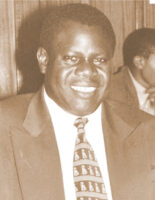
Julius Lekakeny Sunkuli – From the Judiciary to the August House

Early in his life, Julius Lekakeny Sunkuli, who would become Minister for Internal Security in the final four years of Daniel arap Moi’s presidency, wanted to be a Catholic priest. His parents, Francis and Helen Sunkuli, raised him and his siblings in conformity with the teachings of the Church, leading him to aspire to become a priest to serve among the faithful in Kilgoris, his home town in the former Transmara District in present-day Narok County.

Sunkuli was born in 1961 in Poroko, Kilgoris West. He attended Oroko Primary School after which he joined Kilgoris Secondary School before proceeding to Cardinal Otunga High School where he completed his A’ level education in 1981. He was admitted to the University of Nairobi and completed a Bachelor of Law degree course in 1985.

In 1987, he joined the Judiciary and was posted to Kericho Law Courts as a District Magistrate. He said he had ambitions of rising to the highest level possible in the Judiciary, but his life took a different turn. “I was certain I would one day be a judge in the Court of Appeal and later Chief Justice. But it was not to be,” he once told a local newspaper.

Joining politics, he said, was the last thing on his mind. He decided to venture into it after Maasai elders approached him while he was still serving justice.

“They kept visiting me in Kericho and at home, insisting I should become their next MP,” he recalled. It took a lot of convincing by elders from his Moitanik clan for him to resign from the Judiciary and join the race for the Kilgoris seat, which had been held by Francis Sompisha for 24 years.

Sunkuli came onto the political scene at a time when Moi wanted a change of leadership in Kilgoris because he believed the incumbent was no longer useful to his political cause in the era of multiparty politics.

While in Kericho, Sunkuli had made friends with KANU party power brokers and it is they who suggested to Moi that he could make a good replacement for Sompisha.

In 1992, at age 31, he successfully contested and held the seat for 10 years until 2002, when he was trounced by Gideon Konchela. In 1993, he was appointed Assistant Minister in the Office of the President in charge of Internal Security and Provincial Administration.

After his re-election in 1997, Sunkuli, who cultivated a close relationship with Moi during his first term in Parliament, was re-appointed Assistant Minister in the same ministry before being elevated to Minister in 1999. He won Moi’s heart because he was fluent in Kalenjin, which made his boss feel at ease with him, and also because he was honest.

These two factors made it easy for him to be admitted to Moi’s inner circle of power, although some of his Cabinet colleagues exploited his close proximity to power and used his good offices to book appointments with the President for them.

His colleagues paint a picture of an affable and efficient man who got along well with them, with MPs and with the President.

“He interacted well with all of us. Whenever we raised issues concerning security in our areas, he acted. Whenever we wanted access to Moi, he arranged a meeting with him,” said Paul Sang, a former Minister for Health.

As a KANU hawk and a powerful minister, he discharged his ministerial duties with vigour, attracting friends and foes in equal measure. His foes accused him of being a liar, arrogant and vindictive, while those who liked him described him as an honest man who used his influential position to help uplift the lives of the electorate in his constituency.

“Like other powerful personalities now and in the past, he made many friends and enemies. In the course of discharging his duties he stepped on many toes,” said Peter Sapalan, a former Transmara County Council Chairman who later became a confidant of the late Professor George Saitoti, a former Minister for Internal Security.

His former Cabinets colleagues said Moi liked him because he discharged his work according to the President’s wishes, and that he helped the President keep any opposition at bay in his Kilgoris backyard and in Narok.

“He accomplished tasks to Moi’s amazement. Whenever he was given an assignment, he brought good news to the President. He also wouldn’t compromise, especially when it came to the security of the country,” said Stephen ole Ntutu, a former Narok South MP who worked with Sunkuli in the Moi Cabinet.

Sunkuli enjoyed such unbridled clout that, allegedly at the behest of Moi and those close to him, he took on another minister, William ole Ntimama, who apparently had become too powerful to tame. As the minister overseeing the provincial administration, he used his influence to thwart Ntimama’s public meetings by having them cancelled while at the same time propping up politicians opposed to Ntimama.

“When Jackson Mwanik fought it out with Ntimama in the 1997 and 2002 elections, Sunkuli openly supported him. During the electioneering period, the police would cancel Ntimama’s meetings citing security reasons, and yet allow his opponent’s meetings to continue,” revealed Jackson Saika, the National Chairman of Maasai Professionals Association.

He observed that the pressure applied on Ntimama by Sunkuli, coupled with the humiliation by district commissioners working in Narok, might have been instrumental in forcing the Narok North MP and his supporters to decamp from KANU and join the Opposition.

In December 1996, Narok District Commissioner John Nandasaba sent police to disperse Ntimama’s supporters who had gathered at his Melili rural home to celebrate Christmas. Nandasaba claimed that the celebration, for which several cows and goats had already been slaughtered, was not licensed.

Sunkuli also enlisted the services of Ntutu to try and cut Ntimama down to size through sustained campaigns to paint him in bad light. He wanted his former colleague to lose grassroots backing in Narok, but it was a difficult mission because he enjoyed massive support among the Maasai.

Using his powerful connections, Sunkuli ensured that Ntimama, who he had for a long time branded as selfish and disloyal to Moi, was denied access to the President’s private and official residences.

In 2009, he was appointed Kenya’s Ambassador to China by President Mwai Kibaki, but he resigned in 2013 to vie for a senatorial seat in the first elections under devolution.

Among his opponents were his younger brother, Andrew Leteipa, and Ntutu. Relatives, friends and elders from their clan tried in vain to have one brother stand down for the other. Their decision to continue as political rivals divided the family down the middle; not even their late father was able to reconcile them.

“My brother begged me to support him since he had supported me in 2002 when I lost the Kilgoris seat and again in 2007 when I tried to recapture it. When I conveyed that to my supporters, they would hear none of it. They told me to obey them and go for it. There was nothing I could do,” he told reporters when he presented his papers at the Independent Electoral and Boundaries Commission office in Narok Town.

He later regretted not reconciling with Leteipa. “It was the worst mistake because if only one of us had vied for the seat, he could have won since our combined votes were more than 120,000,” he told the Daily Nation newspaper. In the 8 August 2017 General Election, he attempted to go back to Parliament but Konchela again thwarted this efforts.

Sunkuli filed a petition at the High Court in Kericho County, claiming that the election was marred by massive irregularities aimed at denying him victory. The petition was thrown out with costs. He proceeded to the Court of Appeal and later to the Supreme Court, but they all maintained that Konchela had been validly elected.

In 2015, before the General Election, President Uhuru Kenyatta had appointed him as a member of the Board of Directors of the Industrial and Commercial Development Corporation (ICDC). His brother was also appointed to the Board of the Lake Victoria South Water Services Board.

Sunkuli wanted the Maasai to abandon traditional practices that hinder education and stand in the way of development

Sunkuli has said he is not yet done with elective politics, claiming that he has all along been his people’s choice but that rigging has been working against him. Apart from improving people’s living conditions through initiating development projects during the 10 years he was the Kilgoris MP, he said he helped build new schools and equip existing ones.

He also said throughout his stint in politics and in the corridors of power, he believed in delivery of services to the people of Kilgoris and Kenya. He further commented that with the exception of 2013, when he and his brother vied for the same seat, his family had supported his political journey all along.

“I got all the support I needed from my parents and siblings. When I decided to wrest the seat from Francis Sompisha who had held it since independence, they supported me,” he said. His father, who died in 2014, was instrumental in his decision to abandon the Judiciary for politics, a decision he never regretted. “He saw my star rising in politics. He also wanted me to serve the people of Kilgoris that he so loved,” he stated.

On his turf wars with Ntimama, Sunkuli emphasised that they were based on principles. He claimed that while Ntimama wanted to live in the past, he (Sunkuli) wanted the Maasai to abandon traditional practices that hinder education and also stand in the way of development.

“It wasn’t personal. I respected him until he died. In fact, he was my political teacher. I was never used by Moi to fight him as people have been made to believe. He was opposed to my mission to change the community thinking and way of life in the face of changing times. We differed but still respected each other,” said Sunkuli.
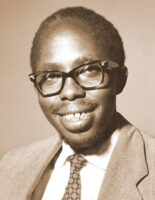


Julius Gikonyo Kiano -Moi ally who served in Cabinet for only one year

In 1976, Julius Gikonyo Kiano was appointed to head the newly-created Ministry of Water Development, where he remained until he lost the Mbiri (now Kiharu) parliamentary seat to Kenneth Matiba in 1979. Kiano had held the seat since 1966 when it was hived off from Kangema, where he had been Member of Parliament since independence. President Daniel arap Moi had been in power for one year when Kiano lost the seat to Matiba.

As the only senior Cabinet minister and the longest-serving legislator from Murang’a District, Kiano had become the dominant politician in the district even though he had lost the KANU party’s Murang’a branch chairmanship in 1976.

As one of the ardent supporters of Moi from central Kenya, Kiano was appointed Managing Director of the Industrial Development Bank (IDB) in 1980, following the death of Joseph Gatuiria. He was also appointed a member of the joint panel of experts under the auspices of the World Health Organization (WHO), the Food and Agricultural Organization of the United Nations (FAO) and the United Nations Environment Programme (UNEP).

The responsibility of the panel was to improve communication between organisations, agencies and individuals responsible or interested in the development, promotion and protection of a healthy environment. In 1977 as the Minister for Water, he was elected Chairman of the steering committee of the United Nations Water Conference held in Argentina, which was the beginning of his high-profile involvement in environmental issues. He led Kenya’s delegation to the UNEP Governing Council meetings in 1978 and 1979.

Politically, Kiano never made it back to Parliament and instead decided to support someone else in 1983 to oppose Matiba. He had opted out of the election hoping to win the post of Secretary General of the United Nations Conference on Trade and Development (UNCTAD). He was not selected for the job and again tried to remove Matiba from Mbiri in the 1988 General Election but lost.

The worst moment of his political career was perhaps in 1989, when he lost a by-election occasioned by the expulsion of Matiba from KANU. Although Kiano was the frontrunner right from the early stages of the election, he lost the the Kiharu seat to his former employee, Gidraf Mweru. In December 1989, Kiano was elected unopposed as the branch chairman of KANU for Murang’a. He lost again to Matiba during the multiparty General Election of 1992. Moi appointed him Chairman of the State-owned Kenya Broadcasting Corporation (KBC).

Kiano, the first Kenyan to obtain a PhD degree, was a pioneer scholar and freedom hero. He was born in 1926 in Githiga, Kangema, in Murang’a District. He went to Weithaga Primary and Kagumo Intermediate schools before joining Alliance High School.

He subsequently did two post-secondary education programmes at Makerere College in Uganda and eventually proceeded to Antioch College in Ohio, USA, in 1948. He graduated with a degree in economics in 1952. At Antioch, Kiano developed an interest in cooperatives, a movement that would revolutionise agriculture and other sectors of the economy after independence.

After eight years in the US studying economics and political science, he got a university fellowship from Stanford University to study political science in 1953.

Before leaving Kenya for the US, Kiano was aware of the political situation (colonialism) and the need for educated and non-educated Kenyans to join hands in the liberation struggle. The desire to free Kenya from the yoke of colonialism had been planted in him by African soldiers returning home from the Second World War in 1945, when he was in high school.

Kiano, who later became independent Kenya’s first Minister for Commerce and Industry, went to California University’s Institute of International Studies, Berkeley, for a PhD in comparative studies on colonial liberation in Asia and Africa.

During a 1996 interview, Kiano recalled: “My going to Berkeley to study nationalism was not theoretical at all. I could see what had happened in India, what was happening in Indonesia, what was happening in Dien Bien Phu and so I knew things would also be happening in Africa.

At Antioch, Kiano developed an interest in cooperatives, a movement that would revolutionise agriculture and other sectors of the economy after independence

“In 1951, Dr Kwame Nkrumah became the Leader of Government Business in the Gold Coast (Ghana) and it later became the first African country to be independent from British rule in 1957, a year after I got my PhD. I was trying to relate my studies as much as I could with what was happening in Africa and what was likely to go on in the continent.”

In September 1956 Kiano returned to Kenya and got a job at the only post-secondary school college in the country, the Royal Technical College (now the University of Nairobi) as its first African lecturer. He taught economics and constitutional law. He later abandoned the classroom for politics and was elected to the Legislative Council (Legco) in 1958 to represent Central Province South. Kiano and other leaders knew freedom would not mean much unless the country had enough personnel to take over from the departing colonial technocrats.

The leaders therefore wrote to their friends in American universities, colleges, the political leadership and the trade union movement, seeking scholarships for young Kenyans to study in America. The response from American universities was overwhelming and resulted in the “Great Airlift” through which hundreds of Kenyan students got opportunities to study in the US.

In 1959, the Kennedy Foundation and its associates offered a whole aircraft to ferry students from Nairobi to the US. This was the first airlift; others followed in 1960 and 1961. Kiano and Tom Mboya will be remembered for and credited with organising the airlifts that formed the core of the country’s future Public Service and chief executives in the private and public sectors. In July 1961, Kiano said the African’s love for education was rivalled only by his love for freedom.

“There is a great need for vocational training (shorthand and typing for girls and technical training for boys) for children leaving school,” he also said.

In December 1961, as a member of Legco, Kiano accused the colonial government of operating a torture house, used to extract confessions from people who had been put under restriction without trial. In 1963, he was elected to the House of Representatives as the MP for Kangema and appointed Minister for Commerce and Industry.

At a time when Indian dukawallah (shopkeepers) were notorious for engaging customers in endless bargaining for small items, Kiano called for an end to the bargaining culture.

“You tell a customer that an item costs KES 20 and it is only worth KES 5. If he bargains down to KES 10, he thinks he has bought something cheaply,” he said.

This contention was, however, bitterly opposed by the mainly Indian members of the Chamber of Commerce.

Kiano was also instrumental in placing and sustaining Africans in business and trade, especially in the rural areas, from where people of Indo-Pakistani origin were told to move to the major towns and leave local trading to Africans.

The Ministry of Commerce worked out a programme that would enable small-scale African traders to buy goods at wholesale prices, a plan approved by the Cabinet. Before that, African traders would get goods for sale from Indian retailers and therefore could not compete with them. To encourage Kenyan Africans to get involved in trade and commerce, the minister travelled across the country opening African shops and businesses.

In 1964 at a Commonwealth trade ministers’ conference, Kiano called for an international trade and development organisation under the United Nations. He envisaged that the organisation would function on lines similar to FAO, the International Labour Organization (ILO) and WHO. Later, the Geneva-based UNCTAD was born and in 1976 Kiano vied unsuccessfully to become its executive director.

Kiano consistently urged Kenyans to save through societies, the Post Office and commercial banks, saying the “savings would be available for investment in development even as the country seeks development capital from the socialist East and hard-hearted Western businesses”. Following the assassination of Mboya in 1969, he termed the heinous act as the “darkest hour and most shocking blot on Kenya’s history since independence”.

At the time, he was the Minister for Education and was later moved to Local Government. Later, in the 1970s, he returned to the expanded Ministry of Commerce and Industry before moving to the Ministry of Water Development, earning himself the infamous distinction of the Cabinet minister Kenyatta had shuffled the most.

Kiano’s last attempt to return to politics was in 1989. He died in August 2003.

Dr. Josephat Karanja – The stop-gap Vice President

When Mathare Consistuency in Nairobi was left vacant following the exile of its MP, Andrew Ngumba, the seat was filled by Dr Josephat Njuguna Karanja, who was essentially a technocrat. Not long after that, in 1988, President Daniel arap Moi handpicked him out of the blue to replace Mwai Kibaki, a highly polished politician, as Vice President of the Republic of Kenya.

Karanja, who occupied the VP position briefly between 1988 and 1989, was installed by Moi reportedly to spite Kibaki and pit the Kikuyu community of Nyeri District against those of Kiambu District. The demotion of Kibaki from VP to Minister for Health was widely viewed as a slur on the Nyeri people, yet with Karanja as VP there was really nothing of benefit to the people of Kiambu either.

For the Kiambu people to feel a sense of ownership in the presidency, they would have preferred a better tested politician such as Charles Njonjo or Njoroge Mungai. Karanja did not have any significant impact locally or nationally since he was not politically savvy and was considered too aloof to play the tricky game effectively. On the other hand, while Njonjo might have been similarly detached before Moi humiliated him with the 1983 Judicial Commission of Inquiry, he had at least proved himself as a king-maker when he almost single-handedly ensured that Moi became the second President of Kenya. He was also effective during his term, albeit shortlived, as the MP for Kikuyu.

Before Karanja was persuaded to enter politics with promises of bigger things, he had been in the level-headed world of diplomacy and the ivory tower of university administration. He therefore did not know how to soil his hands. It is believed that Moi singled him out because he would be easy to shake off when the time came. Being a novice in politics, he did not have a solid base and following, which meant few people would stand up for him when push came to shove.

Just as he had pitted the people of Kiambu against those of Nyeri by appointing Karanja as his second-in-command, Moi used Kikuyu politicians in a plot to remove Karanja from office in 1989. A mechanic working with the Ministry of Public Works reportedly fixed Moi’s limousine when it broke down on the road. His name was Kuria Kanyingi.

Karanja will be remembered for his tenure at the university between 1970 and 1979, a period referred to as the heydays of the university during which black student enrolment increased by large numbers

In his signature dramatic style, Moi picked the mechanic literally from the underbelly of his limo and elevated him to the helm of the Motor Vehicles Inspection Unit. Here Kanyingi is reported to have transformed his fortunes and became a multi-millionaire within a very short time.

He used the money he amassed to spite Moi’s political enemies; his modus operandi was to outdo them at fundraising events and also to build the reputation of Moi and his government by becoming his fundraiser agent. He gained the reputation of being Moi’s ‘spanner boy’ and was used to bring down or cut down to size those Moi wanted kept in their place. Accordingly, when the Moi government decided the time for Kikuyus to occupy the number two slot was over and that Karanja had to go, Kanyingi was instructed to put a spanner in the works.

Taking advantage of Karanja’s reserved nature and obviously at the command of a higher authority, Kanyingi was the first to throw stones at the VP. He accused Karanja of acting like a god by demanding that politicians kneel before him. The short and slender yet aggressive mechanic-turned-politician from Limuru also allegedly accused the VP of imagining that he was the country’s President-in-waiting, since he had been left as acting President while Moi was travelling outside the country on official duty.

Having thrown the opening salvo, Kanyingi sat back while the battle to slay Karanja was taken in hand by other MPs – some even from his native Kiambu District. The main accusation against Karanja was that, like Njonjo before him, he was building an anti-Moi political machinery with the ultimate aim of removing the President from power. Of course everyone knew these allegations were absurd, and few mentioned the VP by name, but what the powers-that-be wanted, they got. Witch-hunting had been taken to another level.

The comical part of this whole saga was the introduction of Karanja’s wife Beatrice into the saga. Moi had for years been estranged from his wife Lena and the unwritten rule within his Cabinet and among senior government officials was that no wives accompanied their husbands to official or any other high-octane public gatherings.

Karanja, however, was an accomplished educationist and diplomat of high standing who had lived abroad and considered it proper and honourable to have his wife by his side during official ceremonies. His political enemies used this against him. Indeed, displaying the Ugandan beauty at a time when politicians’ wives were never seen or heard, was viewed as disrespectful. Few Kenyan politicians of that era could understand this seemingly ‘Western’ thinking.

When the battle went to Parliament, the government employed the services of another diminutive loudmouth MP by the name of David Mwenje, a self-styled champion of the landless poor city dwellers. On 25 April 1989, the former Embakasi MP stood on a point of order in Parliament and without provocation started attacking the VP. Mwenje told Speaker Moses arap Keino that he would move a no-confidence motion against Karanja. Other MPs referred to Karanja as a ‘kneel before me’, arrogant, corrupt leader who was anti-Nyayo (disloyal to the President).

Mwenje accused Karanja of scheming to overthrow Moi’s government with assistance from his foreign friends. The accusation that politicians were working with foreign people to overthrow the government was a common tactic used to remove people who had outlived their usefulness.

The VP was no different. Of course if asked to substantiate, his detractors would have pointed to the fact that Karanja had been a high-ranking diplomat in the West, where he had a large network of friends and fellow professionals. At that time, Western nations did not see eye to eye with the government.

As expected, the no-confidence motion against the VP was passed four days later. Addressing Parliament on the issue, a dignified if cowed Karanja termed the passing of the motion “… a sad day for Kenya”, noting that some politicians had lost “a sense of common decency and embraced political thuggery and vindictiveness”. These were Karanja’s parting words as he resigned from his position as VP immediately afterwards.

Born in February 1931, Karanja was the second VP to serve under Moi and the fifth since independence. He was replaced by another university don, Professor George Saitoti, who would similarly face Moi’s wrath only a few years after his appointment.

Although Saitoti was said to have some Kikuyu blood, he was primarily a Maasai; President Moi had effectively cut the cord that might connect the Kikuyu to the presidency.

Before moving his political base to Mathare, Karanja had given in to coercion by people in the regime to vie for the Githunguri parliamentary seat occupied at the time by Arthur Magugu. He had tried to win the seat twice without success. Magugu was known for his development record at the constituency level, and so despite the political powers behind Karanja, he was difficult to dislodge. The opportunity for Karanja to win a seat in Parliament presented itself when the Mathare MP went into exile in Sweden.

Andrew Ngumba, a former mayor of Nairobi and after whom Nairobi’s Ngumba Estate is named, was a very progressive MP who founded and grew Rural-Urban Credit Finance, a company that advanced unsecured loans to constituents interested in buying public transport mini-vans (matatus) plying the Nyamakima-Mathare route.

There have been claims that this unchecked loaning system led to the collapse of the credit finance company in 1984. Another school of thought had it that Rural-Urban was politically sunk for the role it played in providing financial assistance to people from a particular community.

Subsequently when Ngumba left the country, Karanja moved in and fought for the seat with the tacit assistance of the Moi regime and local leaders. His victory was greatly tilted by the influential Councillor Ndururu Kiboro (after whom Kiboro Primary School on Juja Road is named). His campaign coincided with the issuance of the ‘kobole’ (KES 5 coin), which Karanja is reported to have literally showered voters with. Once he won the election, the way was clear for Moi to appoint him VP in place of Kibaki. In 1992, Karanja moved back to his home constituency of Githunguri. This time – perhaps out of sympathy – the people voted him in.

At age 33 he had become the country’s first and youngest High Commissioner to Britain, a post he held between 1964 and 1970. Britain was then the most important economic partner of Kenya, its former colony. He then became Vice Chancellor of the University of Nairobi at age 40, replacing Dr Arthur Porter.

His lukewarm political career aside, Karanja will be remembered for his tenure at the university between 1970 and 1979, a period referred to as the university’s heydays during which black student enrolment increased by large numbers. His liberal and Western inclination opened the university to many changes, including encouraging women to acquire higher education.

At the university, Karanja had a reputation as a no-nonsense leader and administrator who managed with an iron fist. As a result, he was liked and loathed in equal measure. He was described in some quarters as brilliant and dedicated, but aloof and out of touch with the masses. However, he delegated skilfully and empowered those below him to take charge. He also fiercely guarded the independence of the university and got things done.

In 1993 as Moi cracked down on enemies of the State, Karanja was arrested and arraigned on charges of inciting the public against the government. It was obvious that the charges were fabricated since at the time he was in poor health and could barely attend parliamentary sessions.

Also at that time, many Opposition politicians were being detained without trial and had their wealth and tax status investigated. Some died in mysterious car accidents.

The 1993 arrests of Karanja and others were condemned by several foreign governments including the US, Britain, Germany and Australia. A few weeks later, the charges were dropped “for lack of evidence” as the government caved in to foreign pressure.

Karanja died on 28 February 1994, three weeks after his 63rd birthday.

Joseph William Nthiga Nyagah – A calm and sober politician

He may not have been very outspoken or politically fiery but Joseph William Nthiga Nyagah was a leader in his own right. He was not your typical politician, neither did he enter politics to make a financial fortune. In fact, the eldest son of independence politician, Jeremiah Nyagah, was self-made.

During his career as a politician he was a Member of Parliament, a Cabinet minister and a presidential candidate. Born in March 1948, Nyagah graduated with a bachelor’s degree in economics and political science from the University of Nairobi in 1970. He proceeded to the United States for a master’s degree in management (finance and management option).

He then worked at The First National Bank of Chicago (which is part of today’s JP Morgan and Chase Bank, New York), Kenya Bus Service, McRae and Smith Accountants and British American Tobacco Kenya Limited. Between 1987 and 1991, he was Chief Executive Officer of the national carrier, Kenya Airways (KQ). Before moving to KQ, he was Kenya’s ambassador to the European Union, Belgium and Luxembourg for four years.

Nyagah was among President Daniel arap Moi’s Cabinet appointees after the 1997 General Election. In the new Cabinet line-up announced on 9 January 1998, that drew a widespread political storm, Nyagah became Minister for Information and Broadcasting. Charity Ngilu, who had run for President on a Social Democratic Party (SDP) ticket, remarked of the new team, “Most of those appointed, especially in some key positions, lack the intellectual resolve and moral fibre to run the ministries.”

Before Nyagah (a member of the ruling KANU party) showed an interest in politics, his younger brother Norman, who was in the Opposition’s Democratic Party (DP), was the Gachoka MP. Their father, Jeremiah Nyaga, had once held the seat. Once Nyagah decided to run for the seat, Norman relocated to Kamukunji Constituency in Nairobi, and won.

Norman was reportedly unhappy with his older brother’s decision to run for the Gachoka seat.

“Moi has destroyed me financially now he’s going for my family. I have no respect for him,” Norman told the media.

But the sibling rivalry made for some hilarious moments in Parliament when the two wrangled over the use of the family name.

“Mr Speaker (Francis ole Kaparo), I should be referred to as Nyagah and that honourable member on the other side as Joe because the voters will get confused and assume that I am the one supporting bad government policies,” Norman said in the House.

In response, Nyagah retorted, “If the Standing Orders permitted it, we should have referred to that honourable gentleman on the other side as the Junior Nyagah!”

Kaparo was not amused. “You are putting me in an awkward position to arbitrate between the Nyagah siblings. For the avoidance of doubt, I will refer to the one on the government side as the ‘Nyagah to my right’ and the one on the other side as the ‘Nyagah on my left’. Since I have only one right and one left, there should be no doubt about which Nyagah I am referring to.”

He set up a Task Force on Press Laws to draft the Media Bill… a Member of Parliament (MP), a Cabinet minister and a presidential candidate

Just days after being appointed to the Cabinet, Nyagah asked the media to pursue reconciliation among Kenyans in the wake of the divisive 1997 General Election. He promised to create a conducive atmosphere for Press freedom.

“The Government will aggressively uphold the freedom of the Press and the free flow of information. We anxiously await the recommendations of the Task Force on Press Laws in order to make the desired changes.”

However, barely three months into his job, he found himself at odds with the media after he attacked the alternative Press, describing it as “the gutter Press” bent on “promoting ethnic animosity and inciting disaffection against the Head of State and the government”. The media, he stated, had taken advantage of the repeal of the sedition laws and were now indulging in “excessive offensive reporting”.

He did not name the media companies but the public felt he was merely being overzealous and trying to curry favour with the appointing authority. Among the papers he singled out was The People, since renamed People Daily.

Somehow, harassment of journalists working for the alternative Press appeared to increase after his accusation. The Kenya Union of Journalists (KUJ) linked Nyagah’s outburst to the harassment and even made a formal protest to the Commissioner of Police.

“Every political statement hostile to the media is followed by open violence, harassment and intimidation by security forces, opportunists, thugs and over-zealous sycophants of those in political power,” KUJ Secretary General Kihu Irimu complained to the police boss.

David Makali, the Media Institute Programmes Director, said, “What is worrying is that since President Moi and Information Minister Joseph Nyagah criticised a section of the alternative media a month ago, we have observed a disturbing trend in which powerful individuals within and outside government have resorted to using the Judiciary to obstruct publication of perceived unfavourable information by the Press.”

Ironically, the minister, even as he told off the media, always seized the opportunity offered by the many media workshops in Nairobi to exhort journalists to support the government of the day.

Nyagah was Minister for Information and Broadcasting during the clamour for the liberalisation of the airwaves. He appeared to dampen the heightened spirit for an informed citizenry when he linked free airwaves to violence. According to him, “some developing countries had rushed to license radio and television stations, resulting in unnecessary problems”.

Despite his run-in with the media, he still advocated for Press freedom. During a meeting with Nigeria’s High Commissioner to Kenya, Clarkson Umelo, Nyagah expressed displeasure at the level of underfunding in the media industry.

“I think we should urge both governments to allocate more financial resources to the development of our information networks so they can compete favourably with their Western counterparts,” he was quoted as saying.

It was during his tenure that the Communications Commission of Kenya, since renamed Communications Authority of Kenya, was established. It is charged with the allocation of radio and television broadcasting frequencies.

In November 1999, Nyagah was moved to the Ministry of Lands and Settlement just as the Media Bill was being debated. He had set up a Task Force on Press Laws to draft the Bill.

During his time as Minister for Lands and Settlement, he asked the Commissioner of Lands, Wilson Gachanja, to step aside and ordered investigations into the system of land allocations countrywide. He appointed Charles Njonjo, the former Attorney General, to chair the presidential commission of inquiry established to look into irregular allocations of land.

According to media reports, the commission was meant to review all illegalities and irregular allocations at the Ministry of Lands. The commission was given two years to undertake a broad review of land issues, produce a policy framework and recommend an overhaul of some obsolete acts.

Gachanja had headed the lands office for 17 years. “During his tenure, Mr Gachanja presided over some of the most controversial land transactions in the country, like the allocation of nearly half of Karura Forest,” the Daily Nation wrote on 25 November 1999.

Nyagah was later moved to the Office of the President as Minister of State. But before the 2002 General Election, he left KANU and resigned from his ministerial position to join the Opposition’s National Rainbow Coalition (NARC).

While Cabinet ministers scrambled to catch Moi’s eye, Nyagah remained calm even during the Moi succession battles. This could explain why he remained relevant even after the exit of the KANU administration.

In 2009, he was Minister for Cooperative Development and Marketing in the coalition government of President Mwai Kibaki and Prime Minister Raila Odinga. By this time he was a member of the Orange Democratic Movement (ODM) party’s ‘Pentagon’, a summit of the party leadership.

He was also the Chancellor of the Cooperative University of Kenya from 2016 to 2017. Between 2013 and 2017, he served as Presidential Advisor in charge of Northern Corridor Integration Projects before he resigned to run for President as an independent candidate. He came a distant third in the 8 August 2017 General Election that was annulled by the Supreme Court over irregularities and malpractices. He also lost in the subsequent repeat presidential election.

Nyagah has written a number of books, including An African Minister’s Lessons for Cooperatives.


Joseph Kirugi Laiboni M’Mukindia – A bold and articulate minister

As a newcomer to politics, Kirugi Joseph Laiboni M’Mukindia took many by surprise following his dramatic victory in the 1988 General Election. Even in his home district of Meru, he was not known. He defeated two veteran politicians — Julius Muthamia and Jenaro Gituma — in the parliamentary race for Meru South-West Constituency (later renamed Central Imenti). Since independence, Muthamia and Gituma had been the main competitors for the seat before M’Mukindia arrived on the scene.

M’Mukindia was described by many as shrewd, quick-witted and self-driven. He was well-educated, young and energetic when he joined politics and during his campaign, he managed to create strong grassroots networks.

He had worked in senior positions at different multinational corporations and had prepared enough resources to fund his campaign, making him a formidable candidate. He also had a very appealing message: given the chance to become the people’s representative, he would be in a position to pull substantial resources from the centre of power to develop the constituency since he had strong government connections.

M’Mukindia worked in different ministries as a Cabinet minister under President Daniel arap Moi. After winning in 1988 he was appointed Assistant Minister for Energy.

A chemical engineer by profession, he had worked with different oil companies. His last assignment before he ventured into politics was as a planning and supply manager at Kobil Petroleum Limited, formerly known as Mobil Oil Company.

M’Mukindia had previously worked with the Kenya Petroleum Refineries Limited, having joined the government-owned company in 1974 after graduating from the University of Surrey in the United Kingdom. He left the corporation in 1979 to work with Kobil, a multinational corporation.

M’Mukindia and Mathews Adams Karauri (Tigania Constituency) supported the ruling party, KANU, and President Moi at a time when other Meru politicians were agitating for the country to return to a multiparty system.

His loyalty to KANU and the President was unquestionable. He had defended the party and the government through a series of press statements. He also teamed up with Karauri, who was the Assistant Minister for Education, to challenge the long-standing leadership of Jackson Harvester Angaine. Karauri was equally well-educated and had been elected Vice Chairman of KANU Meru branch.

In December 1991, the KANU government re-introduced pluralism. This changed Kenya’s political landscape as several political parties were registered.

In the Mt Kenya region, Mwai Kibaki formed the Democratic Party and Kenneth Matiba — one of the leaders who had been detained for agitating for multipartism — formed the Forum for the Restoration of Democracy (FORD)-Asili. KANU reacted by restructuring its presence in Meru.

Moi appointed M’Mukindia Minister for Research, Science and Technology to replace George Muhoho, who had left KANU to join DP. M’Mukindia faced the 1992 General Election in an area that supported the Opposition.

Once again, just like in 1988, he defied the odds in Imenti Central by comfortably retaining the seat on a KANU ticket against three Opposition candidates. Moi reappointed him to the Cabinet, this time in the Ministry of Commerce and Industry.

M’Mukindia was among the most articulate ministers in Parliament, ably answering every question raised by the Opposition. The minister also made bold decisions. In the early 1990s, he stripped the Kenya National Chamber of Commerce and Industry of its mandate to issue ordinary certificates of origin to local exporters. This prompted protests from several entrepreneurs.

He took the decision after it was found that some foreign and local entrepreneurs were exporting non-Kenyan products to other markets using fraudulent local certificates of origin. The entrepreneurs were purporting that the products being exported were manufactured in Kenya.

On 2 March 1994, the Daily Nation quoted M’Mukindia as saying: “This has been done by misrepresenting these products as being Kenyan products through fraudulent use of a Kenyan certificate of origin.”

The minister explained that if the malpractice continued, it could frustrate Kenya’s efforts to promote its exports, especially in countries that applied quota systems on imports. Such countries, the minister argued, could put restrictions on genuine Kenyan exports. He therefore directed that the role of issuing such certificates be reverted to the ministry.

M’Mukindia also featured prominently when Kenya implemented structural adjustment programmes.

Once again, just like in 1988, M’Mukindia defied the odds in Imenti Central. He comfortably retained the seat on a KANU ticket against three opposition candidates.

He consistently performed well as a minister and was considered one of the most brilliant minds in the Cabinet. However, his strong defence of the ruling party and the government earned him criticism from peers in Parliament and from the Press.

Despite attempts to oust him from the position of Meru KANU branch Vice Chairman, and other issues that arose from his being a KANU leader in an Opposition zone, M’Mukindia was one of the leading government agents in Meru County. Every development project, including the expansion of health facilities, improvement of the road network and creating new administrative divisions to bring services closer to the people, was associated with him.

In 1997, M’Mukindia was transferred to the Ministry of Energy just before the General Election held in December. He lost the seat to Gitobu Imanyara and won it back in 2001 as a National Rainbow Coalition (NARC) candidate, only to lose it to Imanyara again in 2007. He contested the seat again in 2017 but lost.

To many, M’Mukindia remains a gallant politician who spoke his mind and had all the answers at his fingertips for every criticism made against him.


Joshua Mulanda Angatia – The High School Head who called out corruption in the Cabinet

Joshua Mulanda Angatia is famous for having confessed his helplessness as Kenya’s Minister for Health by describing the ministry’s Afya House headquarters as “Mafia House.” Shortly after the 1992 multiparty elections when he was appointed to the ministry, a frustrated Angatia told journalists that the ‘mafia cartel’ had put road blocks everywhere. He declared that even a minister who was an angel would not dare go past the spikes blocking the way lest his legs got punctured and permanently maimed. Angatia further shocked the nation when he admitted that as the minister in charge, he had no idea how Aspirin, a first-line drug, was tendered for or supplied.

The Kenya Central Medical Stores (KCMS), the government’s custodian of all medical supplies, was so opaque that not even a minister could penetrate and scrutinise its operations. Angatia, a Quaker by faith and a former headmaster of Upper Hill High School in Nairobi, owned up to this state of affairs after the ministry’s Head of Audit had sought his help. The auditor wanted Angatia to compel officers in the Accounts and Tendering departments to make records available; he was frustrated at being unable to peruse any documents or even answer audit queries, which was a legal requirement, as he had been completely denied access to the records.A Sunday Nation columnist queried, “If the Minister for Health can cry, what will Kenyans do, weep?” Massive corruption, which characterised the Ministry of Health, had proliferated since independence. Angatia was being baptised the same way his fellow minister, Joseph Daniel Otiende, had been baptised by a scandal in which a KCMS officer was tried and jailed for corruption in procurement. Renowned journalist Peter Mwaura, a former university don and Editor-in-Chief of the Daily Nation, even won a prize for investigative journalism for unearthing the scandal in the 1970s. Angatia was essentially confessing that he was incapable of cracking the whip to break up the cartel, just like Otiende had been forced to do. He never found an opportunity to shed light on whether he had sought intervention from his boss, President Daniel arap Moi, or to share the response he was given, if any. Instead, what followed was indicative of the power the mafia wielded. He was switched to the Ministry of Commerce and Industry.

But before his transfer, Angatia faced a plethora of problems in Health that he was hard put to resolve. First, he was in the unfortunate position of having to deal with one of the longest doctors’ strikes in the country. For the first time in independent Kenya’s history, doctors, dentists and clinical officers challenged the government by demanding their right to form a trade union of their own.

Moi responded by threatening that the government  would import doctors from India and other countries to replace the Kenyan medics. But the doctors pressed on for registration of the Kenya Medical Practitioners and Dentists’ Union, which the government argued could not be registered since its members fell within the category of providers of essential services.

This was same reasoning the Moi government applied concerning the Kenya Civil Servants’ Union, which had threatened to call a strike. By a stroke of the pen, that particular union was deregistered in 1980.

“You can go on strike for a year, but the union will not be registered,” Angatia told the media in his response to the medics. This hard-line stance on the doctors’ strike entrenched the minister in Moi’s good books.

The doctors and dentists leading the agitation for members’ rights were either sacked or deregistered. Some even fled the country to practise in neighbouring countries, while others left government service to open private practices as far as South Africa, Botswana, Lesotho, Swaziland and Namibia. But the union was eventually registered, and has since become very powerful.

Secondly, Angatia was confronted with the Pearl Omega affair. Pearl Omega was a herbal-based medicine developed by his schoolmate, Professor Arthur Obel, from ancestral medicinal lore from their native Busia District, and it was a supposed cure for HIV and AIDS. Obel, who with Angatia had attended Friends School Kamusinga in Bungoma District, attracted widespread media attention for this claim. The media reports indicated he had used the influence of another schoolmate, Professor Phillip Mbithi, then Vice Chancellor of the University of Nairobi, to source research money for developing the drug.

Obel was well connected among the Kamusinga alumni who included professors Otieno Malo (engineer), Justice J.B. Ojwang’ (Supreme Court judge), Awuor Mulimba (pioneer orthopaedic surgeon) and Angatia himself. It was thought that Angatia, being the minister in charge, was extending petty high school differences against Obel to block the ‘discovery’ and, by extension, block Obel’s potential for global fame in medicine.

Obel even went ahead to give a lecture at Kenyatta University in which he told the audience that historically, medical discoveries are replete with scepticism. He reminded them that the Greeks, who discovered great medicines, had been treated to the same cynicism he was now facing. He drove his point home using a Luhya proverb that says a medicine man is never recognised in his own village, only in faraway foreign lands. He said this was the reason he was being dismissed by his fellow Kenyans for his discovery. Following this lecture, an Assistant Minister for Health, Basil Criticos (coincidentally a Kenyan of Greek descent) hailed the discovery in Parliament, proclaiming to the House that Kenya had at last found a cure for HIV and Aids. After this, many HIV and AIDS patients from as far as the Democratic Republic of Congo and other countries in the eastern Africa region trooped to Obel’s clinic in Nairobi’s central business district to obtain the medicine; curious journalists also jammed the clinic to find out how effectively the ‘discovery’ was working on the continent. Obel is said to have made a fortune from the thousands of hopeful patients who had previously had no hope of treatment before the advent of antiretroviral medications.  Then a can of worms erupted. Patients began to sue Obel on the grounds that according to trial tests they performed to monitor progress, they had not experienced any improvement since starting to take Pearl Omega. Angatia quickly denounced the drug a week later, saying that his former schoolmate had not followed medical ethics and had bent the rules of medicine to suit his quest. Then, in the midst of the furore, Angatia was transferred to the Ministry of Commerce and Industry.

Prior to the transfer, Angatia was also occupied with an election petition against him, the second in his political career. His 1992 opponent, Nathan Anaswa, was challenging his election in Malava Constituency. The election was nullified towards the end of the Seventh Parliament in 1997. Angatia was defeated by Anaswa in the by-election, consigning him to permanent political oblivion. The subsequent 1997 election was won by Soita Shitanda, who would dominate Malava politics for the next 15 years.

Angatia had faced his first election petition after the 1979 elections, his first attempt in politics, in which he defeated titan Burudi Nabwera in Lurambi North Constituency, which later birthed Malava and Lugari. The victory was a feat because he felled not only an Assistant Minister for Foreign Affairs but also a high-profile former ambassador. The ensuing petition against Angatia was dismissed by justices S.K. Sachdeva and J.M. Gachuhi who dismissed it on the grounds that the petitioners relied on hearsay and did not prove their case. Born on 30 December 1938 in Kabras, Kakamega District, to devoted Quaker parents Daudi and Leah Mulanda, Angatia was educated there and at Kamusinga High School. He joined Dar es Salaam University to read for a BA degree, later choosing to become a teacher.  He eventually rose to the position of Headmaster of Ingotse Secondary School in his home area before moving to Nairobi’s highly-reputed Upper Hill High School, from where he ventured into politics.A staunch Quaker like his parents, Angatia always observed Quaker traditions in Parliament by declining to hold the Bible while being sworn in (most Quakers do not believe the Bible to be the final authority or the only source of divine wisdom). Angatia was married to Emily and together they had eight children. He died on 21 October 2004.


Joseph Kimeu Ngutu – Beneficiary of Ngei’s fall from power

Joseph Kimeu Ngutu was a police officer-turned-politician who had difficulties fitting in the shoes of mercurial politician and freedom fighter, Paul Joseph Ngei.

Ngutu was the beneficiary of Ngei’s fall from power when he was finally forced to resign from his Cabinet post and relinquish his Kangundo parliamentary seat in 1991 after being declared bankrupt by the High Court of Kenya.

As soon as Ngei was declared bankrupt, Ngutu, who had been groomed and primed for the position, declared his interest in contesting the seat once it was declared vacant. He had retired as Deputy Commissioner of Police in charge of the Nyeri-based Kiganjo Police Training College. He contested the seat in the subsequent by-election and won, becoming the second occupant of the seat since independence.

He was appointed Minister for Labour, a position he held for about a year and a half until the 1992 multiparty elections in which he lost the seat to a political greenhorn, Joseph Wambua Mulusya, who ran on a Democratic Party (DP) ticket. The party was led by Mwai Kibaki.

Five years later, Ngutu made a dramatic comeback. In the 1997 elections, he, under the sponsorship of strong KANU party forces led by the Machakos District Chairman and Moi’s point man, Joseph Mulu Mutisya, put up a spirited fight against the Opposition candidate and managed to win back the Kangundo seat.

Ngutu once again became Minister for Labour where he stayed for the next five years until the 2002 General Election in which he, along with many other KANU politicians including Moi, lost to a combined Opposition that coalesced around the National Rainbow Coalition (NARC) led by Kibaki.

Born in Kawethei, Kangundo District in what is now Machakos County, in 1941, Ngutu went to the local Kawethei District Education Board (D.E.B.) School for his primary and secondary education. As a lad coming from humble beginnings, Kimeu did what many African boys did: looked after his father’s cattle and helped his parents with household chores and work on the shamba (farm).

From an early age, Ngutu had a strong desire to serve in the disciplined and uniformed forces. He therefore took advantage of a recruitment exercise in Kangundo and showed up for conscription. He was recruited in 1966 while in his mid-twenties and went to Kiganjo Police Training College in Nyeri.

He worked at many stations across the country and rose through the ranks to the position of Deputy Commissioner of Police in charge of Operations. His rise is attributed to his high sense of discipline in carrying out his duties and his dealings with various cadres of staff in the police force. This is said to have endeared him to his superiors in the police force as well as politicians.

One of these politicians was Mutisya, who identified him as a potential ally in the game of politics as soon as he retired from the police force in 1990. Mutisya saw Ngutu as the no-nonsense man who could successfully take Ngei head-on and replace him as MP for Kangundo.

According to those in the know, Mutisya, like Moi, was never comfortable with “arrogant and uncooperative Paul Ngei” as MP for Kangundo. Indeed, according to insiders Moi only kept Ngei in the Cabinet because of the large following he commanded in Ukambani and the undisputed role he played in the struggle for Kenya’s independence.

When an opportunity presented itself through the courts, Moi grabbed it and Ngei was subsequently replaced by Ngutu. With the powerful ruling party KANU behind him, Ngutu, a political neophyte, led a spirited campaign and eventually won the seat in the 1990 by-elections beating such perennial contestants as Henry Muli.

Since the holder of the Kangundo seat was always a Cabinet minister, in usual Moi style Ngutu was appointed to the Cabinet as Minister for Labour.

But if he did not cut a high profile as a minister, Ngutu was very active as the Kangundo MP, holding many fundraisers for development projects. Some of the projects credited to Ngutu included the construction of health centres, Kawethei Secondary School and coffee processing factories. He also encouraged farmers in agriculturally potential areas to start coffee plantations.

He would not enjoy the position of minister for long.

Two years after he was elected MP for Kangundo to replace Ngei, he was defeated during the sweeping tide of multipartism when youthful Opposition politician, Mulusya of Kibaki’s DP, won the seat in 1992.

Mulusya’s five-year stint as Kangundo MP was, however, characterised more by KANU bashing and other political theatrics than any meaningful development efforts. Mulusya was a rather noisy MP, both in and out of Parliament. But as he made numerous contributions in the House and held political rallies in Kangundo, Ngutu was quietly consolidating his grassroots support in the vast constituency. As a consequence, KANU reclaimed the seat in the next elections held in 1997. Ngutu was re-elected but was not appointed to any ministerial position

Four years later, on 11 June 2001, in one of his signature lunchtime Cabinet reshuffles, Moi re-appointed Ngutu to head the Ministry of Labour. The move was specially meant to accommodate Raila Odinga in the Cabinet. Odinga had been re-elected MP for Kibera on a National Development Party ticket after ditching the Opposition and forging alliances with KANU.

Ngutu worked as minister for just about a year before the 2002 General Election when he lost his seat to Moffat Maitha, who contested via the little-known Sisi Kwa Sisi party.


Joseph Kamau Kamere – A victim of the times

To friends and foes alike, Joseph Kamau Kamere’s appointment as Kenya’s third Attorney General came as an absolute shocker. The only person who must have smiled, perhaps sardonically, for days on end at this most unlikely appointment was Charles Njonjo, independent Kenya’s pioneer AG and the man believed to have recommended Kamere to President Daniel arap Moi. In his book, The Black Bar, lawyer Paul Mwangi describes that even Kamere’s wife was aghast at the appointment and declared, “I was shocked and could not believe it.”

The hitherto unheard of attorney, by coincidence or otherwise, hailed from Kiambu District – the third in a row to come from that part of Kenya after Njonjo and James Karugu, who succeeded Njonjo. When Njonjo, arguably the most powerful AG the country has ever had, resigned from the position and entered the world of elective politics in 1979, he recommended that Karugu, his long-time assistant, take over from him. As fate would have it, Karugu would only last for slightly over one year in that office. Whereas Njonjo had been more of a political power broker and one not averse to dishing out favours and harbouring grudges to the loyal and the dissident in equal and unmitigated measure, Karugu would bring a brand of fierce professionalism to the office of the AG. After testing the waters, AG number two decided he was not about to do Njonjo’s or the government’s bidding unquestioningly, hence his hasty departure.

Hand-picked from private practice that was teeming with big names that could have made the office of the AG tick, but who were not looked upon favourably by the government of the day, Kamere’s appointment was apparently intended to scorn the crème de la crème among law practitioners, while at the same time keeping the incumbent on the shortest possible leash. It turned out that Kamere did not need to be leashed to keep pace with his masters. He is believed to have been completely compliant to Njonjo.

Unfortunately, even for a regime that wanted an AG at its beck and call, Kamere seemed not to suit their purposes. He was variously described in different quarters as “… tactless and lacking in decorum”. At one point in March 1982, fiery Member of Parliament Lawrence Sifuna accused Kamere of being among government ministers who had received unsecured loans from the Bank of Baroda when the bank was under investigation for illegal foreign exchange repatriation. A fuming Kamere threatened the MP with unspecified but dire legal action.

Responding to Sifuna’s allegations, Kamere said, “All the powers of the Attorney General are stipulated by the constitution and if the Attorney General uses those powers, it might be too bad for some people.” Kamere, who did not have an account with the bank, had allegedly received a loan of KES 3 million, a colossal amount at that time.

This indiscretion coincided with Kamere’s maiden attendance in the august House. Before the 2010 Constitution of Kenya came into force, Attorneys General in Kenya were ex-officio Members of Parliament and were therefore sworn in as such by the Speaker and allowed to make inaugural speeches.

When Kamere’s turn came up following his appointment, the AG took the opportunity in his maiden speech to thank President Moi for appointing him as AG since the appointment “… made him an honourable Member of Parliament without going through an election”.

He expressed sympathy for elected MPs who, as a result of spending their resources during the electioneering period, were “… heavily laden with debts” and could therefore not sleep properly at night. Kamere added that he, on the other hand, was free of debt and so slept like a baby as he had nothing to worry about.

These remarks, viewed as tactless and arrogant, caused an uproar in the House, with members demanding that the AG substantiate or apologise and withdraw his remarks.

Failure to this, the MPs demanded that Kamere resign altogether. Eventually and reluctantly, he withdrew his remarks. But because of this one incident, his general demeanour and other unfortunate blunders he repeatedly made, the MPs turned his appearances in the House into a nightmare.

Whenever he tried to move bills in Parliament, MPs humiliated him by cross-examining him on such trivia as grammatical mistakes and he was often sent back to correct minor errors. In any case, most of his bills were deemed defective and MPs cast doubt on them and eventually called for debate into his competence in law and the effect it had on his duties as the country’s AG.

Being a Njonjo ally and by extension a man who saw nothing good in his fellow Africans, Kamere was correspondingly hostile to the ‘black bar’ throughout his tenure as AG. In November 1981, he was invited to address members of the Law Society of Kenya (LSK) during an event organised to congratulate newly appointed judges.

In The Black Bar, Mwangi writes, “After consultation with Njonjo, Kamere demanded that the LSK furnish him with a copy of the speech that would be read by the Chairman of the Society as a condition for his attendance”. Lawyer Paul Muite, the LSK Vice Chairman at the time, was holding brief for Chairman Lee Muthoga and declined the request. Consequently, the AG did not attend the cocktail party and this, together with the speech Muite delivered, would form the basis of the sour relationship between the AG and the bar.

Muite presented what would popularly come to be known as his “colour of the goat” speech, in which he castigated Kamere for not attending the function. He likened the AG to a guest who, when invited to a goat-eating party, demanded to know the colour of the goat to be slaughtered. Kamere was not amused by this and held it against the LSK throughout his tenure.

The bar, in turn, did not make any efforts to accommodate him as exemplified by an occasion when he summoned Muthoga to his office. As LSK Chairman, Muthoga had made a speech criticising the Judiciary for its eagerness to accommodate the wishes of the Executive even when such wishes were illegal. When Muthoga arrived at the AG’s office, an indignant Kamere told him that he was awaiting instructions to institute contempt of court proceedings against the lawyer.

Muthoga mockingly speculated how and from whom an AG would be awaiting instructions to prosecute instead of going right ahead with it. The lawyer challenged the AG to charge him promptly if he had committed a crime. That was the end of the matter.

Mwangi further writes, “The government had thought Kamere would be a faithful errand boy, but had not reckoned with the requirement of intelligence. Kamere turned out to be good at carrying out instructions but terrible at managing his post. With his continuous professional blunders he became an embarrassment and liability to his masters”.

But the AG would not resign before a German businessman took him to court for improperly detaining his two luxury cars, a BMW and a Mercedes Benz. By that time Kamere had learnt that all power in that era was derived from the President and despite his high office, he in reality wielded very little power. Many civil servants subordinate to him were much more powerful because Moi decided they should be.

As the President prepared to clip the wings of his hitherto bosom buddy Njonjo and bring on board people who would pledge their loyalty directly to him and do his bidding without much prodding, he relieved Kamere of his job in January 1983. His place was taken by High Court judge Mathew Guy Muli.

Kamere started his law studies at the Adam’s College in South Africa but after two years he left and completed his studies at the London University between 1954 and 1961. Upon his return to Kenya, Kamere worked as a Resident Magistrate in Nakuru and Eldoret districts for four years before being appointed State Counsel in the AG’s Chambers. He spent three years in this position up to 1968, then opened his own law firm in 1969. His was a low-key practice and little was known of him or his firm until his appointment as AG.

Slightly younger than Njonjo, he was born on 7 July 1926 in Githunguri, Kiambu. He attended Githunguri Independent School from 1938 and Premier College Nairobi where he studied shorthand and typing between 1944 and 1946. Following this training, Kamere was employed as an interpreter and crime statistician at the East African High Court where he worked for six years up to 1952, when he left for further studies in South Africa.

His timidity notwithstanding, during his tenure as AG Kamere introduced the Statute Law (Miscellaneous Amendment Act) of 1981 that increased the number of puisne judges from 19 to 24. The move was aimed at speeding up the hearing of court cases. He also set up the Law Review Commission that came up with the Succession Law on inheritance.

During his tenure the Criminal Law Bill enacted the Criminal Procedure Code in which the Evidence Act stipulated a three-year jail term for giving false statements to the police. Kamere also introduced the Banking Act on client confidentiality with a KES 20,000 fine or a year in jail imposed for contravening it.


Johnstone Muendo Makau – Navigating the choppy waters of transition

Johnstone Muendo Makau was a flamboyant, youthful Minister for Information and Broadcasting who spent most of his time fending off local and international criticism of President Daniel arap Moi’s government for muzzling media freedom.

An outgoing politician who nursed presidential ambitions, Makau was at the centre of scathing criticism from the Kenyan opposition for allegedly agreeing to be used by the President and the ruling party KANU’s top brass to splinter the Opposition at a crucial time when it was poised to dethrone Moi’s government in the watershed 1992 General Election.

Makau worked at a time when the media was caught up in the vortex of anti-government activities by so-called dissidents who ended up being detained without trial or handed long jail terms for treason; a time when journalists were arrested and locked up in police stations and released without trial for “writing false reports”; when newsrooms were routinely raided and “seditious documents” and equipment seized by the dreaded Special Branch officers.

Makau was accused of failing to advise the government against its retrogressive policy of denying or delaying the registration of private print and electronic media companies, even as applications continued to pile up.

He controversially registered and launched the Social Democratic Party (SDP) in 1992 while still a Cabinet minister, a move that was roundly criticised by the emergent Opposition as part of the strategies employed by the Kenya African National Union (KANU) to create several Opposition parties in order to splinter the main one, Forum for the Restoration of Democracy (FORD) jointly led by Jaramogi Oginga Odinga and Kenneth Matiba.

The fears were vindicated when Makau abandoned the SDP following the split of FORD and defected back to KANU, winning back his Mbooni parliamentary seat during the 1997 General Election. The party would later sponsor presidential candidates Charity Kaluki Ngilu (1997) and James Aggrey Orengo (2002).

As the nation braved the birth pangs of pluralism, Makau held his own and found his niche in the promotion of local artistic talent

Born in Yatwa village in the hilly Mbooni Constituency of Machakos District, Makau attended Yatwa Primary School before joining Mbooni High School. He then went to the University of Nairobi to study for a Bachelor of Arts degree.

After graduating, Makau entered the publishing industry and cut his teeth as an editor and marketer at Longhorn Publishing Company, one of the leading publishing firms in Kenya that has published millions of school books in addition to local fiction and non-fiction. He later went into partnership with the centuries-old British book publishing company, Thomas Nelson.

While he published and sold books, Makau developed a strong interest in politics. He was often to be found attending political rallies in Machakos, especially in his native Mbooni Constituency, presided over by the district KANU heavyweights led by powerful party branch Chairman Mulu Mutisya, which did not go down well with the incumbent MP, Joseph Konzolo Munyao.

Few people were surprised, therefore, when Makau announced his intention to run for the Mbooni seat in the infamous 1988 mlolongo (queue voting) election. He was pitted against two top contenders: Munyao and a previous holder of the seat, the fiery veteran politician, Fredrick Mulinge Kalulu. All were running on a KANU ticket. This would be the last single-party election in Kenya. The next one in 1992 would be under a multiparty political dispensation that ushered in competitive politics and freedom of expression unprecedented since the country attained independence in 1963.

Makau put up such a spirited fight in the hotly contested poll that he emerged the winner. The queue-voting election was, however, marred by widespread criticism from across the country and viewed as being unfair. It was condemned as one of the world’s worst methods of holding elections. Many popular candidates, who clearly had the longest queues, lost after corrupt presiding officers ruled that their queues were the shortest. The 1988 elections went down in history as one of the worst stains on the Moi government.

The polling method was seen as having been used to weed out political leaders perceived to disagree with the President. In Mbooni, for instance, Makau was perceived to be a Nyayo follower, meaning that he was seen as a diehard KANU supporter and loyal to Moi and his government. On the other hand, Joseph Munyao was seen as a lackey of Mwai Kibaki, who had formed the Democratic Party of Kenya (DP) with hopes of ousting the Moi government.

Upon his election, Makau joined the Cabinet as Minister for Information and Broadcasting. He worked in the ministry for a decade after he was re-appointed following his re-election as Mbooni MP for a further five years. Makau enjoyed close political ties with Moi and was often regarded as one of the President’s trusted point men in the Ukambani region. He often held press conferences to defend the government against accusations from the international community that it was engaged in such excesses as human rights abuses and violation of the people’s freedoms – including a level playing field through political pluralism.

During his tenure in the ministry, Makau is credited with having strengthened the government-run Kenya News Agency (KNA) network by opening up more offices across the country. This measure was aimed at providing a platform to explain government policy and to counter negative anti-government sentiments. The minister also forged closer links between his ministry and the Chinese government, the result of which was the introduction of the official Chinese government’s Xinhua News Agency to Kenya.

In addition, Makau was often seen at events that were aimed at promoting local home-grown entertainment. He often recognised and occasionally awarded talented local actors and musicians and demanded that they be promoted through the government-owned Kenya Broadcasting Corporation (KBC) TV and radio stations.

“It is the policy of the government to promote the local film and music industry by training local talent and populating KBC radio and TV content with local drama and music,” said Makau at a music awards presentation ceremony.

Makau’s stint at the ministry coincided with the re-introduction of plural politics through the registration of more parties in 1991, which came about via a constitutional amendment that repealed Section 2A. The State subsequently allowed for the proliferation of opposition political parties and human rights groups. The parties could not, however, operate freely as they were often prevented from operating in certain areas considered to be strongholds of the ruling party.

At other times the government, through the provincial administration functionaries and police, denied the Opposition licences to hold political meetings. Political violence by hired goons often disrupted rallies organised by the opposition parties. This strategy, along with that of splintering the Opposition, enabled Moi and KANU to sail through in the 1992 and the 1997 elections.

However, upon sensing defeat by the FORD coalition, the ruling party’s top brass launched deliberate propaganda campaigns that sowed suspicion among the leaders of FORD, contributing to its split in June 1992. This resulted in the formation of FORD-Kenya (FORD-K), led by Jaramogi Oginga Odinga, and FORD-Asili (FORD-A), led by Kenneth Matiba. The surprising speed with which the Registrar of Societies registered the two FORD factions further served to fuel suspicion that Moi had a hand in the split of the original FORD.

More political parties were registered, with suggestions that KANU sponsored the registration of some of them – leading to further splintering of the Opposition. It was during this period that Makau, still serving as a minister, formed SDP.

“This is nothing but an evil plot by Moi’s regime and KANU to subvert the will of the people of Kenya by attempting to split the Opposition,” fiery Butere MP and one of the original FORD luminaries, Martin Shikuku, told the media.

By the time the presidential candidates were nominated, nine opposition parties had been registered and subsequently contested the 1992 General Election. In the end President Moi’s strategy paid off when he won the elections, garnering 1,964,867 votes against his closest rival, FORD-Asili’s Kenneth Matiba who bagged 1,430,627 votes. Mwai Kibaki’s DP garnered 1,064,700 while Oginga Odinga of FORD-K managed 944,564 votes.

Many political pundits were in agreement that had FORD not split into two, and had the likes of Makau and company not been persuaded to register more opposition parties, Moi and KANU would have been sent packing in 1992. Makau’s SDP did not nominate a presidential candidate and received only 177 votes in the National Assembly elections.

After the win, the government tightened media controls and restricted political activity and freedom of expression. According to a Daily Nation report of December 1994, both Moi and Makau publicly attacked the Nation group of newspapers, including a threat to ban the daily newspaper. Two reporters were summarily dismissed in as many months. One of them had written about a government minister’s alleged property deals, while the other had criticised the Attorney General.

Makau was put on the spot when Moi waded into a court case in which more than 50 applicants, including the Royal Media Services (RMS), sued the minister for the delay in granting them private commercial broadcasting licences. Moi had criticised the manner in which the presiding judge was handling the case.

The RMS proprietor, Samuel Kamau Macharia (popularly known as S.K. Macharia), would later withdraw his application, suggesting that he had been pressured by the State to do so.

One of the violations of press freedom, one that elicited much local and international criticism and made Makau squirm in his ministerial seat, was the 1994 prosecution for contempt of court of Bedan Mbugua and David Makali, editor and reporter respectively of The People, a weekly newspaper owned by Kenneth Matiba, and of lawyer G.B.M. Kariuki.

According to media reports, the weekly paper had published an article quoting Kariuki as saying that a Court of Appeal ruling in a case involving striking university lecturers “… reeked of State interference.” The three were given heavy fines, which Mbugua and Makali refused to pay; instead, they opted to serve five and four months in prison respectively. Their jailing was seen as proof that the Judiciary was susceptible to pressure from the highest levels of government.

One political analyst commenting on Makau’s political standing said, “Makau’s political stature has been badly bruised by the manner in which the government has treated the Press. Criticism against the government by local and international media has dealt Makau political body blows from which he is unable to recover.”

In the 1997 General Election, the minister was dealt a fatal political blow by the ageing Fredrick Kalulu who made a dramatic comeback as MP for Mbooni on a KANU ticket. Makau, who was larger than life and had dominated Mbooni Constituency in his political heydays, never recovered from Kalulu’s blow.

He retreated to his businesses and eventually developed cardiac complications that led to his death in June 2005.


John Njoroge Mungai – The bus driver who aimed high

Among the young men who President Jomo Kenyatta chose as his Cabinet ministers at independence in 1963, Dr Njoroge Mungai was arguably the most ambitious.

Others suspected of harbouring aspirations to the presidency included Tom Mboya and Charles Njonjo, although it turned out that the latter would end up holding brief for Vice President Daniel arap Moi, while Mboya did not live to see the end of the Kenyatta administration. Mungai would serve in powerful Cabinet dockets including Defence and Foreign Affairs, gaining experience and connections that gave him the confidence to gun for the top job.

As Minister for Foreign Affairs, he established good working relations with African leaders through the Organisation of African Unity (OAU) and leaders of liberation struggles in southern Africa where several countries were still under the colonial yoke.

Furthermore, Mungai had close family ties with Kenyatta and had built links with officials of the influential Central Province grouping known as the Gikuyu, Embu and Meru Association (GEMA), particularly with its charismatic Chairman, Njenga Karume, with the prominent ‘king of Meru’ Jackson Angaine, and the colourful political heavyweight from Ukambani region, Paul Ngei. A type of ‘sibling’ rivalry simmered between Mungai and Njonjo, who led a separate group from Central Province to counter the succession schemes that were brewing in the Mungai camp. The Njonjo group flew the flag high for Moi, and Mungai had to contend with the cunning of his political nemesis Njonjo.

Mungai did not anticipate the rude interruption of his political career in the 1974 General Election. That year, Mungai was defeated by Dr Johnstone Muthiora in a hotly contested race for the Dagoretti parliamentary seat. Muthiora, however, died shortly after the elections, and ostensibly due to the political mud that was thrown his way following the death of his successor, Mungai did not vie in the ensuing by-election. It was won by one Francis Kahende.

Mungai would subsequently be nominated to Parliament by Kenyatta when his (Mungai’s) sister, Jemimah Gecaga, a nominated MP, died. From this position he would start a comeback, albeit cautiously. In 1976 he defeated Charles Rubia for the Nairobi KANU Branch chairmanship and began forming alliances with district KANU chairmen across the country, an indication that he was still aiming for higher things.

Mungai was instrumental in bringing the United Nations Environmental Programme to Kenya despite concerted opposition from several countries

However, he underrated the power and shrewd nature of Njonjo when he joined a group of crusaders seeking to change the constitution to ensure that the incumbent Vice President, Daniel arap Moi, would not succeed Kenyatta. Comprising members from the Kikuyu, Meru and Kamba communities, the group’s efforts would be scuttled when Njonjo – with the approval of Kenyatta – accused them of imagining the President’s death, which he equated to treason. This stopped them in their tracks.

But though cowed, Mungai was not done yet and appeared to be preparing to vie for the national chairmanship of KANU, the ruling party, come 1977. The elections did not, however, materialise and even if they had been held, it was obvious by then that those supporting the VP would win an easy victory over any opposition.

Mungai’s star continued to dim until Kenyatta’s death in 1978. There are those who claim that he tried to persuade a section of the Cabinet not to sign a resolution required for the VP to be sworn in as Acting President, but these efforts apparently also failed. He would make another comeback when he was elected MP for Dagoretti in 1979 but as expected, Moi kept him on the back burner and his parliamentary debate contributions up to the 1983 elections were minimal.

In early 1980, Mungai tried to defend himself against those associating him with anti-Moi activities, claiming that the media had been instrumental in grouping him with politicians opposed to Moi since he had been among the initiators of the 1976 ‘Change the Constitution’ lobby.  “I have been at various times the Minister for Health, Internal Security and Defence, and Foreign Affairs in the Government of Kenya,” he said. “I feel that this government (Moi’s) is the government I want. I will never sabotage it as long as it is democratic.”

Then, with his rival Njonjo out of the way following the infamous 1983 Judicial Inquiry into his conduct, Moi allowed Mungai some political leeway and even appointed him Minister for Environment in 1990. In 1992, he briefly defected from KANU to FORD-Asili but soon found his way back to KANU.

He retired from active politics in 1997 to oversee operations at his expansive flower farming and export enterprise, Magana Flowers, in Muthiga, Kikuyu.

As the nation braved the birth pangs of pluralism, Makau held his own and found his niche in the promotion of local artistic talent

When Kenya became independent in 1963, the youthful doctor was appointed the country’s first Minister for Health, taking on the responsibility of developing the necessary facilities and personnel to cultivate good health, which was one of the three main development pillars of the young nation.

His focus was to create the infrastructure that would serve the hitherto neglected African population, equip health facilities and ensure that these institutions were adequately staffed. In a press interview decades later, he would recount how he travelled widely to the developed world to recruit medical personnel and solicit material support towards the establishment of a medical school.

Mungai was born in Gichungo Village on the border of Nairobi and Kiambu on 7 January 1926 to pioneer Christians George Njoroge Singeni ole Mbachucha and Leah Gathoni wa Kung’u wa Magana. His father came from Narok and his mother from Gatundu.

He started his education at the Church of Scotland Mission Primary School in Thogoto, Kikuyu, before joining Alliance High School for his secondary education. His classmates at Alliance included Mbithi Mate, who would become Speaker of the National Assembly, Kyale Mwendwa, Robert Matano, Julius Kiano and Munyua Waiyaki, who would all serve in the Cabinet, and Julius Kariuki Gecau, who would later head the Kenya Power and Lighting Company.

He first met Kenyatta in 1946 at his home in Dagoretti. “He (Kenyatta) was a very impressive man with big red eyes. He carried a walking stick in one hand and a fly-whisk in the other,” he recalled.

Between leaving Alliance High School in 1945 and joining Fort Hare University in South Africa in 1948, Mungai plied the Nairobi-Kikuyu-Mutarakwa-Limuru route ferrying passengers.

“On getting my public service vehicle (PSV) licence in 1946, I drove a 60-seater Chevrolet bus between Limuru and Nairobi,” he revealed. “Prior to that, I worked briefly for the British Overseas Airways Corporation.”

Mungai later joined Fort Hare University and subsequently Stanford University in the United States where he obtained a Bachelor of Arts degree in 1952. He then joined the Stanford Medical School for medical studies at the Columbia University, also in the US.

The newly qualified Mungai came back from America in 1959 and immediately set up a chain of affordable medical clinics – the first in Thika, then Embu and Riruta in Dagoretti. He also ran a mobile clinic where malnourished African children were treated.

“We were just coming out of the (state of) Emergency and there was a lot of suffering. Many Africans could not access medical care and most children were malnourished and had skin diseases. I raised money from my friends in the United States and this made it possible for my clinics to give affordable and even free medical services,” he reminisced. Mungai chose Thika as the location for his first clinic so that people from Ukambani, Murang’a, Embu and Kiambu could easily access it.

Apart from setting up the chain of clinics, Mungai also became involved in politics and served as Secretary to the preparatory committee that gave birth to the Kenya African National Union (KANU) in May 1960. He recalls how the Central Province KANU Council collected money to buy Kenyatta a car before he was released from prison by the colonial government.

“He had been in prison for so long, with nothing to his name, so we decided to get him the means of transport that would enable him to meet the people once he was released. We bought him a Mercedes Benz 220SE and delivered it to his Gatundu home,” recounted Mungai, who personally drove the car from Nairobi to Gatundu. The registration number of the car was KGZ 110 and it cost a princely sum of 1,750 Pounds Sterling (about KES 35,000 as per exchange rates obtaining then).

Mungai became Minister for Foreign Affairs at a time when South Africa and Mozambique were still under colonial rule, and he remembers moving a motion at the OAU against the supply of arms to the Boer regime in South Africa and Portugal.

Mungai was also instrumental in bringing the United Nations Environment Programme (UNEP) to Kenya despite concerted opposition from North America, Europe and some Asian countries.

In 1960, Mungai together with doctors Waiyaki, Likimani and Nesbitt, visited Kenyatta in detention in Maralal and independently examined and found him physically and mentally fit. British propaganda had declared him mentally and physically unfit to lead independent Kenya.

The minister regularly accompanied the President on trips that were mostly made by road as Kenyatta hated flying.

“I particularly recall a trip we made to Dar es Salaam to attend Tanganyika’s Indepence Day celebrations in a rented Pontiac,” he said. “The driver, a man from Kipsigis, and I would take turns driving but it rained so hard on our way back that we had to wait long hours for the seasonal rivers to subside. At one point we could not cross at all and had to be rescued by the British army. Yet Kenyatta would not agree to travel by air.”

Mungai remembers the Kenyatta cabinets as a close-knit group made up of men who respected each other and were courteous to the President and the people of Kenya.

“Whether in Nairobi, Mombasa or Nakuru, we met every Thursday. Cabinet decisions were never discussed in public.” Concerning the 1976 ‘Change the Constitution’ campaign against Moi, he explained that he was only crusading for a clause to be inserted in the Constitution to limit the President’s term and not to bar Moi from ascending to power. He accused his “enemies in the media” of poisoning his relationship with Moi, a man he claimed to have continued working with even after his retirement from politics in 1997.

Mungai briefly resurfaced from retirement in 2002 to support the ‘Uhuru for President’ campaign.

The former minister had five brothers, one of whom was a High Commissioner in Kenyatta’s government, and one sister, Jemimah Gecaga, who was Kenya’s first nominated female Member of Parliament.

Mungai died in 2014 at the age of 88.