About Us

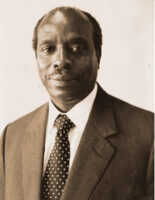
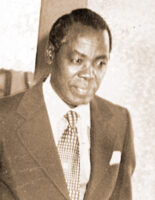
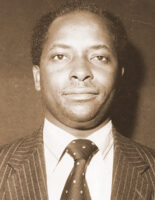
John Joseph “JJ” Kamotho – The KANU cockerel

As a Cabinet minister and the Secretary General of KANU, John Joseph ‘JJ’ Kamotho was famed for his habitual terse and snappy statements, especially in defending the government of President Daniel arap Moi and the ruling party. Kamotho’s political ascension started in 1979, when he was elected MP for Kangema. Although he lost his seat in snap elections called by President Moi in 1983 to rid his government of dissidents perceived to be aligned with Attorney General Charles Njonjo, accused of attempting to wrest power from Moi, Kamotho recaptured his seat in 1988 – earning him a reputation for having the proverbial nine lives of a cat.

In 1993, at the height of the KANU regime, he commented to the media in response to a question on rampant corruption, “KANU never promised zero tolerance on corruption in its campaign manifesto.” During the 1992 multiparty elections, a major focus of the campaign manifestos of opposition parties was to fight corruption, giving Kamotho the ammunition of sarcasm. When under siege ahead of KANU’s merger party elections with Raila Odinga’s National Development Party (NDP) in 2001 – Kamotho was apparently to be axed from the Secretary General position – he told journalists at Parliament Buildings, “Politics is not a soccer match between Gor Mahia and AFC Leopards football clubs.”

The remark was directed at Raila, who was vying for the KANU Secretary General position in the new power-sharing arithmetic and who was famous for using football analogies. In this case, the Luo-backed soccer team Gor Mahia and the Luhya-backed AFC Leopards were the subject of the illustration. Kamotho’s remark was graphic: “Football is straightforward. You cannot score from an offside position. In politics you can score from anywhere and with a leg or even Diego Maradona’s hand of God!”

Under Kamotho’s watch, the Mackay team recommended the establishment of a second public university and thus Moi University in Eldoret was born

As KANU Secretary General, he had no problem answering calls from journalists day or night. His stock answer to most questions was, “KANU shall not accept it.” That was vintage Kamotho.

JJ, or ‘Kaleft’ (the jocular  translation of his Kikuyu name Kamotho) as he was teasingly called, was a wordsmith with a penchant for prickly phrases shaped by the Soviet Union’s Kremlin parlance. Kamotho had lived in both the East and the West in an era that divided the globe into capitalist and socialist blocs, which exposed him to the manipulation of propaganda and Machiavellianism in public communication.

Between 1990 and 2000, Kamotho belonged to the ruling party’s wing known as KANU-A that was fronting Professor George Saitoti, then Vice President, to succeed President Moi. Another wing, KANU-B, was lethargically opposed to Saitoti, preferring younger KANU politicians who included Uhuru Kenyatta, Musalia Mudavadi and Kalonzo Musyoka. Kamotho and Saitoti, the party’s Vice Chairman, were thus targeted for side-lining.

Indeed at the 2001 KANU Delegates’ Conference held at the Moi International Sports Complex in Kasarani, Saitoti’s post was diluted and his attempt to vie for one of the four party deputy slots was blocked. The posts were filled by Uhuru, Mudavadi, Musyoka and Coast Province politician Katana Ngala. Kamotho’s post was similarly taken by Odinga.

After the conference, journalists sought comment from Kamotho about the party elections. His response was, “Which elections?! That was a marketplace!” Kamotho was further quoted as saying in the media regarding the KANU-NDP merger, “Mark my words, this marriage will not last; divorce proceedings will begin at the wedding.” This turned out to be an accurate prediction. Divorce proceedings in what came to be called “the short-lived KANU-NDP merger” began immediately after Kasarani.

Odinga’s supporters expected Moi to position him as the successor, which did not happen. The merger caused significant harm to KANU, tearing it into pieces with Moi’s anointment of Uhuru as KANU’s 2002 presidential candidate. They all scattered and the rest is history.

Kamotho was in many ways a man for all seasons. One of the low points in his chequered political career came in 1983, during the hurricane that felled Njonjo, the all-powerful Minister for Constitutional Affairs. Moi accused Njonjo of conspiring with foreign powers to topple him. The ensuing Njonjo Inquiry, headed by the late Justice Cecil Miller and justices Chunilal B. Madan and Effie Owuor, absolved him – but not before a political witch-hunt purged Parliament of all politicians perceived to be ‘Njonjo men’.

Kamotho was among the casualties and went on to lose his Kangema parliamentary seat to John Michuki in snap elections held later that year. From a Cabinet position as Minister for Higher Education flying the ministerial Kenyan flag on his car, Kamotho became a pariah in society along with other ‘Njonjo men’. They were shunned in the streets and in social places. No one wanted to associate with such people for fear of being expelled from the only legal political party in the country at the time.

Kamotho took this new state of affairs in his stride. With his financial stability threatened, he began selling groceries from a kiosk on the ground floor of Finance House along Koinange Street in Nairobi. At his side in the kiosk was his wife Eunice. Kamotho used to call friendly journalists to the kiosk to draft handwritten press statements for him. They were usually ignored by the media, but he never gave up.

But Kamotho’s work should not be overshadowed by the politics of Moi’s KANU.

When he was appointed Minister for Higher Education, he hit the ground running. For instance, he vowed to clamp down on the frequent university closures that had characterised the previous regime under President Jomo Kenyatta. Riots were frequent, especially every year on 2 March, to commemorate the murder of former Nyandarua North MP Josiah Mwangi ‘JM’ Kariuki whose body was discovered in the Ngong Hills by a Maasai herdsboy in 1975.

University of Nairobi (UoN) students would habitually go on the rampage, stoning cars along Uhuru Highway and University Way. They would also stone and loot shops. Kamotho would rush to the UoN and Kenyatta University College to address students whenever there was trouble. The irony was that under his watch, he was to preside over the longest university closure lasting over a year after the 1982 attempted coup by renegade Kenya Air Force soldiers.

However, Kamotho’s most outstanding chapter in the Ministry of Higher Education came on 21 January 1981, when Moi appointed the Collin Mackay Commission to evaluate the viability of a second public university and give detailed plans and recommendations. As minister in charge, Kamotho’s role was to oversee the commission’s work and ensure the report was handed to Moi on time. The 18-member commission was mostly comprised of university professors and education technocrats. Devoid of government bureaucracy, it was thus able to move with speed and completed its work barely 18 months after it was constituted.

Under Kamotho’s watch, the Mackay team recommended the establishment of a second public university and thus Moi University in Eldoret District was born. Professor Douglas Odhiambo, Mackay’s Vice Chairman, was appointed the university’s founding Vice Chancellor initially operating from Development House in Nairobi as construction went on in Eldoret. Also under Kamotho, groundwork for the 8-4-4 education system, the second Mackay recommendation, was put in place for implementation without a hitch.

After his fall from grace, Kamotho had to find a way to return to mainstream Moi politics. One day in 1987, the President made a trip to Nyandarua District and Kamotho appeared out of nowhere and managed to catch the eye of the President. That day marked Kamotho’s political resurrection.

In the KANU-era jargon of the time, Kamotho became ‘Nyayo damu’ and went all over Central Province preaching the party gospel and praising Moi’s leadership. Kangema Constituency was split into two, hemming him into Mathioya, which he won at the polls, while leaving Kangema for Michuki. He was appointed Assistant Minister for Transport and Communication and never looked back.

But to Kamotho’s credit, he had studied Moi the politician and come to know what the President liked. He did not want to go back to selling groceries in a kiosk

In a subsequent Cabinet reshuffle, he was elevated to Minister for Transport and Communication. His high moment in KANU came with the death of Moses Mudavadi in February 1989. Mudavadi had been flown home from a hospital in Europe the previous year to be installed as the KANU Secretary General.

Kamotho ended up getting the powerful post in what was seen as KANU’s political re-arrangement sharing out the party’s top posts to regions: Moi as President, Saitoti (Rift Valley) as his VP, Peter Oloo Aringo (Nyanza) as Chairman, Japhet Lijoodi (Western) as Treasurer and Kalonzo Musyoka (Eastern) as Organising Secretary. Kamotho was from Central.

Kamotho’s ascendance to the pinnacle of power in both the party and in the Cabinet marked the turning point of his fortunes; he became the KANU cockerel that crowed every hour, becoming the darling of party diehards and an irritant to the anti-Moi populace. He would soon pay the price as he was to lose his parliamentary seat with the re-introduction of multiparty elections in 1992, prompting his acerbic remark: “Even a dog would have won on a FORD-Asili ticket” in Central Province.

He was referring to the FORD-Asili party’s win in a province-wide political wave spearheaded by Kenneth Matiba that brought in 31 MPs mostly from Murang’a, sharing it out with Mwai Kibaki’s Democratic Party sweep of 23 seats mainly from Nyeri and Meru districts. Moi, whose party KANU won, would nominate Kamotho to Parliament and appoint him as Minister for Education. From this position during his tenure as KANU Secretary General, he ended up rubbing his opponents the wrong way.

In one memorable incident, Fred Gumo, a Cabinet minister, publicly claimed that Kamotho had insulted the Luhya community by calling them “cooks and watchmen” – an accusation Kamotho vehemently denied. Despite his denial, Gumo’s political message had already achieved what it intended. This estranged Kamotho from the Luhya community and indirectly marked the start of a slow-motion fall from his membership among the Moi-era power barons. He was forever relegated to the pro-Saitoti political grouping, which had no favour in the Moi succession line.

But to Kamotho’s credit, he had studied Moi the politician and come to know what the President liked. He did not want to go back to selling groceries in a kiosk. Accordingly, he perfected his unswerving loyalty to the man who ruled Kenya with an iron fist for 24 years. He never tired of reminding Kenyans wherever he went that “KANU ni baba na mama” (KANU is our father and mother – in other words, our lifeline) and “Nyayo juu juu juu zaidi!” (Long live Nyayo!).

Kamotho would, for instance, praise Moi and say unrealistic things without batting an eyelid. A case in point was during a public fundraiser in Karatina, Nyeri District, in 1993 when he amused Moi to the point of laughter. After the first multiparty elections of 1992, nobody in Central wanted anything to do with KANU. Indeed, anti-Moi sentiments in the region were so high that no one even wanted to attend a Moi event. Schoolchildren would be bussed to the President’s rallies to form a crowd. Kamotho, who had been rewarded with a nomination to Parliament and a Cabinet post, rose to welcome Moi. He said, “Mzee, huu umati wote na watu wote wa mkoa wa kati wako ndani ya chama kinachotawala cha KANU!” (“Sir, this entire crowd and all the people from Central Province belong to the ruling party KANU!”). This sent all the dignitaries into peals of laughter as they cast telling glances at each other.

Kamotho was also very adept at handling ministerial and party matters. When the Goldenberg scandal erupted in the 1990s putting his political friend Saitoti at the centre of the scam, Kamotho shrewdly and uncharacteristically steered clear of the controversy, preferring to completely avoid contributing to the debate when it raged in Parliament.

He used the knowledge he gained in KANU corridors to avoid crossing the path of powerful politicians in the Moi era, including Nicholas Biwott, even as he supported Saitoti as the man who would have succeeded Moi. When he realised that Josephat Karanja, a former Vice President, had lost favour with Moi in 1989, Kamotho strategically aligned himself with a group of politicians led by Limuru MP Kuria Kanyingi in bringing down the VP.

As a politician he knew when to act for his own good. Prior to the 2002 elections, he read the signs and knew KANU was a sinking ship; he therefore made a timely move to desert the party that he had so eloquently defended during his political career. He had earned himself nominations to Parliament after failing at the polls in 1993 and 1997, and in the entire decade up to 2002 remained in the Cabinet. During those years he served in the key ministries of Trade, Environment and Local Government.

Moi trusted Kamotho as his point man in Central Province at a time when he lacked the support of the populous community in that region. It paid dividends as powerful business tycoons in the region used Kamotho as the ladder to government tenders.

When Moi’s tenure at State House was coming to an end, Kamotho chose to align himself with the Opposition’s National Rainbow Coalition that eventually swept KANU out of power.

Born in 1942 in Mathioya, Murang’a District (now Murang’s County), Kamotho enrolled in Muthangari Primary School where he sat for the Common Entrance Examination and later joined Njumbi Intermediate School. After sitting for his Cambridge School Certificate in 1962, he left for the Soviet Union to pursue his degree course. Upon his return in 1968, he was employed as a lecturer at the Kenya Institute of Administration (KIA, now known as the Kenya School of Government). In 1970 through a scholarship obtained by KIA, he travelled to the UK for a Master’s degree in Public Administration.

Kamotho died in South Africa on 6 December 2014 of a heart attack.
 

John Kipkorir Sambu – No man’s pawn

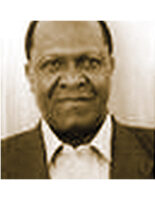
John Kipkorir Sambu, the Member of Parliament for Mosop between 1992 and 2002, was among the few post-independent Kenyan Cabinet ministers to be sacked for being independent-minded. Currently a farmer in Uasin Gishu County, he was a community worker with the Church of the Province of Kenya (CPK) Eldoret Diocese before he ventured into politics.

Anglican Church of Kenya Bishop Alexander Muge, who worked closely with Sambu, inspired him to go into politics in order to change the lives of the people of Mosop, who the bishop believed had stagnated under MPs who had been hand-picked by President Daniel arap Moi. Muge, who had a frosty relationship with the President, believed that past legislators lacked a development agenda for Mosop because they were not answerable to the constituents.

Sambu, who was the Minister for Environment and Natural Resources from 1993 to 1996, was born on 11 July 1948. He attended Kimngorom Primary School, Tenges High School and later, the University of Nairobi from where he attained a Bachelor of Science degree in Agriculture in 1973. Between 1973 and 1974, he worked as a senior manager at Kenya Seed Company Limited before leaving to work as a District Cooperative Officer in Nandi District. He quit the position in 1985 to join the CPK Diocese of Eldoret as a Community Project Manager.

In 1992, he contested the Mosop parliamentary seat and won on the wave of Nandi redemption. Muge had died in 1990 in a road accident in Kipkaren near Turbo Township on the Eldoret-Malaba road as he was driving himself back to Eldoret from Busia District.

Sambu worked closely with people in initiating various community projects aimed at uplifting their lives, using as a template his work with the church

During that time, the Kalenjin sub-ethnic group felt that it was being dominated by the Keiyo and the Tugen. The people of Mosop claimed that for many years they had not been given a free hand to choose their own leaders.

“They felt leaders like the late Stanley Metto, Benjamin Kositany (Moi’s relative) and others before that had been imposed on them. They wanted to be left to make their own electoral decisions,” said Micah Bittok, Sambu’s paternal cousin.

When Sambu entered Parliament, the stranglehold that Nandi power broker, Ezekiel Barngetuny, had on influencing the election of leaders in the region had diminished significantly after the advent of competitive multiparty elections. Between 1979 and 1988, the nominated MP is said to have forced leaders on the people of Nandi.

Sambu worked closely with people in initiating various community projects like water supply and others aimed at uplifting their lives, using as a template his work with the Church, which gave him an advantage over other competitors in a KANU party stronghold. Those who know him say he was appointed to the Cabinet to pacify the people of Mosop – where Muge hailed from – who were bitter following the clergyman’s controversial death. Locals claimed that the outspoken cleric was killed because of his constant attacks on KANU and the government at a time when the clamour for multiparty politics was gathering momentum.

“Moi made Sambu his minister to try and win the hearts of the Nandi, who were still hurt after Muge’s death and who were rebelling because of being sidelined while the interests of Keiyos and Tugens were being promoted. It is not that he liked Sambu,” said Jesse Mais, a one-time Eldoret South MP. He claimed that Moi wanted Kositany, who Sambu defeated, but he could not tinker with the election, fearing a backlash.

“His relationship with Moi was only based on telephone conversations and in a peripheral ministry. He was unlike others before him, never assisted to win the seat,” said Mais.

Mais added that Sambu was nobody’s pawn, which freed him to speak his mind and demand development for his people. According to Mais, Moi viewed him with suspicion in the Cabinet; apparently his differences with those close to the President, including Mark Too who remained a Nandi power broker after Barngetuny’s exit, aggravated the situation. “He was loyal to his boss and KANU but was not the kind of person who could be manipulated,” Mais remarked.

As Minister for Environment and Natural Resources, Sambu visited Enoosupukia Forest in Narok District and declared it trust land under the local county council, which paved the way for the eviction of hundreds of squatters, mainly Kikuyu farmers. Around that time, illegal logging was taking place in Nandi Forest and other forests around the country.

Sambu was sacked in 1996 after showing sympathy to the Cherangany MP, Kipruto Kirwa, and politician Jackson Kibor in opposing what they called the side-lining of Nandis in land allocation when the East African Tanning and Extract Company (EATEC), a subsidiary of Lonrho PLC, was disposing of thousands of acres in Uasin Gishu, Nandi and Trans Nzoia after their leases expired.

Kirwa and his supporters were also against the allocation of thousands of acres of the former Agricultural Development Corporation (ADC) to influential people in the government, claiming that all the land in Uasin Gishu and Trans Nzoia ancestrally belonged to the Nandi.

“Although some claimed that he was sacked because of rampant logging under his watch, we know his opposition to the dishing out of land the community laid claim to, to undeserving people, cost him his job,” said Mais.

Apart from Kirwa, Sambu teamed up with William Ruto, then Eldoret North MP, to oppose KANU at a time when the United Democratic Movement (UDM) was gaining a foothold in the North Rift. After his removal from office, he was replaced by Henry Kosgey, MP for Tinderet in Nandi. His sacking seemed to have freed him to openly speak his mind and he often rubbed the establishment the wrong way.

His rallies to expose what he called injustices against the Nandi people were always outlawed by police, leading to clashes between his supporters and law enforcement agencies. But as a legislator, his political downfall started when his people raised funds to buy land from EATEC and gave him the money but were allegedly left out during the allocations. They claimed the MP did not want to assist them. Some even claimed that he used the money to buy land for himself.

“The claim spread like bushfire. He had little time to set the record straight because the 2002 General Election was fast approaching. It denied him sizeable votes,” said Bittok, who refuted any suggestion that Sambu was involved in any scandal during his term as a minister. “He left the Cabinet without any scandals. He was somebody who eschewed corruption. He was a victim of perception,” he emphasised.

After his defeat in the elections Sambu, who is a publicity-shy individual, retreated to his farm near Eldoret Town to engage in maize and wheat farming. He again unsuccessfully tried to recapture his seat in the 2013 General Election.

He spends most of his time on his farm with his family, away from the limelight. But his friends still hope that one day he will be back in active politics even though he is now in his 70s.


John Kipsang Koech – A Minister who dared to resign

One fine day after a graduation ceremony at Egerton University in Njoro, John Koech, a Cabinet minister, made his way to President Daniel arap Moi’s home for the customary luncheon that followed such events, only to be denied entry. Livid at the humiliation, he headed straight to the Nation Media Group’s Nakuru Bureau and wrote a resignation later that was published the next day.

Nobody knows what transpired overnight but the next morning, he called a press conference retracting his letter. He was back on the job, having learned the bitter lesson that when you were appointed by Moi, you served purely at his pleasure. No matter how tough the going got, resignation was never an option. This marked the start of an uneasy relationship with his boss.

Born in 1946 in Olbutyo, Chepalungu, Koech attended Segemik Primary School and later Tenwek High School for his O’ and A’ level education. From Tenwek, he went to Makerere University in Uganda, graduating in 1972 with a Bachelor of Arts in Economics.

From 1973 to 1975, he worked as a high school teacher and later, from 1976 to 1979, as an education officer. Early in his budding career as an educationist, he attempted to venture into the rough and tumble of politics by vying for the Chepalungu parliamentary seat but he emerged second after the incumbent, Kimunai arap Soi.

He eventually triumphed in the 1979 General Election, the first after Moi became President following the death of Jomo Kenyatta.

Koech believed in empowering his people and was against the prevalent culture of handouts

Before the election, he had been introduced to Moi by Kipsigis power brokers led by Isaac Salat, a long-serving Assistant Minister in the Office of the President. New in the job, President Moi was scouting for a team to work with.

“The President was in the process of consolidating power,” said Chepkebit Mibei, the Kericho KANU Chairman between 1988 and 2002. “He wanted people who could assist him, and Koech came in handy.”

Mibei said Koech, who served as Chepalungu MP uninterrupted from 1979 to 1990, promoted education in Kericho and Bomet districts as a result of his previous professional experience.

“Moi didn’t hesitate to ‘anoint’ him because of his past record in education, as education was key for Moi’s devel opment agenda,” he added.

After the 1976 campaign spearheaded by people opposed to a Moi succession and aimed at changing the constitution to bar a Vice President from automatically succeeding a President, Moi wanted loyalists in Parliament to scuttle any attempt to pass a vote of no confidence in him.

“He filled Parliament with loyalists from Rift Valley to check those who were against him (and keep them from) ascending to power, especially those from Central Province,” said Mibei. “Even if one was popular with the electorate in the region, one couldn’t become an MP without Moi’s blessings.”

When Moi called for a snap General Election in 1983 to get rid of MPs allied to former Attorney General, Charles Njonjo, who had subsequently been elected as MP for Kikuyu, Mibei said that Koech was re-elected because of his loyalty to Moi.

“His loyalty saw him going back. This was a time when no one could be elected as a legislator or a councillor without blessings from Moi.”

After the 1988 polls, Koech was appointed Minister for Public Works, a position he held for only one year because in May 1989 he was sacked and replaced by Timothy Mibei, the MP for Bureti in Kericho.

According to Chepkebit, Koech was sacked after he differed with Moi and a few powerful people in government over the manner in which he was handling his ministry.

“Although we were told that he was sacked for not being loyal to the President and KANU, many held the opinion that he was relieved of his duties after blocking some powerful people from using his ministry for selfish gain,” he said. He added that after the sacking, Koech lost interest in supporting the government and the governing party.

“He was bitter about it and wherever he went, he complained. That was not taken lightly by his former boss and KANU, and prompted action against him.”

In 1990, his relationship with Moi and KANU worsened and he was subsequently expelled from KANU, the only political party at the time. The party claimed he was sowing seeds of division among the Kipsigis, hence the urgent need for his expulsion. A by-election was called and Soi was elected to take Koech’s seat.

He cooled his heels in the political cold until 1992, when he was pardoned. In December of that year, he wrested the seat from Soi. After spending some time as a backbencher, shortly before the 1997 General Election, a now-reformed Koech was reappointed to the Cabinet after Kipkalya Kones was sacked as Minister for State in the Office of the President.

Kones was sacked via the dreaded Kenya Broadcasting Corporation one o’clock radio news bulletin while on a visit to his father’s farm in Molo. His official driver abandoned him and took the ministerial flag he was flying on his car to Molo Police Station, leaving Kones to hike a lift to Nakuru Town.

As a minister in the Office of the President, Koech did not endear himself to Moi, who was facing stiff political competition five years after the re-introduction of multiparty politics.

“Moi wanted somebody who was aggressive and who could counter the spread of opposition in South Rift Valley. Koech was too diplomatic and couldn’t fit in that job,” explained William Kettienya, a friend and age-mate of the former minister.

Koech, he said, was a strict person who liked doing things without being interfered with or influenced. He had an independent mind, which was a rare thing during the Moi regime. It was due to his diplomatic nature that he got along with his colleagues in the Cabinet.

Koech was trounced by Isaac Ruto in the 1997 General Election, but claimed he was rigged out because he was a thorn in the flesh of powerful people in the Moi government.

Between 1998 and 2000, he served as United Nations Environment Programme (UNEP) Permanent Representative. But again Moi fired him for allegedly being sympathetic to Mwai Kibaki’s Democratic Party and replaced him with Professor Michael Kipkorir Koech. In spite of the challenges he faced at the hands of Moi and his handlers, the former minister claimed that no development projects could be rolled out in the South Rift without his involvement.

“My input was always sought before the government embarked on any projects in the region,” said Koech. He expressed regret that his advanced age stood in the way of his becoming the first governor of Bomet County under the devolved system of government in 2013.

Koech is credited with helping establish Moi Siongiroi Girls Secondary School.

“Apart from the school, he influenced the rolling out of electricity supply in Chepalungu,” said Kettienya, adding that Koech believed in empowering his people and was against the prevalent culture of handouts.

In an interview with a local daily newspaper before the 2013 General Election, Koech was quoted as saying he was bothered that his successor had entrenched that culture.

“I wanted to empower people, not by enticing them with handouts. It is a bad thing that makes people lazy.”

John Musembi Kyalo – He gave Makueni a hospital in a tricky mix-up!

John Musembi Kyalo was a technocrat who left a rich, extensive and successful career in the civil service to join politics, becoming one of President Daniel arap Moi’s trusted and loyal Cabinet ministers.

This was the minister reported to have used trickery to put up a multi-million shilling hospital in Makueni in his native Machakos District that was actually meant for Mukurweini in Nyeri District, in what famously and hilariously became referred to as the Makueni-Mukurweini mix-up.

After his university education in India, Kyalo joined the civil service and rose from District Officer (DO) to Director of Immigration and finally to Permanent Secretary in both the Jomo Kenyatta and Moi administrations.

Kyalo was first elected to Parliament in the infamous mlolongo (queue) election method of 1988. It was his third attempt and he would remain a backbencher until 1992, when he was re-elected and subsequently appointed to the Cabinet by Moi. But he died of throat cancer while still in office.

Kyalo was born in 1931 in Kisekini Village, Kasinga, in what was Iveti South Constituency of Machakos District, some 15 kilometres from Machakos Town. He went to Kasinga and Ngelani primary schools and later joined Kabaa High School in Machakos before attending university in India, majoring in business administration.

On his return to Kenya he joined the provincial administration in the Office of the President and served as a DO before he was promoted to District Commissioner; he worked in several districts across the country.

Kyalo left the provincial administration and joined the Department of Immigration as Director.

As a pointer to his dedication to work and integrity, Kyalo reached the pinnacle of the civil service in 1970, when he was appointed by the Kenyatta administration as Permanent Secretary in the Ministry of Health.

In 1974, Kyalo resigned from the civil service and plunged into politics. He contested the Iveti North parliamentary seat that was then held by Aaron Mutung’a. Laban Kitele and Kavuti Ndeti were also in the race for the seat but Mutung’a shrugged off the spirited opposition and won back the seat.

As minister, Kyalo gave the go ahead for the construction of the modern Makueni hospital which was completed in haste, thanks to the minister’s close supervision of the project.

In the 1979 General Election, Kyalo lost again. He also lost to Kitele in the 1983 snap elections called by Moi to consolidate his power following the August 1982 attempted coup by elements within the Kenya Air Force and some politicians. Kitele was appointed Minister for Internal Security in the Office of the President.

In the 1988 General Election conducted through the controversial mlolongo system, Kyalo won the newly-created Machakos Town Constituency, beating three former MPs: George Nthenge (1969), Danson Paul Mbole (1974) and Onesmus Mwanza Kikuyu (1979 and 1983).

Kyalo, who had been nicknamed “Kyalo wa Makindi” (a forceful Kyalo), is said to have won courtesy of an election campaign strategy he had perfected, namely door-to-door night visits. He did this because he was not a good orator, especially at campaign rallies which he avoided as much as possible. He applied the same campaign method in the next round of elections in 1992 and won again, having forged a close relationship with power broker Mulu Mutisya.

Mutisya called the shots in the whole of Machakos and other areas of Ukambani region despite his lack of education and the fact that he had only moderate wealth. This stemmed from Moi’s preferred mode of leadership in which he identified point men in key regions of the country and bestowed on them power and influence. Other point men in this league were Kariuki Chotara of Nakuru District, Shariff Nassir of Mombasa and, to a lesser extent, James Njiru of Kirinyaga, Joseph Kamotho of Murang’a, Stanley Oloitiptip of Narok, G.G. Kariuki of Laikipia, Moses Mudavadi of Western Province and Okiki Amayo of Nyanza.

Moi hardly ever supported the election of a particular candidate or made an appointment to the Cabinet or to a parastatal without consulting his point men. They often carried bags full of money, which they distributed to the citizenry and loyal grassroots leaders like councillors during weekend rallies. This way, Moi enjoyed direct and unwavering support from these regions.

Through this kind of arrangement, Kyalo was appointed Minister for Health. During the three-year period when he flew the ministerial flag, Kyalo hosted Moi at several fundraisers in aid of schools and churches in Machakos Town Constituency, a pointer to their close relationship.

During his time as Minister for Health, Kyalo is credited with expanding a few hospitals and establishing new ones across the country where none existed.

The story is told of how Kyalo used trickery to put up a multi-million shilling hospital in Makueni District.

As minister, Kyalo gave the go-ahead for the construction of the modern Makueni Hospital, which was completed in haste, thanks to the minister’s close supervision of the project.

Once the hospital was complete and commissioned, political leaders in Nyeri complained about the delay in construction of the planned Murkurweini Hospital. After conducting “thorough investigations” into the matter, Kyalo said there had been a mix-up in the ministry leading to the Mukurweini hospital going to Makueni.

He apologised profusely for the confusion and pledged to have the situation corrected with the next budgetary allocation! Mukureweini would later have a modern hospital of its own.

Months after the controversy died down, Kyalo admitted to a few select friends that the mix-up was just a means to an end!

“I think Kyalo was right,” commented one former Machakos Town MP who did not wish to be named. “I mean, most major projects were going to Gatundu or Central (Province) during Kenyatta’s time and later Rift Valley (during Moi’s rule) so what did you expect Kyalo to do? If you recall, Makueni people were travelling 50-60 kilometres to Machakos Hospital for medical treatment.”

The Minister for Health lost his voice midway through his term and was diagnosed with throat cancer, which led to his death in 1995, three years after his appointment as minister. Moi led most of his Cabinet and almost the entire Ukambani political leadership in giving the minister a final farewell.

Kyalo’s critics blame him for not doing much in terms of initiating development projects in Machakos Town Constituency mainly because he lived in Nairobi for most of his life and not Machakos. According to those who knew him well, most of his business interests were located in Nairobi and Kiambu, including a large coffee plantation in Ruiru.


James Charles Nakhwanga Osogo – The politician who might have become a priest, or maybe a soldier

What comes to mind when one converses with James Charles Nakhwanga Osogo is William Shakespeare’s dictum in the play titled As You Like It: “All the world’s a stage, And all the men and women merely players; They have their exits and their entrances; And one man in his time plays many parts…”

At his Kilimani Estate home in Nairobi, evidence of Osogo’s graceful ageing is a doting granddaughter who won’t leave the old man alone. The young girl will one day understand that her grandfather was a pioneering political leader who contributed greatly to shaping the political theatre that Kenya is.

Osogo fought many political battles in his day and even stuck his neck out sometimes in the most charged of circumstances. In 1975 for instance, following the mysterious death of Nyandarua MP Josiah Mwangi Kariuki (popularly known as J.M.), Osogo, then the Minister for Health, led the government’s attempt to scuttle the report by the Parliamentary Select Committee, chaired by Elijah Mwangale, that implicated Police Commissioner Bernard Hinga and General Service Unit Commandant Benjamin Gethi in the killing.

The Busia South (now Bunyala) MP moved an amendment motion urging the House to “… note and understand rather than accept the report”. The motion was defeated; MPs were so incensed that they could not entertain anything that would water down the report. Osogo explained the circumstances in which he moved the motion.

“I had no ulterior motives. All I wanted was to save the Mwangale Report. What had happened was that an initial report, which I happened to have seen, had many more names (of people implicated) compared with the one Mwangale presented in Parliament. It appeared that Mwangale had been forced to withdraw the first report because the names of some very senior politicians were in it, but some of us had seen this very report.”

Osogo was born in the little village of Bukani in Bunyala District in 1932, the second of 10 children. He was raised in a strict Catholic family, his father being an official of the local church. In fact, as a child his desire was to join a seminary and become a priest. He ended up at St Mary’s Yala School, the famous Catholic Church-sponsored institution that nurtured many a talent in Kenya’s formative years. One of his school mates was Thomas Joseph Mboya, who would become the Minister for Economic Planning and Development.

After school, Osogo had a lingering ambition for the military, specifically the Royal Navy. But opportunities in this area were scarce so he took up an opportunity to work with the East African Railways – a major employer then. This required training at the East African Railways and Harbours Institute (today’s Kenya Railways Training Institute) in Nairobi.

If Osogo’s political consciousness, particularly against the colonialists, had been pricked while he was at Yala, joining the Railways Institute brought him face to face with the brutal face of imperialism. He would witness and participate in the riots called by such fiery trade union leaders as Markhan Singh and Kung’u Karumba.

After his training, he was employed as an Assistant Station Master at various railway stations in Kenya and Uganda.

“This gave me an opportunity to traverse the two countries, in the course of which I met and interacted with very many people,” he recalled. However, his heart was never really in Railways. His passion was teaching “which for me was the closest thing to politics since by imparting knowledge, you influence people towards development”.

What accelerated his departure from Railways were the many instances of discrimination against Africans, which he could not stomach. He himself had many run-ins with the white managers. Thus, in 1953, he enrolled at Kagumo Teachers’ Training College from where he would graduate three years later. Like the Railways Institute, Kagumo had the effect of expanding his knowledge of Kenya’s leadership challenges at the time, mainly the Mau Mau uprising and the fact that Kagumo was in the heartland of Kikuyu country, where a brutal purge was going on.

After graduating, Osogo was posted to Sigalame Intermediate School in Busia District (now Busia County) where he got engaged in politics, becoming a councillor in the Nyanza African District Council. But the council was dissolved two years later, ostensibly because Osogo and his colleagues were very critical of the colonial administration. In 1959, he was transferred to Port Victoria Intermediate School on the shores of Lake Victoria. This was also the year he married his first wife, Maria. His stay at Port Victoria would be cut short as within the year, he had run afoul of the colonial administration for being outspoken about the fishing rights of his Bunyala people.

For his agitation, the colonial administration transferred him to Kabasaka Intermediate School in Nandi District (since renamed Nandi County).

“This infuriated me but I took it in my stride, knowing that the transfer would be a temporary stop before I left to serve the people full time,” he recalled.

When the Kenya African National Union (KANU) party was formed in 1960, Osogo was one of the first people to join. He would stick with KANU even when the Luhya community decamped to the Kenya African Democratic Union (KADU), in part because one of its leading lights was Masinde Muliro, the sole representative of Elgon Nyanza (Western Province) in the Legislative Council.

“I felt very strongly that we needed a national party that would bring together all Kenyans as a force to defeat the colonialists and believed that divisions would make us weak,” he explained.

Thanks to the passing of the Lancaster Constitution in 1961, elections were called throughout the country. Osogo’s Bunyala region was in Central Nyanza District and attracted eight parliamentary candidates. He thought he had a chance but when the results came in, he was third after Jaramogi Oginga Odinga, who became Kenya’s Vice President, and Argwings Kodhek. After the elections, he lobbied for nomination by KANU but the slot went to Walter Odede instead while KADU nominated Peter Habenga Okondo, the man who would become Osogo’s nemesis.

The first duel in the Osogo-Okondo rivalry would play out in 1963 as part of the comprehensive political reforms accompanying Kenya’s independence. In the battle for Ruwambwa Constituency, Osogo emerged victorious, notwithstanding the fact that Okondo had had a head start as a nominated MP in the previous Parliament and was the more educated of the two men. Okondo had a Bachelor of Commerce degree from the University of Cape Town in South Africa and had also worked as a senior government official in the Ministry of Finance in Uganda.

When he made his debut in Parliament, Osogo was appointed the Ministry of Agriculture’s Parliamentary Secretary (assistant minister). The Minister for Agriculture was Bruce McKenzie. When the relationship between President Jomo Kenyatta and Vice President Odinga soured, Osogo was the beneficiary. In the 1966 reshuffle, he replaced Achieng Oneko as the Minister for Information and Broadcasting.

The Osogo-Okondo political battle was replayed in 1969 and Osogo once again trounced Okondo, although this time by a thin margin of 600 votes. Kenyatta appointed him Minister for Commerce and Industry and from there moved him to the Ministry of Local Government, where he oversaw the transformation of many market and urban centres into town councils.

In 1974, Okondo tactfully decided not to contest the Busia South seat and instead threw his weight behind James Ombere Okoch, a relative of Osogo’s. The contest was bruising but Osogo managed to scrape through and was appointed Minister for Health at a time when the sector was going through many difficulties.

Kenyatta National Hospital, the country’s only referral facility at the time, was in a shambles. Doctors were threatening industrial action against poor living and working conditions. The minister had his hands full addressing these mounting problems while also overseeing an ambitious expansion of medical facilities across the country.

When Kenyatta died in 1978, Osogo’s fortunes started to plummet and he found himself facing new challenges. In the 1979 elections, all indications were that President Daniel arap Moi was intent on getting new faces across the nation as he sought to consolidate his power base. Many political careers ended abruptly as newcomers with demonstrated loyalty to the new President romped home.

Osogo managed to stave off a spirited battle from his perpetual nemesis, Okondo, and on his return to Parliament, he was appointed Minister for Agriculture while retaining the Deputy Leader of Government Business position he had held since June 1975.

If signs that things were not rosy for Osogo in the new dispensation were discernible, the clearest indication was in the 1980s, when his Agriculture portfolio was split into two and he was moved to the newly created Ministry of Livestock.

As his duties and functions were being clipped, he had another worry in the form of a petition by a voter who claimed he had won the last election by administering an oath. Osogo lost his parliamentary seat in 1981 with a heavy price — he was legally barred from contesting the seat for five years. In the ensuing by-election, he threw his weight behind a retired army officer named William Diffu.

But the KANU machinery was determined to ensure that Okondo made it to Parliament. Diffu was barred from contesting and Okondo sailed through unopposed. He would win again in 1983 and 1988 against Osogo, who petitioned and pointed out oath-taking as the main grounds. The court dismissed the petition.

Not long after this, Okondo was involved in an altercation with the outspoken Anglican Bishop, Alexander Muge. When Muge, a vocal critic of Moi’s government, died in a car crash shortly after Okondo had publicly threatened that he would not live should he visit the MP’s home district of Busia, public pressure hounded him out of his ministerial position.

When the wave of multipartism gained momentum in the late 1980s and early 1990s, Osogo joined FORD-Kenya and became the party’s Busia Branch chairman. But he was soon persuaded by Moi to rejoin KANU.

“I was all for the Opposition but when the leaders could not agree to field one candidate against Moi, I had to be realistic. I knew that divided, they would not beat Moi. I tried to advise but the Opposition was full of ambitious people who would not make room for one another. These were the circumstances in which I rejoined KANU,” he explained.

He easily won the Bunyala seat and on returning to Parliament after a decade in the cold, he was appointed Assistant Minister for Commerce. In 1997, Osogo and Oneko were co-chairmen of the Inter-Parties Parliamentary Group that successfully negotiated minimum reforms before that year’s elections. But in the 2002 General Election, he lost to a newcomer, Raphael Wanjala, for the now renamed Budalang’i Constituency. After the loss, Osogo hung up his political boots for good. Today he shuttles between his Nairobi and Busia homes attending to personal business.


Jeremiah Joseph Mwaniki Nyagah – Teacher who left a political dynasty

Jeremiah Joseph Mwaniki Nyagah is best remembered as a politician who opted to retire from politics to a village life, having served with distinction in the ministries of Agriculture and Education. Born at Igari, Embu, on November 24, 1920, Nyagah started primary education in 1925 at the Anglican Missionary School at Kabare in present-day Kirinyaga County. Later, he was moved to Kagumo in Nyeri, where he sat the Standard Eight examinations. He then joined Alliance High School in 1937 (student number 427). From Alliance he went to Makerere College, Uganda, in 1940 for a three-year diploma course.

Nyagah had many firsts in his life. He was among the first Africans to sit the Cambridge School Certificate exam in Kenya. Among his classmates at Alliance were B.M. Gecaga (they later taught at Kahuhia, Murang’a, where politician Kenneth Matiba was their student) and Njonjo. From Makerere, Nyagah returned to Kenya in January, 1944, to begin a teaching career that he slowly combined with moderate politics. Between 1944 and 1958, Nyagah taught in various schools and colleges and became the first teacher of Kangaru School in Embu with only 30 students.

It was his appointment as an education officer that enabled Nyagah to criss-cross central Kenya, endearing himself to the moderates and the church leadership, especially in the Anglican Church. Before he was posted to Kiambu as an assistant education officer, Nyagah had a two-year break at Oxford University’s Department of Education for further training from 1952 to 1954. In this period, the Mau Mau war of liberation had started. Nyagah integrated the independent schools, run by the Kikuyu Independent Schools Association (KISA), into the leadership of District Education Boards (DEB). The schools were considered as education bases for subversion.

When — as a result of the Lyttelton Constitution — the colonial government called the March, 1957, elections to allow the first group of eight Africans to the Legco, Nyagah contested the Central seat. But he lost to a comparatively unknown South African-trained teacher, Bernard Mate, who won 51 per cent of the votes against Nyagah’s 12 per cent. Others in the race included Eliud Mathu, the first African at the Legco, lawyer David Waruhiu and Stephen Kioni, the first Kenya National Union of Teachers’ (KNUT) secretary-general. In the Legco, the eight African representatives, under Tom Mboya’s leadership, pushed for an additional six African elected seats to bring Africans to parity with European legislators. This move forced Allan Lennox-Boyd, the British Secretary of State for the Colonies, to impose a constitution on Kenya in November, 1957, that created additional African seats. Nyagah vied for the new Embu seat in the 1958 elections and won.

Nyagah was a moderate politician and in 1960 he joined a small multi-racial band of idealists — known as Capricorn Society or, officially, as the  Kenya College of Citizenship Association. The group believed that a future without racial discrimination would allow East and Central African countries to prosper. He was appointed the governor of the association in place of Musa Amalemba.

In those early years, Nyagah was instrumental in the formation of the Kenya Youth Hostels after a 1957 challenge by the president of the International Youth Hostel Federation, E. St John Catchpoll. Among those who joined Nyagah were Chief Scout Commissioner Godfrey Rhodes, anthropologist L.S.B. Leakey, Edmund Crosher, Amalemba, G.S. Amar, and D.Q . Erskine. Today, the Kenya Youth Hostels, whose headquarters is on Nairobi’s Ralph Bunche Road, is part of a global network of more than 4,000 hostels.

Upon his return from Oxford, Nyagah was posted to Kiambu, where he served as an Assistant Education Officer (AEO) at the height of the Mau Mau war. Part of his task was to take over Kikuyu Independent Schools and channel them into the government curriculum. The colonial authorities had closed the institutions for their links to the independence movement, especially in central Kenya, where they were associated with Jomo Kenyatta and KAU leadership. They were accused of being breeding grounds for nationalism and subversion.

Nyagah was a pioneer trade unionist and served as secretary of the Union of Civil Servants, Kiambu branch. He first met Mboya, a leading trade unionist and politician, in the union’s Kariokor offices next to Mboya’s residence.  But it was Nyagah’s role as a scout that earned him global accolades. Nyagah had joined the Boy Scouts at Alliance in 1937 and was one of the most senior African members of the Kenya Boy Scout Association during the colonial era. It was through his efforts that the African troops survived since the Scouts Association was keen to shut them down for sympathising with the liberation movement.

After independence, Nyagah successfully recast the scout movement as an African institution, frequently using the Kiswahili adage udongo upate uli maji (work the clay while it is still wet). He argued that this was the only way to mould the youth in Kenya. He rose from a Rover Scout to one of the longest-serving Chief Commissioners of the scouting movement in Kenya. At Oxford University in the 1950s, he was vested as a King Scout. But it was not until February, 1982, that Nyagah got the highest distinction in the Scout Movement. He was awarded the Bronze Wolf medal for outstanding service to international scouting. At the regional level, Nyagah bagged the Elephant and the Platinum awards, the highest in Africa and Kenya, respectively. By the time he died, he was considered the father of scouting in post-independent Kenya.

Nyagah’s entry into politics, thanks to the loyalists among his Mbeere community, made him the most astute politician in the larger Embu. Upon election to the Legco, he was appointed the first African Deputy Speaker. One of his most memorable tasks was to swear in Kenyatta as MP for Kigumo in Fort Hall District (now Murang’a County) after Kenyatta was released from detention and house arrest. The move was to enable Kenyatta to join the Legco and lead the Kanu delegation to the 1961 Lancaster Conference in London. Nyagah was part of the delegation. He became a Parliamentary Secretary (Assistant Minister) in the Ministry of Power and Works at independence in 1963. He also served long in the Cabinet — 1966 to 1992.

After Independence, Nyagah had hoped to get a ministerial post, but Kenyatta appointed Mwanyumba in the Ministry of Works, Power and Communications. In 1964, Nyagah was one of a few leaders who went to the US on a leadership scholarship. When he returned, he was appointed an assistant minister for Home Affairs under Moi with Matiba, Nyagah’s former student, as the Permanent Secretary.

In 1966, President Kenyatta appointed Nyagah the Minister for Education, a docket he ran for three years. Before his appointment, the Ministry of Education, under Joseph Otiende, had gone through turbulent times as Knutstaged two successful strikes demanding a central employment agency. During the second national teachers’ strike in October, 1965, the unresolved issue of a single employer for all teachers resurfaced.

Knut had found it hard to negotiate teachers’ salaries since they were employed by different entities. It was after the third strike in November, 1966, that Nyagah, a former teacher and trade unionist and now the Education Minister, took to Parliament a Bill to establish the Teachers Service Commission (TSC), bringing teachers in public schools under one employer. This ended the missionary grip on education in Kenya.

As a result of Nyagah’s efforts the TSC Act was passed in 1966 and the Commission came into being on July 1, 1967. It was during his tenure that several technical and middle-level colleges were started. He reduced the number of teacher training colleges to 16 and turned the others into secondary schools. He also started a policy that favoured natural sciences — agriculture and nature study. But these were also turbulent times in Kenya’s political history as the Cold War was replicated in Kanu’s ranks. Nyagah was one of the politicians who attended the Corner Bar meeting in 1966 under the chairmanship of Ronald Ngala. Others included G.G. Kariuki, Clement Lubembe, Makone Ombesa, John Okwanyo and Justus ole Tipis.  They agreed to cut Vice-President Odinga to size. The meeting laid the ground for the Limuru Conference of March, 1966, that finally dethroned Odinga. As a result, Nyagah became one of the insiders in Kanu, playing above-board politics as he became a solid figure in the party ranks. The Limuru Conference elected Nyagah to one of the eight party vice-presidents (Eastern).

In 1969, Nyagah was moved to the Ministry of Agriculture to replace McKenzie, who had opted to retire on health grounds. The ministry and that of Lands and Settlement — under Angaine — were considered the bedrock of Kenya’s economic future. Nyagah took over at a crucial time. The redistribution of former white-owned land was coming to an end and the new farmers had settled in the former scheduled areas.

New settlement schemes in degazetted forests, known as Salient Schemes, were being formulated, giving Nyagah a challenge and an opportunity to develop agriculture. During his tenure, agricultural production was higher than at any other period in Kenya’s post-independent history. The only exception was wheat, whose production started to decline after the sub-division of large-scale farms. The new owners replaced wheat with maize and dairy farming. But Nyagah sustained agriculture as the backbone of the economy and as the single most important sector, contributing about 25 per cent to the Gross Domestic Product (GDP) and employing 75 per cent of the national labour force. His tenure was also marked by controversy following a maize shortage in 1978, when he was accused of selling the crop to Mozambique at a time when Kenya had no maize in its silos.

By then, Kenyatta had died and Moi taken over. Nyagah and Kiano were initially thought to be natural choices as Moi’s Vice-President. But finally, the mantle fell on Finance Minister Kibaki. After the 1979 General Election, the Ministry of Agriculture was divided into two and Nyagah was appointed the Minister for Livestock Development. He later served with distinction in various ministries, including Water, Information and Broadcasting, Environment and Natural Resources. Nyagah finally retired from active politics in 1992, at the height of the multiparty debate and dedicated his life to the church as a lay leader. He was still the Commissioner of Scouts in Kenya.

His son, Norman Nyagah, took over his father’s Gachoka seat on Kibaki’s Democratic Party ticket. Norman was to shift to Nairobi’s Kamukunji constituency in the 1997 General Election. He won. And the Gachoka seat went to his brother and Nyagah’s eldest son Joseph, a former ambassador and Kenya Airways managing director. In 2007, Joseph and Norman lost their seats. However, Prime Minister Raila Odinga’s Orange Democratic Movement nominated Nyagah to Parliament and he was appointed Minister for Cooperatives Development and Marketing in the Coalition Government. Nyagah’s eldest daughter, Mary Khimulu, is Kenya’s ambassador to Unesco.

Nyagah’s other son, Nahashon, is a career banker and the chairman of TATU City Limited, the company seeking to develop TATU City within the greater Nairobi, off the ultra-modern Thika Highway. TATU City will be home to an estimated 62,000 residents. Nahashon served as the Central Bank of Kenya Governor for two years up to March 2003 when he resigned after being criticised for failing to prevent the loss of 1.4bn Kenyan shillings (£11.6m; $18m) which state organisations had deposited in the collapsed Euro Bank.

Nyagah’s wife Eunice Wambeere, a former Girl Guide he met at Kahuhia, died on October 29, 2006. He served various voluntary organisations, including the Heart-to-Heart Foundation, where he was the chairman of the board, and the Kenya Fund for the Disabled. He also held various positions in international organisations, such as FAO, Unesco and Unep. Nyagah was also an Honorary Doctor of Letters’ holder from Egerton University for his contribution to agricultural development. He died on April 10, 2008, at the Aga Khan University Hospital, Nairobi. He was 88.


Jeremiah Kiereini – Taking the heat at the helm of the Civil Service

As Kenya approached independence, a young Jeremiah Kiereini was employed by the colonial government as part of a ‘pipeline’ constituted to ‘rehabilitate’ Mau Mau detainees. This was 1955 and marked the beginning of a government career that would span three decades and see him rise through the ranks to ultimately occupy the highest post in Kenya’s public administration sector: Head of Civil Service and Secretary to the Cabinet.

While in the employ of the colonial government, theoretically Kiereini and his co-rehabilitators were charged with the task of transforming the minds of detainees from anger and feelings of oppression and subjugation. However, many of these so-called rehabilitators terrorised the Mau Mau, and most were considered traitors to the cause.

Kiereini would rise to the position of District Commissioner (DC) in the colonial administration and, after independence, continued to be promoted within the civil service although many still viewed him with suspicion because of his role as an employee of the colonial government.

“Unfortunately, that stigma remained with me. There might be people who still label me a collaborator. Although I was senior to other officers, it took me a long time to be promoted to the senior position of Permanent Secretary. Initially, (President Jomo) Kenyatta would not even shake my hand despite the fact that I was the head of the provincial administration”, he confessed in his autobiography titled A Daunting Journey.

Nevertheless, Kiereini was undoubtedly one of the most experienced administrators the newly independent nation had, and when the Permanent Secretary for Defence retired in 1970, Kenyatta appointed him to the position. The Ministry of Defence at that time was headed by Kenyatta’s bosom friend, James Gichuru, whose health was declining. The PS was personally tasked by the President with giving all the necessary assistance to his successor and to consult Kenyatta whenever the need arose.

As PS for Defence, Kiereini was also supposed to work closely with Vice President Daniel arap Moi, who at that time chaired the National Security Committee. In 1971, the PS moved into a government house in Woodley Estate next to the Nairobi Golf Club along Kabarnet Gardens. His next door neighbour was Moi.

Kiereini would often drop in for a cup of tea at Moi’s house, and the VP would similarly visit him and share a meal with his family. They frequently spent time together talking about various issues concerning the country. This friendship would culminate in Moi appointing Kiereini as Head of Civil Service and Secretary to the Cabinet when he became President after Kenyatta.

Kiereini also developed a close friendship with Attorney General Charles Njonjo, to the extent that the two went into business together. They became so close that when Kiereini married his second wife, Eunice Muringo Githae, Njonjo was his best man. The two were among the government elite that included Moi, G.G. Kariuki and other senior officers who habitually enjoyed an occasional lunch at the renowned Red Bull Restaurant in the heart of Nairobi. Initially, however, Kiereini was chummier with Duncan Ndegwa, Kenya’s first Head of Civil Service, whom he supported in the Kiambu-Nyeri political squabbles of the 1970s.

When some of the Gikuyu, Embu and Meru Association (GEMA) officials decided they wanted to change the constitution to prevent the automatic ascension of the VP to the presidency in the event of the President’s death, Kiereini, in spite of being from the Kikuyu community, stood with the pro-Moi forces. He joined the ranks of his friend and business associate Njonjo and his not-too-close former student, G.G. Kariuki.

“I was among the few Kikuyu senior government officials who stood by Moi during this trying period. I had never been close to GEMA leaders and I did not approve of their motives for rejecting Moi,” he asserted in his autobiography. Kiereini was convinced that G.G., a man he had taught and whom he later served under in the Ministry of State in charge of Security, was aloof towards him because of his political elevation.

Kiereini found it despicable that some of those who wanted the constitution changed showed open disrespect to the VP. On one occasion, the Rift Valley provincial police boss went as far as ordering that Moi’s car be stopped and searched as he travelled along the Nakuru-Nairobi highway. Kiereini could not see the sense in such contemptuous treatment. He knew Moi as a humble and staunch Christian who was unswerving in his loyalty to Kenyatta; an ethical man of values who had served exceptionally as Chairman of the National Security Committee. “(He was) a generally good person and our friendship had never been influenced or affected by the fact that we came from different tribes. I decided to stand by and support him,” he stated.

At the time of Kenyatta’s death in August 1978, Kiereini was holidaying in Mauritius with his family when the news reached him. By the time he was able to catch a flight back home three days later, Moi had been sworn in as Acting President and the PS and others were left with the task of preparing for Kenyatta’s funeral.

Kiereini would be appointed to the powerful position of Head of Civil Service in September 1979 to replace Geoffrey Kareithi, a man he had deputised several times. Kiereini did not, however, attribute this promotion to his close association with Moi, but rather to his competence.

“I had vast experience in the civil service, having risen through the ranks from 1955. Secondly, I was already holding a senior position and I had worked in an acting capacity as deputy to Ndegwa and Kareithi”, he explained.

It is worth noting that Kiereini was a Njonjo ally, and that most of those appointed to senior positions after Moi took over – especially those from central Kenya – were associated with the Attorney General in one way or another. But Kiereini was also a shrewd operator. When the time came for Moi to shake Njonjo off, he easily distanced himself from the AG. In fact, Kiereini was required to help Moi to ruthlessly purge civil servants associated with Njonjo after he fell out of favour.

Unbeknown to him, an awkward situation was brewing. As was his habit, Moi would hire and fire senior government officials through the 1pm Kenya Broadcasting Corporation (KBC) radio news bulletin. The announcement that Kiereini had been appointed to replace Kareithi was made in this way and presented an embarrassing situation for the former when the two met for lunch at the Red Bull Restaurant on the material day. Kiereini knew about the impending announcement but his boss Kareithi did not.

For the king to rule without looking over his shoulder, the kingmaker had to go

As the two, accompanied by Attorney General James Karugu and Principal of Kenyatta College (later Kenyatta University) Joe Koinange, walked back to their office after lunch, people started congratulating Kiereini – and that’s how Kareithi found out that he had been replaced.

From pre-independence days, Moi had been a proponent of majimbo (regionalism) and only accepted the idea of a unitary state after KADU – the Kenya African Democratic Union political party that he was affiliated to – was assimilated by the Kenya African National Union (KANU) in the 1960s. Moi felt that some parts of the country were not receiving the allocation of resources they deserved in terms of development. So when he became Head of State, he asked his bureaucrats to look for ways to ensure that the marginalised and under-developed parts of the country caught up with the others.

The District Focus for Rural Development was conceived as a vehicle for this agenda under Kiereini’s watch, although it was executed under Simeon Nyachae, who replaced Kiereini as Head of Civil Service in 1985. According to the design of this new system, planning would be done at the district level and finances to implement the projects would then be sought from the National Treasury. But the arrangement was in several instances frustrated by the Ministry of Finance, which either delayed or failed to disburse the funds.

The idea was refined by Muriuki Karue when he introduced the Constituency Development Fund (CDF), which was eventually enhanced by the Constitution of Kenya 2010 through devolution.

The government’s latest exercise to reform its basic education structure seeks to overhaul a system that was put in place by the Moi administration under the leadership of Kiereini in the civil service. He is credited with head-hunting Professor Colin B. Mackay, who recommended the 8-4-4 system. Professor Joseph Mungai, a former Vice Chancellor of the University of Nairobi, was tasked with drawing up an implementation report. In his autobiography, Kiereini stated, “He came up with an excellent paper (suggesting that) the system be implemented slowly and carefully one year at a time.”

However, Moi directed that the system be implemented immediately. The directive caught the education sector by surprise as teachers had not been trained, classroom facilities were inadequate, and neither syllabus nor learning resources had been produced.

At the start of his tenure, Kiereini would be part of most of the presidential delegations abroad, but this practice was later changed for security reasons.

“After a few security issues cropped up back home when we (himself and Moi) were abroad together, we decided this was a risk that was not worth taking,” Kiereini explained.

He was, however, among the more than 60 people in a presidential delegation that once flew to Washington DC aboard a Concorde to seek donor funding. This was at a time when visits abroad were a very big deal for Kenyan politicians; in exchange, some of them would be sure to sing his praises to their local communities when they came back. Kiereini had not factored in how American media would read the situation, especially given the delegation’s luxurious mode of transport. On the morning of their arrival in the US, the Washington Post carried a banner headline screaming, “Beggars arrive in Concorde”. The delegation was hard put to conduct its ‘begging’ mission as a consequence of the ensuing embarrassment.

The President blamed the humiliating headline on the Kenyan envoy in Washington, insisting that he should have anticipated the story and stopped it.

The following year Parliament, at the behest of Moi, created the position of Chief Secretary, elevating the position of Head of Civil Service to the level of a Cabinet minister. Some Members of Parliament were opposed to the creation of this post, claiming it was too powerful and that office holders could misuse it.

“We are lucky that Kiereini is not a power-hungry man. Just think of what would happen if this post was given to someone with greed for power,” MP Peter Okondo said in the House.

Kiereini became the first holder of this position and through it created the unquestionably authoritarian provincial administration and civil service that served purely at the mercy of the President. During that era, you remained and were promoted in the civil service depending on your perceived or real loyalty to the President or his ‘Nyayo philosophy.’ Kiereini is credited as being one of the senior government officials who, led by Police Commissioner Ben Gethi, helped to quell the August 1982 attempted coup led by a number of Kenya Air Force soldiers. With Vigilance House as the government command headquarters they, together with senior police and intelligence officers, coordinated the forces battling the rebels.

The attempted coup was a definitive turning point for Moi. He ruthlessly embarked on consolidating his authority following this incident. In A Daunting Journey, Kiereini described Moi as a man who had been reasonably tolerant of differing opinion. “… but after this incident, his character changed to become almost unrecognisable. Suddenly, he began imagining enemies everywhere. He became paranoid and suspected any person whom he felt might have a motive to act against the presidency.”

Kiereini was not personally mentioned with regard to direct involvement in the coup attempt, which evoked an avalanche of misinformation and rumours, and cast suspicion on many innocent people especially from the Kikuyu community. Despite this, Moi no longer appeared to be comfortable with him and rarely discussed anything important with his Chief Secretary. “Things were never the same between us,” wrote Kiereini in his autobiography.

Gethi, who Kiereini acknowledged as being instrumental in handling the counter-attack against the rebels in a highly professional manner, was retired by Moi two weeks later and thereafter detained. The detention of the man who had fought tooth and nail to save Moi’s presidency shook senior civil servants to the core. It became quite apparent to Kiereini that not even he was safe.

The axe would fall closer to home, and devastatingly so, when Njonjo, Kiereini’s friend and business partner – and hitherto Moi’s confidant – was fingered as the traitor who wanted to overthrow Moi’s government. Those close to Moi and Njonjo knew this was a baseless accusation, but in order to have free rein, Moi had to get rid of Njonjo who was viewed as the man who had handed him the presidency on a silver platter. For the king to rule without looking over his shoulder, the kingmaker had to go.

In the meantime, although no longer the trusted servant that he once was, Kiereini continued having to do Moi’s dirty work, which included sacking senior government officers – some of whom were his friends. Gradually, politicians took over the running of the civil service and Moi stopped consulting Kiereini on such decisions as appointments and dismissals. Kiereini confirmed that he too heard the announcements on the radio along with everybody else.

Kiereini’s last few years as Chief Secretary were consequently full of frustration without the trust of his boss and without cooperation from the political class. Politicians were grabbing land left, right and centre using the President’s name. Corruption was rife and neither the Chief Secretary nor any other well-meaning Kenyan could do anything about it.

Finally, after several unsuccessful requests, he was allowed to retire in July 1984. So relieved was he that when the announcement was made over the radio, he is quoted as saying, “That night I slept like a baby.”

Apart from owning various parcels of land in Nairobi and central Kenya, while in the civil service Kiereini engaged in private business that would end up making him a billionaire. In the 1970s, along with 20 other senior civil servants, Kiereini formed the company Heri Limited, a vehicle they used to buy shares in blue-chip companies.

He and his contemporaries would end up becoming the majority shareholders of these companies.

On retirement he took on the role of Executive Chairman of Cooper Motor Corporation (CMC), a company in which he and Njonjo were major shareholders. He later served as Chairman of East African Breweries Limited (EABL).

Kiereini had married Esther Njeri in 1954 and had four children with her. He later married Eunice Muringo Githae in 1971 and had two more children with her. He died in May 2019 aged 90 years.


John Cheruiyot – Cheruiyot’s lacklustre performance

John Cheruiyot, a former Cooperative Minister, was among the people who benefitted from the infamous mlolongo (queuing) method that was used to elect leaders during the 1988 general election. Unknown to many even to people of Aldai Constituency before, Cheruiyot became the minister after his Tindiret counterpart was sacked hardly nine months into his tenure as the Minister for Commerce. Before the elevation, Cheruiyot was an Assistant Minister for Education.

Albeit his lacklustre performance, he served as minister from 1988 to 1992. At that time the Commissioner for Cooperatives, Raymond Bomet, was more powerful than the minister. In many instances, Bomet, who was Moi’s relative, executed his mandate which had implications on the entire running of the ministry, without consultations with the minister who unlike some of his colleagues, was not much visible. Bomet, who enjoyed unfettered access to Moi, could make decisions like dissolving cooperatives’ boards after consulting the former president without informing his minister.

It during Cheruiyot’s tenure that a number of cooperative societies and unions started were crumbling because of political interference. Cooperative societies like the giant Kenya Planters Cooperative Union (KPCU) were so powerful, and drew such huge membership from certain regions like the former Central Province, that they were viewed by the Kanu establishment as alternative opposition in the era of one party state. In the era when freedom of association was absent, cooperative movements, championed for farmers rights to a point where Moi became very uncomfortable.

“They were vocal about issues affecting its members. Leaders of cooperative societies were so powerful which made those in power devise ways of weakening or killing them,” says Kipkorir Menjo, Director, Kenya Farmers Association, North Rift.

KPCU was also at the time embroiled in leadership and managerial wrangles and thievery. The woes later led to its collapse, sinking with it billions of shillings of members investments. Menjo says the government had a hand in managerial problems at KPCU, claiming that powerful people wanted it to die.

“Kanu had an ideology to make people poor for it to rule comfortably. To achieve that, leadership wrangles in giant cooperative societies had to be engineered to hasten their demise,” he says. He adds that though Cheruiyot may not have directly participated, he was still blamed for presiding over the demise of cooperatives.

He used to carry the Bible wherever he went. He also used to preach in school assemblies. He was a darling of the school administration

“Farmers (still) blame him for being used to kill vibrant cooperatives which led to poverty and food insecurity. Cooperatives used to avail subsidised farm inputs and buy farmers produce,” says Menjo. He adds; “Problems farmers are now facing like lack of market for their produce and many others can be traced to the time when cooperatives were killed for political expediency.”

Kenya Farmers Association (KFA) which used to provide farm inputs and buy farmers inputs was one of the farmers’ entities to suffer from political interference. In 1989, during Cheruiyot’s reign, KFA changed from a farmers’ cooperative association to Kenya Grain Growers Cooperative Union (KGGCU). Farmers lost their shareholding with the changes, making them lose their say in the new structure.

KGGCU failed to discharge the mandate KFA which is now a limited liability, used to, rendering it useless and leaving farmers on their own. Also during Cheruiyot’s tenure, the giant milk processor Kenya Cooperative Creameries was on a steady decline, unable to pay farmers in time. Later, shareholders lost their shares when it changed ownership, courtesy of killing strong cooperatives. “All the problems farmers are facing now can be traced back from late 1980s when Cheruiyot was the minister,” says Menjo who is Uasin Gishu farmers’ activist.

Cooperative societies’ properties, like land and vehicles which belonged to millions of shareholders, he says were grabbed immediately they started crumbling. He says instead of reforming cooperatives, Cheruiyot sat watching them dying or being mismanaged, adding he left his ministry to be run from elsewhere.

Cheruiyot, who went up to form six, was plucked from his family business by the late Ezekiel Barngetuny, then Nandi power broker, to replace a former National Assembly speaker, Samuel Arap Ngeny, who was unable to do the bidding of powers that be. He did his A level examination at Kakamega High School in 1971 where he was a loyal member of the Christian Union (CU).

“He used to carry the Bible wherever he went. He also used to preach in school assemblies. He was a darling of the school administration,” says Japheth Kip’nyango, his contemporary who is now a retired teacher. He says his parents often visited him, adding that he was an average student who did not show any interest in leadership position. “He was ever smart and kept company of CU members. I don’t remember him being punished for indiscipline,” says Kip’nyango.

Apart from Ngeny, Henry Kosgey (Tindiret) and Stanley Metto (Mosop) were shown the door at the instigation of Barngetuny who wanted loyalists to work with him. Cheruiyot had an added advantage because he was the son of Ezekiel Birech, the head of the African Inland Church (AIC). Former President Moi, who is an ardentfaithful of the church, was then close to the late Birech.

Like all Birech children, Cheruiyot, then an ever smartly dressed man who was visible in virtually all Moi functions, was born and brought up in a strict Christian family. His elder sister was married to the late William Morogo Saina, a former Eldoret North MP and assistant minister Agriculture.

Shortly after 1992, he fell out with Barngetuny because of allegedly sidestepping him to access Moi, forcing him to look for his future replacement. A little known Paul Titi won the former nominated MP’s heart and during the Kanu nominations before the first multi party election, he easily trounced Cheruiyot to take the Aldai seat.Those days if one won nominations in Kanu strongholds, one automatically becomes an MP. Titi was before that the chairman of Mumias Sugar Company.

Before he was trounced, Barngetuny knew where to hit Cheruiyot and when he did it, he did not recover politically. He claimed that Cheruiyot was circumcised in hospital contrary to Nandi customs which dictates that a man should face the knife and spend healing in a secluded place, the thickets.

Being a church leader, Birech might have followed strict Christian norms prohibiting consumption of alcohol that is associated with traditional circumcisions when he initiated his favourite boy to manhood.

In 2015, a Nairobi court jailed Cheruiyot for six years for failing to pay a 20 year old outstanding debt of Kshs 2 million to businessman Anthony Lang’o. Lang’o successfully argued his case that he had printed and delivered 50,000 Kanu caps and other party materials to Cheruiyot in 1994.

Originally, the debt was Ksh565,000, but it over the years attracted a Ksh 1.6 million interest. The independence party, it is said, directed him to order for them and sign the purchase order, putting him in trouble years after he stop being an MP. He successful appealed against the court decision and the jail term was suspended.

After he was defeated, he was in 1993 appointed Rivatex Ltd chairman before disappearing into political obscurity. Supporters of Cheruiyot, who it was not uncommon to see on the streets of Nairobi until he recently retired to his father’s farm in Aldai, say he was not born a politician. “He was not used to the rough and tumble of politics. He was brought up according to Christian teachings devoid of name calling and peddling lies,” says Rashid Too, a former civic leader of Chepsonoi area in Aldai.

Like most politicians who hardly go back to their former constituencies after being defeated, Cheruiyot decided to spend most of his time in the city, perhaps hunting for jobs. He nowadays travels to Nairobi to meet his children and perhaps connect with those he met when he was in active politics. His former bodyguard, Gilbert Kiptanui, says Cheruiyot was an affable man who was loyal to Moi and the party, adding that the former head of state liked him.

He says he remembers when his father told Moi in State House, Nairobi to protect his son against onslaught by his political adversaries in his Aldai backyard. “We were about to leave after Birech and his son had a meeting with the president when the old man told Moi in Kalenjin that his son was having difficult moments in Aldai and asked him to offer him protection,” says Kiptanui.

He adds that the former minister had easy access to the former president, saying that there was no time they were blocked or were delayed when they went meet him be it in the various State Houses, State Lodges or his Kabarak home.


John Henry Okwanyo – The anti-majimbo maverick

John Henry Okwanyo was one of the longest-serving Members of Parliament for Migori in Nyanza region. He was also a close friend and point man of President Daniel arap Moi whom he served with total loyalty as a friend, confidant and Cabinet minister for decades. The no-nonsense minister is best remembered for his anti-majimbo (federalism) stance from independence in 1963 onwards, and for being bold enough to lead the anti-Jaramogi Oginga Odinga wave in Southern Nyanza.

Okwanyo was abrasive and spoke his mind freely. He shot from the hip as he opposed those calling for the re-introduction of majimbo and later others who lobbied for the return of a multiparty State. He held that majimbo would be divisive for a young nation like Kenya, besides being expensive and cumbersome.

“Majimbo process is not good. It will divide our people. We are not ripe for it because we are still a poor nation. Those advocating for it have a hidden political agenda,” Okwanyo told the Daily Nation during an interview after he had retired from 38 years of active politics in 1994. He died two years later.

Okwanyo plunged into politics in 1963 by successfully contesting for the Migori parliamentary seat on a Kenya African National Union (KANU) party ticket. He lost the seat to Lawrence Oguda in the subsequent and hotly-contested 1969 polls. Election campaigns during that time were exciting because all politicians shared one platform and the best orator always carried the day.

After losing one term to Oguda, Okwanyo bounced back in 1974 with a landslide victory. He retained his seat again in 1979 but lost in 1983 to Gor Misiani, only to recapture it in the 1988 controversial mlolongo (queue) voting where losers and winners were promptly announced during the one-day exercise.

Okwanyo became widely known early in his political career due to his sense of humour that he used to liven debates both within and outside Parliament. He became famous for his trademark refrain, “What about Migori?” which would became his nickname. He was zealous in his efforts to promote his constituency and his electorate at every opportunity he could find during parliamentary debates.

A story is told that one day while in Parliament, Okwanyo dozed off as other MPs debated and presented problems acing their constituencies. When a colleague woke him up, Okwanyo is said to have shouted, “And what about Migori?” The joke stuck to him like glue. He later explained, “I had taken a brief afternoon nap and when I woke up, I wanted to find out if they had discussed anything about Migori that I needed to know.”

Okwanyo counted his greatest moment in the Cabinet as hosting the week-long United Nations Energy Conference in Nairobi in 1981 while he served as Minister for Energy. He was automatically appointed Conference President by virtue of serving as the hosting minister. The conference brought together senior government officials, scientists and researchers from all over the world.

“My best moment as a Cabinet minister was when I hosted the UN Energy Conference in Nairobi which was a great success and made Moi very happy with me. He told me I had done a good job and that the delegates had praised me and my team for a job well done,” the Migori MP recalled in one of his last media interviews. After the Energy Conference, he was invited to New York to address another UN conference.

A Moi loyalist, Okwanyo never spared anyone who dared to criticise his mentor and boss. He was known by his supporters as a vehement opponent of ‘Odingaism’ – the Luo people’s perceived obsession with the late Jaramogi, a man who commanded fanatical support from his community and across many parts of the country. Okwanyo’s political animosity towards Odinga partly stemmed from the fact that he was former Planning Minister Tom Mboya’s key ally in Luo land. He had mobilised support for Mboya during President Jomo Kenyatta’s regime, at a time when Mboya and Odinga could not see eye to eye.

Martin Odeny, a former civic leader in the now defunct South Nyanza County Council, remarked that Okwanyo was Mboya’s point man in South Nyanza and his frequent public attacks on Jaramogi later endeared him further to Moi, who harboured hostility towards the doyen of the Opposition.

Whenever fellow Luo leaders were too shy to take on Jaramogi directly and in public, Okwanyo went for him with bare knuckles, according to Jackson Rono, a retired District Officer who worked in Migori for five years in the 1990s. Rono vividly recalled an incident when Okwanyo was unwell but insisted on being driven all the way to Nairobi, some 500km away, to attend a KANU meeting chaired by the President.

Moi retained Okwanyo in his Cabinet as long as he was an MP. He worked in the ministries of Energy, Water Development, Commerce, and finally, Regional Development.

In 1990, a year before the landmark repeal of Section 2A of the constitution, the Migori MP ran into trouble with his fellow Luo leaders – especially those in the Opposition and the Church – when he led a large delegation of elected MPs, KANU officials and civic leaders in a visit to Moi at his Kabarak home in Nakuru District (now Nakuru County). During the visit that was well publicised by the Kenya Broadcasting Corporation (KBC), Okwanyo was in his element, showering praise on Moi while chastising other Luo leaders for embracing opposition politics.

The firebrand minister was quoted by KBC as saying, “Mtukufu Rais (Your Excellency) don’t be misled; Luos still love you despite Jaramogi’s opposition.”

Other leaders who were in the delegation were Cabinet colleagues Charles Onyango Midika (MP for Nyando), Wilson Ndolo Ayah (Kisumu Rural) and Dalmas Otieno (Rongo). The agenda of the meeting was very clear: to denounce outspoken Anglican Church of Kenya (ACK) Bishop Henry Okullu and Odinga for being a thorn in the flesh of the KANU government and for always campaigning for a multiparty system of governance.

Okwanyo’s delegation also had KANU officials from all over Nyanza who had been transported there in scores of school buses and matatus (minibuses). Speaker after speaker pledged loyalty to the President and denounced Odinga and Okullu.

As leader of the delegation, the Migori MP’s fiery speech assured Moi that Nyanza leaders would not allow the likes of Odinga and the bishop to destabilise his government. The delegates did not walk away empty-handed; each was given KES 500 as a token of appreciation. They enthusiastically sang, “Jogoo (cockerel) juu! KANU yajenga nchi!” (The cock was the party symbol and their words proclaimed that nation-building was assured in the hands of KANU).

The visit came at a pivotal moment when the country was at a crossroads as the clamour for re-introduction of multipartism was in top gear, and demands for the arrest and prosecution of the killers of Robert John Ouko, the Minister for Foreign Affairs, was the chorus of the day. Okwanyo said during the live KBC coverage of the event, “Bishop Okullu and Jaramogi are the black sheep in the family. I am seeking permission from Your Excellency to deal with the duo!”

Okullu’s bold rejoinder was well-publicised in a press conference. He said, “Okwanyo should know that he is not a Luo community spokesman by any stretch of the imagination, and should therefore keep his mouth shut!”

In 1992, when most Luo leaders defected from KANU to join Odinga’s Forum for the Restoration of Democracy (FORD) party, Okwanyo stayed put in KANU. He reportedly said scornfully at a press conference, “They are doing so because they lack political morals and principles.”

The KANU government has tried its best to help develop Nyanza, but the Luos are a difficult people who cannot be satisfied

Even with the changed political landscape that saw KANU lose its popularity to the wave of opposition, Okwanyo still believed until the last minute that by virtue of his long stay in the Cabinet, he was still the most popular leader in the area. His loss to FORD-Kenya’s Charles Owino Likowa in the 1992 multiparty elections marked his journey to political retirement.

A few months before he threw in the towel, the former minister called a press conference to bash the Luos: “The KANU government has tried its best to help develop Nyanza, but the Luos are a difficult people who cannot be satisfied,” he told journalists as he enumerated scores of projects that he praised the KANU government for implementing.

Okwanyo said he was retiring from the political and public service arenas as a proud man, having built the nation through his long service both as a Cabinet minister and as MP for Migori.

“I am happy that my total loyalty to Moi and the ruling party KANU helped Migori to benefit from many government projects,” he said.

Asked about his legacy, he listed the construction of the Migori Teachers’ Training College and the Ombo Mission Hospital, built with funds from the Dutch government through the Catholic Church, and construction of the Moi Institute of Technology (MIT) in Kitere, Rongo, which was later taken over by the current Rongo University.

Okwanyo was also behind the construction of the National Cereals and Produce Board (NCPB) depot in Migori to help farmers address post-harvest losses.


James Boro Karugu – A man committed to the rule of law

Deputy Public Prosecutor James Boro Karugu was a long-serving and loyal senior officer in the Attorney General’s chambers. He was the first choice of his long-serving boss, Charles Mugane Njonjo, to succeed him once he left office to enter politics and become the Member of Parliament for Kikuyu. Njonjo did not have the powers to appoint, but as one of the most influential members of Moi’s kitchen cabinet and the immediate former holder of the office, it is most likely that Moi appointed Karugu on Njonjo’s advice. In Karugu, Njonjo saw a man he had mentored through the ranks, a member of his ethnic community and a village-mate who he could easily use to further his agenda. However, Karugu was an ethical professional who would not be pushed around.

Karugu’s brief sojourn at the AG’s chambers would be marked by three main events: A ‘shoot to kill’ order decreed by his predecessor, the Frank Sundstrom murder case and the Andrew Muthemba treason case.

Njonjo, a man who had enjoyed immense power in his years as AG, left Karugu, one of his ‘home boys’ (both came from Kiambu, and specifically Kabete), in a dilemma. Njonjo had just instructed the police to shoot violent robbers on sight, a directive that was vehemently opposed by some legislators who wanted to know how such an order would be carried out without trigger-happy police killing innocent Kenyans.

Instead of clarifying the matter, Njonjo just dropped it in Karugu’s lap when he left office. But Karugu, a professional and ethical lawyer, neither rescinded nor endorsed the order. He instead issued a ministerial statement in Parliament cautioning against “the use of firearms by trigger-happy policemen”. In the same statement, however, he defended the right of policemen to resort to the use of “such force as is necessary to apprehend a criminal or prevent the commission of crime”.

This statement watered down Njonjo’s ‘shoot to kill’ order and made Karugu the darling of MPs who had thought the order was outrageous. The public was also wary of the extrajudicial actions of a trigger-happy police force under the pretext of following such orders.

As AG, Njonjo was in no particular hurry to replace the white bench with a black bench. During his tenure that ran for three decades from independence to 1980, the High Court, as well as the Court of Appeal, were mainly the preserve of Europeans judges. It was before one such judge that an American sailor, Frank Joseph Sundstrom, was arraigned following the brutal murder of an African girl named Monica Njeri in Mombasa in 1980.

The case raised a hue and cry and drew a lot of publicity locally and abroad. Kenyans demanded justice for the girl and hoped for the American’s execution, or at least a life sentence. On the other hand, ‘Big Brother’ (the United States government) exacted pressure on Kenya to release its citizen, the shocking murder notwithstanding.

Sundstrom had arrived in Kenya on 3 August 1980 aboard a US naval ship and hours later was at the Florida Night Club in Mombasa having drinks with a group of friends. The marines were taking some days off from a tour of duty at sea. Not long after, he befriended one of the girls in the club and the two agreed to leave together and have a good time at the nearby Florida House. Soon they were back and Sundstrom continued partying with his friends. It is at this point that he noticed Njeri, a friend of the previous girl, and after getting acquainted, the two retired to her flat in Ganjoni.

The couple engaged in sexual relations and it is said Njeri got tired at some point and wanted to go to sleep, but the marine would have none of this. In protest, he hit her with one of the beer bottles he had carried with him from the club and it broke on her body. He then used the broken piece to slash her several times until she was dead. This was the background to the murder case before Justice Leslie Harris, a charge he later downgraded to manslaughter.

The wheels of justice turned very fast for the American. One short month later, on 30 September 1980, Kenyans would be most dismayed when Justice Harris seemingly patted Sundstrom on the back by handing him the incredulous penalty of signing a bond promising to pay KES 500 “if he failed to maintain good behaviour in the next two years”. With those words from the honourable judge, the 19-year-old marine was free to go.

Many Kenyans saw a white judge straight from the ‘Wild West’ applauding his younger brother for skinning a Negro. Among these was Attorney General James Karugu.

In those days, criticising the Judiciary or its officers, especially judges, was unheard of; but this did not stop Karugu. He censured Harris on this sentence that was an obvious perversion of justice.

When the matter went to Parliament, MP Kimani wa Nyoike asked the AG whether he was satisfied that justice had been done or/and seen to be done in the Sundstrom case. Karugu said he was not satisfied on both counts. Admitting that the matter had given him some anxious moments, the AG however added, “… perhaps this is the price we have to pay for the independence of the Judiciary”.

Probed further, Karugu said, “Let me assure the House – and I do this with all the sincerity I can command – that if I had any alternative, I would have appealed this case to a higher court.” Unfortunately, by that time, Parliament was yet to amend Section 379 of the Criminal Procedure Code which would have allowed the AG to appeal such a case in the Court of Appeal. “I am legally impotent to do anything as far as this case is concerned,” he said.

But by the time MPs were clamouring for the AG to bring a Bill that would enable him to appeal the Sundstrom case and other such cases, the American had already paid the fine and flown back to his country. The white bench was clearly outraged by Karugu’s sterling performance in Parliament; he had shown that he was his own man and was committed to maintaining the rule of law.

Earlier in the year, Njonjo’s cousin, Andrew Mungai Muthemba, had been charged with treason. Muthemba was accused with another person of intending to depose President Daniel arap Moi. The case was being prosecuted by the AG’s office under Karugu and some of the prosecution evidence seemingly implicated Njonjo.

Appearing as a witness for the defence, Njonjo, then the Minister for Constitutional Affairs, questioned the motive of the police who supplied the evidence and, by implication, the Attorney General. When judgement was finally delivered, the court said the prosecution investigations had been rushed and unprofessional. It also noted that Njonjo’s reputation had been unfairly challenged. Additionally, a local daily wrote a strongly-worded editorial questioning the motives and competence of the AG in the Muthemba case. This put Karugu in the bad books of his former boss.

While it was not explicitly stated that Karugu was being used as a political tool to bring down Njonjo, by then it was clear that Moi and his other confidants were wary of Njonjo and his motives. So this could very well have been one of those instances where Moi used one government official to fix another, knowingly or otherwise. The conclusion was left to the public, but it could also be that Karugu was shaking off Njonjo’s shadow and asserting himself. Either way, the ruling indicated that the Judiciary, which Njonjo had controlled for a long time, was still sympathetic towards him.

In those days the ruling party, KANU, was ‘baba na mama’ (father and mother, to mean all-powerful) and whatever its bigwigs said, however absurd, became law. So when reporters and editors of one local daily were picked up after the daily published a story suggesting that the author of a KANU press statement on an ongoing doctors’ strike was anonymous, the State expected them to be duly charged. The newsmen spent the weekend in police cells but the police prosecutors were unable to craft a suitable charge.

Karugu was an ethical professional who would not be pushed around

On Monday, they turned to the AG for assistance, but Karugu told them he did not know of any law under which the journalists could be charged. This led to the release of the newsmen, who had been unlawfully held for more than 48 hours according to the constitution. In the upper echelons of KANU, some people were very bitter with the AG as a result.

These acts, perceived as defiance, sealed the fate of the AG as a marked man and after 15 months on the job, Karugu abruptly resigned. President Moi accepted his resignation and appointed Joseph Kamere, the first Attorney General from the private sector, to replace him. Karugu, who quit quietly, did not issue a statement about his resignation. Retreating to his Kiamara Coffee Estate near Kiambu Town, he went down in Kenyan history as the shortest-serving Attorney General.

He did, however, manage to contribute to Kenya’s legal map. It was during his tenure as AG that the Land Control Act was introduced. The Act mandated elders to handle rural land disputes. He also introduced the Civil Procedure Act concerning the re-hearing of civil appeals. Also under Karugu’s watch the manufacture, supply and selling of chang’aa was banned.

Karugu was born in 1937 in Chura Village in Kabete, just a few kilometres from Njonjo’s home village of Mararo. He attended Mang’u High School before joining Ohio State University in the USA between 1958 and 1962 to study history and political science. He qualified as a barrister-at-law after graduating with a BA degree from Lincoln’s Inn London in 1964.

Once back in Kenya, he started working at the Attorney General’s chambers where he was promoted to Senior State Counsel in 1967. He replaced expatriate John Hobbs as Deputy Director of Prosecutions in 1970.

Many years later Karugu, who had avoided the media for decades, would tell a reporter from a local daily how he got into the law profession. His father had sold their small piece of land in Chura to send him to the US to fulfil the dream of becoming an academician of repute like others who had gone before him. One of these senior academicians advised him to take up studies in law after graduating in political science.

“As a student, I diligently followed the Kapenguria trial of Jomo Kenyatta and five others and I came to admire the likes of D.N. Pritt and A.R. Kapila who I later worked with,” he revealed.  It was the advice of scholars and the drama of the Kapenguria trial that convinced Karugu about becoming a lawyer.